Ryker@RykerJackson97
I’m not going to insist on being called a Christian.
Do I consider myself to be a Christian? Yes. Absolutely and unequivocally yes.
But, I understand that my rejection of formal Trinitarian dogma is a nonstarter for many. That’s ok. Everyone has a right to make such determinations.
This post (which will probably end up being quite long) is not a plea to be recognized as Christian, but rather an explanation of what I as a Latter-day Saint do believe about Jesus Christ.
Jesus is Jehovah. He is the God of the Old Testament and the Redeemer of the New.
It was He who covenanted with Abraham, and He is indeed the very God of Abraham, Isaac, and Jacob. He spoke to Moses through the burning bush and gave him the Ten Commandments. He led the children of Israel through the Red Sea on dry ground.
He is the creator of the heavens and the earth and all things that in them are.
He descended to earth in the meridian of time, was born of the Virgin Mary in a manger, and at the age of thirty began His public ministry.
He called apostles, ordained them to the priesthood, and taught the truths of eternity to all who would listen.
He established His church, healed the sick, raised the dead, restored sight to the blind, instituted the sacrament of the Lord’s supper and, when the time had come, endured the unbearable weight and agony of all our sins, pains, and weaknesses in the Garden of Gethsemane, a burden so heavy that even He, God, the greatest of all, trembled because of pain and bled from every pore.
He was betrayed with a kiss, mocked, and put through a sham trial at the behest of a mob.
He was denied, and made to endure it alone.
He was beaten, whipped, and scorned, made to carry a cross to calvary’s hill.
Large nails were driven into His hands, wrists, and feet, and a crown of thorns was placed on His head.
He suffered on the cross, pleading to His Father to forgive even those who were in the very act of torturing and killing Him.
Hours later, He gave up the ghost, declaring “It is finished”. He descended to the spirit world, preaching to the prisoners there while His body lay in a tomb.
On the third day He rose from the grave, being the first fruits of them that slept and assuring us all of a glorious resurrection and a knowledge that death will not lay claim on our physical bodies forever.
He showed Himself to his disciples, ensuring they knew that He was not a spirit, but rather that He had been resurrected with a perfected, glorified body of flesh and bone.
He gave commands to His disciples before He ascended to heaven, exhorting them to preach the gospel to every creature, baptizing them in the name of the Father, and of the Son, and of the Holy Ghost.
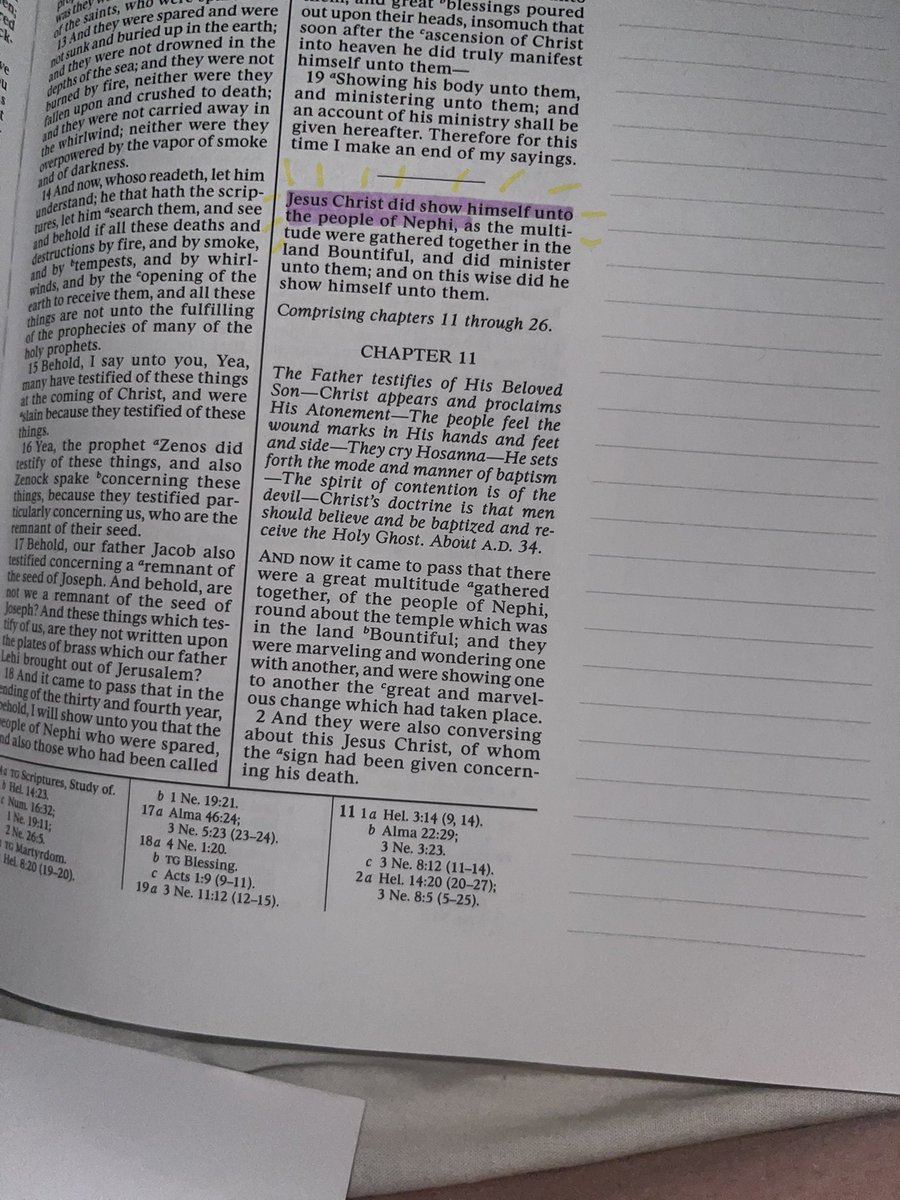
He initiated the restoration of His church through Joseph Smith, Jr., appearing first to the boy prophet in 1820, and later revealing The Book of Mormon, a sacred record of scripture that, with the Bible, testifies plainly that Jesus Christ is our Lord and Savior.
In the time since, He has led and guided this The Church of Jesus Christ of Latter-day Saints.
Jesus is an high priest of good things to come, the Great King Immanuel who sits on the right hand of His Father, crowned forever with eternal glory and all power, might, and dominion, having finished His preparations unto the children of men and offering them redemption through the shedding of His own blood.
He is the light and the life of the world, and salvation comes in and through His atoning blood and in no other way.
He is my prophet, my priest, my king and my God.
That is who Jesus of Nazareth is to me.