
kevin simler
9.2K posts
kevin simler
@kevinsimler
on twitter i value insight and kindness ••• once upon a time i wrote a book: https://t.co/v8jaqX5ml0
san francisco Katılım Mart 2011
626 Takip Edilen25.4K Takipçiler



Why do we build such ugly stuff these days?
Look around: buildings, benches, and doors increasingly feel rushed and disposable. Somewhere along the way, we traded beauty for efficiency and craft for convenience.
And so, I've produced the film below.
To make it, I’ve partnered with Sheehan Quirke (@culturaltutor). He’s the host. I’m the producer. This is our shared vision.
The series is called "The Modern World." In each episode, we’re going to look at the past to better understand who we are today, what we value, and what we believe about the good life. You can think of the series as a mix between Kenneth Clark’s Civilization series, which aired on the BBC in 1969, and Anthony Bourdain’s Parts Unknown.
People love to celebrate the progress of modernity, and indeed there are things to celebrate, but the decline in our built environment is a grave exception. A few months ago, I was looking for an apartment in New York when a real estate agent told me: “If you want a place with character, you should only look at places built before World War II.” The more I looked, the more I saw how all the new builds look like a hospital waiting room. Gone are the bricks, the cornices, and the rounded windows that make the older neighborhoods in New York so charming (and desired).
The word “beautiful” gets thrown around a lot these days, but this isn’t just about the decline in beauty. It’s about the decline in charm, character, and interestingness — the very things that raise our spirits and splash us with delight in a world that can be cruel and unforgiving.
There are exceptions, of course, but the general trend is clear: our aesthetic decline shows up all over the place — cars, signage, train stations, train tickets, benches, bollards, and lamp posts have all lost their luster.
Is this really the world we want to live in?
Aesthetics are a window into the soul of a culture. If you want to understand a society, don’t listen to what it says about itself. Look at what it creates. To walk around a city is to see a series of competing worldviews with contrasting beliefs about how we should live and what a good life looks like.
For this pilot episode, we traveled to London to compare the modern world to the Victorian period of 19th century England. The differences were obvious. For the Victorian-era English, ornamentation was a way to show off technological progress. For us, progress looks sleek and minimal and efficient.
The difference in values is exemplified by Crossness Pumping Station, a sewage facility built in the 19th century to process humanity’s least glamorous export. And yet, it’s prettier than most of the churches we build today. It’s prettier because the Victorians believed that ordinary objects could (and should) be beautiful.
Right next to Crossness Pumping Station is the modern sewage facility that was built to replace it, which reflects a different set of values: convenience and efficiency. These days, we want things to do their job. Functionality is the priority. Charm and delight are generally afterthoughts.
Our world could be much more delightful, if only we wanted it that way.
My point isn’t that everything needs to look like Versailles or that we should put chandeliers in Dunkin’ Donuts. That’d be ridiculous. But beauty, charm, and interestingness are worth pursuing. Sure, it’s not the cheapest or fastest way to do things, but I submit that the material costs aren’t what's holding us back. After all, we have the wealthiest society the world has ever seen, and things are still getting uglier.
Why did this happen? What should we do about it? What do these changes reveal about our modern world? That’s what this series is all about.
(And you can watch the pilot episode below).
The Cultural Tutor@culturaltutor
I’ve made a short film. Look at the things around you: doors, bins, staircases, furniture, railings, doorhandles, windows. Do you like how they look, or not? Modern design has become boring, but it doesn’t have to be this way. The word “beautiful” is overused. We don’t need “beautiful” lamps, bus stops, and water fountains – we just need lamps, bus stops, and water fountains that are interesting, that actually mean something. Or, at the very least, not boring. Because the aesthetics of architecture and urban design aren’t just a bonus; they totally change how we think, feel, and behave. Boring environments make us more stressed and less productive; they erode our sense of community; they make us sadder, less trusting, and lonelier. A boring world is one where we spend even more time online and where our addictions are even harder to battle. The Problem There is global, widespread dissatisfaction with how the world looks. In this film, and the series it will lead to, we want to investigate that feeling and give it a voice. The point isn’t that we should return to the past or get rid of modernism. It’s about learning from the past in order to improve the present, and about giving the public what they very clearly want, which isn’t the eradication of modernism but the co-existence of modernism AND traditionalism. Just look where tourists go, where they take their photos, and that tells you everything you need to know about what most people find interesting or beautiful. And look at where people go on holiday. It’s always to cities filled with old architecture and design, with churches and mosques and palaces, with charming little alleyways and stone staircases and wrought-iron railings. Of the world’s fifty most visited buildings, only four were made in the 20th century, and they’re all museums or memorials. There’s a reason why posts about this go viral online all the time. Regardless of why the change happened, it is clearly the case that we no longer make things how we used to. People are rightly confused by the fact that old lamp posts (to take the example we focus on in the film) are usually so pretty, while modern ones are usually so boring. Some people say this is just an example of survivorship bias… and they’re mostly correct. But that’s the whole point! Saying old buildings are usually prettier than modern buildings is not to say that architecture used to be better, or that the past was better. It is simply to say that certain kinds of buildings, because they have been preserved, are good examples of what people like most. In which case... shouldn't we try to design at least some buildings in a way that we know people like? A Unifying Cause Everybody, from all sides of the political spectrum and all backgrounds, stands to benefit from a world that is designed more thoughtfully and imaginatively. The world could be such a colourful, meaningful, and thrilling place! So this isn’t about left versus right or conservatism versus progressivism; it’s about making our world a more interesting and meaningful place to live in. This should be a unifying cause, because everybody loses out when our homes and cities are badly designed. I want this film to unite people who think they’re on opposite sides, and to create a consensus that we need to change our approach to how we design our buildings and the objects – benches, bus stops, bins, lamp posts, aircon units – that fill our cities. The Importance of Details We are incredibly rich and have a sprawling choice of shows to stream, phones to buy, or shoes to wear… but everything feels more and more generic all the time. If you want to understand a society, don’t listen to what it says about itself – look at what it creates. You can learn everything about the Victorians – the good and the bad – just by looking at their lamp posts. And what do the ordinary details of the modern world say about us? That we are technologically advanced, very efficient… and care more about making money, about making things as quickly and cheaply as possible, than making our world an enjoyable place to actually live in. It’s important to learn about why and how things have changed, but that’s for another time. The first step is establishing that the public aren’t happy with modern architecture and design, and that something needs to be done. But what we need isn’t a total revival of so-called ‘traditionalism’; the truth is that traditionalism and modernism can (and should) co-exist. The trouble right now is that we only have one, and that people are tired of it. The Power of Noticing But this film (and the series it will, all being well, lead to) is about more than the specific argument it presents. Above all it’s about a way of seeing the world around us, a way of noticing and thinking. “How you do anything is how you do everything.” That is probably true, and it also applies to whole societies, not just individuals; a single doorbell implies everything else about the whole socio-economic and political system that gave rise to its creation. And, beyond being merely “useful”, the ability to notice details makes the world a richer place to live in, and life a richer thing to lead. This is what the film is about, more than anything: the power and joy of noticing. A Bigger Project This short film is just the beginning. We want to make a full series about the history of art and architecture, both for their own sake and also to see what we can learn about life in the twenty-first century and how to improve it. To keep updated you can join our email list over at our website, linked in the reply below. Final Words You can watch the film here on X, or over on YouTube, also linked in the reply below. So… this is where the dream begins, the dream of a new series and the dream of a more charming, more interesting, more meaningful modern world. Spread the word.
English
@diviacaroline @RichardMCNgo Which I guess doesn’t make it impossible for a species with less cognitive sophistication, just a lot more difficult
English
@diviacaroline @RichardMCNgo If I understand correctly, it requires one level deeper theory of mind, and is one level further from the ultimate reward signal
English

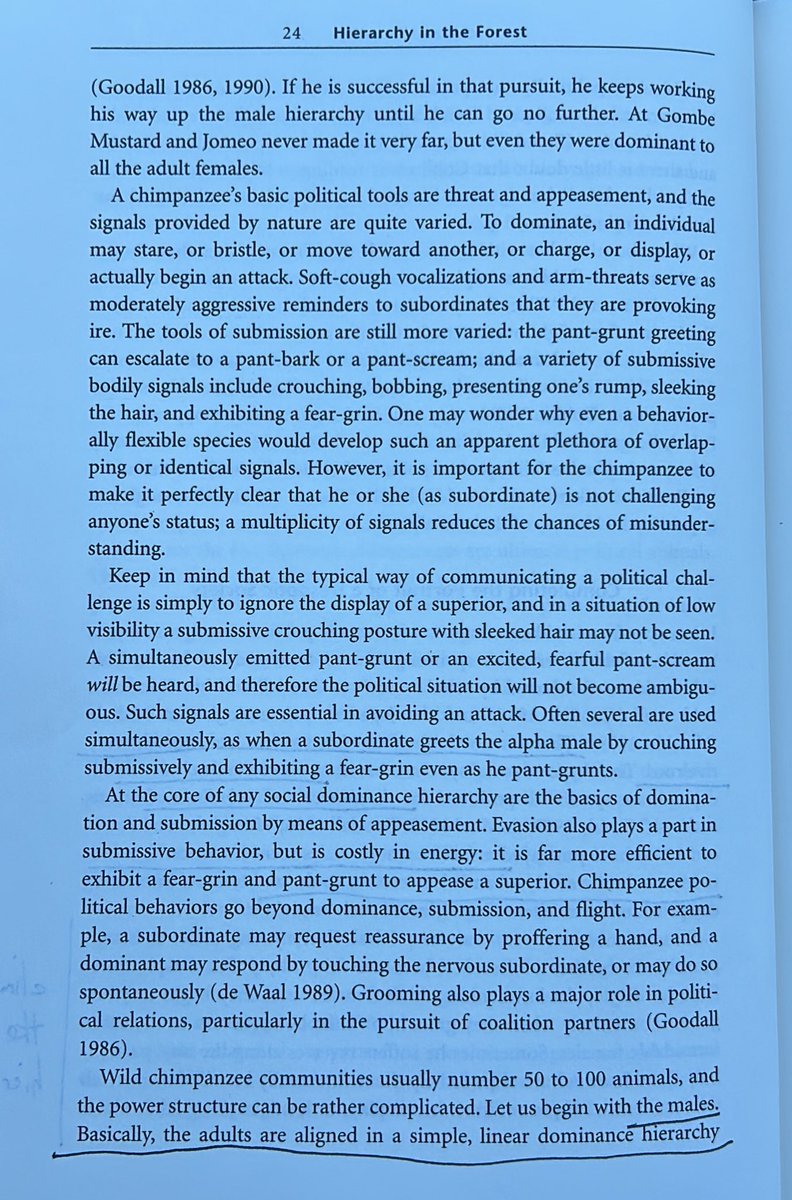
Are there any good ways to formalize the difference between prestige and dominance hierarchies?
In exchange I offer the following passage on chimpanzee dominance and submission behaviors for your perusal.

English
@RichardMCNgo @diviacaroline For example, I’m curious what might be going on with babblers, meerkats, wolf packs, etc. And I don’t think they’re capable of something like eigenmorality
English
@RichardMCNgo @diviacaroline Maybe we’re asking and answering slightly different questions?
I’m curious about the minimum architecture that could conceivably work at all. Whereas you seem(?) to be asking about an architecture that would work *well*, is highly stable, etc.
English
@RichardMCNgo @diviacaroline Anyway I definitely don’t have a good grasp on how prestige and dominance interact. In the essay Divia linked, I was trying to model what a prestige-only system looks like, even if there are no such systems in the real world because dominance is first/foremost and always present
English
@RichardMCNgo @diviacaroline 1. I don’t understand this paragraph. What’s a nepotistic hero? Also, doesn’t your last sentence just kick the question down the road? (What’s in it for the person who rewards the person who celebrates the hero?)
English
@wrathofgnon @chrislakin
(not an endorsement of OP, but I know you’ve been hunting for memes like these)
English

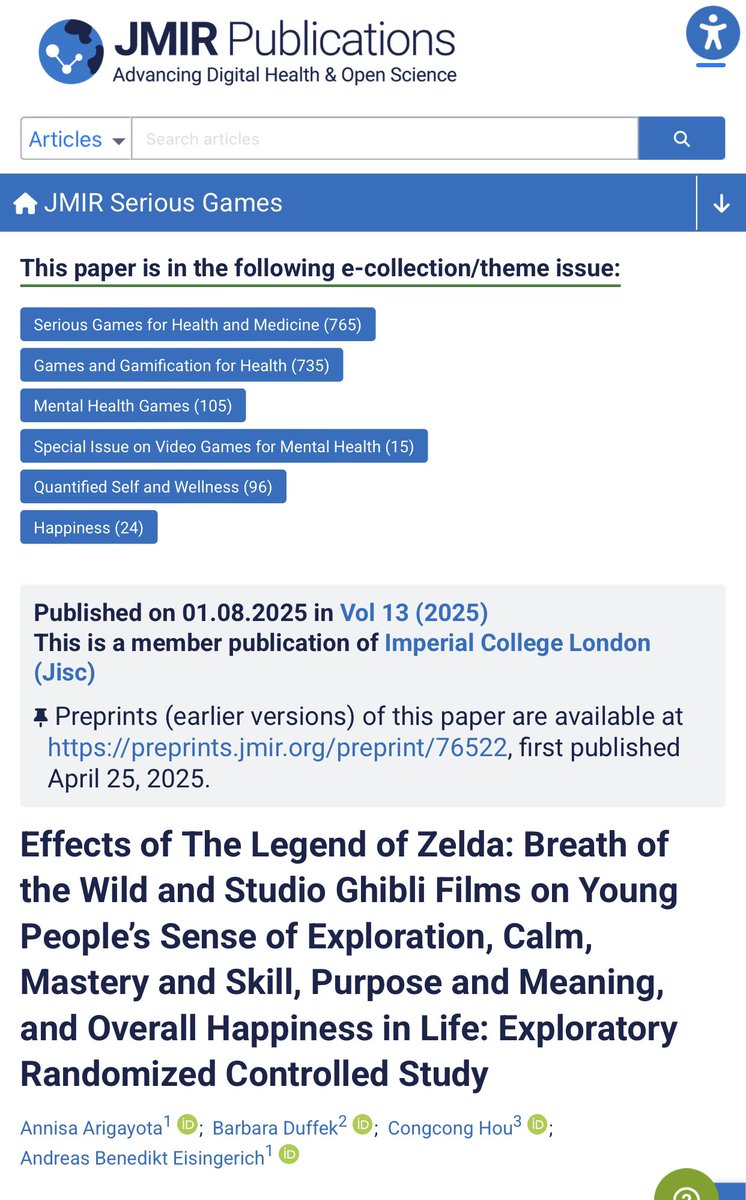
Zelda and Totoro and Kiki are socially contagious memes that inject happiness and calm into your life: "This study shows that playing an open-world game, such as The The Legend of Zelda: Breath of the Wild, and nostalgia evoked by Studio Ghibli films significantly foster a sense of exploration and calm in life, as well as a feeling of mastery and skill, and purpose and meaning, hence ultimately contributing positively to one’s overall happiness in life." games.jmir.org/2025/1/e76522


English
@literalbanana refusing to know about things is a valid form of self care
English

interesting take on the value of ignorance x.com/loquitur_ponte…
Loquitur Ponte Sublicio@loquitur_ponte
My view is that the answer to "why are people often unhappy in modernity" is actually pretty clear and isn't anything especially ideologically satisfying. It isn't economic precarity, we're very rich. It isn't lack of social community, we actually choose that. It isnt a lack of spirituality or an abundance of plastics or this or that. It's just information abundance. Imagine the ancestral village. How often do you get new information about the world? What works, what threats there are, what food is abundant, what others think of you... you do get that from time to time, more if you're out ranging for food. And what it all has in common is its all life or death. Starvation is a risk if you mismanage food or predators, injury risks infection and death. The opinion of the humans around you is especially dangerous - who gets fed in lean times? And of course tall poppy syndrome predominates hunter gatherers so if you're too useful you may meet an unfortunate riverbed fall too. Your mind evolved in an environment where most new information was life and death especially the opinions of others. You live in an environment where you are constantly awash in new information and the opinions of others. How would a mind grown in the former respond to the latter? It would be constantly on edge, frantically searching to see the hidden meaning behind every social cue, the threat in every circumstance, the risks to every good thing. There would be so many things to worry about it could never hit them all. And so it would respond like a mind in the village having an endless web of panics would respond - it would assume on some subconscious level that the environment was dangerous and pull away. Pull away from social situations it cant manage, pull away from resource sources it can't maintain. Retreat, retrench, recoil. Anyone who's ever struggled with anxiety can imagine easily. And indeed what do we see, as technology becomes more prevalent, the information diet gets more constant? More people retreat, retrench, recoil from everything. Even video games obviously fit this - village brain wants to find a different environment that's going better than it thinks yours is. And it gets it. Challenging but bounded, very satisfying to thrive in. And of course people are different, the rising tide hits different people sooner. The young more not just because they're more digital and less fully formed mentally but because they have less context, less anchored sense of what really matters. But some are more stress tolerant than others, have better ability to identify what matters and phase out other signals than others. But neurotic agreeable people (nervous people who really care about what others think) are in trouble. And that's it basically. The other stuff is more satisfying and a better story but frankly i think it's just that simple.
English
Refusing to know about things is a valid form of civil disobedience
English
@literalbanana @Conaw @diviacaroline i’ve only read Presentation of Self and Interaction Ritual… in a lonely apartment 😭😭
both excellent
English
@Conaw @kevinsimler @diviacaroline if you mean me as well as kevin my top recommendation is to get audiobooks of behavior in public places and presentation of self in everyday life and listen to them out in nature or where you could possibly come across other people rather than with your eyes sitting down
English

Just got home after this trip (missed our connecting flight and had to stay over in Detroit last night) and it’s hard to overstate how happy I am to be home!!!!
Also let me try to answer the question about how I think shame can be helpful
Divia Eden 🔍@diviacaroline
@made_in_cosmos On a plane about to take off and the 1.5y on my lap is not that chill lol (Not my example, my reason that trying to give an example will likely have to wait)
English
@literalbanana @diviacaroline we all be out here repackaging goffman (and clumsily)
analogy to pain is great. I think people generally understand that (anticipation of) pain is adaptive, but fail to extend that insight to other painful emotions
English
I'd forgotten about this! I see an analogy to pain where pain is a "useful signal" but you don't actually have to FEEL intense pain to get the benefit of the capacity for pain to protect your body from injury - you can mostly sense what will be painful before it happens
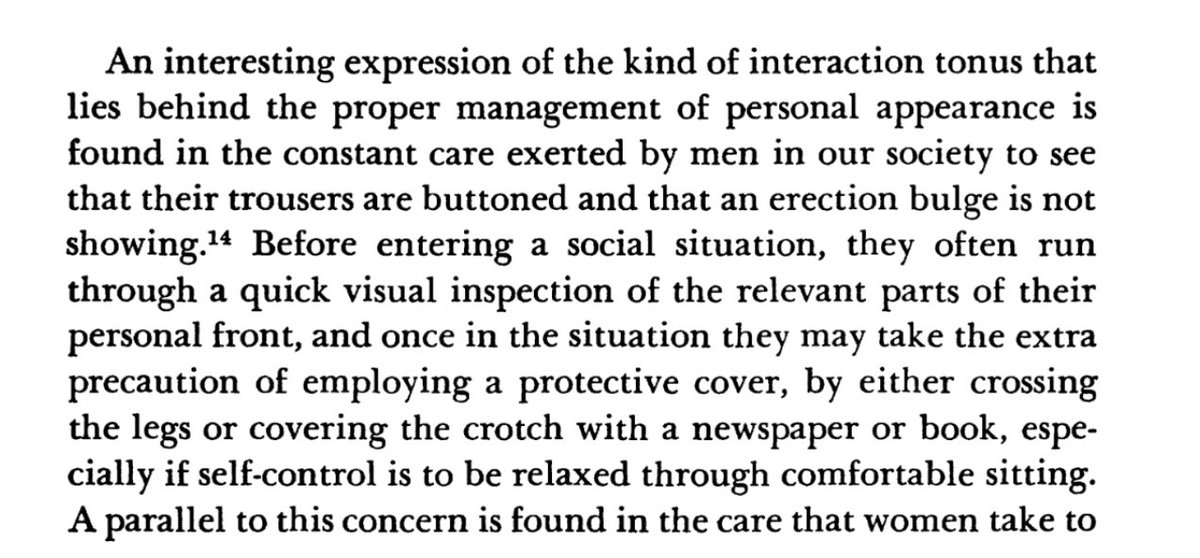
I was reading a couple of goffman books recently and the "shame = pathological shame" overcorrection Divia is talking about makes sense - like one perspective is "wouldn't life be nice without all this shame" but the reality of not having that capacity is the mental hospital, where it looks more tragic than free

English
@GarrettPetersen 4. Have you considered not auto-rearranging successfully guessed lines? Dunno if the UX and/or playability would suffer, but seems like an interesting way for the game to work… user gets less info from successful guesses, has to figure more of it out on their own
English
@GarrettPetersen 3. Have you played the game Red Herring? Connections-style game which leans into the presence of red herrings. (Probably not relevant to refining Connecdoku, just a related game…)
English

It has come to my attention that To Kill a Mockingbird was not marked as a movie. The AI responsible has been severely punished.
Dr. Dad, PhD 🔄🔼◀️🔽▶️@GarrettPetersen
Connecdoku 2025-07-27 📚🍽️🗺️👥 🟩🟩🟩🟩🇮🇹 🟩🟩🟩🟩🇺🇸 🟩🟩🟩🟩🇬🇧 🟩🟩🟩🟩🎬
English
@diviacaroline anyway I totally agree — small doses of shame (or even large doses for big violations) are normal, appropriate, and mostly good
calling someone “shameless” is rightly an insult!
English
@diviacaroline oops I started liking tweets in this thread before I noticed I was mentioned 😳
I also talk about shame explicitly in that post!

English
English
@GrantSlatton @gtmom +1
i’ve also wondered about this for banking. could you make a fun enough game where the player takes deposits, issues loans, confronts bank runs, etc.?
English

@gtmom wonder if you could design a board game in which players *sold* insurance as a game mechanic
taking the side of the insurance seller is probably the only way to get people to understand
English