klaas kuitenbrouwer

423 posts

klaas kuitenbrouwer banner
klaas kuitenbrouwer

klaas kuitenbrouwer

@KlaasJK

Zoöp, regenerative practices, human-inclusive ecologies

Katılım Ocak 2009
802 Takip Edilen402 Takipçiler
klaas kuitenbrouwer retweetledi
Voedselpark Amsterdam
Voedselpark Amsterdam@Voedselpark020·
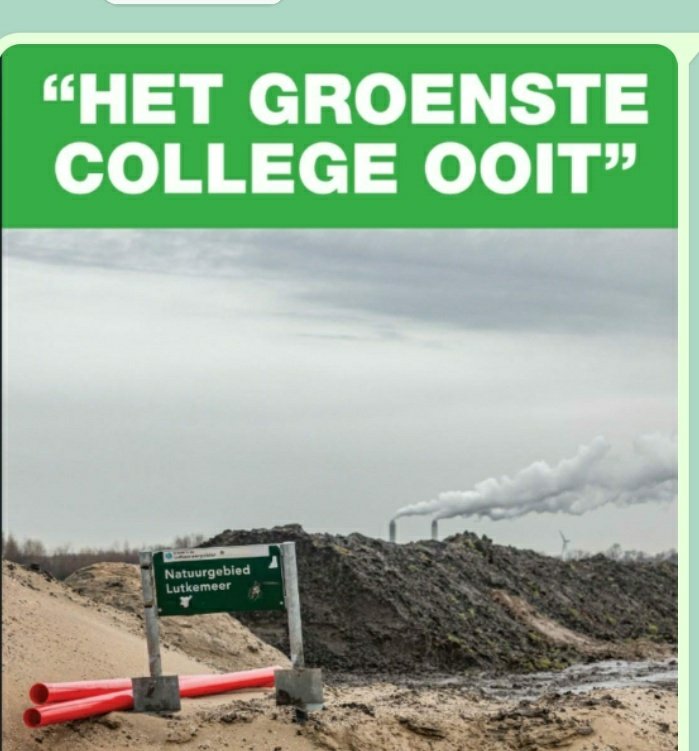
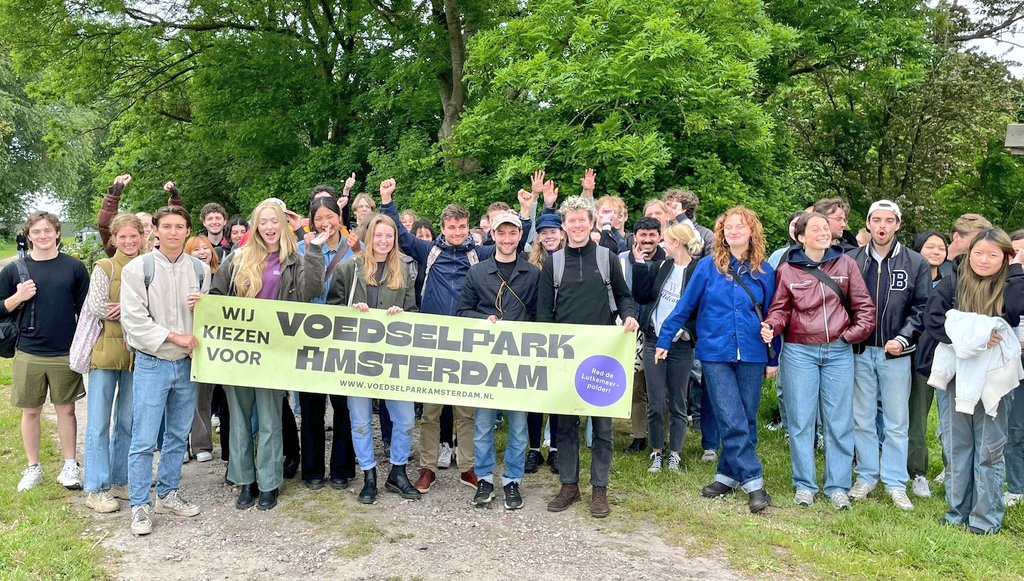
Goedemorgen deze 🌧️dag! Een goed moment om je te realiseren, dat de politiek (GL,PvdA en D66) wil besluiten om in de laagst gelegen polder van Amsterdam, op de laatste zeekleigrond, de grootste distributiehallen neer te zetten. #Lutkemeerpolder Kijk tip: dezwijger.nl/programma/meer
Voedselpark Amsterdam tweet media
Amsterdam, The Netherlands 🇳🇱 Nederlands
2
9
18
1.4K
klaas kuitenbrouwer retweetledi
Voedselpark Amsterdam
Voedselpark Amsterdam@Voedselpark020·
Klopt: "Er hoeft echt geen voedseltekort te zijn, er is alleen een kennistekort. Er kan echt overal voedsel groeien. Die kennis wil ik hier graag met anderen delen, want hier is echt een sterke community." at5.nl/artikelen/2216… Wij willen dit ook in de #Lutkemeerpolder
Voedselpark Amsterdam tweet mediaVoedselpark Amsterdam tweet media
Nederlands
0
6
11
325
klaas kuitenbrouwer retweetledi
Voedselpark Amsterdam
Voedselpark Amsterdam@Voedselpark020·
@ChrisJulien @Ruigoord1 @the_eco_thought @RenetenBos @chummels_tue @oliverszasz @elinkelsey @SjorsRoeters @KrenakShirley @KlaasJK @jembendell And while we are talking endlessly, we lose the last fertile ground of Amsterdam.The destructive machines are running, politics, art sector and scientists what do you do for the #Lutkemeerpolder? For the for the residents of @NieuwWest @VUamsterdam @BIOTraCes @WUR @UvA_Amsterdam
Voedselpark Amsterdam tweet mediaVoedselpark Amsterdam tweet mediaVoedselpark Amsterdam tweet mediaVoedselpark Amsterdam tweet media
Amsterdam, The Netherlands 🇳🇱 English
0
4
4
262
klaas kuitenbrouwer
klaas kuitenbrouwer@KlaasJK·
Again, humans can be ecologically useful.
Thomas Reis@peakaustria

10,800 Years Ago, Early Humans Planted Forest Islands in Amazonia's Grasslands An aerial shot of the Llanos de Moxos region in South America shows the strange isolated mounds of trees that grow among expansive grasslands. Scientists’ explanation for these islands: Ancient humans planted and cultivated crops, making them some of the oldest domesticated plants in history. Every spring, rains and snowmelt swamp vast grasslands that stretch between the Andes Mountains and Amazon rainforest in northern Bolivia. But thousands of tree-covered mounds stand solid, several feet above the flooded grasses. “They are like islands in a sea of savannah,” says Umberto Lombardo of the University of Bern, Switzerland. In 2006, Lombardo first stepped onto a forest island in this Llanos de Moxos region, puzzling over how such features could form naturally. “As a geographer, I had absolutely no explanation for them,” he recalls. One theory suggested that over the past few centuries, ranchers had carved away lush rainforest to create pastures, but left scattered groves of about 300 trees each. Yet that didn’t explain why the trees grew on higher ground. It turns out the forest islands were made by people, and are much older than suspected. Lombardo and colleagues pieced together the history, published in May in Nature: Roughly 10,800 years ago, humans cultivated crops in the Llanos de Moxos — which puts them close in age to the oldest known domesticated plants, cultivated in the Middle East about 12,000 years ago. This confirms Amazonia as one of the first places on Earth where people domesticated wild species. Their gardens piled up fertile compost, which allowed trees to root above the seasonal flood line. Rather than wrecking the environment, the artificial forest islands enhanced biodiversity, providing habitat for rare species to this day. Lombardo “is a real hero in this … really pushing research,” says José M. Capriles, study co-author and archaeologist at Penn State. In 2012, he and Lombardo launched excavations, which confirmed that three mounds were made by ancient people, based on burned clay, food scraps and human burials found at the sites. For the new study, Lombardo used Google Earth to map 6,643 forest islands in a region about the size of Illinois. “It was like a Zen activity just surfing and clicking on all these points,” he says. The researchers probed some and found archaeological debris similar to the fully excavated sites in 64 out of 82 of the tested mounds between 2,300 and 10,850 years old. From that ratio, they estimated humans erected at least 4,700 of the 6,643 forest islands visible on Google Earth. In the probes, the team also identified microscopic plant remains from the oldest-known squash in Amazonia and the oldest-known crops of the tuber cassava (also known as manioc or yuca) in the world, as well as nearly 7,000-year-old corn — a plant domesticated about 2,000 years earlier in Mexico. It seems people passed seeds from one community to the next, spanning over 2,000 miles from Central to South America.

English
0
3
8
742
klaas kuitenbrouwer retweetledi
Voedselpark Amsterdam
Voedselpark Amsterdam@Voedselpark020·
Komt allen! Op donderdag 29 juni 11.00 uur is er een belangrijke rechtzaak voor de toekomstige generaties! De zitting is bij de Raad van State om 11 uur, Kneuterdijk 22 in Den Haag. Kom ook! 🪲🦋🦟🐞🐜🪲🪳🦟🦗🐛🌍💦💚 #Toekomst #ClimateAction #healthplanet @nat_ombudsman
Voedselpark Amsterdam tweet mediaVoedselpark Amsterdam tweet mediaVoedselpark Amsterdam tweet mediaVoedselpark Amsterdam tweet media
The Netherlands 🇳🇱 Nederlands
0
8
8
586
klaas kuitenbrouwer retweetledi
Prof Julia Steinberger
Prof Julia Steinberger@JKSteinberger·
Topics covered planetary boundaries, trade, finance, fiscal policy, global South, decolonisation, gender, justice, well-being, social policies. Every panel included major advances in understanding. Together, the conference represents a monumental coming of age of post-growth. 3/
Prof Julia Steinberger tweet media
English
7
350
1.4K
94.3K
klaas kuitenbrouwer retweetledi
Prof Julia Steinberger
Prof Julia Steinberger@JKSteinberger·
For 3 full days the EU parliament hosted thousands of scientists, activists and policy-makers charting a future beyond growth. The talks & discussions were recorded and are now available to all. Thousands attended, thousands more followed online. 2/ beyond-growth-2023.eu/programme/
Prof Julia Steinberger tweet media
English
11
557
1.6K
124.8K
Jessica den Outer ✊🌳⚖️
Jessica den Outer ✊🌳⚖️@JessicadenOuter·
Eindelijk mag ik het van de daken schreeuwen! 😁 Op 21-3 lanceer ik mijn boek: 'Rechten voor de Natuur' @iLemniscaat. Deze avond is niet alleen een boeklancering maar een grootschalig evenement met bekende sprekers: Humberto Tan, Jan Terlouw, Tineke Lambooy & Jan van de Venis.
Nederlands
5
13
52
4.7K