

@hulu2026 @Pelasgian_Greek @DerinPusulaTR @moderatus_gr Έχετε πολλούς 🤡 σαν το Καραγκιουλ ή εσπασε το καλούπι μετά από αυτόν...;
Ελληνικά
makridis konstantinos
2.4K posts


@Meda_2077 @EleosKapou Μάθε επιτέλους την αλήθεια και μην πουλάς προπαγάνδα. Η υπόθεση αυτή φορτώθηκε σε Έλληνες γιατί βόλευε στην στοχοποίηση των Ελλήνων και τα σχέδια της Άγκυρας. Διάβασε το άρθρο σε τουρκική εφημερίδα...






Iran bought drone tech through UAE, then used it to attack it israelhayom.com/2026/05/24/ira…


Bize bu kadar yakın olan adaların, Yunan’da olması sinir bozucu değil mi? Var bir hayalimiz…👇👇🇹🇷
For 300 years the Ottoman Turks were stealing kids from their mothers. This was the most brutal thing humanity ever witnessed. They were waiting for women to birth, raise their kids, and then at the age of 8 were collecting the them. The devşirme known as "collection of children" or "blood tax" or in Greek as "paidomazoma" (παιδομάζωμα, was a systematic practice by the Ottoman Empire from the late 14th century until the mid-17th century, that forced the recruitment of young Christian boys, typically aged 8–18, from Balkan provinces as a form of tribute ("blood tax"). These boys were taken from their families, converted to Islam, and rigorously trained to serve in the empire's military, administrative, and bureaucratic roles. This created a loyal class of elite soldiers and officials who were dependent on the sultan rather than on hereditary Turkish aristocracy. Ottoman officials periodically conducted levies in Christian villages, selecting physically fit and intelligent boys. Exemptions were sometimes granted to certain communities (for example those in key trade cities like Galata or Chios) or families providing essential services to the empire. They were separated according to ability and could rise in rank based on merit. The most promising boys (known as iç oğlanı or "inner boys") received elite education in Constantinople's Enderun School, covering warfare, administration, sciences, and Islamic theology. Many became Janissaries - the empire's elite infantry corps - or rose to high positions like grand viziers, provincial governors, admirals, or financial bureaucrats. Estimates suggest tens of thousands of boys were recruited annually at its peak in the 15th–16th centuries. Historians estimate the total number of Christian boys taken across the entire Ottoman Empire around 300.000 kids. From those kids 150.000 were Greek kids (over 300 years). It means the half of the total kids that were stolen were only Greek. It's insane. For example in 1540, a levy in Thessaly & Macedonia took 1.000 Greek boys in one season and in Chios (Greek island) 200 boys taken in 1567 alone. The peak was 5.000 kids/annual from Greece. A generational trauma, with thousands of Greek families losing sons every few years for centuries. The system began under Sultan Murad I (1362–1389) and largely ended by 1648, as Muslims were increasingly allowed to fill these roles and Janissary corruption grew. It ensured a supply of skilled, loyal personnel for expansion and governance, bypassing traditional Turkish elites who might challenge the sultan's authority. While it offered social mobility to recruits, it was coercive and severed family ties. Greeks, as a major Christian population in the Ottoman Balkans (including regions like Thrace, Macedonia, Epirus, and the Aegean islands), were heavily affected by the devşirme. After the fall of Constantinople in 1453, Ottoman control extended over most Greek lands, making Greek Orthodox families prime targets for recruitment. The practice targeted rural communities disproportionately, as urban or strategically important groups were often exempt. On 28 February 1395, Archbishop Isidore Glabas of Thessaloniki denounced it in a speech as "paidomazoma" (child-gathering), describing the anguish of parents: mothers scratching their cheeks in grief and fathers beating their breasts and the violent Islamization of children and their hard training in the use of dogs and falcons. A 1550 Greek poem by Ioannes Axayiolis, appealed to Charles V of Germany to liberate the Christians from the Turks (for liberation from this "sorrow"). The text is found in the Codex Vaticanus Graecus of 1624. In another account, the Roman Catholic bishop of Chios in 1646 writes to the director of the Catholic Greek Gymnasion of Rome asking the latter to accept Paulos Omeros (lol my name Pavlos Homeros), a 12-year-old boy from Chios, to save him from the devshirme. Once taken, boys were circumcised, renamed with Muslim names, and forbidden from contact with their families. They were raised as Muslims, effectively erasing their Greek cultural and religious identity to foster loyalty to the sultan. Historical records show Greek-origin devşirme boys rising to prominence, such as Mimar Sinan (chief architect of the Ottomans, possibly Greek) and several grand viziers like Ibrahim Edhem Pasha (from Chios). The system accelerated Islamization in Greek regions, reducing Christian populations and creating a class of "Greek Muslims" (for example in Pontus or Crete). It fueled revolts and the Greek War of Independence (1821), where devşirme grievances were invoked. That was the "devşirme". The Ottoman Empire was the worst thing that ever happened to us Greeks. And many more things that you don't know if you are not Greek, like flaying (skinning alive) that many of our ancestors suffered to death. Next, I will teach you what the "haraç" was.
🇷🇸☪️O Museu Nacional da Sérvia abriga esta pintura de 1595. Ela retrata o bispo ortodoxo sérvio Vršac Teodor sendo esfolado vivo pelos turcos otomanos. Essa era uma prática comum, especialmente contra cristãos que se recusavam a se converter ao islamismo.
Τούρκοι ποζάρουν στον φωτογραφικό φακό, αφού πρώτα αποκεφαλισαν Έλληνες.. Η φωτογραφία βρέθηκε τυχαία στην προκυμαία της Σμύρνης τον Σεπτέμβρη του 1922 και ανήκει στο αρχείο του Αμερικάνικου Ερυθρού Σταυρού.. Oι Τουρκο΄ι δεν έχουν ιστορία αλλά ποινικό μητρώο!!
@e_gozuguzelli And recently One of thousands
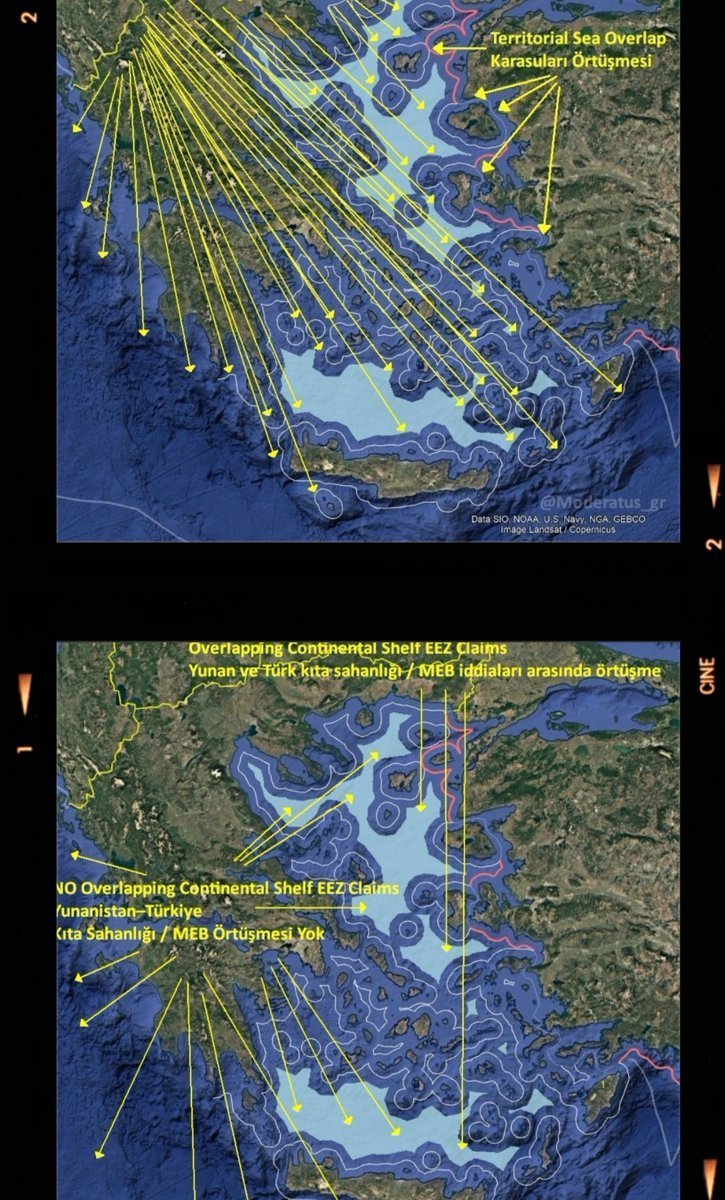
Lozan ve Adalar Denizi’nde Türkiye’nin Haklarının Yeniden Değerlendirilmesi Türkiye’nin Adalar Denizi’nde 6 mil, Akdeniz ve Karadeniz’de 12 mil esasına dayanan yeni deniz yetki alanları düzenlemesini gündeme getirmesinin ardından, Lozan Antlaşması’nın 6. maddesi ve bu maddenin üç milin ötesindeki bütün ada, adacık ve kayalıkları Yunanistan’a bıraktığı yönündeki tartışmalar yeniden gündeme gelmiştir. Oysa Lozan’ın 6. maddesinde böyle bir hüküm bulunmamaktadır. Maddede yalnızca kıyılarımıza üç milden yakın ada ve adacıkların Türkiye’ye ait olduğu belirtilmektedir. Üç milin ötesindeki bütün ada, adacık ve kayalıkları Yunanistan’a bırakan bir ifade ise kesinlikle yer almamakta ve hangi adaların hangi devlete bırakıldığı Lozan’ın diğer maddelerinde ayrıca düzenlenmiştir. Aslında bugün yaşanan tartışma yalnızca bir Lozan tartışması olmayıp, bu yorumun kabul edilmesi halinde Adalar Denizi’nde kıta sahanlığı belirlenirken Anadolu’nun binlerce kilometrelik kıyıları yerine adalar esas alınacaktır. Bu durumda da Türkiye’nin kıta sahanlığı daralacak, Yunanistan’ın adalardan başlattığı kıta sahanlığı anlayışı sebebiyle deniz yetki alanlarımız önemli ölçüde küçülecektir. Bu durum da elbette yalnızca denizlerdeki egemenlik haklarımızı değil, enerji kaynakları üzerindeki hak ve menfaatlerimizi de doğrudan etkileyecektir. Halbuki iddia edildiği gibi bu mesele Lozan ile 1923 yılında kesin olarak çözülmüş olsaydı, yüzyılı aşkın süredir bu konu neden devam etmektedir? Üstelik bu konu artık yalnızca Türkiye ile Yunanistan arasındaki bir sınır anlaşmazlığı olmayıp Adalar Denizi ve Doğu Akdeniz; enerji kaynaklarının, deniz ticaret yollarının ve askerî dengelerin kesiştiği stratejik bir coğrafya üstünde güç elde etme mücadelesidir. ABD, İngiltere, Fransa ve Rusya gibi küresel güçlerin bölgeye gösterdiği ilginin temelinde de bu jeopolitik gerçek yatmaktadır. Bu devletler kendi menfaatlerine göre Türkiye veya Yunanistan yanında pozisyon almaktadır. Çoğu zaman bu tercihin Yunanistan’dan yana olması da artık şaşırtıcı değildir. Bu nedenle asıl konu, Türkiye’nin denizlerdeki egemenlik haklarını, kıta sahanlığını, enerji kaynakları üzerindeki tasarruf yetkisini ve Mavi Vatan’daki stratejik konumunu koruma meselesidir. Biz , Lozan Antlaşması’nın hükümlerinin tarihî bağlamı içinde değerlendirilmesi gerektiğine ve ayrıca II. Dünya Savaşı sonrasında yaşanan gelişmeler ve İtalya’nın hâkimiyetinde bulunan 12 Ada’nın bir oldu bittiyle Yunanistan’a devredilmesi sürecinin de hukuki zeminde tartışmaya açılması gerektiğine inanıyoruz. Bu konuda hiçbir zaaf ve taviz kabul edilemez nitelikte olup tarih Türkiye lehine akmalıdır. Gücümüz buna yeter. #MaviVatan #Lozan #AdalarDenizi #KıtaSahanlığı #Yunanistan #DoğuAkdeniz#AnahtarParti
