Kpler

2.6K posts

Kpler banner
Kpler

Kpler

@Kpler

Intelligence tools for trade

London, England Katılım Aralık 2015
636 Takip Edilen36.5K Takipçiler
Kpler
Kpler@Kpler·
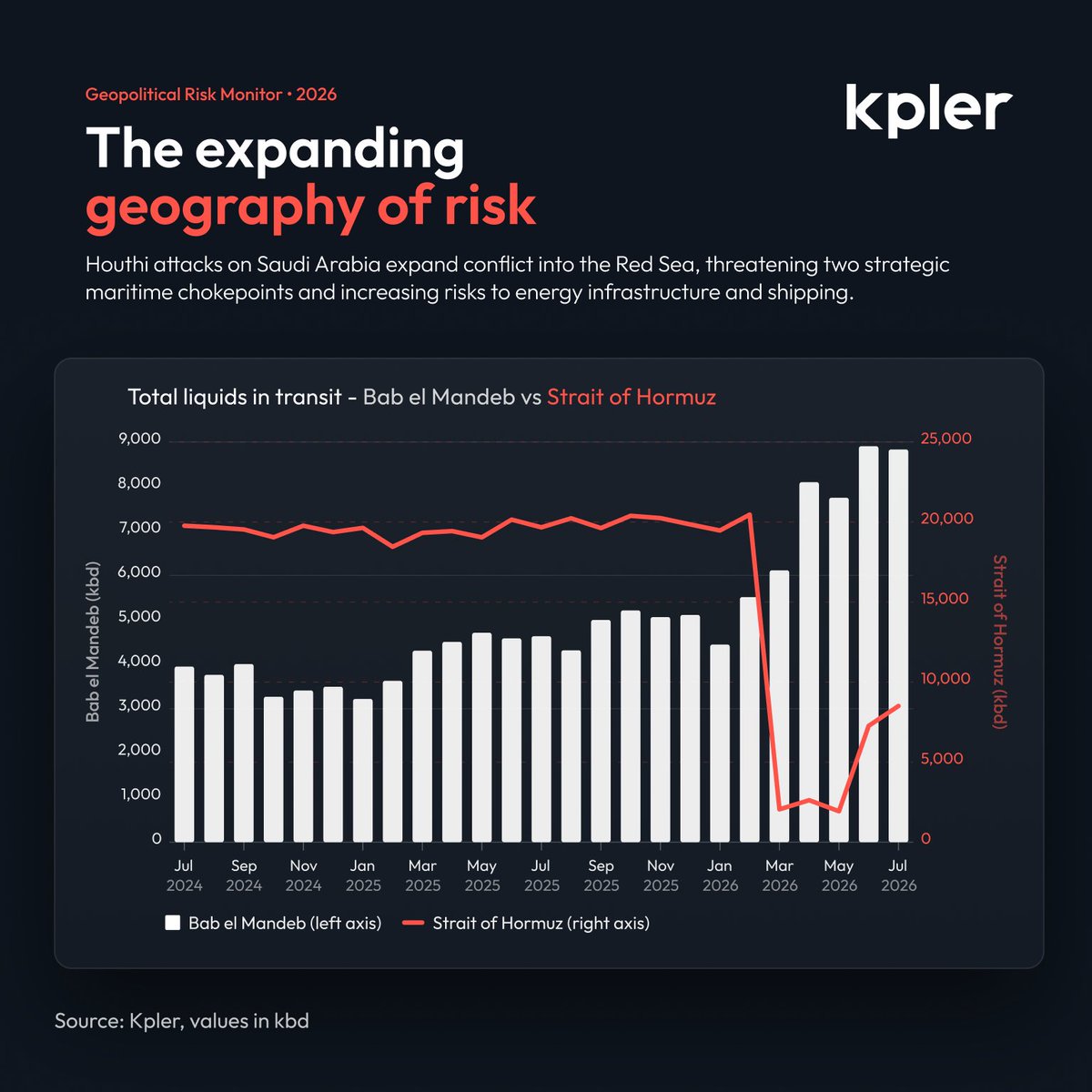
The expanding geography of risk The Houthis' attacks on Saudi Arabia represent more than another military exchange. They mark the conflict's horizontal escalation, expanding from the Strait of Hormuz into the Red Sea. Saudi Arabia invested for years in the East West Pipeline and Yanbu to preserve exports if Hormuz became disrupted. If the Bab el Mandeb also becomes contested, policymakers will be managing risks across two critical maritime chokepoints rather than one. The more important question may no longer be who is fighting the war, but which strategic geography becomes vulnerable next. As new participants emerge, the risks extend beyond crude supplies to shipping, refined products, infrastructure and broader regional stability. Read the full analysis by Michelle Brouhard on #Kpler Insight: okt.to/E0WMdI
Kpler tweet media
English
0
14
26
4.6K
Kpler
Kpler@Kpler·
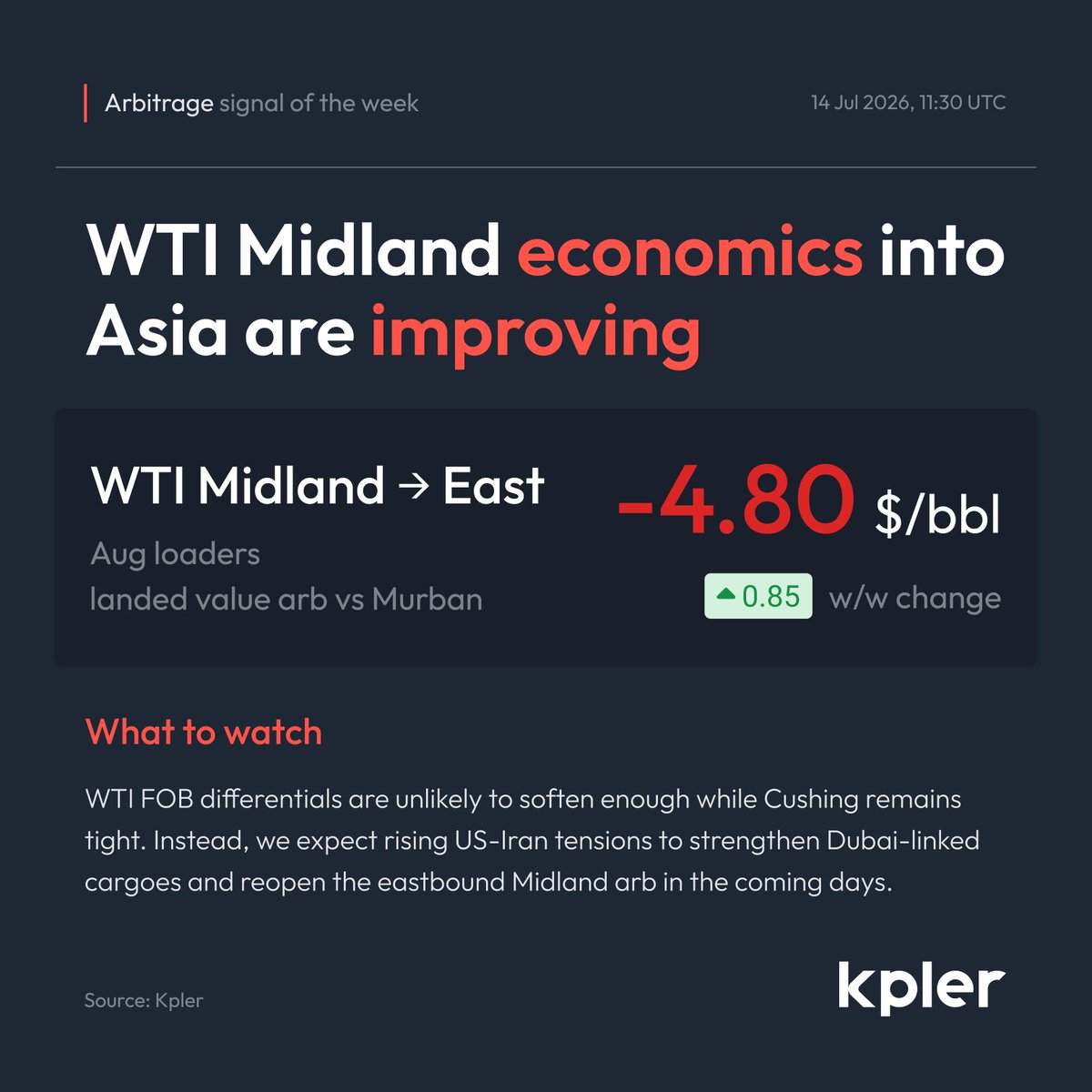
Weekly arbs update: WTI Midland economics into Asia are improving, but the East remains almost $6/bbl less attractive than Europe. Eastbound flows typically pick up once that gap narrows below $2/bbl, so barrels should remain in the Atlantic Basin for now. Real-time tools to enable faster, better decisions: okt.to/lQSUAv
Kpler tweet media
English
1
2
8
3.4K
Kpler
Kpler@Kpler·
Kpler’s new whitepaper asks a simple question: Can arbitrage spreads tell you where crude is heading before the physical flows confirm it? Our analysis suggests they can. Across the most responsive crude systems, arbitrage signals show a measurable lead relationship with physical flow allocation, with the strongest relationships observed over a 15-45 day forward window. Download our new report here: okt.to/J6dhUY
Kpler tweet media
English
0
2
19
5.1K
Kpler
Kpler@Kpler·
Hormuz traffic turns defensive Confirmed Strait of Hormuz crossings declined by around 52% week on week over 10 to 12 July, with traffic reverting to more defensive routing patterns. Use of Iranian and Dark routes increased while activity on IMO and Omani corridors almost disappeared. Although no new IMO confirmed physical attacks have been reported since 27 June, renewed US Iran tensions and IRGC warnings continue to drive heightened caution across commercial shipping. Stay ahead of the market with #Kpler Insight: okt.to/yQ62dX
English
16
134
353
145.8K
Kpler
Kpler@Kpler·
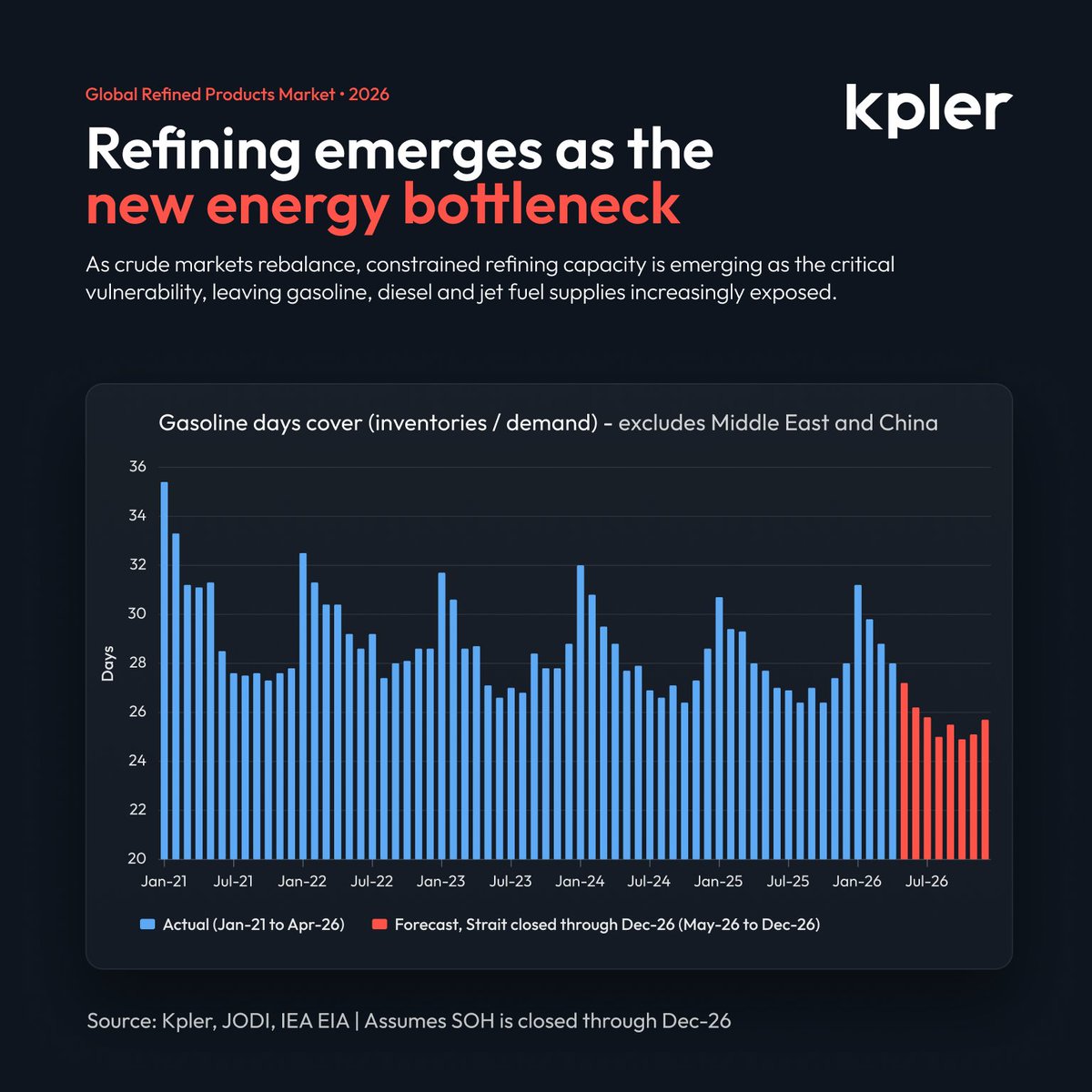
For decades, energy security has focused on protecting crude oil supplies through strategic reserves, secure shipping lanes, and stable production. This analysis argues that the next strategic vulnerability lies elsewhere. While crude markets have largely rebalanced, refining capacity has emerged as the critical constraint, leaving gasoline, diesel, and jet fuel markets exposed despite lower oil prices. As governments rethink energy security and affordability, protecting refining capacity and product supply chains may prove just as important as securing crude itself. Read the full analysis by Michelle Brouhard on #Kpler Insight: okt.to/rJlFWp
Kpler tweet media
English
4
21
57
17K
Kpler
Kpler@Kpler·
Kpler London Summer Party 2026 wrap up Last week, we had the pleasure of welcoming clients, partners, and industry professionals to the Kpler London Summer Party 2026 for an evening of conversation, collaboration, and connection. Hosted at The Nest and set against the backdrop of London's skyline, the event brought together members of the #energy, #shipping, and commodities communities to exchange ideas, strengthen relationships, and celebrate the partnerships that continue to shape our industry. Thank you to everyone who joined us and contributed to such a memorable evening. See you at the next Kpler event.
Kpler tweet mediaKpler tweet mediaKpler tweet mediaKpler tweet media
English
1
1
13
5.1K
Kpler
Kpler@Kpler·
Hormuz traffic stays cautious Confirmed crossings through the Strait of Hormuz zone fell for a second consecutive day on 9 July, dropping to 22 from 30 the previous day. Activity remained largely low risk, with commercial traffic only marginally exceeding non commercial movements. Operators continued to favour the Iranian route, while the Omani route saw just one crossing, reinforcing the lasting impact of recent security incidents near Oman. Although no new physical attacks have been recorded since 7 July, renewed US-Iran military escalation has weakened confidence that diplomacy will provide near term stability. Stay ahead of the market with #Kpler Insight: okt.to/7ZBVzy
English
9
96
258
90.6K
Kpler
Kpler@Kpler·
Hormuz confidence erodes again Week three of the US Iran memorandum of understanding highlights a more fragile outlook for the Strait of Hormuz. While crude continues to transit the waterway, the latest attacks on commercial vessels, US retaliation and a decline in forward tanker positioning have weakened confidence in the reopening. Strong export volumes appear to reflect the clearance of delayed cargoes rather than a return to normal trading conditions. Brent prices have regained a risk premium, while market attention has shifted towards the durability of shipping confidence, route security and whether non Iranian exports can continue moving through a corridor that remains politically and operationally contested. Stay ahead of the market with #Kpler Insight: okt.to/LEs8H6
Kpler tweet media
English
1
20
54
18.2K
Kpler
Kpler@Kpler·
Hormuz recovery faces fresh pressure Traffic through the monitored Strait of Hormuz zone strengthened on 7 July, with 41 verified crossings compared with 36 the previous day. Commercial west to east movements continued to dominate, while sanctioned vessel activity eased and laden crude, dry bulk and #LPG voyages remained significant. However, the operating picture became more complex. Use of the Iranian route declined as IMO routing recovered, but elevated Dark or Unknown movements highlighted uneven confidence across the market. The backdrop also deteriorated after two newly confirmed tanker incidents near Oman and OFAC’s replacement of General License X with GLX1, tightening the sanctions framework for Iranian related trade. The focus is now shifting from traffic recovery towards security, compliance and route risk management. Stay ahead of the market with #Kpler Insight: okt.to/hNPCli
English
9
55
182
106.3K
Kpler
Kpler@Kpler·
Qatar confirms LNG tanker attack Qatar has effectively confirmed that the QatarEnergy operated #LNG carrier Al Rekayyat was targeted during an apparent missile attack near the Strait of Hormuz, after the the government condemned the incident as an unacceptable attack on international shipping and global energy supplies. The government said it holds Iran legally responsible for any resulting damages and consequences. UK maritime authorities previously reported that a tanker had been struck by an unknown projectile, causing a fire but no casualties or pollution.The incident marks the most significant security event affecting commercial shipping in the Strait since the US-Iran ceasefire, reinforcing concerns over regional stability, maritime trade and the reliability of global LNG exports. Stay ahead of the market with #Kpler Insight: okt.to/dPpwUA
Kpler tweet media
English
3
15
40
10.1K
Kpler
Kpler@Kpler·
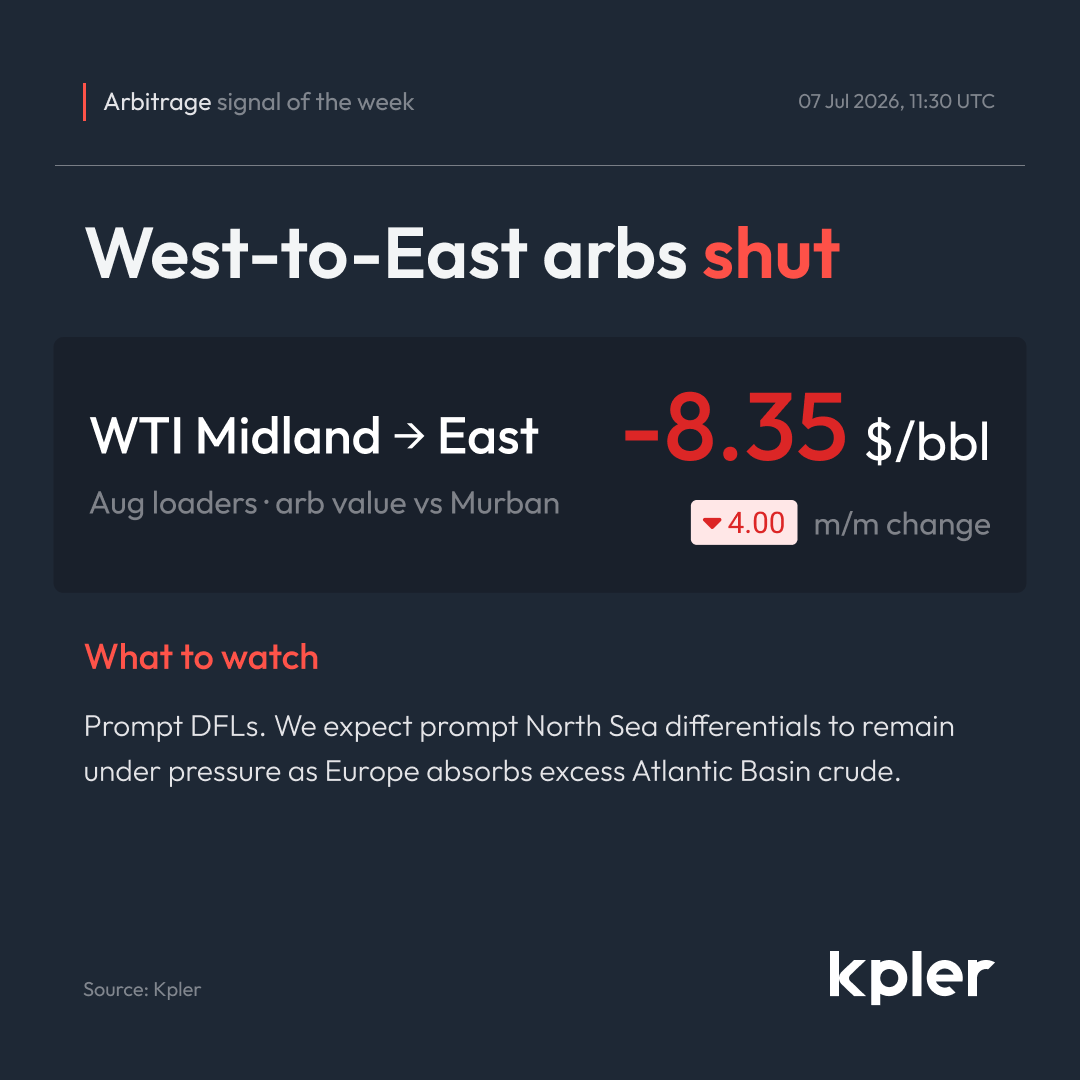
Weekly arbs update: Improving SoH flows and weak Chinese demand have left Asia well supplied, shutting west-to-east arbs. Europe is now carrying the burden of clearing surplus Atlantic Basin #crude. What to watch: Prompt DFLs. We expect prompt North Sea differentials to remain under pressure as Europe absorbs excess Atlantic Basin crude. Real-time tools to enable faster, better decisions: okt.to/iCFrhX
Kpler tweet media
English
2
3
18
5.1K
Kpler
Kpler@Kpler·
Hormuz weekend traffic shows resilience Between 3 and 5 July, the Strait of Hormuz traffic remained active, with total of 108 verified crossings recorded across a wide range of vessel and cargo types. Traffic was slightly weighted East to West and remained spread across predominantly Iranian and Omani routes, while some crossings continued among IMO and Dark/Unknown routes. This shows continued operations but fragmented routing patterns and cautious behavior. Sanctioned vessel activity was also present, with 14 crossings recorded. While the Strait remained open, a sizeable Dark/Unknown Route share and end-June IMO-confirmed attacks suggest that security, routing and insurance risks remain elevated. Stay ahead of the market with #Kpler Insight: okt.to/6TlrJU
English
10
77
215
56.5K
Kpler
Kpler@Kpler·
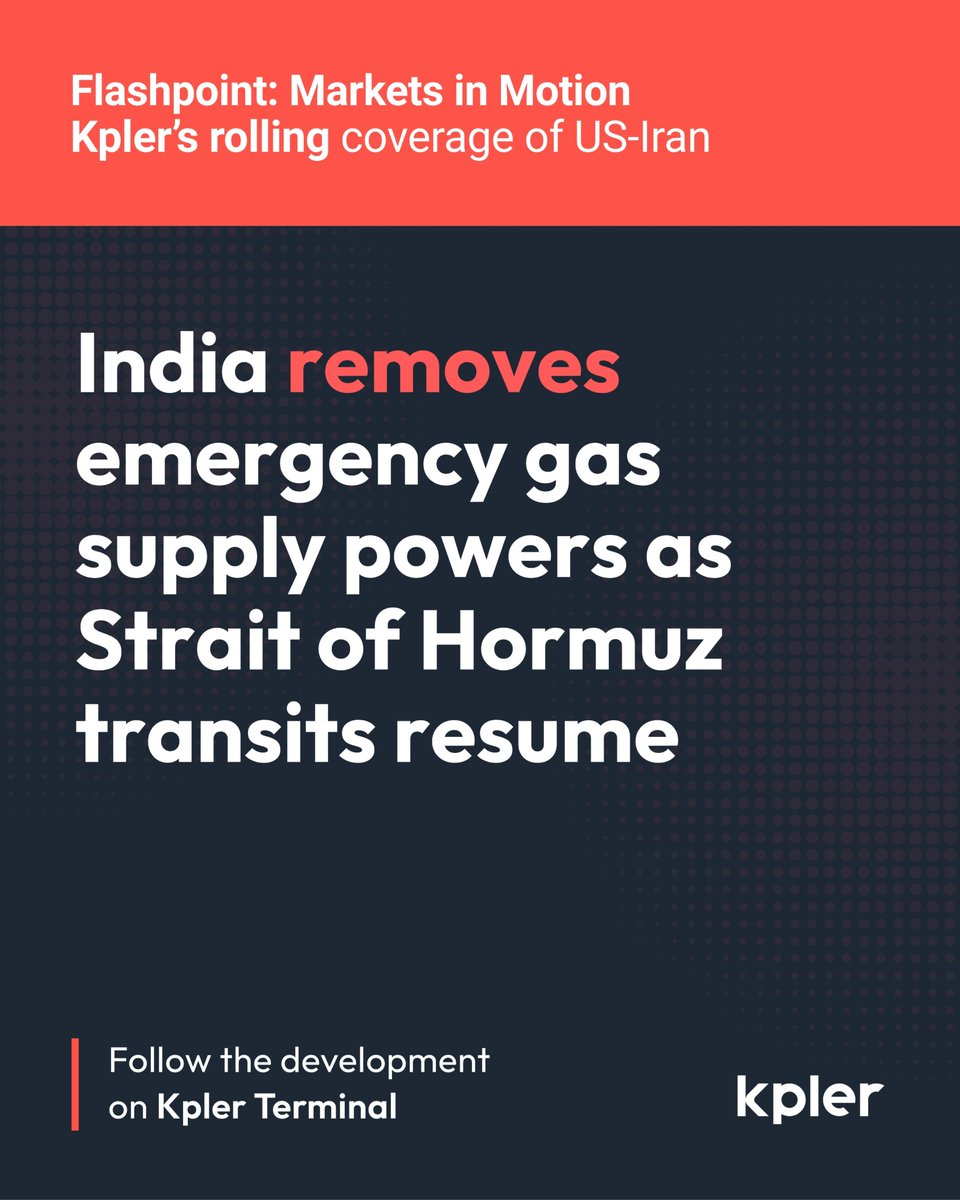
India ends emergency gas measures India has withdrawn emergency gas supply measures introduced after disruptions to #LNG shipping through the Strait of Hormuz threatened domestic gas supplies. The government cited a ceasefire, ongoing negotiations and the resumption of sea traffic through the waterway as the reasons for removing the emergency provisions. LNG tanker transits through the Strait rose to 36 transits in June from eight in May and five in April, after none in March, although the traffic remains well below pre-conflict levels, according to Kpler data. Some caution also remains after Iran's Islamic Revolutionary Guard Corps instructed vessels to use only Tehran-designated shipping lanes, even as LNG transits have continued. For India, which sourced about 46% of its 2025 LNG imports from Qatar, uninterrupted access through Hormuz remains central to its energy security. Stay ahead of the market with #Kpler Insight: okt.to/1nR5JW
Kpler tweet media
English
1
11
16
5.8K
Kpler
Kpler@Kpler·
Hormuz recovery remains fragile Traffic through the monitored Strait of #Hormuz zone showed further signs of stabilisation, with 38 confirmed crossings on 2 July, down 10% day on day but still within the emerging 30 to 60 crossings per day range. Commercial vessels continued to dominate, while Iranian flagged activity rose sharply and operators shifted towards Iranian and Dark or Unknown routes. The pattern suggests confidence remains incomplete, with passage increasingly shaped by political acceptance, compliance exposure and unresolved negotiations over fees and route governance. Stay ahead of the market with #Kpler Insight: okt.to/AKBnXj
English
9
78
210
192.3K
Kpler
Kpler@Kpler·
Hormuz LNG transit stabilises The Adnoc linked LNG carrier Mubaraz crossed the Strait of Hormuz via the Omani shipping lane with its AIS signal active, a notable shift after weeks of delayed crossings, course reversals and signal gaps. The vessel’s movement suggests conditions are gradually stabilising for #LNG traffic from Gulf exporters, including the UAE and Qatar. While regional tensions remain a material risk, recent transits indicate shipowners are becoming more comfortable using established corridors through the waterway. Stay ahead of the market with #Kpler Insight: okt.to/ncaRxS
Kpler tweet media
English
3
14
52
7.5K
Kpler
Kpler@Kpler·
Weekly arbs update: Europe remains long prompt, with North Sea barrels under pressure and Atlantic Basin flows seeing limited pull. That leaves DFLs carrying more of the adjustment. What to watch: SoH transits could further disruption slow westbound Gulf flows and put a floor under DFLs? Real-time tools to enable faster, better decisions: okt.to/KQfq5w
Kpler tweet media
English
0
4
23
5.4K
Kpler
Kpler@Kpler·
Hormuz traffic holds steady The Strait of Hormuz remained open and active on 30 June, with 34 verified crossings recorded and traffic evenly split by direction. The dataset showed a broad mix of commercial, energy-linked and support movements, while route visibility remained fragmented across Iranian, Omani, IMO and Dark or Unknown routes. That pattern points to continued operational continuity, but not a settled return to normal routing. With IMO’s incident tracker now listing 49 confirmed regional incidents, including a newly confirmed physical attack on BOCHEM MARENGO, maritime-security commitments linked to US-Iran discussions face a more demanding test. Stay ahead of the market with #Kpler Insight: okt.to/QJfFlu
English
9
100
242
78.6K
Kpler
Kpler@Kpler·
Ballasters reshape tanker rates Tanker markets are adjusting to the partial reopening of the Strait of Hormuz. MEG VLCC rates fell as inbound ballasters returned to the region, easing tightness after a period of disruption. In contrast, Atlantic VLCC and Suezmax routes gained temporary support as vessels repositioned towards the Middle East. Product tankers showed a more divided picture, with LR2 rates underpinned by limited clean tonnage availability, while Atlantic MR markets remained under pressure from structural oversupply. The near-term outlook now hinges on the pace of fleet redistribution and the recovery in Middle East crude flows. Stay ahead of the market with #Kpler Insight: okt.to/CV4c5f
Kpler tweet media
English
1
7
21
5.9K