Frank Wesseling@frank_wess6648
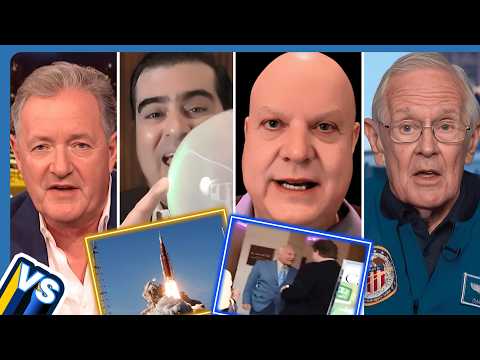
Here is a full list on your full of shit Piers. Also added in a image of a rocket with a rat on it.
The mission was too complex for the technology of the time.
Too many steps had to work perfectly in sequence with almost no margin for failure.
The onboard computers were too primitive for that level of navigation and control.
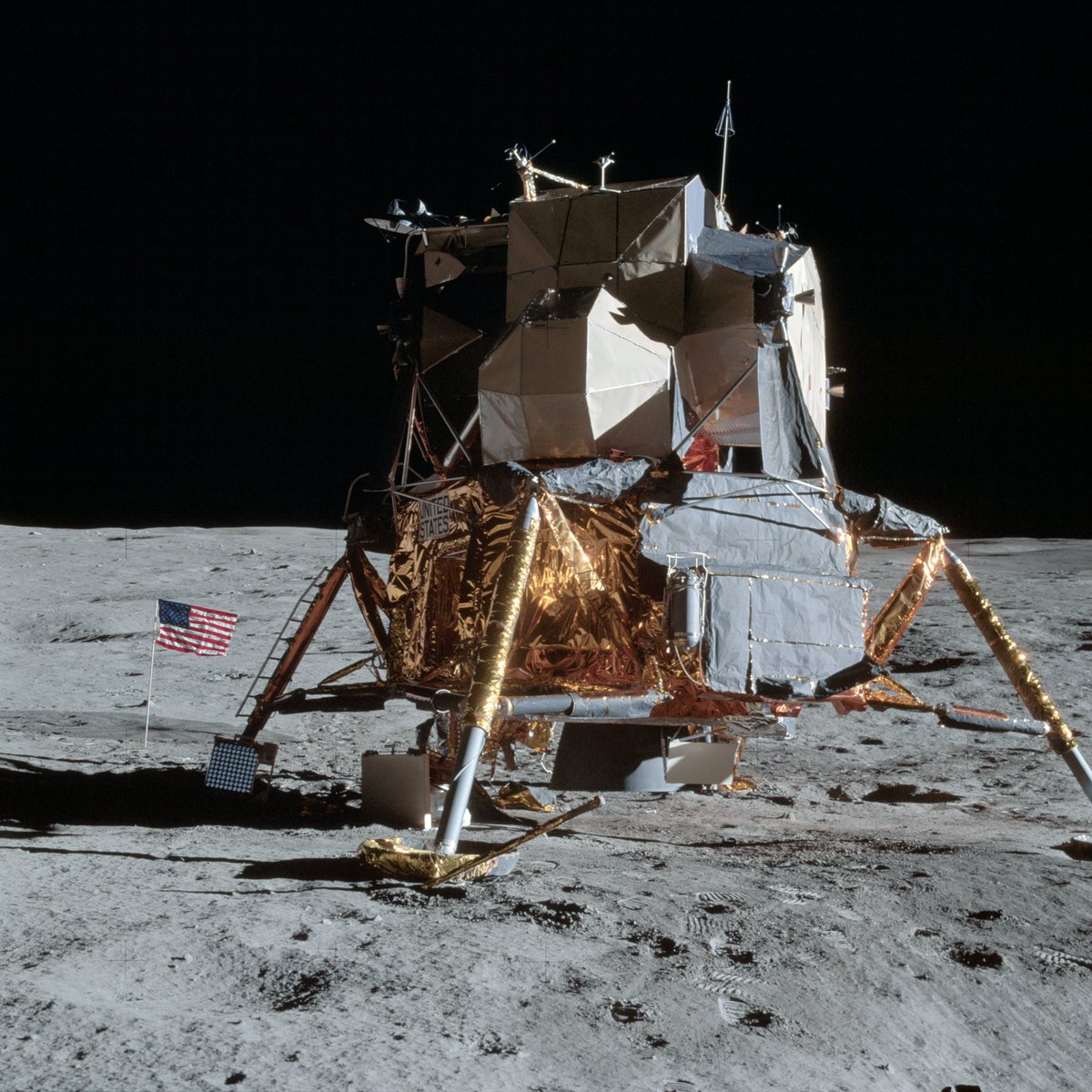
The lunar module looked too fragile for a real landing and ascent mission.
The lunar module had almost no redundancy in its most critical systems.
The ascent engine had no real second chance if ignition failed.
The docking maneuver after lunar ascent was too precise for the hardware available.
The landing required extremely fine thrust control in vacuum with no natural stabilization.
In vacuum, small errors do not self-correct the way people imagine.
Fuel margins during descent were too tight for comfort.
Radar, guidance, and engine behavior all had to stay stable at the same time.
One bad sensor reading could have ruined the landing.
One valve failure could have stranded the crew.
One engine instability could have ended the mission.
The mission depended on multiple single-point failure systems.
The public story makes those failure risks sound far smaller than they were.
The Van Allen radiation belts are treated like a minor detail when skeptics say they were not.
Radiation exposure risk to the crew is seen as underplayed.
Radiation exposure risk to electronics is seen as underplayed.
Shielding enough against radiation would add weight the system could barely afford.
Thermal control in space is not simple, and skeptics say the public story makes it sound easy.
One side of the spacecraft can be heated intensely while another side cools sharply.
Heat dissipation in vacuum is harder because there is no air to carry heat away.
Spacesuits would need tighter thermal stability than skeptics think possible.
Lunar dust should have created more operational problems than shown.
Dust should affect seals, joints, visibility, and equipment reliability.
Dust and engine plume behavior are seen as too clean in the footage.
The lander’s feet and landing behavior are seen as too neat for the surface conditions.
The footage looks too smooth for the environment being claimed.
The photographs look too clean and composed for a high-risk mission under stress.
The visual record looks curated rather than chaotic.
The public saw only what it was meant to see through limited broadcast quality.
Poor video quality makes it easier to hide staging details.
Audio and signal relay systems are a black box to the public.
Most people cannot independently verify whether a signal came from deep space.
Mission telemetry is trusted because institutions said it was real.
The public depends entirely on state-backed experts to interpret the data.
The launch being real does not prove the landing was real.
A real rocket launch can still be used as cover for a staged lunar surface sequence.
Earth orbit operations can be real while the lunar surface segment is false.
Recovery of astronauts does not prove they walked on the Moon.
The Soviets not exposing it is explained by skeptics as either mutual silence or lack of hard proof.
The Cold War created a motive for spectacle as much as for science.
The U.S. had an enormous political need for a decisive symbolic victory.
A staged success would be more useful politically than a public failure.
The mission served propaganda needs as much as scientific ones.
Europe was already tied to American security and finance, so a giant technical triumph reinforced dependence.
The Moon story helped present U.S. leadership as unquestionable.
The mission created psychological authority, not just scientific prestige.
Once accepted, the story made later questioning look fringe.
National pride gave institutions a motive to defend the story permanently.
Too many careers and reputations would depend on maintaining the official version.
Media incentives favored celebration, not hostile scrutiny.
Public awe reduced critical thinking.
The success came at exactly the moment America needed to restore prestige.
The official narrative is seen as too neat for something so dangerous.
The mission asks people to believe a chain of extreme events all worked cleanly on early attempts.
Skeptics say hard engineering was turned into a heroic public relations story.
The story relies on trust in invisible systems ordinary people cannot inspect.
The gap between what the public can verify and what it is told is where skepticism begins.
Most of the science is fake just like Nuclear Weapons