Kurtis Lockhart

7.2K posts

Kurtis Lockhart banner
Kurtis Lockhart

Kurtis Lockhart

@kurtislockhart

Founder & Director @AfricaUrbanLab at @ASE_Zanzibar 🌆🌆

Vancouver | DC | Zanzibar Katılım Şubat 2011
4.1K Takip Edilen2.4K Takipçiler
Sabitlenmiş Tweet
Kurtis Lockhart
Kurtis Lockhart@kurtislockhart·
Excited to launch the @AfricaUrbanLab podcast! 🌆🌆 In the first episode, I speak with Joe Studwell about his new book How Africa Works. Enjoy.
Africa Urban Lab@AfricaUrbanLab

🎙️ The first episode of The Africa Urban Lab podcast is live! Our first guest is @JoeStudwell — development scholar and author of the landmark How Asia Works and long-awaited follow-up, How Africa Works. In this episode, we dig into the book's central arguments: why dense cities are essential to building functional markets, how urbanization can actually boost agricultural productivity, and why population density is the key to affordable infrastructure at scale. It's a conversation that challenges some persistent assumptions about African development. 🎧 Listen Now! Spotify: open.spotify.com/episode/0VK2mw… Apple Podcasts: podcasts.apple.com/us/podcast/the… YouTube: youtu.be/wP0RIBRp6Ss

English
2
13
30
7.7K
Kurtis Lockhart retweetledi
In Development
In Development@indevmag·
This week in @indevmag: in 2014, Jakarta was crowned the world's most congested city. In the last decade, it has also added *ten million* new residents - a perfect recipe for yet more gridlock. And yet the traffic has improved. Nithin Coca explains how: indevelopmentmag.com/jakarta-transi…
English
1
4
12
1.2K
Kurtis Lockhart retweetledi
Lauren Gilbert
Lauren Gilbert@notanastronomer·
In 2014, Jakarta was crowned the most congested city in the world. Ten years later, it was only the 24th most congested - despite *adding* ten million new residents. How? Transit, of course.
English
15
291
1.4K
228.9K
Kurtis Lockhart retweetledi
Africa Urban Lab
Africa Urban Lab@AfricaUrbanLab·
Interested in joining our third cohort starting in November 2026? Applications are now open. Apply here: aul.city/admissions 🎓 Scholarships are available.
English
0
2
4
88
Kurtis Lockhart retweetledi
Africa Urban Lab
Africa Urban Lab@AfricaUrbanLab·
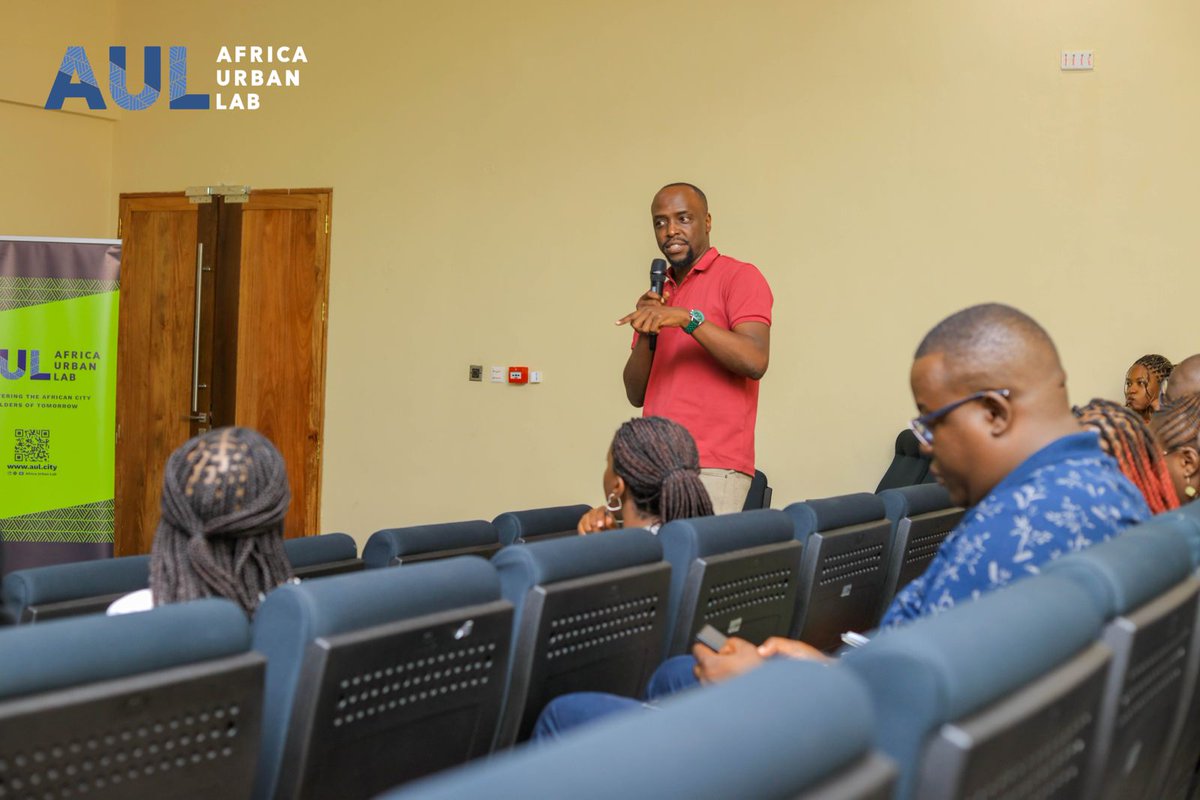
The AUL students are back in Zanzibar for two intensive weeks of Urban Finance and Governance. 🏙️ 🎓 Led by Dr. Jeremy Gorelick, Week One is designed to help African city builders move from ideas to investable urban projects. Through applied lectures, Excel-based modelling, sector case studies, and group presentations, AUL students are learning how cities can raise, manage, and structure finance for real infrastructure challenges.
Africa Urban Lab tweet mediaAfrica Urban Lab tweet mediaAfrica Urban Lab tweet media
English
1
1
5
132
Kurtis Lockhart retweetledi
Africa Urban Lab
Africa Urban Lab@AfricaUrbanLab·
If you’re working on cities in Africa and looking to deepen your expertise while engaging with a network of practitioners and policymakers from across the continent, this program is designed for you. Applications for the third cohort (starting November 2026) are now open. Scholarships are available. Apply here: lnkd.in/e4CyPUXC
English
0
1
3
148
Kurtis Lockhart retweetledi
Simon Kuestenmacher
Simon Kuestenmacher@simongerman600·
Let's turn this map showing the 50 largest cities in Africa into a geography game. Try to name the ten largest cities on the continent. Did you get the top 3 in the right order? Maybe even the top 5? Source: visualcapitalist.com/mapped-the-50-…
Simon Kuestenmacher tweet media
English
9
16
112
24.8K
Kurtis Lockhart
Kurtis Lockhart@kurtislockhart·
Start here ⬇️
Kurtis Lockhart tweet media
Jesús Fernández-Villaverde@JesusFerna7026

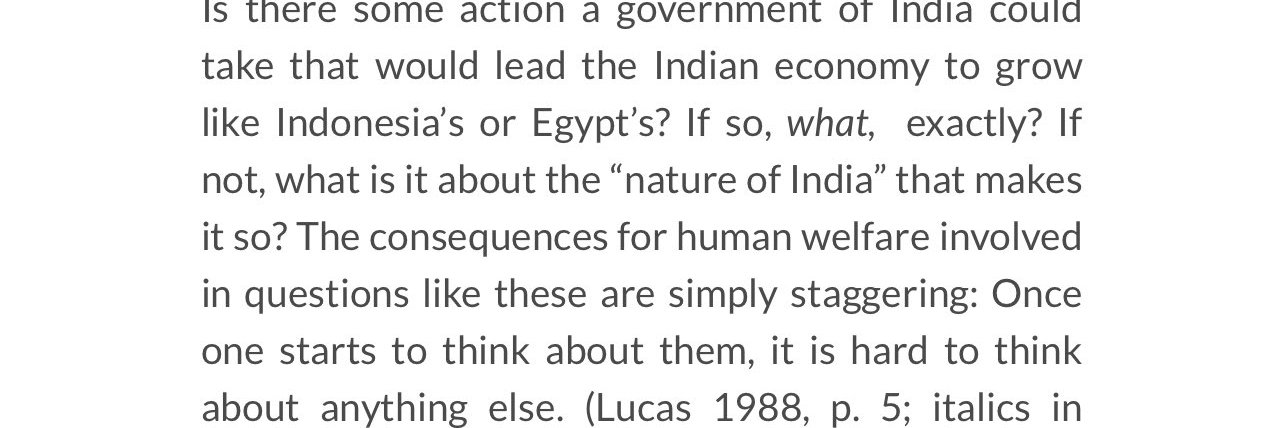
As reflected in many of my posts over the past few months, I have been reading (and re-reading) a lot of social theory. What strikes me is that most critics of “capitalism” (whatever “capitalism” might mean, and regardless of the value of those critiques) are really critics of modernity, understood as the organization of society around technology, formal institutions, and rational criteria. I teach the economic history of the Soviet Union and socialist China, and all the pathologies (pollution, reliance on fossil fuels, inequality, depersonalization, consumerism, alienation, you name it) that you can find in a poor neighborhood of 2026 Philadelphia appeared in the same way, or even more, in a factory in Leningrad in 1970 or on a collective farm in Jiangsu in 1978. Critics seem to lack a vocabulary (or, if you prefer, a cognitive framework) for distinguishing “capitalism” from modernity. For example, people everywhere tend to link personal relationships to displays of consumption. There are likely deep evolutionary reasons for this. De Beers did not invent spending a lot of money on a useless engagement ring: it rode a pre-existing disposition into a particular form of consumption. Couples in Leipzig in 1982 were as interested in conspicuous consumption as those in Chicago in 2026. Talking about “Love and the Cultural Contradictions of Capitalism” misses the point completely. Of course, you can try, as some of the more perceptive Trotskyists did, to argue that the Soviet Union or China were not truly socialist countries, but this is just a lazy application of the “no true Scotsman” fallacy, and, consequently, their complaints failed to gain much traction outside some departments of cultural studies. But this is not just a matter of poor analytic skills, as bad as those are. More importantly, it means that 99% of the policy proposals activists put on the table to correct the problems of “capitalism” are doomed to fail because they do not understand where the root cause of the phenomena they complain about lies. I see this at the university. Do you think the corporation you deal with is self-serving and incompetent? Wait until you need to deal with the Graduate School at a private Ivy League university. The incentive problems (asymmetric information, career concerns, lack of timely feedback, pressure toward conformity) that cause dysfunction in the former are even more pronounced in the latter because of the absence of a profit motive, the sharpest disciplinary mechanism. At a very fundamental level, Marx got modernity wrong; Weber got it right. Time to spend much less time with Marx and much, much more time with Weber.

English
1
0
5
478
Kurtis Lockhart retweetledi
David Ndii
David Ndii@DavidNdii·
Why Tanga? Uganda crude export pipeline terminates there. Uganda has 6.5b barrels of proven reserves, 2m recoverable, Kenya ~500m recoverable. Tanga is 200k from Mombasa. Turkana crude can be shipped cheaply. Tanga-Mombasa crude and product pipelines are under consideration.
David Ndii tweet media
David Ndii@DavidNdii

1. Dangote is in this as an industrialist, not a philanthropist 2. The East Africa refinery project is our initiative (Economic Advisors). We proposed it to President Ruto, President Museveni and. AFC. We invited Dangote to become anchor investor to derisk the project.

English
62
93
269
45.4K
Kurtis Lockhart retweetledi
World Bank Data
World Bank Data@worldbankdata·
Sub-Saharan Africa needs 15 million new #jobs every year to absorb its growing workforce. But new Enterprise Surveys data reveal a major challenge: firms are not scaling. After 30 years, an average firm employs only 2x as many workers as when it started. wrld.bg/SBnf50YP5QL
English
0
14
22
2.6K
Kurtis Lockhart retweetledi
Jeremy Horpedahl 🥚📉
There's a great article on Japan's railways in this month's @WorksInProgMag. It's worth considering a print subscription too, because the design is so beautiful and makes this article even more of a joy to read: worksinprogress.co/issue/why-japa…
Jeremy Horpedahl 🥚📉 tweet media
Handre@Handre

The Japanese railway privatization of 1987 stands as one of the most devastating defeats ever dealt to statist transportation mythology. The government split the bloated Japan National Railways into seven regional companies, sold them off, and watched private ownership transform a bankruptcy-bound disaster into the world's most efficient rail system. JNR hemorrhaged money for decades before privatization. By 1987, the state railway carried debt equivalent to $200 billion in today's money while delivering mediocre service plagued by strikes and inefficiency. Politicians treated it as a jobs program rather than a transportation service. The predictable result: chronic losses, deteriorating infrastructure, and customer service that reflected government monopoly arrogance. Private ownership changed everything overnight. The new JR companies slashed operating costs by 40% within five years while dramatically improving service quality. JR East alone now generates annual profits exceeding $3 billion. These companies invest billions in cutting-edge technology, maintain punctuality rates above 99%, and operate the world's most advanced high-speed rail networks. They achieved this without a single yen of operational subsidies. The transformation reveals a core dynamic of transportation infrastructure: private companies must satisfy customers to survive, while government monopolies need only satisfy politicians. JR companies diversified into real estate, retail, and hospitality around their stations, creating integrated profit centers that cross-subsidize rail operations. Government railways never innovate this way because bureaucrats face no market pressure to generate returns. Meanwhile, Amtrak burns through $2 billion in annual subsidies while delivering third-world service across most routes, and European state railways require massive taxpayer bailouts every few years to stay solvent.

English
7
75
556
65.7K