Kyle Fraser

5.2K posts

Kyle Fraser banner
Kyle Fraser

Kyle Fraser

@Kyle_Fraser

I write about creative innovation and people-first tech. Breakthrough ideas get you better results. @PlusNarrative

South Africa Katılım Temmuz 2008
1.4K Takip Edilen3.6K Takipçiler
Kyle Fraser
Kyle Fraser@Kyle_Fraser·
You’ve probably had one of those days where the work never really starts, no matter how hard you try. A few calls in the morning. Slack pops off constantly. A deck lies, waiting, in one tab with Gmail in another and Canva in the third. You’ve been pulled away for a few “quick check-ins” several times, and you have a meeting in 15, so you can’t really dig into a big task. By the end of the day, you’ve been busy the whole time, but the deep work you really need to do still feels untouched. This kind of interrupted thinking is called “fragmentation”, and there’s plenty of research on it. The most salient point is that fragmentation carries a high cognitive cost. The American Psychological Association notes that even brief mental blocks caused by switching between tasks can consume as much as 40% of one’s productivity. One study, conducted by the University of California, showed that people completed interrupted work faster, but only by compensating with more stress, more frustration, more time pressure, and more effort. You’d think if it were such a widely documented phenomenon that we’d do more to avoid it, but that’s not the case. The workplace is only becoming more fragmented. Microsoft’s 2025 Work Trend Index found that employees are interrupted every two minutes during the workday by meetings, emails, or pings, with 60% of meetings classed as ad hoc. That’s a real problem, no matter your field. Productivity and the flow state many of us strive to achieve requires some element of uninterrupted time to achieve. If your day is constantly being broken into smaller and smaller pieces, you lose the conditions you need to work meaningfully. It comes back to a point we’ve covered recently about your environment: If the work feels flat, don’t just ask whether the team has enough talent or whether the brief is strong enough. Instead, ask what kind of environment the thinking is happening in. If your team is struggling with interruptions, it’s usually an easy place to start overhauling. For more on how to achieve the flow state, check out the Never Think Alone substack.
Kyle Fraser tweet media
English
0
0
0
26
Kyle Fraser retweetledi
Andy Galpin, PhD
Andy Galpin, PhD@DrAndyGalpin·
Most people treat self-talk like a pep talk — you tell yourself you've got this, you stay positive, you push through. That advice isn't wrong. It's just incomplete in a way that matters more than most people realize. The research on positive self-talk is real. Encouraging internal dialogue does improve performance. But the field has largely moved away from framing this as "positive vs. negative" because that's not actually the right question. The right question is whether what you're saying to yourself is *effective*. And negative self-talk can be effective. Positive self-talk can be useless. The valence isn't the variable. What actually drives effectiveness is something most self-talk advice never mentions: psychological distance. Here's the thing: you're probably already an expert at this, just not for yourself. Think about a scenario you find stressful — an exam, a tough conversation, a high-pressure week. Now picture a friend in that same situation texting you about it. You know exactly what to say back. You're not scrambling. You're not spiraling. Because you're not inside the emotion of it. That clarity you have for them? That's the same clarity psychological distance gives you for yourself. Your inner voice isn't your best coach. It's your most reactive one.
Andy Galpin, PhD@DrAndyGalpin

New Perform with Dr. Andy Galpin episode: How to Build Mental Toughness & Perform Under Pressure My guest is Dr. Lenny Wiersma, a 20+ year professor turned Senior Mental Performance Consultant at Cal Athletics who's worked with UFC fighters, big wave surfers, CrossFit Games champions, and Olympic athletes. We discuss what's really happening psychologically at the edge of human performance, why the fearlessness narrative is wrong, the difference between confidence and belief, and what visualization actually requires to work under pressure. This episode is for athletes, coaches, and anyone navigating high-pressure moments in daily life. 0:00 Introduction 0:48 Alex Honnold Mindset 2:18 Risk And Confidence 6:45 Extreme Athletes Trainability 11:12 Wipeout Planning 13:54 Visualization Basics 15:53 Phelps Coping Visualization 19:46 Visualization Best Practices 24:09 Visualization Beyond Sport 26:35 Sleep Stories Unhooking 32:47 Balancing Failure Imagery 37:33 Self Talk Framework 40:37 Coach Yourself With You 41:04 Borrow a Trusted Voice 42:46 Nicknames and Second Person 45:34 Research and Best Timing 48:41 Rethinking Discomfort 53:19 Confidence Versus Belief 57:14 Build Robust Confidence 1:01:14 Tools to Grow Belief 1:08:34 Overconfidence and Honesty 1:10:52 Resilience Mental Toughness 1:13:47 Emotional Regulation Skills 1:16:11 Label Emotions and Purpose 1:17:12 Labeling Emotions Fast 1:18:06 Next Play Mindset 1:18:28 Co Regulation Explained 1:20:03 Reading the Locker Room 1:21:12 Flag Disaster Scenario 1:25:23 Downregulate and Refocus 1:26:34 Reset Anchors and Cues 1:31:58 Corner Coaching in UFC 1:36:21 Simple Phrases That Land 1:39:29 Coaches Need Coaching Too 1:45:00 Earning Trust With Staff 1:47:09 Mental Performance vs Therapy 1:48:44 Embedded Team Support 1:50:23 Biofeedback Meets Performance 1:51:14 HRV Breathing Demo 1:55:57 Coherence Breathing Protocol 1:58:13 Color Screen Training 2:01:24 At Home Biofeedback Options 2:02:39 NeuroTracker Focus Training 2:07:51 Mental Fatigue Insights 2:10:49 Restore Attention Fast 2:12:06 Better Film Sessions 2:14:08 Careers And Credentials 2:17:17 Closing Thoughts Includes paid partnerships.
English
6
43
439
70.1K
Kyle Fraser
Kyle Fraser@Kyle_Fraser·
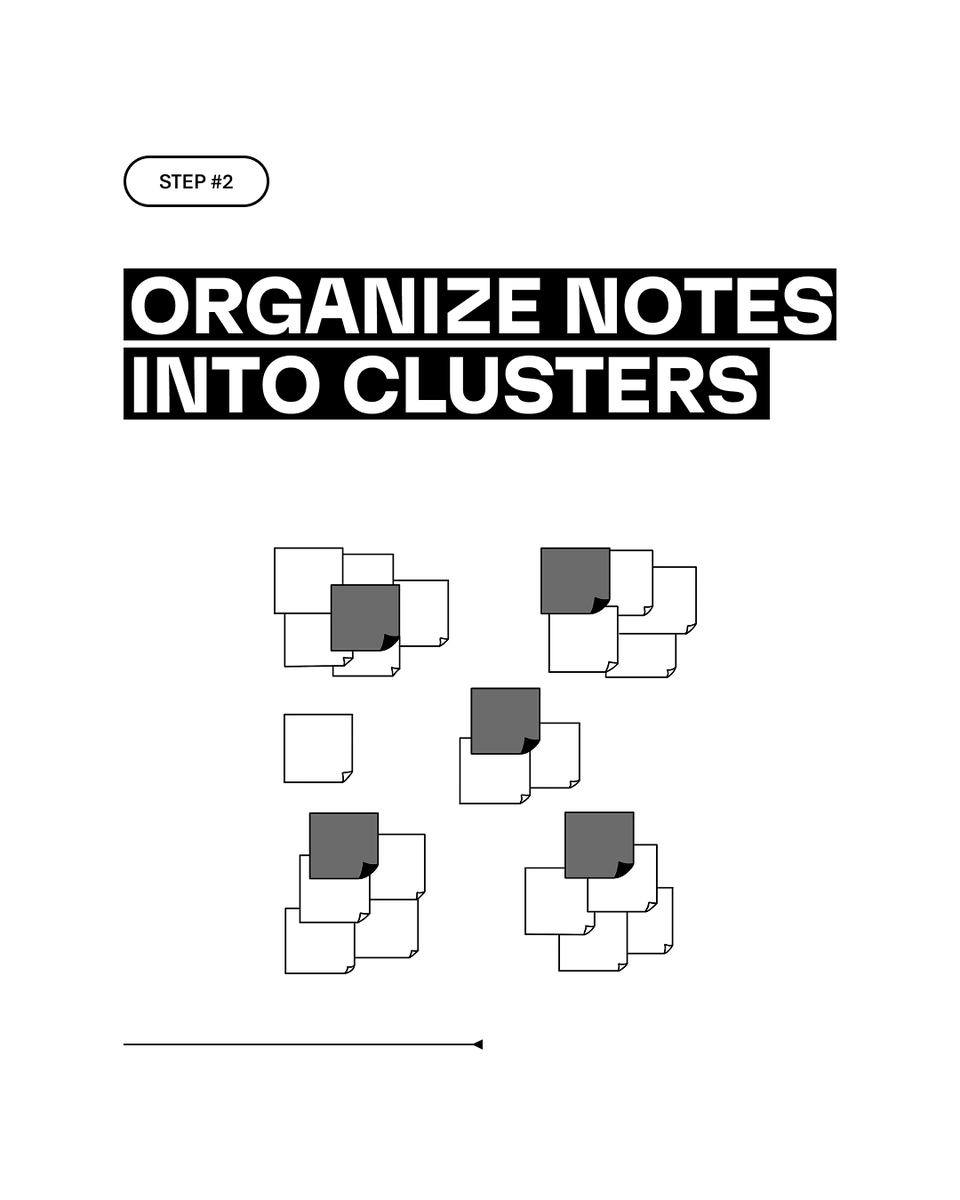
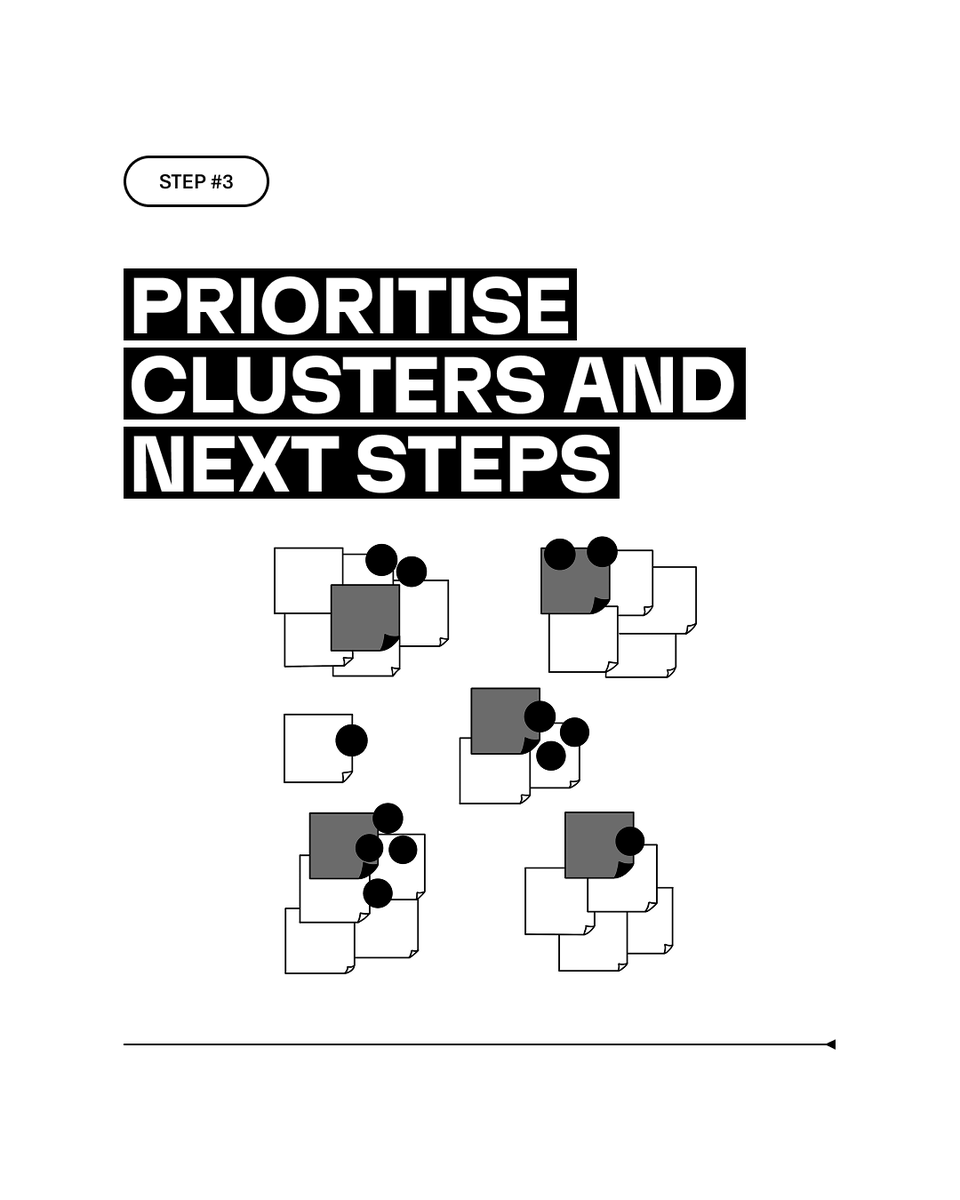
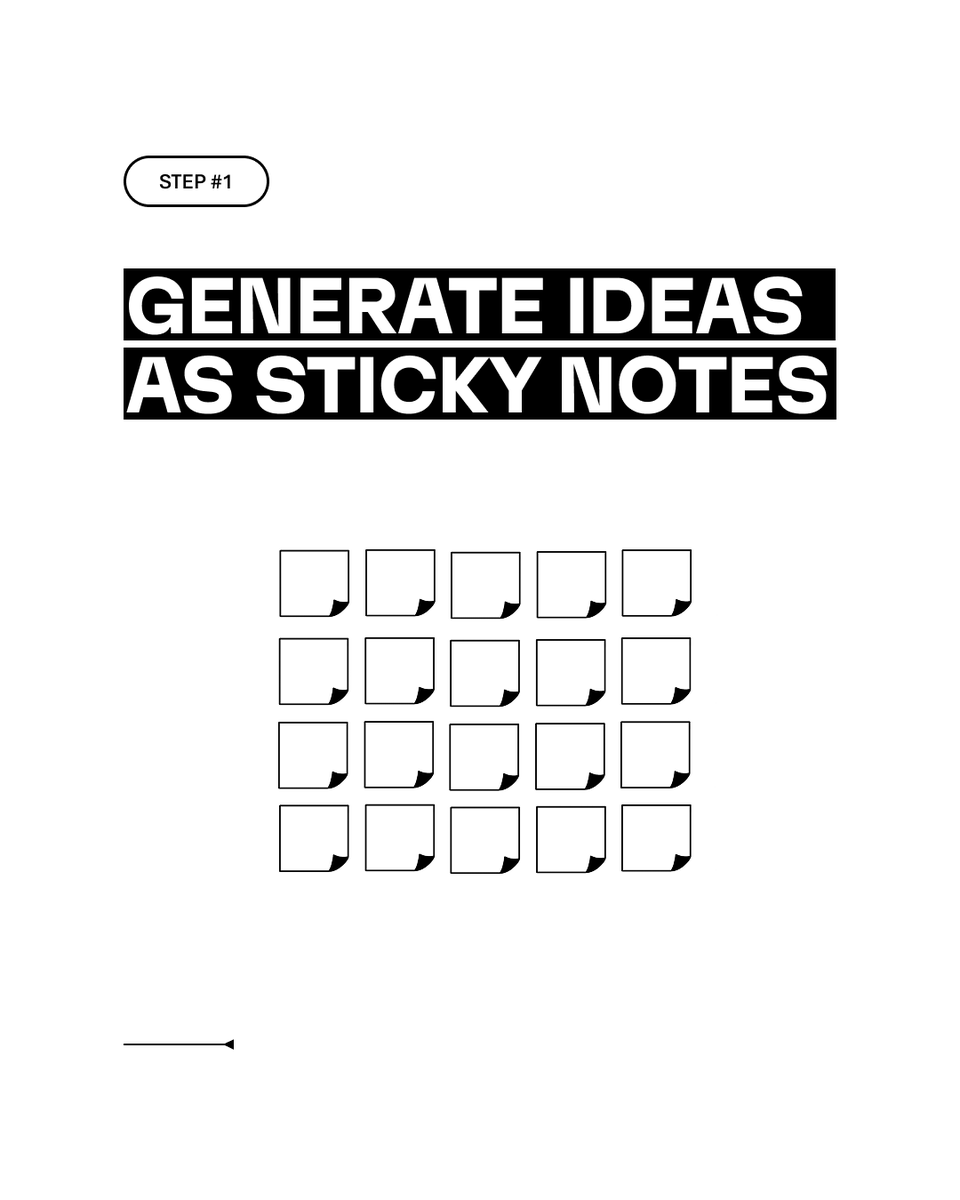
Most teams don’t struggle coming up with ideas. They struggle to come up with great ideas. You’ve probably experienced it during a workshop or a brainstorming session. Everyone has big ideas and opinions they’re desperate to share, which is great! That’s what you want. But after the productive chaos, you’re left with a notebook of half-formed thoughts and concepts that aren’t really connected in any meaningful way. So how do you fix it? That’s where an Affinity Diagram can be very useful. The premise is very straightforward: You take a large volume of information and start grouping it based on natural relationships. Patterns begin to emerge and what once felt overwhelming starts to make sense. Affinity Diagrams are extremely good at making sense of your team's ideas. When everything is still messy and unresolved, the temptation is to jump straight into solutions. But the result is usually underbaked at best and, at worst, completely misses the point. An Affinity Diagram forces you to slow down and really consider things. The exercise is specifically designed to help teams identify themes and insights from unstructured data, particularly in research and ideation contexts. Those patterns often spark better ideas. The added benefit is that having everything mapped out makes prioritisation even easier. Creative work doesn’t fail because of a lack of organisation. The real culprit is often a lack of support and organisation in uplifting your ideas. Fix that, and you’ll be amazed at how much more value you can get out of a brainstorming session.
Kyle Fraser tweet mediaKyle Fraser tweet mediaKyle Fraser tweet mediaKyle Fraser tweet media
English
0
0
0
22
Kyle Fraser
Kyle Fraser@Kyle_Fraser·
Most teams don’t struggle coming up with ideas. They struggle to come up with great ideas. You’ve probably experienced it during a workshop or a brainstorming session. Everyone has big ideas and opinions they’re desperate to share, which is great! That’s what you want. But after the productive chaos, you’re left with a notebook of half-formed thoughts and concepts that aren’t really connected in any meaningful way. So how do you fix it? That’s where an Affinity Diagram can be very useful. The premise is very straightforward: You take a large volume of information and start grouping it based on natural relationships. Patterns begin to emerge and what once felt overwhelming starts to make sense. Affinity Diagrams are extremely good at making sense of your team's ideas. When everything is still messy and unresolved, the temptation is to jump straight into solutions. But the result is usually underbaked at best and, at worst, completely misses the point. An Affinity Diagram forces you to slow down and really consider things. The exercise is specifically designed to help teams identify themes and insights from unstructured data, particularly in research and ideation contexts. Those patterns often spark better ideas. The added benefit is that having everything mapped out makes prioritisation even easier. Creative work doesn’t fail because of a lack of organisation. The real culprit is often a lack of support and organisation in uplifting your ideas. Fix that, and you’ll be amazed at how much more value you can get out of a brainstorming session.
English
0
0
0
20
Kyle Fraser retweetledi
Vala Afshar
Vala Afshar@ValaAfshar·
The problem is not people being uneducated. The problem is that people are educated just enough to believe what they have been taught, and not educated enough to question anything from what they have been taught. —Professor Richard Feynman
Vala Afshar tweet media
English
10
81
221
11.1K
Kyle Fraser
Kyle Fraser@Kyle_Fraser·
Sometimes, friction creates value. We’ve been told repeatedly that friction should be avoided when designing anything. But that kind of absolutist thinking undermines a great deal of nuance when it comes to what friction actually means. PlusNarrative’s Connor Weber has been writing a series of articles on this, and in his latest post, he makes an excellent point about IKEA intentionally using friction to add value to its business model. Even if you’ve never bought anything from IKEA, you likely know the company is known for selling flat-pack furniture. It’s famous (or rather infamous) for starting many arguments between couples. Having said that, once the furniture’s assembled, it feels so much more impactful for the consumer. Yes, the flat-pack model reduces costs and improves logistics, but it also taps into a deeper part of customers’ brains. It’s literally been coined the IKEA Effect: The idea that we place more value on things we’ve put effort into. Research has shown people are even willing to pay more for items they assemble themselves. That small investment of time and effort from you increases your levels of appreciation for the product even more. That angle reframes friction into something useful. The right amount of friction acts as ‘fuel’, not just a frustration or a waste of time as we’ve been led to believe from the array of frictionless apps at our disposal. The friction is actually about involvement and ownership. The process is part of what you pay for. It’s a great reminder that removing friction entirely sometimes isn’t the answer. What we should be doing is designing it and placing it in the right places to ensure that it works for us, not against us.
Kyle Fraser tweet media
English
0
0
0
18
Kyle Fraser
Kyle Fraser@Kyle_Fraser·
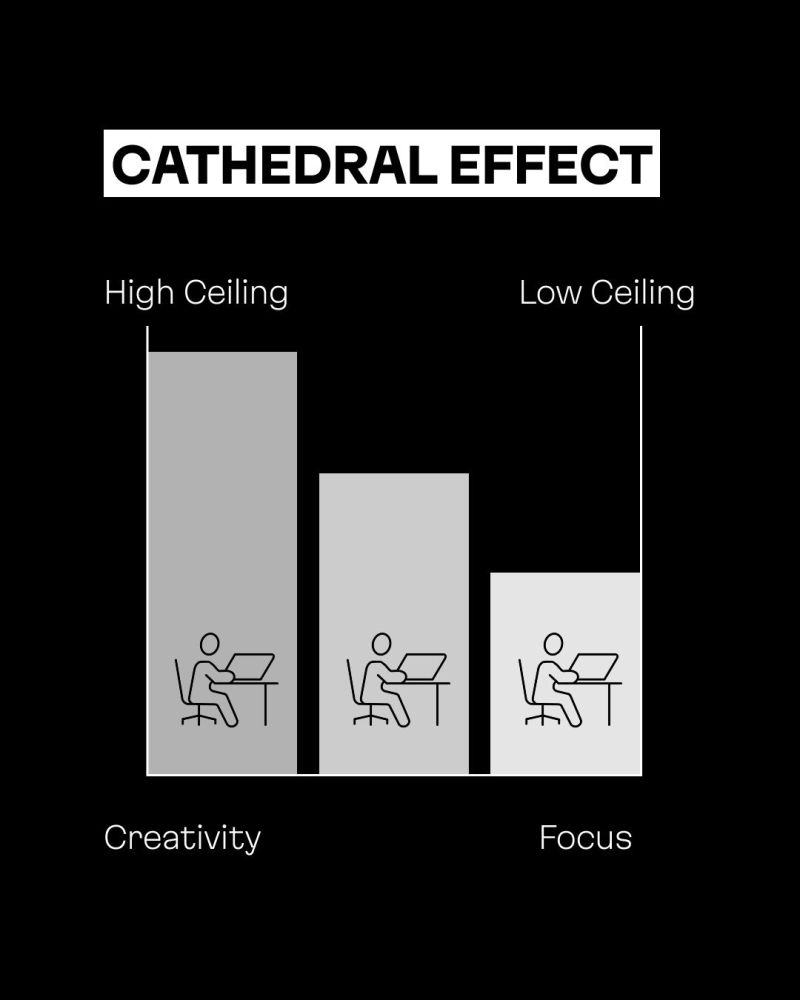
We often treat our workspace as a background. Nothing more than a room where work is done. But when you dig into it further, you come to understand that the environment impacts your mindset. It turns out that your workspace, beyond the desk in front of you, plays a major role in how you think. You’ve probably experienced this unconsciously: It’s called The Cathedral Effect. A well-known study found that higher ceilings tend to encourage a sense of freedom in people, while lower ceilings give us a sense of confinement. Building on that, the height of your ceiling also affects how you process information. Higher ceilings are associated with more relational, abstract thinking, while lower ceilings push people toward more item-specific, detail-oriented thinking. You can essentially use your ceiling height to set the aperture of your level of thought. If you’re trying to generate new ideas, challenge assumptions, or connect dots, your environment should help you do that. If you’re refining, checking, and narrowing, a different kind of space may serve you better. If you want to increase your level of focus for deep work, try wearing a peak cap while you’re in that mode. It’s a simple and cheap way to centre your attention. Changing your space to match your mode of work can prove very beneficial. There’s a reason art galleries always have very high ceilings, often with plenty of skylights. If you’re in a rut, change your environment before you change the process and see how things improve.
Kyle Fraser tweet media
English
0
0
0
31
Kyle Fraser retweetledi
Mateus — eu/acc 🇪🇺
Mateus — eu/acc 🇪🇺@im_Mateus_·
Don't aim to be the best. Aim to be the only. Kevin Kelly says most people are aiming at the wrong target. It sounds simple. But Kelly is quick to admit just how hard it actually is to get there. "It requires a tremendous amount of self-knowledge and awareness to really understand what it is that you do better than anybody else in the world." For most of us, that's a lifetime of work. "For most of us it takes our lives to figure that out." And here's what makes it even harder: you can't get there alone. Kelly argues that family, friends, colleagues, customers, and clients all play a role in helping you see what you truly do better than anyone else. The people around you often spot it before you do. You also can't think your way there. "You can't do thinkism," he says. "You have to try and live it out." That's why most remarkable lives are full of detours and dead ends. The wrong turns aren't failures. They're part of the process of elimination, the only way to arrive at what's uniquely yours. But if you do find it? Everything changes. "You don't need a resume. There's no competition. And it's easy for you because you're doing it. You're not looking over your shoulder." When you're the only one, the race disappears entirely.
English
10
93
421
28.8K
Kyle Fraser
Kyle Fraser@Kyle_Fraser·
You can use AI without making your brand feel disposable. That feels important to say, especially given the vitriol towards “AI slop.” A recent report from Vogue points out that the backlash to companies using AI to generate campaigns is growing. The most common complaints are that they lack creativity and feel generic, cheap, and forgettable. In response, more brands are leaning on visible craft and imperfections as the cornerstones of their creative projects. Vogue also notes a broader push toward real-world, immersive experiences as digital outputs become easier to mass-produce. Which, of course, makes sense. Once synthetic sameness becomes cheap, the value moves somewhere else. Louder branding and more content don’t hold as much weight against a project that’s been made with consideration. You might have noticed that many brands are now doing their best to emulate human touch in their campaigns. There’s a greater push for slightly messy visuals accentuated by scribbles, awkward angles, and odd compositions. It’s all intentional because it shows that a human was there. AI is clearly a powerful tool, I’ve said it many times before. But what it can't do is make you or your brand distinct in a world where everyone is using it. AI can’t come up with original ideas; it just repeats what’s worked in the past. Your work still needs to give people a reason to care about it. When your campaign becomes interchangeable with everyone else’s, is the efficiency with which it was made something to be proud of? Probably not.
Kyle Fraser tweet media
English
0
0
0
18
Kyle Fraser retweetledi
Reads with Ravi
Reads with Ravi@readswithravi·
“The best people in your life are the ones who see potential in you that you didn't see in yourself.” — Brian Chesky, Airbnb CEO
English
26
184
1.9K
73.4K
Kyle Fraser
Kyle Fraser@Kyle_Fraser·
How do we measure marketing performance? Clicks and conversions are probably the most obvious answer, and while those metrics are useful and necessary in their own ways, there’s a limit to how much they can tell you. If you want to truly understand your audience, you need to start measuring meaning. When there’s an almost never-ending amount of content flooding our feeds, much of it optimised and increasingly indistinguishable, performance data only gives you half of what you need. It’s easy to determine whether something was seen, but knowing whether or not it resonated? That’s a different story. Research into authenticity (yes, it’s become a cliche before it can be truly effective) shows that its value goes beyond function. It builds trust, which drives long-term brand value. How authenticity is understood has changed. In fact, it’s changing every day. It’s a difficult concept to fully understand. What you will find is that it’s no longer about who made something but whether it means something to the person experiencing it. If you want to truly gauge the impact of your campaign, the standard metrics still apply. They’re not going anywhere. But you also need to subsidise that with contextual information. You need to look more closely at what people spend time with, what they keep coming back to, and what’s creating an emotional reaction. Those are the types of signals that are harder to fake, but conversely, they’re harder to create. It all comes back to empathy. Learning to understand the emotions of both yourself and your audience. I expand on this topic in an essay for Never Think Alone. If you want to dive into “The Authenticity Premium,” give it a read. Link is in the comments.
Kyle Fraser tweet media
English
0
0
0
23
Kyle Fraser
Kyle Fraser@Kyle_Fraser·
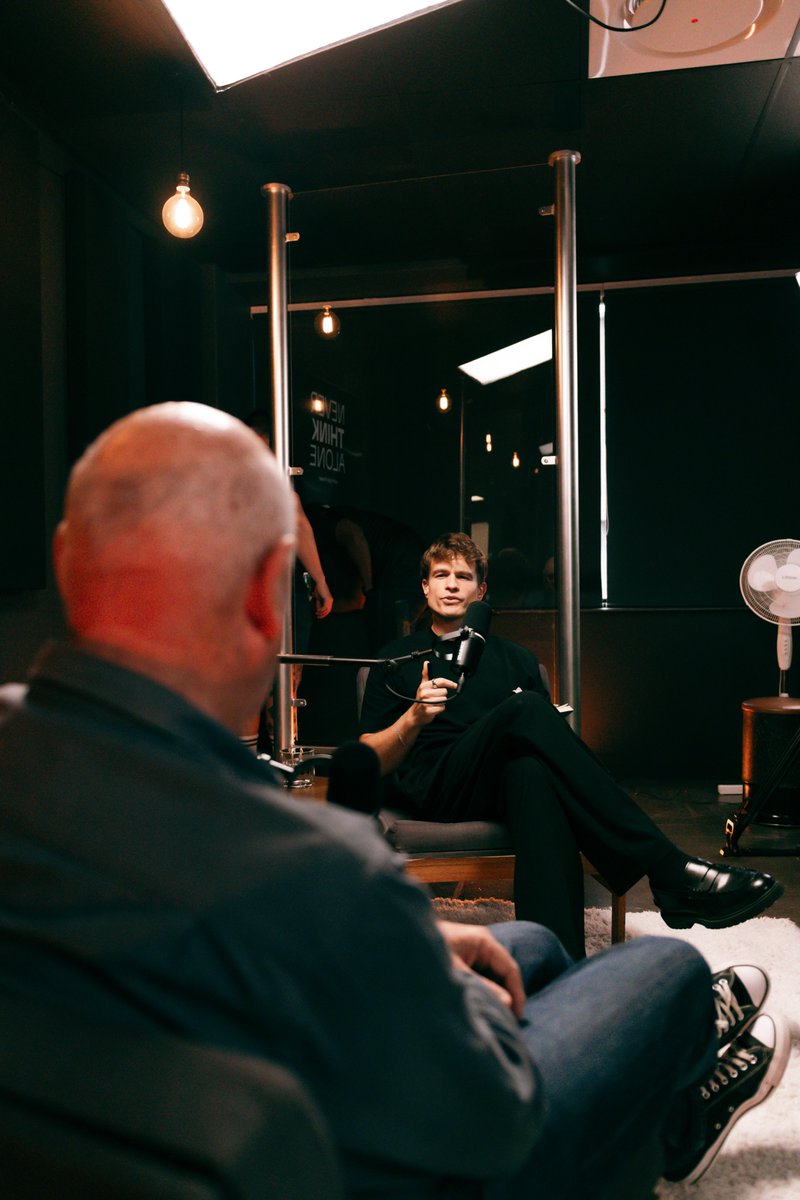
The purpose of the Never Think Alone podcast comes down to one thing: Enable the growth and development of deep thinkers by giving them the frameworks, patterns, habits, beliefs, and behaviours that successful creative leaders have used to achieve their dreams. Together, we will unlock new ways of seeing the world that shape how they make decisions and build. These are the principles that usually go undocumented, so they tend to be difficult to pass on for others to learn. Which is why creating a space to share those ideas is so important. With Never Think Alone, we’re speaking to experienced leaders and going deeper than the usual surface-level questions. We want to understand how they think, what shaped them, and what others can take from that. The goal is to have listeners leave with something valuable. Something that they can apply to their own work. Our ambition is to make Never Think Alone the number one business podcast in South Africa within 12 months. We’re still very early, but we’re picking up some great momentum, and I can’t wait to share that with you all. If the idea of sharing the way you think resonates with you, connect with me and let’s have a chat. Hopefully on mic!
Kyle Fraser tweet media
English
0
0
0
24
Kyle Fraser
Kyle Fraser@Kyle_Fraser·
When something works, we tend to repeat it because we believe it will always work. It’s like when you prepare dinner in a unique way. Maybe you used a different set of spices for the potatoes, or a different oil. Whatever the twist, the result was excellent. The people who ate it loved it. So next time you prepare this same meal, you replicate the process. Success again! But the third time, it’s not as successful. People still think it was good, but… it’s really just the same thing. Next time, people start asking, “Can we get something new? We have this all the time.” Whatever change you initially made to cook something in an exciting new way is lost. It’s become rote. The same thing applies to creative work. You launch a campaign with great feedback and success, so the next project borrows from it. Then the next one borrows a little more. After a while, what once felt inventive feels familiar and tired. But the funny thing is, it always starts with a win. When something works, teams naturally try to repeat it. In organisational research, this is sometimes called the “success trap.” It’s the tendency for companies to keep exploiting what worked in the past instead of exploring new ideas. Over time, that familiar approach becomes the default. The routine. The team is operating within patterns shaped by previous success. It’s called “path dependence”. Past decisions constrain future choices, making it harder to change direction even when better options exist. So how do we avoid that “success trap”? It’s difficult because you don’t want to sabotage a potentially strong endeavour, but there are a few signs. The two biggest issues are that the project brief contains more questions than answers, and that the team relies more on past work than on new information or research. The reset requires deliberate intervention and hard constraints, but the result will be genuine creativity rather than ideas reheated in a microwave.
Kyle Fraser tweet media
English
0
0
0
33
Kyle Fraser
Kyle Fraser@Kyle_Fraser·
Have you noticed that some of your best ideas come after a discussion with someone you barely know? Could be a quick coffee with a potential client. Maybe a chat after a meeting. Better yet, a conversation with someone waiting in the same queue as you. There’s a reason that the Hollywood trope of an epiphany coming from a stranger is so prevalent. When you spend most of your time with the same people, you end up circulating the same information. Assumptions repeat themselves and trends become ingrained. You establish a pattern. Patterns can be good. They’re efficient and comfortable. But if you stick with a pattern for too long, it becomes a limitation that’s difficult to break. People you don’t know well, or “weak ties” as researchers would call them, tend to sit outside that immediate loop. They bring different references, different experiences, and different ways of framing problems. That’s where new combinations start to form. Studies on network diversity have shown that people with broader, more varied connections are more likely to access novel information and generate more innovative ideas. In practice, it’s someone asking a question you hadn’t considered. Or challenging an assumption that everyone else took for granted. It hardly feels like a breakthrough in the moment, but it’s usually enough to flip a switch in your mind. This is why stepping outside your usual circle is so important. Both socially and mentally. If all your thinking happens inside the same group, the odds of coming up with an innovative, fresh idea shrink drastically. Exposing yourself to new perspectives is where creativity flourishes. Next time you’re stuck on a concept, go and talk to someone you’re not all that familiar with. Ask for their perspective. You could have your own Hollywood moment.
Kyle Fraser tweet media
English
0
0
0
35
Kyle Fraser
Kyle Fraser@Kyle_Fraser·
“Write drunk, edit sober.” - Earnest Hemingway. You might be asking whether his advice should be taken literally…But you will find that, metaphorically, it’s an excellent way to channel your creative mind. What Hemingway is getting at is something we all struggle with at times: Thinking creatively and critically at the same time. One part of our brain wants to flex and explore, but the other part deliberately blocks it. Shuts down ideas before they actually take root. It results in a vicious cycle in which we want to come up with new ideas, but no idea is good enough. Start again. The key to entering a flow state is learning how to turn off that critical voice. It’s the most challenging aspect of the whole process. There is a way to work around your inner critic. It’s not a magical formula that works every time, but a sequence of actions. This is a process to help guide your approach whenever you want to start creative thinking without constant mental interruptions: 1. Prime: Start by clarifying the problem. What are you trying to solve? What constraints matter? Gather the data. Talk to customers. Set a clear goal. 2. Load: Pull the raw material into your mind. Connect the dots between notes and references. Look for patterns. No judging. 3. Release: Step away on purpose. Take a short walk. Shower. Wash dishes. Something mildly engaging that lets your mind wander. No screens. 4. Catch: Ideas tend to arrive when you stop forcing them. When they do, capture them immediately. In a voice note, notebook… whatever works. 5. Polish: Now switch modes. Test the idea against the brief. Tighten the thinking. Prototype it quickly and ask for feedback. 6. Leave something in the cup: Stop before you’re completely empty. Write down the next step and set up a time to return to it. Creative work moves in cycles. Condensing those six steps even further, you could describe a flow state as simply as “Expansion. Reflection. Refinement.” Working with that rhythm, rather than fighting it, is how we make our work easier and, hopefully, a little more rewarding.
Kyle Fraser tweet media
English
0
0
0
34
Kyle Fraser
Kyle Fraser@Kyle_Fraser·
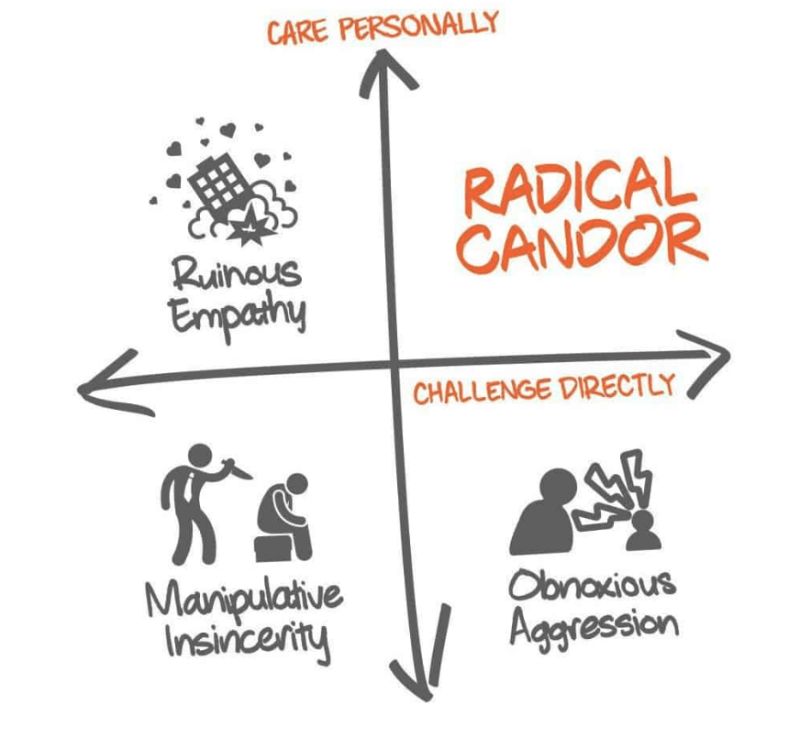
Honest feedback is the backbone of any creative endeavour, but too often people don’t actually know how to give it. They either come off as too blunt and dismissive, or they shower the idea with praise to avoid the tension of being the critic in the room. In any company, no matter the field, when feedback is required, I’ve found there’s often a long pause in the conversation. People don’t know how to give feedback effectively. The next time you need to give feedback, try a framework that has been so helpful to me and millions of other business leaders: The Radical Candor Matrix. Developed by Kim Scott, who boasts a CV that includes both Google and Apple, the central premise of the matrix is deceptively simple: Great feedback happens when you care personally about the people you work with while challenging them directly. To illustrate this, Scott maps the four possible approaches onto a 2x2 matrix. Radical Candor = Care personally + challenge directly. Ruinous Empathy = Care personally but avoid difficult feedback. Obnoxious Aggression = Challenge directly without showing care. Manipulative Insincerity = Neither care nor challenge. Creative work is fragile, especially in its early stages. Ruinous Empathy allows bad ideas to survive too long, while Obnoxious Aggression pushes people to stop trying altogether. Different styles, but both end up killing creativity. You want to hit the sweet spot of Radical Candor. Instead of saying “Looks good to me,” or “None of this is any good,” go with the middle ground. “The direction is good, but this part isn’t working for me.” It all comes down to culture. Radical Candor allows leaders to build a culture where people care enough to push ideas forward. Consider using it for your next ideation or feedback session.
Kyle Fraser tweet media
English
0
0
0
30
Kyle Fraser
Kyle Fraser@Kyle_Fraser·
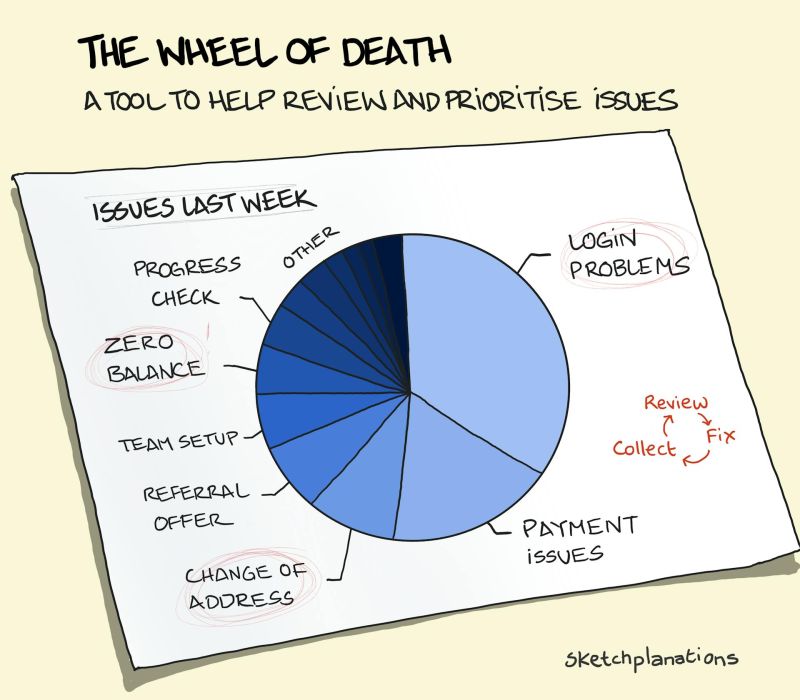
When your campaign flops, it’s time for a post-mortem. It’s actually an essential part of the process, even when your campaign succeeds. Everything can be a lesson if you look at it the right way. Marketing teams are often quick to ignore this stage. They speculate on some of the problems and then they move on to something else. It’s a fast-paced environment, after all. You can’t be stuck in the past. While there’s certainly something to be said about not dwelling on failure, it’s usually more beneficial to confront it. A structured post-campaign review is one of the most effective ways to improve future performance. Research in marketing analytics consistently shows that a post-mortem helps teams take actionable steps towards improving their next campaign. The first thing you should check? Alignment. It’s not just a word corporations love to throw around in meetings. There is value in it. Marketing analysis frameworks consistently emphasise aligning campaign metrics with business objectives before evaluating success or failure. Were you measuring the right thing? Were you optimising for the right outcomes? These are valuable questions. Once you’ve crossed that off the list, zoom in before you zoom out. Surface metrics rarely tell the full story. Channel-by-channel analysis is critical because underperformance is often isolated, not universal. Finally, the hardest part: Asking “Why?” You have to go deeper than “What happened?” Honest debriefs consistently produce better strategic decisions because they expose flawed assumptions rather than protect them. To wrap up, document everything. AI has been transcribing meetings like this easier than ever, so use it. If a campaign fails and nothing changes, then it’s just an expensive experiment with nothing to show.
Kyle Fraser tweet media
English
0
0
0
13
Kyle Fraser
Kyle Fraser@Kyle_Fraser·
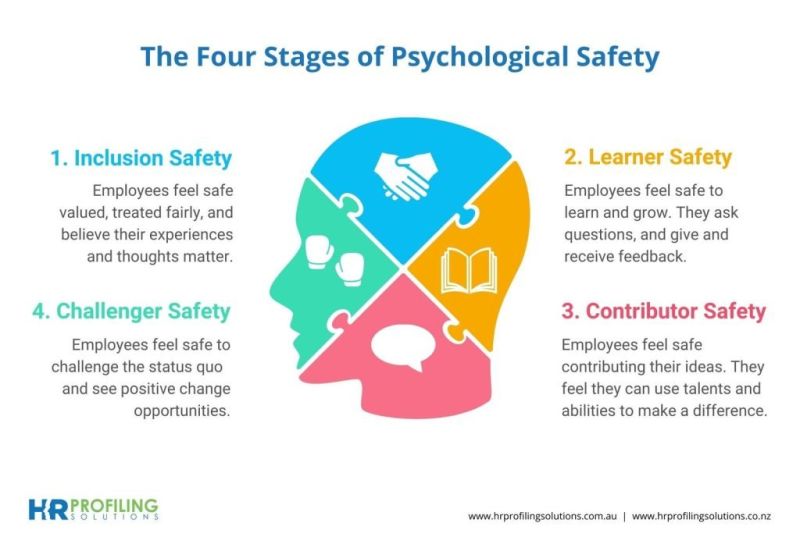
Psychological safety is more than just “being kind” to your team. I’ve seen people mocking the term as people needing to be coddled in the workplace, but I believe that’s a purposeful misrepresentation. Psychological safety is about creating an environment where people feel comfortable voicing their thoughts on any and every topic. They may not be the ones making the decisions, but their opinion still matters. I can cite plenty of excellent research done on this topic (the work of Dr. Amy Edmondson is particularly relevant, if you want to look it up), but it boils down to common sense. Psychological safety is no different from physical safety. There doesn’t need to be a hard line separating them. If you force people to work in an unsafe environment, physical or mental, they won’t give their best. When your people are in survival mode their creativity will be the first sacrifice. Try to write up a pitch deck when the roof of your office begins to cave in. You probably won’t be able to think straight until the structure’s fixed. The same principle applies when someone is trying to brainstorm ideas but is terrified they’ll get ridiculed for their input. People need to feel safe. It’s human nature. At PlusNarrative, we’ve done our best to foster an environment where everyone feels seen and represented when it matters most. We all learn from each other, and their voices are heard. As a leader, it’s my responsibility to listen to those opinions. I don’t necessarily have to agree with them, or even like them, but I need to hear them. It’s a philosophy that’s led to some major creative breakthroughs. Don’t underestimate our need for psychological safety. It’s the core of any collaborative experience. I expand on this topic in this post on Collaborative Resilience for the Never Think Alone newsletter. Check it out and give it a follow if you want more insights on the creative process.
Kyle Fraser tweet media
English
0
0
0
18
Kyle Fraser
Kyle Fraser@Kyle_Fraser·
Certainty kills creativity. It can feel productive and sound confident, but it destroys any chance of exploration. If you’ve ever been in a room where the idea was “locked in” too early, you’ll know what happens next. The questions stop. Exploration narrows. The team shifts from discovering to defending. In situations like that, we had to stop exploring an idea and start justifying it instead. When that happens, the end result is always going to suffer. Creativity needs room to breathe. This is why it’s best when clients come to you with a rough idea of what they want and nothing else. It gives you a place to start, but doesn’t box you in with restrictions and limitations. At PlusNarrative, we’ve learned to treat early certainty as a signal to slow down, not speed up. When we’re not asking enough questions and just following the brief blindly, we’re not exploring the possibilities. When we're playing in the space and giving ourselves room to think, we're doing our job. There’s a difference between being clear about the process and being certain about the outcome. Clarity allows you to build momentum, but certainty limits it. Forces it to be reigned in. The best creative work I’ve been part of didn’t start with answers. It started with navigating the ambiguity of “this doesn’t quite feel right yet.” With the patience to stay in that space a little longer.
Kyle Fraser tweet media
English
0
0
0
24
Kyle Fraser
Kyle Fraser@Kyle_Fraser·
The level of burnout in the world of marketing right now should worry all of us. Marketing Week’s 2025 Career & Salary Survey found that over half of UK marketers feel emotionally exhausted, nearly 60% feel overwhelmed, and 56% feel undervalued. These sentiments aren’t just coming from junior roles. CMOs, directors, and VPs are reporting similar levels of strain. You’ve likely also experienced it. At this point, nearly everyone has. The constant need to prove ROI. The tightening budgets. The expectation to move faster, deliver more, justify everything... It’s mentally and physically exhausting at times. Sometimes, it feels like burnout is an unavoidable reality. One that’s coming very close to boiling over across the industry. Burnout is too often reduced to “working too hard.” That’s part of it, but it’s so much deeper than that. The World Health Organisation classified it as an “occupational phenomenon” that often leads to depression and anxiety disorders. It’s not a case of just taking a few days off. It can leave serious scars on one’s mental well-being. When you’re at the start of your career, it can feel like work has to be your whole life. That if you take leave, you’ll be shunned by those who “work harder” than you. It’s an old mindset that many people still hold as truth for success. You need to take that leave. Go on a holiday. Put your phone away at 17:00, if you can. That needs to be the norm and working after hours should be the exception. Not the other way around. I’m always trying to keep track of whether the PlusNarrative team is using their leave days. If they aren’t, I encourage them to. Both for their sake and the sake of their work. The human brain can’t function if it’s running on fumes. The last thing anyone should be doing is risking their mental health just to file a report early.
Kyle Fraser tweet media
English
0
0
0
20