
Lex Luthor retweetledi

ive been slacking on my open source contributions for the past year or so, perhaps this will help me catch up: github.com/beatzxbt/stink…
hope you find it useful!
English
Lex Luthor
4.3K posts


@L3X_luthor
superhero is useless without supervillain...


having been on multiple desks I cannot emphases the importance of continuing to improve the trade. having personally been on desks trading very similar variants of strategies, its always interesting to see how widely pnl varies from the firms have put in to bettering the trades

I see comments like this re: the design of oil perpetuals on TradeXYZ/HL a lot -- why do the oil perps use futures as the underlying, rather than spot? The question shows a fundamental misunderstanding by crypto-native people, who I guess understandably do not spend much time thinking about the mechanics of physical commodity markets!

@0xAlcibiades @tradexyz It’s quite odd to design perps with futures as the underlying. The whole point of perps was to remove the need for rolling over futures. They probably have good reasons for why they didn’t use spot prices, but still very odd.
EDGE REVEALED: How an Ex-Jane Street Trader Finds Edge in Markets & Life Agustin Lebron @AgustinLebron3 (former Jane Street trader, author of The Laws of Trading, now working at an AI startup applying reinforcement learning to market execution) breaks down what edge really means — and how to find yours in trading, careers & life. “Edge is something that either you know or you can do that the marginal participant in that market either doesn’t or can’t.” We cover: - What edge actually means & how Jane Street builds organizational edge (their worst skill is still "pretty decent") - Why you can never truly know if you have edge — the statistical vs intuitive approaches - The consolidation of quant trading: from dozens of options firms to a handful of giants - The gamblification of everything — retail trading, sports betting & prediction markets fueling quant profits - What it was like having Sam Bankman-Fried (@SBF_FTX) as a Jane Street intern: "Day one, I'm going to ask all the questions" - How to apply edge thinking to your own career: find what you're differentially good at - Raising teenagers in the AI age: why the traditional path still works, but other paths are opening up 00:00 Introduction 00:44 What is edge in financial markets 01:43 Jane Street and organizational structures for quant trading 03:46 Identifying and validating edge in trading 06:22 Navigating extreme market events and volatility 09:37 Future of quant trading and consolidation 12:15 Why quant firm profits have increased 14:42 The gamblization of everything 15:55 Who should pursue a career in quant trading 18:19 Applying the concept of edge to career and life decisions 20:56 Advice for interns to excel in quant trading 23:44 Predicting long-term success in trading interns 25:08 Sam Bankman-Fried as an intern and FTX reflections 28:15 Reasons people leave Jane Street and what they do next 31:19 Advice for young people in a changing world 36:09 Navigating job insecurity in tech-driven roles 38:55 Where to live if you want to be successful 40:28 Raising kids for a rapidly changing future 42:55 Questions young people should ask themselves 44:45 Outro and book recommendation


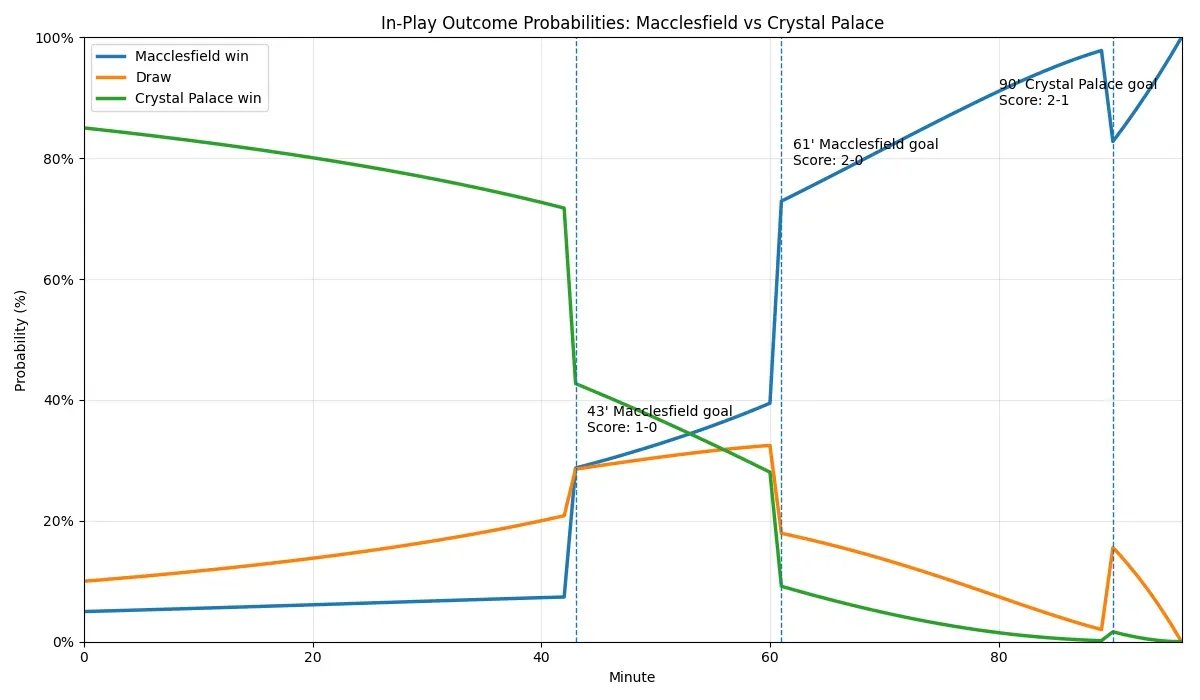
getting edge in sports betting markets with novel information or better models . . . i've been writing things about sports betting. this is about getting edge by predicting outcomes better than the market. it's really really fkin hard - but i'm gonna talk about it anyway





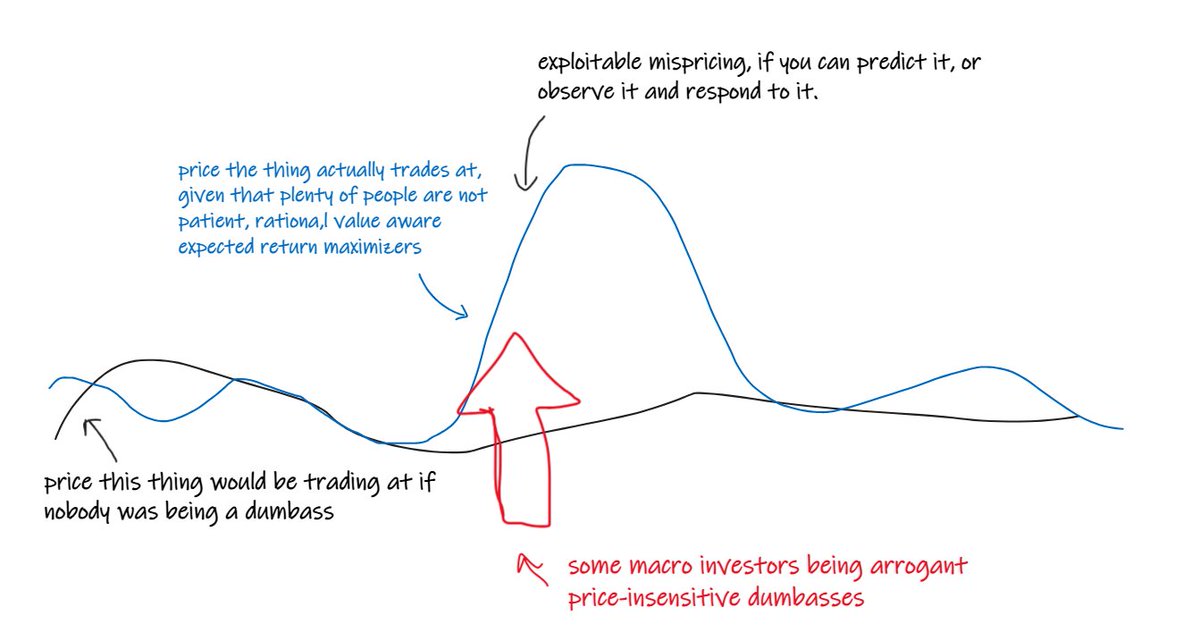


Common misconception. It assumes that every institution is trading against each other. IF that were the case, then yes, there will be only one big dawg and everyone will lose. In extremely PvP regimes where it's mostly institutions vs institutions, this is indeed the case. However, in most markets, the institutions are not making money off of each other. They are making money off of (uninformed) retail. This is why even institutions of "various complexities" can survive in the market. For example, as a new entrant to FX. I know I am certainly not as competitive as XTX, which has considerable resources spent on dominating FX. However, that does not imply I cannot make money from FX; as the average participant in FX is still leaps and bounds inferior to my investment process. This means I will make more money from these fishes than I will lose to XTX. If you've played Poker, it's akin to folding whenever the biggest shark bets and trying to be in all pots where the fish is playing but the shark has folded. TLDR: Money is always made from weaker players that have no edge. And that's why (uninformed) retail participation is so important for institutions. TLDR2: Avoid the sharps, and trade against the squares, everywhere.