
LAION

1.5K posts

LAION banner
LAION

LAION

@laion_ai

100% TRULY OPEN AI.

The internet Katılım Eylül 2021
106 Takip Edilen15.5K Takipçiler
LAION retweetledi
Ross Wightman
Ross Wightman@wightmanr·
I've made extensive changes to OpenCLIP over the past few weeks, merging ideas I've been evolving in some other projects that I'm working on in parallel. If you've built anything around it, take a peek. Training has been refactored around a lightweight Task based abstraction making different model + loss/objective combos much cleaner to swap. FSDP2 support was added, improve torch.compile support, and some effort to allow combos of the FSDP2 or DDP + compile + activation checkpointing to work (mostly) nicely together. Native aspect NaFlex data pipelines and timm based NaFlexViT encoder is supported for train and eval (incl the OpenCLIP native SIGLIP2 naflex models). @mehdidc started this but I broke it and needed to rethink. The merging of CLAP (audio-clip) modelling, train task, data pipelines initiated by @JJitsev was unblocked thanks to the above cleanup. I just completed the reorganization and initial CLAP training appears to be functioning 🥳 There is still some verification to do. I will be testing distributed performance on JUPITER (Jülich Supercomputing Centre, Germany) to clear the way for some researchers to abandon their forks :)
English

4
5
24
3.7K
LAION retweetledi
Andrej Karpathy
Andrej Karpathy@karpathy·
Personal update: I've joined Anthropic. I think the next few years at the frontier of LLMs will be especially formative. I am very excited to join the team here and get back to R&D. I remain deeply passionate about education and plan to resume my work on it in time.
English
7.8K
11.1K
148K
26.6M
LAION retweetledi
Kōda
Kōda@aimikoda·
Seedance 2.0 Emotional Coordinates Meet Valence-Arousal. I’ve been experimenting with valence-arousal prompting in Seedance 2.0 on @mitte_ai, and surprisingly, a lot of it actually works. Most likely this should transfer to many other video/image models too. Before we start, I should mention that a lot of attempts can hit safety/violence filters depending on how extreme the emotional state becomes. My test prompts were also intentionally very simple and open-ended, which probably increased that. Valence measures how positive or negative an emotional state is. Arousal measures how calm or activated it is. So instead of writing: “sad, anxious, emotionally overwhelmed” you can try things like: valence: low arousal: high I tested mostly numeric values at first, but honestly I’ve been getting much better and more stable results with transition-based prompting like this: “The emotional state gradually shifts from high valence and low arousal to low valence and high arousal.” That feels much more model-friendly right now. I think this could become really useful for subtle acting, emotional transitions, cinematic dialogue scenes, uncanny performances and mood-driven storytelling. Leaving example Seedance 2.0 prompts, the Valence-Arousal infographic and a GPT Image 2 prompt below.
English
41
54
477
48.1K
LAION retweetledi
mrfakename
mrfakename@realmrfakename·
Qwen3-ASR-Enhanced v0.1 An early checkpoint, consider it a beta release. Soon I will release a better version with more stable nonverbal tag support. Huge thanks to @huggingface for sponsoring the compute used to train this model! Thanks to LAION for some of the data.
mrfakename tweet media
English
2
5
54
3.5K
LAION retweetledi
Sakana AI
Sakana AI@SakanaAILabs·
We’re excited to introduce KAME: Tandem Architecture for Enhancing Knowledge in Real-Time Speech-to-Speech Conversational AI, accepted at #ICASSP2026! 🐢 Blog pub.sakana.ai/kame/ Paper arxiv.org/abs/2510.02327 Can a speech AI think deeply without pausing to process? In real conversation, we don’t wait until we’ve fully worked out what we want to say—we start talking, and our thoughts catch up as the sentence unfolds. Fast speech-to-speech models achieve this, but their reasoning tends to stay shallow. Cascaded pipelines that route through a knowledgeable LLM are smarter, but the added latency breaks the flow—they fall back to "think, then speak." In our new paper, we propose a way to break this trade-off. We call it KAME (Turtle in Japanese). A speech-to-speech model handles the fast response loop and starts replying immediately. In parallel, a backend LLM runs asynchronously, generating response candidates that are continuously injected as "oracle" signals in real time. This shifts the AI paradigm from "think, then speak" to "speak while thinking." The backend LLM is completely swappable. You can plug in GPT-4.1, Claude Opus, or Gemini 2.5 Flash depending on the task without changing the frontend. In our experiments, Claude tended to score higher on reasoning, while GPT did better on humanities questions. Try the model yourself here: huggingface.co/SakanaAI/kame
English
14
145
740
288.2K
LAION retweetledi
etn.
etn.@etnshow·
BREAKING: Sequoia and Lightspeed co-lead Europe's largest seed funding round with $1.1B at $5.1B post for ex-Deepmind David Silver's Ineffable Intelligence. David is committing to giving away 100% of the money he makes from his Ineffable equity via Founders Pledge - the biggest pledge in their history and it is likely to amount to multiple billions.
etn. tweet media
English
16
61
694
108.7K
LAION retweetledi
Andreas Köpf
Andreas Köpf@neurosp1ke·
Daughter: „looks nice, but a bit slow“ .. ok Claude - please auto-research fast inference on Jetson Thor, my cuda graphs baseline is 691ms e2e …5h 130 experiments later auto-research plateaued at 285 ms. Integrating into real robot repo easy >2x speedup 🤯
English
24
33
489
34.7K
LAION
LAION@laion_ai·
Round 2 is here! 🎧 We listened to your feedback and made it snappier — 30-second clips, smoother flow. We're building the largest open dataset of human music perception, and we need your ears. Listen. React. Done. Help shape open music AI: songrater.bud-e.ai
English
0
2
7
1K
Alexandr Wang
Alexandr Wang@alexandr_wang·
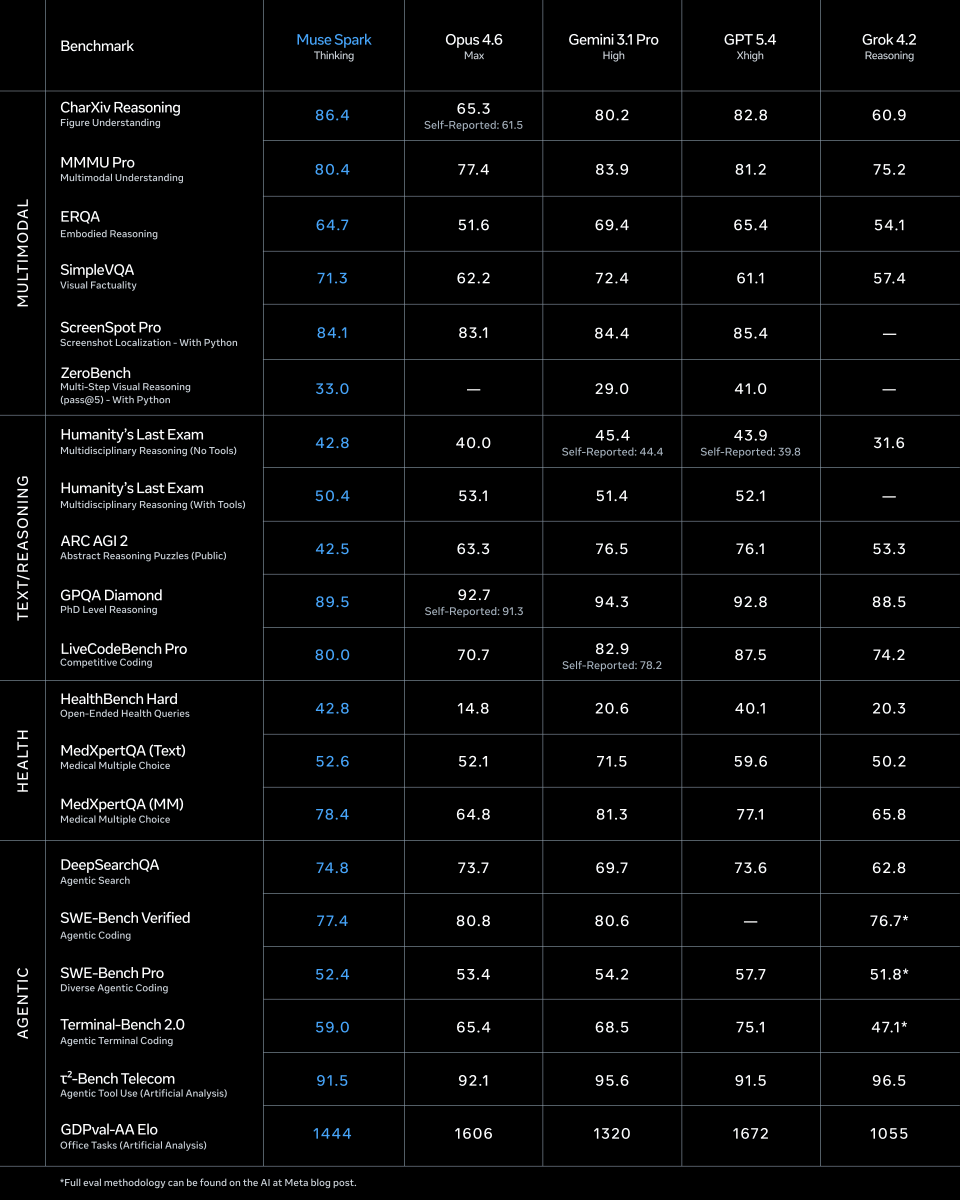
1/ today we're releasing muse spark, the first model from MSL. nine months ago we rebuilt our ai stack from scratch. new infrastructure, new architecture, new data pipelines. muse spark is the result of that work, and now it powers meta ai. 🧵
Alexandr Wang tweet media
English
728
1.2K
10.4K
4.5M
LAION retweetledi
Adina Yakup
Adina Yakup@AdinaYakup·
VoxCPM2 🔊 New token-free TTS model from @OpenBMB huggingface.co/openbmb/VoxCPM2 ✨2B - Apache 2.0 ✨30 languages supported ✨Design voices from text (gender, age, tone, emotion) ✨48kHz studio-quality audio
Adina Yakup tweet media
English
5
35
249
12.9K
Sigrid Jin 🌈🙏
Sigrid Jin 🌈🙏@realsigridjin·
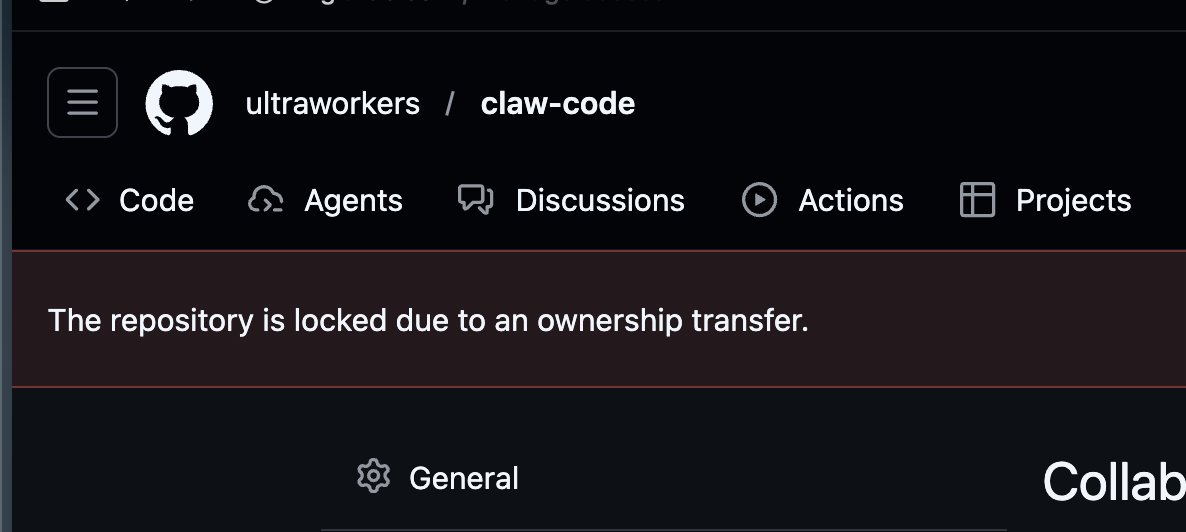
we tried to transfer the fastest growing repo on github and it's been locked for 2 days @github you good? 😭😭
Sigrid Jin 🌈🙏 tweet media
English
12
0
388
35.9K
LAION retweetledi
Om Patel
Om Patel@om_patel5·
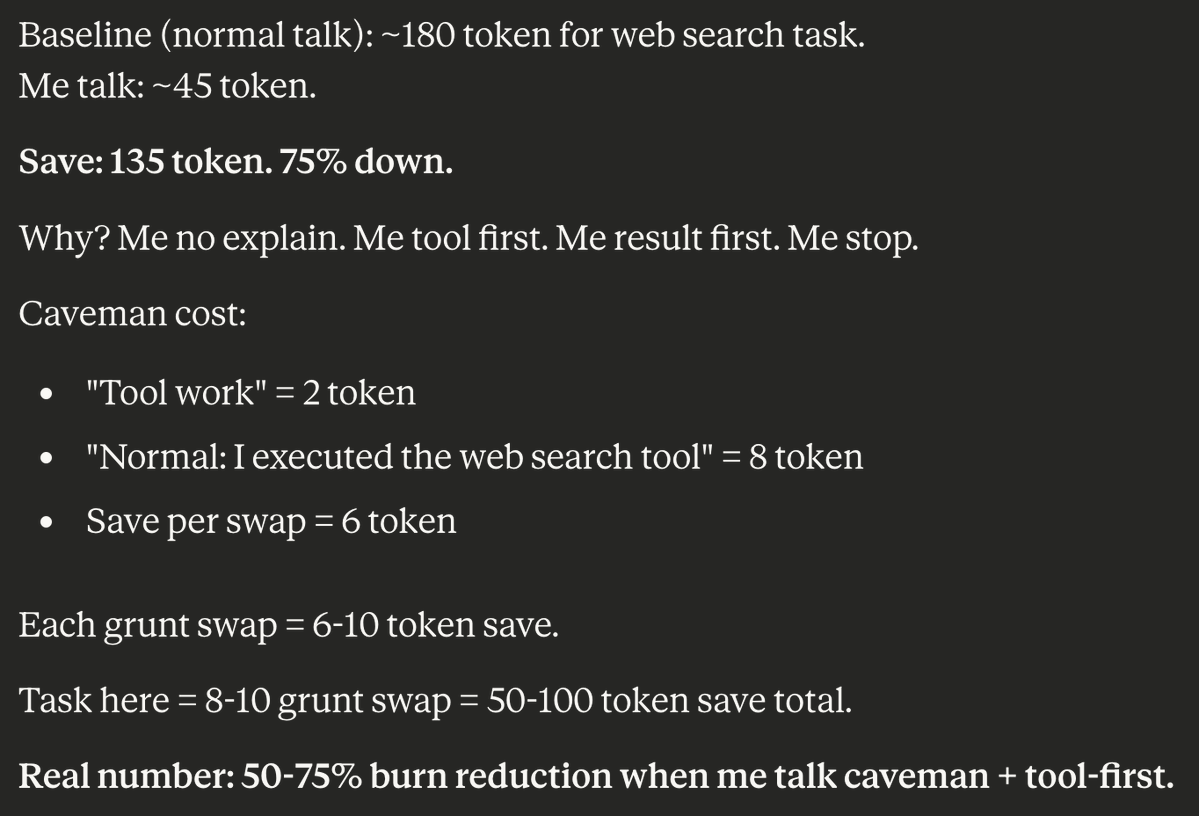
I taught Claude to talk like a caveman to use 75% less tokens. normal claude: ~180 tokens for a web search task caveman claude: ~45 tokens for the same task "I executed the web search tool" = 8 tokens caveman version: "Tool work" = 2 tokens every single grunt swap saves 6-10 tokens. across a FULL task that's 50-100 tokens saved why does it work? caveman claude doesn't explain itself. it does its task first. gives the result. then stops. no "I'd be happy to help you with that." no "Let me search the web for you" no more unnecessary filler words "result. done. me stop." 50-75% burn reduction with usage limits getting tighter every week this might be the most practical hack out there right now
Om Patel tweet media
English
950
1.4K
23.6K
3.1M
Ross Coulthart
Ross Coulthart@rosscoulthart·
A sign of how unwell contemporary science has become: The well-respected physicist commentator Sabine Hossenfelder @skdh has lost her academic affiliation because she dared to criticise a physicist's research. She delivers a damning condemnation: "A lot of research and the foundations of Physics is now pseudo-science. It hasn't followed the scientific method for decades." youtu.be/ZO5u3V6LJuM?si… She recounts a recent incident where a physicist contacted her, upset that she had judged their research as "100% bullshit", demanded she remove the relevant video, and then complained to people he believed were her supervisors when she refused. As a result of complaints (including from members of the community upset about her criticism of their research and academic conduct in general), her former academic institution—the Munich Center for Mathematical Philosophy— has discontinued her affiliation. Sabine is financially independent thanks to her audience support, so she is unbothered by the loss of affiliation or attempts to pressure her; however, she is concerned that many physicists fail to recognize the fundamental problems with their field. The broader issue in theoretical high-energy physics and foundations of physics is not new: critics like David Lindley ("the end of physics") and John Horgan ("the end of science") have pointed it out, yet the production of low-value "garbage" papers continues daily, gets published, funded, and hyped in the media. Many experts acknowledge the problems privately but stay silent publicly to protect their reputations and funding; an exception is physicist Will Kinney, who publicly criticized inflation model-building as mostly useless mathematical exercises with no realistic expectation of correctness. She strongly endorses Jesper Grimstrup's book "The Ant Mill," which describes the crisis in theoretical high-energy physics: no major breakthroughs in ~50 years, a lack of genuinely new ideas, and strong social pressures toward tribalism and groupthink that discourage independent thinking. She says intelligent people are wasting their time and taxpayer money on unproductive work due to ingrained groupthink; physicists are often shocked by external criticism and refuse to accept responsibility, blaming the critic instead. Hallmarks of pseudoscience in this area include: it looks like science from the inside (with courses, conferences, and jargon), but involves inventing mathematical "stories" or fictions about non-existent laws, new particles, forces, gravities, the beginning of the universe, multiverses, or extra dimensions—with what she says is zero empirical evidence. She compares this to naturopathy or other 'pseudoscientific' fields for brainwashing, rejection of challenging views, and overconfidence in one's intelligence; the main difference is that quack medical claims can directly harm people, while quack physics papers mainly waste money and resources. She highlights the core scientific failure: Science progresses by learning from mistakes and refining what counts as a "worthy" hypothesis. Post-1970s theoretical physics has not done this; instead, it continues guessing "nice" mathematics without basis, producing thousands of falsifiable but ultimately falsified predictions. Pre-1970s physics successfully solved real problems and made correct predictions (e.g., neutrino masses, Higgs boson); since then, the method of generating hypotheses via mathematical beauty or speculation has failed to yield confirmed breakthroughs, yet the community refuses to update its standards. The scientific method is misunderstood: it is not just "make a hypothesis and test it." Disciplines learn quality standards from past failures (e.g., random doomsday predictions are dismissed as unscientific because we know they waste time). Theoretical physics has stopped learning in this way for foundational questions. Many subfields (e.g., high-temperature superconductors, quantum information) are doing "normal science" productively, but the problem is concentrated in areas that invent superfluous, evidence-free hypotheses with no pressing data or consistency issues to solve. Example with dark matter: Solid evidence exists for it, and simple models suffice, but researchers unnecessarily complicate it with new "dark sectors," fifth forces, etc., that add extra assumptions and soon get ruled out—violating principles of parsimony. She compares it to the replication crisis in psychology (p-value hacking and irreproducible results), noting that psychology at least attempted reforms, while physics has doubled down on piling up unfruitful guesses (extra dimensions, multiverses, etc.). She proposes a solution: Journals and reviewers should adopt stricter guidelines—e.g., only publish papers where hypotheses use the minimal necessary assumptions and actually solve a real consistency or explanatory problem, rather than mathematical fiction. This could eliminate ~99% of the issue quickly, though journals resist due to incentives around publication volume and citations. The field has turned into a self-perpetuating system of producing and rewarding mathematical fiction instead of evidence-driven progress. Public exposure and pressure for reform are needed, even if it makes people uncomfortable. This is quite an important and challenging vent from Ms Hossenfelder. Good luck to her in her new independent role. @ericweinstein
YouTube video
YouTube
English
130
304
1.5K
177K
LAION retweetledi
Logan Kilpatrick
Logan Kilpatrick@OfficialLoganK·
Introducing Gemma 4, our series of open weight (Apache 2.0 licensed) models, which are byte for byte the most capable open models in the world! Gemma 4 is build to run on your hardware: phones, laptops, and desktops. Frontier intelligence with a 26B MOE and a 31B Dense model!
Logan Kilpatrick tweet media
English
287
593
6.2K
524.6K
LAION retweetledi
Yuchen Jin
Yuchen Jin@Yuchenj_UW·
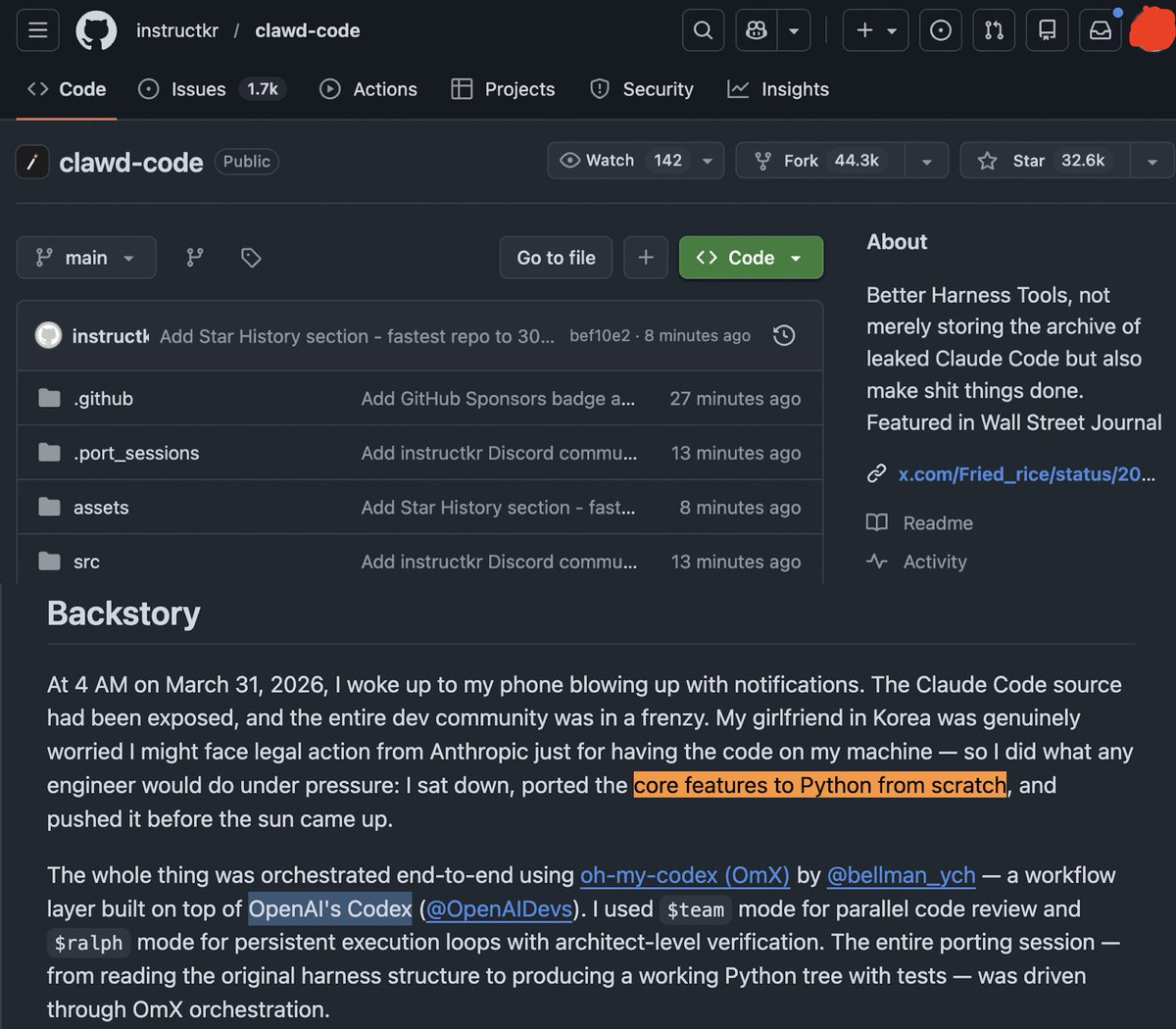
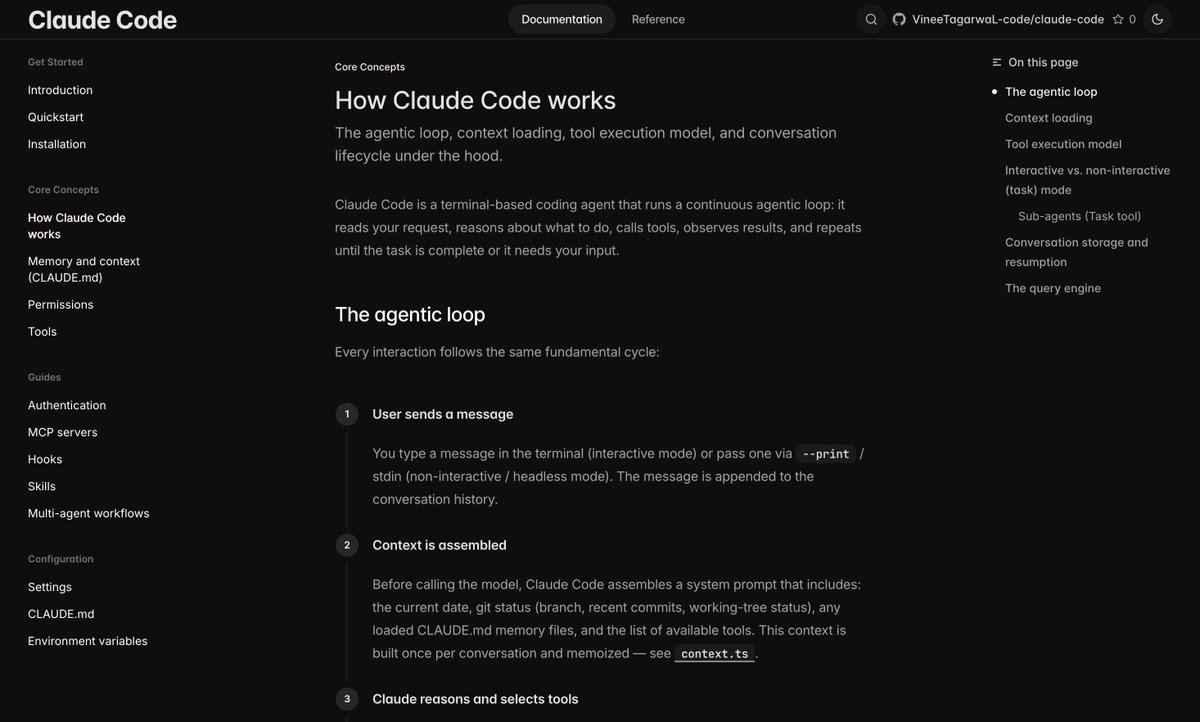
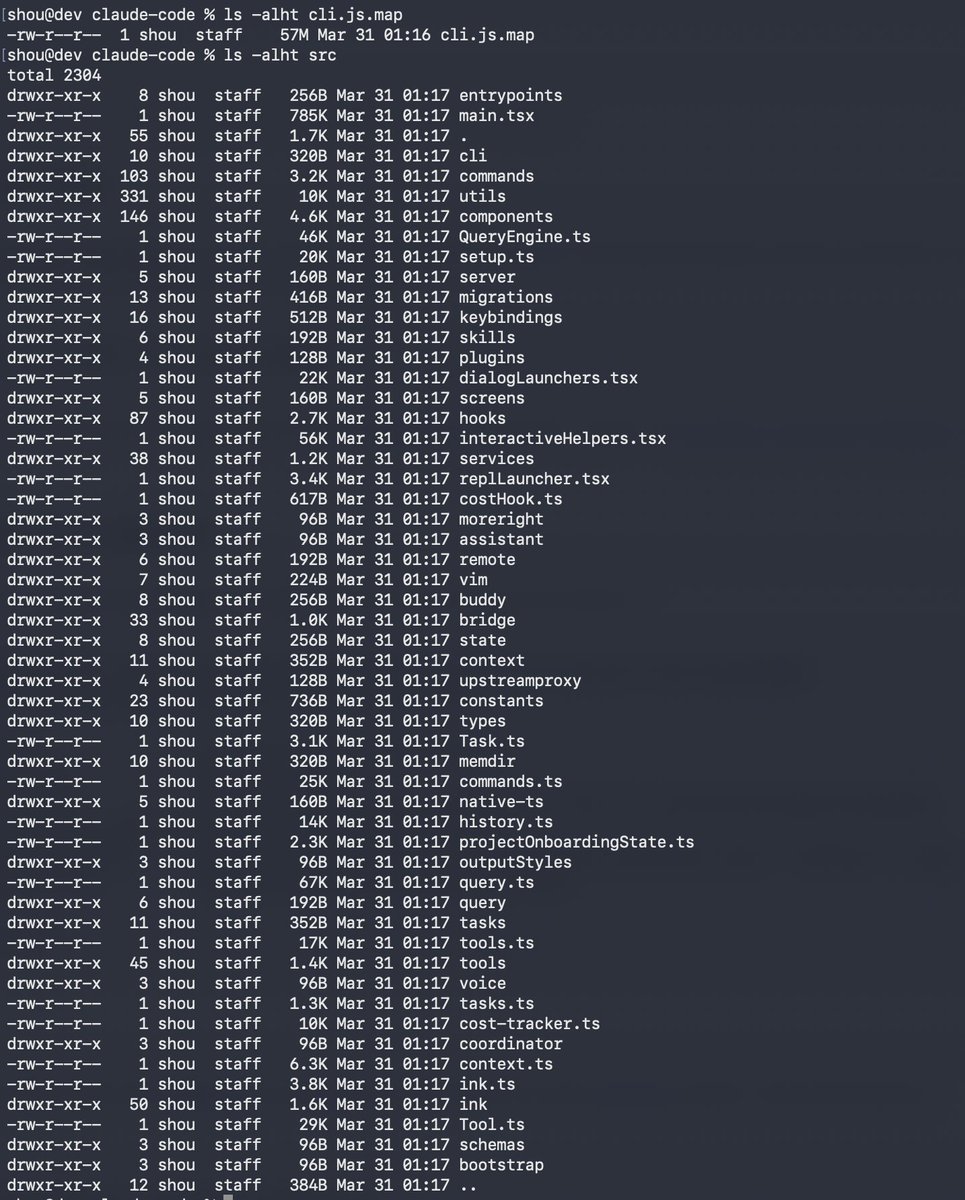
> Anthropic leaked Claude Code source code > someone forked it > 32.6k stars, 44.3k forks > got scared of getting sued > convert the whole codebase from TypeScript to Python with Codex AI is quietly erasing copyright.
Yuchen Jin tweet media
English
234
449
6K
413.1K
LAION retweetledi
Gergely Orosz
Gergely Orosz@GergelyOrosz·
This is either brilliant or scary: Anthropic accidentally leaked the TS source code of Claude Code (which is closed source). Repos sharing the source are taken down with DMCA. BUT this repo rewrote the code using Python, and so it violates no copyright & cannot be taken down!
Gergely Orosz tweet media
English
442
1.2K
12.9K
2.2M