

Lorenz Assländer
166 posts

Lorenz Assländer
@LAsslander
Researcher and lecturer @UniKonstanz || neuroscience of balance || modelling || using VR for balance analysis || developing AR for fall prevention
Konstanz, Germany Katılım Şubat 2021
349 Takip Edilen146 Takipçiler
Lorenz Assländer retweetledi

Lorenz Assländer retweetledi

List of high-level Alzheimer's researchers accused of credible fraud:🧵
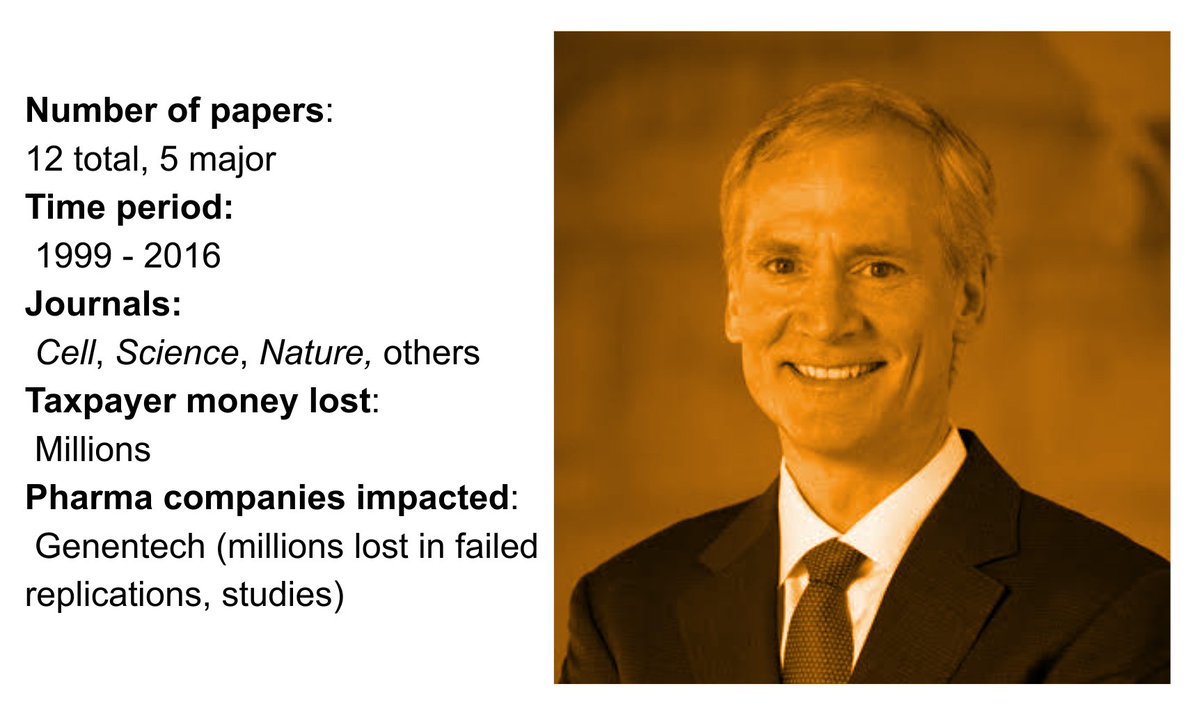
#1 - Marc Tessier-Lavigne
Genentech pointed out problems in his 2009 Nature paper in 2012. After an expose by @tab_delete, he had to resign from Stanford Presidency, but can still run lab and do research.
English
💪It is great working with you and it was great having you in our lab for this study @kyle_missen!
English
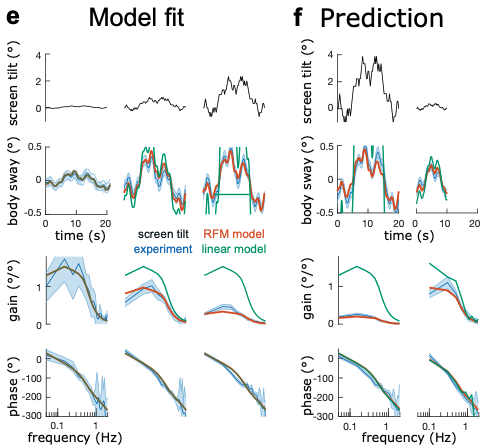
Conclusion: sensory integration can be characterized by two variables. 1) How much do we use a sensory system (in %); 2) At which velocity do we start to suppress a moving reference.
English
The evidence:
1) The model explains and predicts a lot of data
2) The nonlinear element distorts body sway: the model predicted sway evoked at frequencies that are not contained in the stimulus

English
Is it me or the train moving? 🚂🫨
📢New preprint📢 on multi sensory integration of conflicting sensory inputs in human balance: doi.org/10.1101/2024.0…
Moving the visual scene creates a conflict and visual orientation cues become erroneous. How does the CNS resolve this?

English
English
Lorenz Assländer retweetledi

I am often invited to review papers on deep learning for medical images. Unfortunately many papers do the same mistake; they split data into training/validation/test on the slice/image/patch level instead of on the patient level. This will lead to inflated test scores, as images from the same patient then can appear in both training and test sets. Since these images can be very similar, the network will perform extremely well on the test images.
If you use 2D networks on 3D data, the 2D slices have to be split on the patient level, not on slice level.
If you use 2D networks on a dataset where each patient has several 2D images, the images have to be split on the patient level, not on image level.
If you use deep learning for digital pathology, the patches have to be split on the patient level, not on patch level.
nature.com/articles/s4159…
link.springer.com/chapter/10.100…
nature.com/articles/s4159…
English
Lorenz Assländer retweetledi

Today marks the start of our annual 2-day symposium "Current Research in Sport Science," a highlight of our Master’s program @SportKonstanz with 6 in-depth sessions covering the full spectrum of sport science 🤩 #SportScienceHealth
Check out the program: mbieleke.github.io/SPO-14545_Curr…

English
Lorenz Assländer retweetledi

For clinicians interested in falls in older adults & people with Parkinson's, join us in Exeter for a 4yr PDRF on a project simulating falls & exploring mechanisms & opportunities for therapy with @SallieLamb18 @GKRWilliams
jobs.exeter.ac.uk/hrpr_webrecrui…
@ISPGR
@ACPIN_UK
@AGILECSP
English
In this study we use a very crude and simple version to test the idea. We show that we can reduce spontaneous sway, thus improve balance.
Can we prevent falls? We don't know, but we are working hard to find out.
Thank you @biosmanager & @StephanStreuber for the joint effort!
English
The key idea is simple: vision improves balance. But what if you turn around in front of a white wall? The image on the retina will not change and you lose visual orientation. Our device displays space orientation cues in the periphery to avoid such situations.
English
#FallPrevention with augmented reality? In our new publication in @VIREJournal we @HPRC10 show that we can improve balance by displaying artificial visual cues. One step closer to bring this to life as an assistive device 💪 link.springer.com/article/10.100…
English
@zamir_ar Nice study!
Quick question: calculating self motion from videos (optic flow analyses) is computationally quite expensive. Do you think you can reduce computational requirements with your approach? (I am thinking about inside-out tracking e.g. for VR/AR)
English

How far can a very simple eye go in solving vision tasks? Like a 1-pixel camera?
Humans have one of the greatest eyes in nature, while many animals have significantly simpler eyes and visual systems yet show complex perceptual behavior.
In an interesting project, we find that many computer vision tasks can be solved without a typical camera and with such simple 1-pixel sensors (photoreceptors). We also find that proper design (e.g., where to place the photoreceptors strategically) makes a big difference, so we developed a computational design method to find them.
🌐 visual-morphology.epfl.ch
👁️[Solving Vision Tasks with Simple Photoreceptors Instead of Cameras]
🧵1/n
English
Lorenz Assländer retweetledi

🚨Calling all EXERCISE SCIENCE RESEARCHERS:
Bad science & questionable research practices are harming the discipline & undermining public trust in experts. Please complete our anonymous survey and help elucidate the extent of the problem.
➡️shusls.eu.qualtrics.com/jfe/form/SV_eV… PLEASE SHARE!

English
Lorenz Assländer retweetledi

15/ All of the above has been made possible through the strong support of most mainstream media in Israel as well as the West, primarily in the United States, the United Kingdom and Germany.
English
Lorenz Assländer retweetledi
1/ I’m an Israeli historian. My community is still too silent about the horrible war in Gaza. Over 8 months I’ve closely followed the war, reading >1000 articles and viewing >1000 videos/images of the war from all sides. My summary conclusions & full report are in the 🧵:
English