LEDiG Technologies

283 posts

LEDiG Technologies banner
LEDiG Technologies

LEDiG Technologies

@LEDiG_Tech

Liquidity and hedging infrastructure for institutional stablecoin–fiat flows.

Nigeria Katılım Kasım 2024
15 Takip Edilen313 Takipçiler
LEDiG Technologies
LEDiG Technologies@LEDiG_Tech·
The US just issued an executive order directing federal financial regulators to review and update rules that create barriers for fintech firms working with traditional financial institutions. The most important part for stablecoin infrastructure is that the Federal Reserve will look at whether non-bank fintech companies, including digital asset providers, can get direct access to Federal Reserve payment accounts. The report is due in 120 days. If this access is granted, the settlement process for stablecoin providers could change a lot. There would be fewer middlemen, faster clearing, and a more direct way into the US payment system. The review itself is not the final decision, but it means the question is now officially being considered. Full order: whitehouse.gov/presidential-a… #stablecoins #federalreserve #US #regulation
LEDiG Technologies tweet media
English
0
0
3
49
LEDiG Technologies
LEDiG Technologies@LEDiG_Tech·
A merchant in Lagos prices their goods in dollars, not by choice, but because the naira is too unstable to protect their margins. Customers are forced to pay in naira at whatever the day's rate is, so the merchant spends more time managing currency risk than running the business. This isn’t a niche problem. It happens every day across emerging markets, in retail, services, and small businesses that don’t have treasury teams or FX desks. They’re left with a pricing problem and tools that weren’t made for them. Stablecoins change things. They’re not just for big institutions moving millions, but also for merchants who want a checkout that accepts USDT/USDC directly so prices stay the same on both sides. NGOs can accept global donations without incurring FX conversion losses before the funds reach their cause. Service businesses can send a payment link and receive payment in USDT or USDC instantly, with no bank delays or currency conversions. The use case for stablecoins in payments is bigger than most people realize. Cross-border infrastructure is just one side. The other is giving stable, accessible payment tools to businesses that have never had reliable options. That’s the part I think deserves more attention as our industry evolves. -David Osawaru Product Manager, Ledig. #stablecoins #crypto #Africa #emergingmarkets #fiat
English
0
1
5
73
LEDiG Technologies retweetledi
Base Africa
Base Africa@Based_Africa·
This generation of builders will shape the global economy. @LEDiG_Tech is revolutionizing cross-border finance by providing stablecoin liquidity across Africa and beyond. Base is the home for builders.
Don of Base@donofbase

Man, we’ve got some seriously DOPE founders building really HIGH-QUALITY projects in the first @base Founders Residency at @ns. Everyone’s locked in. Heads down. Absolutely cooking. Here's what they're building on @base: @sanfdn by @adamwebthree: World-state intelligence for AI agents for API, MCP & x402. @LEDiG_Tech by @gozie606: Liquidity & hedging infrastructure for institutional stablecoin-fiat flows. @beeponbase by @tonymfer Signal layer making sure valuable signals reach the right people, without spam. @zeus_exchange by @0xG3orge Onchain perpetuals with real revenue sharing and fully onchain execution. @Raflux_io by @Riozx_22 Onchain raffle marketplace for TCG collectors, crypto & more.

English
5
5
48
6.6K
LEDiG Technologies
LEDiG Technologies@LEDiG_Tech·
Most treasury teams and PSPs focus on rates, fees, and settlement time when choosing a Stablecoin provider. These are important, but in large-scale B2B payments, there is an even more important question that often gets overlooked. Thin liquidity in emerging market corridors can quietly cost businesses thousands in slippage per transaction, often without anyone realizing it is the reason. To learn more about how this affects your business, read the full article at: ledig.io/blog?post=liqu…
LEDiG Technologies tweet media
English
0
2
6
87
LEDiG Technologies
LEDiG Technologies@LEDiG_Tech·
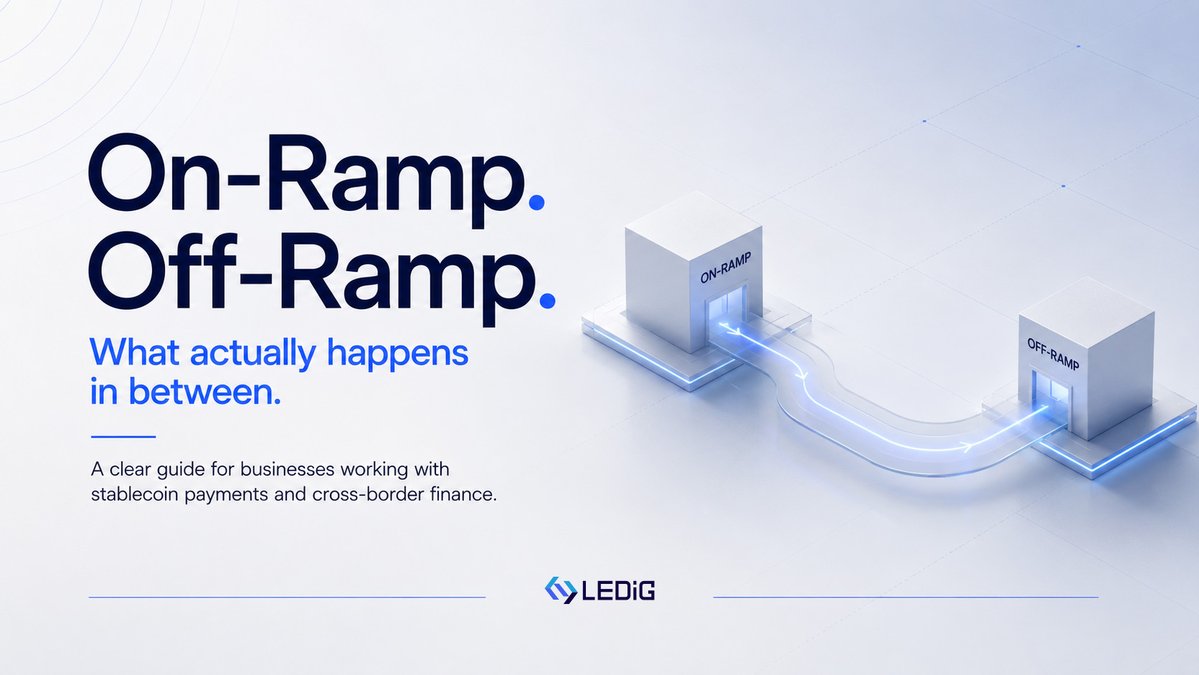
If you work with stablecoin payments or cross-border finance, you often hear the terms on-ramping and off-ramping. Most people have a general sense of what they mean, but here’s a clear explanation. On-ramping means converting fiat into a stablecoin. For example, a business that accepts dollars, pounds, or euros converts those currencies into USDT or USDC. This lets them move value quickly using stablecoins instead of waiting for traditional banks. The process goes through a licensed provider or OTC desk, the rate is set in advance, and the stablecoin arrives in the business’s wallet, ready to use. This is how you get started. Off-ramping is the exit. For example, a supplier in Lagos might receive payment in USDT but need Naira to pay employees and keep the business running. The stablecoin is converted to Naira and sent directly to their bank account via local banking systems. To do this well, the provider must have real banking partners and sufficient local-currency liquidity in that market, not just offer it as an option on their website. Which brings up what most people get wrong. Off-ramping is not universally harder than on-ramping. The corridor decides. A market with deep liquidity, solid banking infrastructure, and clear regulation processes both smoothly. A market with dollar shortages, limited banking access, or complex compliance requirements needs more expertise and stronger local connections to get the same transaction across the line. So, instead of asking a provider how many markets they cover, ask which ones they truly support and how they do it. Ledig provides on and off-ramp infrastructure across African and emerging market corridors, in markets where the banking relationships and liquidity are already in place. Visit ledig.io to find out more #Stablecoins #CrossBorderPayments #OnRamp #OffRamp #Fintech #EmergingMarkets #Ledig #Treasury #Africa #USDT #USDC #cNGN
LEDiG Technologies tweet media
English
0
2
6
123
LEDiG Technologies
LEDiG Technologies@LEDiG_Tech·
@yosephayele @lavavc_ Businesses in emerging markets need effective tools to hedge FX risk, and onchain derivatives tailored to local market conditions help provide this solution. We’re glad to have you on this journey with us.
English
0
1
4
137
Yoseph Ayele
Yoseph Ayele@yosephayele·
“Risk” is a permanent stamp on all emerging markets. Often informed by disparate data points that smell more like a dog’s breakfast of information than sophisticated measurements, and fueled by ignorance that no amount of education can satisfy. What if we can transparently and verifiably price risk?
Yoseph Ayele tweet media
English
4
6
22
1.7K
LEDiG Technologies
LEDiG Technologies@LEDiG_Tech·
7/ FX hedging is designed to solve this problem. It lets businesses lock in a local currency rate against the US dollar for a set period. Companies like Ledig help businesses manage this risk directly, so the rate you plan for is the rate you get, no matter what happens in the parallel market before settlement. If your business works in emerging markets and you’re not sure how changes between the official and parallel rates affect your margins, it’s a good idea to talk with your treasury team this week.
English
0
0
1
298
LEDiG Technologies
LEDiG Technologies@LEDiG_Tech·
6/ The real risk is that the gap between rates can change quickly. A business that set its prices on Monday might see its profit margins change by Thursday if the spread shifts and there’s no protection in place.
English
1
0
1
332
LEDiG Technologies
LEDiG Technologies@LEDiG_Tech·
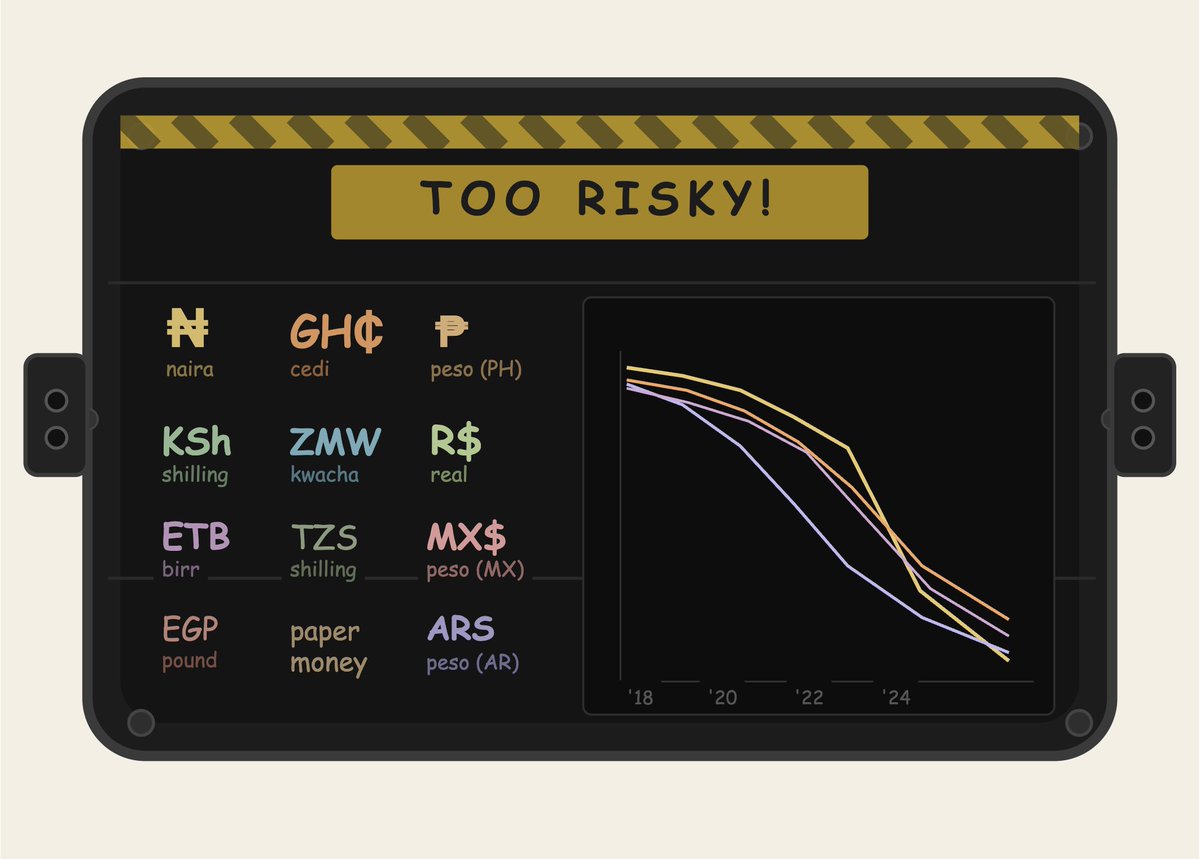
1/ In most African markets, there are two exchange rates, but most businesses only plan for one. Let’s look at what the other rate is, why it exists, and why it can surprise you.
LEDiG Technologies tweet media
English
1
1
5
702
LEDiG Technologies
LEDiG Technologies@LEDiG_Tech·
Last year, businesses in Sub-Saharan Africa moved $200 billion on-chain, and 43% of that was in stablecoins. Not every business made the switch for the same reason. What motivated your business to make the change?
English
0
1
6
353
LEDiG Technologies
LEDiG Technologies@LEDiG_Tech·
Getting foreign currency out of certain African markets is not a process problem. It is a structural one. Malawi is one example. Official FX channels cannot handle the volume a growing fintech needs. The partners that can, in charge accordingly The same situation occurs in many African markets. Central bank windows do not deliver at scale. Volume is split across partners just to complete one transaction. The Ledig Dealing Desk handles both aspects. It deals with MWK to USDT and USDT to EUR. Payments are sent to London. One desk, no structural workarounds. If your business encounters this barrier in any corridor, that is exactly what the Dealing Desk is designed for. Visit ledig.io for more information.
LEDiG Technologies tweet media
English
0
0
2
176
LEDiG Technologies
LEDiG Technologies@LEDiG_Tech·
5/ @Mastercard purchased stablecoin infrastructure company @BVNKFinance for $1.8 billion. @Visa settles in USDC. The US passed the GENIUS Act, which includes reserve requirements and mandatory audits. The EU's MiCA does the same. This space is now regulated.
English
1
0
1
100
LEDiG Technologies
LEDiG Technologies@LEDiG_Tech·
1/ Stablecoins settled $33 trillion in 2025. That’s more than Visa. If you work in finance and you find this number surprising, this thread explains what stablecoins are, how they maintain their value, and why they are important for payments and treasury. 👇
LEDiG Technologies tweet media
English
1
1
2
141