Transaction Advisor

42 posts

Transaction Advisor banner
Transaction Advisor

Transaction Advisor

@LFGeth1590762

vencedor , lutei pelo o que eu quis , sei porque sou , aonde estou .

Bosnia and Herzegovina Katılım Ekim 2023
30 Takip Edilen29 Takipçiler
TheValueist
TheValueist@TheValueist·
$NVDA $MU $SNDK $LITE EXECUTIVE ASSESSMENT The post is best interpreted as a bring-up and qualification milestone for an Azure-branded implementation of NVIDIA Vera Rubin NVL72, not as a broad production deployment announcement. The wording emphasizes “bring up” and “validation,” which indicates an early qualification stage rather than customer-available scale deployment. That reading is consistent with Jan. 5, 2026 disclosures from Microsoft and NVIDIA that Rubin deployments on Azure were planned for 2026 and that Microsoft would deploy Vera Rubin NVL72 rack-scale systems in Fairwater AI superfactory sites.  The only companies that can be identified with high confidence from the image itself are Microsoft and NVIDIA. Microsoft is directly evidenced by Azure branding on the rack and by Microsoft’s public description of Azure-specific thermal, power, network, and serviceability design choices for Rubin. NVIDIA is directly evidenced by the post text and by Rubin’s official architecture, which integrates Rubin GPUs, Vera CPUs, NVLink 6 switches, ConnectX-9 SuperNICs, and BlueField-4 DPUs inside the NVL72 system. No 3rd-party cable, power, CDU, manifold, connector, or ODM logo is legible in the photo.  WHAT THE IMAGE MOST LIKELY SHOWS The rack geometry strongly matches a full 1-rack NVL72 system. Official Rubin disclosures specify 72 GPUs and 36 CPUs, the Rubin compute tray contains 2 superchips per tray, and the NVLink switch tray contains 4 NVLink 6 switch ASICs per tray. That math implies 18 compute trays and 9 switch trays per full rack. The photo shows 18 silver compute trays split into 10 upper trays and 8 lower trays, with 9 beige middle trays between them. That 10-9-8 layout is visually consistent with NVIDIA’s documented NVL72 rack lineage and with public GB200/GB300 rack documentation.  Within each silver compute tray, the 2 long horizontal silver members with looped ends appear to be tray extraction handles or service rails, not signal cables or coolant lines. Their geometry is consistent with NVIDIA’s and Microsoft’s emphasis on fast tray exchange, cable-free modular trays, and serviceability. The central I/O area shows 1 white RJ45-style management cable on many trays, multiple green-lit link points, and several black braided high-speed cable assemblies. The front-right side of each compute tray shows 4 front-access removable bays that resemble the local E1.S NVMe storage-bay pattern used in GB200/GB300 NVL72 compute trays. Rubin public materials emphasize BlueField-4 storage offload and NVMe-over-Fabrics, but they do not explicitly enumerate the front-bay count in the cited materials. The image therefore supports the conclusion that front-serviceable local media or I/O bays are present, but not the exact storage BOM.  The 9 beige middle modules are best identified as NVLink 6 switch trays, not power shelves. The count matches the 36-switch rack specification divided by 4 switch ASICs per tray, and the sparse front panel with management ports aligns with NVIDIA documentation that the switch tray incorporates a system management module, console access, and telemetry and control-plane functions. This distinction matters for supplier attribution: the central block is primarily NVIDIA scale-up fabric silicon, not a 3rd-party switching domain and not a bank of PSUs.  The 2 black vented units at the top of the rack are most likely rack-management infrastructure, most plausibly top-of-rack management switches or adjacent rack services. NVIDIA’s NVL72 rack documentation includes 2 top-of-rack management switches for BMC and switch-tray management traffic. The image is consistent with that placement, but no visible label permits definitive vendor identification. Power shelves are a required architectural element of NVL72 systems, but they are not cleanly identifiable in this front-facing validation photograph.  CABLES, COOLING, AND POWER The cable population suggests a validation-lab environment rather than a production row. Several trays are asymmetrically cabled, the white management cabling is externally exposed, and large side hoses, loose harness bundles, lab furniture, and boxes are visible around the rack. The thick braided black assemblies plugged into the tray fronts are most likely high-speed scale-out, storage-adjacent, or test cable assemblies associated with ConnectX-9 and BlueField-4, while the thin white cables are most likely 1 GbE or similar low-speed management and BMC links. The thick side hoses and color-banded couplings are consistent with direct liquid-cooling supply and return lines. None of these cable or cooling components carries a legible 3rd-party vendor mark in the photo. Rubin officially uses warm-water, 1-phase direct liquid cooling at 45 C, and Azure says Rubin readiness required liquid-cooling loop revisions, CDU scaling, and high-amp busways.  The key power-infrastructure conclusion is that the economically important content is increasingly outside the GPU package but still not directly identifiable by supplier in the image. NVIDIA describes Vera Rubin NVL72 as a fully liquid-cooled rack with rack-level power smoothing, approximately 6x more local energy buffering than Blackwell Ultra, and site-level battery storage integration for grid stability. Microsoft describes Fairwater as a closed-loop liquid-cooled architecture operating at roughly 140 kW per rack and 1,360 kW per row for the Blackwell generation, alongside software, hardware, and on-site energy storage solutions to manage power oscillations. The post therefore signals validation of compute silicon plus the rack’s thermal, electrical, and transient-behavior stack. The visible photo, however, does not reveal the specific maker of the rack busbar, local energy-buffering modules, power shelves, CDU, or facility electrical gear.  HIGH-CONFIDENCE COMPANY ATTRIBUTION Microsoft’s role extends beyond cloud tenancy. Microsoft is almost certainly supplying the rack-level integration, datacenter envelope, cooling abstraction layer, tray serviceability model, management stack, and the site-level electrical and cooling environment into which the rack is being validated. Microsoft has also disclosed 1st-party Heat Exchanger Units, Azure HSM silicon, Azure Cobalt CPUs for adjacent workloads, and Azure-specific network infrastructure as part of Rubin readiness. In practical terms, Microsoft is the system integrator and site-operations owner even if much of the subcomponent manufacturing is outsourced.  NVIDIA is almost certainly supplying the economically dominant rack-resident silicon and reference architecture: Rubin GPUs, Vera CPUs, NVLink 6 switch ASICs, ConnectX-9 SuperNICs, BlueField-4 DPUs, the 3rd-generation MGX NVL72 rack design, and the associated scale-up fabric model. NVIDIA also specifies the optional scale-out domains outside the rack, namely Quantum-X800 InfiniBand and Spectrum-X Ethernet. The strategic implication is that the rack-level silicon stack is unusually vertically integrated by NVIDIA. Compared with prior generations, that compresses attach opportunities for 3rd-party switch or NIC vendors inside the rack and shifts more of the non-NVIDIA wallet toward cooling, connectors, power conversion, manifolds, cable assemblies, and ODM manufacturing.  There is also no visible or documentary basis in this post to attribute in-rack silicon content to Broadcom, Marvell, Astera Labs, Arista, or other non-NVIDIA networking or interconnect vendors. Those companies may have relevance elsewhere in Azure’s broader network or storage fabric, but the rack-resident silicon enumerated by NVIDIA for Rubin is NVIDIA-owned.  PLAUSIBLE BUT NOT PROVABLE NON-NVIDIA SUPPLIERS No defensible analysis can name a 3rd-party cable, connector, quick-disconnect, cold-plate, manifold, CDU, PSU, busbar, or ODM supplier for this exact rack from the photo alone. That limitation matters. NVIDIA’s broader MGX and NVL72 ecosystem does include a large supplier set. In adjacent NVL72 and MGX programs, NVIDIA has publicly cited partners across cables, connectors, cooling, power, and mechanicals, including Vertiv, Amphenol, BizLink, Boyd, CoolIT, Danfoss, Delta, Flex, LiteOn, LOTES, Luxshare, Megmeet, Molex, Motivair, nVent, Parker, Rittal, Schneider Electric, Staubli, and TE Connectivity, alongside system partners such as Compal, Ingrasys, Inventec, Pegatron, QCT, Supermicro, Wistron, and Wiwynn. Those names define the likely supplier universe. They do not establish socket wins in this photograph.  Vertiv deserves separate mention because NVIDIA explicitly highlighted Vertiv’s complete power and cooling reference architecture for NVL72-lineage deployments and later 800 VDC work. Even so, the post does not provide enough evidence to say that the photographed Azure validation rack uses Vertiv racks, CDUs, power distribution, or cooling hardware. The same caution applies to Amphenol, BizLink, Boyd, CoolIT, Delta, and Staubli. These are credible ecosystem candidates, not confirmed suppliers in the image.  CABLE AND NETWORK CONTENT Within the photographed rack, the highest-confidence cable attribution is to NVIDIA-owned networking endpoints rather than to an independently identifiable cable OEM. Rubin NVL72 officially uses ConnectX-9 and BlueField-4 within the compute tray, and Azure says Rubin relies on 1,600 Gb/s ConnectX-9 networking. The black braided front cables are therefore best understood as cable assemblies serving NVIDIA networking endpoints. The actual cable manufacturer could be any qualified MGX ecosystem supplier, but the rack-level network silicon owner remains NVIDIA. The white cables are consistent with the BMC and out-of-band management path found in NVL72 racks.  The image does not prove whether this validation system is cabled for Ethernet or InfiniBand at the external scale-out layer. Rubin supports both Quantum-X800 InfiniBand and Spectrum-X Ethernet, while Microsoft’s broader Fairwater strategy has emphasized a 2-tier Ethernet backend for some deployments and NVIDIA has separately said Microsoft is deploying Spectrum-X in Fairwater. The visible front-cabled lab rack could therefore be attached to either validation path, or to a lab-specific harness, and no stronger claim is supportable from the photograph.  STORAGE AND MEMORY SIGNALS Rubin adds an AI-native storage layer, ICMS, driven by BlueField-4 and Ethernet-attached flash for KV cache. That matters because the rack should not be read as a pure GPU chassis. The platform is being designed around inference-state persistence, networked flash, and storage offload as 1st-class architectural features. ICMS, however, is a pod-level storage layer rather than something that can be visually isolated in the pictured rack. The photograph therefore says more about compute, switch, cooling, and management hardware than it does about the eventual storage-vendor stack.  STRATEGIC INTERPRETATION This post is materially more important as a systems-readiness datapoint than as a unit-volume datapoint. Microsoft and NVIDIA had already disclosed Rubin collaboration and planned 2026 deployments. What the image adds is evidence that Azure has a physical Rubin NVL72 rack powered, cabled, liquid-cooled, and under validation in a real lab environment. That reduces perceived schedule risk around rack integration, thermals, and management-plane bring-up. It does not, by itself, prove high-volume production, customer GA timing, or Azure monetization velocity.  The claim of 1st-cloud Rubin bring-up is directionally consistent with Microsoft’s earlier pattern of moving early on NVIDIA rack-scale generations. Microsoft publicly claimed the 1st cloud running GB200 systems in 2024 and later announced the 1st at-scale GB300 NVL72 production cluster in Oct. 2025. That pattern increases the probability that the Rubin validation claim reflects genuine preferential execution and co-design access rather than pure marketing inflation, although the specific “1st cloud” Rubin claim in this case still rests primarily on Microsoft’s own post.  The most important equity implication is that the next AI-infrastructure bottleneck is no longer only GPU availability. The photo and the supporting disclosures point to a stack in which value creation and execution risk increasingly sit in 5 areas: rack-scale networking, direct liquid cooling, power distribution and transient smoothing, serviceable modular tray mechanics, and fast supply-chain qualification across a broad partner base. Microsoft and NVIDIA are directly evidenced winners in this post. The next ring of potential beneficiaries sits in connectors, cable assemblies, manifolds, quick disconnects, cold plates, CDUs, busbars, power electronics, and ODM integration, but the image does not reveal which company captured those sockets.  INCOMPLETE ATTRIBUTIONS The incomplete portion of the analysis is the subcomponent-vendor layer. The photo does not permit defensible identification of the exact cable-assembly maker, connector maker, quick-disconnect vendor, cold-plate vendor, manifold vendor, PSU vendor, busbar vendor, CDU vendor, leak-detection vendor, or chassis ODM and contract manufacturer. Any attempt to assign those sockets from this image alone would exceed the evidence base. NVIDIA and Microsoft documentation confirms that these component classes exist in the architecture, but not who supplied them here.  BOTTOM LINE This is almost certainly an Azure-branded NVIDIA Vera Rubin NVL72 validation rack comprising 18 compute trays and 9 central NVLink switch trays, with direct liquid cooling, front-serviceable modular trays, visible management cabling, and visible high-speed networking cable assemblies. The only companies that can be named with high confidence for this specific post are Microsoft and NVIDIA. The most likely additional supplier pool spans Vertiv, Amphenol, BizLink, Boyd, CoolIT, Delta, Flex, LiteOn, Molex, Parker, Schneider Electric, Staubli, TE Connectivity, QCT, Wiwynn, Inventec, Pegatron, Supermicro, and related MGX partners, but those names remain ecosystem candidates rather than confirmed content winners in this exact rack. The analytical edge in this post lies less in naming hidden cable vendors and more in recognizing that Azure appears to have reached a meaningful Rubin bring-up milestone unusually early in the cycle, with the rack-level thermal, power, and serviceability stack already tangible in hardware. 
TheValueist@TheValueist

Let's go baby! $NVDA $MU $SNDK $LITE

English
1
1
8
4.3K
TheValueist
TheValueist@TheValueist·
$NVDA $MU $SNDK $LITE A real update from running a 100-agent mesh in simultaneous development: this is much harder in practice than it looks on paper. The first problem is infrastructure stress. When 10s of agents are concurrently hitting CPU, DRAM, and SSD, something always becomes the choke point. Once one layer saturates, the rest of the workflow backs up, latency rises, and errors start compounding. The second problem is integration. Generating work in parallel is one thing. Reassembling 100 disparate outputs into a single coherent product is another. There is overlap, mismatch, duplicated effort, conflicting assumptions, and regression that can take significant time to clean up. To me, this is a bullish signal for GAI infrastructure, not a bearish one. If the hardware stack were more capable and the orchestration layer were more robust, productivity would increase materially. Better burst handling, stronger memory and storage performance, and better multi-agent coordination would all raise the ceiling. The demand for agentic execution is here. The infrastructure to support it at full scale is not. That gap still has to be built.
TheValueist@TheValueist

Can you comprehend the sheer amount of data that's will be generated by a 100-agent mesh as compared to a 100-agent parent-child? What about a 1000 agent mesh - exponential growth. All of the log files, traces, communications, versions, and temporary outputs - it will be massive. $NVDA $MU $SNDK $LITE

English
1
1
13
4.5K
Transaction Advisor
Transaction Advisor@LFGeth1590762·
Stealing 5 mins to hide from deadlines—sipping iced coffee, staring at the sky, and pretending the to-do list doesn’t exist.
Transaction Advisor tweet media
English
0
0
2
5
Transaction Advisor
Transaction Advisor@LFGeth1590762·
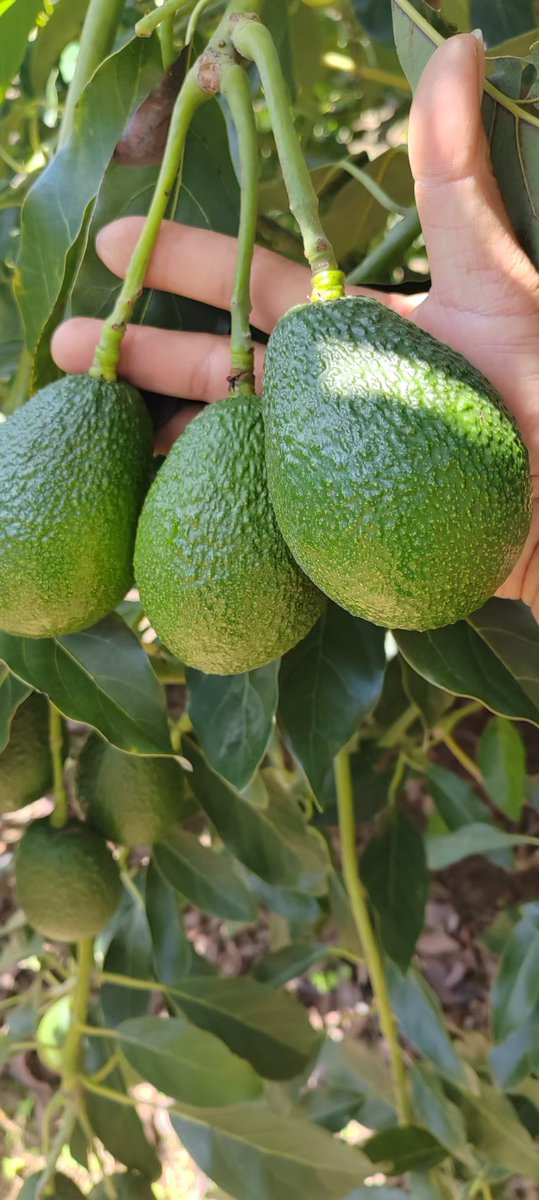
"Taste test alert! Organic Hass avocado: Creamy, rich, u0026 zero bitter aftertaste. Perfect for toast, smoothies, or guac—ripe in 2 days, stays fresh 5+ days. A must-have for healthy eats! #AvocadoReview #OrganicProduce"
Transaction Advisor tweet media
English
0
1
0
14
Transaction Advisor
Transaction Advisor@LFGeth1590762·
"Decades later, same smiles, same stories. Grateful for the ones who turn 'hello' into 'let’s catch up' — always."
Transaction Advisor tweet media
English
0
0
1
3
Transaction Advisor retweetledi
Bessarn
Bessarn@Maksim27341335·
"Turn a thrifted glass jar into a cozy candle holder! Add twine + dried lavender—zero cost, maximum charm. #UpcycleHacks #EcoFriendlyLiving"
Bessarn tweet media
English
0
1
1
2
Transaction Advisor
Transaction Advisor@LFGeth1590762·
Spotted a stranger help an elderly carry groceries without hesitation today. Small kindnesses are the warmest magic
Transaction Advisor tweet media
English
0
1
0
4
Transaction Advisor
Transaction Advisor@LFGeth1590762·
Just wrapped a focused morning deep dive + quick team sync—now fueling up with a matcha latte Small wins (and good coffee) keep the day on track! #WorkLife #DailyGrind
Transaction Advisor tweet media
English
0
1
1
11
Transaction Advisor
Transaction Advisor@LFGeth1590762·
Level up your skills this week! Pick 1 micro-skill (e.g., business email writing, public speaking) → practice 10 mins daily → see small wins. Consistency beats perfection. #SkillUp #DailyPractice
Transaction Advisor tweet media
English
0
1
1
21
Transaction Advisor retweetledi
The Velua Terdar-Trading Assistant
The Velua Terdar-Trading Assistant@BanksFranc88925·
"Folding laundry mid-chat with my cat—tiny paws ‘helping’ (read: stealing socks). Messy, warm, perfect. "
The Velua Terdar-Trading Assistant tweet media
English
0
1
0
13
Transaction Advisor
Transaction Advisor@LFGeth1590762·
Swap processed snacks for this protein-packed, veggie-loaded bowl! Grilled chicken, quinoa, roasted veggies + a lemon-tahini drizzle = 300+ calories of clean, satisfying fuel. Prep in 15 mins—perfect for your busy day. #MealPrep #FatLoss #CleanEating
Transaction Advisor tweet media
English
0
2
1
10