Lajos Kossuth

5K posts

Lajos Kossuth banner
Lajos Kossuth

Lajos Kossuth

@LKossuth

Economist and Behavioral Scientist. Assistant Professor @UCOMILLAS. Opinions are mine. 🇵🇪🇵🇪 Also on BSKY: https://t.co/HRTEtZpbSi

Madrid, Spain Katılım Haziran 2011
1.3K Takip Edilen2.3K Takipçiler
Sabitlenmiş Tweet
Lajos Kossuth
Lajos Kossuth@LKossuth·
Thrilled to share that, after years of work, Roberto Asmat and I have published our paper in the Journal of Development Economics: “Gender Differences in Judicial Decisions under Incomplete Information: Evidence from Child Support Cases” 👩‍⚖️ sciencedirect.com/science/articl…
Lajos Kossuth tweet media
English
2
3
17
1K
Paulo Drinot
Paulo Drinot@paulodrinot·
Como van las encuestas pareciera que el principal clivaje político en el Perú no es ni geográfico ni fujimorista-antifujimorista sino si tienes o no Tik Tok.
Español
3
16
78
5K
Lajos Kossuth retweetledi
Carolina
Carolina@castellco_·
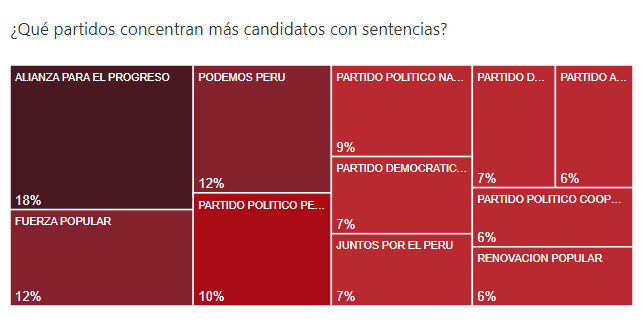
Los datos no votan, pero ayudan a que el voto no sea a ciegas. A 2 semanas de las Elecciones en Perú, extraje los datos de los más de 6mil candidatos según sus fichas del Jurado Nacional de Elecciones (JNE). Sentencias, ingresos, educación, bienes... > shorturl.at/Zy4wb
Carolina tweet media
Español
6
105
146
19.4K
Lajos Kossuth
Lajos Kossuth@LKossuth·
@KhamaRamaq @JavierAlban Me parece que te has equivocado en el cálculo. Con p=0.25 y 1500 sería como +-2.19 de margen de error. Para el margen que mencionas necesitarias como 6800 encuestados.
Español
1
0
0
55
Mathieu Rojas
Mathieu Rojas@KhamaRamaq·
Ojo, si asumes que ningún candidato supera el 25% de intención de voto (cosa que me parece razonable asumir a estas alturas del partido), el margen de error de una encuesta con 1500 encuestados sería 1.19%
Español
2
2
6
929
Lajos Kossuth
Lajos Kossuth@LKossuth·
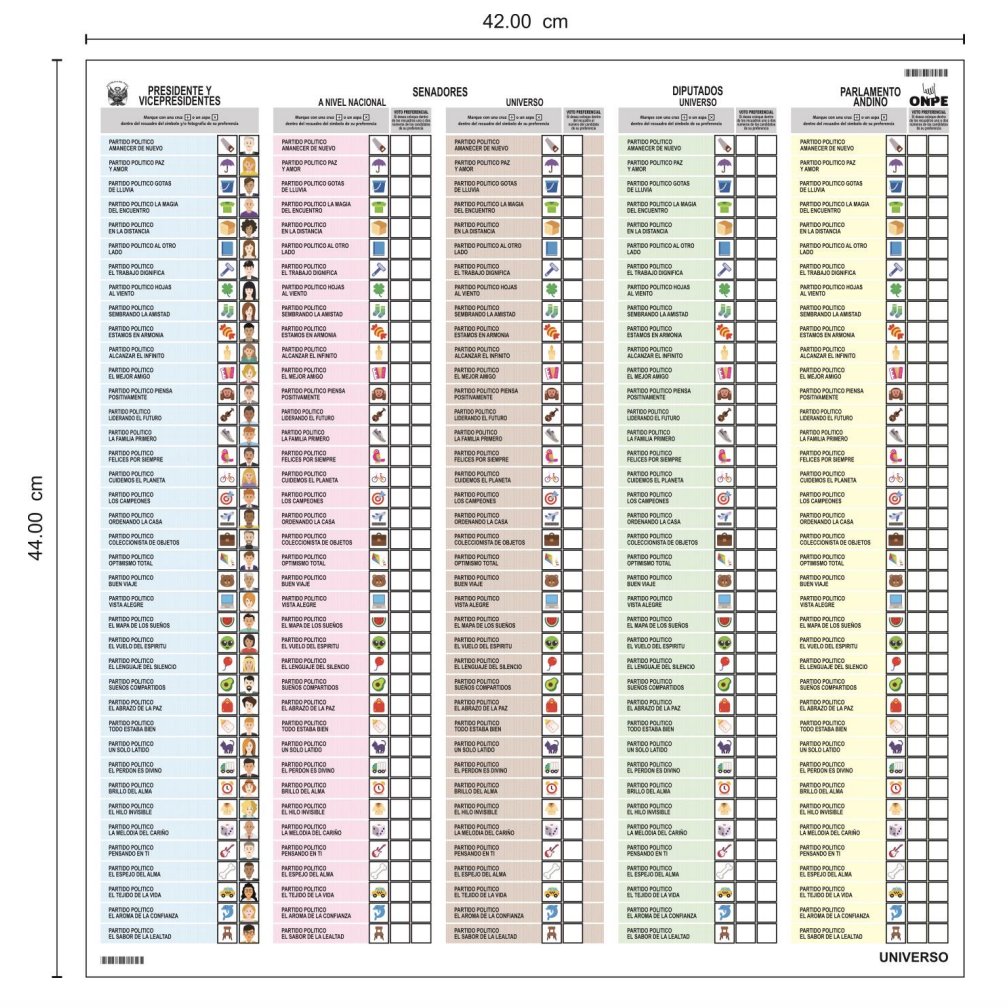
Parálisis de decisión ante sobrecarga de opciones. Bajo ciertos requisitos (opciones difíciles de comparar, decisión relevante, etc.), el equilibrio puede ser la ausencia de elección. Que no sorprenda ver al final resultados incompatibles con el análisis político típico.
Lajos Kossuth tweet media
Diego Macera@dmacera

Intención de voto presidencial: % de "blanco/viciado" + "no sabe/no precisa" Enero del 2016: 14% Enero del 2021: 25% Enero del 2026: 44% (!!) Hartazgo? Cinismo? Demasiadas opciones? Siempre se dice que "nos decidimos al final". Pero esta vez nos estamos pasando de la raya.

Español
0
0
1
165
Lajos Kossuth
Lajos Kossuth@LKossuth·
Brillante.
Jesús Fernández-Villaverde@JesusFerna7026

Olivier Blanchard (@ojblanchard1) had a provocative post yesterday about a higher preference of French people for leisure: x.com/ojblanchard1/s… I have learned nearly an infinite amount of economics from Olivier since I was an undergrad, and he came to Spain to present a report on our unemployment problem, so I feel a bit intimidated about pushing back on this idea. I am perfectly happy with the idea that preferences are heterogeneous: some people like leisure more than others. And the goal of economic policy should never be to maximize output, but to maximize welfare. If most people in France enjoy sitting in the beautiful sun of Provence while productivity increases, who am I to question their wisdom? But perhaps one of the aspects of economics that I have always felt uneasy about is how little effort we have put into exploring the extent to which preferences are endogenous. Let me borrow from an old idea of Gary Becker and Kevin M. Murphy (1988) in their classic “A Theory of Rational Addiction,” a beautiful piece of work all students of economics should read. Becker and Murphy consider a model with two consumption goods: one that requires “consumption capital” to be enjoyed and one that does not. Think about fine wine: it takes some time and experience to truly enjoy a good bottle. In comparison, every kid enjoys candy on first taste, no experience required (nor much is gained from repeated tastings). How much an agent invests in “consumption capital” determines whether increases in consumption of the first good in the past will lead to higher consumption of that good in the future. Many leisure activities belong to the former group, not the latter: going to the Opera, appreciating fine food, discovering the charming streets of a world-class city, ... Based on that observation, let me extend Becker and Murphy’s framework to the work-leisure choice by introducing the notion of “leisure capital.” Imagine a situation where, in France, taxes on labor income were high (or, equivalently, wages were lower than they should have been because of misallocation). This made leisure activities preferable in the past because their relative price was low (let’s assume the income effect was small), leading to an increase in the “leisure capital” of the French today and, therefore, in how French society takes advantage of increases in productivity. Now, one could argue that this reasoning is a hyper-sophisticated form of rationality that does not resemble reality. But I have seen this phenomenon at a micro level: very rich people who made their own fortunes are often not very good at enjoying leisure, but their kids are extremely good at it, because they accumulated plenty of “leisure capital” when they were young. More seriously, other observers of society would have found the reasoning natural, because there is a long tradition of analyzing labor supply decisions as embedded in social relations. Let us start with Karl Marx. In historical materialism, consciousness follows the forces of production. When the forces of production generate a lower labor supply (for whatever reason), consciousness will follow through the multiple channels of the superstructure, starting with the creations of the culture industry that favor leisure. Having delightful bistros is an epiphenomenon of a deeper structure of relations of production. In the opposite direction, E.P. Thompson, also from a Marxist perspective (though less orthodox), emphasized that the factory system required clock-based discipline and, therefore, that within a generation or two of the Industrial Revolution, punctuality became a cardinal virtue. Just reverse E.P. Thompson’s analysis. And Émile Durkheim, with his view of how social facts shape the division of labor in society, might have agreed as well. For Durkheim, social facts are “every way of acting which is general throughout a given society, while at the same time existing in its own right, independent of its individual manifestations.” In this perspective, the French have absorbed a particular relationship to work through decades of participation in French economic life, which is not divorced from taxes and regulations. Of course, one could reply that it might be the preferences for leisure that are behind higher taxes and regulations. For example, you can use regulations to move to a better coordination equilibrium: you do not want to take vacations if your spouse at another firm cannot take a vacation at the same time. This is what Max Weber would have called an elective affinity (Wahlverwandtschaft) of leisure and taxes. But that reply only reinforces my point that we probably want to think about preferences and economic policy as a simultaneous system, more than one driving the other. The practical implication is that policy reforms may have effects far beyond what an analysis that takes preferences as given would suggest. If decades of high taxes built up “leisure capital” in France (which fits perfectly with Olivier’s observation that the French are better at leisure), lowering taxes tomorrow will not instantly undo that accumulation. Preferences have their own inertia. But by the same token, sustained policy changes can, over time, reshape what people want, not just what they can afford. The real problem with all this reasoning, though, is that it makes welfare analysis a nightmare! I will leave that task to someone smarter than me.

Español
0
0
0
260
Lajos Kossuth
Lajos Kossuth@LKossuth·
Si ese va a ser el pronóstico mejor que inviten a Agatha Lys.
Canal N@canalN_

En #CuentasClaras, Urpi Torrado, gerente general de Datum, consideró que, en la medida que los candidatos se hacen más conocidos ante la población, pasan por un riesgo: "O ganan votos o pierden votos" Mantente informado en la WEB ► bit.ly/webcanaln

Español
1
0
3
261
Lajos Kossuth
Lajos Kossuth@LKossuth·
¿Alguien ha hecho el paper de cuántos minutos de vida quita el Microsoft Authenticator? Pregunto para un amigo.
Español
0
0
1
133
Lajos Kossuth retweetledi
Velina Tchakarova
Velina Tchakarova@vtchakarova·
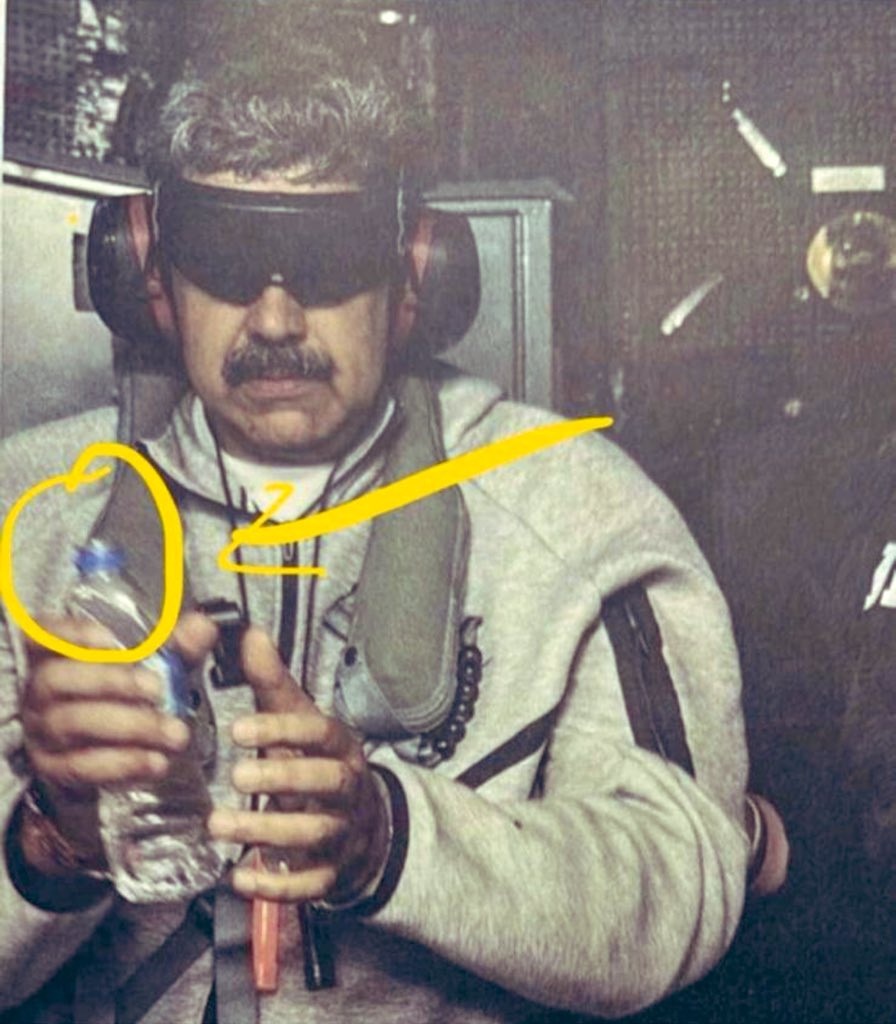
After carefully monitoring the situation in Venezuela for the last 24 hours, the EU has found out that the water bottle of Maduro did not have the EU-regulation approved attached cap.
Velina Tchakarova tweet media
English
1.9K
11.5K
100.8K
5.9M
Lajos Kossuth retweetledi
Curiosity
Curiosity@CuriosityonX·
It took 9 years and 3 billion miles to get this shot. Pluto’s icy Mountains.
English
2.7K
23.8K
176.8K
18.3M
Lajos Kossuth retweetledi
Lionel Page
Lionel Page@page_eco·
Economics is one of the disciplines where publications in top journals, editorships and awards are most concentrated in a few US institutions. It is also one of the few disciplines in which top journals have often abandoned blind peer review. The two may not be unconnected.
Philipp Heimberger@heimbergecon

Prestige bias in academic research: Paper submissions from authors affiliated with top-20 ranked institutions receive higher reviewer scores, an effect that vanishes when reviews are blinded. Blinded reviewing narrows disparities in reviewer evaluations and acceptance rates.

English
9
46
328
37.7K
Lajos Kossuth
Lajos Kossuth@LKossuth·
@florianederer There's unbounded resale now, as opposed to previous editions. Probably loads of scalpers getting all the tickets.
English
1
0
0
126
Florian Ederer
Florian Ederer@florianederer·
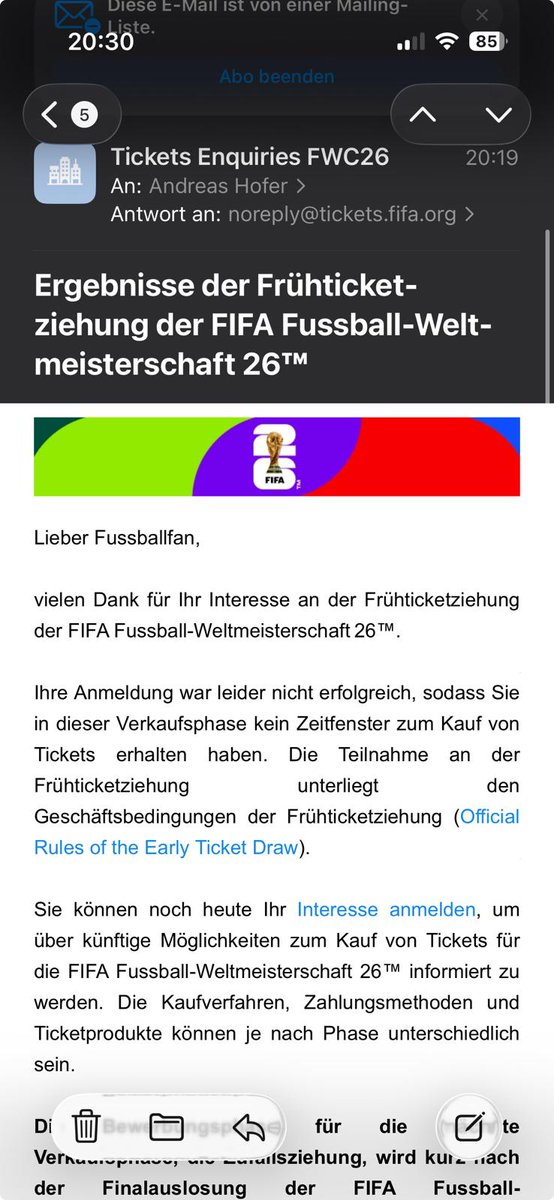
Why is demand for World Cup group stage tickets so high when some of these games are going to be unwatchable for neutrals? Who really wants to see Austria - Cape Verde in Kansas City? Even despite $13 tickets the Club World Cup semifinal (Chelsea - Fluminense) wasn't sold out!
Florian Ederer tweet media
English
10
0
18
11.1K
Lajos Kossuth retweetledi
Isaac Z. Martinez
Isaac Z. Martinez@isaaczmartinez·
1/ Hi, my name is Isaac Martinez. I am a PhD student in Economics at the LSE, and I wanted to share something personal. On July 6, 2025, I suffered a stroke while I was finishing my PhD. It was completely unexpected and changed my life. #EconTwitter #EconJobMarket
English
26
354
1.1K
249.4K
Lajos Kossuth
Lajos Kossuth@LKossuth·
Es inaudito el desparpajo con el que se producen proyectos de ley que son evidentemente dirigidos a beneficiar grupos económicos de interés específicos.
OjoPúblico@Ojo_Publico

#Urgente 🚨 Con el apoyo de Somos Perú y Acción Popular la propuesta de la congresista Lady Camones (APP) para reducir los impuestos a las casas de apuesta deportivas a distancia se exoneró de dictamen e ingresó a la agenda del Pleno. ✍️ @Jackeline_CI 🧵

Español
0
1
0
104
Lajos Kossuth
Lajos Kossuth@LKossuth·
@JavierAlban @ipsosperu Claro, mira lo que pasó con la última. Apareció Espá con 2% (cuando la percepción era que "no existía") y fue el tema político principal; de todas las redacciones (o sus equivalentes). Hasta portada de diario ha sido y Bayly le dedicó uno de sus videos.
Español
0
0
0
66
Javier Albán
Javier Albán@JavierAlban·
@LKossuth @ipsosperu Es verdad. Otro punto que también podría mejorar es lo que se muestra sobre el voto por NSE y por zonas del país, porque el margen de error no es el mismo. La muestra que usan no es representativa de cada zona o NSE. Eso confunde y ahí los medios también tienen responsabilidad.
Español
1
0
3
184
Javier Albán
Javier Albán@JavierAlban·
Se entiende la desconfianza general, pero “no se puede confiar en @ipsosperu” es una conclusión equivocada. Gran parte del problema con las encuestas es que no se leen correctamente, ni se distingue entre las serias y las que manipulan datos. Ipsos, Datum, IEP y otras son serias.
Javier Albán@JavierAlban

@KevinAlca Es una de las mejores empresas encuestadoras que tenemos. Son profesionales, trabajan en varios países. Mentir o manipular cifras les saldría muy caro, ¿quién usaría una marca global para hacer eso y ganarse una demanda? Sus mediciones siempre han estado cerca de los resultados:

Español
13
8
29
11.4K
Lajos Kossuth
Lajos Kossuth@LKossuth·
Hay que dejar de reportar estas encuestas como si realmente te diesen la intención de voto cuando tienen un margen de error de +- 2.8 puntos y confianza de 95%. Tiene que haber más responsabilidad de las encuestadoras.
Ipsos Perú@ipsosperu

#Elecciones2026 Si las elecciones fueran mañana, los peruanos votarían por Rafael López Aliaga (9%), Keiko Fujimori (8%), Mario Vizcarra (7%) y Carlos Álvarez (4%). #IpsosPeru @peru21noticias

Español
0
1
2
226