Lemma W. Senbet

2.2K posts

Lemma W. Senbet

Lemma W. Senbet

@LSenbet

Chair Prof of Finance, Univ of Maryland, Smith School; Former ED/CEO of AERC, Pan African econ policy research and training network. Full bio - website below.

College Park, MD USA Katılım Ağustos 2011
710 Takip Edilen1.8K Takipçiler
Lemma W. Senbet retweetledi

Emeka Ajene ✍🏽
Emeka Ajene ✍🏽@eajene·
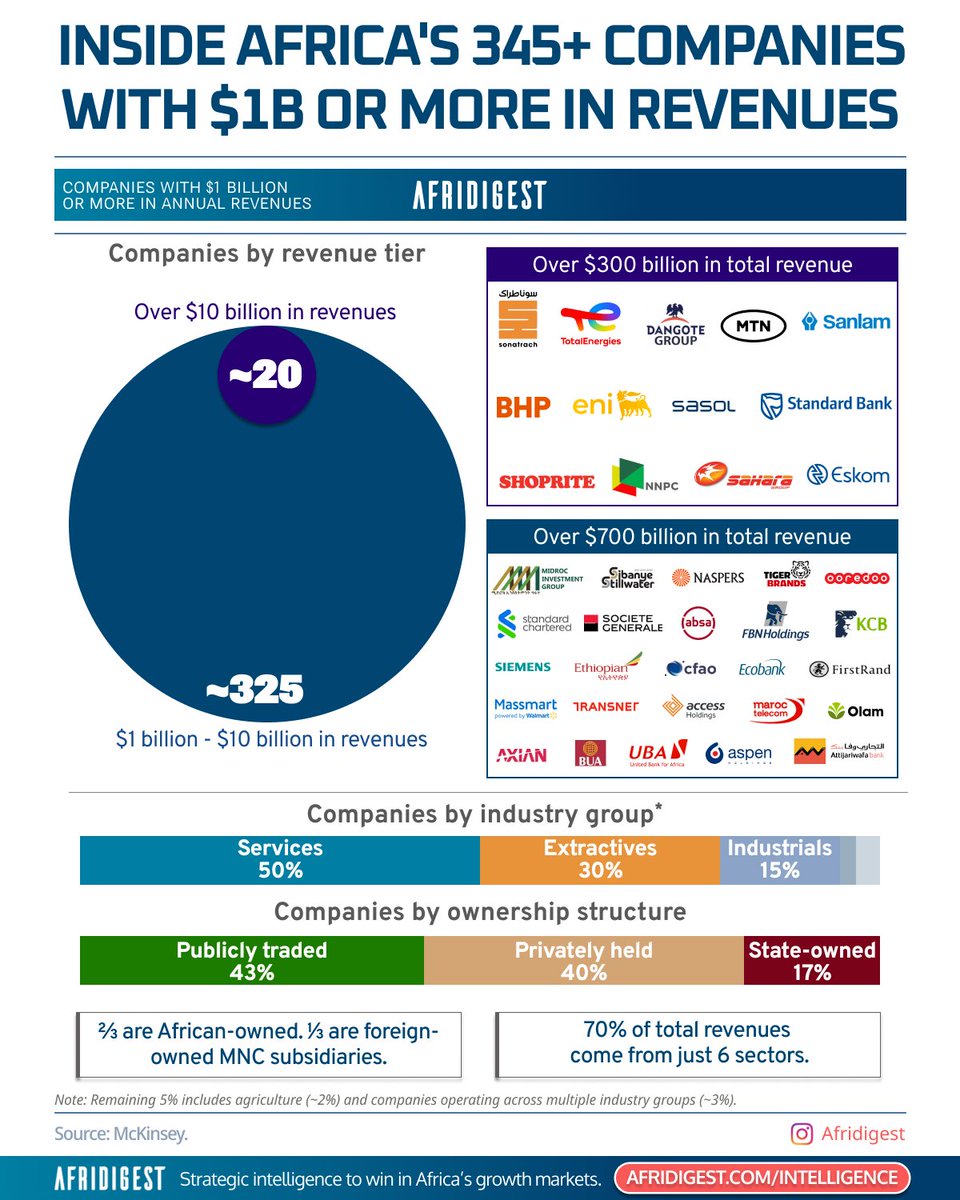
Africa has ~20 companies generating more than $10 billion in annual revenue. You probably know some of them. MTN. Shoprite. Eskom. Sanlam. Dangote Group — bolstered by its new oil refinery. I posted yesterday that Africa has more billion-dollar companies than many people think: x.com/eajene/status/…. Here's a deeper look at them: • About 5% generate over $10B annually; the balance sit in the $1B–$10B range — the backbone of Africa's large-company ecosystem. • 70% of total revenues generated by these companies come from just 6 sectors: oil & gas, mining, financial services, retail & consumer goods, manufacturing, and telecoms. • Roughly 50% of the companies are in services (financial services, telecoms, transport/logistics, CPG/retail, healthcare, IT); another ~30% are in extractives (oil & gas, mining & metals); ~15% are in industrials (construction, manufacturing, power & utilities). The sector concentration points both to the depth of what's been built to date — and the breadth of what hasn't been built yet. Agriculture, for example, which employs more Africans than any other sector, accounts for just ~2% of these companies. More big companies will be built across Africa as the continent's markets mature. The question is whether the next wave of African giants will reflect the full breadth of the continent's economy — not just its most extractable parts. — Afridigest Intelligence — real intelligence to win in Africa's growth markets: afridigest.com/intelligence | Follow Afridigest on LinkedIn & Instagram
Emeka Ajene ✍🏽 tweet media
English
2
67
181
7.8K
Lemma W. Senbet retweetledi
Zainab Usman
Zainab Usman@MssZeeUsman·
Pleased to share my new paper. It examines how the U.S. is using trade policy tools to secure #criticalminerals supply chains. It offers one of the first comprehensive & empirical analysis of the recent U.S. critical minerals trade deals with six countries shorturl.at/DTUEx
Zainab Usman tweet media
English
7
211
471
43K
Lemma W. Senbet retweetledi
Carlos Lopes
Carlos Lopes@LopesInsights·
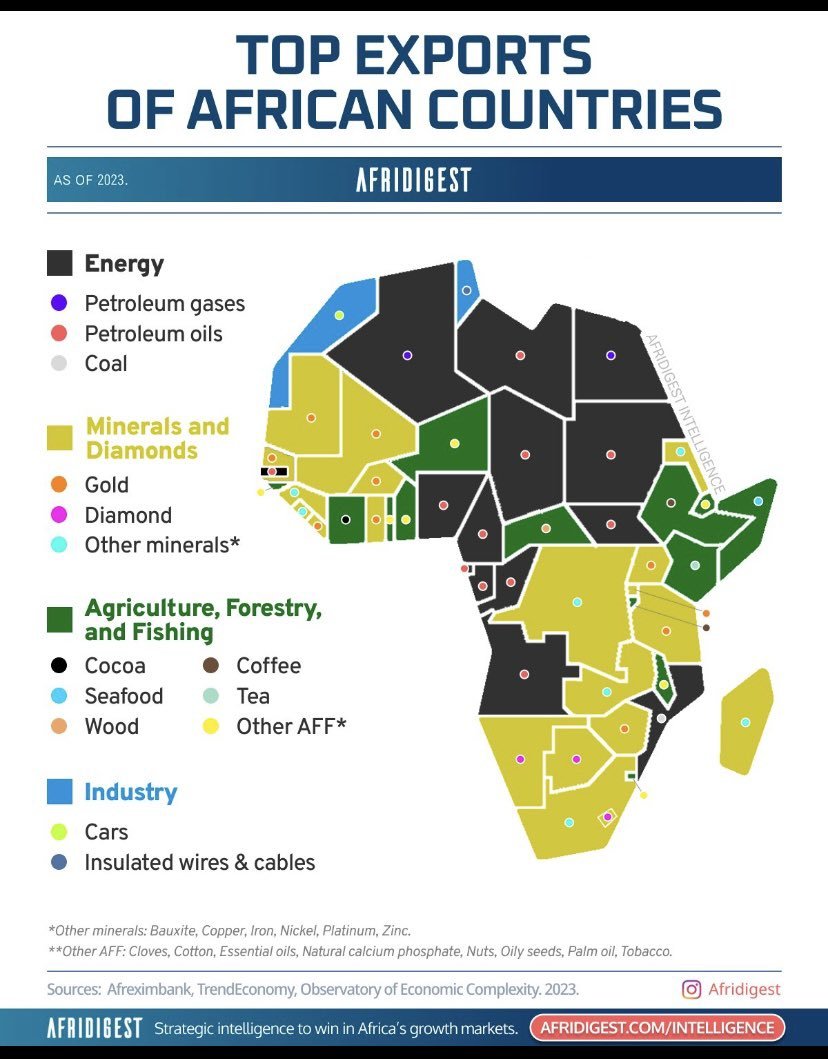
Extractives dominate Africa's exports: 13 countries have energy-related commofiyiesxas their top; another 19 have minerals. This needs to change. After 6 decades of diversification policy prescriptions coming mostly from Washington, time has come to look East.
Carlos Lopes tweet media
English
5
34
75
5.2K
Lemma W. Senbet retweetledi
Addis Standard
Addis Standard@addisstandard·
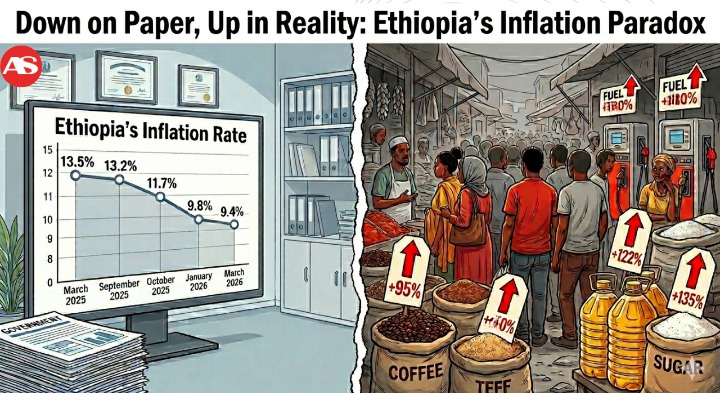
Down on Paper, Up in Reality: #Ethiopia’s Inflation Paradox According to the latest Consumer Price Index (#CPI) released by the Ethiopian Statistical Service (#ESS), Ethiopia’s general inflation rate declined to 9.4% in March 2026, compared with the same period in the previous year. During the same period, food inflation stood at 11%, while non-food inflation was recorded at 7%. In fact, official data indicate a sustained downward trend in the general inflation rate since April 2025, with inflation standing at 14.7% and gradually falling into single-digit territory by December 2025, when it reached 9.7%. Despite this easing in official inflation figures, the lived reality for millions of Ethiopians in both urban and rural areas tells a markedly different story. Domestically produced commodities have recorded significant price increases in the past year: coffee prices have nearly doubled, rising by 95%, while teff and wheat—key components of the Ethiopian diet—have increased by more than 60%. The situation is even more pronounced for imported essentials. A five-liter container of cooking oil and a kilogram of imported sugar now cost 150% more than they did a year ago. Fuel prices have followed a similar trajectory. Between October 2024 and March 2026, the price of gasoline (benzene) increased by approximately 50%, rising from 91 birr to 142.41 birr per liter. A recent analysis published by Addis Standard highlights this glaring contradiction: while official reports indicate inflation is cooling, the real-world cost of living tells a much grimmer story. Want to understand why official data points to disinflation while markets scream otherwise? Read the full article. addisstandard.com/?p=54111
Addis Standard tweet media
English
9
35
57
20.7K
Lemma W. Senbet retweetledi
Charles Onyango-Obbo
Charles Onyango-Obbo@cobbo3·
Africa's Wealthiest Women and How They Built Some Of the Continent’s Most Successful Enterprises Kate Fotso, Cameroon's wealthiest private business woman, is investing $28.3 million in a new brewery project. Fotso made her fortune in cocoa. The investment marks one of the largest private industrial projects in Cameroon’s recent history. Fotso’s story raises the story of who are the wealthiest women in Africa, who didn’t make their fortune from present or past foundational benefits from state/power connections or from a spouse or parents who were presidents (like Angola’s Isabel dos Santos or Kenya’s Mama Ngina Kenyatta). As of early 2026, Forbes reports no women among the official $1 billion plus class in Africa, following the asset freezes of Isabel dos Santos and the market fluctuations affecting Folorunsho Alakija. Listed here are the TOP 10. 1. Folorunsho Alakija (Nigeria) Estimated Net Worth: $1 Billion Alakija is a self-made titan. She began her career in fashion before pivoting to the oil industry. Her wealth primarily comes from Famfa Oil, which holds a major stake in the Agbami Oilfield. 2. Hajia Bola Shagaya (Nigeria) Estimated Net Worth: $950 Million Shagaya is one of Africa’s most prolific entrepreneurs. She built her empire through Bolmus Group International, with diversified interests in real estate, banking (Unity Bank), and photography (she was the sole distributor of Konica in West Africa for decades). 3. Stella Okoli (Nigeria) Estimated Net Worth: $850 Million Dr. Okoli is the founder of Emzor Pharmaceutical, one of the largest indigenous pharmaceutical companies in Nigeria. She started as a small chemist shop in 1977 and scaled it into a multi-billion naira manufacturer of over 50 different products. 4. Wendy Appelbaum (South Africa) Estimated Net Worth: $260 Million The daughter of billionaire Donald Gordon, Appelbaum has carved out her own path as a major player in South African agriculture and finance. She owns DeMorgenzon Wine Estate and held significant stakes in Liberty Investors and various insurance firms. 5. Kate Fotso (Cameroon) Estimated Net Worth: $252 Million Often called the "Iron Lady" of cocoa, Fotso runs Telcar Cocoa, the largest cocoa exporter in Cameroon. Her wealth is rooted in agricultural trade, banking, and she’s now makinglarge-scale investments in the brewing industry. 6. Wendy Ackerman (South Africa) Estimated Net Worth: $200 Million Ackerman was instrumental in building Pick n Pay, one of South Africa’s largest retail chains. While she co-founded the business with her husband, she served as a long-term executive director and is a powerhouse in the African retail sector. 7. Irene Charnley (South Africa) Estimated Net Worth: $150 Million A former trade unionist who transitioned into the corporate world, Charnley was a key executive at MTN Group, where she spearheaded the company's expansion across Africa. She later founded Smile Telecoms, a telecommunications provider operating in several African nations. 8. Bridgette Radebe (South Africa) Estimated Net Worth: $100 Million The founder of Mmakau Mining, Radebe was South Africa’s first black female mining entrepreneur. Although her brother is billionaire Patrice Motsepe and her husband is a politician, she built Mmakau independently as a contract mining firm before acquiring her own mining shafts. 9. Divine Ndhlukula (Zimbabwe) Estimated Net Worth: $50M - $80M (Estimated) Ndhlukula is the founder of SECURICO, one of Zimbabwe’s largest private security firms. She started the company in the late 1990s with only four employees and a few hundred dollars; today, it employs thousands and is a regional leader in the sector. 10. Bethlehem Tilahun Alemu (Ethiopia) Estimated Net Worth: $40M - $60M (Estimated) Alemu is the founder of soleRebels, a globally recognised eco-friendly footwear brand. Her wealth is entirely self-made, built on transforming traditional Ethiopian "selate" (tyre) shoes into a high-end international export sold in over 50 countries. Many of these women lead private companies, meaning their net worth is estimated based on company revenue, sector valuations, and known assets rather than public stock prices. Contest any if you think information is inaccurate, or indicate who should be on the list and has been left out.
Charles Onyango-Obbo tweet media
English
7
63
120
7.8K
Lemma W. Senbet retweetledi
African Development Bank Group
“Africa is not short of vision,” Prof Carlos Lopes told delegates at the Consultative Dialogue on the New African Financial Architecture for Development (#NAFAD). Speaking at the dialogue in Abidjan, Lopes underscored that the continent has long been clear about its direction. Through Agenda 2063, Africa has set out a compelling vision, one that is integrated, prosperous, and driven by its own citizens.
English
3
30
64
6.7K
Lemma W. Senbet retweetledi
African Development Bank Group
At its core, the New African Financial Architecture for Development (#NAFAD) rests on a simple proposition: Capital should be deployed at the right level by the right institution with the right instruments. WATCH below for more from African Development Bank Group President Sidi Ould Tah, at the Consultative Dialogue in Abidjan on 9 April 2026. ⬇️
English
2
23
47
3.3K
Lemma W. Senbet retweetledi
ﺭﺭ
ﺭﺭ@DrRafiqRaji·
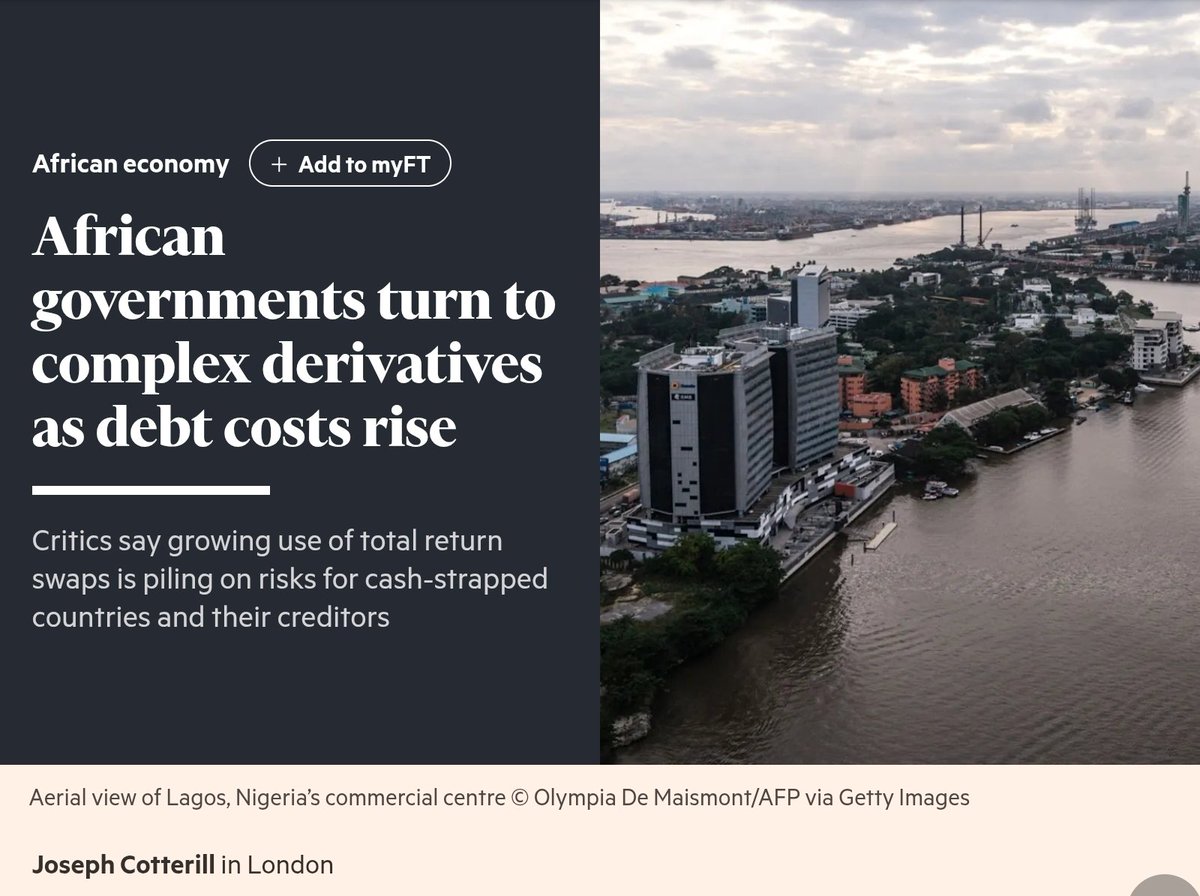
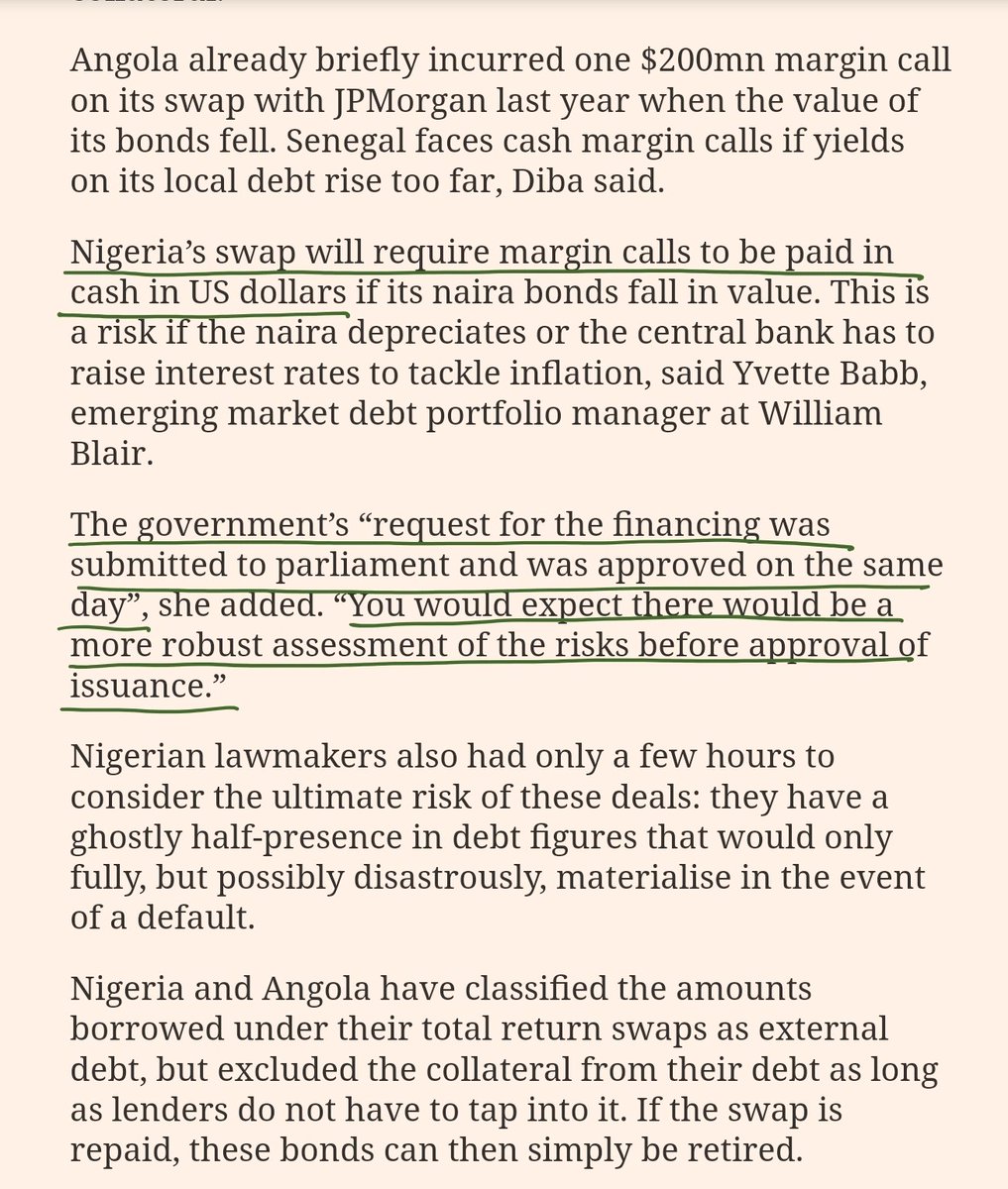
African governments turn to complex derivatives as debt costs rise 10 Apr 2026 Governments have defended the swaps as cost-effective compared with bond markets ft.com/content/9b7687… # africa economics debt
ﺭﺭ tweet mediaﺭﺭ tweet mediaﺭﺭ tweet media
English
1
1
1
47
Lemma W. Senbet retweetledi
African Development Bank Group
TODAY: Launch of @AfDB_Group’s 2026 Africa’s Macroeconomic Performance and Outlook (MEO) report. Amid global uncertainty, #AfricaMEO2026 provides evidence-based insights into economic trends across Africa and its short- to medium-term outlook: bit.ly/4dixfuJ
English
3
30
59
3.5K
Lemma W. Senbet retweetledi
Aina
Aina@Aina_Ai2·
Breaking news: The CEO who created Claude just published a 38-page letter to all of humanity. Dario Amodei mapped out exactly which careers will survive AI and which won't. No hype. No doomsday. Just the coldest, most specific prediction any AI leader has ever made. But page 29 contains a reasoning framework that transforms AI from what will replace you into your greatest unfair advantage. Here are 9 prompts from Claude based on Amodei's methodology that will put you years ahead of everyone who didn't read this:
Aina tweet media
English
97
266
2.1K
610.4K
Lemma W. Senbet retweetledi
Money Ape
Money Ape@TheMoneyApe·
🚨 POWELL BIG WARNING 🚨 FED CHAIR POWELL: U.S. DEBT IS GROWING MUCH FASTER THAN THE ECONOMY & CALLS IT “NOT SUSTAINABLE.” ALSO WARNS: “IT WILL NOT END WELL IF WE DON’T ACT SOON.” U.S. DEBT ~$39 TRILLION WITH INTEREST COSTS ~$1 TRILLION A YEAR. TRUMP MAY LOSE MID… Show more
English
631
664
4.2K
3.4M
Lemma W. Senbet retweetledi
StockMarket.News
StockMarket.News@_Investinq·
The CEO of a $3 trillion company just admitted the biggest threat to AI has nothing to do with the technology itself. It is YOU. Satya Nadella spoke at Davos and said the real obstacle to AI is getting people to actually change how they work. He gave a personal example. Before Davos, his team would spend days preparing briefing notes, filtering up through layers of staff before reaching him. That process had not changed since he joined Microsoft in 1992. Now he types one sentence into Copilot and gets a full 360-degree brief in seconds what Microsoft is doing for a client, what that client is doing for Microsoft, the whole picture at once. Nadella said that kind of capability does not just speed things up, it completely inverts how information flows through an entire organization. The old model, departments hoarding knowledge, information trickling upward through hierarchy, is now structurally obsolete. Most companies have not figured that out yet. He said firms will see almost zero productivity gains from AI unless leaders actively redesign their structures, retrain their people, and rebuild how context moves through the organization. The companies that refuse to change will not just fall behind and they will become irrelevant to the ones that do. His exact words: "That's why you're going to see the challenge of why am I not seeing immediate results in productivity. You have to do the hard work." The hard work is convincing an entire workforce to let go of how they have operated for decades. That is the actual AI race and most companies are losing it before it even starts.
unusual_whales@unusual_whales

Microsoft CEO: The biggest obstacle to expanding artificial intelligence is persuading people to change the way they work.

English
163
239
1.1K
463.3K
Lemma W. Senbet retweetledi
Dustin
Dustin@r0ck3t23·
Larry Ellison just told every software engineer on Earth their job description is dead. Not evolving. Dead. Ellison: “The code that Oracle is writing, Oracle isn’t writing. Our AI models are writing.” This is not a startup demo. This is one of the largest infrastructure monopolies on the planet telling you it already replaced the people who built it. For fifty years, building software meant translating human intent into machine instructions. Line by line. Bug by bug. Sprint by sprint. That entire layer is gone. Ellison: “We don’t write the procedure. We declare our intent.” That sentence just made the entire engineering labor market flinch. The procedure was the job. The procedure was the paycheck. The procedure was what made a developer valuable. And now the machine does it without being asked twice. Ellison: “We just tell the model what we want the program to do, and then the AI comes up with a step-by-step process to actually do it.” You are no longer paid to build. You are paid to think. And most organizations have no idea how to evaluate that. The companies still hiring armies of developers to grind through codebases are paying salaries the machine already made worthless. Not in years. In seconds. When a company worth hundreds of billions hands the keyboard to the machine and tells you the output is better, the debate is not winding down. The debate is over. The enterprise that wins this decade does not write the best code. It removes the human from the process entirely and runs on intent alone. The programmers who survive are the ones who realize the craft is no longer typing. It is architecture. It is judgment. It is knowing what to build and why. Everything else now belongs to the machine. And the machine does not negotiate severance.
English
539
645
2.2K
531.4K
Lemma W. Senbet retweetledi
Charles Onyango-Obbo
Charles Onyango-Obbo@cobbo3·
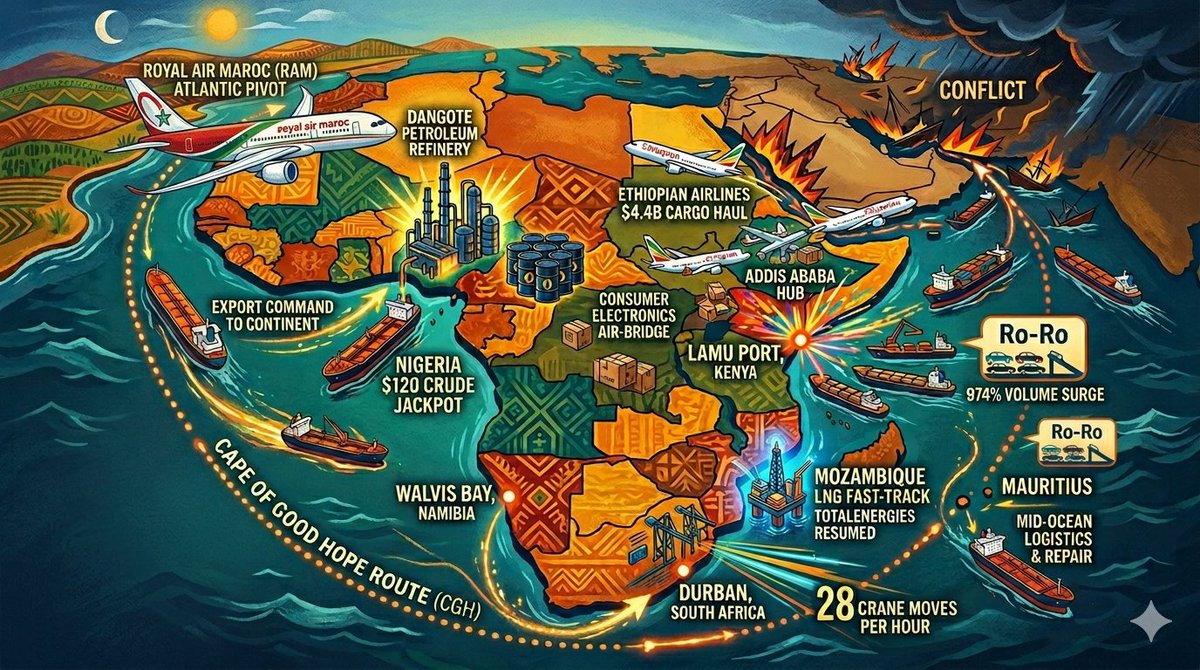
Kenya, Ethiopia, Nigeria Early African Winners as They Harvest Windfall from the Misery of US–Israel vs Iran War As the world reels from the escalation of the US–Israel vs Iran war that erupted on 28 February, the humanitarian suffering is profound. Yet in the realm of global commerce, a quieter upheaval is underway. With the Red Sea and Strait of Hormuz rendered near impassable – shipping traffic down by 90% – Africa has emerged as the world’s most vital logistics corridor. •In KENYA, the once-forgotten LAMU PORT has roared to life. Long dismissed by critics as a white elephant, it has seen a 974% surge in volume. Ultra-large vessels, too deep for Mombasa and too exposed for Gulf waters, now dock at Lamu’s 18-metre natural depth. •ETHIOPIA'S national carrier Ethiopian Airlines has seized the moment. With Dubai and Doha mostly paralysed by airspace risks from Iranian missile and droke strikes, Addis Ababa has become the continent’s primary air-bridge. Cargo revenue is up 14%. High-value goods – electronics, pharmaceuticals, perishables –are now routed through Bole International, bypassing the 40-day sea detour. •NIGERIA is counting its crude. Brent prices hit $120 per barrel in March. Against a budget benchmark of $64.85, daily revenues have doubled. The government has stumbled into an unexpected multi-billion dollar fiscal cushion. •DURBAN, South Africa’s main port, has shed its reputation for congestion. It is now clocking 28 crane moves per hour, processing thousands of ships rerouted around the Cape of Good Hope with a rare level of precision. •MOROCCO'S Royal Air Maroc has moved swiftly. Ten new international routes –including Los Angeles and Beirut – have siphoned off transit passengers who once relied on Middle Eastern hubs. Casablanca traffic is up 12%. •WALVIS BAY in Namibia has become the first reliable refuelling station for ships emerging from the South Atlantic. Bunkering demand is up 30%. •The DANGOTE Petroleum Refinery has in Nigeria, is cashing in. In March, it issued an export tender for 84,000 metric tonnes of jet fuel and diesel. It is no longer just a domestic project – it is replacing Persian Gulf supplies for the continent. •MOZAMBIQUE'S $20 billion LNG project has been fast-tracked. TotalEnergies resumed operations in early 2026. Over 4,000 workers are racing to meet an accelerated production date. Iranian gas is out. Mozambican gas is in. •At Mozambique's PORT of MAPUTO, volumes grew by 16% in the weeks following the war’s outbreak. Chrome and coal exporters have abandoned northern routes in favour of the safer Indian Ocean–Cape corridor. •MAURITIUS, ever shrewd, has leveraged its mid-ocean position into a 15% revenue increase. High-end logistics and emergency repair services are now its bread and butter. But no doubt, the most intriguing twist is the Roll-on/Roll-off (RoRo) revolution in Lamu. Manufacturers are using RoRo ships – where vehicles are driven on and off via ramps – to offload thousands of cars. These are then ferried to the Gulf on small, low-risk boats to avoid the $200,000+ war risk insurance premiums slapped on large carriers entering the Strait of Hormuz. To protect this windfall, Kenya and Ethiopia have launched joint military operations along the once-languishing Lamu Port–South Sudan–Ethiopia Transport (LAPSSET) corridor. This unprecedented coordination is designed to ensure that the new “safe harbour” of Lamu remains shielded from regional spillover. And because the closure of the Strait of Hormuz marooned shipping containers, an emergency air-bridge has formed. Nairobi and Addis Ababa are now the primary transit points for consumer electronics flown from Asia to Europe—bypassing the the 17,700KM sea detour. US leader Donald Trump despises Africa, once labelling its countries "sh*thole", but while many of them will be hit hard by rising energy and fertilisers from America and Israel's attack on Iran, several of them will get a bounty he would never have wished for them.
Charles Onyango-Obbo tweet media
English
59
653
1.1K
151.3K
Lemma W. Senbet retweetledi
United Nations Geneva
United Nations Geneva@UNGeneva·
“No one is born hating another person because of the color of his skin, or his background, or his religion. People must learn to hate, and if they can learn to hate, they can be taught to love.” ― #NelsonMandela #ZeroDiscrimination
United Nations Geneva tweet media
English
71
312
741
25.5K
Lemma W. Senbet retweetledi
Charles Onyango-Obbo
Charles Onyango-Obbo@cobbo3·
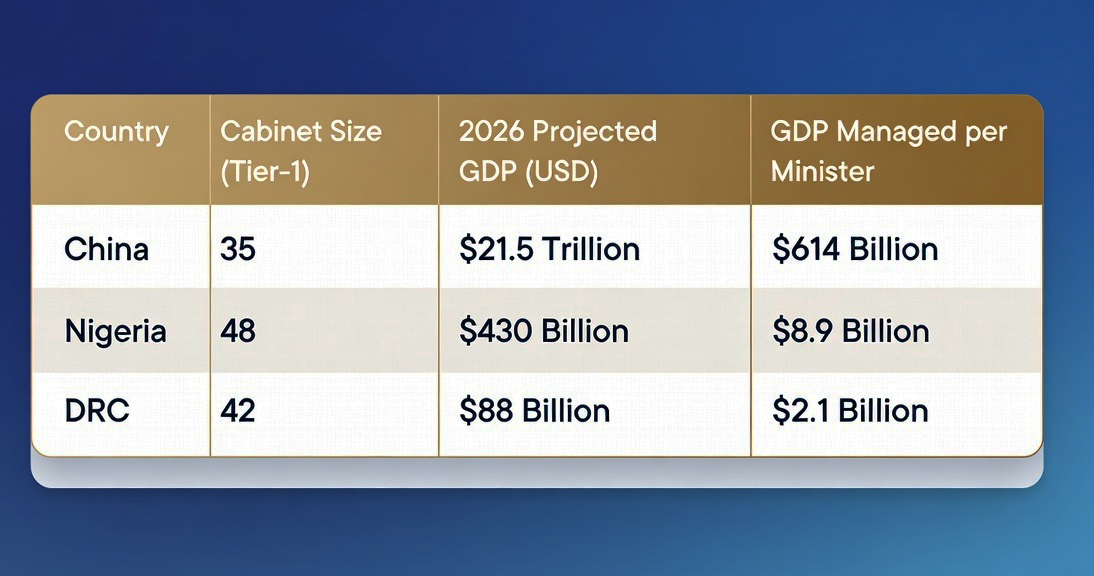
TOO MANY COOKS: WHY 50 AFRICAN MINISTERS CAN'T MATCH ONE CHINESE HEAD As Beijing prepares to scrap all import tariffs for its African partners this May, a stark reality emerges about the price of governance and the sheer scale of the hand that feeds the continent. While China -the world’s largest economy when measured by Purchasing Power Parity (PPP) - governs its $31 trillion (PPP) empire with a lean 35-member Cabinet (State Council), some of its primary African partners have taken the opposite approach. Nigeria and the Democratic Republic of the Congo (DRC), for example (and we have left out smaller economies to avoid extreme embarassment), have bloated their ministerial Cabinets (we are not counting ministers of State and Deputy ministers here) to nearly 50 members each, a kind of "stability tax" that their fragile economies cannot afford, but which Beijing is all too happy to underwrite. The table here bares the efficiency gap. China manages roughly $614 Billion in GDP per Cabinet member. In contrast, Nigeria manages about $9 Billion per minister, and the DRC manages only $2 Billion per minister. The African nations with larger cabinets are effectively micro-managing smaller pots of gold, often using money borrowed from the very country that governs with far fewer heads. To understand the gulf in economic gravity, one must look at the multipliers. China’s economy is 50 times larger than Nigeria’s. Yet, Nigeria requires 13 more senior ministers to manage 50 times less wealth. China’s economy is 244 times larger than the DRC’s. Despite this, the DRC maintains a cabinet 20% larger than Beijing’s. In a world where "size matters," the African executive branch is punching far above its economic weight class. Why the bloat? In many African capitals, a cabinet seat is rarely about administrative necessity; it is about ethnic and regional mathematics. Leaders must hand out portfolios like party favours to keep a lid on internal fractures. Every new ministry created is a seat at the table for a potential rival, a restless ethnic bloc and, of course, the Big Man's family and relatives. China, meanwhile, operates as the world's most efficient landlord. By governing with a small, highly centralised core, it has the agility to move massive amounts of capital. In 2025 alone, China directed over $47 billion into Nigeria and the DRC combined. As long as African nations need "Big Cabinets" (these days some of them, if deputy and minister of State are included, are so large it is almost impossible to get them together for a group photo) to stay stable, China’s smaller, leaner executive will continue to hold the ultimate leverage: the chequebook.
Charles Onyango-Obbo tweet media
English
13
34
77
6.6K
Lemma W. Senbet retweetledi
Farida Bemba Nabourema
Farida Bemba Nabourema@Farida_N·
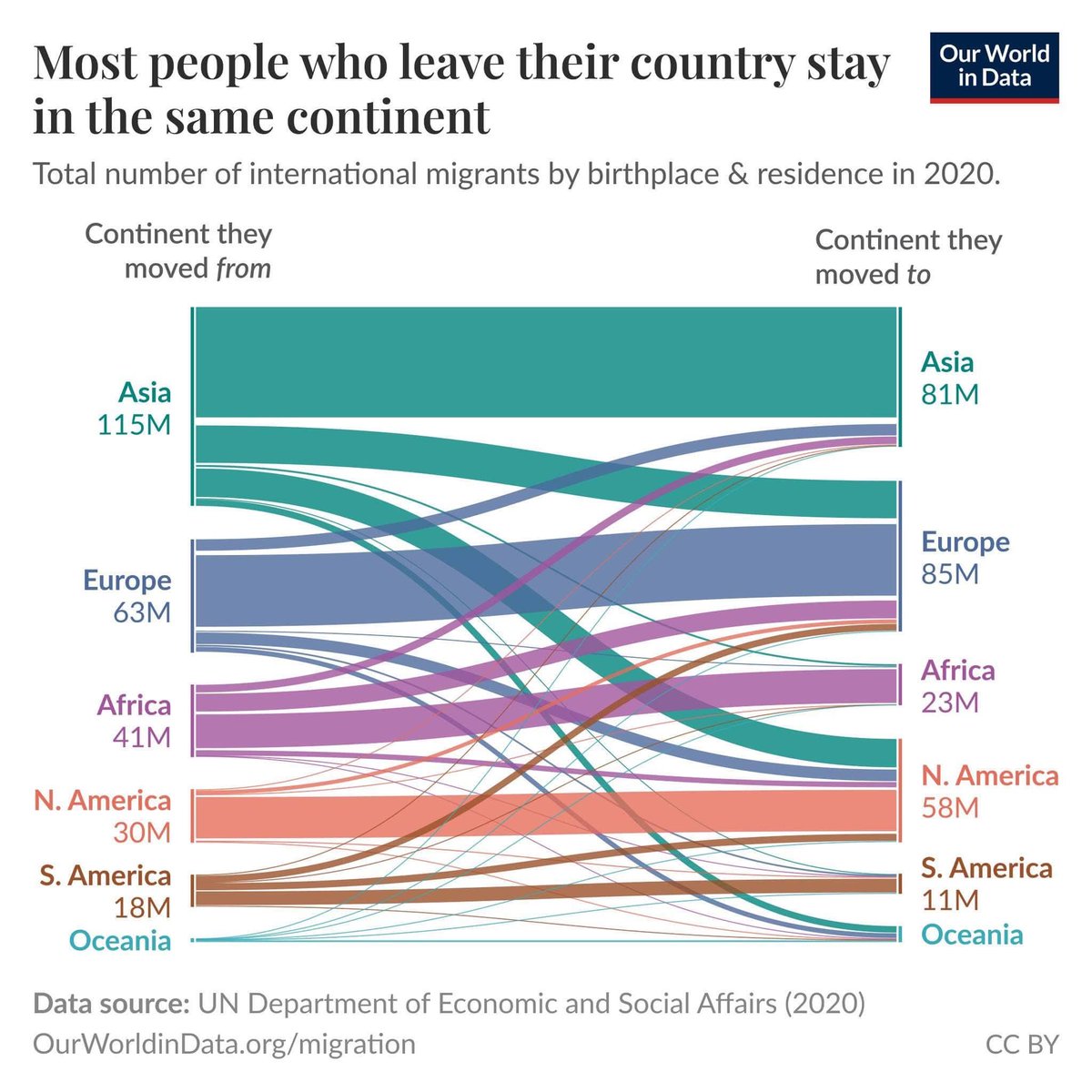
According to the United Nations Department of Economic and Social Affairs: About 45 million Africans live outside of Africa. Out of 1.4 billion people, that is roughly 3 percent of our population. Around 85 to 90 million Asians live outside of Asia. Asia’s total population is about 4.7 billion. That means roughly 2 percent of Asians live outside their continent. About 9 million citizens of the United States live outside their country out of 335 million people. That is roughly 5 percent of Americans. And around 70 million Europeans born in Europe live outside of Europe out of 450 million. That is about 15 percent of their population. So in raw numbers and in percentage, Americans and Europeans are the biggest migrant populations on this planet. Yet somehow they keep pushing the story as if migration is a problem exported by the global south.
Farida Bemba Nabourema tweet media
English
169
1.7K
4.4K
132.6K
Lemma W. Senbet retweetledi
Amina J Mohammed
Amina J Mohammed@AminaJMohammed·
Hunger remains a stark reality for millions. Yet resilient, inclusive and sustainable food systems can turn the tide. Together, let’s accelerate their transformation and deliver on the SDGs, leaving no one behind.
English
28
66
224
8.5K
Lemma W. Senbet retweetledi
Matt Allen
Matt Allen@investmattallen·
Peter Lynch delivers an investing masterclass Must watch:
English
0
49
167
14K
Lemma W. Senbet retweetledi
Sukh Sroay
Sukh Sroay@sukh_saroy·
Stop scrolling. Seriously. This video explains exactly how AI is about to flip the world upside down over the next 10 years. Jobs. Money. Power. Everything. Best breakdown I’ve seen and it’s not even close.
English
113
887
4.5K
461.2K