Lachlan Forrow

954 posts

Lachlan Forrow banner
Lachlan Forrow

Lachlan Forrow

@LachlanForrow

Senior Fellow, Harvard Medical School Center for Bioethics; President Emeritus, The Albert Schweitzer Fellowship

Boston Katılım Temmuz 2009
677 Takip Edilen820 Takipçiler
Sabitlenmiş Tweet
Lachlan Forrow
Lachlan Forrow@LachlanForrow·
This is both terrifying and very helpfully-clarifying. Those "conditions" will sooner or later inevitably arise. IF the "adversary" has nuclear weapons, they will use them. So our ONLY hope for surviving the nuclear weapons era is abolishing those weapons.
United States Strategic Command@US_STRATCOM

#USSTRATCOM Posture Statement Preview: The spectrum of conflict today is neither linear nor predictable. We must account for the possibility of conflict leading to conditions which could very rapidly drive an adversary to consider nuclear use as their least bad option.

English
1
0
12
0
Lachlan Forrow
Lachlan Forrow@LachlanForrow·
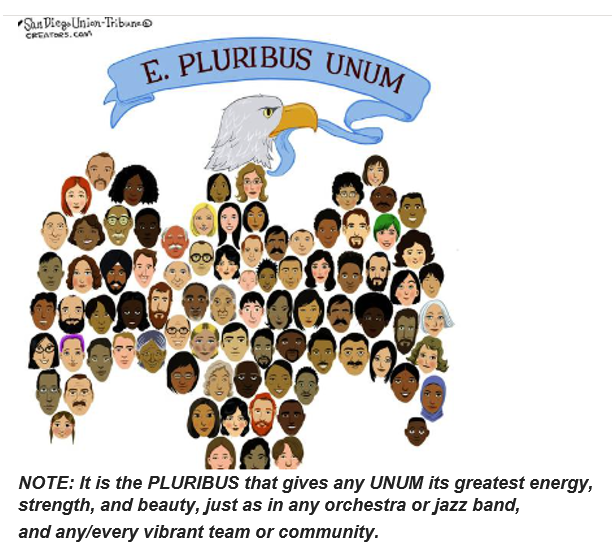
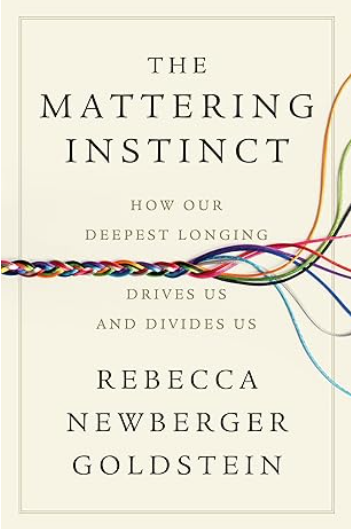
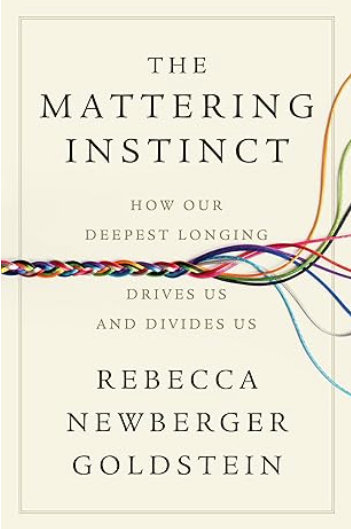
2/3 Her book calls on each of us, in this 250th anniversary year of 1776, to add to our own personal "Mattering Maps" a commitment to making our own distinct contributions to "a more perfect Union", proving that our nation's founders chose the right motto: "E Pluribus Unum"
Lachlan Forrow tweet media
English
1
0
1
54
Lachlan Forrow
Lachlan Forrow@LachlanForrow·
1/3 Rebecca's new book is a major contribution to the vibrantly-ongoing Bach Fugue that started in 1776, her Variation on the initial Theme of "The Greatest Sentence" just substituting "Nature" for "Creator" and "Mattering" for "Happiness".
Lachlan Forrow tweet media
Steven Pinker@sapinker

Walter Isaacson discusses his book with the greatest title ever written about ‘The Greatest Sentence Ever Written.' I agree with his judgment: my eyes well up every time I read the sentence (particularly in context, where it appears as a climax after a moderate preamble. The following clause isn't bad either). news.harvard.edu/gazette/story/…

English
1
0
2
76
Lachlan Forrow
Lachlan Forrow@LachlanForrow·
Rebecca's work is a major contribution to a vibrantly-ongoing Bach Fugue, a creative Variation on the core Theme that began with what Walter Isaacson's newest book calls "The Greatest Sentence Ever Written", just substituting "Nature" for "Creator" and "Mattering" for "Happiness"
Lachlan Forrow tweet media
English
0
0
1
38
Lachlan Forrow
Lachlan Forrow@LachlanForrow·
4/4 The rich diversity of the distinctive "mattering maps" we each bring to our individual lives gives us all reason to unite in mutual respect, proving that E Pluribus Unum was the right founding motto of the U.S. @sapinker @davideagleman @bizbookpr @michaelshermer
English
1
0
6
211
Lachlan Forrow
Lachlan Forrow@LachlanForrow·
3/4 This is the outline of her argument, supported with rich descriptions of how it has applied in real human beings, from William James to a young man today finding his "mattering" in a group of violent neo-Nazis (spoiler: he is now a friend of Rebecca's)
Lachlan Forrow tweet mediaLachlan Forrow tweet mediaLachlan Forrow tweet media
English
1
0
3
338
Lachlan Forrow
Lachlan Forrow@LachlanForrow·
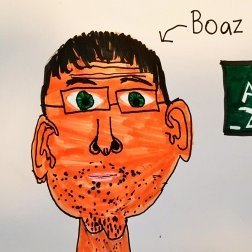
@boazbaraktcs Boaz—great points, esp the last. For 3 of our 4 children, with all due respect to the academic rigor of their classes, the most valuable thing in high school was 3-season distance running, a paradigm for learning the importance, rewards, and satisfaction of sustained hard work
English
0
0
0
42
Boaz Barak
Boaz Barak@boazbaraktcs·
I think this post is somewhat misleading. No doubt people like this exist but I don't think it describes a large fraction of the PhD cohort in a top STEM program (especially given that about half are International students). FWIW I did not go to any special school as a kid in Israel nor did I do any special activity. Math competitions were not really a thing in my area of the country. I did the standard top math ("5 units" which about 15% of students take nationwide) and also did pretty well (though not perfect) on the Israeli version of the SAT. The first time I discovered I really loved math was in undergraduate studies (which like most Israelis I started at the age of 22). That was also my first exposure to actual mathematical proofs. By the time I got to PhD, I don't think I was much behind peers who took multivariate calculus in 8th grade. I actually think that the main skill that students who work very hard on math at high school gain is not the exposure to advanced material - that is something you can pick up later on. Rather it is the skill of being able to work very hard at something - whether you get it from being an athlete, mathlete, or something else that is one of the most valuable skills to have.
sarah@atheorist

Most people don't actually know the lengths parents will go to try to raise an academic superstar. In this post, I will detail the life of the average thoroughbred in STEM PhD programs at a top university. The thoroughbred lives a difficult life full of enormous amounts of pressure. The thoroughbred's parents have oriented the next 18 years of their family life to evolve around the academic success of their children. The thoroughbred's parents don't simply move houses within their country so their kids can go to the best school in the district; they do a nationwide search to decide where to raise their children based on the schools in that area. The thoroughbred's parents tell their kids that getting straight A's in school isn't enough because the kids in their class are "normal," and to cut it, they are going to have to strive far beyond what's taught in a classroom. They usually have various tutors starting in elementary school, do math and language courses after school, and engage in summer enrichment activities. They make sure their kids get into the gifted and talented programs in their kids' school, and if their kid doesn't make the cut, they hound the school as hard as possible to make sure their kid stays with the leaders of the pack. Their parents give them extra homework during the summer so that they can test out of as many subjects as possible during the school year. Their parents know the algebra readiness exam is in 6th grade and that their child needs to score above a 90% to be able to take algebra 3 years early. They have their child prepare for this exam as early as their kid can handle the material. For these children, school should be a breeze, and they learn the real stuff during their studies outside of the classroom. By middle school, they are spending summers at various math and science camps and doing STEM after school programs. I cannot stress how common math camp is. Most people I have met in STEM PhD programs have gone to math camp, and basically all know each other from their early days going to various math camps as kids. Moreover, in middle school, a lot of the parents start on SAT prep and hope they can do the bulk of their preparation before high school because in high school they have more difficult things to worry about. I know a lot of folks who got the SAT score they used for college in 8th grade. Some kids even have dubious non-profits that they started in middle school that they build up throughout high school in order to project sincere interest in outreach over a long time period—god forbid college admissions programs think you just created a non-profit to get into college. If the high school they want their kid to attend requires testing, they start their kids in test prep classes a few years prior to the high school admissions exam. In high school, they are maxing out AP courses and taking the hardest possible courses available. Usually by junior year, they are taking at least one course at a nearby college. They are entering science competitions and scoring very well at the national and international level. Many of the students who do well at Intel science competitions or Science Olympiads have parents in that exact field of study who can help guide them towards more sophisticated ideas. I know someone who won the Intel science competition by doing a project in spectroscopy whose parents worked on spectroscopy professionally. That being said, the parents aren't doing the projects for them—they know that would ultimately hurt their child—they can just steer them towards actual cutting-edge science and tell them which projects are promising. By high school, all of the thoroughbreds are together at various prestigious public and private schools. Scattered amongst the thoroughbreds are incredibly smart kids who got lucky, and a few people who are struggling in that academic situation who just got lucky during the admissions process. The kids who aren't thoroughbreds have no idea what's going on underneath the surface. They think the thoroughbreds are simply geniuses - they just have so much better mastery of the material and seem to learn everything more quickly than they do. They have no idea what they are stacked up against. They simply do their assignments, try to get good grades, and do a good job in the clubs at school. If a thoroughbred finds themselves struggling in school for whatever reason, they get a tutor and work on it incredibly hard outside of school, though the parents would see that as a personal failure as they should already be so far ahead of their peers that it shouldn't be possible. When the thoroughbreds apply to college, they end up all over, not just fancy institutions. This is primarily because colleges have unofficial admissions quotas for how many students they can admit from each high school. So the top 10% of the thoroughbreds from the top 10% of high schools fill up prestigious universities, and the rest go elsewhere. But do not fret; those who go elsewhere kill it in college and become academic superstars at their respective universities. Once PhD programs come around, the thoroughbreds all end up back together. They all know each other from math camp, science competitions, and shared social circles from prestigious high schools. They have an academic base that's just incredibly hard to compete with if you did not have similar academic training. The additional dexterity you get with that much additional exposure to material is hard to overstate. Of the 50 students admitted to a physics PhD program at my university, most of their parents have PhDs, and all but one student took calculus in high school. Their parents are not necessarily wealthy; they simply prioritized their child's education to an extent most families don't even realize is on the table. Very few people seem to realize just how far families are willing to go to ensure their kids succeed academically, and I hope this post shines some light towards what is going on under the surface of what it actually takes to raise a thoroughbred.

English
16
16
243
31.7K
Lachlan Forrow
Lachlan Forrow@LachlanForrow·
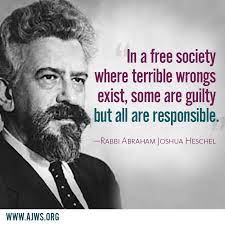
5/5 Rabbi Abraham Joshua Heschel taught us all what having "Freedom", and being a citizen of a "free society", _requires_ of us. (His own understanding of civic responsibilities compelled him, among many other acts of principle and courage, to join MLK and others in Selma.)
Lachlan Forrow tweet media
English
0
0
3
100
Lachlan Forrow
Lachlan Forrow@LachlanForrow·
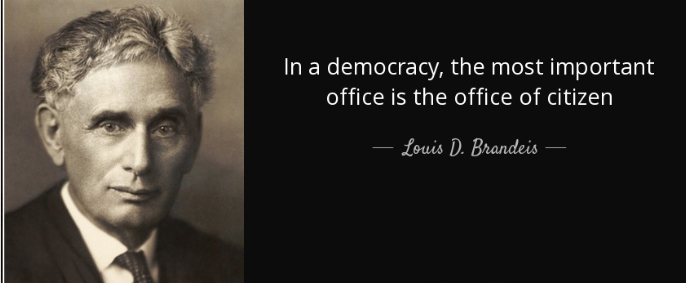
4/5 The highest office in this country is -- and must always be -- the office of “citizen”. On Nov 5 our votes for the highest _elected_ office in our country must be cast as an _American_, not as a member of any party/faction. Save that for all the “down-ballot” voting.
Lachlan Forrow tweet media
English
1
0
5
110
Lachlan Forrow
Lachlan Forrow@LachlanForrow·
@jflier Rabbi Abraham Joshua Heschel, whose faith-rooted understanding of citizen responsibilities compelled him, among many other acts of principle and courage, to join MLK and others in Selma, taught us all what true "Freedom", and being a citizen of a "free society", _requires_ of us.
Lachlan Forrow tweet media
English
0
0
0
19
Lachlan Forrow
Lachlan Forrow@LachlanForrow·
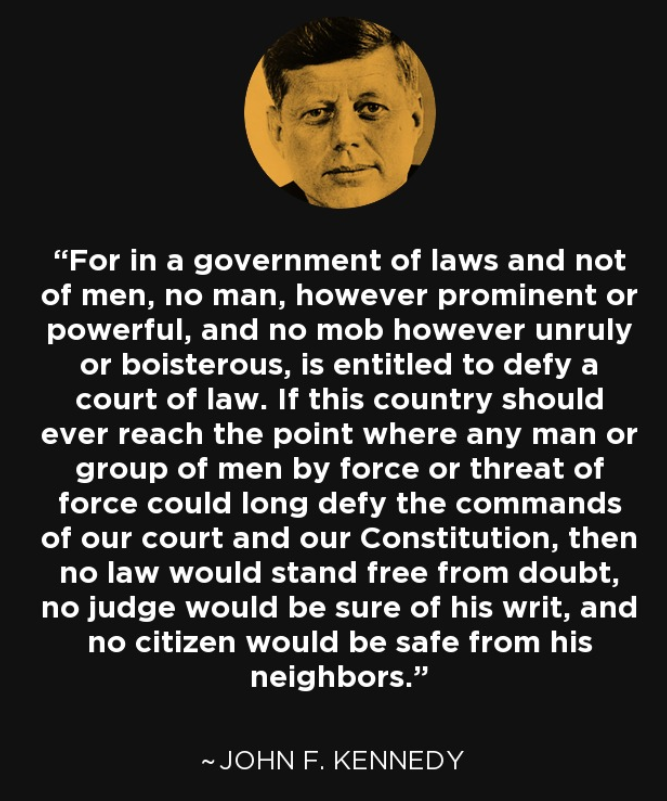
@jflier 3/4. BUT: Every citizen of this country is now a member of the _ultimate_ "jury of his peers", each of us personally responsible on Nov 5 _both_ for issuing our own "verdict", and for convincing our fellow jury members to join us in showing we are a nation of laws, not men.
Lachlan Forrow tweet media
English
1
0
0
14
Lachlan Forrow
Lachlan Forrow@LachlanForrow·
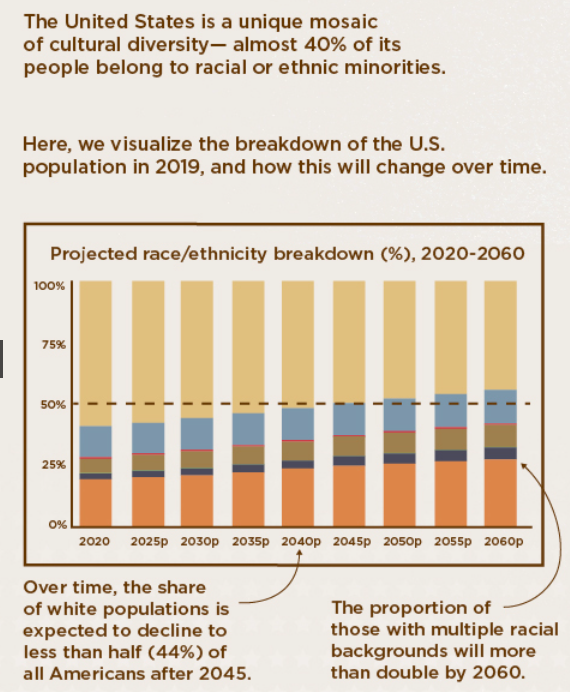
@JoiaMukherjee Joia: Love this! If we project Love out into our country's future (this only goes to 2060), it is _inevitable_ that most Americans will identify with _multiple_ "racial"/ethnic categories, and the idea that _anyone_ belongs to one "race" will be understood as totally absurd!
Lachlan Forrow tweet media
English
0
0
0
21