
Láďa Malý cynický princ
12.7K posts

Láďa Malý cynický princ
@LadaMaly
Konzervativní asociál. INTJ analytik. PS: S vulgárními tykači se nehádám, ale blokuji je. Živým CZ a SK profilům sledování vracím.


The Arctic Ocean will be ice-free by 🎯 2000 🎯 2008 🎯 2012 🎯 2013 🎯 2016 🎯 2017 🎯 2018 🎯 2019 🎯 2020 and now, 🎯 2027 Can’t wait to laugh when that doesn’t happen.


Nárůst teploty v ČR je přibližně dvojnásobný než nárůst světové průměrné teplotní anomálie. Obecně platí, že pevnina se otepluje rychleji než oceán a severní polokoule se otepluje rychleji než jižní. Světová průměrná teplotní anomálie však průměruje pevninu, oceán, severní i jižní polokouli a tedy světový trend oteplování je přibližně poloviční než oteplení v pevninských částech severní polokoule.


Methane is portrayed as a ticking time bomb hidden in the seabed. Methane is largely neutralised by the ocean itself before it ever reaches the air, thanks to seafloor methanotrophic bacteria that 'eat' the gas, oxidizing it into CO₂ and water. By the time methane bubbles travel from the deep seabed through kilometers of water, the vast majority has been dissolved or consumed. Methane hydrates (ice-like structures on the seafloor) require specific pressure and temperature to remain stable. While localised seeps occur, the thermal inertia of the deep ocean is so great that disrupting these stores on a global scale would require centuries of sustained warming, not just a few hot summers. The central weakness in the 'perpetual decay' narrative is the distortion of time. We are told the crisis is ten years away, yet the ocean operates on a clock where a single 'tick' is a hundred years. To suggest we can accurately forecast the collapse of a system so vast - a system that has moderated the Earth's climate through icehouse and greenhouse conditions for eons—is a triumph of narrative over data. The ocean is not a trigger for anything. It is the greatest stabilising force on Earth.


@Surda_Jan Jdeš do bloku :) pa


These two images were taken by @astro_reid only minutes apart. The stark difference is the result of camera settings. In the first, a longer shutter speed let in much more light from Earth, while the shorter shutter speed in the second emphasizes our planet's nighttime glow.

These two images were taken by @astro_reid only minutes apart. The stark difference is the result of camera settings. In the first, a longer shutter speed let in much more light from Earth, while the shorter shutter speed in the second emphasizes our planet's nighttime glow.

These two images were taken by @astro_reid only minutes apart. The stark difference is the result of camera settings. In the first, a longer shutter speed let in much more light from Earth, while the shorter shutter speed in the second emphasizes our planet's nighttime glow.


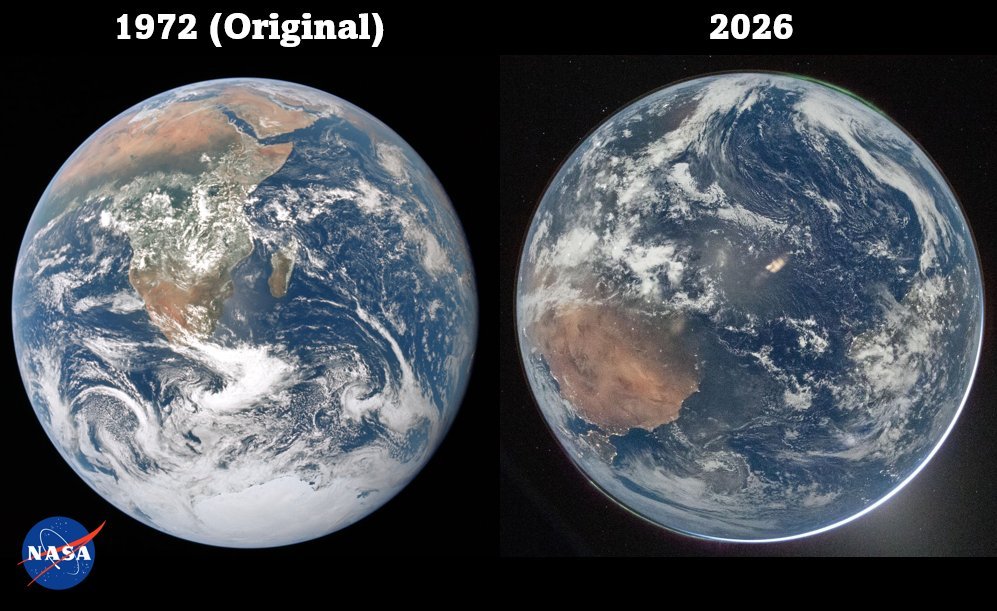
NASA shares the first photo of Earth from outer space taken in 54 years. On the left is a 1972 photo which shows Earth during the day while the sun is shining on it. On the right is the 2026 photo which shows Earth at night lit up by the moon. Godspeed to Artemis II. 🚀🧑🚀

These two images were taken by @astro_reid only minutes apart. The stark difference is the result of camera settings. In the first, a longer shutter speed let in much more light from Earth, while the shorter shutter speed in the second emphasizes our planet's nighttime glow.