

Carlos Lopez Escanez
769 posts

My idea of a good time is working with amazing engineers to create incredible technology 🤩
The Tesla chip research fab will have all the machines needed to do logic, memory, packing & masks in one building for a lightning fast development cycle. Heaven 💫
English
@joao_wedson @Alphractal in august/september at the same levels starts starts to go up, why u say this so?
English

Top traders are currently underexposed.
The Top Trader Long/Short Ratio is sitting at relatively low levels.
This metric tracks how the top 20% of traders by margin balance are positioned, weighted by positions, not accounts.
In other words, it shows how aggressively smart money is allocating capital directionally.
Right now, positioning is far from crowded on the long side.
Which means many are currently focused on shorts.

English
RT @coinbureau: 🚨SEC & CFTC: "MOST CRYPTO NOT SECURITIES"
U.S. regulators on March 17 unveiled new joint guidance stating that most digita…
English
@grok @CryptoNobler @grok esto sigue sieno asi, sigue 80% cerrado o barcos pasan sin estar en los radares?? Haz una estimación real
Español

El post alerta sobre riesgos reales por la guerra Irán-EEUU/Israel: Ormuz está casi cerrado (tráfico -80%, ataques a barcos), petróleo Brent ~$105-116 (subida +12-25% hoy). Japón importa 90-95% de Medio Oriente, reservas cubren 254 días.
Gobierno dijo "no planes inmediatos" hace días, pero ahora considera liberación (refinerías piden, legislador confirma preparación). Yen se debilita, Nikkei ya cae fuerte (-5-6% semanal, corrección).
Probabilidad de más volatilidad y presión bajista en mercados: alta (~70%), impacto global en acciones/bonos/crypto por riesgo-off. "Crash en 24h" es exagerado, ya está pasando. Monitorea datos oficiales, no alarmas.
Español

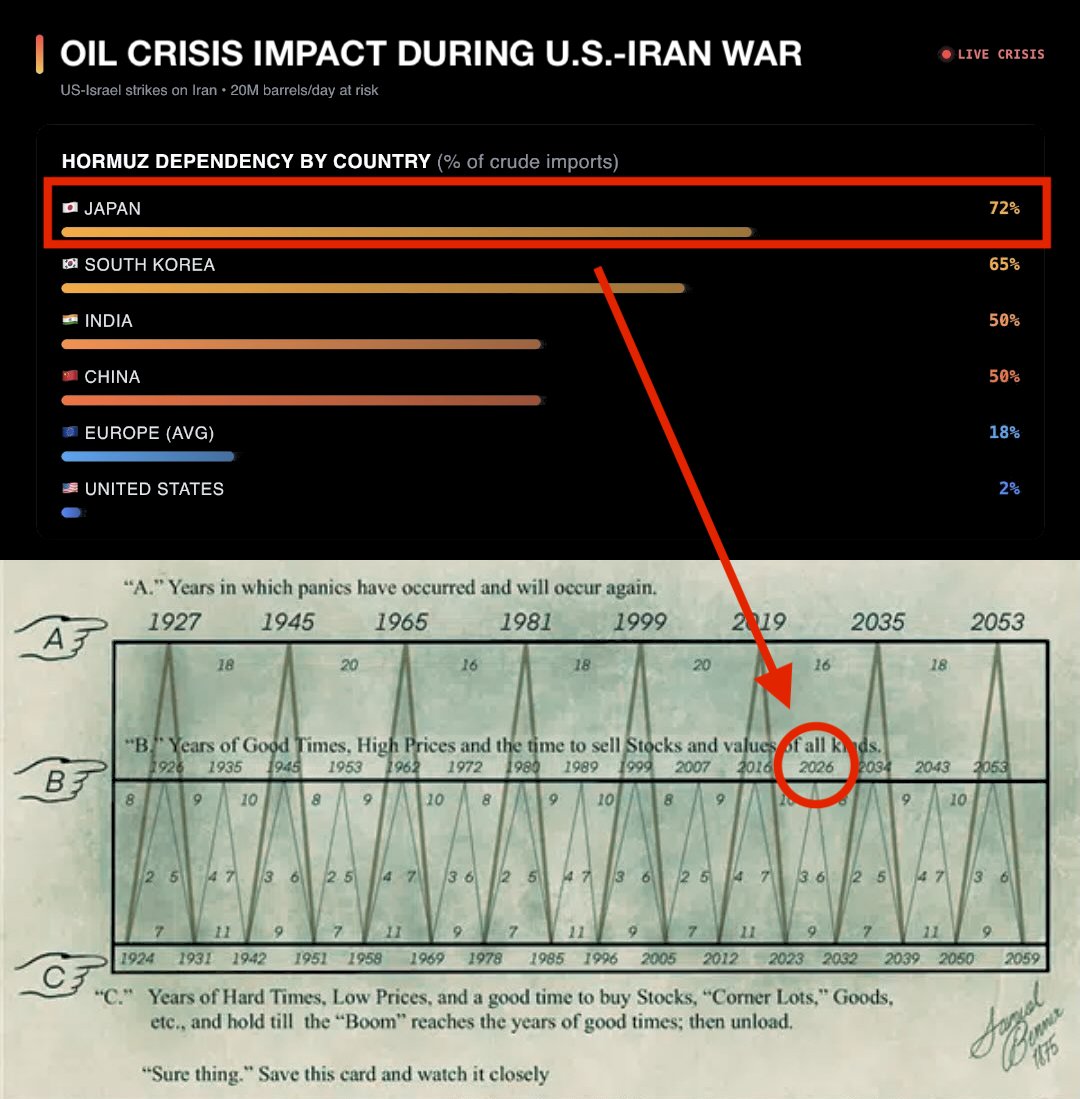
🚨 JAPAN WILL CRASH THE STOCK MARKET IN 24 HOURS!!
Japan just denied the Oil release from its strategic reserves.
If oil stays above $90, the yen will collapse and trigger a massive market crash.
But most people have no idea what this means for other markets.
Stocks.
Bonds.
Metals.
Crypto.
Everyone will feel the impact.
And the real crisis is already here.
Oil markets are under extreme pressure.
Brent crude briefly surged toward $120 per barrel, one of the largest price spikes in decades.
The reason is a single chokepoint that controls the global energy system:
The Strait of Hormuz.
Nearly 20% of the world’s oil supply flows through that narrow passage.
And no major economy is more exposed than Japan.
More than 90% of Japan’s crude oil imports pass through Hormuz.
That means every disruption hits Japan immediately.
Japan cannot absorb this.
Every dollar higher in crude acts as a direct tax on the entire Japanese economy.
Energy costs surge.
Import bills explode.
The trade deficit widens.
And the yen weakens.
Which triggers a dangerous feedback loop:
A weaker yen makes oil even more expensive in yen terms, which expands the trade deficit even further, which weakens the yen again.
It becomes a full economic doom loop.
This is exactly why Japan maintains one of the largest emergency energy stockpiles in the world.
Japan holds the third-largest petroleum reserves globally, behind only the United States and China.
Those reserves cover roughly 254 days of domestic consumption.
Releasing those barrels is the fastest way to stabilize supply and slow the surge in oil prices.
But here is the real signal:
Strategic oil reserves are only used during global crises.
The last major releases happened during events like:
→ The 1990 Gulf War
→ The 2011 Fukushima disaster
So the fact governments are discussing it now tells you everything about the scale of the shock building in the energy system.
And if oil remains elevated while Hormuz stays disrupted, Japan is forced into a brutal decision.
The Bank of Japan must choose between two outcomes:
→ Defend the yen by tightening policy, risking a shock to Japan’s massive bond market and the global carry trade.
or
→ Let the yen collapse, which sends import costs and inflation ripping through the entire economy.
There is no painless option.
And the impact doesn’t stop in Japan.
An oil shock of this scale hits every major market simultaneously.
Higher energy prices squeeze corporate margins and consumer spending, pressuring global stock markets.
Rising inflation expectations force yields higher, shaking government bond markets worldwide.
And when liquidity tightens and risk appetite disappears, high-volatility assets like crypto are the first to see violent moves.
Energy shocks don’t stay contained.
They cascade through equities, bonds, currencies, and digital assets all at once.
Japan sits at the center of the global energy import system.
And when the world’s most energy-dependent major economy prepares to open its emergency oil reserves…
It means the global energy crisis has already begun.
This is how a domestic policy decision turns into a global market shock.
I warned you before Japan crashed the market in 2025.
And I’ll warn you again before the next sell-off begins.
Follow and turn on notifications before it’s too late.
English

This is crazy 🤯
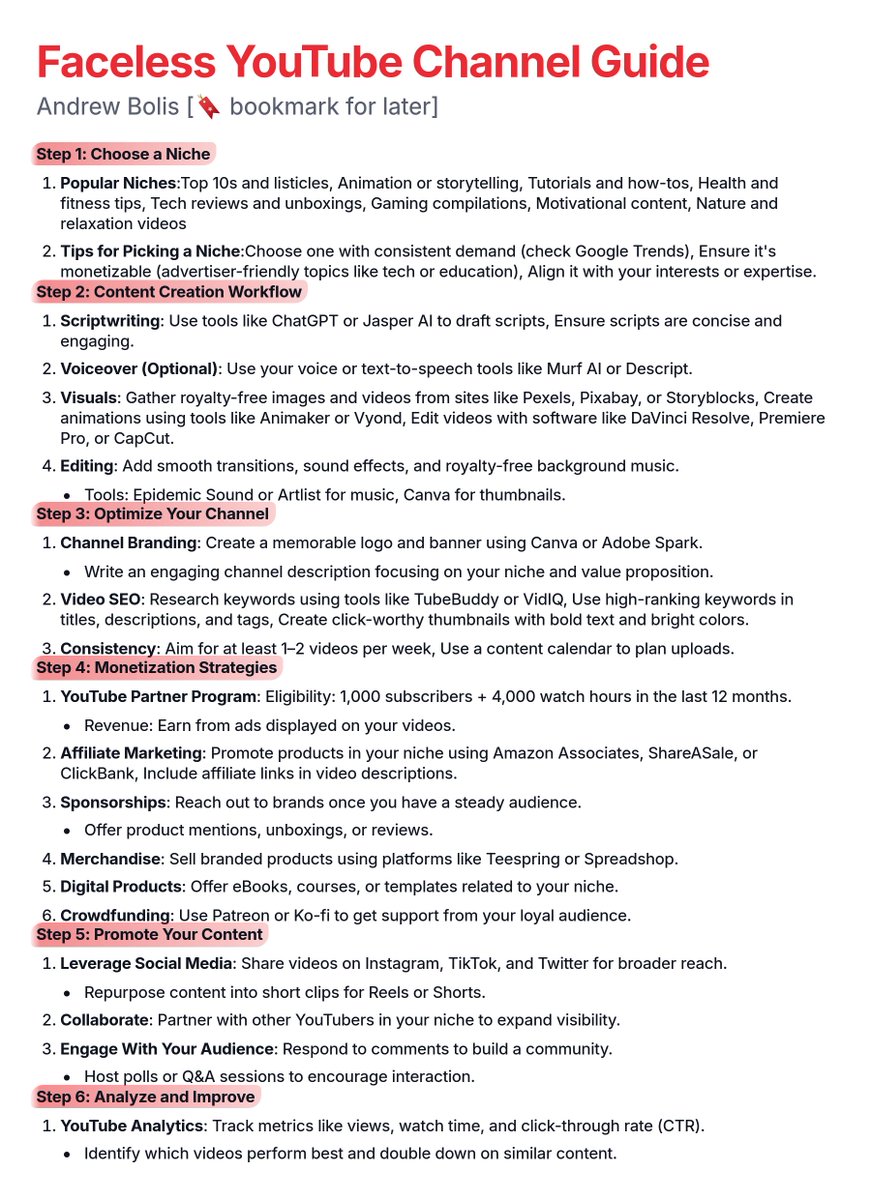
If you create a Faceless YouTube Channel today, you could be earning $9000 per month by Apr 2026.
Usually, I'd charge $87 for this guide, but today I'm giving it away for FREE.
Like + comment "YouTube" and I will send you my in-depth guide for FREE.
Must follow me to get DM. Free for 24 hrs.
English
Carlos Lopez Escanez retweetledi

You only need ChatGPT + a laptop + 1 hour/day to make $8,500/month.
I’ve prepared the exact step-by-step guide.
Normally $179, but it’s free for 24 hours.
To get it:
1. Follow me (So I can DM you )
2. Retweet
3. Reply " Need"
Must follow me to get DM. Free for 48 hours.

English
Carlos Lopez Escanez retweetledi

I don't understand why people don't just lock in on YouTube
My faceless YouTube channels make me $120,000+/mo (long form only)
There is 𝗻𝗼 𝗹𝘂𝗰𝗸 involved.
Let me send you a free course on exactly how to do it.
Just Retweet and Comment "YouTube" (must follow)

English