🚨 New Issue Alert!
Language Awareness, Vol. 35, Issue 1 (February 2026) is now live! Featuring research on EMI, AI writing, metacognition, Global Englishes, corrective feedback, translanguaging, decolonial language awareness & more.
🔗 Read the full issue. Link in comment.
Teaching Global English can change minds, but can it change FEELINGS? This study shows pre-service teachers adapted cognitively to global English perspectives, while affective shifts were slower and more complex. Abs.=Catalan
How does language shape identity after displacement? A case study of a bisexual North Korean refugee shows how different languages become tools for survival, refuge, and rebuilding identity, with English emerging as a space for affirmation and future selves. Abs.=English
What happens when students read across languages, with NO teacher support 😲?
Grade 6 learners in Quebec showed SURPRISING ABILITY to make meaning, transfer strategies, and think critically, highlighting the UNTAPPED potential of plurilingual reading. Abs.=English
Does #ChatGPT really improve ESL writing? Clear gains in vocabulary, grammar, cohesion, and style. BUT learners engaged with it in VERY DIFFERENT ways, suggesting outcomes depend on how the tool is actually used. Abs=English
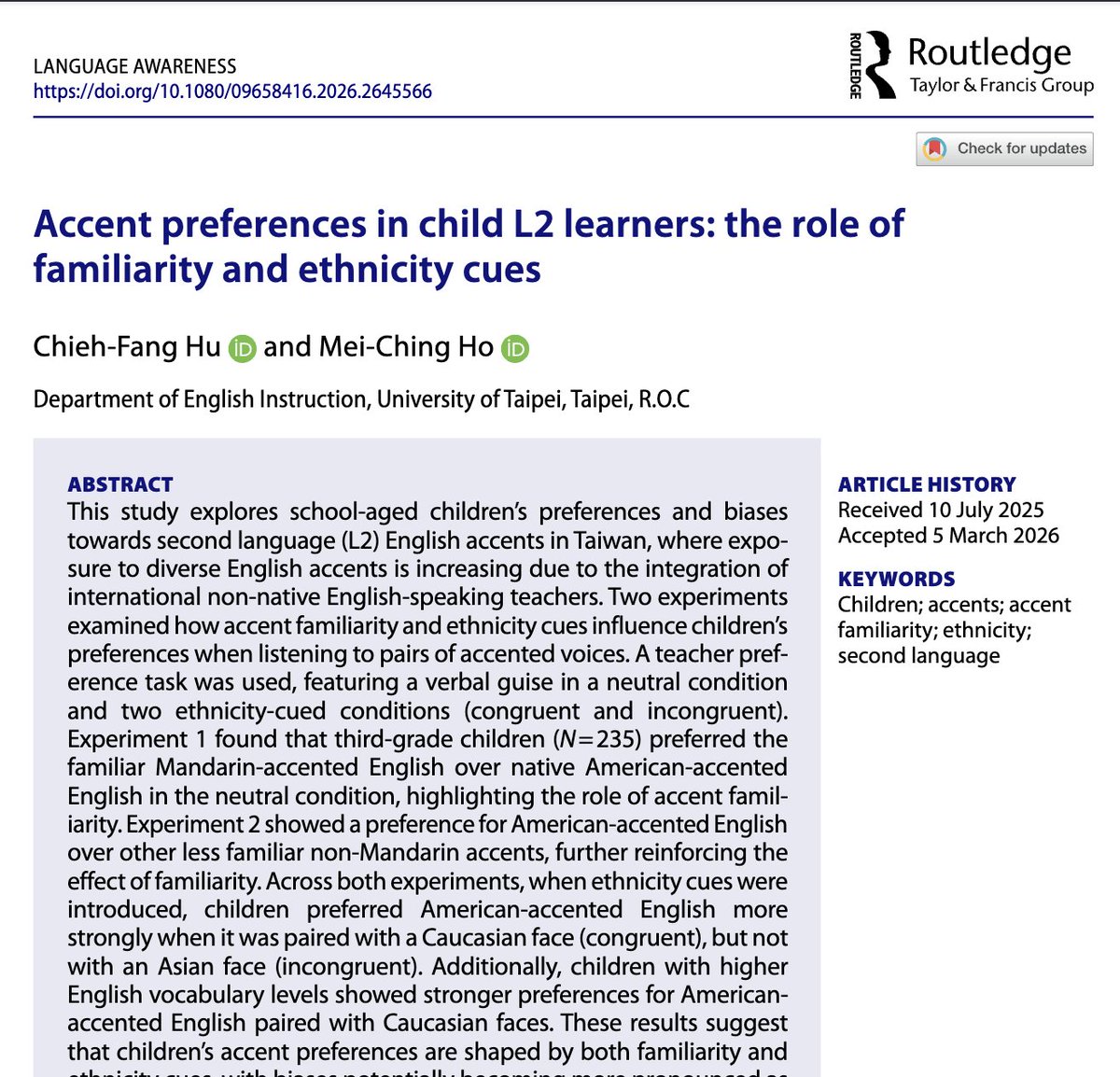
What shapes children’s accent preferences? In Taiwan, familiarity and ethnicity cues both matter—kids preferred familiar accents, but favoured American-accented English more when paired with a Caucasian face, pointing to emerging bias. Abs.=Chinese
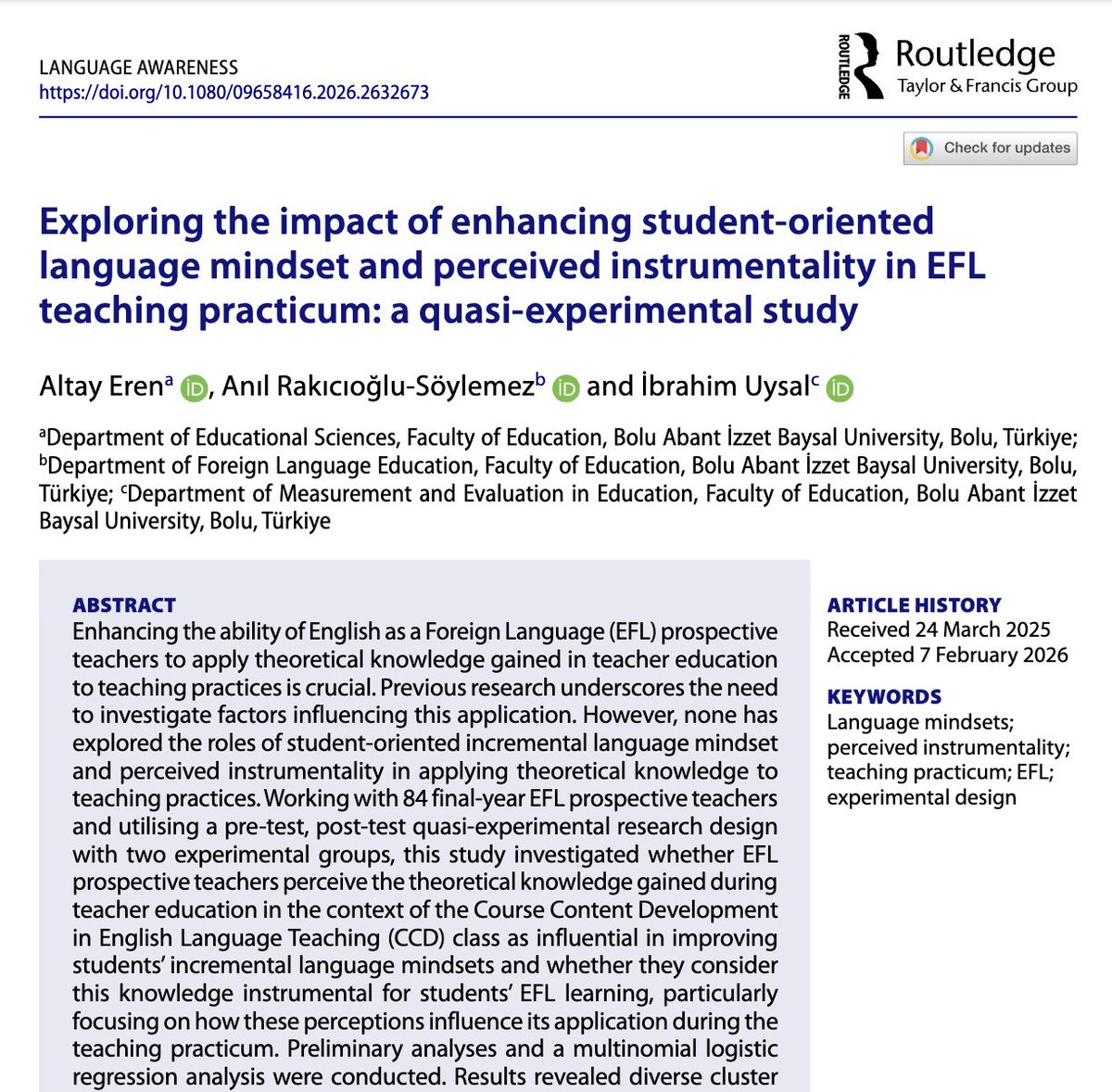
Does perceived usefulness drive theory–practice transfer? This study shows future EFL teachers are more likely to apply course knowledge in their practicum when they see it as useful for students’ language learning. Abs=Turkish.
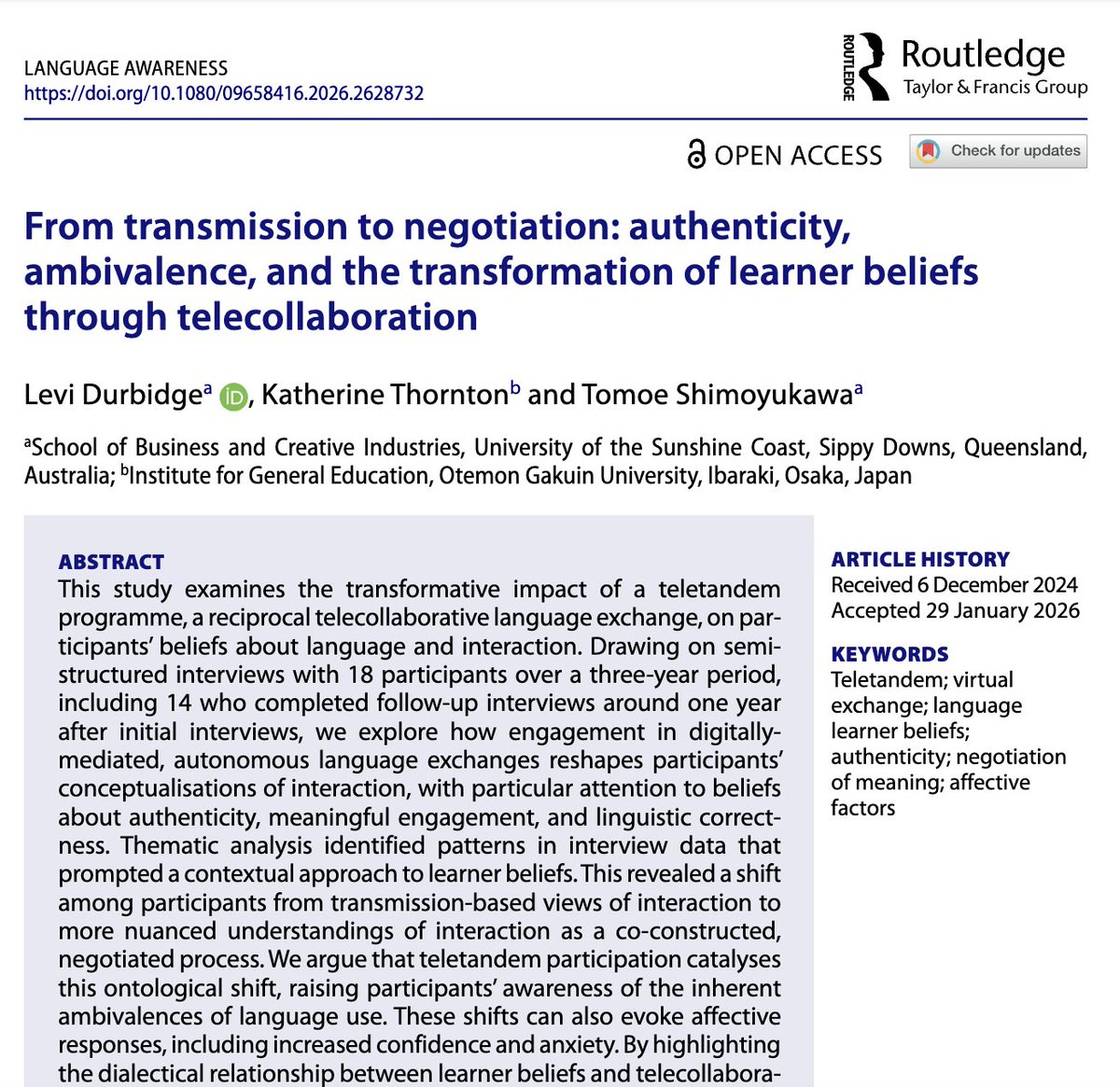
How does teletandem reshape beliefs about language and interaction? Longitudinal data showed a shift from transmission-based views to seeing interaction as co-constructed and negotiated, transforming learners’ beliefs, confidence, and understanding of authenticity. Abs.=Japanese
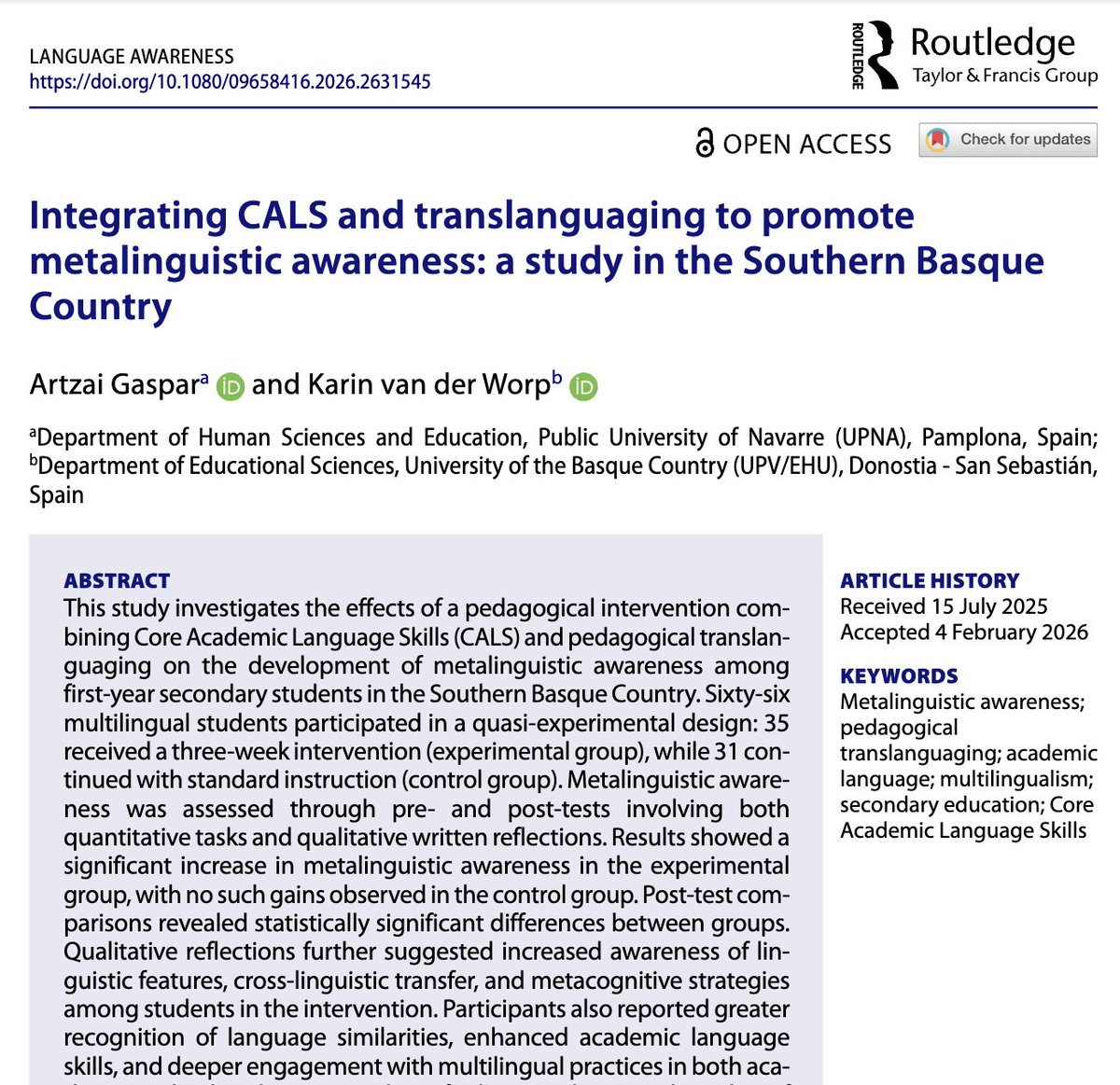
Can Core Academic Language Skills and translanguaging boost metalinguistic awareness? In the Basque Country, a short intervention led multilingual students to outperform a control group, supporting integrated academic language and translanguaging practices. Abs.=Basque
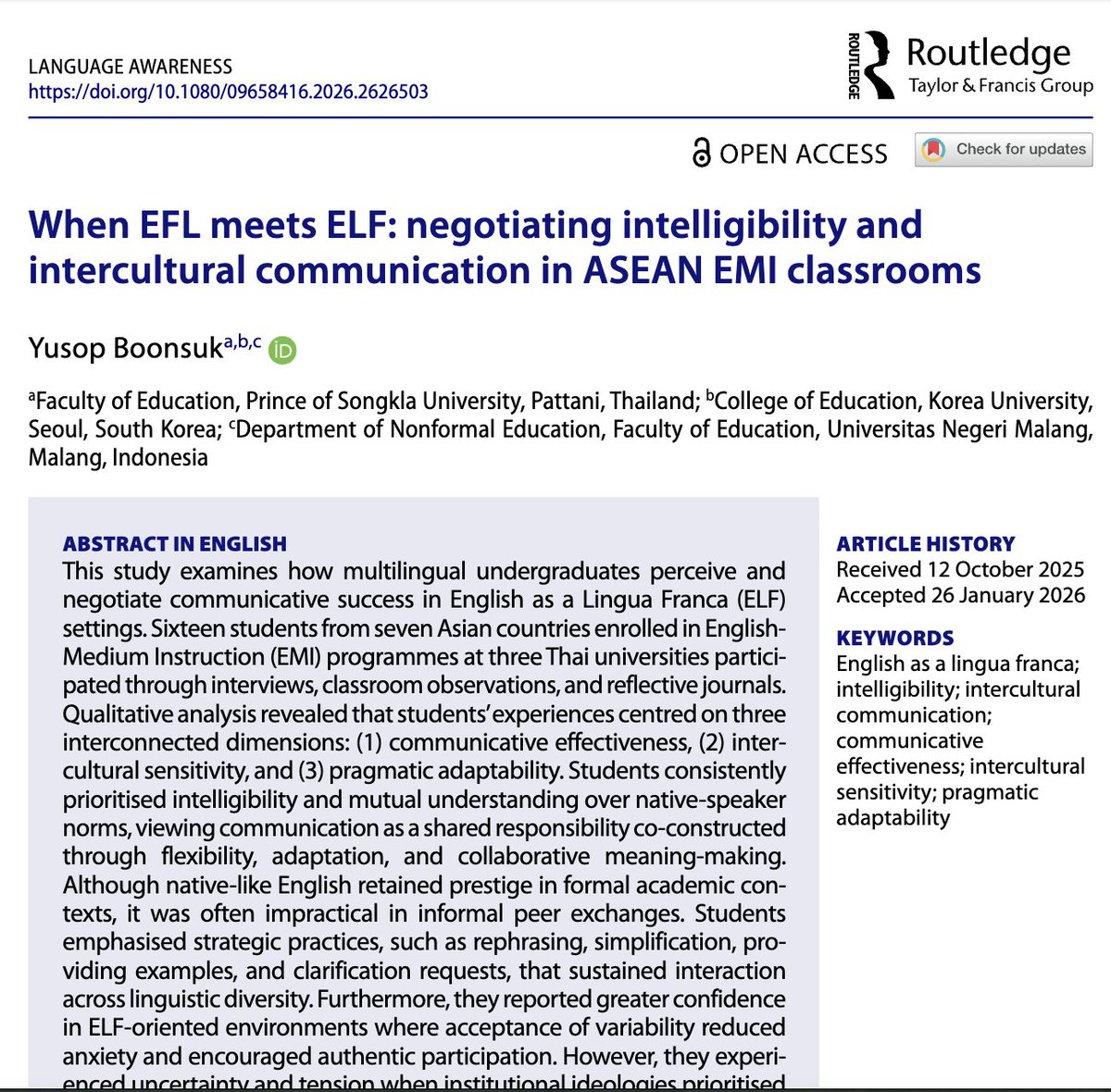
What counts as “successful” communication in EMI universities? Multilingual students in Thailand prioritised intelligibility, adaptability, and shared meaning-making over native-speaker norms, calling for pedagogy that values flexibility and intercultural sensitivity. Abs.=Thai
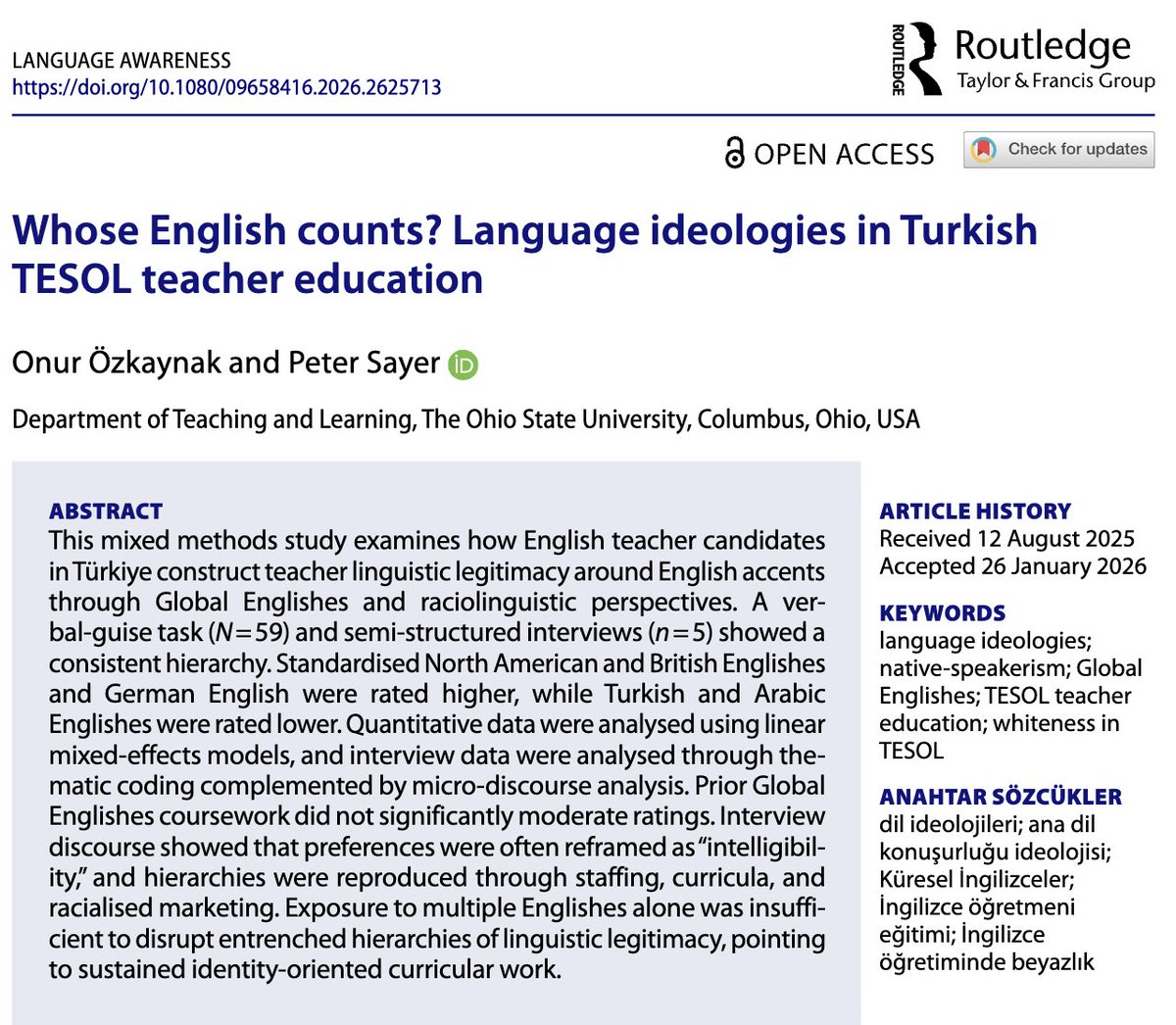
Which English accents sound “legitimate” to future teachers? In Türkiye, North American and British Englishes were rated higher than Turkish and Arabic Englishes. Exposure alone was not linked to change, highlighting the need for identity-focused curricular work. Abs.=Turkish
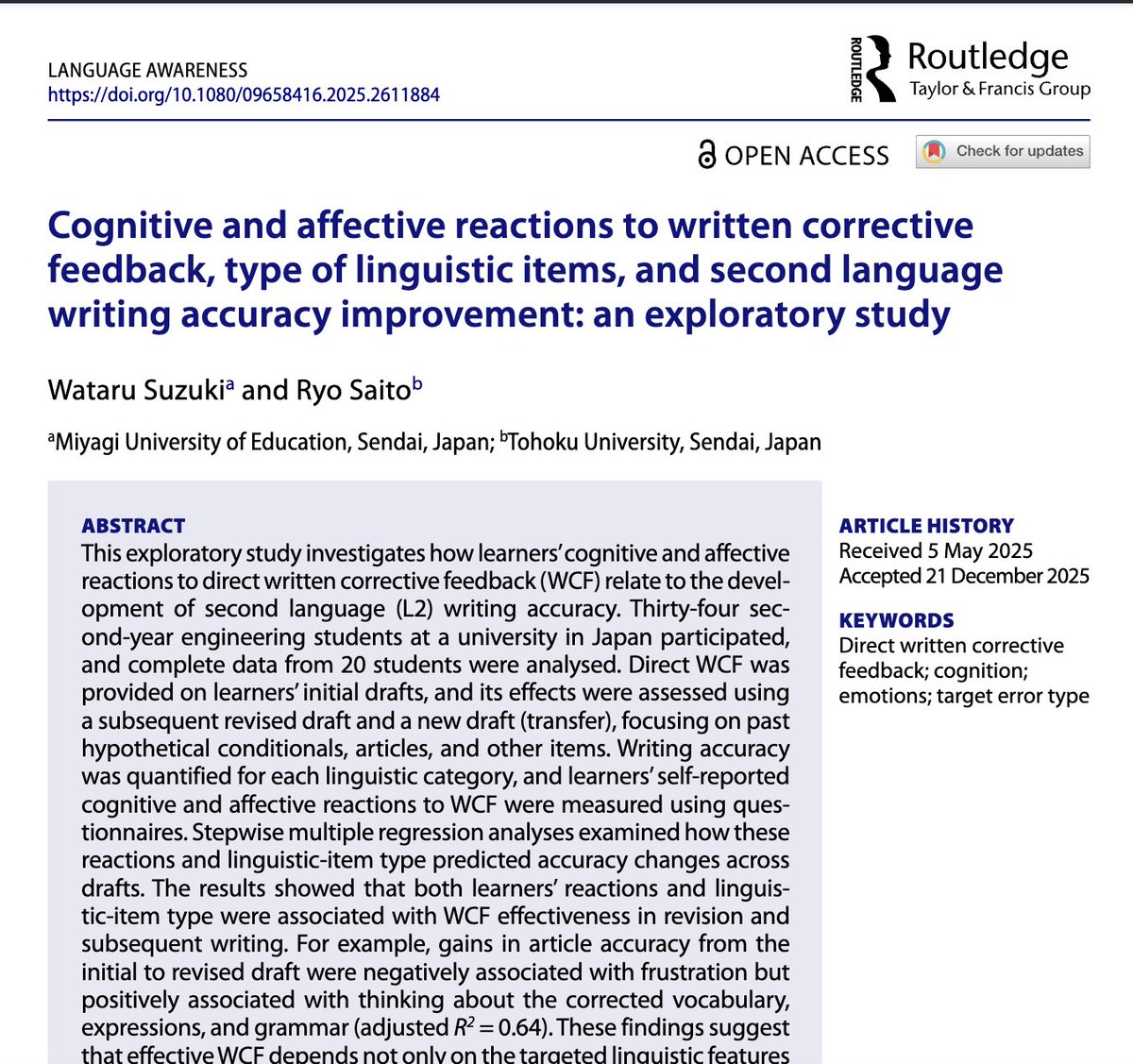
Does written corrective feedback work the same for everyone? Evidence from Japanese university learners shows that writing gains are linked not only to the type of error targeted but also to learners’ cognitive engagement and emotional responses. Abs=Japanese
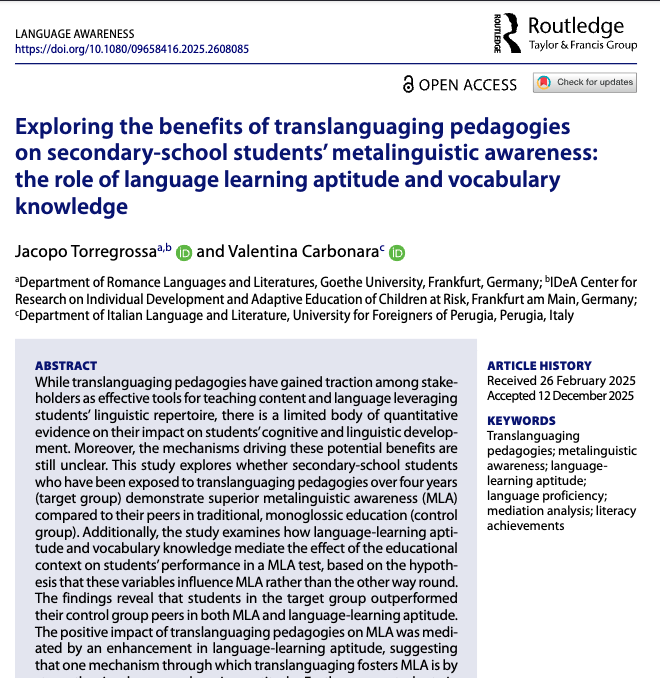
Do translanguaging classrooms change how students think about language? This study shows that long-term translanguaging pedagogy boosts metalinguistic awareness by strengthening language-learning aptitude and cross-linguistic awareness! Abs. = Italian
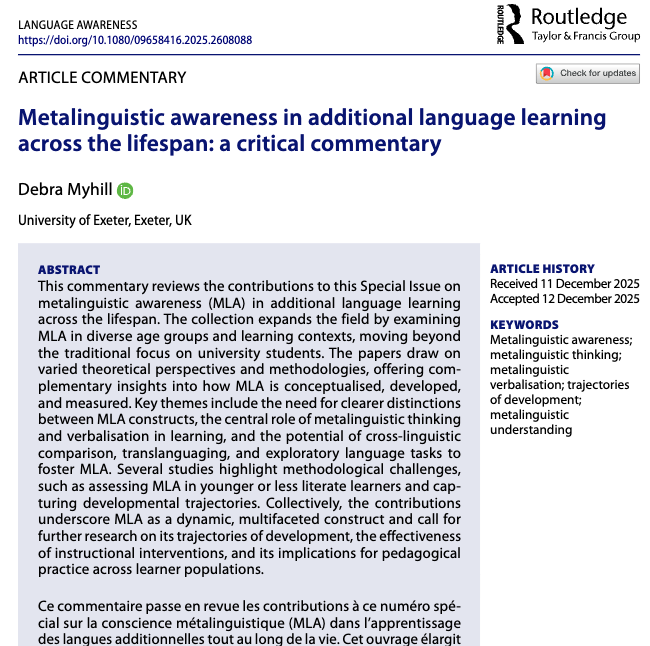
What does #MetalinguisticAwareness look like across the lifespan? This Special Issue shows MLA as a dynamic, multifaceted construct shaped by age, context, and task design, with clear implications for how we teach, foster, and assess it beyond university settings. Abs.=French
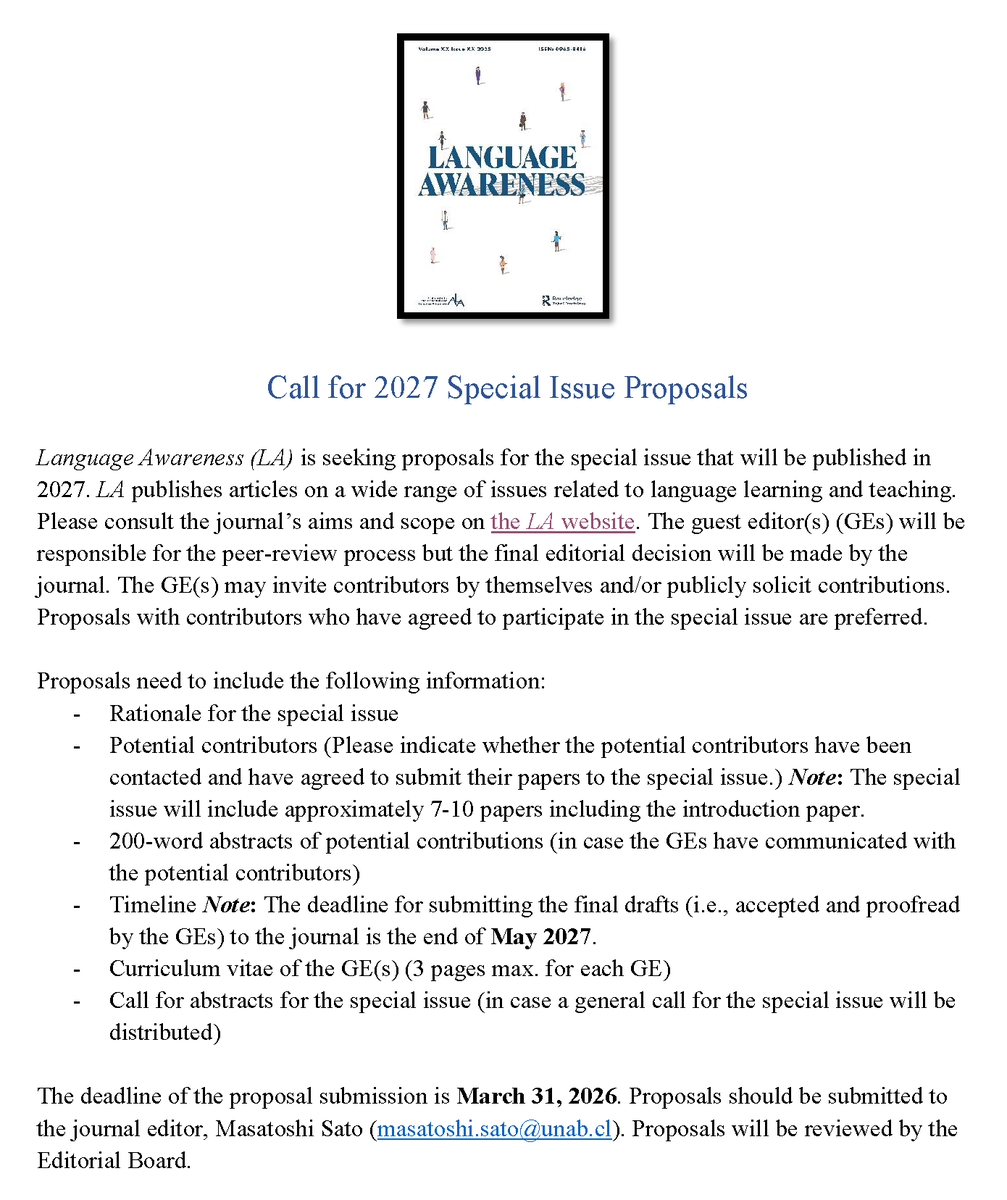
Language Awareness is seeking proposals for the special issue that will be published in 2027. We publishes articles on a wide range of issues related to language learning and teaching.
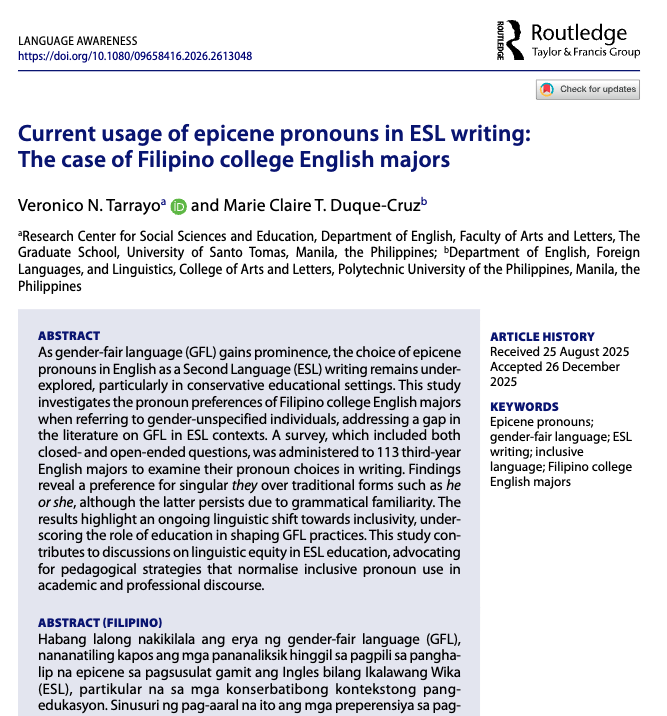
Which pronouns do ESL writers choose when gender is unspecified? Filipino English majors favour singular "they", though "he" or "she" persists out of habit. The findings highlight how instruction can normalize gender-fair language in academic writing. Abs=Filipino
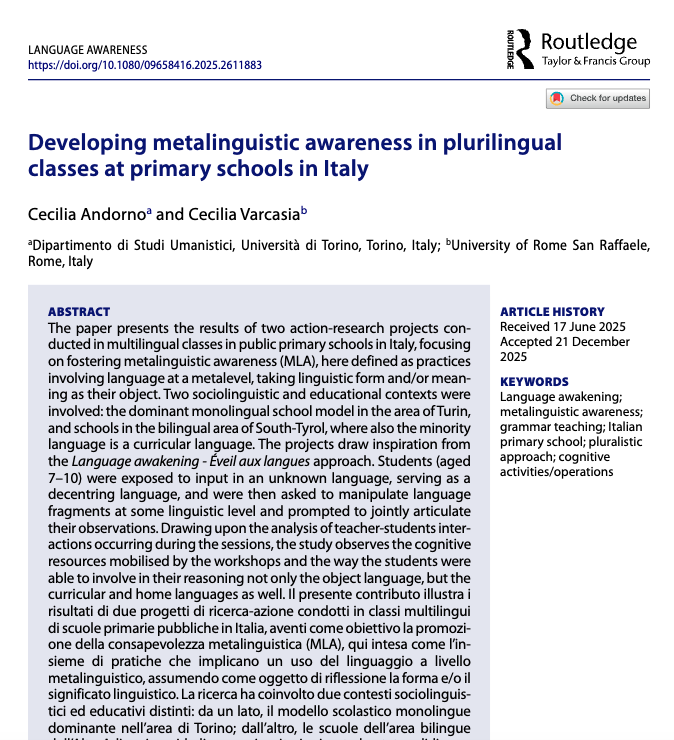
What happens when children explore an unfamiliar language? Action research in Italian primary schools shows that “decentring” languages boost metalinguistic awareness by helping young learners draw on both school and home languages. Abs.= Italian
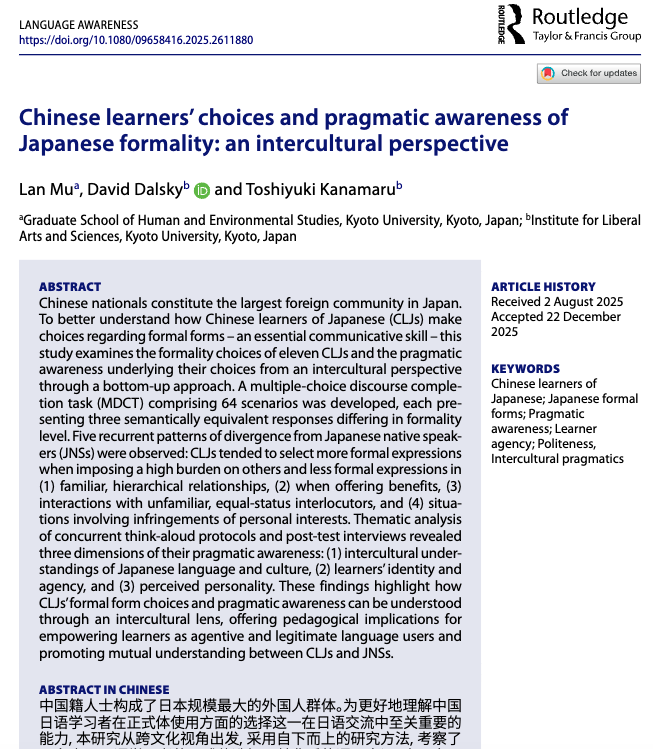
How do learners know when to use polite vs. casual forms in Japanese? A study of Chinese learners of Japanese reveals systematic differences from native speakers in formality choices, driven not just by rules but by intercultural understandings, identity, and agency. Abs.=Chinese