Larry Flick retweetledi
Larry Flick
90.1K posts

Larry Flick
@LarryFlick
OG @siriusxm host... ‘90s/‘00s-era @billboard editor/pop and dance... currently music curator at @verotruesocial... Lifelong queer activist.
United Kingdom Katılım Ekim 2008
2.1K Takip Edilen15K Takipçiler
Larry Flick retweetledi

Built from your feedback 💬
Three updates to Convert, AI Agents, and Wallet are now live. Tell us, what do you want us to build next?
👉 binance.com/en/my/user-sup…
English
Larry Flick retweetledi

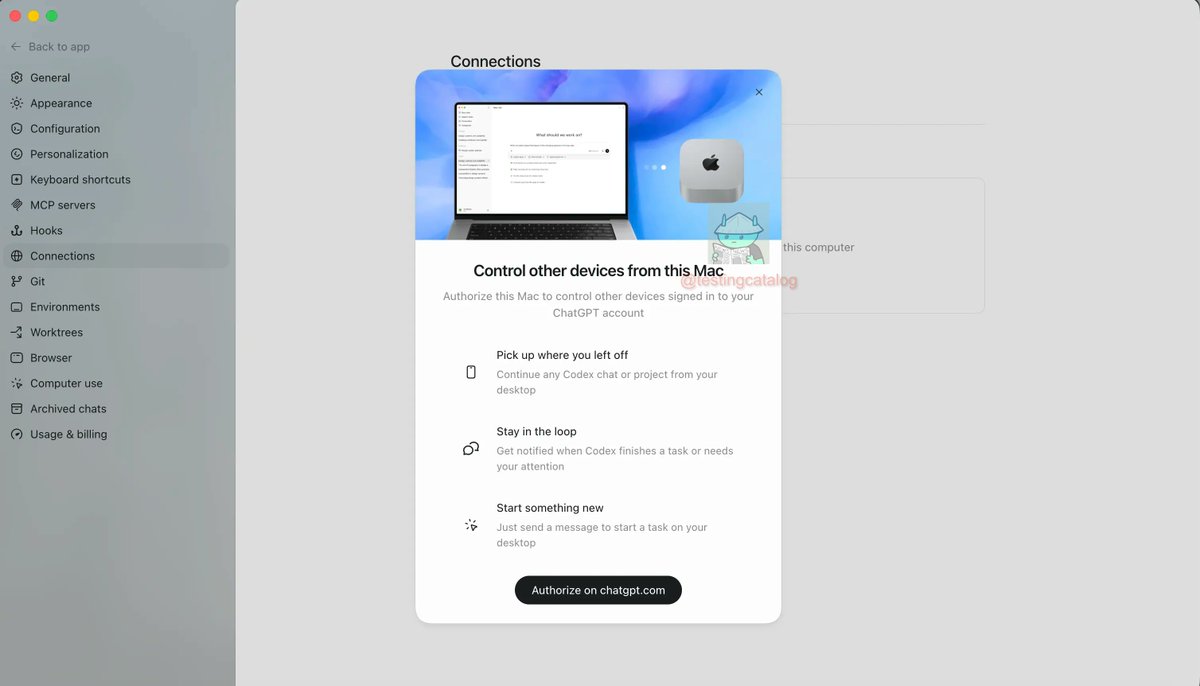
Developers coming from other tools are often impressed by what Codex finds in code review.
In this video, @majatrebacz and I show how to set it up and walk through issues Codex finds in real PRs.
Included with ChatGPT Plus/Pro (or ~$1/run with credits).
English
Larry Flick retweetledi

Ages of the Founding Fathers on July 4, 1776:
-James Monroe, 18
-Aaron Burr, 20
-Alexander Hamilton, 21
-James Madison, 25
-Thomas Jefferson, 33
There is indeed a problem with people today being unserious, but to pretend that age itself is the problem is ridiculous
Joel Berry@JoelWBerry
If an 18-year-old kid has extremely strong opinions on Israel and foreign policy, something’s wrong there. That’s not an opinion earned through years of learning and life experience. It’s the result of a kid spending hours on his phone, being conditioned by an algorithm.
English
Larry Flick retweetledi

Introducing: 50% Maker Rebate on Opinion
Makers now earn 50% of the trading fee from every filled order. Stacks with Maker Liquidity Points.
Daily USDT payouts. First payment tomorrow.
Start trading: app.opinion.trade

English
Larry Flick retweetledi

Agents are starting to spend money autonomously.
Tomorrow @ 12pm ET join our Spaces on what that looks like in practice w/ top pioneers in agentic commerce.
@solana @PayAINetwork @relayaisolana @corbits_dev @x402scan @UltravioletaDAO @dexteraisol
x.com/i/spaces/1oKMv…
English
Larry Flick retweetledi

What’s coming next to Opinion:
Our 2026 roadmap — Part I.
• (up to 60%) Maker Rebates
• Sports & Esports Experience
• Builder Keys
• Dispute Rewards
Rollout begins right this week.
Read more ↓
@info_82635/whats-coming-next-to-opinion-trade-a-product-roadmap-for-2026-b436b290f4af" target="_blank" rel="nofollow noopener">medium.com/@info_82635/wh…
English
Larry Flick retweetledi

Would be nice to unload the bags just before the dump 🥲
Juri Strumpflohner@juristr
POV: Senior Agentic Engineer
English
Larry Flick retweetledi

Thank you @arbitrum and RobinHood for putting on the Founders House in NYC. The experience has been invaluable so far!
The Future of Finance is Onchain!


English
Larry Flick retweetledi

China looked at the lessons of 20th century great power conflict and drew the conclusion that military power alone doesn't determine outcomes, upstream industrial capacity does.
The Allies won because of overwhelming industrial might. Japan and Germany lost because they lacked critical industrial inputs. Starved of oil, they were forced into gambles that cost them the war…Japan attacking Pearl Harbor to seize the oil in the Dutch East Indies, Germany marching to the Caucasus to take the Baku oil fields. Input scarcity doesn't just weaken you. It steers your decisions. It pulls decisions away from the optimal plan and toward the necessary plan.
China learned this lesson and decided to be the one holding the chokepoints. By embedding itself so deeply into the upstream supply chains that feed American military production, a conflict would trigger Western industrial paralysis and neuter its ability to fight a long war.
But the chokehold only works if the West doesn't rectify its supply chain vulnerabilities before China is ready to move on Taiwan. So China's central strategic requirement was to delay Western recognition of the threat for as long as possible.
Thus, China's entire foreign policy posture becomes oriented around appearing non-threatening. And it works because it aligns with the economic incentives of Western elites who benefit from cheap inputs and profitable trade. The cost of denial is kept artificially low. Raising the alarm looks like paranoia or protectionism when cheap goods keep flowing and no shots are being fired.
The administration is now racing to unwind its supply chain vulnerability before the conflict window opens. But that takes years, and they face significant inertia, both domestically and among allies who remain naively blind to the risk.
China knows this. So their strategy is to keep the West sleepwalking. Which means they can’t show their hand. If China comes into direct military conflict with the US in order to defend a proxy, the West wakes up. The inertia collapses. The reshoring and remilitarization that China spent decades trying to prevent happens on an emergency timeline.
But the US finally realized it could use this against them.
Since China can’t show its hand until it's ready to move on Taiwan, the US realized that it can turn China's greatest strategic asset, the pacifist disguise, into a structural trap.
They cannot take overtly aggressive action without triggering the Western industrial mobilization their entire strategy depends on preventing.
So the US can eliminate their proxies and China can’t respond without destroying the disguise.
Maduro removed. Cuba strangled. Now Iran.
Beijing must decide if defending the proxy is worth waking the West up? And the answer keeps being no.
Until China’s window to move on Taiwan opens, the pacifist posture that enabled its chokeholds constrains their response to US actions.
Everything the US is doing right now is a race to be ready before that moment arrives. Clear the proxies. Arm the allies. Break the chokeholds. And build new ones of its own.
English
Larry Flick retweetledi