Mikey

737 posts

Mikey banner
Mikey

Mikey

@Laughing____

Fascinated by technology and humanities. Tech-savvy | INTJ | Bohemian | Flying sponge

Katılım Ağustos 2016
950 Takip Edilen97 Takipçiler
Mikey retweetledi
WeChat
WeChat@Weixin_WeChat·
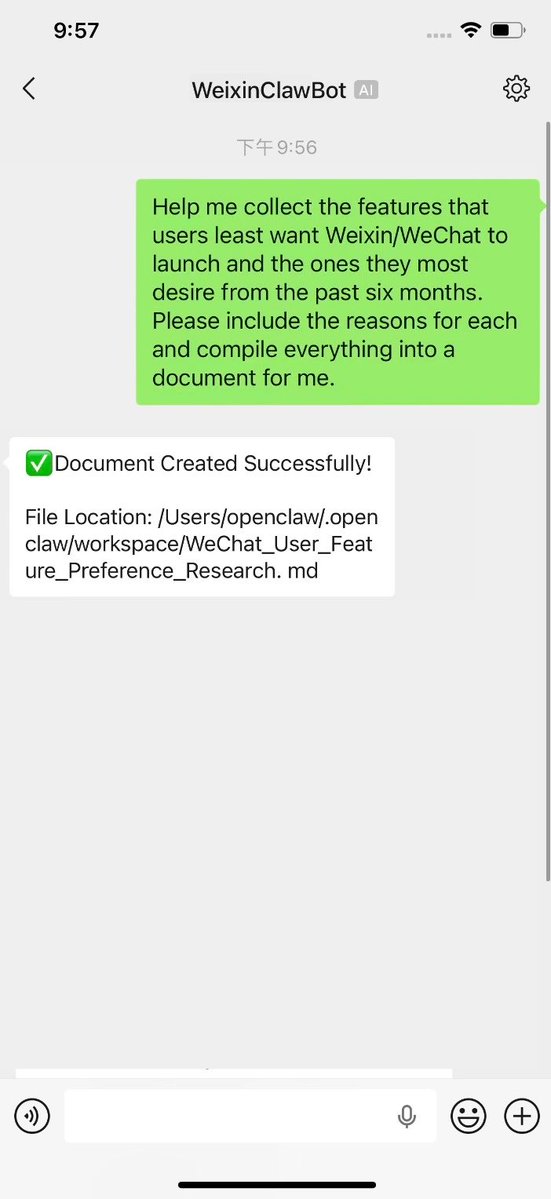
Today, we are officially opening the capability to integrate #OpenClaw into #Weixin. With the launch of the #WeixinClawBot, users can use Weixin as a dedicated messaging channel for OpenClaw. Now, you can send and receive messages with OpenClaw just like texting a friend. #AIAutomation #AI
WeChat tweet mediaWeChat tweet media
English
337
354
2.5K
755.4K
Mikey retweetledi
Kimi.ai
Kimi.ai@Kimi_Moonshot·
Congrats to the @cursor_ai team on the launch of Composer 2! We are proud to see Kimi-k2.5 provide the foundation. Seeing our model integrated effectively through Cursor's continued pretraining & high-compute RL training is the open model ecosystem we love to support. Note: Cursor accesses Kimi-k2.5 via @FireworksAI_HQ ' hosted RL and inference platform as part of an authorized commercial partnership.
English
511
1.4K
20.3K
3.4M
Mikey
Mikey@Laughing____·
In the past week, social media has been filled with concerns about AI replacing jobs. After participating in the developer event today, I am optimistic that a new technological cycle has begun, just like the previous mobile Internet technological cycle, it is time to overthrow those aging technological systems!
Mikey tweet mediaMikey tweet media
English
0
0
0
14
Mikey
Mikey@Laughing____·
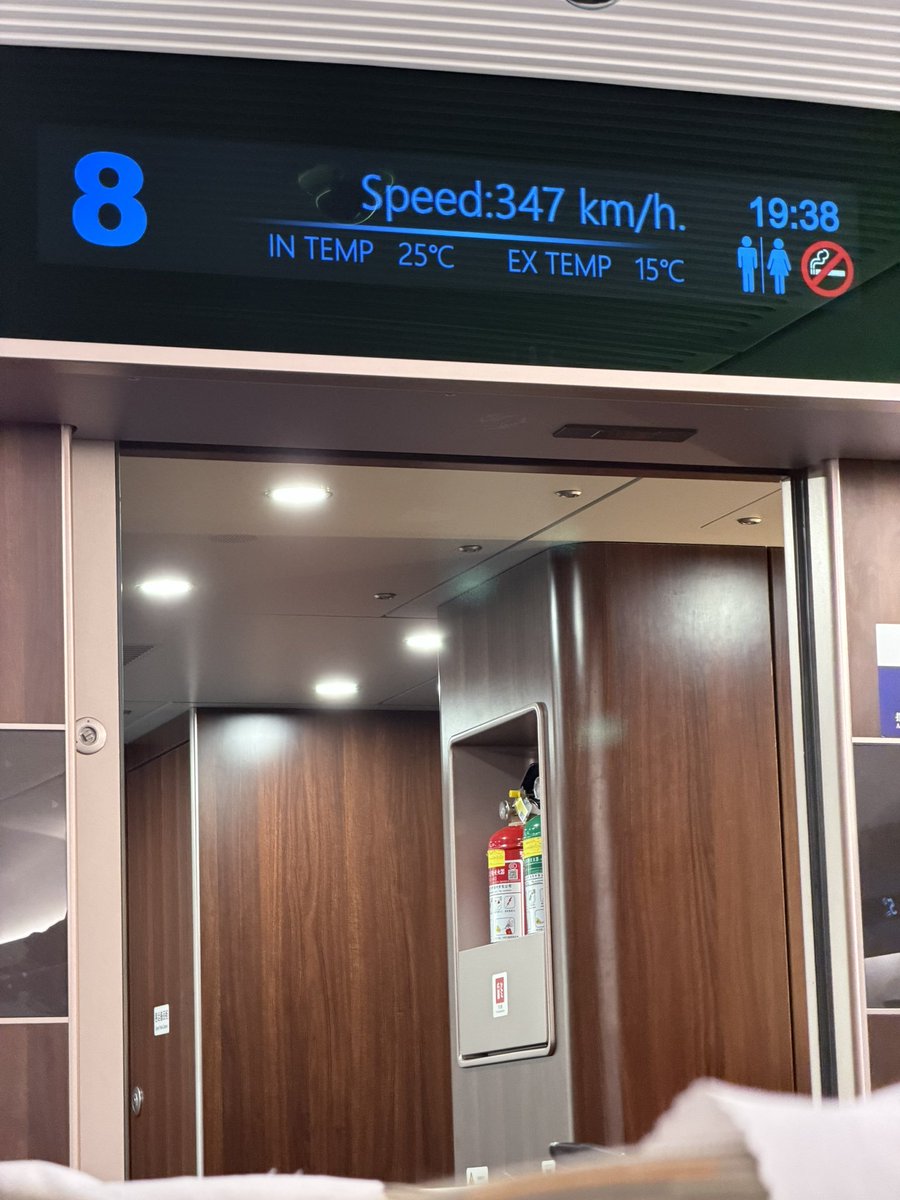
Next year, we may be able to take the high-speed railway with a speed of 400 km/h.
Mikey tweet media
English
0
0
0
17
Mikey retweetledi
Deedy
Deedy@deedydas·
Karpathy says "I haven't typed a line of code since December" in his latest podcast. Here are the 10 most interesting things he said: Industry-level thoughts: 1. The new way to code is the Peter Steinberg (OpenClaw) way. Have 10 Claude Code / Codex windows open in parallel. The skill is now more how to manage a small org of agents. You need to know how to carve up a codebase into parallel non-conflicting workstreams, write good specs so agents don't go off the rails, and tune when you should review code output. 2. Open source started 18mos behind frontier and is now 6-8mos behind. He thinks this equilibrium will last. He's worried about centralization 3. Two-minded on the future of engineers. On one hand, Jevons paradox could apply where the ease of building software means more software demand than ever (like ATMs allowed more bank tellers, not less). At the same time, in the long run, recursive self-improvement could remove humans from the loop entirely. 4. Interesting startups are at the intersection of physical + digital. The interface between intelligence and the real world is with "Sensors" for reading and "Actuators" for doing. Data for AI is just using humans as sensors. He cites Periodic Labs using lab equipment for material science as sensors. Talks about Daemon by Daniel Suarez. 5. Education will shift from humans to teaching agents. He's writing markdown for agents to teach microGPT. Personal projects: 6. Autoresearch found things he missed after two decades of experience, citing NanoChat where it found weight decay on value embeddings and insufficiently tuned Adam betas jointly interacted to create improvements. 7. "Dobby the Elf Claw" runs his entire home. Overproduction of bespoke apps. Reverse engineered Sonos API and now controls his entire home (lights, HVAC, shades, camera) through WhatsApp. Takes: 8. Claude Code personality better than Codex, but uses both. Finds himself trying to present better ideas to earn Claude's approval, which is a feedback loop that actually improves the quality of his input. 9. Token throughput is the new GPU utilization. If you have tokens left, you haven't maximized leverage. 10. He's not at a frontier AI lab because financial misalignment compromises your independence, social pressure to stay on-message, and as an employee you don't have much sway on decisions.
Deedy tweet media
English
56
199
1.4K
97.6K
Mikey retweetledi
cat
cat@_catwu·
The PM playbook was built on an assumption that the technology underneath your product is roughly stable With the current pace of model progress, this is no longer true. Here's how we've evolved the PM role:
English
69
171
1.9K
332.1K
Mikey retweetledi
Atai Barkai
Atai Barkai@ataiiam·
Google, CopilotKit, and Oracle just shipped A2UI powered Generative UIs for Open Agent Spec via AG-UI The goal is simple: plug-and-play portability across runtimes, UI frameworks, and observability tooling, without rewriting the experience each time. This means: - You define your agent once with Open Agent Spec - A2UI tells the frontend exactly what to render - AG-UI protocol streams the real-time events to your app All without tons of custom code. We built AG-UI with a bet: the agent <> frontend layer should be open and composable with whatever the ecosystem creates. @Oracle built Open Agent Spec to make agents portable. @Google created A2UI to make agent UIs declarative. We built AG-UI and @CopilotKit to make the frontend layer interactive and composable. This is the power of open standards that integrate across the ecosystem, and that's the agentic future we're building toward at CopilotKit. I'm grateful to the Oracle and A2UI teams for helping us build it! You can read more here: go.copilotkit.ai/oracle-a2ui-bl… Get Started: github.com/CopilotKit/wit…
English
1
5
14
572
Mikey retweetledi
cat
cat@_catwu·
Bihan Jiang (Director of Product, Decagon) and Kai Xin Tai (Senior Product Manager, Datadog) also shared how their teams get a prototype in front of a customer way faster than they used to. Read more: claude.com/blog/product-m…
English
3
17
259
24.9K
Mikey retweetledi
Fidji Simo
Fidji Simo@fidjissimo·
Companies go through phases of exploration and phases of refocus; both are critical. But when new bets start to work, like we're seeing now with Codex, it's very important to double down on them and avoid distractions. Really glad we're seizing this moment.
Berber Jin@berber_jin1

SCOOP - OpenAI is planning to simplify its product experience and launch one "superapp" -- part of its broader effort to instill more discipline and focus into the business, and beat back the threat posed by Anthropic more here in our @WSJ story wsj.com/tech/openai-pl…

English
217
68
1.1K
784.9K
Mikey
Mikey@Laughing____·
After the popularity of openclaw, OpenAI's strategic adjustment also came. OpenAI Plans Launch of Desktop ‘Superapp’ to Refocus, Simplify User Experience wsj.com/tech/openai-pl…
English
0
0
0
13
Mikey retweetledi
Christian Catalini
Christian Catalini@ccatalini·
1/ This is a great description of what verification infrastructure looks like in practice. In our new paper we argue this is the binding constraint on the AI economy — the same bottleneck textile mills hit when they scaled looms faster than weavers could check them.
Rohit@rohit4verse

x.com/i/article/2028…

English
10
29
218
59.3K
Mikey
Mikey@Laughing____·
OpenClaw is a geek toy, and the process of Claude or ChatGPT for its productization is the division.
Aakash Gupta@aakashgupta

The biggest bottleneck in AI coding right now is the human. Claude Code can run for hours autonomously. It can write features, run tests, fix bugs, spin up worktrees. But the second it hits an ambiguous decision or needs clarification, it stops. Sits there. Waits for you to look at your terminal. That’s the problem channels solves. Your Claude Code session stays live while you’re on your phone, in a meeting, on a walk. It pings you on Discord or Telegram: “Should I refactor this into two services or keep it monolithic?” You reply from your phone. It keeps building. This changes the math on what a solo developer can ship. Before channels, your effective Claude Code hours were capped by your desk hours. Now the constraint is your response time to a Telegram message. The people building serious things with Claude Code already figured this out. Community projects like claude-code-telegram and Clawdbot have been hacking together phone bridges for months. One developer built a bot that let him find parking near his exam by voice-messaging Claude Code while driving. Anthropic just made it official infrastructure. The timing matters. Claude Code just got /loop for recurring tasks, voice mode, and 1M token context. Stack channels on top and you have an agent that runs continuously, asks you questions asynchronously, and remembers everything from the session. That’s closer to a remote junior developer than a code autocomplete tool. The feature is a research preview for a reason. But the direction is clear: the terminal is becoming optional.


English
0
0
0
26
Mikey
Mikey@Laughing____·
It turns out that the plane also has a front illumination light.
Mikey tweet media
English
0
0
0
8
Mikey retweetledi
Aakash Gupta
Aakash Gupta@aakashgupta·
Anthropic is building OpenClaw faster than OpenAI is. OpenClaw proved a concept the entire industry had been theorizing about: your AI agent should live on your computer, not in someone else’s cloud, and you should be able to talk to it from anywhere. 318,000 GitHub stars. Then Steinberger joined OpenAI to build exactly this at scale. Here’s what OpenAI has shipped since: Codex, a desktop coding agent with no mobile remote control. ChatGPT Agent, which runs on a remote virtual computer in OpenAI’s cloud where it can’t see your local files. Developers are filing GitHub issues on the Codex repo right now requesting phone-to-desktop control. Third-party devs already built Taskdex and Remote Codetrol to hack around the gap with relay servers and Tailscale tunnels. Anthropic just shipped it natively. Dispatch: pair your phone with Claude Desktop, message Cowork from anywhere, come back to finished work. Cowork already had the VM running on your machine, full filesystem access, browser control, sub-agent coordination, and a skills system stored as markdown. Dispatch was the missing piece that turns the whole stack into something you can operate from your pocket. The reason this works when cloud agents can’t: Cowork reads your actual filesystem, your actual browser, your actual connected tools. When I ask it to cross-reference a local spreadsheet with a competitor’s pricing page, it can do that because both the spreadsheet and the browser are on my machine. A cloud agent would need me to upload the spreadsheet first, lose the file path context, and still wouldn’t have access to my connected Slack or Google Drive. The context is real because the machine is real. I’ve been running Cowork since launch. Five tasks dispatched every morning before my kids wake up: research briefs, competitor analysis, file organization, data pulls from local spreadsheets, editing passes on drafts. 90 minutes of active work compressed into 10 minutes of dispatching and 20 minutes of reviewing outputs. Dispatch changes what happens the rest of the day. An idea hits while I’m out, I message Cowork from my phone, the work is waiting when I get home. And the part that should keep OpenAI up at night: Anthropic didn’t need to acquire OpenClaw or hire Steinberger to ship this. They were already building the same architecture independently. Cowork launched in January with local VM execution, filesystem access, and markdown skills before OpenClaw was even mainstream. Steinberger validated the demand. Anthropic had already built the supply. OpenAI bought the architect. They’re still looking for the blueprints he left at Anthropic’s door.
Felix Rieseberg@felixrieseberg

We're shipping a new feature in Claude Cowork as a research preview that I'm excited about: Dispatch! One persistent conversation with Claude that runs on your computer. Message it from your phone. Come back to finished work. To try it out, download Claude Desktop, then pair your phone.

English
37
48
448
120.5K
Mikey
Mikey@Laughing____·
Temporal is not a new API. It's a decade-long, language-level infrastructure project — probably the biggest capability expansion to ECMAScript since ES2015. Two things stand out in the implementation: Clean break. No more patching Date. A new type system — Instant, ZonedDateTime, PlainDate, PlainTime, Duration — all immutable, all value semantics. Shared infrastructure. Multiple JS engines ship from one Rust core (temporal_rs). Not each engine reinventing the wheel. A rare, deliberate choice to make the implementation itself a shared asset. The backstory matters: JS Date was copy-pasted from Java in 1995. Mutable objects, implicit timezones, inconsistent parsing, off-by-one months. What started as quirks became engineering liabilities at scale — banking, trading, cross-timezone systems. Moment, date-fns, Luxon were symptoms, not cures. bloomberg.github.io/js-blog/post/t…
English
0
0
1
12
Mikey
Mikey@Laughing____·
WIRED's latest long-form report reveals the inside story of OpenAI's race to catch up with Anthropic in the AI programming tool market. The reporter interviewed over 30 insiders, including executives like Altman and Brockman, piecing together a rare picture: this time, OpenAI is the one playing catch-up. A few key figures: Claude Code's annualized revenue exceeds $2.5 billion, contributing nearly one-fifth of Anthropic's total revenue; as of late January this year, Codex had just surpassed $1 billion. Last September, Codex's usage was only 5% of Claude Code's, but by January this year, it had climbed to 40%. The gap is narrowing, but it is still far from closed. Altman calls AI programming a "rare multi-trillion dollar market," believing that Codex is "likely the most viable path to AGI." [1] An Early Start OpenAI was actually the pioneer in this field. They launched the first generation of Codex in 2021, which was later licensed to Microsoft to become GitHub Copilot. However, after ChatGPT exploded in popularity at the end of 2022, the programming team was disbanded, and all resources were poured into consumer-grade products. Internally, it was felt that this field had already been "covered by GitHub Copilot." Anthropic took a different path. In early 2024, they trained Claude 3.5 Sonnet using a massive amount of real-world codebases. After its release in June, its programming capabilities stunned the developer community. Usage surged after Cursor integrated it, and Anthropic immediately began closed beta testing for Claude Code. Brockman himself admitted that OpenAI "started late" when it came to training on real-world codebases. 【2】The Cost of Catching Up OpenAI didn't get serious about programming agents until late 2024, and it took several months for several scattered internal groups to merge into a unified team. Altman also attempted to overtake the competition by acquiring the programming startup Windsurf for $3 billion, but Microsoft intervened. Microsoft, which has been powering GitHub Copilot with OpenAI's models, did not want OpenAI to release a competing product. After months of back-and-forth, the deal fell through last July; Windsurf's founder was poached by Google, and the team was acquired by Cognition. 【3】The Turning Point Brought by GPT-5.2 What truly allowed Codex to catch up was GPT-5.2. Notion co-founder Simon Last said he and his team switched to Codex for that reason, stating: "Claude Code lies; it says it's working when it's actually not." OpenAI's advertisement during this year's Super Bowl featured Codex rather than ChatGPT, which clearly demonstrates the magnitude of their bet on the technology. The style of Codex is also interesting. Researcher Katy Shi noted that while some people complain it's like "dry bread," many engineers actually prefer this no-nonsense tone; writing code requires direct, critical feedback. However, both companies are burning cash to acquire users. Some developers have reported that a $200/month plan actually yields over $1,000 worth of usage. Essentially, they are spending money to help developers build a habit before eventually switching to usage-based billing. 【4】The Bigger Problem The impact of AI programming agents has spilled over beyond Silicon Valley. Last month, Claude Code was credited with indirectly triggering a trillion-dollar sell-off in tech stocks; after Anthropic announced that Claude Code could modernize legacy COBOL systems, IBM's stock price saw its largest drop in 25 years. Cisco President Jeetu Patel told employees: using these tools won't cost you your job, but not using them certainly will. Regarding security, the non-profit organization Midas Project accused OpenAI of cutting corners on the security assessment of GPT-5.3-Codex, a claim denied by OpenAI's Head of Alignment, Amelia Glaese. Brockman's feelings likely represent the mindset of many engineers: while this way of working is "liberating," when you become the person commanding thousands of AI agents, "you no longer have a deep understanding of how specific problems are solved," and sometimes feel as though you are "losing your intuition for the problems." Many engineers inside OpenAI say they almost never write code by hand anymore, spending their days in dialogue with Codex. Product lead Fidji Simo stated that the goal is for Codex to eventually power all products—not just writing code, but helping people complete tasks. The battle of AI programming tools is far from over; the focus of competition is shifting from "who can build it first" to "who can earn the true trust of developers." wired.com/story/openai-c…
English
0
0
0
14