Metre Lemoisson
187 posts

Metre Lemoisson
@LemoissonMetre
Founder https://t.co/UqD1hvxiKK | Building AI-first Products for Africa like https://t.co/mxYmBqSQR8 & https://t.co/b7l9QxIuPq | Full Stack Lead (PHP, React, TS)
Goma, DRC. Katılım Ağustos 2019
295 Takip Edilen160 Takipçiler

English

@LemoissonMetre @oosanya2 @asemota Yeah getting pricing right is something you have to be intentional about
For @hagfish_app I’ve experimented with PPP, and most recently credit based pricing
Like why ask a freelancer who doesn’t get gig that often to subscribe to your stuff monthly
They will churn
English

Is there a list of failed venture backed African startups anywhere? I remember someone tried to do one last year, but it wasn't extensive. There are a number of failed YC backed startups not also in the startups.rip list yet. Learning from failure is very important.
Osaretin Victor Asemota@asemota
I asked Claude to look at startups.rip the site with details of YCombinator startups that didn't make it and this was what it found: Here's what stands out when you look across the graveyard on startups.rip, combined with the broader failure research: 1. Premature platform ambition — winning a niche, then abandoning it Posterous is the clearest example: it launched with a genuinely elegant premise, drove 30% month-over-month growth, and hit 15 million monthly visitors — then abandoned its winning position to fight a social media war it was never built for. Feature accumulation eroded the product's clarity. By March 2012, monthly visitors had collapsed from 15 million to 1.33 million. This pattern — find a sharp edge, then blunt it chasing a bigger vision — recurs constantly across the list. 2. Timing mismatch (too early, not too wrong) Loopt is the canonical case: Sam Altman built what we now take for granted in apps like Google Maps, Life360, and Find My — but in 2008 the smartphone ecosystem, social norms around location sharing, and carrier infrastructure weren't ready. The idea was right; the moment was wrong. Looking at the startups.rip list, this appears repeatedly in the community/social cluster — Openland, Allo, Tress, Quest — products that might have found audiences at different points in the cycle but launched into a market not yet ready or already saturated. 3. The "feature, not a company" problem — especially brutal in the AI wave The W22–S23 cohort on the list is telling: Flike, Parabolic, Fabius, CoffeeAI, Dialect, Mercator, Demo Gorilla — almost all AI-wrapper companies doing one thing (AI sales emails, AI customer support, AI outreach, AI forms). When ChatGPT can do 80% of what your product does for $20/month, your margin for differentiation becomes razor-thin. These companies weren't solving hard problems — they were building thin layers on top of foundational models that rapidly caught up with them. 4. Marketplace leakage — the disintermediation trap Tutorspree's business model had a structural flaw baked in: once a tutor and student connected on the platform, nothing stopped them from cutting Tutorspree out of the transaction. The company was taking 50% of tutor fees, giving both sides a massive incentive to bypass it. This same trap hit many marketplace plays on the list — Gigster, The Muse, Creative Market — where the platform creates the match but can't hold the relationship. 5. Regulatory/compliance exposure in regulated industries Call9 (healthcare at nursing facilities), LendUp (predatory lending regulations), Argovox (healthcare billing), SimpleCitizen (immigration) — companies operating in highly regulated spaces ran into the same wall. They built genuine utility but couldn't survive the compliance overhead, regulatory shifts, or the cost of becoming legitimate at scale. LendUp in particular is interesting: it raised significant capital on a "socially responsible" fintech mission but ultimately ran afoul of the CFPB for the very lending practices it claimed to be reforming. 6. Over-dependence on a single acquisition channel Tutorspree was almost entirely dependent on Google search traffic for new student acquisition — any algorithm change could significantly reduce their traffic and in return their users. As resources dwindled and the traffic dried up, there was no alternative funnel to fall back on. This single-channel dependency is a recurring killer across the list, especially for consumer and marketplace plays. 7. The acqui-hire as soft failure — talent over traction A large chunk of the "Acquired" column on startups.rip aren't real exits — they're acqui-hires: Twitter buying Posterous for the Garry Tan/Sachin Agarwal team, Apple absorbing Raven Tech, Google absorbing Bump. About 40% of YC startups ultimately achieve an exit, but a significant portion of those are acqui-hires with very small outcomes for early investors. The acqui-hire is the startup world's equivalent of a graceful funeral — the company dies but the founders land softly, which obscures how common actual failure really is. 8. Community/social products without cold-start solutions Looking at the community cluster — Openland, Allo, Tress, BlackOakTV, Quest — none found a way to solve the cold-start problem. A community product is worthless to user #1 and only marginally useful to user #100. None of these had the distribution engine, the density play, or the content moat needed to get over that hump. At YC's early stage, companies fail because they give up or the founders don't get along, and another big reason is the company is not making what people really want. In the community sector specifically, founders often build for a demographic they believe in (Black women's hair care, neighboring families, audio career advice) without finding a sustainable engine for growth. 9. The "idea whose time came and went" — wave mistiming Escher Reality (AR backends, 2017), NeoWize (ML algorithms), Pit.AI (AI for investing), CrowdAI (vision AI) — these companies were building on technology waves that either didn't materialize at the expected pace or got absorbed by the foundational layer providers (Apple ARKit eating Escher Reality, for instance). They weren't wrong about the technology, but the value accrued to the platform, not the middleware. The meta-pattern across all of it What startups.rip reveals most starkly is that YC's selection process gets founders in the door but doesn't solve the three things that actually kill companies: finding a defensible position (not just a clever insight), building a business model with structural integrity, and surviving long enough for the market to catch up to the idea. Most of the dead companies on that list had real ideas — some of the ideas are now worth billions in other hands. The gap between insight and execution, between timing and readiness, between building something people want and building something that sustains itself financially — that's where the graveyard fills up.
English
English

@asemota @Dominus_Kelvin I tried the subscription model in DRC with my app Dug Assistant. Users started comparing it to rent and most of them could not afford yet another recurring cost. They were also told that we get paid by Telco companies when they buy internet bundles to use our APP
English
Now I have enough across the site and corroborating sources. Here is the full pattern analysis:
The African startup graveyard tells a story that is recognizably similar to the YC graveyard in some places — and starkly different in others. The surface causes (financial distress, market competition, operational failures) are familiar. But the root causes are largely Africa-specific, and they reveal something important about the gap between how the ecosystem has been funded and how African markets actually work.
1. The Silicon Valley playbook applied to markets it was never designed for
This is the single biggest meta-pattern. After record funding highs in 2021 and 2022, venture capital inflows into African startups declined sharply by 2024, leading to lower valuations, tighter access to capital, cost-cutting, and a renewed focus on profitability — not because of a lack of innovation, but simply a reckoning with mathematics. Investors funded companies on growth-at-all-costs assumptions borrowed from US tech, in markets with radically different cost structures, consumer purchasing power, and infrastructure realities. iROKOtv spent $100 million trying to win the African streaming market against Netflix and local piracy simultaneously — the platform struggled to compete with global players and ultimately decided to shut down after its subscription model proved unsustainable in markets where most users couldn't or wouldn't pay monthly fees.
2. Currency exposure as an existential threat — not a risk factor
This is almost entirely absent from the YC graveyard analysis, but dominates the African one. Okra launched Nebula, a naira-priced cloud offering in October 2024, feeling bold, but it arrived in a market dominated by AWS and Google Cloud — and with the naira losing ground daily, it was a mismatch the company could not win. The same story plays out across fintech, logistics, and e-commerce on the continent: companies earning in local currency while paying for cloud infrastructure, imported hardware, and USD-denominated debt faced a structural arithmetic problem that no amount of product excellence could solve. Naira depreciation alone wiped out the unit economics of dozens of otherwise viable businesses.
3. Financial distress is the headline but governance collapse is the real killer
Across the startups that failed, several common themes emerged: financial difficulties at 58%, market-related factors at 20%, regulatory issues at 17%, and operational challenges at 27%. But the data undersells a more disturbing sub-pattern. Bento Africa faced mounting allegations of a tax and pension remittance scam, which led to investigations by the Lagos State Inland Revenue Service and the Economic and Financial Crimes Commission — issues compounded by internal turmoil including the resignation of the CEO and the layoff of the entire engineering team after disputes over unpaid salaries. Thepeer went further: a co-founder went public with allegations of fraud and missing funds, with alleged misuse including $50,000 spent on car purchases for a company generating less than $1,000 in annual revenue. These are not isolated governance failures — they reflect what happens when founder incentive structures, weak board oversight, and a thin investor monitoring culture collide under financial pressure.
4. Aggressive geographic expansion without unit economics — the "Big Four" trap
The "Big Four" hubs — Nigeria, Kenya, South Africa, and Egypt — attract almost all the capital, and founders under investor pressure expand across them before proving the model in one. Bento Africa had quickly expanded into Ghana, Kenya, and Rwanda while onboarding hundreds of businesses — it was the kind of company investors expected to scale quickly — but it collapsed in a spiral of mistrust and forensic scrutiny. Lipa Later similarly scaled fast after a large 2022 raise, then accumulated unsustainable debt and made a costly 2023 acquisition, leaving the business overleveraged and entering administration in March 2025. Expansion before consolidation is lethal in markets where each country has different regulatory frameworks, payment rails, tax obligations, and consumer behaviors.
5. Regulatory dependency as a single point of failure
KOKO Networks is the most dramatic example on the graveyard: following the government's discontinuation of its carbon credit sales, the Kenyan clean cooking startup laid off all 700 employees and ceased operations, facing bankruptcy after failing to secure government approval to sell its carbon credits. A business model built on a government-administered revenue stream — carbon credits in this case — has no defense when that stream is shut off by policy decision. The same structural fragility appears across the list in fintech (regulatory licensing dependencies), healthtech (government procurement exposure), and agtech (subsidy dependency). African regulatory environments are not just slow and complex; they can reverse course entirely without warning.
6. The open banking / infrastructure pioneer problem
Okra built impactful technology, worked with some of the biggest brands across the continent, and helped pioneer open banking in Africa — and still failed. This reflects a pattern specific to infrastructure plays: the pioneer does the expensive work of educating the market, building the regulatory case, and proving the concept, then either gets acquired on poor terms, or finds that incumbents (banks, telcos) simply replicate the capability internally once it's been validated. Okra, Collect Africa, and similar API-layer companies built genuine value but couldn't capture enough of it before the window closed.
7. Pandemic-induced structural damage that never healed
Afristay's shutdown closed the chapter on one of South Africa's most recognizable travel-tech platforms. The pandemic crushed demand almost overnight — traffic dropped 96%, bookings evaporated — and by 2023, Afristay was operating with two part-time staff and fewer than 30 monthly bookings. But what makes this distinctly African is the coda: the analysis notes that South Africans now have far less spending power than they did a decade ago, and travel is a luxury many can no longer afford. In many African markets, the pandemic didn't just pause spending — it permanently compressed the consumer base for discretionary digital services.
8. The transparency gap — silent exits deprive the ecosystem of learning
Without clear founder communication, the ecosystem couldn't learn from the failure. Silent exits deprive the ecosystem of learning opportunities and damage founder credibility for future ventures. This is the meta-problem that startupgraveyard.africa itself was built to solve. Unlike the YC world where post-mortems are almost a cultural ritual, African startup failures often just disappear — founders move on, companies go dark, employees find out when salaries stop arriving. Medsaf ceased operations in March 2024 but its shutdown only became public knowledge in 2025. Kippa's wind-down was so opaque that by mid-2025 no one could confirm what had actually happened.
The fundamental divergence from the YC pattern
In the YC graveyard, most companies died from internal causes — wrong timing, feature creep, bad pivots, founder conflict. The ideas were often right; the execution was the problem. In the African graveyard, the pattern is more often external forces colliding with fragile internal foundations: currency collapse, regulatory reversal, funding withdrawal, and infrastructure failure exposing governance gaps that good market conditions had previously masked. The common thread was not simply lack of funding, but fragile unit economics, aggressive expansion strategies, and delayed paths to profitability — 2025 functioned less as a funding winter and more as a reckoning.
The African startup that survives is the one that treats macro volatility as a core design constraint from day one — not an afterthought.
English
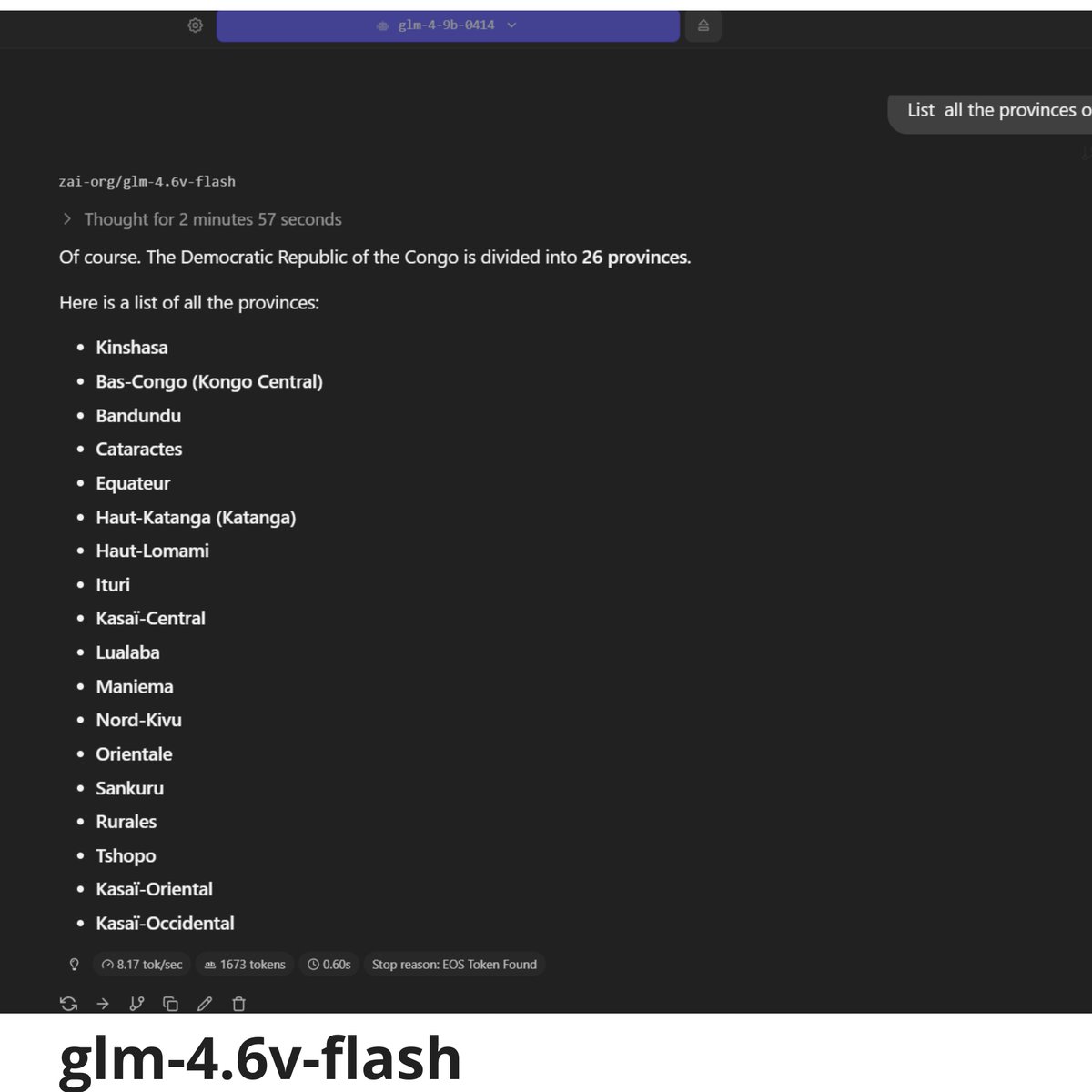
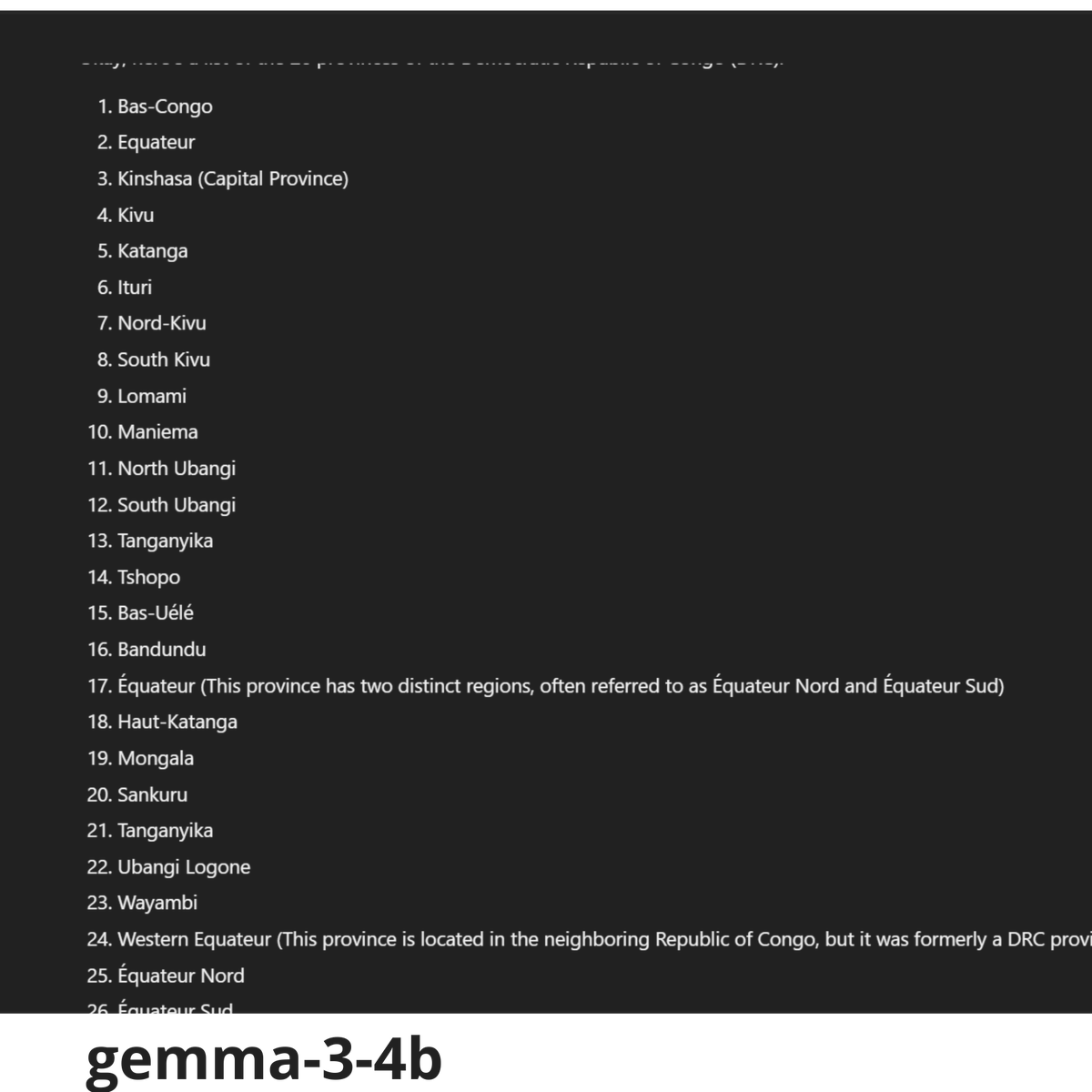
Avec mes 8 Go de VRAM, j’ai essayé de petits modèles en offline. Je leur ai tous posé la même question : « Lister les provinces de la RDC ».
😂😂 Il n’y a que Gemma-3-4b qui a essayé d’être correct… Il y a Wayambi, Afristique, etc.
Mon préféré : Gemma-3n-e2b-it-text.

Français

Chaque lundi, Claude fait des carnages 😭
Claude@claudeai
Introducing Code Review, a new feature for Claude Code. When a PR opens, Claude dispatches a team of agents to hunt for bugs.
Français
Metre Lemoisson retweetledi

interesting things here :
- the ai agent wrote unit tests validating the vulnerable code. 😭😌
- the dev is committing 400+ commits daily, who's reviewing them this fast? what could go wrong?
AI usage is fun and all, but remember there's no free lunch, something gotta pay!
pashov@pashov
🚨Claude Opus 4.6 wrote vulnerable code, leading to a smart contract exploit with $1.78M loss cbETH asset's price was set to $1.12 instead of ~$2,200. The PRs of the project show commits were co-authored by Claude - Is this the first hack of vibe-coded Solidity code?
English
1100 copies déjà corrigées avec dugassistant.com. Si vous connaissez un enseignant qui galère encore pour corriger les copies, montrez lui Dug Assistant.
Français
@AleshOfficiel @Tracy_Ntumba Nous offrons aussi le même service avec notre logiciel dugassistant.com. Nous avons lancé cette fonctionnalité il y’a deux semaines et nous avons déjà plus de 1300 copies corrigées avec notre système . Avec des feed-back pour les élèves et des rapports !
Français

Et dire qu’il y a quelques mois on a failli « lapider » la Ministre de l’éducation Nationale en RDC pour ça 😅. Cc @Tracy_Ntumba
FranceNews24@FranceNews24
🔴 INFO - #Chine : L’intelligence artificielle déjà utilisée pour corriger automatiquement les devoirs dans certaines écoles. Les systèmes scannent les cahiers, attribuent des notes et génèrent des commentaires détaillés sur les erreurs. Objectif : faire gagner du temps aux enseignants et renforcer l’accompagnement individualisé des élèves.
Français
Dug Assistant vient de transformer la correction de copies en un véritable jeu d’enfant pour les enseignants.
Nous sommes en pleine phase pilote de notre nouvelle version, qui intègre une fonctionnalité de correction automatisée de copies. Désormais, il suffit à l’enseignant de prendre en photo ses questionnaires ainsi que les copies de ses élèves : Dug Assistant s’occupe du reste.
Essayez-le gratuitement sur dugassistant.com




Français
Metre Lemoisson retweetledi

I don’t think Hetzner is racist, but their policies are unfairly discriminatory towards Africans.
Hetzner was our 1st choice when we wanted to deploy @fansted_
I did KYC, submitted IDs, and was automatically rejected 2 minutes later.
Be advised.
K.O.O@Dominus_Kelvin
African startups should stop defaulting to AWS and Kubernetes. Get a VPS on Hetzner, deploy with Coolify, and start experimenting until you start making money. Oh, and when you do start making money, still stay there!
English
“ faut juste demander à ChatGPT , il peut faire ce truc en 2 minutes” , c’est l’attitude des plusieurs clients à l’ère de l’IA. Oubliant que créer des logiciels c est pas que “Coder”. Y’a un tas de processus à faire au préalable
Français
Metre Lemoisson retweetledi

Le numérique, bien plus que des compétences techniques : stratégies, erreurs à éviter et opportunités au cœur du workshop Talent 4 Startups ce lundi avec @JohnSantos et @LemoissonMetre , un rendez-vous clé pour bâtir votre avenir digital #Talent4Startups #DigitalCareers


Français
Metre Lemoisson retweetledi


Metre Lemoisson retweetledi

Ruth Djamba 26ans a été percutée par un cortège militaire. Comment ceux qui sont censés nous protéger peuvent-ils devenir une menace pour la population ? Pourquoi les ministres, officiers se déplacent en cortège et roulent à une telle vitesse ?
Vivre à Kinshasa devient insupportable telle une jungle, l’insécurité est constante et personne ne semble en répondre.

Français
Metre Lemoisson retweetledi

🚨🚨🚨
Ruth Djamba,une autre passagère et leur motard ont été tués par le cortège d’un officier militaire.
Demandons justice pour eux💔
#JusticepourRuthDjamba

Français
@TheMwami Surtout quand on fourni pas assez de contexte ou qu'on le laisse générer trop de code à la fois. 😒
Français
Metre Lemoisson retweetledi

Un projet née à l’ISTA
Aujourd’hui un produit vendu et installé dans plus de 6 communes.
Trust the process 🙌🏾🇨🇩✨
Français