
Leon Perkins

18.1K posts

Leon Perkins banner
Leon Perkins

Leon Perkins

@LeonLifeDesign

Marketing for coaches. 2,700+ calls and $1.4 million+ revenue generated. Scaled a client from 10-20K/mo to 110K/mo organically with less than 16K followers

Asunción, Paraguay Katılım Haziran 2022
573 Takip Edilen13.7K Takipçiler
Leon Perkins
Leon Perkins@LeonLifeDesign·
Your coaching or consulting business only grows based on the amount of expertise and effort going into it. The expertise determines how effective what you do is. The effort determines how much volume of it you do. For example, the expertise behind how to make high-performing organic content determines how many quality leads you get. The effort determines how many of those posts you can make per week. Every business owner gets stuck when there isn't enough new expertise or effort going into their business. This is normally when they're trying to do everything themself. They only have so many new things they can learn at once and they only have so much time they can put into doing more volume. Let's say you work 8 hours a day 7 days a week and split 2 hours a day between: 1. Content 2. Lead Generation 3. Sales 4. Client Fulfilment That means a whole function of your business can only get 2 hours a day of learning and work put into it. That's enough to go from $0 to $10K/month or even up to $30K/month but you'll struggle beyond that. It simply takes more than your 2 hours of content, lead gen, sales and client work to generate that level of revenue. Whereas if you hire a team member or agency who has years of expertise you don't have and can put hours more a day into your business you don't have, you inevitably make significantly more revenue. If you do things right, it will be significantly more profit too - without you working any more. But to make that decision to scale, you need the humility to realize you can't do it alone and you'd benefit from outside "help". Even better, you can realize that it's not even really about humility, ego or confidence. It's about acknowledging that it's totally normal for a business to hire more people to help grow. That's why it's a business - and not a job.
English
0
0
0
53
Leon Perkins
Leon Perkins@LeonLifeDesign·
If you're an entrepreneur, the more easily you spend money in your business, the more easily you make it back. The more hesitant you are to invest in things that might make you more money because you're worried about it not working and losing your money, the less investments you'll make and the less times you'll have them work out and increase your revenue. Picture it like this: Let's say your revenue is $20K/month currently and you think there's a new team member or agency could you invest $5K/month in to help you grow. Let's say if things don't work, you'll have spent 2 months with them and wasted 10K. You've lost 10K. But then let's say that if things do work, you'll make an extra $15K/month of revenue from now on and about an extra $8K/month of profit after their cost and $2K/month of any other costs. Let's say from that hire, you make an extra $8K/month profit for only the next 6 months. That's $48K extra profit. Now imagine the odds are 50/50 that they'll fail or they'll succeed. You might not want to make the investment because you're scared of losing the 10K. But if you don't make those bets, you'll miss out on the 50% of times where the bet leads to multiple times more money than you could have lost. It's a hugely asymmetric upside compared to the downside risk. If you could flip a coin and heads meant lose $10K and tails meant gain $48K, you should flip that coin as many times as possible. You need the willingness to risk a loss in order to have a chance at a much larger gain. But unlike a coin flip: - You have your judgement over how likely you think the investment is to work and how large the upside would be. - You also have more control over the outcome. For example, if you invest in some kind of marketing agency to book more qualified calls, you can't really control how many calls they book once you decide to start working with them. But you absolutely can work even harder to get better at sales so you make even more revenue from the calls you book them and you make more revenue from working with them - even though they're the same agency. It's all about betting on yourself and on your business. My clients who make the most revenue (and profit) are the ones who invest the most in growing their revenue - whether it's with us, other team members, paid distribution for organic content, ad spend - all of it. You get back what you put in. If you don't reinvest much of your revenue into growth, your revenue won't grow much. But if you do, and if you have good judgement, it will.
English
1
0
1
86
Leon Perkins
Leon Perkins@LeonLifeDesign·
Most people focus too much on what they're marketing and not enough on who they're marketing it too. You might think of your coaching or consulting as a defined product or service. But people don't buy products or services. They buy how they think it will help them solve their problem or reach their goal. They buy the solution - how ever that solution looks like to them. So in your marketing and in your sales calls, your first job is really to go as in-depth as possible into the problems your potential clients are trying to solve and the goals they're trying to reach. The more detail you have about them, the better you can articulate how your coaching or consulting offer matches it. I use the word "match" because you have to think about *how* your offer *fits* it and then sell that *how*. You focus on the specific *how* you solve the problem or reach the goal - not so much the features and tangibles of the offer itself. This is even more important for attracting new leads with front-end content and then how you nurture leads once they've booked a call with you. They're interested in how you can help them solve their problems and reach their goals. They're not interested in just hearing a pitch about your offer. The more you focus on the offer, the less interested they are. But, once you've marketed very effectively how you help, they're far more receptive to your pitch at the end of the sales call. In short, market how you help - not your offer.
English
2
0
2
97
Leon Perkins
Leon Perkins@LeonLifeDesign·
There's a certain level of information prospects need about your offer to buy and a sales call alone isn't enough to cover it all. You've had sales calls before where the prospect shows up cold, not very interested, they're there to "learn more" but ultimately, no matter what questions you ask them and no matter what you say in your pitch - they don't buy. They can listen to what you're saying but what you're saying can never be enough to make them care enough about it or believe in it enough. You need them to have gone through the right content beforehand. 50-minutes of content that's carefully designed word by word to make the viewer as interested as possible in what you do is going to be 10X more compelling than a 5-minute pitch on a sales call. The pitch should be focused on personalizing to the prospect how everything would work for them. But if they haven't been through all that background content that makes them believe in why it's so important in the first place, what you say doesn't sound important enough. Recently with one of my clients, we've had some prospects who were super warm on the sales calls and seemingly close to closing and we've had others who were totally cold and low-awareness. We were wondering why. Was it: - Their career background - Whether they're from ads or organic - Whether they're inbound or from outreach And eventually we realized that the only main difference was whether they had been through the content we had sent them to go through before the call or not. The prospects who had been through it understood: - What we do - How it works - Why it's so important - Our past client results and credibility Whereas the prospects who hadn't barely knew anything about us at all so they weren't even interested enough in the first place to hear and believe in anything our closer could say. The reason why "nobody likes being pitched" is because they don't like being told to believe something by someone. But the reason why people love educational content is because they feel like the person is helping them understand something they care about in a collaborative way that's not pushy at all. When your pitch comes after the educational content, people care about and trust much more what you say. To increase the chances prospects have consumed our content we send them pre-call, we're now: - Making a Thank You page with quick, dense snippets of info - Going to make a shorter, more condensed version of our VSL so leads are more likely to go through it. Your nurturing content before the call is the most underrated aspect of a call funnel. Focus on it more.
English
1
1
1
69
Leon Perkins
Leon Perkins@LeonLifeDesign·
Your standards are the start of everything for your success in your business. Your standards determine: The quality of lead you're willing to take a sales call with - How high volume of content and DMs you do to book sales calls - How high prices you charge - How much content you send leads to nurture them before the call - How much you invest into your business e.g. ads, team members or agencies. - The entrepreneur with high standards is always pushing to do more and more and better and better. So, they always get more and more and better and better results. Here's my best example of this. We have a high client who can fluctuate between 50K to 80K to 100K/month. Why? The main factor is our standard for the quality of leads we take sales calls with. When our standards aren't high enough, we get more cancellations and no-shows and lower close rates. Our calendar is full of sales calls so we have the perception that our lead generation to book calls is going "well enough" but then look at the result. When we significantly raise our standards, we cancel more calls, only take very highly qualified ones and then we have a lot of space in the calendar. So what do we do next? We have the standard that our calendar should always be full. Having a calendar with a lot of empty space isn't good enough at all. So, we think of ways to fill up the calendar again - but this time only with the most highly qualified leads according to our new qualification criteria. We think of ways to improve the organic content performance, the outreach and anything else it takes to fill up the calendar again. Then, we implement what we thought of and it works. Our calendar is now full of higher quality leads and now we reach 80 to 100K that month. Now we have a closer and more calendar availability - enough to book 6-7 calls a day. We've just about been filling it enough but unfortunately, we're now having some leads who turn out to not be high enough quality. So what will we do? Not be content that the calendar is "full". We'll raise our qualification requirements, take less calls, be down to only around 4-5 qualified calls a day, notice the gap in our calendar... And then do whatever it takes to go back to booking 6-7 qualified calls/day but now with better prospects than ever. We're going to do a higher volume of outreach and we're probably going to spend a bit more on ads to do that. Now, our show rate will be higher, our close rate will be higher and we'll make more revenue and profit than before. It sounds obvious that you should always do the most outreach and ad spend and anything else you profitably can. But you don't even notice what the true level of that you should be at if your standards aren't high enough. Your standards determine in the first place what you even see is possible and what you should do.
English
1
0
1
60
Leon Perkins
Leon Perkins@LeonLifeDesign·
Don't sell coaching or consulting offers. Sell life or business transformations. When someone is bought into as much as possible of the vision for their life or business that you paint with them in your content and on the sales call, your offer will seem so much more valuable. The value of your offer is completely limited by the value of the outcome it produces. - Group calls - 1-1 DM messaging - A course curriculum Are only valuable in so far as they lead to the outcome you promise. Here's an example with one of my clients: He teaches corporate executives how to transition to having multiple fractional roles instead of a full-time job. We spend about 80-90% of our content, marketing and even sales calls just on how much better their life will be if they achieve that. Only the final 10-20% is about how our coaching program will help them achieve it. We notice that prospects who already come to the call 100% sure they want to do fractional have a much higher chance of closing. Why? Because they're so much more aware of how much it will benefit their lives than the prospects who still aren't sure. Another example is that prospects who have already been laid off or describe themselves as burnt out are much more likely to close because they've already suffered one of the main problems of full-time jobs that fractional fixes. Prospects who haven't already suffered that are looking at fractional more like a "hypothetical benefit" rather than a real solution to a desperate problem they're suffering everyday. Even better: This allows you to appeal to and convert less aware leads (which is most of your ICP). The ones who are aware of their problem but don't really know much about solutions will resonate with you. Whereas, if you focus too much on your offer, you'll only resonate with the leads who are actively looking for a solution. Overall, as Alex Hormozi says: "The pain is the pitch" "Sell Hawaii - not the flight"
English
0
0
1
62
Leon Perkins
Leon Perkins@LeonLifeDesign·
Ironically, when you propose a sales call, it shouldn't be directly about the offer you're selling. If you do that, you book so many fewer calls. If you want to book significantly more sales calls for your offer, you need to be generating a lot of new leads. These "new" leads can't just be people who've been marinating in your audience for months. That's a very limited number of people. They need to be people who are genuinely new to your content. Who saw your post for the first time that day and then decided to send you a DM or respond to your outreach. This can be a much, much larger pool of people. But because these people are new to you, if the call you propose with them just sounds like a sales call without much value to them, extremely few of them will say yes and book it. You're asking them to already be very interested in your offer but they have barely any information at all about you and your offer because they're new to you. So instead, you should: - Focus the DM conversation on what they want to learn more about - Then propose the call as a way for them to learn even more, specific to them - And you use certain wording that implies that you'll talk about how you can help (your paid offer) - But without making it sound like that's the main focus of the call. Then, many more people will book because many more people are genuinely interested in "learning more". Once they book the call, then you should have backend selling systems in place that nurture them much more and introduce them more to your paid offer so when they're on the sales call, they're now much more likely to be interested in buying it. The prospects who book calls with one of our clients often go through about 50 minutes of video content between booking the call and having the call. By the end of it, they're so much more interested and open to our client's paid offer than they were when we proposed the call in the DM conversation. This is how you maximize call bookings while also making sure people show up to calls warm enough to have a good chance of closing.
English
0
0
1
90
Leon Perkins
Leon Perkins@LeonLifeDesign·
Articulating as well as possible the pain of your target ICP that you solve with your offer might be the most important thing in your top-of-funnel content. We've started running LinkedIn ads for our client and the target audience is very broad - it's 5.1 million - that's his whole ICP on LinkedIn. We're not using any kind of interest-based targeting yet as we haven't got a large enough lookalike audience to. I was concerned that our ads wouldn't appeal enough to these people because of that. But, they still are. We got 14 leads yesterday with about $80 in spend. We booked a call with one today. We've gotten over 50 profile visitors and followers who we'll connect with, reach out to and convert to at least 1-2 booked calls. Our ads lead with the exact pains that our ICP have with their career so any of them who see the ad have a high chance of resonating with it and reading more. Once we've hooked them, showing we understand fully their pain, we pivot to presenting our solution to the pain. The solution we present isn't our coaching program. It's the opportunity/end-outcome our coaching program is based on. Then, we have a CTA at the end of the ad to DM us for a lead magnet which shows them how their specific career background fits this opportunity. It's a funnel that takes people from problem-aware (the pains with their career) to solution aware (our opportunity) so we can get them in the DMs and set them onto a sales call with us where we make them product-aware (selling our coaching program). Appealing to the pains and problems of your ICP is how you grab their attention the most - even if they're not familiar at all with you or your solutions yet. Lead with that in your content and in your ads.
English
0
0
0
54
Leon Perkins
Leon Perkins@LeonLifeDesign·
If right now you don't have enough qualified profile viewers, followers and reactions to do 200 connection requests/week, you're missing out on so many booked calls and so much revenue. One of my clients now has more availability to take sales calls because we now have a closer. We tried doing more cold outreach to help book more calls but leads' responses were very cold... Then, my organic posts went viral, generated a ton of qualified profile viewers and followers, and now from connecting and reaching out to those... We're booking 6 qualified calls/day so far this week. The leads are so, so much warmer. I also launched that client's ads that I'm running and we already booked a qualified call with just $15 of spend so far. That ad is also generating qualified profile viewers and followers who we can connect with and reach out to. We're going to ramp that up and then we should be able to keep booking 6 qualified calls/day every single day Monday to Friday + a few on the weekend. The reach of your content to qualified viewers is the start of everything for your client acquisition. You need to make it the no.1 priority.
English
0
0
0
74
Leon Perkins
Leon Perkins@LeonLifeDesign·
There are so many ways to improve your organic content performance but this one is my favorite. It's simply to do more of what already worked best. You analyze as deeply as possible the commonalities between the best performing posts that you've made or that others in your niche have made. You identify them. Then you make more content based on that. I recently noticed with one of my clients that when we presented the opportunity we promote as what our target ICP was already doing but just with a different "structure", that content performed so well. So I've started making many more posts following that theme and nearly all of them are performing great. They're bringing in many more new qualified profile viewers and followers we connect with, reach out to and then book onto calls. We booked 5 qualified calls yesterday. You don't always need to reinvent the wheel. You don't always need to be super novel or spontaneous. You just need to do more of what works best.
English
0
0
0
58
Leon Perkins
Leon Perkins@LeonLifeDesign·
You scale the most not by appealing most to the warmest leads, but by being able to convert totally cold leads to warm leads. This is the most important marketing thing I'm working on with a client currently. Our current goal is to go from $100K/month to $200K/month. I've been writing a VSL script for him to more effectively get his leads bought in on the opportunity we promote with our offer. To sell your offer, you really need two sales: 1. That they definitely want the opportunity/end-outcome 2. They they want your offer to help them achieve it. You can't sell them on your offer if they don't even want the opportunity or outcome of it. But the people who aren't even dead-set on it can actually be 90-95%+ of your target market. These are your potential leads who are totally cold at this stage. We estimate that there are around 5-10 million of my client's ICP on LinkedIn. Out of those, maybe around 1-2 million are severely experiencing the problems and pains my client's offer solves AND are interested in a solution. Then out of those, maybe around 100-200K have decided that the solution my client's offer is based on is the right solution for them and they'll start trying it now. If we can only appeal to these 100-200K people, then we're very capped. If you think about it, if your content gets 100K views, how many clients do you get from it? 1, 2 or 3? Or a few more? Not many compared to the number 100K. Why is that? It's because out of those views, such a small percentage are aware enough of their pains, problems, goals, potential solutions to them, your solution to become a lead and then only a limited percent of leads become a client. So if you want to scale much higher, you need to be able to get millions of views on your content and effectively convert the less aware viewers to becoming more aware and ultimately aware enough to become a lead and then buy your offer. You do this by attracting viewers with the pains, problems and goals you help with and then convincing them that your solution (not your offer) is the best path for them. This is what I'm working on with the client's VSL so when we get leads from that 1-2 million-person bracket, we get them to be bought in enough on our opportunity. If you could reach and highly effectively convert 1-2 million viewers on your content, how much do you think you'd scale? So much more. When it comes to organic content, too many people focus on virality and not enough on taking viewers through different levels of awareness and converting them. When it comes to VSLs, too many people focus on selling their offer rather than the opportunity/end-outcome itself. Always remember that "marketing" is about what the "market" is aware of and their pains, problems, goals and what kind of solution they think would fit them best.
English
0
0
0
77
Leon Perkins
Leon Perkins@LeonLifeDesign·
One of my favorite parts of business is endlessly making progress and becoming more and more competent at more and more things. It's a huge process of improvement and intellectual challenge that you just don't get from many other things in life. We reached 100K/month with one of my clients (112K in 29 days). We had set that goal about a year ago when we were only at about 20K/month. Then the moment we hit it, we had a few hours of celebrating and patting ourselves on the back... And then we started working on our plan and taking action to scale to 200K/month and beyond. We got to 100K/month with: 1. Not doing all the outreach we could 2. Him taking all the sales calls himself without any closers 3. Him having limited calendar availability due to that 4. Organically, without ads 5. Without a backend offer to significantly increase LTV Right now, we're working on fixing/improving all those things. 1. We're now maxing out how much outreach we can do 2. We've hired a closer (and a sales agency to help manage and train him) 3. We now have more calendar availability as that closer starts taking calls for us 4. We've set up our ads and they're nearly ready to start running 5. We've started the lead generation process for our new backend offer. Even better, these things don't cap out at 200K/month - they are the foundations to scale higher than that. If you can hire, train and manage 1 closer effectively, you can do the same for 3-5 more. If you can make an extra 50K/month from ads when you were making 100K/month organically, you can scale your ads much higher. If you can make more revenue from a new backend offer you just started, you'll naturally make more and more revenue from that over time as you work on it and as you bring in more clients on the frontend who you can sell it to. You don't set goals to reach them and that be it for the rest of your career or the rest of your life. When you set goals, you enjoy the process of reaching them and the benefits that come with that. But once you've done that, the only thing that's left is to set new goals and repeat the same process. People think of "goal-setting" for extrinsic rewards and for extrinsic motivation but I think the actual process of working towards them is its own instrinsic reward.
English
0
0
0
84
Leon Perkins
Leon Perkins@LeonLifeDesign·
Some people call AI a "bubble". Some people overhype it and invent new workflows that are useless just because AI can do it... The truth is that AI is best when you use it to make: More effective Or More time efficient Pre-existing workflows in your business. You have different workflows in your business because you think they effectively help you: - Market - Sell - Fulfil for clients - Or do some other kind of finance, admin or tax task. Your whole focus with AI should just be how you can apply it to make those exact same workflows more effective or more time-efficient. That's it. Here's why: You made these workflows based on what you think works best for your business. Whereas, if you think about some random thing AI can do and then think about how to apply it to your business... You're basically making up new workflows that aren't what's most important for your business just to use AI. It's backwards. It's unproductive. It's a distraction. Use AI to enhance what you're already doing as best as you can. On the other side, the people who claim AI is a "bubble" are just people who are underutilizing it. They're people who aren't even enhancing the work they already do with it. Eventually, they'll be so far left behind. It's like the people who used to call the "Internet" a bubble and didn't adapt and take advantage of it. You need to take the time to learn how to use it to optimize different processes in your business. If you don't, you'll be outcompeted by the competitors who did and can now market, sell and fulfil for clients more effectively, time-efficiently and cost-efficiently than you can.
English
1
0
1
104
Leon Perkins
Leon Perkins@LeonLifeDesign·
The most under-utilized form of marketing for coaches and consultants: Long client case study videos (20-30 minutes+) Why? You can have the best marketing message possible but your leads still know that you're just saying things in order to get them to pay you. They're just words. They might be extremely well chosen and compelling sounding words... but they're still just words. Whereas when you have a client saying it, it's a real person who literally embodies that what you claim about your offer is real and true. They're also far more likely to be totally honest whereas everyone knows that someone who's selling something is incentivized to make it sound better than it really is. But you have to structure the video correctly. Most people make theirs only 5-15 minutes long and only cover a few basic things like: - Where the client started from - The client's results - How the program helped (but only a few details) - What the client would recommend to others wanting to achieve the same. But what is much more powerful than that is when you ask your questions in a way that gets the client to say in their own words all your key selling points for your offer. Think about: What is every important thing that a prospect must believe in order to buy my offer? List it out in bullet points. Think of around 4-8 key things. Then think about how you can ask questions that'll get the client to say them. You also need to think about how to incorporate the questions in the conversation in a way that sounds natural. The best way to do this is to have a conversation covering the full journey and timeline of the client's work and results with you. Then, at each point when you ask the client what happened or how they achieved something, you incorporate your "selling point" question into it. For example, one of the key selling points of our offer is that if you're a coach or consultant who's super busy running everything in your business, you don't have enough time to make all the content you could. So, we come in and make the content for you so you can have a higher volume of it, get more leads and grow your revenue. In a video I did with one of my clients, I ask about how we were able to go from $46.5K in a month to 79K and he said that one of the main reasons was because we started ghostwriting for him and we increased the volume of content. He reached $46.5K only posting 2-3 times a week on LinkedIn. Then my agency started posting 5-6 times a week for him and he reached 79K Hearing it from him is more compelling than me just saying "We'll make more content for you so you'll get more leads". This applies to every single selling point of your offer. Have your clients say them - not you.
English
0
0
0
69
Leon Perkins
Leon Perkins@LeonLifeDesign·
Most coaches and consultants get their "marketing" backwards. They think marketing themselves means talking about themselves. But "market"ing is actually about the market. It's about who you're selling to. It's about: - Their goals - Their problems - Their pains And ultimately, what they care about the most, what they find the most interesting and what resonates with them the most. So your marketing needs to be entirely focused on that. That's the 80/20 of your marketing. The final 20 should just be showing how you specifically match all of that. But they come first - not you. People care about themselves - not you. They'll only be interested in you once you've proven to them that you fully understand their goals, problems and pains. That's what you should focus your content on to get them interested. Here's an example: The most effective content for lead generation and client acquisition for this client of mine does not mention at all: - His credibility - His background - His client results - His coaching program None of it. Instead, it 100% focuses on: 1. Our target ICP's problems and pains with their career 2. How the new opportunity of "fractional" roles fixes those Then, we CTA to DM us for a free lead magnet that tells them more about how their career background would fit fractional. Then we have a DM conversation to book a sales call with us (if they're qualified). Even the DM conversation still doesn't market our coaching program. The DM conversation is focused on getting them interested in just talking to us more. We need them to keep responding to the DMs. Then we need them to want to have a call with us to talk more on a call. But for someone to be willing to have a call with you does not mean that they need to already be very interested in buying your offer. Not at all. They literally just need to be interested in having a call with you to "talk more". Then once they book, we send them content that makes them significantly more interested in our coaching program. Then we have the whole sales call to actually sell them on it. With this process, you're able to appeal to every person who's your ICP - even if they have no idea who you are yet or how your offer works. How many people on LinkedIn are your ICP? Probably hundreds of thousands or millions. How many people on LinkedIn regularly see your content and are interested in how your program works? Probably a few hundred or a few thousand. Around 1000X fewer people. This process with content and DMs is how you book the most qualified sales calls possible.
English
2
0
2
76
Leon Perkins
Leon Perkins@LeonLifeDesign·
If you're a coach or consultant booking around 10-15 sales calls a month and making $10-30K/month in revenue: I can nearly 100% guarantee that improving your lead generation from your content and DMs is the only difference between you doubling or tripling your revenue. Here's how: If you have those call booking and revenue metrics, it roughly means these 3 things: - Your show rate is okay - Your close rate is okay - Your price is okay You might be able to improve them by around 20%. For example, taking your close rate from 25% to 30%. But it's nearly impossible to double or triple them. You can't double a 60% show rate to 120%. But if you: - Post more content - Have a few more viral posts a month - Have more warm leads you reach out to from that content - Have a better DM script - Respond to leads faster - Do more follow-ups You will 2-3X your number of qualified booked calls and your revenue. One of my clients went from $10-20K/month to $34K in a month as soon as his content went a bit more viral and he brought us on for his setting. His show rate, close rate and price was very similar. Then we went on to reach $112K in a month in 11 months from then. With our ghostwriting and DM setting, we generated more and more leads from content, had a higher and higher conversion rate of those leads to booking calls in the DMs and that allowed us to fill our calendar with the highest quality leads and triple our prices while maintaining a similar close rate. Content and DMs are the start of everything.
English
0
0
0
100
Leon Perkins
Leon Perkins@LeonLifeDesign·
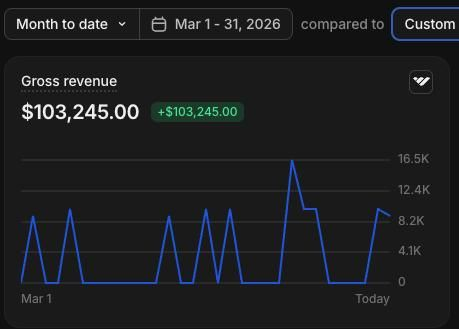
The biggest misconception about lead quality is that it's just about targeting in your content. With organic content, no matter how well you try to target potential leads with specific characteristics, you'll always get a lot of viewers and leads who don't have them. There's always an overlap between the problems, pains, goals, characteristics etc. of your ICP with other types of leads. Since we started working with one of our clients over a year ago, we've continually increased our qualification requirements for the leads who we're willing to talk to, book calls with, and take on as clients. We target them as well as we can in our content by focusing on certain: - Job titles - Salary numbers - Problems only executives (as opposed to entry level employees or managers) have But you still get some other types of people interested in the content. So what's the solution? You simply just have to generate more and more leads so you can be more selective and still book enough calls. We've been booking about 40 qualified calls per month for many months now. This is the maximum that client can take based on his availability. So as we generate more leads, we increase our qualification requirements and only book calls with the highest quality ones. But we're only able to do this because we generate so many more leads. If we didn't, no matter what we do with the "targeting" of our content, we'd be booking fewer calls and making the same revenue or less rather than more. We went from $46.5K in June to about $80K in October and December to $103K in March while taking a similar number of sales calls. That's how much you can improve your lead quality and revenue just by generating more leads.
Leon Perkins tweet media
English
0
0
0
88
Leon Perkins
Leon Perkins@LeonLifeDesign·
The work itself of creating content isn't very valuable anymore. It used to be an incredibly long, manual process. But now with AI, it can be incredibly quick. So now, how do you actually create content that stands out and generates as many qualified leads as possible? AI can make the content but ironically, the more "AI" the content is, the worse the content will perform. The more AI the content, the more general it is, the less different it is and by definition, it will stand out less. The best AI content is produced when you give AI the most sophisticated inputs possible based on your expertise of how to make high-performing content and the quality of the swipe file you give it. The quality of the swipe file you give it is also determined by your expertise with organic content. So ultimately, the performance of your content still comes back to your level of skill with content. AI doesn't replace that skill. AI makes the skilled people able to produce their high-quality content faster. The value of ghostwriting and content creation isn't the work itself anymore. It's the expertise to make that work as good as possible.
English
0
0
0
59
Leon Perkins
Leon Perkins@LeonLifeDesign·
Your content shouldn't sell your coaching or consulting offer. It should sell the opportunity/end-outcome of your offer. The offer of one of my clients is a coaching program that helps corporate professionals get fractional roles based on their career experience. We don't promote the program at all in the content. We promote why corporate professionals should go for fractional roles. We sell them on that being the best thing they can do to advance their career (and their life as it relates to their career). Once they believe it's the best thing they can do, the focus of the DMs is to sell them on talking to us about it. The focus is still not selling the program. Then once they're sold on talking to us about it (and they book the sales call), we send them strategic content that sells them even more on fractional roles and that introduces info about our program. Then they go into the call 100% sold on fractional roles and with some background info about our program and client results. Then the call is about selling them on the program. Mainly, going in depth into their specific situation and showing them exactly how our program fits it and will help them achieve their goals. This doesn't always work. Not 100% of the prospects show up sold on fractional. But it works most of the time and when it does, our close rate is very high. When you focus on selling the opportunity/end-outcome of your offer, you also appeal to far, far more leads. How many leads see your content, are already 100% sold on the opportunity/end-outcome of your offer AND are interested in hearing more about your offer? Maybe 100-1000 (depending on audience size) But then how many leads who see your content aren't 100% sold on the opportunity/end-outcome yet? At least 10X more. So when you focus on that content, you appeal to 10X+ more leads. Then, as you convert them to now being sold on the opportunity/end-outcome, you've grown the pool of people who'd now be interested in hearing more about your offer. Then you have more warm leads to reach out to. Higher response rates. More DM conversations. Higher conversion rates in the DMs. More booked calls. More revenue.
English
1
0
0
91
Leon Perkins
Leon Perkins@LeonLifeDesign·
The fewer steps your funnel has, the higher your conversions will be. It sounds counterintuitive. You think the more steps your funnel has, the more "nurtured" the leads will be. But you should focus instead on how you can nurture and convert leads as fast as possible in as few steps as possible. Every single step will have a conversion rate with leads dropping off. Here's the simplest funnel you should be maximizing on social media. Organic content --> DMs --> Book a closing call. To get a closing call booked, you just need 2 steps: 1. Content 2. DMs That's it. Your content gives you inbound leads in the DMs. It gives you warm leads following you or engaging on your profile who you send DM outreach to. Once they're in the DMs, you have one DM conversation framework to book a sales call with them. Then you can also focus on things like backend selling systems, sales process and offer optimization to make more revenue from each call you book. But fundamentally, you only need those 2 things to book a call (content and DMs). We helped a client scale from averaging $10-20K/month to $112K in 29 days with this. All organic content. No ads. One platform (LinkedIn). No webinars. The simpler you keep your funnel and the fewer steps it has, the more time and money you can dedicate to improving each step. Before you start thinking about ads, VSLs, webinars, low-ticket to high-ticket and any other kind of funnel: Ask yourself if you're already 100% maximizing your organic content --> DMs --> book a closing call funnel.
English
0
0
0
71