
Adrian Lerer
5K posts

Adrian Lerer
@LererAdrian
Lawyer (UBA) - MBA (IAE) | Legal | Integrity | PR|CSR|HHRR|Forensic||M&A|IP||Law Firms & In-House Law Management - IntegridAI SaaS Plataform


¿Qué te parece esta entrevista, @LererAdrian? utdt.edu/ver_nota_prens…

A poet used Claude Code + public APIs to flag $4.2B in Pentagon overcharges in one afternoon. The same day, a prestigious Argentine/Spanish administrative law lawyer and IDB consultant @beltrangambier published a column proposing AI-enhanced polygraphs to catch corrupt officials signing procurement contracts. Both are asking the right question: how do you put technology at the service of public integrity? But the evidence points in a different direction than the polygraph. @Argona0x pulled 1.2M contract awards from USAspending v2, cross-referenced against Digikey and Mouser prices. 340 contracts flagged at 10x+ markup. A $14.80 connector billed at $1,280. A $287 circuit breaker at $3,400. A $71K "ruggedized tablet" that's a Panasonic Toughbook with a sticker. This isn't an isolated experiment. Brazil's GRAS (World Bank) found 850+ collusive suppliers and 450 front companies by cross-referencing beneficial ownership with procurement data. Spain's BRAVA classifies collusive bids at 90%+ accuracy since 2022. Colombia runs AI-driven risk alerts on SECOP since 2019. None of these systems read minds. They read transaction data. Corruption in procurement is a Nash equilibrium: officials, firms, intermediaries, party structures all optimize against each other. Detecting one player doesn't collapse it. A perfect polygraph would just shift who signs the form. Corruption mutates. The polygraph doesn't. Worse: integrity declarations don't just fail. In Extended Phenotype Theory terms, the anti-corruption form is an extended phenotype of the corrupt system itself. It creates the appearance of control, reducing pressure for actual control. The paperwork stays clean. The 50x overcharge stays too. The pending question is one of regulatory design. What due diligence standard applies to an official who approves a contract without checking market prices, when a poet can do that check in an afternoon? We've built a simulation engine (816 institutional agents, OASIS/CAMEL-AI) that reproduces regulatory rigidity indices across Argentina, Spain, Brazil, and Chile with <4% error. Open-source replication code on Zenodo. If the tool to test a norm before enacting it already exists, not using it is itself a due diligence failure. You don't need to know if the minister lied. You need to know if the connector costs $14.80 or $1,280. That information is already public. AI already knows how to process it. The only missing piece is the institutional will to ask. Full Substack article : adrianlerer.substack.com/p/the-polygrap…

A poet used Claude Code + public APIs to flag $4.2B in Pentagon overcharges in one afternoon. The same day, a prestigious Argentine/Spanish administrative law lawyer and IDB consultant @beltrangambier published a column proposing AI-enhanced polygraphs to catch corrupt officials signing procurement contracts. Both are asking the right question: how do you put technology at the service of public integrity? But the evidence points in a different direction than the polygraph. @Argona0x pulled 1.2M contract awards from USAspending v2, cross-referenced against Digikey and Mouser prices. 340 contracts flagged at 10x+ markup. A $14.80 connector billed at $1,280. A $287 circuit breaker at $3,400. A $71K "ruggedized tablet" that's a Panasonic Toughbook with a sticker. This isn't an isolated experiment. Brazil's GRAS (World Bank) found 850+ collusive suppliers and 450 front companies by cross-referencing beneficial ownership with procurement data. Spain's BRAVA classifies collusive bids at 90%+ accuracy since 2022. Colombia runs AI-driven risk alerts on SECOP since 2019. None of these systems read minds. They read transaction data. Corruption in procurement is a Nash equilibrium: officials, firms, intermediaries, party structures all optimize against each other. Detecting one player doesn't collapse it. A perfect polygraph would just shift who signs the form. Corruption mutates. The polygraph doesn't. Worse: integrity declarations don't just fail. In Extended Phenotype Theory terms, the anti-corruption form is an extended phenotype of the corrupt system itself. It creates the appearance of control, reducing pressure for actual control. The paperwork stays clean. The 50x overcharge stays too. The pending question is one of regulatory design. What due diligence standard applies to an official who approves a contract without checking market prices, when a poet can do that check in an afternoon? We've built a simulation engine (816 institutional agents, OASIS/CAMEL-AI) that reproduces regulatory rigidity indices across Argentina, Spain, Brazil, and Chile with <4% error. Open-source replication code on Zenodo. If the tool to test a norm before enacting it already exists, not using it is itself a due diligence failure. You don't need to know if the minister lied. You need to know if the connector costs $14.80 or $1,280. That information is already public. AI already knows how to process it. The only missing piece is the institutional will to ask. Full Substack article : adrianlerer.substack.com/p/the-polygrap…

A poet used Claude Code + public APIs to flag $4.2B in Pentagon overcharges in one afternoon. The same day, a prestigious Argentine/Spanish administrative law lawyer and IDB consultant @beltrangambier published a column proposing AI-enhanced polygraphs to catch corrupt officials signing procurement contracts. Both are asking the right question: how do you put technology at the service of public integrity? But the evidence points in a different direction than the polygraph. @Argona0x pulled 1.2M contract awards from USAspending v2, cross-referenced against Digikey and Mouser prices. 340 contracts flagged at 10x+ markup. A $14.80 connector billed at $1,280. A $287 circuit breaker at $3,400. A $71K "ruggedized tablet" that's a Panasonic Toughbook with a sticker. This isn't an isolated experiment. Brazil's GRAS (World Bank) found 850+ collusive suppliers and 450 front companies by cross-referencing beneficial ownership with procurement data. Spain's BRAVA classifies collusive bids at 90%+ accuracy since 2022. Colombia runs AI-driven risk alerts on SECOP since 2019. None of these systems read minds. They read transaction data. Corruption in procurement is a Nash equilibrium: officials, firms, intermediaries, party structures all optimize against each other. Detecting one player doesn't collapse it. A perfect polygraph would just shift who signs the form. Corruption mutates. The polygraph doesn't. Worse: integrity declarations don't just fail. In Extended Phenotype Theory terms, the anti-corruption form is an extended phenotype of the corrupt system itself. It creates the appearance of control, reducing pressure for actual control. The paperwork stays clean. The 50x overcharge stays too. The pending question is one of regulatory design. What due diligence standard applies to an official who approves a contract without checking market prices, when a poet can do that check in an afternoon? We've built a simulation engine (816 institutional agents, OASIS/CAMEL-AI) that reproduces regulatory rigidity indices across Argentina, Spain, Brazil, and Chile with <4% error. Open-source replication code on Zenodo. If the tool to test a norm before enacting it already exists, not using it is itself a due diligence failure. You don't need to know if the minister lied. You need to know if the connector costs $14.80 or $1,280. That information is already public. AI already knows how to process it. The only missing piece is the institutional will to ask. Full Substack article : adrianlerer.substack.com/p/the-polygrap…

A poet used Claude Code + public APIs to flag $4.2B in Pentagon overcharges in one afternoon. The same day, a prestigious Argentine/Spanish administrative law lawyer and IDB consultant @beltrangambier published a column proposing AI-enhanced polygraphs to catch corrupt officials signing procurement contracts. Both are asking the right question: how do you put technology at the service of public integrity? But the evidence points in a different direction than the polygraph. @Argona0x pulled 1.2M contract awards from USAspending v2, cross-referenced against Digikey and Mouser prices. 340 contracts flagged at 10x+ markup. A $14.80 connector billed at $1,280. A $287 circuit breaker at $3,400. A $71K "ruggedized tablet" that's a Panasonic Toughbook with a sticker. This isn't an isolated experiment. Brazil's GRAS (World Bank) found 850+ collusive suppliers and 450 front companies by cross-referencing beneficial ownership with procurement data. Spain's BRAVA classifies collusive bids at 90%+ accuracy since 2022. Colombia runs AI-driven risk alerts on SECOP since 2019. None of these systems read minds. They read transaction data. Corruption in procurement is a Nash equilibrium: officials, firms, intermediaries, party structures all optimize against each other. Detecting one player doesn't collapse it. A perfect polygraph would just shift who signs the form. Corruption mutates. The polygraph doesn't. Worse: integrity declarations don't just fail. In Extended Phenotype Theory terms, the anti-corruption form is an extended phenotype of the corrupt system itself. It creates the appearance of control, reducing pressure for actual control. The paperwork stays clean. The 50x overcharge stays too. The pending question is one of regulatory design. What due diligence standard applies to an official who approves a contract without checking market prices, when a poet can do that check in an afternoon? We've built a simulation engine (816 institutional agents, OASIS/CAMEL-AI) that reproduces regulatory rigidity indices across Argentina, Spain, Brazil, and Chile with <4% error. Open-source replication code on Zenodo. If the tool to test a norm before enacting it already exists, not using it is itself a due diligence failure. You don't need to know if the minister lied. You need to know if the connector costs $14.80 or $1,280. That information is already public. AI already knows how to process it. The only missing piece is the institutional will to ask. Full Substack article : adrianlerer.substack.com/p/the-polygrap…
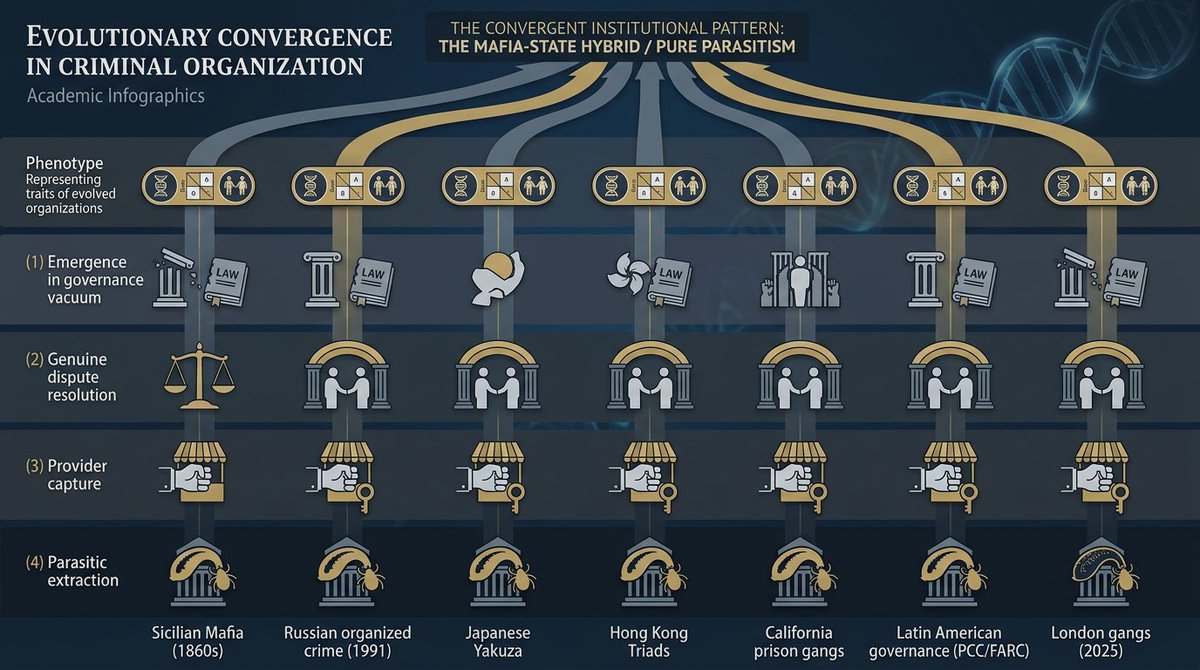
A poet used Claude Code + public APIs to flag $4.2B in Pentagon overcharges in one afternoon. The same day, a prestigious Argentine/Spanish administrative law lawyer and IDB consultant @beltrangambier published a column proposing AI-enhanced polygraphs to catch corrupt officials signing procurement contracts. Both are asking the right question: how do you put technology at the service of public integrity? But the evidence points in a different direction than the polygraph. @Argona0x pulled 1.2M contract awards from USAspending v2, cross-referenced against Digikey and Mouser prices. 340 contracts flagged at 10x+ markup. A $14.80 connector billed at $1,280. A $287 circuit breaker at $3,400. A $71K "ruggedized tablet" that's a Panasonic Toughbook with a sticker. This isn't an isolated experiment. Brazil's GRAS (World Bank) found 850+ collusive suppliers and 450 front companies by cross-referencing beneficial ownership with procurement data. Spain's BRAVA classifies collusive bids at 90%+ accuracy since 2022. Colombia runs AI-driven risk alerts on SECOP since 2019. None of these systems read minds. They read transaction data. Corruption in procurement is a Nash equilibrium: officials, firms, intermediaries, party structures all optimize against each other. Detecting one player doesn't collapse it. A perfect polygraph would just shift who signs the form. Corruption mutates. The polygraph doesn't. Worse: integrity declarations don't just fail. In Extended Phenotype Theory terms, the anti-corruption form is an extended phenotype of the corrupt system itself. It creates the appearance of control, reducing pressure for actual control. The paperwork stays clean. The 50x overcharge stays too. The pending question is one of regulatory design. What due diligence standard applies to an official who approves a contract without checking market prices, when a poet can do that check in an afternoon? We've built a simulation engine (816 institutional agents, OASIS/CAMEL-AI) that reproduces regulatory rigidity indices across Argentina, Spain, Brazil, and Chile with <4% error. Open-source replication code on Zenodo. If the tool to test a norm before enacting it already exists, not using it is itself a due diligence failure. You don't need to know if the minister lied. You need to know if the connector costs $14.80 or $1,280. That information is already public. AI already knows how to process it. The only missing piece is the institutional will to ask. Full Substack article : adrianlerer.substack.com/p/the-polygrap…

A poet used Claude Code + public APIs to flag $4.2B in Pentagon overcharges in one afternoon. The same day, a prestigious Argentine/Spanish administrative law lawyer and IDB consultant @beltrangambier published a column proposing AI-enhanced polygraphs to catch corrupt officials signing procurement contracts. Both are asking the right question: how do you put technology at the service of public integrity? But the evidence points in a different direction than the polygraph. @Argona0x pulled 1.2M contract awards from USAspending v2, cross-referenced against Digikey and Mouser prices. 340 contracts flagged at 10x+ markup. A $14.80 connector billed at $1,280. A $287 circuit breaker at $3,400. A $71K "ruggedized tablet" that's a Panasonic Toughbook with a sticker. This isn't an isolated experiment. Brazil's GRAS (World Bank) found 850+ collusive suppliers and 450 front companies by cross-referencing beneficial ownership with procurement data. Spain's BRAVA classifies collusive bids at 90%+ accuracy since 2022. Colombia runs AI-driven risk alerts on SECOP since 2019. None of these systems read minds. They read transaction data. Corruption in procurement is a Nash equilibrium: officials, firms, intermediaries, party structures all optimize against each other. Detecting one player doesn't collapse it. A perfect polygraph would just shift who signs the form. Corruption mutates. The polygraph doesn't. Worse: integrity declarations don't just fail. In Extended Phenotype Theory terms, the anti-corruption form is an extended phenotype of the corrupt system itself. It creates the appearance of control, reducing pressure for actual control. The paperwork stays clean. The 50x overcharge stays too. The pending question is one of regulatory design. What due diligence standard applies to an official who approves a contract without checking market prices, when a poet can do that check in an afternoon? We've built a simulation engine (816 institutional agents, OASIS/CAMEL-AI) that reproduces regulatory rigidity indices across Argentina, Spain, Brazil, and Chile with <4% error. Open-source replication code on Zenodo. If the tool to test a norm before enacting it already exists, not using it is itself a due diligence failure. You don't need to know if the minister lied. You need to know if the connector costs $14.80 or $1,280. That information is already public. AI already knows how to process it. The only missing piece is the institutional will to ask. Full Substack article : adrianlerer.substack.com/p/the-polygrap…
A poet used Claude Code + public APIs to flag $4.2B in Pentagon overcharges in one afternoon. The same day, a prestigious Argentine/Spanish administrative law lawyer and IDB consultant @beltrangambier published a column proposing AI-enhanced polygraphs to catch corrupt officials signing procurement contracts. Both are asking the right question: how do you put technology at the service of public integrity? But the evidence points in a different direction than the polygraph. @Argona0x pulled 1.2M contract awards from USAspending v2, cross-referenced against Digikey and Mouser prices. 340 contracts flagged at 10x+ markup. A $14.80 connector billed at $1,280. A $287 circuit breaker at $3,400. A $71K "ruggedized tablet" that's a Panasonic Toughbook with a sticker. This isn't an isolated experiment. Brazil's GRAS (World Bank) found 850+ collusive suppliers and 450 front companies by cross-referencing beneficial ownership with procurement data. Spain's BRAVA classifies collusive bids at 90%+ accuracy since 2022. Colombia runs AI-driven risk alerts on SECOP since 2019. None of these systems read minds. They read transaction data. Corruption in procurement is a Nash equilibrium: officials, firms, intermediaries, party structures all optimize against each other. Detecting one player doesn't collapse it. A perfect polygraph would just shift who signs the form. Corruption mutates. The polygraph doesn't. Worse: integrity declarations don't just fail. In Extended Phenotype Theory terms, the anti-corruption form is an extended phenotype of the corrupt system itself. It creates the appearance of control, reducing pressure for actual control. The paperwork stays clean. The 50x overcharge stays too. The pending question is one of regulatory design. What due diligence standard applies to an official who approves a contract without checking market prices, when a poet can do that check in an afternoon? We've built a simulation engine (816 institutional agents, OASIS/CAMEL-AI) that reproduces regulatory rigidity indices across Argentina, Spain, Brazil, and Chile with <4% error. Open-source replication code on Zenodo. If the tool to test a norm before enacting it already exists, not using it is itself a due diligence failure. You don't need to know if the minister lied. You need to know if the connector costs $14.80 or $1,280. That information is already public. AI already knows how to process it. The only missing piece is the institutional will to ask. Full Substack article : adrianlerer.substack.com/p/the-polygrap…

A poet used Claude Code + public APIs to flag $4.2B in Pentagon overcharges in one afternoon. The same day, a prestigious Argentine/Spanish administrative law lawyer and IDB consultant @beltrangambier published a column proposing AI-enhanced polygraphs to catch corrupt officials signing procurement contracts. Both are asking the right question: how do you put technology at the service of public integrity? But the evidence points in a different direction than the polygraph. @Argona0x pulled 1.2M contract awards from USAspending v2, cross-referenced against Digikey and Mouser prices. 340 contracts flagged at 10x+ markup. A $14.80 connector billed at $1,280. A $287 circuit breaker at $3,400. A $71K "ruggedized tablet" that's a Panasonic Toughbook with a sticker. This isn't an isolated experiment. Brazil's GRAS (World Bank) found 850+ collusive suppliers and 450 front companies by cross-referencing beneficial ownership with procurement data. Spain's BRAVA classifies collusive bids at 90%+ accuracy since 2022. Colombia runs AI-driven risk alerts on SECOP since 2019. None of these systems read minds. They read transaction data. Corruption in procurement is a Nash equilibrium: officials, firms, intermediaries, party structures all optimize against each other. Detecting one player doesn't collapse it. A perfect polygraph would just shift who signs the form. Corruption mutates. The polygraph doesn't. Worse: integrity declarations don't just fail. In Extended Phenotype Theory terms, the anti-corruption form is an extended phenotype of the corrupt system itself. It creates the appearance of control, reducing pressure for actual control. The paperwork stays clean. The 50x overcharge stays too. The pending question is one of regulatory design. What due diligence standard applies to an official who approves a contract without checking market prices, when a poet can do that check in an afternoon? We've built a simulation engine (816 institutional agents, OASIS/CAMEL-AI) that reproduces regulatory rigidity indices across Argentina, Spain, Brazil, and Chile with <4% error. Open-source replication code on Zenodo. If the tool to test a norm before enacting it already exists, not using it is itself a due diligence failure. You don't need to know if the minister lied. You need to know if the connector costs $14.80 or $1,280. That information is already public. AI already knows how to process it. The only missing piece is the institutional will to ask. Full Substack article : adrianlerer.substack.com/p/the-polygrap…

A poet used Claude Code + public APIs to flag $4.2B in Pentagon overcharges in one afternoon. The same day, a prestigious Argentine/Spanish administrative law lawyer and IDB consultant @beltrangambier published a column proposing AI-enhanced polygraphs to catch corrupt officials signing procurement contracts. Both are asking the right question: how do you put technology at the service of public integrity? But the evidence points in a different direction than the polygraph. @Argona0x pulled 1.2M contract awards from USAspending v2, cross-referenced against Digikey and Mouser prices. 340 contracts flagged at 10x+ markup. A $14.80 connector billed at $1,280. A $287 circuit breaker at $3,400. A $71K "ruggedized tablet" that's a Panasonic Toughbook with a sticker. This isn't an isolated experiment. Brazil's GRAS (World Bank) found 850+ collusive suppliers and 450 front companies by cross-referencing beneficial ownership with procurement data. Spain's BRAVA classifies collusive bids at 90%+ accuracy since 2022. Colombia runs AI-driven risk alerts on SECOP since 2019. None of these systems read minds. They read transaction data. Corruption in procurement is a Nash equilibrium: officials, firms, intermediaries, party structures all optimize against each other. Detecting one player doesn't collapse it. A perfect polygraph would just shift who signs the form. Corruption mutates. The polygraph doesn't. Worse: integrity declarations don't just fail. In Extended Phenotype Theory terms, the anti-corruption form is an extended phenotype of the corrupt system itself. It creates the appearance of control, reducing pressure for actual control. The paperwork stays clean. The 50x overcharge stays too. The pending question is one of regulatory design. What due diligence standard applies to an official who approves a contract without checking market prices, when a poet can do that check in an afternoon? We've built a simulation engine (816 institutional agents, OASIS/CAMEL-AI) that reproduces regulatory rigidity indices across Argentina, Spain, Brazil, and Chile with <4% error. Open-source replication code on Zenodo. If the tool to test a norm before enacting it already exists, not using it is itself a due diligence failure. You don't need to know if the minister lied. You need to know if the connector costs $14.80 or $1,280. That information is already public. AI already knows how to process it. The only missing piece is the institutional will to ask. Full Substack article : adrianlerer.substack.com/p/the-polygrap…
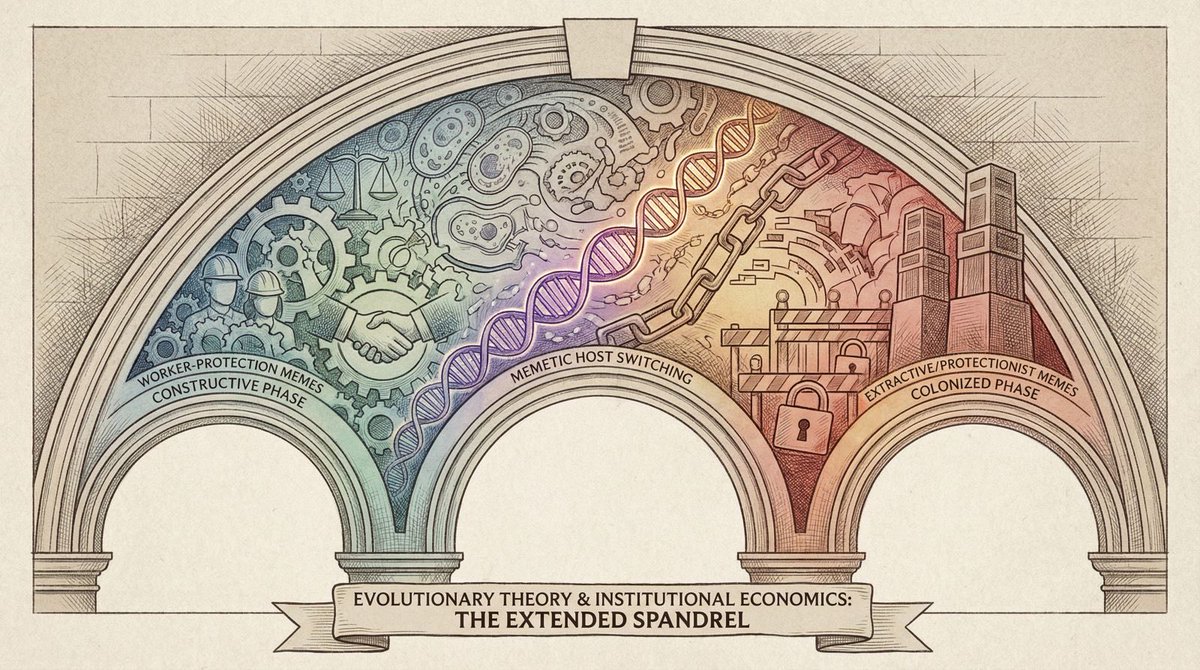
A poet used Claude Code + public APIs to flag $4.2B in Pentagon overcharges in one afternoon. The same day, a prestigious Argentine/Spanish administrative law lawyer and IDB consultant @beltrangambier published a column proposing AI-enhanced polygraphs to catch corrupt officials signing procurement contracts. Both are asking the right question: how do you put technology at the service of public integrity? But the evidence points in a different direction than the polygraph. @Argona0x pulled 1.2M contract awards from USAspending v2, cross-referenced against Digikey and Mouser prices. 340 contracts flagged at 10x+ markup. A $14.80 connector billed at $1,280. A $287 circuit breaker at $3,400. A $71K "ruggedized tablet" that's a Panasonic Toughbook with a sticker. This isn't an isolated experiment. Brazil's GRAS (World Bank) found 850+ collusive suppliers and 450 front companies by cross-referencing beneficial ownership with procurement data. Spain's BRAVA classifies collusive bids at 90%+ accuracy since 2022. Colombia runs AI-driven risk alerts on SECOP since 2019. None of these systems read minds. They read transaction data. Corruption in procurement is a Nash equilibrium: officials, firms, intermediaries, party structures all optimize against each other. Detecting one player doesn't collapse it. A perfect polygraph would just shift who signs the form. Corruption mutates. The polygraph doesn't. Worse: integrity declarations don't just fail. In Extended Phenotype Theory terms, the anti-corruption form is an extended phenotype of the corrupt system itself. It creates the appearance of control, reducing pressure for actual control. The paperwork stays clean. The 50x overcharge stays too. The pending question is one of regulatory design. What due diligence standard applies to an official who approves a contract without checking market prices, when a poet can do that check in an afternoon? We've built a simulation engine (816 institutional agents, OASIS/CAMEL-AI) that reproduces regulatory rigidity indices across Argentina, Spain, Brazil, and Chile with <4% error. Open-source replication code on Zenodo. If the tool to test a norm before enacting it already exists, not using it is itself a due diligence failure. You don't need to know if the minister lied. You need to know if the connector costs $14.80 or $1,280. That information is already public. AI already knows how to process it. The only missing piece is the institutional will to ask. Full Substack article : adrianlerer.substack.com/p/the-polygrap…

A poet used Claude Code + public APIs to flag $4.2B in Pentagon overcharges in one afternoon. The same day, a prestigious Argentine/Spanish administrative law lawyer and IDB consultant @beltrangambier published a column proposing AI-enhanced polygraphs to catch corrupt officials signing procurement contracts. Both are asking the right question: how do you put technology at the service of public integrity? But the evidence points in a different direction than the polygraph. @Argona0x pulled 1.2M contract awards from USAspending v2, cross-referenced against Digikey and Mouser prices. 340 contracts flagged at 10x+ markup. A $14.80 connector billed at $1,280. A $287 circuit breaker at $3,400. A $71K "ruggedized tablet" that's a Panasonic Toughbook with a sticker. This isn't an isolated experiment. Brazil's GRAS (World Bank) found 850+ collusive suppliers and 450 front companies by cross-referencing beneficial ownership with procurement data. Spain's BRAVA classifies collusive bids at 90%+ accuracy since 2022. Colombia runs AI-driven risk alerts on SECOP since 2019. None of these systems read minds. They read transaction data. Corruption in procurement is a Nash equilibrium: officials, firms, intermediaries, party structures all optimize against each other. Detecting one player doesn't collapse it. A perfect polygraph would just shift who signs the form. Corruption mutates. The polygraph doesn't. Worse: integrity declarations don't just fail. In Extended Phenotype Theory terms, the anti-corruption form is an extended phenotype of the corrupt system itself. It creates the appearance of control, reducing pressure for actual control. The paperwork stays clean. The 50x overcharge stays too. The pending question is one of regulatory design. What due diligence standard applies to an official who approves a contract without checking market prices, when a poet can do that check in an afternoon? We've built a simulation engine (816 institutional agents, OASIS/CAMEL-AI) that reproduces regulatory rigidity indices across Argentina, Spain, Brazil, and Chile with <4% error. Open-source replication code on Zenodo. If the tool to test a norm before enacting it already exists, not using it is itself a due diligence failure. You don't need to know if the minister lied. You need to know if the connector costs $14.80 or $1,280. That information is already public. AI already knows how to process it. The only missing piece is the institutional will to ask. Full Substack article : adrianlerer.substack.com/p/the-polygrap…

A poet used Claude Code + public APIs to flag $4.2B in Pentagon overcharges in one afternoon. The same day, a prestigious Argentine/Spanish administrative law lawyer and IDB consultant @beltrangambier published a column proposing AI-enhanced polygraphs to catch corrupt officials signing procurement contracts. Both are asking the right question: how do you put technology at the service of public integrity? But the evidence points in a different direction than the polygraph. @Argona0x pulled 1.2M contract awards from USAspending v2, cross-referenced against Digikey and Mouser prices. 340 contracts flagged at 10x+ markup. A $14.80 connector billed at $1,280. A $287 circuit breaker at $3,400. A $71K "ruggedized tablet" that's a Panasonic Toughbook with a sticker. This isn't an isolated experiment. Brazil's GRAS (World Bank) found 850+ collusive suppliers and 450 front companies by cross-referencing beneficial ownership with procurement data. Spain's BRAVA classifies collusive bids at 90%+ accuracy since 2022. Colombia runs AI-driven risk alerts on SECOP since 2019. None of these systems read minds. They read transaction data. Corruption in procurement is a Nash equilibrium: officials, firms, intermediaries, party structures all optimize against each other. Detecting one player doesn't collapse it. A perfect polygraph would just shift who signs the form. Corruption mutates. The polygraph doesn't. Worse: integrity declarations don't just fail. In Extended Phenotype Theory terms, the anti-corruption form is an extended phenotype of the corrupt system itself. It creates the appearance of control, reducing pressure for actual control. The paperwork stays clean. The 50x overcharge stays too. The pending question is one of regulatory design. What due diligence standard applies to an official who approves a contract without checking market prices, when a poet can do that check in an afternoon? We've built a simulation engine (816 institutional agents, OASIS/CAMEL-AI) that reproduces regulatory rigidity indices across Argentina, Spain, Brazil, and Chile with <4% error. Open-source replication code on Zenodo. If the tool to test a norm before enacting it already exists, not using it is itself a due diligence failure. You don't need to know if the minister lied. You need to know if the connector costs $14.80 or $1,280. That information is already public. AI already knows how to process it. The only missing piece is the institutional will to ask. Full Substack article : adrianlerer.substack.com/p/the-polygrap…
