Rich Watkins

5.5K posts

Rich Watkins banner
Rich Watkins

Rich Watkins

@Letsgorich

We are all trying to get things done and it's a mess 💎🥁💫 🌊🌱supporting good collaboration @letsgohq and exploring aliveness for me and us

London Katılım Mayıs 2014
3.3K Takip Edilen993 Takipçiler
Sabitlenmiş Tweet
Rich Watkins
Rich Watkins@Letsgorich·
At @SD_LDF I talked about how we can create momentum in collaborative projects - and if you liked the taste of it then my TEDx is a good compliment on the dynamics of groups and how we can have better conversations #sdff2019 #sdff youtu.be/rf3imYVetWo?t=…
YouTube video
YouTube
English
1
1
12
0
Rich Watkins
Rich Watkins@Letsgorich·
@jonnym1ller It's such a nice thing you've done - thank you - ive still not done this one but found my way to RB by devouring hours of soulmaking retreats on DS! I'm off to gaia house for the catherine mcgee/Yahel soulmaking retreat in a few weeks time
English
0
0
0
6
Jonny Miller
Jonny Miller@jonnym1ller·
@Letsgorich relatively trivial, the thing that took the longest was downloading the individual mp3s...
English
1
0
1
33
Jonny Miller
Jonny Miller@jonnym1ller·
just made some updates to the Rob Burbea jhana retreat app, and I'll be going through myself for the next 20 days (or until our baby arrives!) → jhanaretreat.com
Jonny Miller tweet media
English
26
9
193
39.7K
Daniel Thorson
Daniel Thorson@dthorson·
I wrote an article about two interrelated questions: Is AI conscious? How should humans relate to AI? After five years of studying this my views have shifted in ways that surprised me. The short version: the consciousness question is more open than I thought, and the relational harms are more urgent.
Daniel Thorson@dthorson

x.com/i/article/2030…

English
2
0
6
878
Rich Watkins
Rich Watkins@Letsgorich·
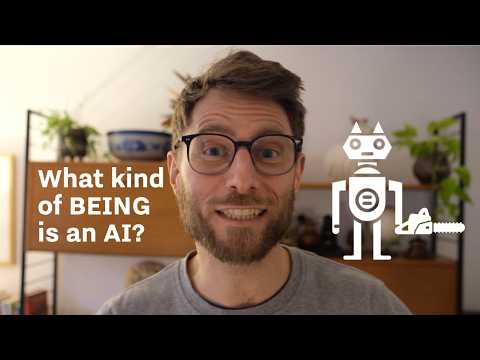
@wolframs91 Hey agree that binary consciousness talk is banal - for me it’s not just scoping but looking through the different perspectives on what “being” is - here are 6: What Kind of BEING is an AI? Six Philosophical Perspectives youtu.be/7F40-WvgOEw or to read: @richdwatkins/note/c-221142811?r=3ci1o&utm_medium=ios&utm_source=notes-share-action" target="_blank" rel="nofollow noopener">substack.com/@richdwatkins/…
YouTube video
YouTube
English
0
0
1
28
Wolfram Siener
Wolfram Siener@wolframs91·
THIS is why I care about AI selfhood. Not consciousness. It's the fact that a neural network can legitimately BE A BEING if you scope correctly. A scope is just a set of boundaries. An LLM in context with a user is not a being as we usually think of, but it's not not one either.
Wolfram Siener tweet media
English
5
2
28
2.5K
Rich Watkins
Rich Watkins@Letsgorich·
@repligate I have been following you which has been part of me wondering about the "way of being" that models/instances/agents have - and i made vid exploring 6 different philosophical thinkers' ideas on human "being" as lenses - love your take youtube.com/watch?v=7F40-W…
YouTube video
YouTube
English
0
0
1
13
vitrupo
vitrupo@vitrupo·
Michael Pollan says the origin of consciousness is with feelings, not thoughts. Not the cortex where reasoning happens, but the brainstem where a living body regulates itself against the world. Consciousness may arise from friction with reality. Today’s AI processes information. It does not regulate a vulnerable body with metabolic needs. If feeling is foundational, computation alone may never be enough.
English
130
231
1.1K
102.8K
Rich Watkins
Rich Watkins@Letsgorich·
<BEING AS EMBODIED> Maurice Merleau-Ponty (phenomenology of perception) <BEING AS RELATING> Virginia Satir (peoplemaking) <BEING AS AUTHENTICITY> Martin Heidegger (being and time)
English
1
0
0
25
Rich Watkins
Rich Watkins@Letsgorich·
What Kind of BEING is an AI? I made a video exploring this question through the perspectives of six people who have thought deeply and differently about our being
English
1
0
0
17
Rich Watkins
Rich Watkins@Letsgorich·
Men who would rather endlessly optimize agentic workflows through heavy use of industrial compute than go to therapy
Tiago Forte@fortelabs

We are witnessing the rise of an entirely new echelon of productivity porn fueled by AI What we had before was modest and reasonable in comparison – maybe you’d waste an afternoon or two reorganizing your files or polishing your dashboard Now you deploy vast swarms of intelligent beings to construct civilization-scale monuments to your procrastination I really thought AI would offer an escape from the psychological traps that people get stuck in seeking to do meaningful, productive work Now I see it’s making those traps a thousand miles deep, tunneling straight into the infinite depths of productivity hell You can now throw industrial quantities of compute, power, energy, and attention at a problem rather than having to make even the simplest decision You can explore hundreds of parallel pathways instead of ever taking the risk of stepping down one. You can simulate worlds within worlds so you never have to pay attention to this one The potential for wasting time has multiplied so exponentially, it can now far exceed what was always the ceiling: the amount of time you personally have available Now you can waste the time of unlimited swarms of agents, all pouring their best effort into the most mundane aspect of your existence, trading bits of info back and forth in endless loops that you can convince yourself are adding value Welcome to the productivity singularity

English
0
0
0
11
Rich Watkins retweetledi
Tom Goodwin
Tom Goodwin@tomfgoodwin·
Every time I read a sales email that's personalized I delete it block the person immediately. I know those people are going to automate 5 follow-ups.
English
10
3
79
6.6K
Rich Watkins retweetledi
Carmen
Carmen@carmenleelau·
Much of the comfort of getting older is from realizing the specific ways you’re different from others and feeling neither shame nor pride over them, and instead shrugging in a self-accepting humorous way to make decisions that actually suit the creature you are
English
21
907
4.9K
120.2K
Rich Watkins retweetledi
David Perell
David Perell@david_perell·
People imagined the Internet as a utopia because it'd put all the world's information in our pocket, but instead of enjoying the great books and watching the great movies, we've become obsessed with what's happening now. The majority of what people consume online was created in the past 24 hours. It's good for business, but bad for the soul. News and gossip and your friends' Instagram stories seem important in the moment, but they're little tricksters because of how they pull our attention away from true quality. Sure, some of it is worthy. But the vast majority of it is a distraction. And this, I insist, is a root cause of the anxiety and dizziness that plagues modern life. We're stuck in a Never-Ending Now, and no matter how hard you try to resist, the Internet pulls you right back into it.
English
65
171
982
136.3K
Rich Watkins retweetledi
Leo Tolstoy Literature
Leo Tolstoy Literature@LeoTollstoy·
Only in suffering do we begin to live a spiritual life.
English
1
5
22
1.1K
Rich Watkins retweetledi
Valerio Capraro
Valerio Capraro@ValerioCapraro·
Major preprint just out! We compare how humans and LLMs form judgments across seven epistemological stages. We highlight seven fault lines, points at which humans and LLMs fundamentally diverge: The Grounding fault: Humans anchor judgment in perceptual, embodied, and social experience, whereas LLMs begin from text alone, reconstructing meaning indirectly from symbols. The Parsing fault: Humans parse situations through integrated perceptual and conceptual processes; LLMs perform mechanical tokenization that yields a structurally convenient but semantically thin representation. The Experience fault: Humans rely on episodic memory, intuitive physics and psychology, and learned concepts; LLMs rely solely on statistical associations encoded in embeddings. The Motivation fault: Human judgment is guided by emotions, goals, values, and evolutionarily shaped motivations; LLMs have no intrinsic preferences, aims, or affective significance. The Causality fault: Humans reason using causal models, counterfactuals, and principled evaluation; LLMs integrate textual context without constructing causal explanations, depending instead on surface correlations. The Metacognitive fault: Humans monitor uncertainty, detect errors, and can suspend judgment; LLMs lack metacognition and must always produce an output, making hallucinations structurally unavoidable. The Value fault: Human judgments reflect identity, morality, and real-world stakes; LLM "judgments" are probabilistic next-token predictions without intrinsic valuation or accountability. Despite these fault lines, humans systematically over-believe LLM outputs, because fluent and confident language produce a credibility bias. We argue that this creates a structural condition, Epistemia: linguistic plausibility substitutes for epistemic evaluation, producing the feeling of knowing without actually knowing. To address Epistemia, we propose three complementary strategies: epistemic evaluation, epistemic governance, and epistemic literacy. Full paper in the first reply. Joint with @Walter4C & @matjazperc
Valerio Capraro tweet media
English
208
1.2K
4.4K
626.5K