
krcrear
9 posts






来玩深夜朋友圈社死,直接把微信能换的全换掉,包括但不限于头像,名字,微信状态,个性签名,朋友圈背景,聊天背景,有没有敢返图的
#社死 #自毁 #朋友圈 #朋友圈社死 #社死挑战 #社死自毁 #社死任务 #社死曝光 #社死朋友圈
中文
@Benathon @blind_via you can also place a 100 ohm resistor and the differential signal next to the chip where you need to use the single-ended signal, connect the differential pair to both ends of the resistor, then connect the differential pair + to the input, and ground the differential pair -.
English

@blind_via Riddle me this. If I have a differential clock (50M) and it needs to terminate single ended, should I route it differential all the way? Or just route one?
English

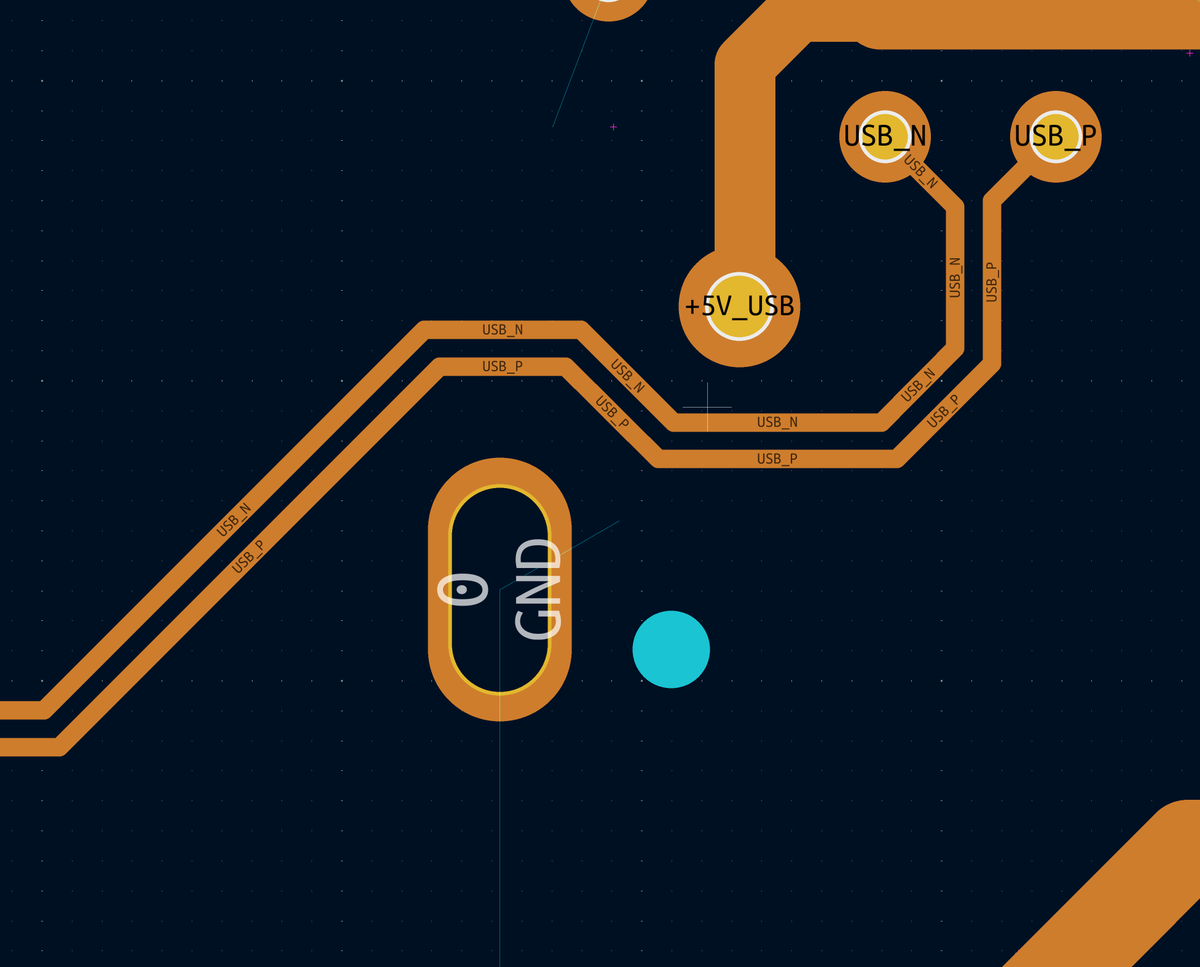
What are differentially paired traces?
Some signals are not just one wire routing through the board. Some are polar opposites of the same signal. As the signal changes from high to low, the other wire changes to the opposite of what the first is. And they want to be right next to each other the whole time, separating them is sometimes necessary, and can be tolerated in short periods depending on how fast your signals switch.
English
@Benathon @blind_via When you need a single-ended signal at the chip, use a differential signal and a balun next to the chip. Connect the differential pair to the balun, and then connect the balun's single-ended output to the input.
English