Sabitlenmiş Tweet

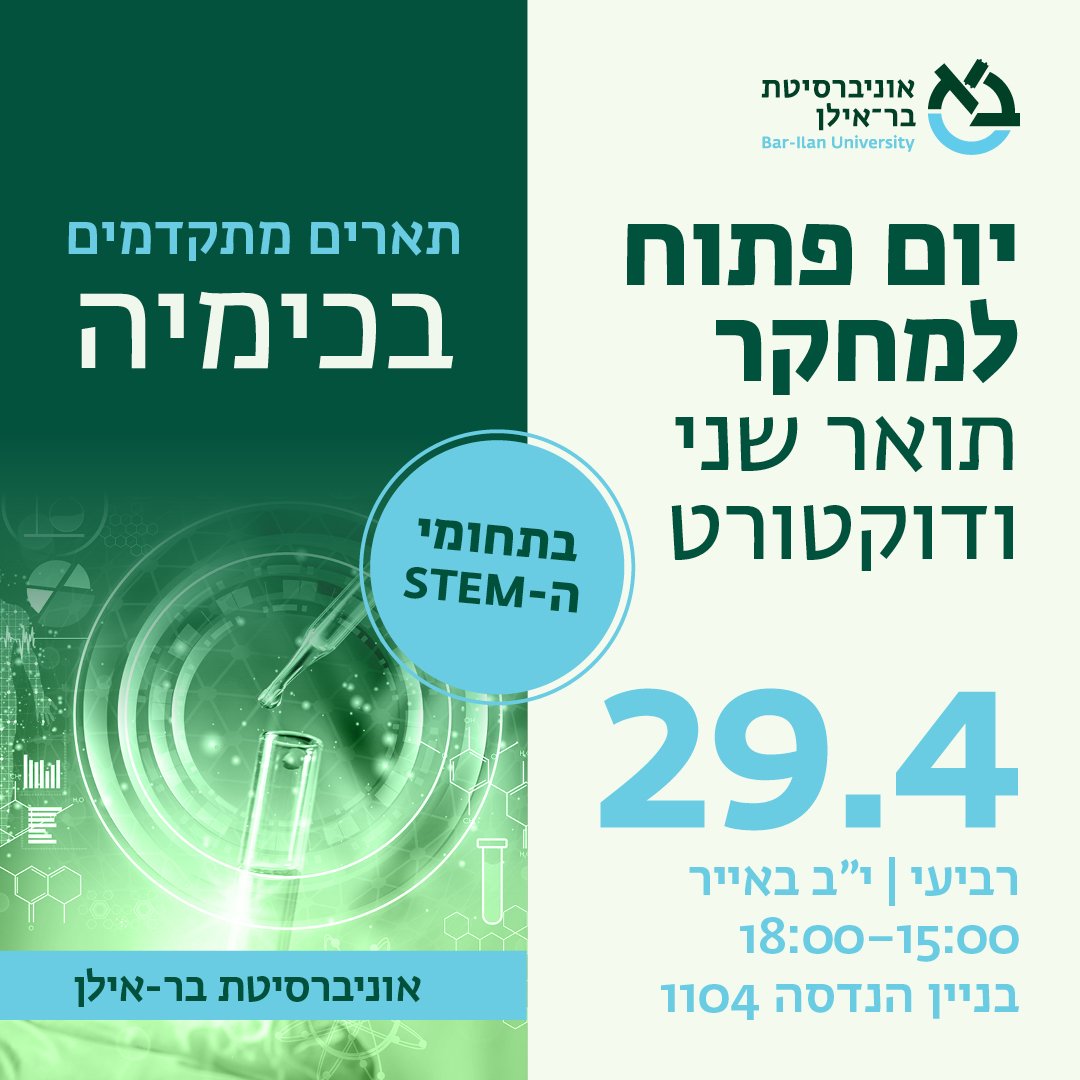
שלום לכולם!
אני מחפש סטודנטים למאסטר ולדוקטורט למחקר מעניין בתחום הפולימרים במחלקה לכימיה באוניברסיטת בר-אילן.
אשמח לשיתופים.
@BiuChemistry
@ubarilan

עברית
Liel Sapir
1.2K posts
@LielS5
Biophysics, Polymers, and Physical Chemistry | #newPI at the Department of Chemistry, @ubarilan


The Ayatollah’s Regime Is Crumbling No matter what happens now, there is no scenario in which the Islamic Republic survives 2026 with its power intact. thefp.com/p/the-ayatolla…
How do you tell a molecular crystal how to grow? In materials science, crystal morphology is usually an outcome. In biology, it’s often a design feature, tuned to deliver specific optical and other functional properties. In our new paper in Small, we dissect how crystal growth can be steered at the molecular level, and show that simple synthetic polymers can not only reproduce biogenic plate-like morphologies, but also expand the accessible shape space. By systematically varying polymer chemistry, we uncover three key principles: • Multivalent interactions are important for sustained growth control • Carbonyl-bearing functional groups selectively adsorb to the crystal stacking face, suppressing growth along the stacking direction • Subtle changes in polarity and sterics redirect growth into plates, prisms, or even needle-like morphologies This work was led by Dolev Brenman-Begin, who submitted her first first-author manuscript just before giving birth, and then handled the revisions with a newborn at home. A remarkable scientific and personal milestone. 💪🏽 The study was a close collaboration with (@barak_hirshberg) Barak Hirshberg‘s lab and his talented postdoc Jonatan Church (Tel Aviv University), and with (@LielS5) Liel Sapir Sapir’s lab (Bar-Ilan University). Other authors and collaborators - thank you all: Siddharth Sahoo, (@ZoharEyal1) Zohar Eyal , (@IdanBiran) Idan Biran, PhD , Nir Kampf, (@yuval_barzi) Yuval Barzilay, Anna Kossoy-Simakov, Lothar Houben. @WeizmannScience onlinelibrary.wiley.com/doi/10.1002/sm…
How do you tell a molecular crystal how to grow? In materials science, crystal morphology is usually an outcome. In biology, it’s often a design feature, tuned to deliver specific optical and other functional properties. In our new paper in Small, we dissect how crystal growth can be steered at the molecular level, and show that simple synthetic polymers can not only reproduce biogenic plate-like morphologies, but also expand the accessible shape space. By systematically varying polymer chemistry, we uncover three key principles: • Multivalent interactions are important for sustained growth control • Carbonyl-bearing functional groups selectively adsorb to the crystal stacking face, suppressing growth along the stacking direction • Subtle changes in polarity and sterics redirect growth into plates, prisms, or even needle-like morphologies This work was led by Dolev Brenman-Begin, who submitted her first first-author manuscript just before giving birth, and then handled the revisions with a newborn at home. A remarkable scientific and personal milestone. 💪🏽 The study was a close collaboration with (@barak_hirshberg) Barak Hirshberg‘s lab and his talented postdoc Jonatan Church (Tel Aviv University), and with (@LielS5) Liel Sapir Sapir’s lab (Bar-Ilan University). Other authors and collaborators - thank you all: Siddharth Sahoo, (@ZoharEyal1) Zohar Eyal , (@IdanBiran) Idan Biran, PhD , Nir Kampf, (@yuval_barzi) Yuval Barzilay, Anna Kossoy-Simakov, Lothar Houben. @WeizmannScience onlinelibrary.wiley.com/doi/10.1002/sm…



Thrilled to announce that this October I will be joining the Department of Chemistry at Bar-Ilan University as an Assistant Professor! 🧪✨ Our lab is already under construction! Looking forward to building a team to explore the exciting interface of catalysis and spectroscopy.