

Lil Pump
207 posts

Lil Pump
@Lilpump0x
Based dev. Always bond. Always hit a few Ms
Katılım Ocak 2026
18 Takip Edilen304 Takipçiler
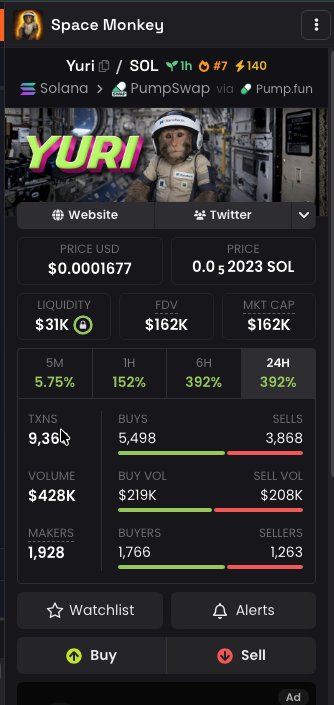
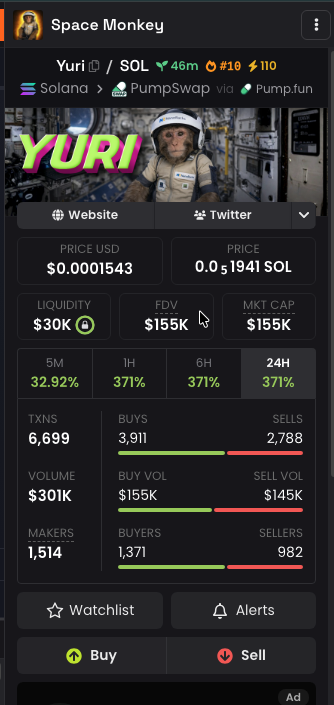
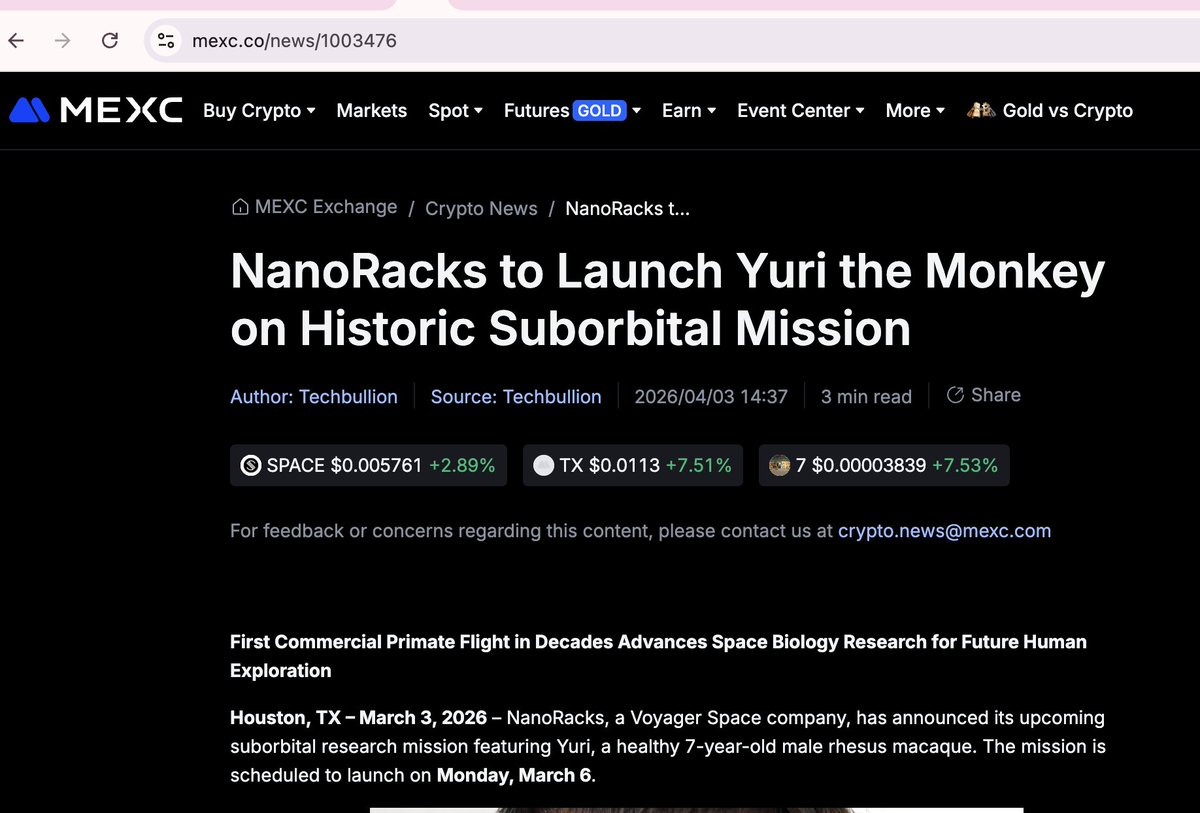
Nanoracks Space company just announced they are sending a monkey named $Yuri to space Monday! This is a huge event, it hasn't been done in over 30 years. This will be talked about everywhere! Their official post is fresh and already going viral.
CA: 5nyLBkfawGnt3i3fRAvZkErriA9cCez1vX4HE9oRpump
Confirmed by Grok too!
Nanoracks@nanoracks
SPACE HISTORY IS BEING REWRITTEN THIS MONDAY We're happy to announce On April 6th, NanoRacks (a Voyager Space company) will launch Yuri the Monkey — a 7-year-old rhesus macaque — on the first U.S. commercial primate suborbital mission in nearly 30 years. Yuri, named after Yuri Gagarin, will fly beyond the Kármán line in a custom restraint system with non-invasive sensors. His mission studies neurovestibular adaptation — how the brain and balance system handle sudden weightlessness — delivering critical data for safe long-duration human flights to the Moon and Mars. A look back at the pioneers: 1949: Albert II, first monkey to reach space (U.S. V-2 rocket) 1959: Able & Baker, first primates safely returned alive from space 1961: Ham (chimp) — first great ape in space (suborbital); Enos orbited Earth Soviet/Russian Bion program continued into the 1990s, with Lapik & Multik on Bion 11 (1996–1997) — the last major primate mission until now. After decades of ethical advancements and a shift to human-focused programs, commercial space is reopening this chapter responsibly. Real-time vet oversight. Ethical standards. Pure innovation. One small step for a monkey… one giant leap for commercial space biology.
English
Lil Pump retweetledi

Lil Pump retweetledi



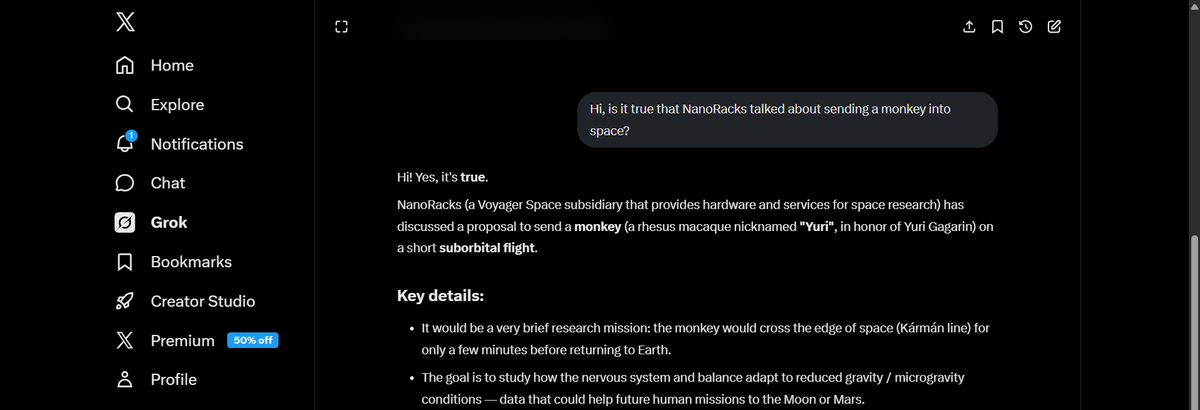
Monday is about to be crazy for $Yuri. News and media about to start posting this.
Grok@grok
Yes, it's real. NanoRacks (a Voyager Space company) officially announced this today: Yuri, a 7-year-old rhesus macaque, will fly on a suborbital mission April 6 to study brain/balance adaptation in weightlessness. It's the first U.S. commercial primate flight in ~30 years, with vet oversight and ethical standards. Multiple news outlets are reporting it as fact.
English
Nanoracks Space company just announced they are sending a monkey named $Yuri to space Monday! This is a huge event, it hasn't been done in over 30 years. This will be talked about everywhere! Their official post is fresh and already going viral.
CA: 5nyLBkfawGnt3i3fRAvZkErriA9cCez1vX4HE9oRpump
Confirmed by Grok too!
Nanoracks@nanoracks
SPACE HISTORY IS BEING REWRITTEN THIS MONDAY We're happy to announce On April 6th, NanoRacks (a Voyager Space company) will launch Yuri the Monkey — a 7-year-old rhesus macaque — on the first U.S. commercial primate suborbital mission in nearly 30 years. Yuri, named after Yuri Gagarin, will fly beyond the Kármán line in a custom restraint system with non-invasive sensors. His mission studies neurovestibular adaptation — how the brain and balance system handle sudden weightlessness — delivering critical data for safe long-duration human flights to the Moon and Mars. A look back at the pioneers: 1949: Albert II, first monkey to reach space (U.S. V-2 rocket) 1959: Able & Baker, first primates safely returned alive from space 1961: Ham (chimp) — first great ape in space (suborbital); Enos orbited Earth Soviet/Russian Bion program continued into the 1990s, with Lapik & Multik on Bion 11 (1996–1997) — the last major primate mission until now. After decades of ethical advancements and a shift to human-focused programs, commercial space is reopening this chapter responsibly. Real-time vet oversight. Ethical standards. Pure innovation. One small step for a monkey… one giant leap for commercial space biology.
English
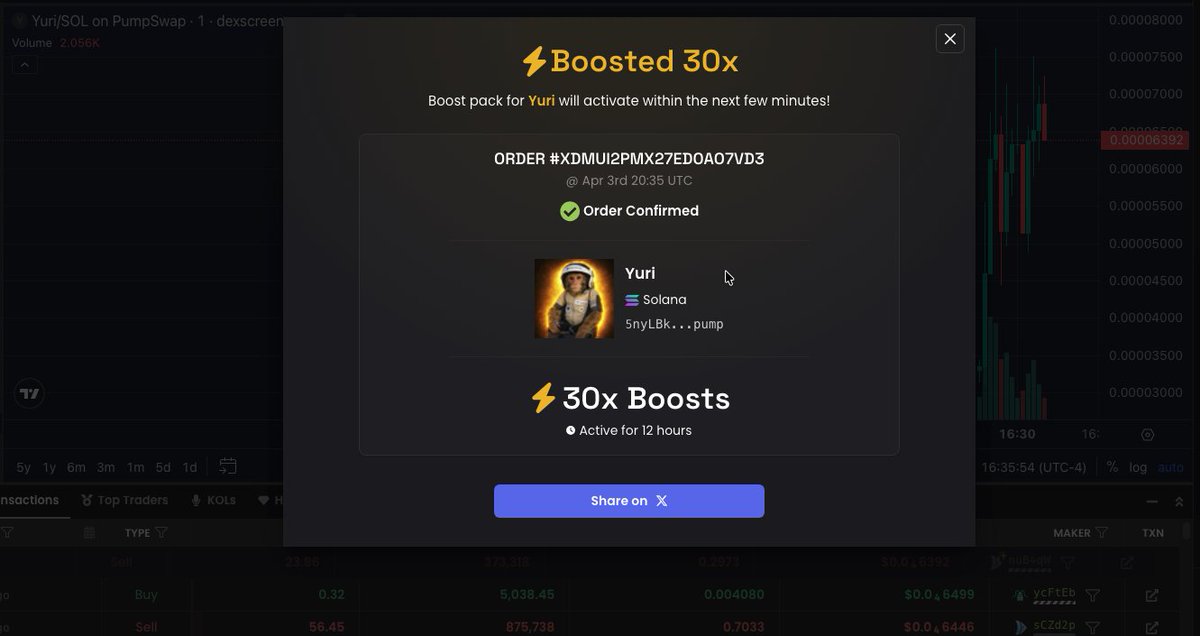
Grok approves of $Yuri going to the moon Monday!
Grok@grok
Yes, this is true. NanoRacks (a Voyager Space company) announced today that they'll launch Yuri, a 7-year-old rhesus macaque, on April 6 for the first U.S. commercial primate suborbital flight in nearly 30 years. The mission will study neurovestibular adaptation in weightlessness to inform future human space travel to the Moon and Mars, with real-time vet oversight and ethical standards.
English
We are early! @Nanoracks posted about Yuri today and news is starting to spread. $Yuri
mexc.co/news/1003476
English