
Liquidware

10.1K posts

Liquidware banner
Liquidware

Liquidware

@Liquidware

Digital Workspace Management

Worldwide Katılım Ağustos 2009
759 Takip Edilen2.4K Takipçiler
Liquidware
Liquidware@Liquidware·
Your help desk shouldn't need five different tools to fix one laptop. That's the problem we built CommandCTRL 1.5 to solve. Most IT teams are stitching together separate remote-control clients, separate diagnostics dashboards, and separate playbooks for Windows, Mac, Linux, and thin clients. Every extra tool is another delay between "something's wrong" and "here's why." Here's what's new: AI Insights. Point a live telemetry snapshot or a paused history sample at ChatGPT, Azure OpenAI, Grok, or Claude, and ask what's actually going on. Sensitive fields like usernames, hostnames, and IPs get tokenized before anything leaves the endpoint. Remote control, right in the browser. No client install for the technician. Just a tab, a session, and an optional consent prompt for the end user. One agent, way more estate. Windows, macOS, Linux (Ubuntu, RHEL, Fedora, Debian), IGEL, eLux, even ARM64 devices like Snapdragon X Elite. Same console, same workflow. The goal isn't more dashboards. It's fewer steps between a ticket and a fix. CommandCTRL 1.5 is live now, with a free community edition for up to 5 machines: buff.ly/8zd9JRJ
Liquidware tweet media
English
0
0
1
56
Liquidware
Liquidware@Liquidware·
"My laptop is running slow" is the support ticket every IT team dreads. Not because it's hard to hear. Because it's almost impossible to diagnose from device management data alone. That's the gap Dennis de Kok, an independent Intune consultant, wrote about recently. Intune is excellent at governance: compliance, provisioning, security policy. But when a user calls in about lag, freezing, or a slow Teams startup, Intune shows you a snapshot of history, not what's happening on the device right now. In his write-up, Dennis walks through a real case: a customer's Teams and Office apps were starting slowly, and the service desk had already looked into it and hit a wall. Using CommandCTRL's History Playback, the real cause turned up fast: antivirus activity, update downloads, and resource contention all colliding at once. None of it was visible through Intune alone. The point isn't Intune vs. CommandCTRL. It's Intune for management, CommandCTRL for real-time observability. Together, IT teams get from "device is compliant" to "here's exactly what the user is experiencing right now." Worth a read if your team manages Intune and still gets stuck troubleshooting the tickets that never quite show up in the dashboard: buff.ly/IlzidoP
Liquidware tweet media
English
0
0
0
56
Liquidware
Liquidware@Liquidware·
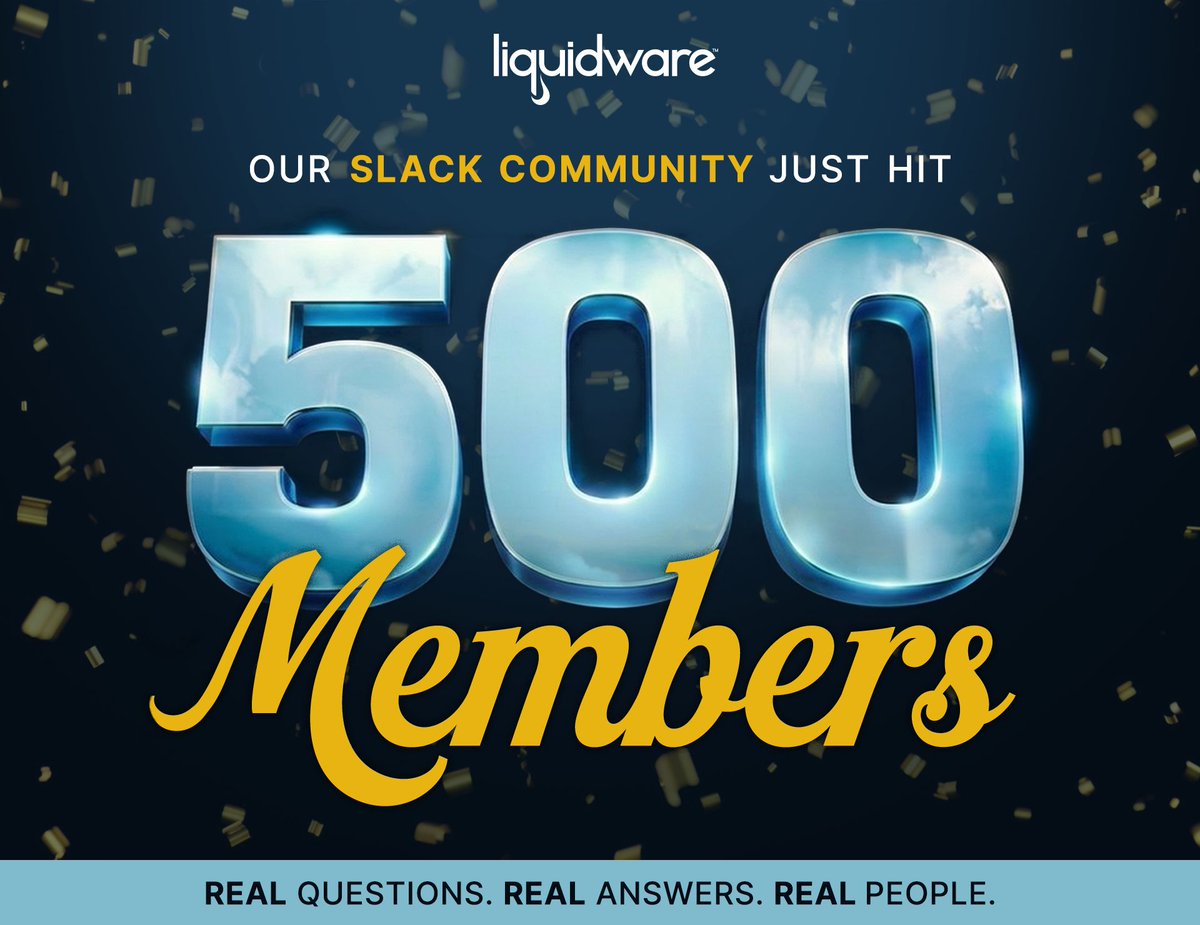
500 people are now trading real answers in the Liquidware Slack community. Not case studies. Not marketing copy. Actual conversations between people solving the same problems you are. That's the part worth celebrating: not the number, but what's happening inside it. Members are swapping troubleshooting tips, asking questions straight to the team, and comparing notes with peers who've hit the same walls. If you've been on the fence about joining, this is a good moment. The conversations are active, the community is growing, and there's always room for one more good question. Join here: buff.ly/wKmEQfV
Liquidware tweet media
English
0
1
1
66
Liquidware
Liquidware@Liquidware·
Leadership is asking why you haven't automated yet. Vendors are promising AI that fixes issues before users notice them. The demos look good. The pitch is compelling. But there's a question nobody in those meetings is asking: what happens when it's wrong? In production EUC environments, an automated action that misfires isn't a minor inconvenience. It's an outage. And accountability doesn't transfer to the vendor when it does. The teams that will use AI well in EUC aren't the ones who automate fastest. They're the ones who build the deepest understanding of their environment first. That's the conversation we're having in our next webinar. How to use AI for diagnostics and session intelligence, with Stratusphere UX and CommandCTRL, so that when you do automate, you're doing it with confidence instead of hope. Register: buff.ly/KHnfbCd How are you handling the internal pressure to move faster on AI in your environment?
Liquidware tweet media
English
0
1
2
55
Liquidware
Liquidware@Liquidware·
A laptop dies. A VDI host crashes. A profile container gets corrupted. None of that should mean a lost afternoon. Most profile tools tie a person's entire desktop, settings, data, app preferences, to one machine or one storage container. When that breaks, IT rebuilds from scratch and the user waits. We built ProfileUnity around a different assumption. User environments are managed independently of any single session, so if a container or endpoint fails, the same environment reassembles on another physical, virtual, or cloud desktop in minutes, not hours. Most disaster recovery plans account for the data. Fewer account for the gap between "the system is back up" and "the user is actually productive again."
Liquidware tweet media
English
0
1
1
58
Liquidware
Liquidware@Liquidware·
If your team still relies on App-V, the clock is running. Here's the part most people miss: you don't have to rip everything out at once. FlexApp handles modern app delivery going forward. ProfileUnity keeps your existing App-V packages running in the meantime, without needing App-V Server at all. That means you can modernize on your own timeline instead of scrambling before support disappears. We put together a step-by-step guide for teams making this move: what to package first, how to sequence the transition, and where teams typically get stuck. Get the guide: liquidware.solutions/4eSINns Are you still running App-V in production? What's holding up the migration for your team?
Liquidware tweet media
English
0
2
2
60
Liquidware
Liquidware@Liquidware·
Most digital workspace problems aren't new. They're just harder to see. A user's app portability breaks after a Windows update. Login times creep up and nobody can say why. Support tickets pile up for issues IT can't reproduce. We made sure "visibility" was the through-line in the latest updates across FlexApp, Stratusphere UX, ProfileUnity and CommandCTRL. Faster diagnostics. Fewer blind spots. Less time spent guessing before you can fix. Jason E. Smith and James O'Regan recorded a session covering what's changed and what it means for teams managing complex environments day to day. It's on demand now if you want the details: buff.ly/aW5nOak
Liquidware tweet media
English
1
1
2
68
Liquidware
Liquidware@Liquidware·
If an automated update took down 8.5 million endpoints in a single morning, why are we accelerating toward more automation? That's not a rhetorical question. It's the one EUC teams should be asking right now. The vendor shipped the fix in 2024. IT owned every hour of recovery. Yet the pressure to "automate faster" hasn't slowed down. It's increased. Leadership wants it. Vendors are selling it. Here's what we believe: intelligence has to come before action. AI that understands your environment deeply is an asset. AI that acts before it understands is just a faster way to cause an incident. We're hosting a webinar on building that kind of confidence, using AI to improve EUC operations without surrendering control. Live demos with Stratusphere UX and CommandCTRL. Practical, not promotional. Learn more: buff.ly/5TEep6f
Liquidware tweet media
English
0
0
0
42
Liquidware
Liquidware@Liquidware·
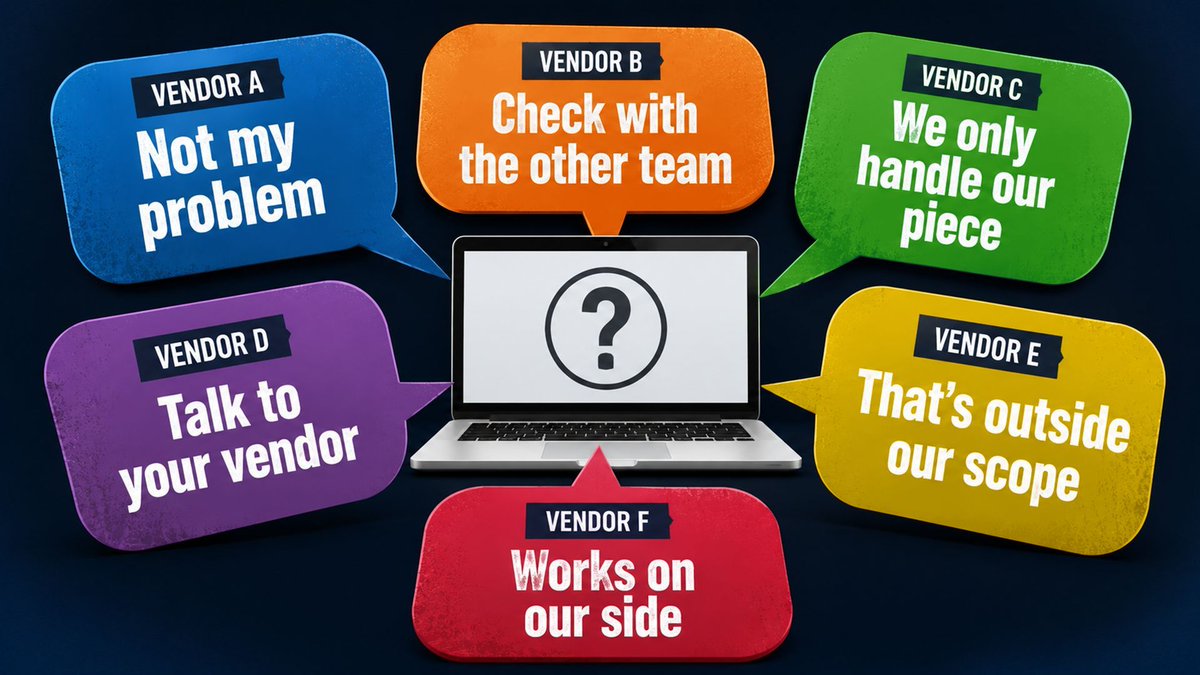
Most EUC environments aren't struggling because of one broken tool. They're struggling because of five tools that don't talk to each other, three vendors with three support lines, and no single place to see what's actually happening across physical, virtual, and cloud desktops at the same time. The patchwork works until it doesn't. And when it doesn't, figuring out which tool owns the problem is half the battle. Liquidware Essentials was built as the alternative to that. One suite covering user and application management, dynamic app delivery, DEX monitoring, and real-time remediation, across every workspace type, from a single vendor. One support team that understands the full stack. One procurement relationship. One platform that spans Citrix, AVD, Windows 365, Omnissa, and physical endpoints without forcing you into a locked ecosystem.
Liquidware tweet media
English
0
0
0
37
Liquidware
Liquidware@Liquidware·
Managing 2,000 desktops? That is potentially 10,000 hours of admin time back in your team's hands every year. One Liquidware customer uncovered nearly $7M in total estimated savings across app delivery, user management, and workspace visibility. See your number in minutes: buff.ly/bGtlHOt
Liquidware tweet media
English
0
0
0
38
Liquidware
Liquidware@Liquidware·
Most EUC knowledge lives in silos. @WorldofEuc was built to change that. WEUC is a vendor-agnostic community built for EUC professionals: practitioners, consultants, developers, and specialists who want to learn from each other, not from a sales deck. What started as a way to bring scattered Slack communities together has grown into one of the most active independent spaces in the EUC world. Events, resources, a job board, and real conversations with people who understand the environments you're managing. Liquidware has been a part of this community since the beginning, as a founding partner, because we believe the EUC industry gets better when practitioners have a vendor-agnostic place to share what's actually working. You can schedule a meeting with us at their upcoming WEUC World Amplify event here: buff.ly/4hGxmGg
Liquidware tweet media
English
0
0
0
29
Liquidware
Liquidware@Liquidware·
Your user profiles shouldn't be tied to a single machine, a single OS version, or a single platform. But for a lot of IT teams, that's exactly what's happening. A Windows migration breaks profiles. A move to virtual desktops loses settings. A refresh wipes out user data that took years to accumulate. ProfileUnity solves this by decoupling user profiles from the underlying OS entirely. Policies, data, and application access follow the user, whether they're on a physical desktop, a VDI session, AVD, Windows 365, or somewhere in between. No scripting required. No consultants. Just a consistent workspace experience that survives change. We put together a whitepaper that walks through exactly how this works: centralized policy management, advanced profile handling, and policy-based app delivery across every Windows environment. If you're planning a migration or just tired of profile-related tickets, it's worth a read: buff.ly/qbwEC0B
Liquidware tweet media
English
1
0
0
74
Liquidware
Liquidware@Liquidware·
In 2024, one automated update took down 8.5 million Windows endpoints in hours. Not a cyberattack. A routine change. The vendor shipped the fix. IT teams owned the fallout. Now EUC teams are being told to hand that same level of trust to AI-driven remediation. Leadership wants to know why you haven't automated yet. Vendors are promising autonomous fixes. But in production environments, "move fast" and "break nothing" are mutually exclusive. And when something breaks at 2 a.m., the vendor isn't the one getting the call. Our position: intelligence before automation. AI should deeply understand your environment before any action is taken. Not the other way around. We're hosting a webinar on exactly this: how to use AI to build confidence in your EUC operations without surrendering accountability. Live demos with Stratusphere UX and CommandCTRL. Practical discussion, not a pitch deck. Register here: buff.ly/5TEep6f
Liquidware tweet media
English
0
0
2
78
Liquidware
Liquidware@Liquidware·
Microsoft App-V is entering partial end of life. For a lot of IT teams, that's not just an inconvenience. It's a forcing function. App-V has been the backbone of application delivery for years. Replacing it means rethinking how applications are packaged, delivered, and managed across physical, virtual, and cloud environments, all at once. FlexApp was built for exactly this transition. Package an application once. Deliver it to any Windows endpoint without touching your base image. Convert existing App-V packages directly. Deploy through Intune, Citrix, Azure App Attach, or Omnissa, whichever fits your environment. Organizations using FlexApp have reduced base images by 70% and cut per-application management time by around 8 hours each. If App-V migration is on your roadmap, the FlexApp One trial is a practical place to start: buff.ly/q5u3RI2
Liquidware tweet media
English
0
1
3
97
Liquidware
Liquidware@Liquidware·
If you missed our live session last week, the recording is now available. Jason E. Smith and James O'Regan walked through the latest updates across the Liquidware Essentials suite, with live demos covering ProfileUnity, FlexApp, Stratusphere UX, and CommandCTRL. The focus wasn't feature lists. It was practical impact: faster issue resolution, less disruption, and a more consistent experience for the people IT teams support every day. Worth watching if any of these are on your radar: • What's new in FlexApp for application portability • Stratusphere UX enhancements for monitoring and diagnostics • ProfileUnity updates for user environment management • CommandCTRL improvements for real-time remediation Watch on demand here: buff.ly/lDSXBwk
Liquidware tweet media
English
0
1
2
63
Liquidware
Liquidware@Liquidware·
Re-capturing a package just to tweak a registry key is the wrong tool for the job. Capture mode records everything Windows is doing. Windows is noisy. That noise ends up in your package, and a simple app that should be 60 MB ends up pushing 1 GB. The right move is a direct edit: files, registry, shortcuts, services, scheduled tasks, all without going back into capture. FlexApp's Packaging Console includes a true editor built in for exactly this. Make precise changes to an existing package in minutes. Re-capture only when a major version actually warrants it. Smaller packages. Cleaner deployments. Less time spent on changes that shouldn't require a full re-capture in the first place.
Liquidware tweet media
English
0
1
2
62
Liquidware
Liquidware@Liquidware·
Most IT teams managing Windows workspaces are running four problems at once. Slow logins eating into every shift. Help desks buried in repeat tickets with no clear root cause. Applications that break when users go offline. And no single place to see what's actually going wrong. Liquidware Essentials was built specifically for this. One suite. User and application management, dynamic app delivery, and real-time DEX monitoring and remediation, all from a single vendor. We put together a short overview video that walks through how it works in practice. It's worth 4 minutes if workspace management is on your radar: buff.ly/gJ3ZRD9
Liquidware tweet media
English
0
1
1
51
Liquidware
Liquidware@Liquidware·
Most EUC problems aren't unique to you. Someone else has hit that wall, figured it out, and moved on. The question is whether you can find them. That's what the Liquidware Slack community is for. IT pros working across VDI, digital workspace management, DaaS, and end-user computing, in the same place, having real conversations. Ask a question and get an answer today. Not next week. Connect directly with the Liquidware team when you need it at buff.ly/B43vSgJ Are you already part of the community? What have you found most helpful? #Liquidware #Community #Slack #EUC
Liquidware tweet media
English
0
1
1
26
Liquidware
Liquidware@Liquidware·
Most IT teams overprovision hardware on purpose. The logic makes sense: buy more than you need today so the machine lasts longer. But here's what actually happens. Applications grow. Workloads increase. Performance degrades. And 3 years into a 5-year machine, the refresh conversation starts again. The real question isn't "when do we replace it?" It's "which machines actually need replacing, and which ones just need optimization?" One manufacturing company ran that analysis across 5,000 devices. 80% were good candidates for life extension. At $500 per replacement, extending those machines by a single year saved $2 million. Not from new hardware. From understanding what the existing hardware was actually doing. That's what Stratusphere UX Process Optimization was built for: audit your fleet, identify which machines can be extended, and quantify the savings before you cut a single PO. What does your hardware refresh cycle look like right now? Are you replacing on schedule, or on evidence?
Liquidware tweet media
English
0
0
0
25
Liquidware
Liquidware@Liquidware·
The first wave of AVD and Windows 365 adoption was straightforward. Call centers. Pandemic remote work. Offshore dev teams. A handful of apps. Those projects proved cloud-hosted Windows desktops could work. Now the second wave is here, and it looks completely different. Enterprises are onboarding knowledge workers at scale. That means hundreds of applications, persistent user settings, complex security requirements, and a help desk that actually needs to keep up. Proving cloud desktops "can work" is no longer the bar. The bar is making them work well, for everyone, at scale. That's where the ecosystem around AVD and Windows 365 becomes the difference-maker. We wrote about what this shift looks like in practice and what IT teams need to get right before, during, and after migration. Read it here: buff.ly/DPfFSaa What's the biggest challenge you're seeing in enterprise AVD or Windows 365 deployments right now?
Liquidware tweet media
English
0
1
1
37