

Lizz Meiring Official
71.5K posts

Lizz Meiring Official
@LizzMeiring
Versatile showbiz pro multi awarded- actor, producer,director, voice artist ,writer ,MC, speaker, tv presenter,auctioneer, Arts&Creative consultant,
Johannesburg, South Africa Katılım Mayıs 2011
231 Takip Edilen10.3K Takipçiler

Lizz Meiring Official retweetledi

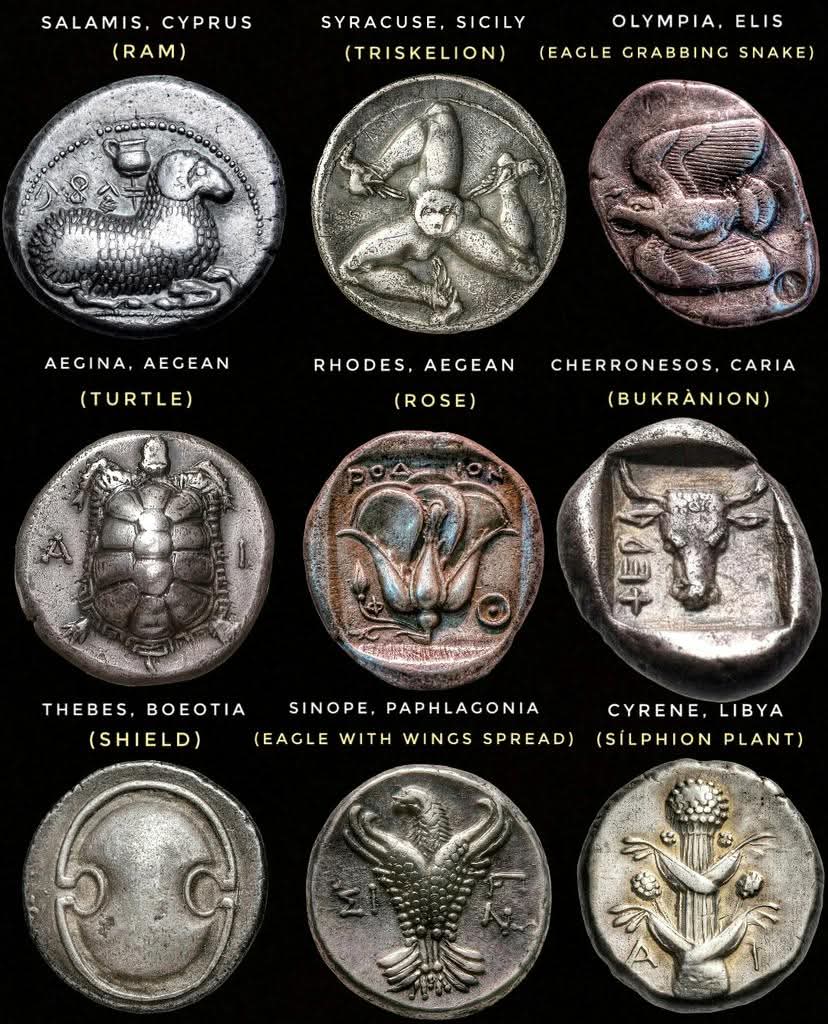
History of Ancient Greek Coins :
The history of ancient Greek coins is a fascinating tale of innovation, politics, art, and culture. Coinage played a pivotal role in shaping the economic and political landscapes of the Greek world, serving not only as a medium of exchange but also as a means of propaganda, artistry, and religious expression.
• The Beginnings of Coinage (7th Century BC) :
The first known Greek coins were minted in the region of Lydia, located in modern-day Turkey, around 600 BC. These early coins were made of electrum, a naturally occurring alloy of gold and silver. King Croesus of Lydia (reigning from 595-546 BC) is often credited with introducing the first pure gold and silver coins, which became highly influential in the ancient world.
However, the idea of coinage soon spread to the Greek city-states, and by the 7th Century BC, the Greek world began producing their own coins. The city-state of Aegina (located in the Saronic Gulf) is thought to have been one of the first to mint coins. The Aeginetan stater, featuring a turtle symbol, became a widely circulated and recognized coin throughout the Mediterranean.
2. The Rise of City-State Coinage (6th-5th Century BC) :
By the 6th Century BC, many Greek city-states began minting their own coins. This was a revolutionary development, as it gave city-states greater control over their economies and allowed them to express their unique identity through the symbols depicted on the coins. Athens was one of the most famous early coin producers, with the Athenian owl coin (featuring the goddess Athena and an owl) becoming an iconic symbol of the city and widely circulated across the Greek world.
Each city-state had its own minting system, with designs that often featured local gods, heroes, or symbols of power. For instance:
Corinth minted coins featuring the Pegasus, the winged horse, which was a symbol of the city.
Syracuse on the island of Sicily, under the rule of Dionysius I, minted magnificent coins featuring images of Arethusa, the nymph, along with dolphins.
Ephesus featured the goddess Artemis on its coins, showcasing her importance in the city's religious life.
The stater (a gold or silver coin) became the standard unit of currency in many city-states. Coins helped facilitate trade, as they provided a standardized form of money that could be used across regions, contributing to the expansion of commerce and exchange between Greek city-states and foreign powers, such as the Persians, Egyptians, and Phoenicians.
• The Classical Period and Expansion of Coinage (5th-4th Century BC) :
The 5th Century BC marked a golden age for Greek coinage, especially with the rise of Athens after its victory in the Persian Wars (490–479 BC). Athens, with its rich silver mines at Laurion, began minting massive quantities of coins, notably the Athenian tetradrachm, which became one of the most important and widely circulated coins of the ancient world. These coins depicted the head of Athena on the obverse and the owl on the reverse, symbolizing wisdom and the city’s power.
Coinage during this period was also a reflection of the political and cultural power of the city-states. Coins were used not only in trade but also as propaganda, reinforcing the authority of rulers and the prestige of the cities. The designs often depicted deities, heroes, and events related to the city’s triumphs or divine patronage.
During this time, the use of coins in warfare became more significant. Armies began paying soldiers in coinage, and mercenaries were often compensated with coins rather than land or goods. This facilitated the expansion of Greek influence, particularly through the use of mercenary forces in campaigns across the Mediterranean and beyond.
#archaeohistories
English
Lizz Meiring Official retweetledi


Lizz Meiring Official retweetledi


Lizz Meiring Official retweetledi


Lizz Meiring Official retweetledi

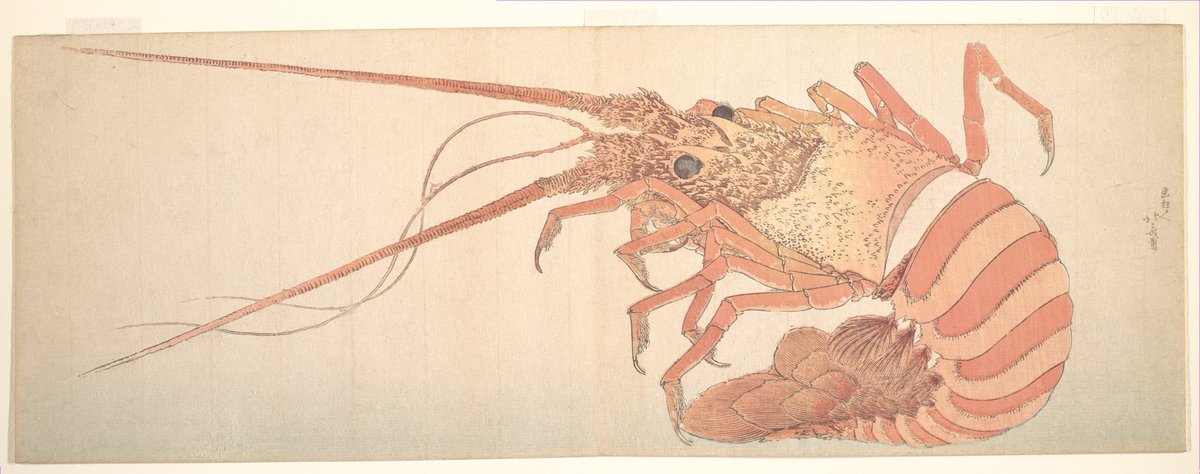
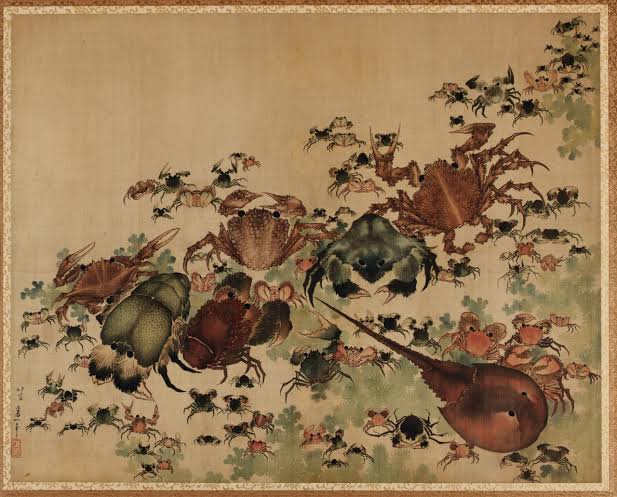
A fascinating detail about Hokusai’s nature studies:
In Edo-period Japan, works like this weren’t just scientific observations—they were about capturing the spirit of living things.
Hokusai’s crab studies show incredible anatomical accuracy, yet the composition still feels fluid and alive.
It’s where art, nature, and philosophy quietly meet.

English
Lizz Meiring Official retweetledi


Lizz Meiring Official retweetledi

Andreas Gering (1892–1957) - Death in the Belfry / Peace Bells, 1916

English
Lizz Meiring Official retweetledi
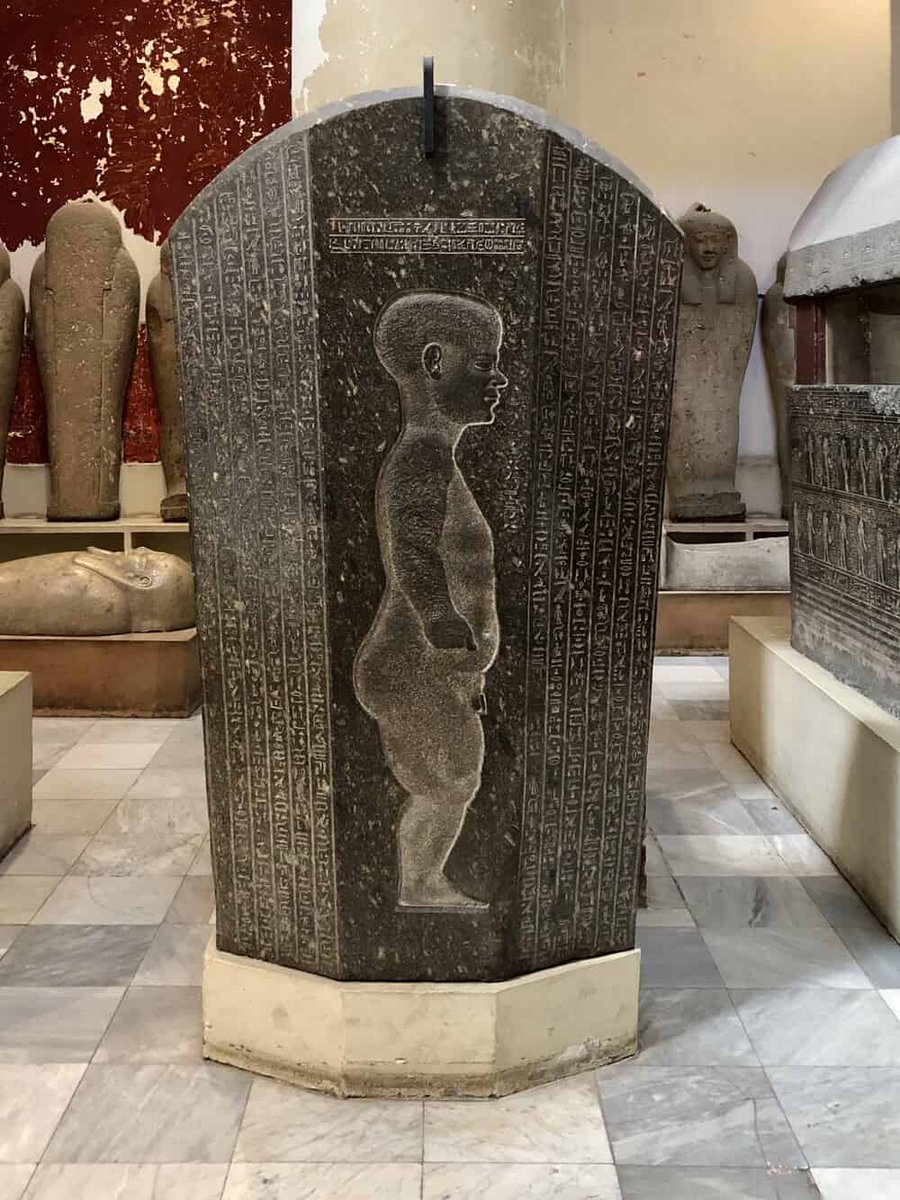
The Sarcophagus of Djeho (reign of Nectanebo II; 346-345 BC, late period) is indeed a remarkable and poignant artifact that provides a rare glimpse into the lives of ancient Egyptians who were not of royal descent.
The sarcophagus belonged to Djeho, a man with dwarfism who served as a dancer for a god, likely in the temple of Ptah in Memphis.
The dwarf Djeho was buried in Saqqara. He shared a tomb with his master and patron Tjaiharpta, which is an indication of the favored position Djeho had with his master.
The craftsmanship displayed in the granite sarcophagus of Djeho is of superb quality, and it would have been very costly to produce such a magnificent piece. Djeho is depicted naked in profile, possibly life-sized (4 ft or 120 cm). It was found by Quibell in 1911. On the sarcophagus’ lid, the biography tells us that Djeho, much like Khnumhotep during the Old Kingdom before him, was a dancer in burial ceremonies connected to the Apis and Memphis bulls.
In ancient Egypt, individuals with dwarfism were not marginalized; on the contrary, they were often held in high esteem, associated with deities, and employed in royal courts as jewelers, artists, or, in Djeho's case, entertainers. Their presence was often considered a source of good luck and divine favor.
Djeho shared a tomb with his master Tjaiharpta, which indicates the favored position he had with his patron. The two similar hard-stone sarcophagi were buried in a single tomb near the Sarapieion road at Saqqara, together with at least seven other people. The lid's provenance is particularly interesting—it was likely a reused piece dating back to the 13th Dynasty, which was adapted for Djeho's burial in the much later Thirtieth Dynasty (360 BC). This practice was not uncommon and highlights the reverence for ancient artifacts and the importance of a proper burial, regardless of the individual's stature. The presentation of one person’s merits through another is probably connected with Djeho’s role in dancing at the mortuary ceremonies of the Apis and Memphis bulls.
Among other questions, the find raises issues of royal and non-royal patronage, of the location of tombs, the placing of biographies on sarcophagi, the use of intermediaries before the gods, and the implications of Tjaiharpta’s partial deference to Djeho in relation to general conceptions of the person.
Egyptian Museum, Cairo
#archaeohistories
English
Lizz Meiring Official retweetledi


Lizz Meiring Official retweetledi

A dolphin playfully riding the bow wave of a ship.
English
Lizz Meiring Official retweetledi
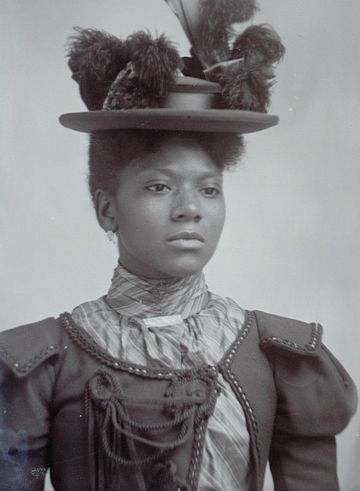
Portrait of an unidentified woman. Photographed in the 1900s.
English
Lizz Meiring Official retweetledi
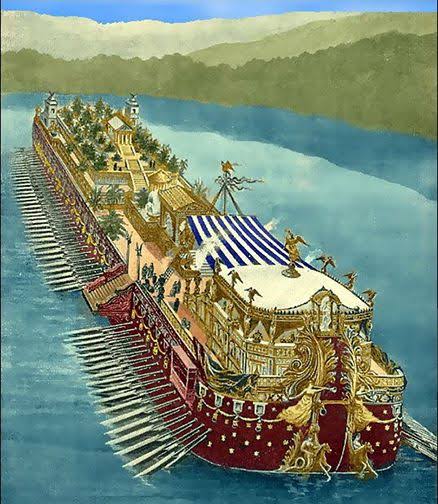
Around 240 BC, King Hiero II of Syracuse commissioned Archimedes to design the largest ship ever built.
The historian Moschion of Phaselis, whose account survives through the later writer Athenaeus, provides the only detailed description we have of what resulted.
The timber used in its construction was enough to build sixty standard trireme warships. Three hundred craftsmen spent a full year completing it. The Syracusia was built across three decks. The lowest carried cargo.
The middle deck held 142 first-class cabins alongside a gymnasium, a library whose walls and floors were covered in mosaics depicting scenes from the Iliad, a bathhouse with hot water, and a garden with walking paths among living vines and flowers.
At the center of that garden stood a small temple dedicated to Aphrodite, its floor inlaid with semi-precious stone, its doors crafted from cedar and ivory. The upper deck housed soldiers and artillery. Eight defensive towers rose above the hull.
The upper mast tops were bronze-clad and served as lookout posts for marines. A giant catapult of Archimedes’ own design sat ready on deck. The ship also held twenty stables for horses, a cistern holding tens of thousands of gallons of fresh water, and a second tank of seawater stocked with live fish for the cook.
Before any of this could sail, it had to be launched. The completed ship proved impossible to move by conventional means. Archimedes installed a system of pulleys and cranks and, according to Plutarch, drew the fully loaded vessel into the water himself from a distance, with no visible exertion, as smoothly as if it were already at sea.
Then came the problem that defined the ship’s fate. No port in Sicily was large enough to receive it.
#drthehistories
English
Lizz Meiring Official retweetledi
She found him alone, abandoned, and unsure if anyone would care 💔
But when she reached out to rescue him, his reaction said it all…
With the softest, most emotional thank you, he showed her how much love he still had to give 💛
English
Lizz Meiring Official retweetledi
The word "Panic" actually comes from this Greek god, Pan.... This 2,000-year-old statue found in Turkey captures his terrifying stare perfectly. Look at those eyes.
The modern word “panic” traces its origins to the ancient Greek god Pan. In Greek mythology, Pan was the half-man, half-goat deity of forests, shepherds, and untamed nature. According to legend, travelers moving through lonely mountains or dense forests sometimes heard strange cries echoing through the wilderness. When people suddenly fled in irrational terror, Greeks believed the fright had been caused by Pan—giving rise to the term “panikon deima,” or panic fear.
Sculptures like this one capture the unsettling expression ancient artists sometimes gave the god. Pan was not merely playful; myths describe him as unpredictable and capable of frightening entire armies with sudden, supernatural dread. Greek writers even claimed that soldiers could be seized by mass fear in battle after hearing Pan’s eerie shout.
Despite his frightening reputation, Pan was also associated with music and pastoral life. He was said to have invented the pan flute, an instrument made from reeds that became one of the enduring symbols of rustic Greek culture.
The word “panic” entered the English language in the 17th century, directly derived from the ancient Greek belief that sudden, unexplained terror in crowds was caused by Pan himself.
#archaeohistories

English
Lizz Meiring Official retweetledi

Lizz Meiring Official retweetledi

Lizz Meiring Official retweetledi
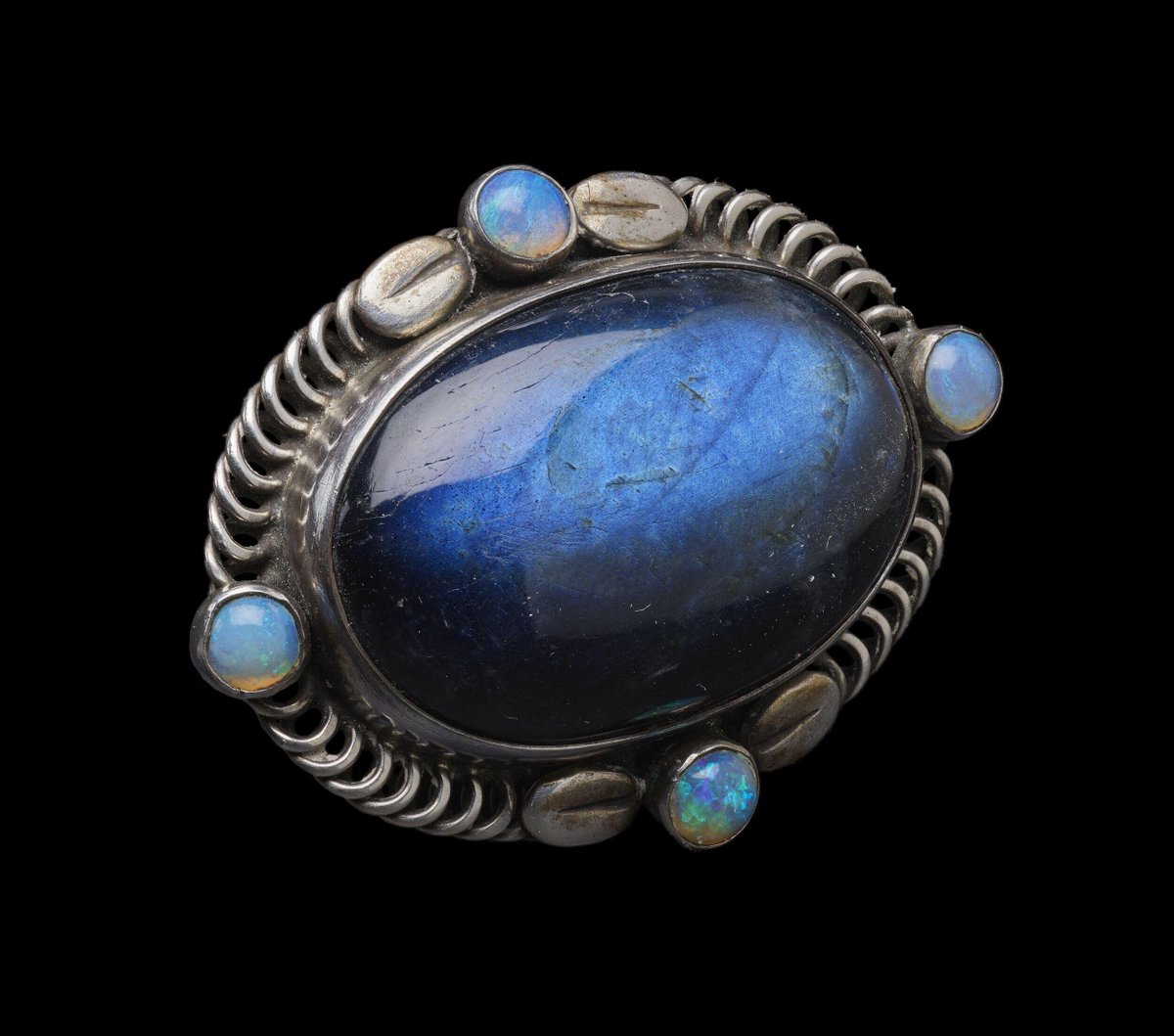
Brooch, silver, labradorite and opal, by Georg Jensen, Denmark 1915-30. Victoria & Albert Museum.
Deutsch
Lizz Meiring Official retweetledi


Lizz Meiring Official retweetledi
