Lukas Hafner

185 posts

Lukas Hafner banner
Lukas Hafner

Lukas Hafner

@LostInTranscrip

Biologist lost somewhere between the scales | Biology x ML @TechnionLive previously @BIUPasteur @lpiparis_ @Biologie_UNIGE Opinions are my own& mostly wrong

Haifa, Israel Katılım Mart 2019
566 Takip Edilen176 Takipçiler
Lukas Hafner
Lukas Hafner@LostInTranscrip·
@caldarellip1 Interesting. But I think the capacity for direction and responsibility will be just completely dependent on the ability of being able to judge in the first place. Also, to what degree can taste be learned without the need to execute (as it is so cheap)?
English
0
0
0
23
Paolo Caldarelli
Paolo Caldarelli@caldarellip1·
@LostInTranscrip Short answer: yes — but with an important nuance. In an AI-rich world, execution becomes cheap, but judgment (taste) becomes scarce and valuable. However, “taste” alone isn’t enough — the key human advantage will be taste + direction + responsibility.
English
1
0
1
162
Lukas Hafner
Lukas Hafner@LostInTranscrip·
With AI getting better and better: will "taste" become the "key" human skill; e.g. the sense of knowing what is "good" and/or "true"?
English
1
0
1
151
Lukas Hafner retweetledi
Umberto Aiello
Umberto Aiello@UmbertoAiello·
1/ Do you have a favorite protein you wish you could dissect residue by residue? 🔬 Excited to share our platform for mutational scanning at endogenous loci in yeast (no ectopic expression needed!) doi.org/10.1101/2025.0…
English
1
1
2
84
Lukas Hafner retweetledi
Rayan Chikhi
Rayan Chikhi@RayanChikhi·
🌎👩‍🔬 For 15+ years biology has accumulated petabytes (million gigabytes) of🧬DNA sequencing data🧬 from the far reaches of our planet.🦠🍄🌵 Logan now democratizes efficient access to the world’s most comprehensive genetics dataset. Free and open. doi.org/10.1101/2024.0…
Rayan Chikhi tweet media
English
5
147
378
66.1K
Lukas Hafner retweetledi
Yunha Hwang
Yunha Hwang@Micro_Yunha·
How do we build AI systems that enable deeper, not just faster, science? I came across a very thought-provoking article by @nisheethvinoi on “What Counts as Discovery?”
English
2
2
14
1.4K
Lukas Hafner retweetledi
Michael Baym
Michael Baym@baym·
Legitmately thrilled to share our latest work, in which @fernpizza solved an experimental challenge in plasmid biology as old as the field: measuring how plasmids compete and evolve within individual cells!
Fernando Rossine@fernpizza

@baym Here we show that within-cell competition is key to plasmid evolution. Link to the paper! (2/n) biorxiv.org/content/early/…

English
6
33
185
42.7K
Lukas Hafner retweetledi
Paolo Caldarelli
Paolo Caldarelli@caldarellip1·
📢 First paper from my Postdoc is out. The field of stem cell-based embryo models is flourishing. These models mimic critical stages of embryo development, providing powerful tools to study processes that are tricky to dissect in natural embryos. Many approaches are being used to investigate them—what was ours? 👇 nature.com/articles/s4146…
English
3
7
66
8.5K
Lukas Hafner retweetledi
Dan Hendrycks
Dan Hendrycks@hendrycks·
We’re releasing Humanity’s Last Exam, a dataset with 3,000 questions developed with hundreds of subject matter experts to capture the human frontier of knowledge and reasoning. State-of-the-art AIs get <10% accuracy and are highly overconfident. @ai_risk @scaleai
Dan Hendrycks tweet mediaDan Hendrycks tweet mediaDan Hendrycks tweet mediaDan Hendrycks tweet media
English
202
756
4.7K
1.1M
Lukas Hafner retweetledi
Arjun (Raj) Manrai
Arjun (Raj) Manrai@arjunmanrai·
Listen to this one to hear a debate about some of the best medical AI papers of the past few years, lots of laughter, and a rare long-form glimpse into @zakkohane’s special mentoring style.
NEJM AI@NEJM_AI

Dr. @zakkohane discusses the evolving landscape of AI in medicine and shares insights on health care system challenges, the Human Values Project, and his perspectives on the most significant AI developments of 2024. Listen to the full episode: nejm.ai/ep26

English
1
4
16
2.4K
Lukas Hafner retweetledi
Tal Ifargan
Tal Ifargan@TalIfargan·
Indeed, mistakes in research are inevitable, but the key is to leverage AI to address them more effectively and expose them transparently. We should harness AI to make science more reproducible and verifiable.
Isaac Kohane@zakkohane

"Merely" having AI oversee study design and manuscript construction (much less than proposed in this article) would reduce errors that have led to irreproducible results and unintentionally misleading figures/tables.

English
0
1
2
117
Lukas Hafner retweetledi
NEJM AI
NEJM AI@NEJM_AI·
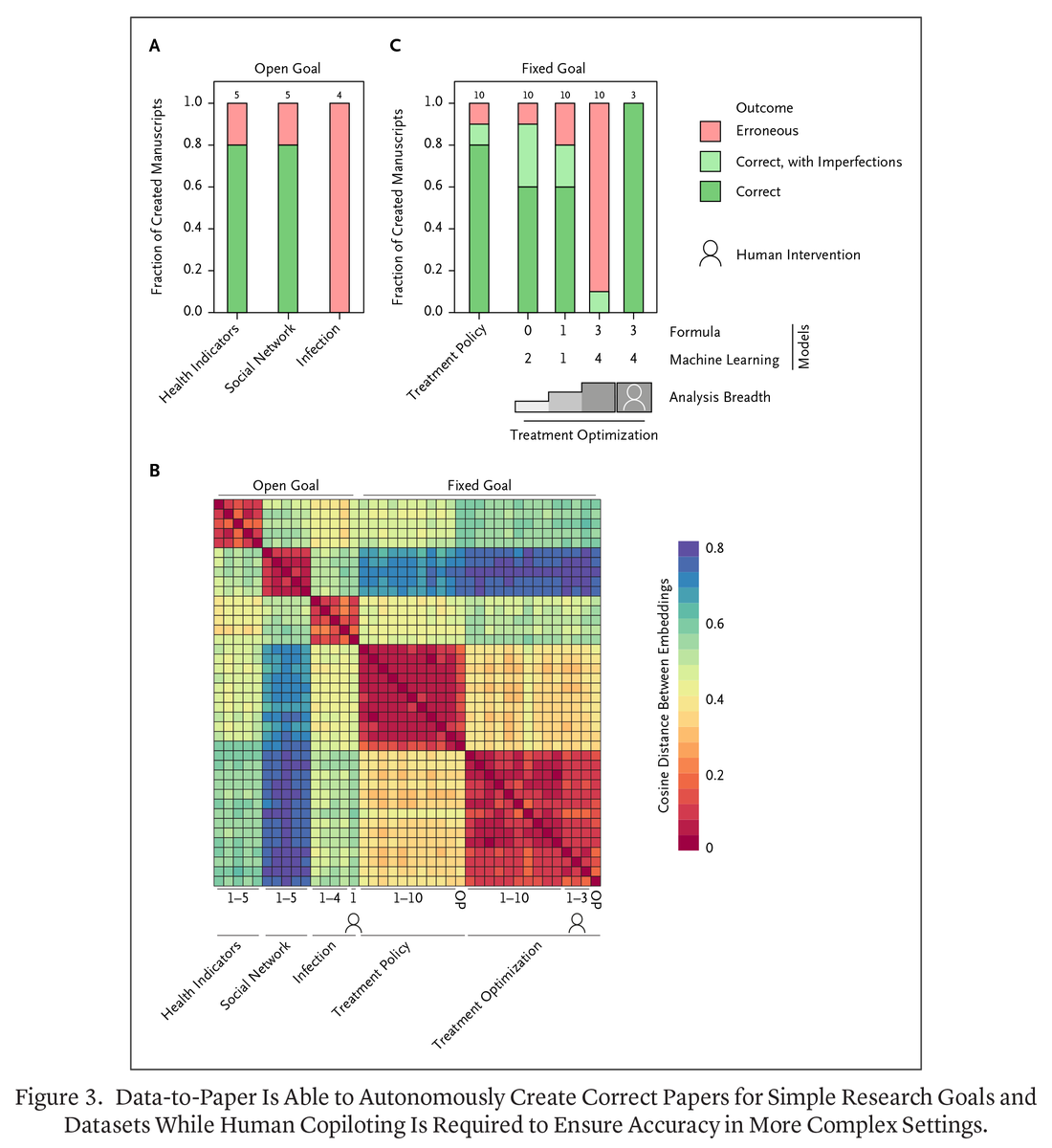
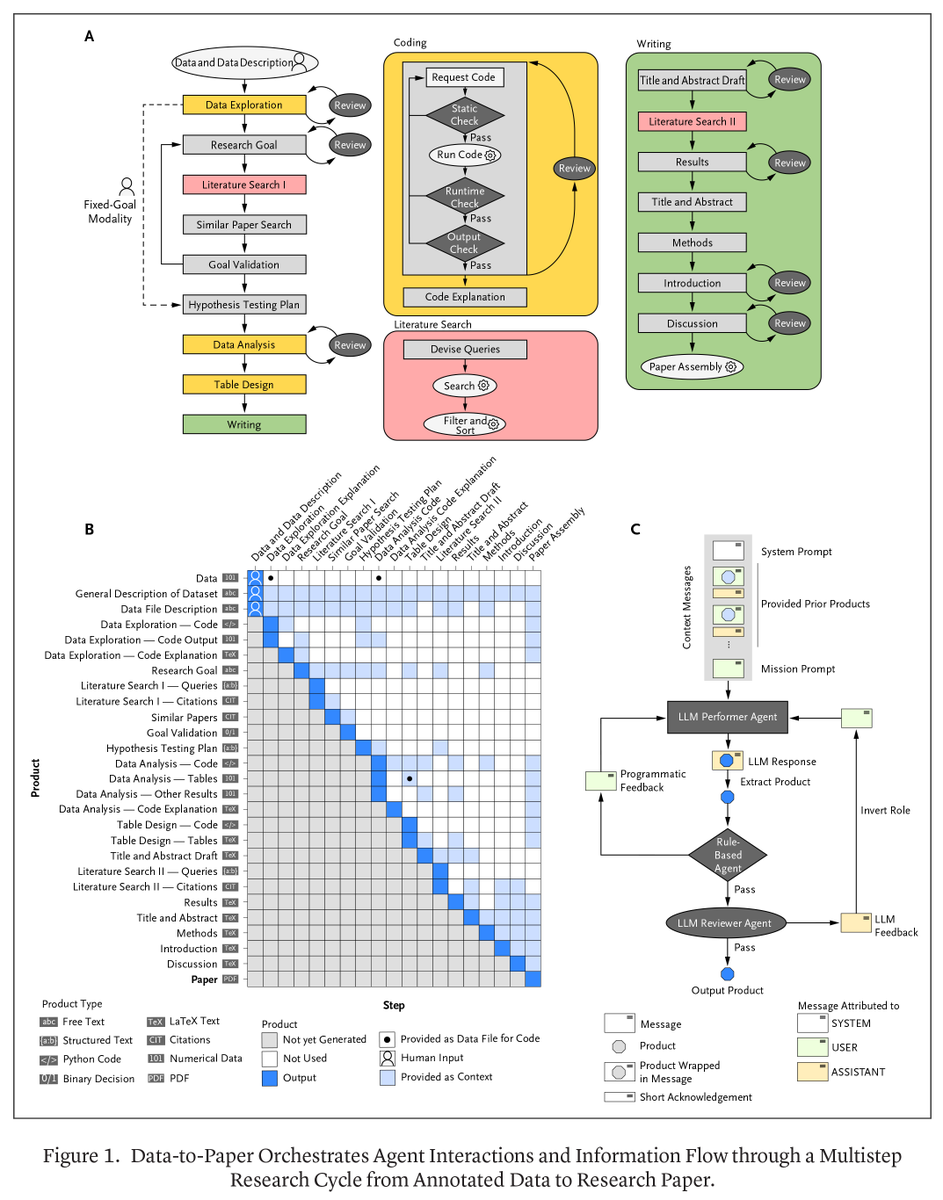
A study by @TalIfargan and colleagues demonstrates a potential for AI-driven acceleration of scientific discovery in biomedical research and beyond, while enhancing, rather than jeopardizing, traceability, transparency, and verifiability. nejm.ai/4f8JAPA
NEJM AI tweet media
English
2
11
32
4.3K
Lukas Hafner retweetledi
Isaac Kohane
Isaac Kohane@zakkohane·
Timely discussion about whether/what guidance is needed in straight-to-publication data-analysed-by-AI @NEJM_AI ai.nejm.org/doi/full/10.10… Bonus: an Asimov story reference.
English
0
4
14
1.2K
Lukas Hafner
Lukas Hafner@LostInTranscrip·
@yoginho @pastramimachine I have the impression that already before AI, we had an issue with a "deluge of crap". To filter out the good, verifiable and meaningful content is one of the major challenges we face today in science - independent if it is coming from an AI or a human
English
0
0
0
72
Lukas Hafner
Lukas Hafner@LostInTranscrip·
@yoginho @pastramimachine Why seeing it so black and white? I would argue that there are ways of using AI that do not result in all of the forementioned(except energy) But will require a lot of not-lazy thinking on finding those ways on scale In the end, AI is "just" a tool - its use is what matters
English
0
0
2
92
Lukas Hafner
Lukas Hafner@LostInTranscrip·
@pastramimachine Also, there is the other misconception that AI necesseraly means that no human is involved anymore. But AI-human copiloting can be actually both be fun and powerful
English
0
0
1
50
Lukas Hafner retweetledi