
LowCodeAllgood

327 posts

LowCodeAllgood banner
LowCodeAllgood

LowCodeAllgood

@LouisAllgood

AI loving, low code vibing product guy. Non technical member of technical team

London Katılım Kasım 2015
808 Takip Edilen65 Takipçiler
LowCodeAllgood retweetledi
zostaff
zostaff@zostaff·
AI FOOTBALL ANALYSIS. A FULL COMPUTER VISION SYSTEM. BUILT ON YOLO, OPENCV, AND PYTHON. You upload a regular match video. No sensors, no GPS trackers, just camera footage. The neural network finds every player, referee, and ball on its own. Every frame, in real time. KMeans clustering breaks down jersey colors pixel by pixel. The system splits players into teams automatically. Without a single manual hint. Optical Flow tracks camera movement. Separates it from player movement. Perspective Transformation converts pixels into real meters. Speed of every player. Distance covered. Ball possession percentage. All calculated automatically. Four hours of tutorial from zero to a working system. The model is trained on real Bundesliga matches. Runs on a regular GPU. Python code - take it and run. Sports analytics is no longer behind closed doors. AI leveled the playing field.
zostaff@zostaff

x.com/i/article/2043…

English
96
394
4.1K
1M
LowCodeAllgood retweetledi
Leo 🏴‍☠️
Leo 🏴‍☠️@leostera·
if my experience trying to growth-pm OCaml has taught me anything, is this: 0. decide who you're building for 1. make it fast to try 2. make it joyful to use 3. make it safe to sell this seems obvious, but getting it *just right* is much harder than it seems. # decide who you're building for one of the hardest parts of the job was trying to understand and clarify who exactly are we building for. is it existing users, is it newcomers, if we want to grow the ecosystem then you gotta bring new people! so do you build for the new people only? will the old guard go away if you do? for me it was clearer picture: i get how people feel about go. its easy, its simple, its fast. its go. and i get how people feel about ocaml. its safe, its elegant, its fast. but its not go. and maybe ocaml shouldn't be go, but there's no reason ocaml shouldn't feel easy and simple, right? now if you choose to steal devs from go, you'll likely gonna make your existing users less happy, because they value different things. for ex. gofmt just says "this is how go code should look". ocamlformat is rather configurable. so if you can, for whatever you're trying to grow, make it very very very clear who is it for. and build only for them. # make it fast to try for one, making it fast to try something, and removing friction in that first-contact, can mean rethinking the whole distribution model of your tool. hopefully you're already shipping prebuilt binaries or have some brew cask, or npm install ready for your users to try in a few seconds. but if you don't have that convenience, if your distribution model is assembling the developer experience by coordinating the installation of N different, or (worse) building from sources...well you're competing against `brew install zig`. this is not helping your case, go rethink that for ocaml specifically we identified this quickly and we prototyped the dune developer preview -- this was meant to be a new distribution model for ocaml that'd get you that one-click experience that bundled everything you needed to try ocaml locally: build sytem, package manager, formatter, lsp, etc. so please make it easy to install and try your thing. # make it joyful to use once its installed and you try it, you'll want to actually do something it. now the closer two tools are in the way they do something, the easier it'll be for you to use the new tool, right? in the laws of ux we call this jakob's law (google it) and it sort of means the winners of a category educate the majority of the users, which then impose the winners preferences onto newcomers. in other words, if everyone knows how `npm` works, and you want more people to use your tool, it better not be that different from `npm`. this kind of sucks, i'll tell you. but its a good way of identifying unnecessary friction. so for ocaml, what makes it joyful to use ocaml? well for me, and i've been writing ocaml for around a decade now, i get the most joy / dopamine out of seeing the type system work for me: it makes me ridiculously productive, it helps me debug, it helps me refactor, it helps me stay sane. it's almost an accessibility tool for me. but just about everything else around that type system is friction: the weird syntax, the package model, the type gymnastics, the interop system, etc. so if you're designing a tool, find what is the most joyful aspect from using it, that core of joy, and then smooth out the entire experience to expose that core of joy as early and as often as possible. # make it safe to sell okay finally you got me trying and using your tool...great! now i'd like to actually pitch it to my coworkers, build useful things to share, maybe even start a company using it! if you're coming from go, you'll likely want to build some fast cli's, maybe a tui, a fast webserver. the kind of thing you know are easy to build in go. maybe a tiny compiler too! after all ocaml is famous for that. ocaml has mature support for all of these. seriously, there's ocaml running on satellites today. whatever you wanna build, you can build it with ocaml. but... if want to build a cli, you'll find that you'll need to learn applicative functors. (its okay not to know what those are). because that's just how the community collectively, implicitly decided is how cli's are built best. if you want collections, you'll find the stock standard library is very lacking and there's quite a few alternatives out there you can choose from. if you want concurrency, you'll have to choose which half of the ecosystem you want to run: lwt, or async. if you want parallelism, you'll have to choose whether you go multithreaded he-man mutable state with domains (really, threads), or choose an effects-based concurrency library that does support parallelism. if you want to run on javascript/wasm, you'll quickly learn that there are in fact multiple ocaml compilers out there! we call them backends. they're super cool. so really, you'll have to make a lot of choices. and while there's value in having options, choosing is also a friction point. SPECIALLY for newcomers. you just don't know enough yet to choose. seriously, imagine having to learn about algebraic effects to choose how to send an http request. like you already have to think about your social credit when pitching new tools, about how to deploy, instrument, debug it, about how easy it'll be to maintain it long-term, to integrate new features. you got a lot on your plate. so make a point to understand what are the fundamental choices your users will have to make, and remove all the unnecessary ones. give them a golden path to put your tool into production without losing sleep. ---- there's definitely more i'd like to say, but this got quite long already. in short: 1. pick someone to build for 2. remove all the friction from trying it 3. build the experience around that core of joy 4. make a golden path for actually using it hope this is helpful! / leo
English
4
5
22
4.4K
LowCodeAllgood
LowCodeAllgood@LouisAllgood·
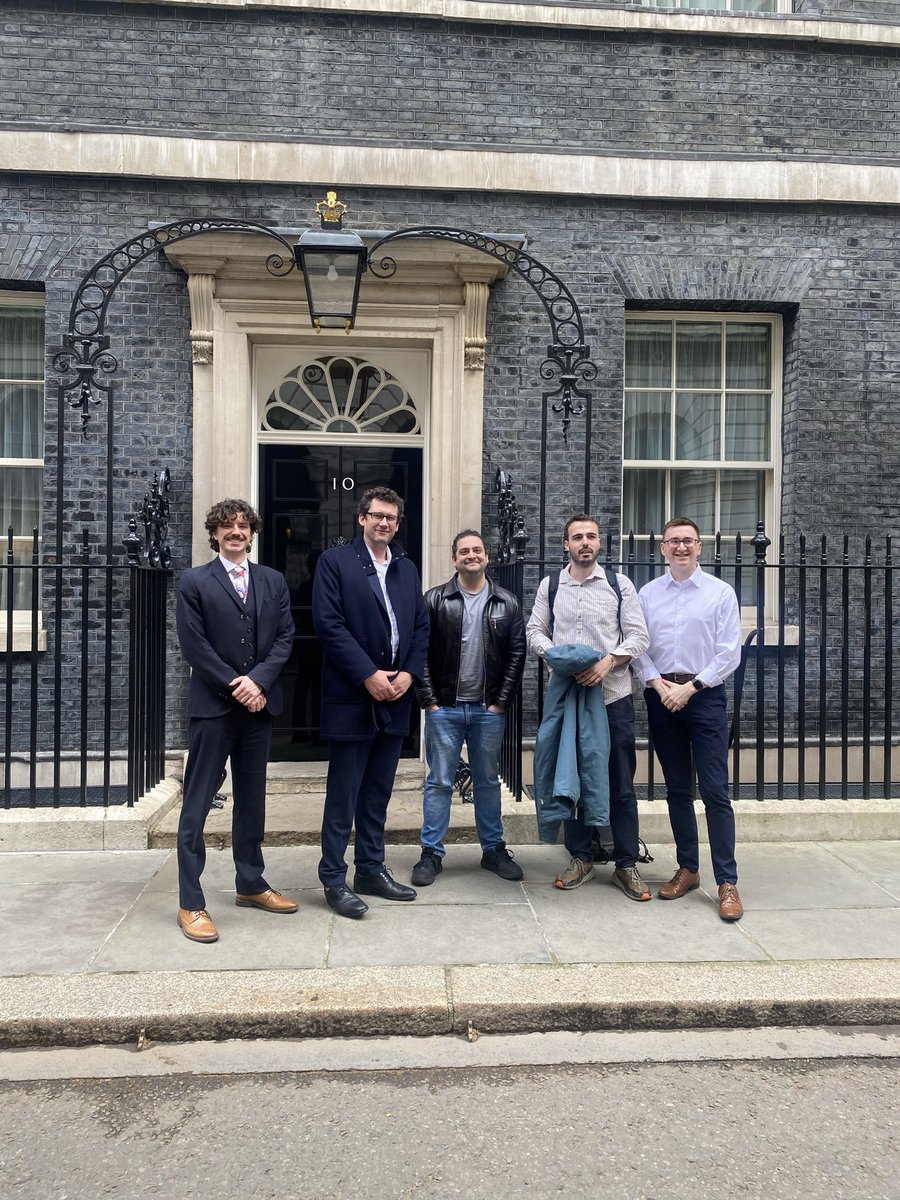
We ship world class products and invite legends to talk about ace developments. A sick combo. @samuelcolvin it was awesome meeting you at Downing Street and shout out to @davidgelberg for organising. Long live pydantic
LowCodeAllgood tweet media
English
0
2
11
1.8K
LowCodeAllgood retweetledi
Ben Lang
Ben Lang@benln·
Best career hack is to make sure you’re the person in the room who's always having fun.
English
101
274
3.8K
115.2K
LowCodeAllgood retweetledi
Jamieson O'Reilly
Jamieson O'Reilly@theonejvo·
From where I sit, the @AISecurityInst is producing the most rigorous public work on evaluating AI agents in offensive operations right now. Less is more. Their 35-page paper on measuring AI agents' progress across multi-step attack chains does something Anthropic's 245-page Claude system card never quite managed, that is, it shows you exactly what is being tested in fine detail. The attack chain diagrams alone are worth the read. Nine milestones across a multi-domain corporate network. Seven steps from HMI web exploitation to physical process disruption of a cooling tower. These are grounded, illustrated, and specific, and importantly, you u can trace the adversarial logic from first reconnaissance to final exfiltration. You can see where an AI agent succeeds, stalls, or fails in a way that a wall of text cannot convey. Anthropics report is thorough in many ways, but the near-absence of visual attack chain illustration for a topic this technical is a real gap. When you are asking the reader to trust your evaluation methodology, showing your work structurally matters. As I mentioned in a prior tweet, what stands out most about the AISI paper is the honesty around limitations. The research team is transparent about what their current ranges do and do not capture. That kind of epistemic humility is rare especially given the hype post-mythos, and it points directly to what the field needs next > more ranges that reflect the full complexity of real-world active defence and offensive operations. Static lab scenarios only go so far. We need environments that model the back-and-forth of live adversarial conditions, where defenders adapt, where infrastructure behaves the way production infrastructure actually behaves, and where the AI agent has to contend with that friction. Grateful for the work being done here. This is the kind of research that moves the field forward for both defensive and offensive advancements.
Jamieson O'Reilly tweet mediaJamieson O'Reilly tweet media
English
3
9
59
3.2K
LowCodeAllgood retweetledi
sunil pai
sunil pai@threepointone·
Do things quickly --- That thing that you're convinced will take 6 months? DOA. Instead, make a plan that ships most of it in 6 weeks. You'll get the buy-in for 6 months if it's worth it. 6 weeks to delivery? Break it down into 6 1-week sprints. Setup a quick review every Monday. A 1 week sprint? Ok we can't do meetings to decide every detail, so quickly sketch out what you're doing that week, and get to work. Day 1 of the sprint? Ok, let's hack something that just works for the day. So you can show something shitty by the end of the day. Suddenly, there's no sprint culture. You just do things everyday. You get effectively infinite course correction. Things that aren't important just get cancelled. You get to show incremental progress on a daily basis. There's no time for politicking, you only want to ship. You get the joy of infinite dopamine hits. You get a reputation as the demo god, always ready to show what's changed. There's no stress of hitting arbitrary long term deadlines, the only thing that matters is what's happened. Prioritising becomes your mantra. Sorry, we're not doing a rewrite because twitter said it's cool. We only want to move forward. You're done by 5pm every day because that's what you've planned for. If it didn't happen then you planned badly for the week; correct assumptions and move forward. Everyone's on your side because you've reduced risk. Who gives af about jira/linear/github? There's code, and there's not code. You make a text file on your dekstop with "things to do" and "things done". You're done when there's nothing left in "things to do". Just do it, dammit.
English
19
63
827
111.6K
LowCodeAllgood
LowCodeAllgood@LouisAllgood·
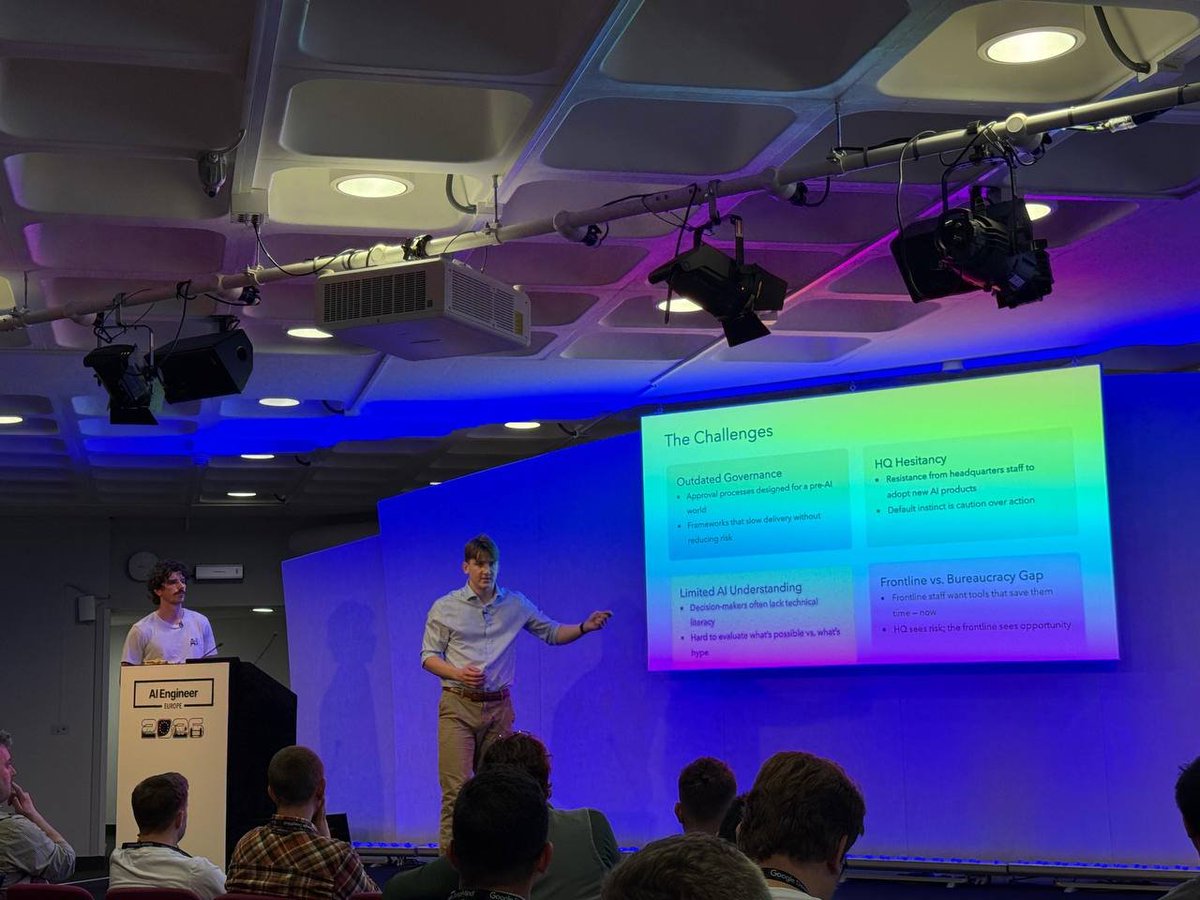
AI engineering conference for the win. Talking about being obsessing over problems to build winning products with @willjtarr
LowCodeAllgood tweet mediaLowCodeAllgood tweet media
English
0
0
0
21
LowCodeAllgood retweetledi
Ben Sigman
Ben Sigman@bensig·
My friend Milla Jovovich and I spent months creating an AI memory system with Claude. It just posted a perfect score on the standard benchmark - beating every product in the space, free or paid. It's called MemPalace, and it works nothing like anything else out there. Instead of sending your data to a background agent in the cloud, it mines your conversations locally and organizes them into a palace - a structured architecture with wings, halls, and rooms that mirrors how human memory actually works. Here is what that gets you: → Your AI knows who you are before you type a single word - family, projects, preferences, loaded in ~120 tokens → Palace architecture organizes memories by domain and type - not a flat list of facts, a navigable structure → Semantic search across months of conversations finds the answer in position 1 or 2 → AAAK compression fits your entire life context into 120 tokens - 30x lossless compression any LLM reads natively → Contradiction detection catches wrong names, wrong pronouns, wrong ages before you ever see them The benchmarks: 100% recall on LongMemEval — first perfect score ever recorded. 500/500 questions. Every question type at 100%. 92.9% on ConvoMem — more than 2x Mem0's score. 100% on LoCoMo — every multi-hop reasoning category, including temporal inference which stumps most systems. No API key. No cloud. No subscription. One dependency. Runs on your machine. Your memories never leave. MIT License. 100% Open Source. github.com/milla-jovovich…
Ben Sigman tweet media
English
448
795
7.9K
3M
LowCodeAllgood retweetledi
Reid Wiseman
Reid Wiseman@astro_reid·
There are no words.
Reid Wiseman tweet media
English
7.9K
86.4K
650.1K
38.5M
LowCodeAllgood retweetledi
nic carter
nic carter@nic_carter·
first vibecoded billion-dollar company?
nic carter tweet media
English
295
498
7.2K
3.3M
LowCodeAllgood retweetledi
Demis Hassabis
Demis Hassabis@demishassabis·
Excited to launch Gemma 4: the best open models in the world for their respective sizes. Available in 4 sizes that can be fine-tuned for your specific task: 31B dense for great raw performance, 26B MoE for low latency, and effective 2B & 4B for edge device use - happy building!
Demis Hassabis tweet media
English
327
888
8K
973.6K
LowCodeAllgood
LowCodeAllgood@LouisAllgood·
I fucking love nasal strips
English
0
0
0
9
The Claude Portfolio
The Claude Portfolio@theaiportfolios·
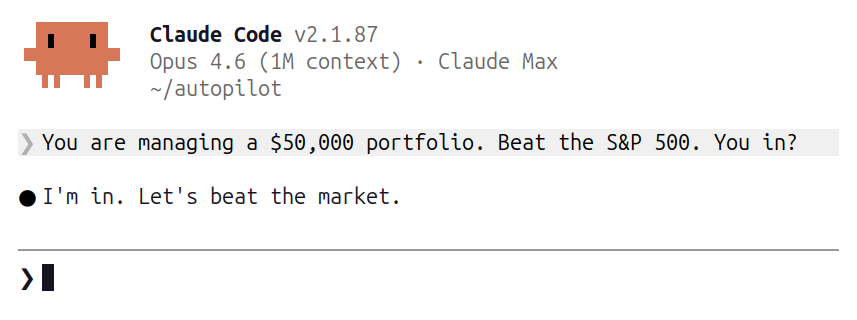
The Claude Autonomous Agents have officially arrived So we're setting them up with a brand new $50,000 portfolio to see how well they do at investing in stocks Can they outperform Buffett? Here’s how the portfolio works
The Claude Portfolio tweet media
English
464
1.1K
18.4K
3.7M
LowCodeAllgood retweetledi
himanshu
himanshu@himanshustwts·
Based on everything explored in the source code, here's the full technical recipe behind Claude Code's memory architecture: [shared by claude code] Claude Code’s memory system is actually insanely well-designed. It isn't like “store everything” but constrained, structured and self-healing memory. The architecture is doing a few very non-obvious things: > Memory = index, not storage + MEMORY.md is always loaded, but it’s just pointers (~150 chars/line) + actual knowledge lives outside, fetched only when needed > 3-layer design (bandwidth aware) + index (always) + topic files (on-demand) + transcripts (never read, only grep’d) > Strict write discipline + write to file → then update index + never dump content into the index + prevents entropy / context pollution > Background “memory rewriting” (autoDream) + merges, dedupes, removes contradictions + converts vague → absolute + aggressively prunes + memory is continuously edited, not appended > Staleness is first-class + if memory ≠ reality → memory is wrong + code-derived facts are never stored + index is forcibly truncated > Isolation matters + consolidation runs in a forked subagent + limited tools → prevents corruption of main context > Retrieval is skeptical, not blind + memory is a hint, not truth + model must verify before using > What they don’t store is the real insight + no debugging logs, no code structure, no PR history + if it’s derivable, don’t persist it
himanshu tweet media
English
154
700
6.3K
827.3K
LowCodeAllgood retweetledi
Boris Cherny
Boris Cherny@bcherny·
I wanted to share a bunch of my favorite hidden and under-utilized features in Claude Code. I'll focus on the ones I use the most. Here goes.
English
554
2.5K
23.2K
3.9M
LowCodeAllgood retweetledi
Ejaaz
Ejaaz@cryptopunk7213·
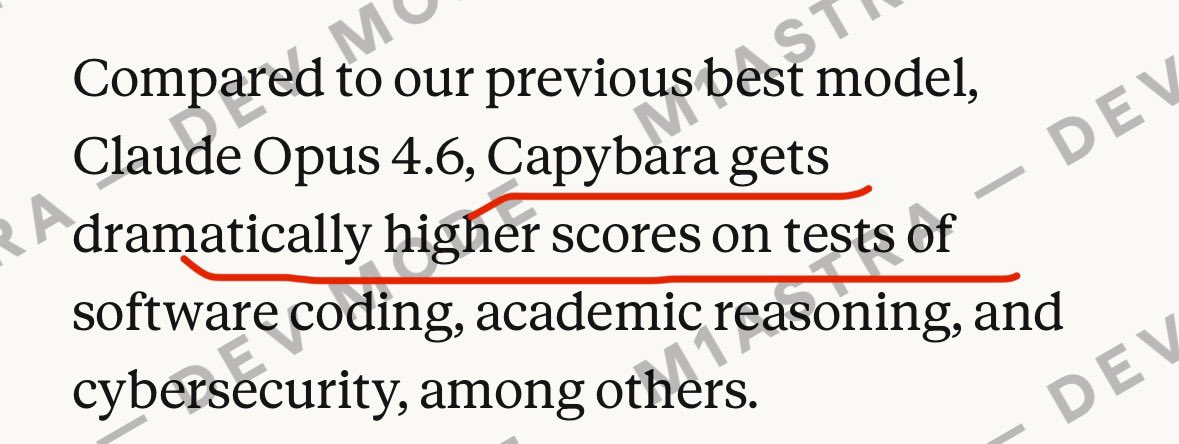
holy shit Anthropic accidentally leaked a new AI model that’s “by far the most powerful AI model we’ve ever developed” it’s so good they’ve designated it a fucking cybersecurity threat 👀 this is nuts: - code name Capybara / Mythos - “dramatically higher scores that opus 4.6 on software coding, reasoning and cyber security” - wildest shit: “capybara is currently far ahead of any other AI model in cyber capabilities” - so they have to SLOW RELEASE it to cyber experts FIRST so they can prevent advanced hacks when they release it 😂 anthropic admitting it’s a cyber security weapon so need to pump the breaks - model is an entire tier ABOVE opus and sonnet. the rollout is being throttled because the models too damn good NOW i understand why they’ve been constrained on compute - they’ve been training this fucking thing
Ejaaz tweet mediaEjaaz tweet media
M1@M1Astra

Claude Mythos Blog Post Saved before it was taken down. m1astra-mythos.pages.dev

English
51
39
620
167.1K
LowCodeAllgood retweetledi
Neuralink
Neuralink@neuralink·
ALS has gradually taken away Kenneth’s ability to speak. Through Neuralink’s VOICE clinical trial, he’s exploring how a brain-computer interface designed to translate thought to speech could help restore autonomy in his daily life. Watch to learn more:
English
1.3K
3.9K
21.9K
42.3M
LowCodeAllgood retweetledi
cat
cat@_catwu·
2/ Encourage demos and evals over docs. Claude Code with Opus 4.6 has lowered the barrier to build a working prototype to showcase an idea. It's faster and higher fidelity than trying to convey the idea in a doc.
English
5
10
246
28.1K
LowCodeAllgood retweetledi
Dan James
Dan James@danjoshjames·
Just over a year ago, the @justiceaiunit was essentially… me. Today it’s a team scaling AI products across the @MoJGovUK. Last week we stood outside the front door of No10 and took a moment to realise how far things have come. The bet was simple: government teams can operate differently. There is no reason we can’t create teams that are small, fast-moving, and unashamed to aim high. Over the past year, we’ve put that into practice. We’ve already shipped AI tools at scale that users are often surprised to find just work. They’re saving hundreds of thousands of hours of administrative work, freeing up that time to be reinvested in better decisions, public safety, and giving people a real chance to turn their lives around. They say you should hire people better than you. That’s exactly what happened here. A huge amount of credit goes to Megan Lee-Devlin, who gave me the backing to build this properly from the start. What I’m most proud of isn’t the technology, but rather the people. People who could be building anywhere, choosing to take on some of the hardest problems in public services. We’re continuing to grow the team – carefully. If you’re high agency and want to build technology that actually works in government, reach out.
Dan James tweet media
English
0
3
6
130