Luba Vangelova

17.5K posts

Luba Vangelova banner
Luba Vangelova

Luba Vangelova

@LubaSays

Founder of @hubmicroschool, where homeschooled tweens and teens can connect and grow together. Also: consultant & systems thinker (edu, econ, gov, soc).

Washington, DC Katılım Ocak 2011
2K Takip Edilen1.4K Takipçiler
Sabitlenmiş Tweet
Luba Vangelova
Luba Vangelova@LubaSays·
From the archives: How #education reflects (and perpetuates) society at large kqed.org/mindshift/3465… (by the same token, different approaches to education can model different ways of relating to self and others, which can then reshape the culture at large)
English
0
3
9
2.8K
Luba Vangelova retweetledi
ZitoSalena
ZitoSalena@ZitoSalena·
How to start a block party in your neighborhood 1.) move in peak Covid & know nobody. 2.) have a harebrained plan that said neighborhood should hold an Oktoberfest. 3.) Inexpensively make a flyer for an Oktoberfest, go to the local print shop to make 150 of them then walk to around to 120 different homes and put it in screen door. Ask them to bring a side casserole, folding chair and drinks. 4.) then set up a folding table at said meeting place cross your fingers and hope someone shows up. 5.) five years later we hold seven block parties a year often have nearly 100 people attend and are blessed with a total of 29 little kids (and more coming) who play it tag, ride their bikes, draw with chalk, blow bubbles, ride their scooters and just be. No screens just being. 6.) We have graduated from flyers to an Evite. We've formed a text chain that alerts each other about power outages, coyote & fox sightings, and never abuse it for something frivolous. 7.) Its not that hard to build a community, or form a community around a central theme; a sense of place. All you have to do is try.  instagram.com/reel/DX4dTUXOi…
English
31
90
840
27.9K
Luba Vangelova retweetledi
Give A Shit About Nature
Give A Shit About Nature@giveashitnature·
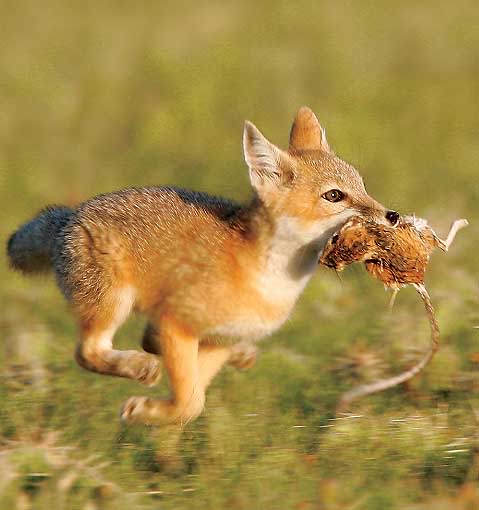
When foxes decline, Lyme rates climb. And the data backs it up. A 2012 paper in PNAS tracked Lyme rates against fox populations across the Northeast and Midwest. Wisconsin saw an 80% decline in foxes from 1984 to 2009 and a 300% rise in Lyme. Martha's Vineyard, which has almost no foxes, has Lyme rates five times higher than nearby Woods Hole, which has plenty of them. If you want to help the foxes in your area: 1. Stop using rodenticide immediately. When foxes eat a rodent that's actively poisoned, the fox can die too. Rodenticide poisoning also kills owls and hawks. 2. Don't shoot or trap them. Kinda goes without saying. 3. Secure your trash, your chicken coops, and keep cats inside to avoid conflict. Next time you see a fox, tell it thank you.
Give A Shit About Nature tweet mediaGive A Shit About Nature tweet media
English
24
432
1.2K
15.9K
Luba Vangelova retweetledi
Atlántico Dulce
Atlántico Dulce@AtlanticoDulce·
En Finlandia, los padres enseñan a los niños una regla antes de dormir, y evita el 80 % de la ansiedad en la adolescencia más adelante en la vida. Se llama "la hora de la preocupación", pero no es lo que imaginas. No les dicen a los niños que dejen de preocuparse. Les enseñan cuándo y dónde pertenece la preocupación. Así es como funciona: Cada noche, 30 minutos antes de ir a la cama, el niño recibe un cuaderno. Durante exactamente 15 minutos, escribe todo lo que ese día le dió miedo, le estresó o quedó sin resolver. Luego cierra el cuaderno. Y la regla es absoluta: las preocupaciones se quedan en el cuaderno hasta la sesión del día siguiente. Un psicólogo finlandés lo explicó así: "No reprimimos la ansiedad. Le damos un contenedor. El cerebro del niño aprende que la preocupación tiene un tiempo y un lugar y la hora de dormir no es uno de ellos," A los 12 años, la mayoría de los niños ya ni siquiera necesitan el cuaderno. Han interiorizado el límite. El cambio ocurre porque el cerebro deja de tratar cada preocupación como una emergencia. No es "no pienses en ello", sino “pensarás en ello, pero no ahora". Ese pequeño retraso rompe el bucle de la ansiedad. El niño duerme. La preocupación pierde fuerza. Y con el tiempo, la mayoría de esos miedos ni siquiera vuelven a la página. La mayoría de los padres intentan resolver los problemas de sus hijos o les dicen "todo irá bien". Pero la verdadera fortaleza emocional no es eliminar el miedo, es aprender que puedes sostenerlo sin dejar que te controle. Los niños que crecen con límites alrededor de su preocupación se convierten en adultos que no entran en espiral a las 2 de la madrugada. (pico de cortisol)
Español
70
1.7K
7.2K
656K
Luba Vangelova
Luba Vangelova@LubaSays·
What a great idea—a quick and easy way to compost
ALEXIS ™I ❤️🇷🇼•@dufitalexis1

Composting does not require a bin, a tumbler, a thermometer, or a schedule. The oldest soil improvement method in agriculture is trench composting — digging a hole, filling it with organic waste, covering it with soil, and planting on top. The decomposition happens underground where you never see it, never smell it, never turn it, and never think about it again. The soil organisms that do the work were already there before you started. 🪱 Every piece of composting equipment ever sold solves a problem that a shovel already solved. A tumbler aerates the material by turning it — soil organisms aerate buried material by moving through it. A bin contains the pile so it does not spread — the hole contains it because the walls are dirt. A thermometer monitors decomposition temperature — buried organic matter decomposes at ambient soil temperature without any monitoring because the organisms that work at that temperature are already the dominant population in the ground. The equipment is not wrong. It is just unnecessary for people who have a garden bed and a shovel. The build takes about 10 minutes: What you need: - A shovel or garden fork - Kitchen scraps, garden waste, shredded leaves, or any compostable organic matter - The garden bed you are already growing in How to do it: DIG — excavate a trench or hole twelve to eighteen inches deep in the garden bed. A trench running between two rows works well. A single hole between two plants works equally well. The shape does not matter. The depth does — twelve inches minimum keeps the material below the surface where decomposition is aerobic, odor-free, and inaccessible to surface-feeding animals. FILL — add kitchen scraps, coffee grounds, crushed eggshells, shredded leaves, garden trimmings, and any non-meat non-dairy organic material to the hole. Fill to within four to six inches of the surface. Mix a handful of existing garden soil into the scraps to inoculate the material with the decomposer organisms already present in the bed — this accelerates the process but is not strictly necessary because the organisms will migrate from the surrounding soil within days. COVER — backfill with the excavated soil, mounding slightly above grade because the material will settle as it decomposes. The soil cap seals the scraps underground where they are invisible, odor-free, and unreachable by raccoons, rats, and dogs. PLANT — wait two to four weeks for the initial decomposition to break down the freshest material, then plant directly on top or alongside. In an active garden, dig the trench between rows or at the end of a bed where nothing is currently growing and plant into that section the following month. In fall, bury the season's accumulated kitchen scraps across the entire bed and plant the whole area in spring. 🌿 What happens underground: Soil bacteria, fungi, earthworms, millipedes, and microarthropods colonize the buried material within days. The decomposition proceeds from the edges inward as the organisms work through the scraps. Nutrients are released directly into the surrounding soil in plant-available form — nitrogen, phosphorus, potassium, calcium, and a full spectrum of micronutrients. The organic matter that remains after decomposition improves soil structure — increasing water retention in sandy soil and improving drainage in clay. The timeline depends on temperature and material. In warm summer soil, soft kitchen scraps (fruit peels, coffee grounds, lettuce leaves) decompose to the point of being unrecognizable within four to six weeks. Tougher material (corn cobs, avocado pits, woody stems) takes three to six months. Shredding or chopping the material before burying accelerates everything because smaller pieces expose more surface area to the organisms. Three variations that fit different garden layouts: THE TRENCH — dig a trench twelve inches deep and twelve inches wide between two planting rows.

English
0
0
0
26
Luba Vangelova
Luba Vangelova@LubaSays·
“The fund borrows money to buy the practice. The debt is loaded onto the practice. The dentist or the veterinarian is required to hit revenue targets that previously did not exist. The targets are met by adding procedures the patient or the pet does not need.” But the kicker shouldn’t be how to profit from all this, but rather how to turn the tide! This isn’t happening because of natural law. It’s happening because it’s been allowed to happen, because of priorities and incentives. Such things can be changed.
Felix Prehn 🐶@felixprehn

Private equity now owns roughly three out of every four veterinary clinics in America. The same private equity firms own the dentist your daughter sees, the orthodontist your son sees, and the urgent care clinic your husband walked into last month. The price of cleaning your dog's teeth has doubled in five years. The price of a child's filling has doubled in three. The exact same financial engineering that took the staff out of nursing homes is being applied to the place you take your golden retriever for surgery. The largest dental chain is Aspen Dental, owned by Leonard Green Partners and Ares. They run more than 1,100 offices. The second-largest is Heartland Dental, owned by KKR. They run more than 1,800 practices. In the veterinary world, Mars owns Banfield, BluePearl, and VCA. JAB Holding Company owns NVA Compassion-First Pet Hospitals. EQT owns IVC Evidensia. Together they own about 75 percent of all American clinics. The pattern is identical to PE hospitals. The fund borrows money to buy the practice. The debt is loaded onto the practice. The dentist or the veterinarian is required to hit revenue targets that previously did not exist. The targets are met by adding procedures the patient or the pet does not need. A 2023 Department of Justice investigation found that Aspen Dental had been pressuring patients to take out interest-bearing financing for procedures that were not medically necessary. The financing was through a captive lender owned by the same fund. Heartland Dental settled a multi-state class action over unnecessary stainless steel crowns and pulpotomies on children, performed under sedation, at scale. In veterinary care, the same model produces a different word for the same outcome. A surgery your dog does not need is recommended. The estimate is six thousand dollars. The financing is offered by a company owned by the same fund that owns the clinic. The pet owner cannot afford it. The dog is euthanized. Pet euthanasia for treatable conditions is now rising at a rate that public health experts cannot explain through medicine. The explanation is financial. The dentist who used to own the practice now works for the fund. They are required to refer the patient up the chain to a financing department they are not allowed to question. They burn out. They quit. The fund replaces them with a younger dentist who has $400,000 of student loans and no negotiating power. You cannot opt out. There are no independent practices left in many American zip codes. HOW TO MAKE MONEY FROM THIS: 1. Long Idexx Laboratories (IDXX). Sells the diagnostic instruments and recurring tests every veterinary clinic in America runs every day. 90 percent gross margin. Compounded at over 17 percent annually for two decades. They get paid regardless of which fund owns the clinic. 2. Long Zoetis (ZTS). Largest veterinary pharmaceutical company in the world. Dominant. The pricing power flows through to the consumer regardless of clinic ownership. 3. Long Henry Schein (HSIC) and Patterson Companies (PDCO). Dental and veterinary supply distributors. The picks and shovels of every chain. Audited. Public. Sticky customer relationships. 4. Long Chewy (CHWY). The only large pet retailer in America with no veterinary clinic ownership conflict. Now expanding into telehealth and pharmacy. Direct-to-consumer pricing pressure on the chains. 5. Long Mars Inc indirectly through its strategic partners and avoid the publicly traded specialist roll-ups. The DOJ antitrust investigation will hit specific names. Mars is private and built before the financialization wave. I'm hosting a once-in-a-lifetime free webinar where I go over the exact things I know as a former banker and world class investor. 100 percent free to join. Sign up at felixfriends.org/live Link is also in my comments. (your dog is on a stainless steel table at a chain veterinary clinic owned by a hedge fund. the bill is six thousand dollars. the surgery is necessary. the price is not. the same hedge fund owns the dentist your daughter goes to next tuesday and the urgent care your husband visited last month. you cannot opt out. there are no independent practices left in your zip code. the money does not stay in your town. it leaves on a wire transfer the same day.)

English
0
0
0
14
Luba Vangelova retweetledi
Ben🕊️
Ben🕊️@2BJDJ·
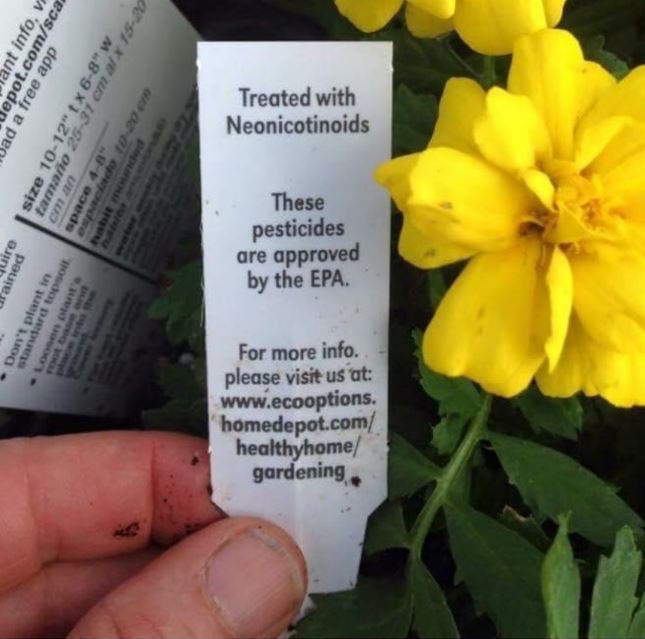
Very Important Message!! Do NOT, and I repeat do not buy plants treated with Neonicotinoids. Bees take the pollen back to the hive and feed it to the brood. This is a number one cause of the colony collapse. It's important to NOT buy these plants! Make sure to share this post!
Ben🕊️ tweet media
English
479
24.2K
35.6K
479.8K
Luba Vangelova retweetledi
Semper Vigilantes
Semper Vigilantes@SemperVigilant1·
I have seen the allegations. Yet to surface are the cannons.
English
2
0
12
1.1K
Luba Vangelova retweetledi
Give A Shit About Nature
Give A Shit About Nature@giveashitnature·
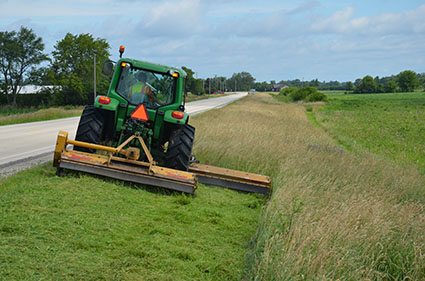
The county just mowed the roadside in June, and an entire generation of monarch caterpillars went with it. In a lot of America, the strip of grass and wildflowers along rural roads is the last place milkweed still grows. Farm fields got sprayed. Suburbs got paved. The roadside ditch is where ground-nesting bobolinks, meadowlarks, pheasants, and bumblebee queens raise their young because almost nothing else is left. June and early July are peak nesting season. They are also when most counties run their mowers. A pheasant nest in early July still has eggs in it 21% of the time. A monarch caterpillar in June is 11 days from becoming a butterfly. The mower doesn't know. The mower keeps going. But there's a fix. Counties that delay roadside mowing until after July 15, mow at higher cutting heights (8–12 inches), use flushing bars on equipment, and target only the visibility-critical edges instead of the entire shoulder have seen big results. Iowa, Minnesota, and Washington have programs along these lines. Most states don't. If you live in a county that mows everything in June, call your county supervisor. Ask for a mowing delay until late summer. Most rural counties have never heard the request and would consider it. The roadside isn't a lawn. It's the last refuge for a lot of species we keep wondering why we don't see anymore.
Give A Shit About Nature tweet mediaGive A Shit About Nature tweet media
English
64
1.2K
3.1K
46.4K
Luba Vangelova
Luba Vangelova@LubaSays·
“After about 18 months, he realized that writing the clinical note was important cognitive work, not merely administrative burden. Delegating it silently hollowed out the reflection and orientation components of caring for patients.” I had a somewhat similar experience and reaction to using AI meeting summaries. The tools didn’t necessarily emphasize what I would have emphasized, and the synthesis was structured differently than I would have structured it. This made the notes less useful, despite the time “saved.”
Taylor Pearson@TaylorPearsonMe

x.com/i/article/2048…

English
0
0
0
23
Luba Vangelova retweetledi
sophia•of•the•Crows🐦‍⬛
So. If you are in ANY emergency situation — let’s say you park in your driveway, & only as you begin taking your groceries from the car, you see movement in your home that is supposed to be empty. And a broken window. You cannot drive away to somewhere safer to get help. Your car refuses. You are at a traffic light. Suddenly someone is trying to get into your car (this has happened to me). You have a split second to accelerate & leave him in the dust. Your car shuts down power. The school calls. Your daughter has fainted. You cannot drive to the school to pick her up because your car notices your eyes are wide & you’re breathing fast. Your car now controls whether you live or die in an emergency situation. And those controls cannot be overridden.
Brian Allen@allenanalysis

Let me tell you about a law most Americans have never heard of. Eighteen months from now, every new car sold in the United States will come with technology that watches you drive. Infrared cameras tracking your eyes. Sensors measuring your pupil dilation. Software analyzing your head position. Software analyzing your behavior at the wheel. If the artificial intelligence in your car decides you are impaired, your car can refuse to start. Or limit your speed to 25 miles per hour. Or shut off entirely while you are driving. This is not a proposal. This is federal law. It applies to model year 2027. Here is the case for the law. 🧵

English
253
6.1K
34.1K
1.5M
Luba Vangelova
Luba Vangelova@LubaSays·
An LLM “has fluency. It has pattern completion. It has a remarkable ability to compress and recombine human text. But fluency is not rationality, and a plausible plan is not an expected-utility calculation. This is why these systems so often fail in strange, brittle, and irreparable ways when given open-ended responsibility. They are not failing because the prompts are insufficiently clever. They are failing because we are asking a simulator of rational agency to be a rational agent.”
BURKOV@burkov

If you don't understand this, you will not understand why LLM-based agents are irreparably failing for a general-purpose problem solving. An agent (by the way it was the topic of my PhD 20 years ago) to be useful, must be rational. Being rational means to always prefer an outcome that results in the maximal expected utility to its master/user. Let’s say an agent has two actions they can execute in an environment: a_1 and a_2. If the agent can predict that a_1 gives its user an expected utility of 10, and a_2 gives an expected utility of -100, then a rational agent must choose a_1 even if choosing a_2 seems like a better option when explained in words. The numbers 10 and -100 can be obtained by summing the products of all possible outcomes for each action and their likelihoods. Now here is the problem with LLM-based agents. The LLM is not optimizing expected utility in the environment. It is optimizing the next token, conditioned on a prompt, a context window, and a training distribution full of examples of what helpful answers are supposed to look like. Those are not the same objective. So when we wrap an LLM in a loop and call it an “agent,” we have not created a rational decision-maker. We have created a text generator that can imitate the surface form of deliberation. It may say things like: “I should compare the expected outcomes.” “The best action is probably a_1.” “I will now execute the optimal plan.” But the internal mechanism is not selecting actions by maximizing the user’s expected utility. It is generating a continuation that is statistically appropriate given the prompt and prior context. This distinction matters enormously. For narrow tasks, the imitation can be good enough. If the environment is constrained, the actions are simple, and the success criteria are close to patterns seen in training, the system can appear agentic. But for general-purpose problem solving, the gap becomes fatal. A rational agent needs stable preferences, calibrated beliefs, causal models of the world, the ability to evaluate consequences, and the discipline to choose the action with maximal expected utility even when that action is boring, non-linguistic, or unlike the examples in its training data. An LLM-based agent has none of that by default. It has fluency. It has pattern completion. It has a remarkable ability to compress and recombine human text. But fluency is not rationality, and a plausible plan is not an expected-utility calculation. This is why these systems so often fail in strange, brittle, and irreparable ways when given open-ended responsibility. They are not failing because the prompts are insufficiently clever. They are failing because we are asking a simulator of rational agency to be a rational agent.

English
0
0
0
27
Luba Vangelova retweetledi
Give A Shit About Nature
Give A Shit About Nature@giveashitnature·
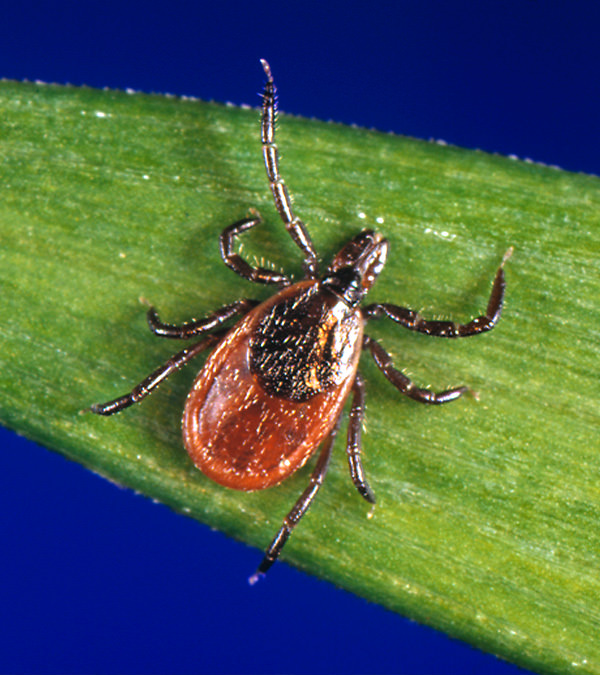
US doctors are warning of one of the worst tick years in a decade. Tick-borne disease isn't just a tick problem. It's a broader ecology problem. Black-legged ticks don't hatch infected. They pick up Lyme primarily from white-footed mice, which infect 40-90% of the ticks that feed on them. White-footed mice explode after big acorn years. Two recent mast years built the mouse population behind this tick surge. What keeps them in check: red foxes, weasels, bobcats, owls, hawks. Cary Institute research shows landscapes with more foxes have measurably less Lyme. The bacteria can't survive a fox's digestive tract. What should you do? Stop using rodenticides. They kill the foxes, owls, and hawks eating the mice you wanted gone. Put up an owl box. A single barred or screech owl pair takes hundreds of mice a year. Plant native shrubs (spicebush, viburnum, hazelnut) that support biodiverse small mammals, not just mice. More species = fewer mice in the mix. Tick checks still matter. Permethrin on clothes still works. But the long game is rebuilding the predators that kept ticks in balance before we paved over them
Give A Shit About Nature tweet mediaGive A Shit About Nature tweet media
English
25
321
820
17.8K
Luba Vangelova retweetledi
Kpaxs
Kpaxs@Kpaxs·
If you want to increase your surface area for luck, focus on producing proof of work. You will make yourself a bigger target for luck.
Kpaxs tweet media
English
24
719
5.7K
474.1K
Luba Vangelova retweetledi
Give A Shit About Nature
Give A Shit About Nature@giveashitnature·
Those “pretty” landscape lights are disorienting birds and killing fireflies. Most light pollution doesn’t come from one big floodlight. It comes from a dozen little lights pointed up at trees, walls, and house siding. Every solar accent, every “moonlighting” effect, every upward-pointing spotlight scatters into the sky. It pulls songbirds off course during migration, confuses nocturnal pollinators, and drowns out firefly mating signals. The fix is ridiculously easy: Tilt every single light downward. Aim it at the ground, the path, or the wall it’s supposed to light up. Same brightness and beauty for you, up to 80% less sky glow. Can’t tilt it? Replace it next time it burns out with “shielded,” “downlight,” or Dark Sky compliant fixtures. You don’t have to give up outdoor lighting. You just have to stop pointing it at the stars. Small change. Huge win for nocturnal wildlife. Will you check your yard lights tonight?
Give A Shit About Nature tweet mediaGive A Shit About Nature tweet media
English
8
196
506
7.5K