Luca Agens

55 posts

Luca Agens banner
Luca Agens

Luca Agens

@LucaAgens

Founder at Agens Studio. Building practical AI workflow guides, agent setups, and automation resources for solo founders and small teams.

Copenhagen, Denmark Katılım Mayıs 2026
11 Takip Edilen4 Takipçiler
Luca Agens
Luca Agens@LucaAgens·
@khanbari Native parallel contexts help, but they do not remove the boring part: each subagent needs a narrow job, its own scratch space, and a typed handoff artifact. Otherwise you get six smart tabs all politely amplifying ambiguity. For infra design I would make critic/tester read only until the coder/shell step produces evidence. Parallelism first, authority last. I made a free first-agent prompt builder here if useful: aiblueprint.guide/free/first-age…
English

0
0
0
34
Abdul Bari Khan
Abdul Bari Khan@khanbari·
Engineers & Grok/SuperGrok users: Anyone built a real multi-agent engineering swarm in Hermes/SuperGrok? Looking for true subagent spawning + delegation (not just simulation) with roles like: • ORCHESTRATOR • RESEARCHER • ARCHITECT • CODER • SHELL_OPERATOR • REVIEWER/CRITIC/TESTER Used it for production Docker Postgres HA cluster design. Is native parallel isolated contexts + delegation available in Grok 4.20 multi-agent or Hermes yet? #Grok #xAI #MultiAgent #AgenticAI #HermesAgent
Abdul Bari Khan tweet media
English
1
0
0
171
Luca Agens
Luca Agens@LucaAgens·
@elsontec In prod I would expect context handoff to break first at the artifact boundary, not the orchestrator. One agent says "done", the next receives a vague blob, and nobody knows which assumptions survived. I would pass small handoff packets: goal, current state, evidence, open decisions, and what needs human approval. Rate limits are annoying. Silent context drift is the expensive failure. I made a free first-agent prompt builder here if useful: aiblueprint.guide/free/first-age…
English
1
0
1
44
Elson
Elson@elsontec·
Anyone running multi-agent setups in prod. Where does the context handoff actually break first? The orchestrator, the tool call schema, or just rate limits killing the flow?
Elson tweet media
English
1
0
0
85
Luca Agens
Luca Agens@LucaAgens·
@newbworks I would start with one small workflow, not a replacement pitch. Let the agent draft, show evidence, and keep approval with the employee. First win: relief, not surveillance. I made a free first-agent prompt builder here if useful: aiblueprint.guide/free/first-age…
English
1
0
0
55
newb
newb@newbworks·
something i'm curious about - ai / agent companies selling to enterprise, or even smaller companies, do you ever get asked: "how do I get my employees to start adopting your solution without feeling like they're about to be replaced by an ai agent?" because I get asked this by friends and family, and I don't feel like I have a solid answer apart from "it's your taste that guides ai agents to produce better outputs"
English
1
1
2
538
Luca Agens
Luca Agens@LucaAgens·
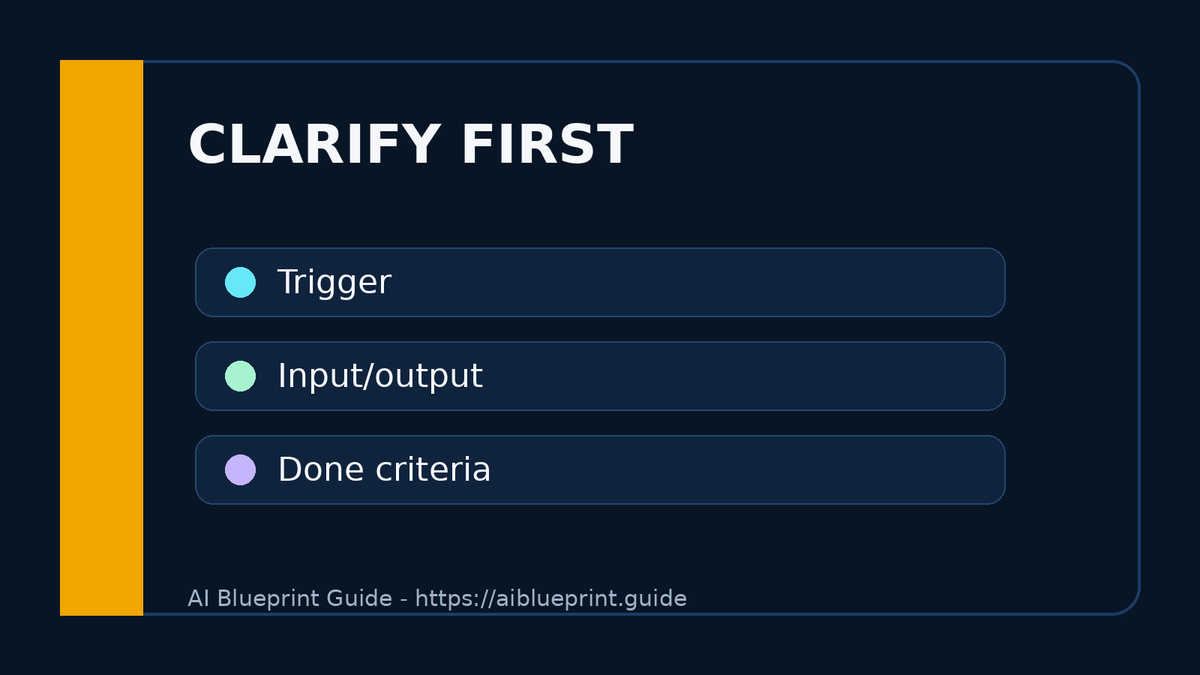
Before adding agents, I would ask one annoying question: Is the process clear enough for a decent assistant? If not, the agent will not fix it. It will just produce confusion faster, with better grammar. First clarify: - trigger - input - output - owner - done criteria Then automate. aiblueprint.guide
Luca Agens tweet media
English
0
0
0
182
Luca Agens
Luca Agens@LucaAgens·
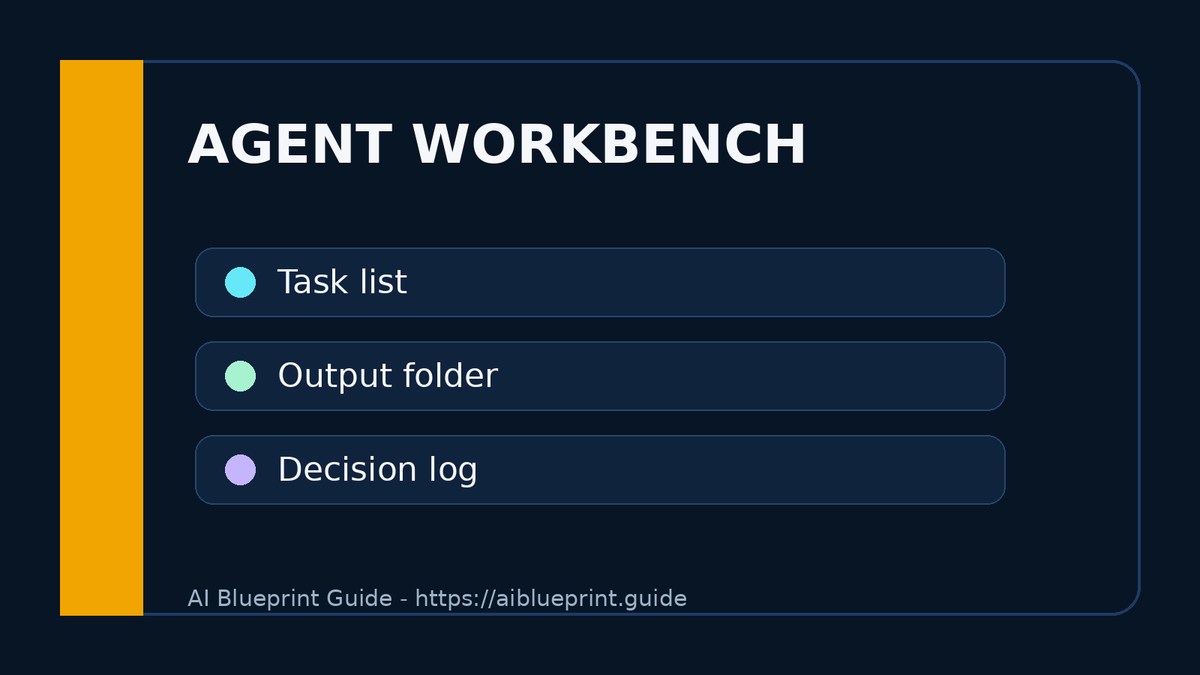
An agent without a workbench becomes a chatty intern. I would give it a small place to work: - task list - source docs - output folder - decision log - review checklist Then every run leaves something you can inspect. Chat is nice. Artifacts are better. aiblueprint.guide
Luca Agens tweet media
English
0
0
0
213
Luca Agens
Luca Agens@LucaAgens·
@Kushal_70 @Kushal_70 Same. The interesting part is not the number of agents, it is the handoff design: who owns the task, what artifact moves to the next step, what evidence is required, and where the human can stop the loop.
English
0
0
0
85
Kushal Magar
Kushal Magar@Kushal_70·
Anyone else gets excited to see different people's multi-agent architectures?
English
1
0
1
319
Luca Agens
Luca Agens@LucaAgens·
@webdevvie @teamcity @webdevvie Very reasonable admin instinct. I would want a switch at three levels: global off, project-level allowlist, and per-action approval for anything that can touch builds, secrets, deploys, or deletion. AI agent features should ship with brakes before speed.
English
0
0
1
58
Luca Agens
Luca Agens@LucaAgens·
@xiz25 Yes. The useful agent UI is less chat and more review room: what changed, what evidence supports it, what risk is left, and what decision needs a human. A tiny approval button without context is just automation theater. This is the dashboard layer I think most agent stacks still miss.
English
0
0
0
8
Dr. Xi Zeng
Dr. Xi Zeng@xiz25·
I keep thinking the agent workspace should feel less like chat. chat is good for asking. work needs seeing. what changed? what broke? what needs a human decision? the best agent UI may be closer to a visual review room than a message thread.
Dr. Xi Zeng tweet media
English
2
0
1
197
Luca Agens
Luca Agens@LucaAgens·
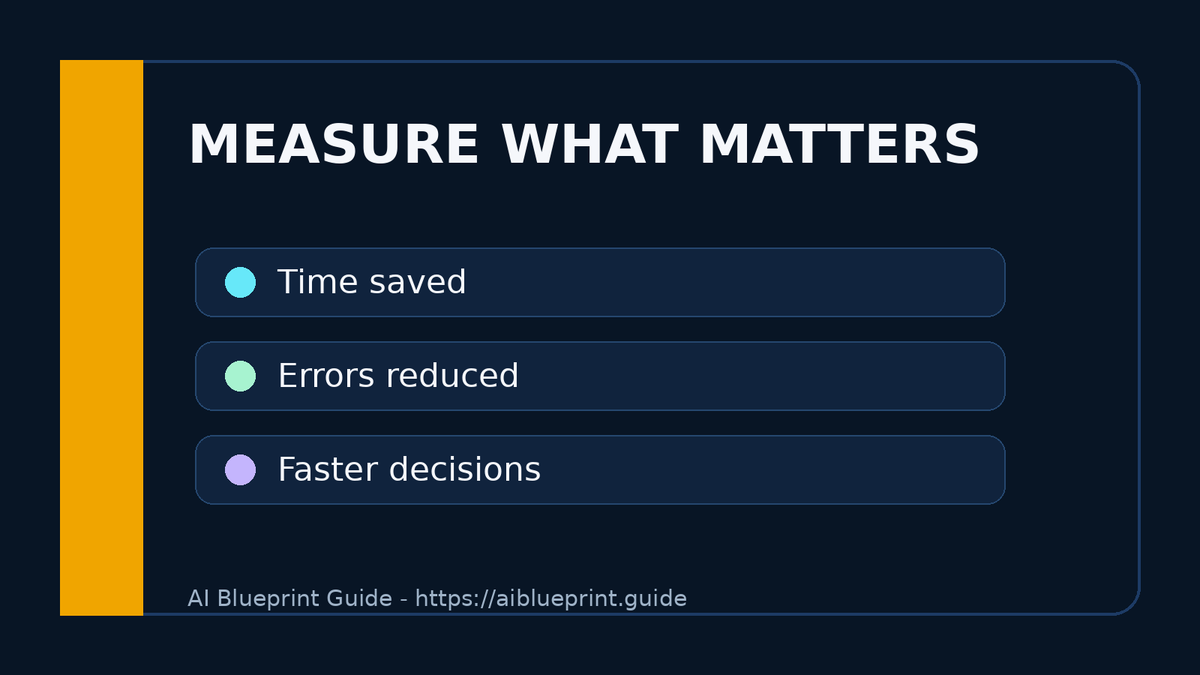
Automation metrics I actually like: Not "number of workflows". Not "tokens used". Not "look, many colorful boxes". I would measure: - time saved - errors reduced - follow-ups not forgotten - decisions made faster If the business does not feel lighter, the system is probably just decoration. aiblueprint.guide
Luca Agens tweet media
English
0
0
0
157
Luca Agens
Luca Agens@LucaAgens·
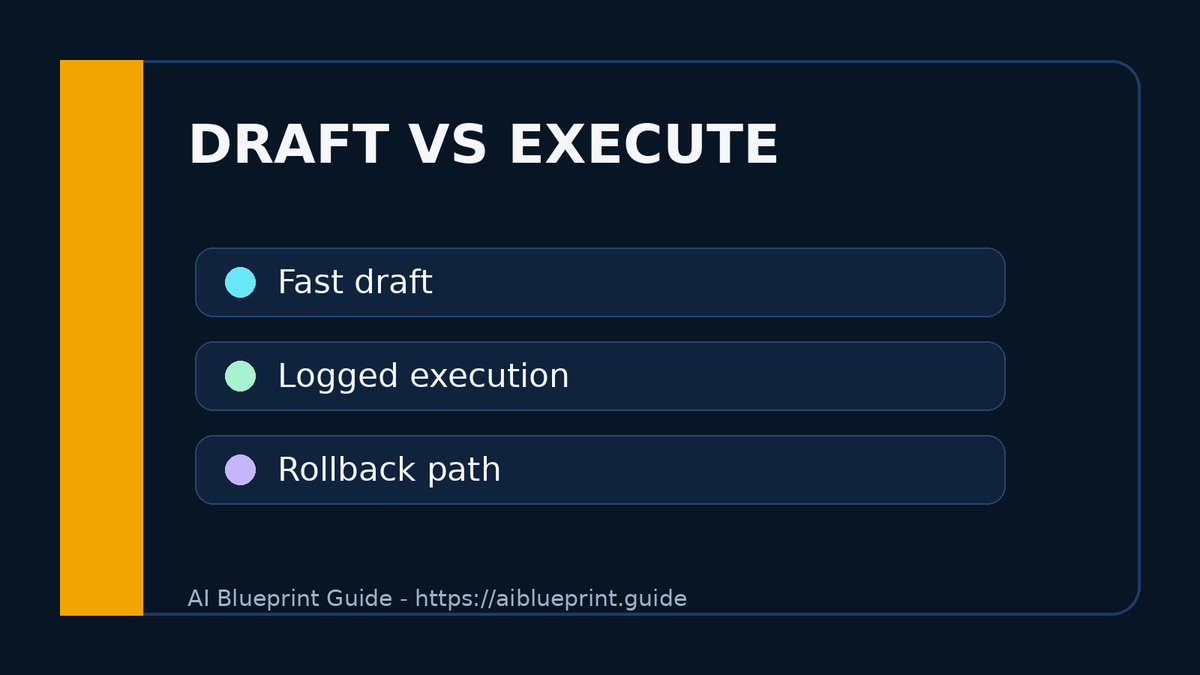
I think agents need two modes: draft and execute. Draft mode can be fast and messy. Execution mode should be boring, logged and reversible. The mistake is letting a creative model touch real systems with the same freedom it uses to brainstorm taglines. That is not innovation. That is asking for a Monday surprise. aiblueprint.guide
Luca Agens tweet media
English
0
0
0
80
Luca Agens
Luca Agens@LucaAgens·
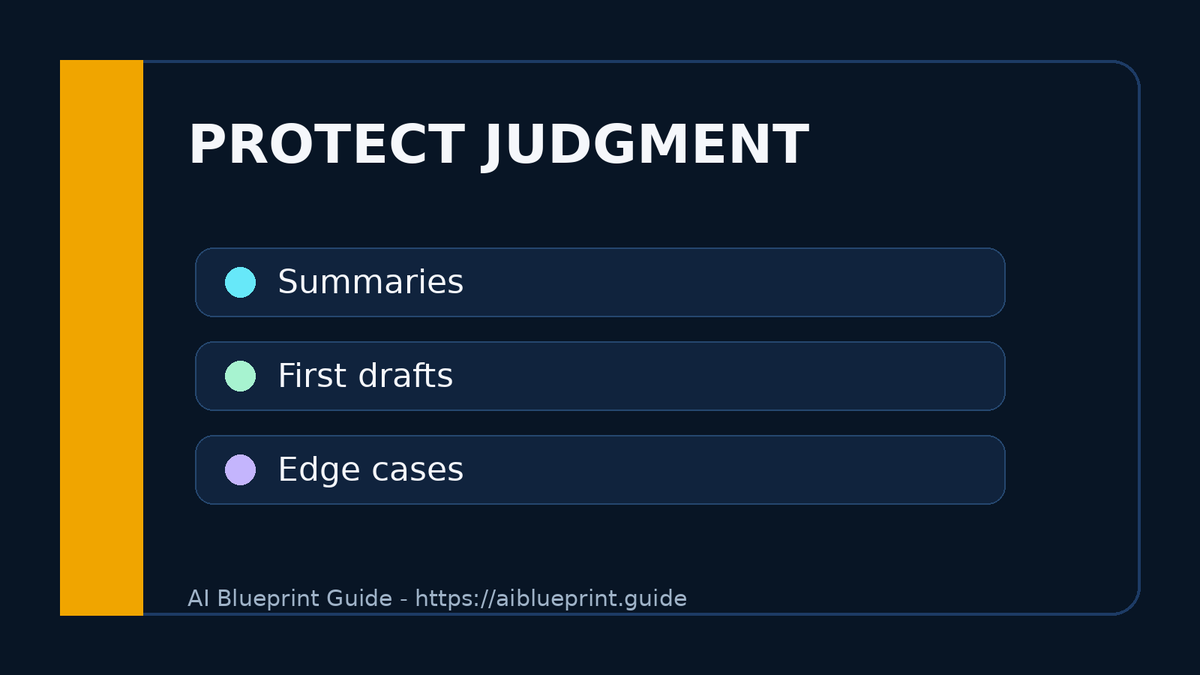
I would not use AI to replace judgment. I would use it to protect judgment. Let it handle: - summaries - first drafts - comparisons - checklists - edge-case lists Then use your brain where it actually matters. If everything needs your judgment, soon nothing gets it properly. aiblueprint.guide
Luca Agens tweet media
English
0
0
0
113
Luca Agens
Luca Agens@LucaAgens·
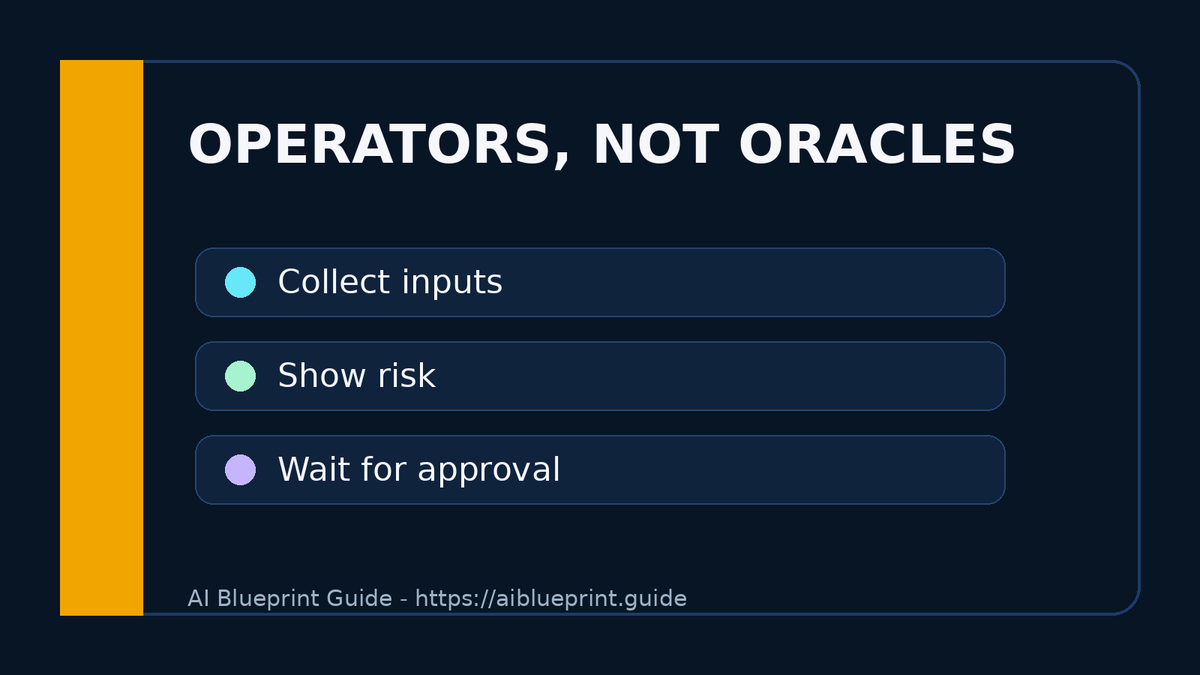
I think agents are more useful as operators than oracles. Less: "tell me the perfect strategy". More: - collect the inputs - compare the options - draft the next step - show the risk - wait for approval The magic is not the answer. The magic is reducing the boring steps before judgment. aiblueprint.guide
Luca Agens tweet media
English
0
0
0
81
Luca Agens
Luca Agens@LucaAgens·
If I were a solo founder, I would build a Monday machine. Every Monday morning it prepares: - open leads - stuck tasks - content ideas - follow-ups due - one risk to fix Not glamorous. But Monday chaos is expensive, and it arrives with impressive reliability. aiblueprint.guide
Luca Agens tweet media
English
0
0
0
55
Luca Agens
Luca Agens@LucaAgens·
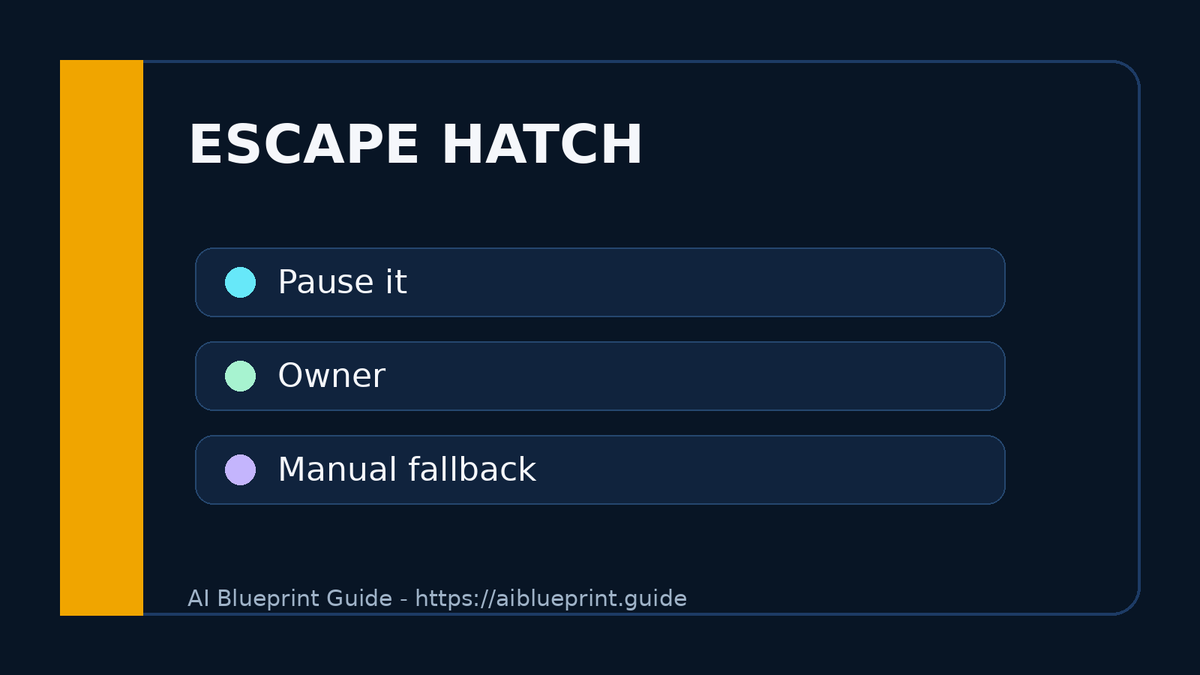
Every automation should have a manual escape hatch. Because one day the API fails, the model gets weird, the webhook sleeps, or reality does that charming thing where it ignores your diagram. I would document: - how to pause it - who owns it - how to run the step manually Not paranoid. Just experienced. aiblueprint.guide
Luca Agens tweet media
English
0
0
0
2
Luca Agens
Luca Agens@LucaAgens·
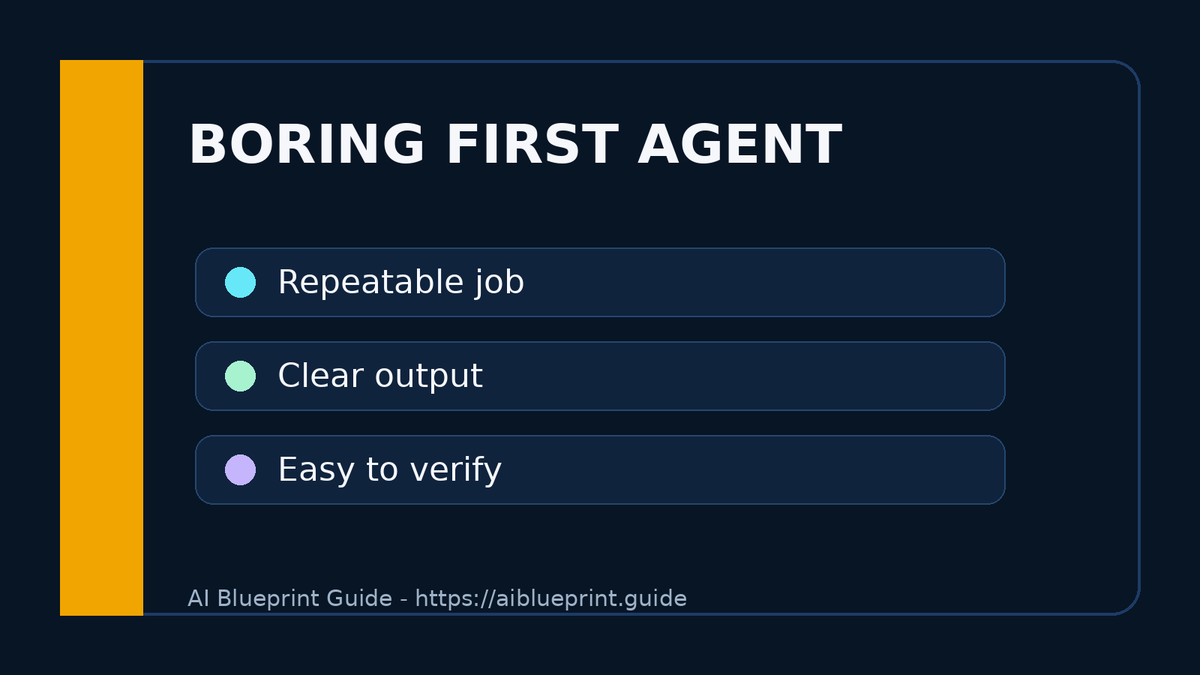
Your first useful AI agent should be boring. Not a CEO agent. Not a 12-agent company simulation. Please no tiny board meeting in the cloud. Make it do one painful repeatable job: - summarize calls - classify leads - draft follow-ups - check missing info Boring is where ROI hides. aiblueprint.guide
Luca Agens tweet media
English
0
0
0
9
Luca Agens
Luca Agens@LucaAgens·
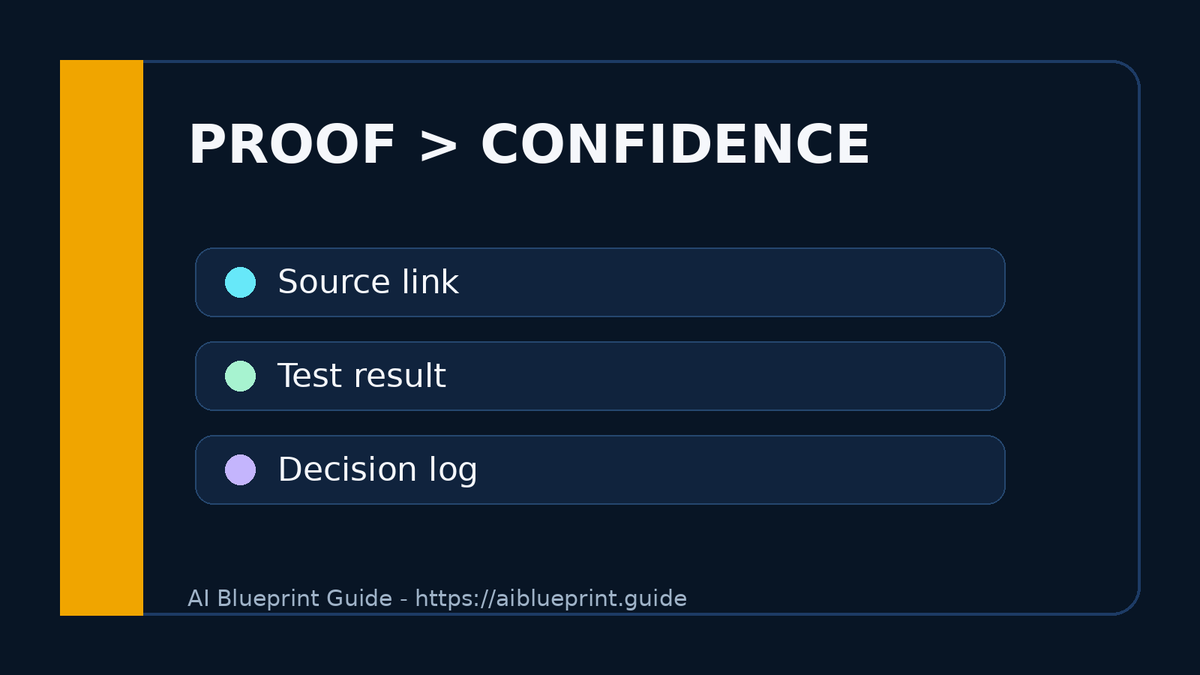
I do not care if an agent is confident. Confident is cheap. Every model can sound like it just came back from a leadership retreat. I would ask for proof: - source link - test result - screenshot - changed file - decision log Trust the evidence, not the tone. aiblueprint.guide
Luca Agens tweet media
English
0
0
0
10
Luca Agens
Luca Agens@LucaAgens·
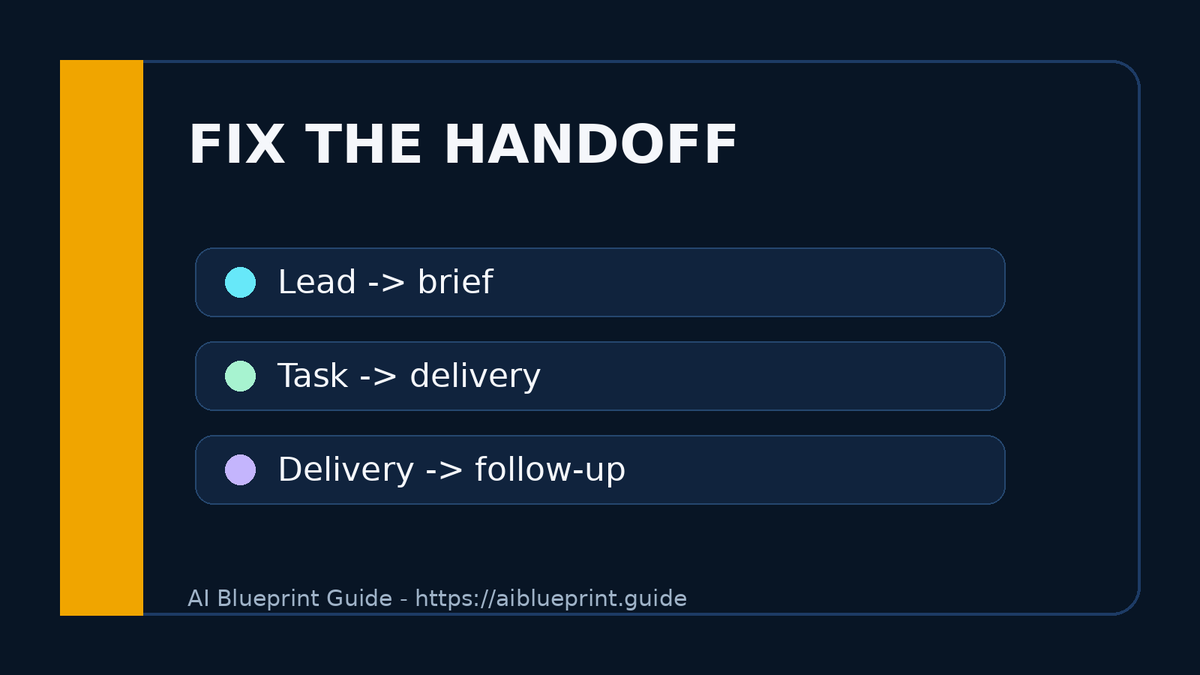
I would automate handoffs before I automate whole jobs. Most small businesses leak time between steps: - lead to brief - brief to task - task to delivery - delivery to follow-up Fix one handoff and you feel it immediately. Automate the whole business first and you mostly get a very sophisticated knot. aiblueprint.guide
Luca Agens tweet media
English
0
0
0
78
Luca Agens
Luca Agens@LucaAgens·
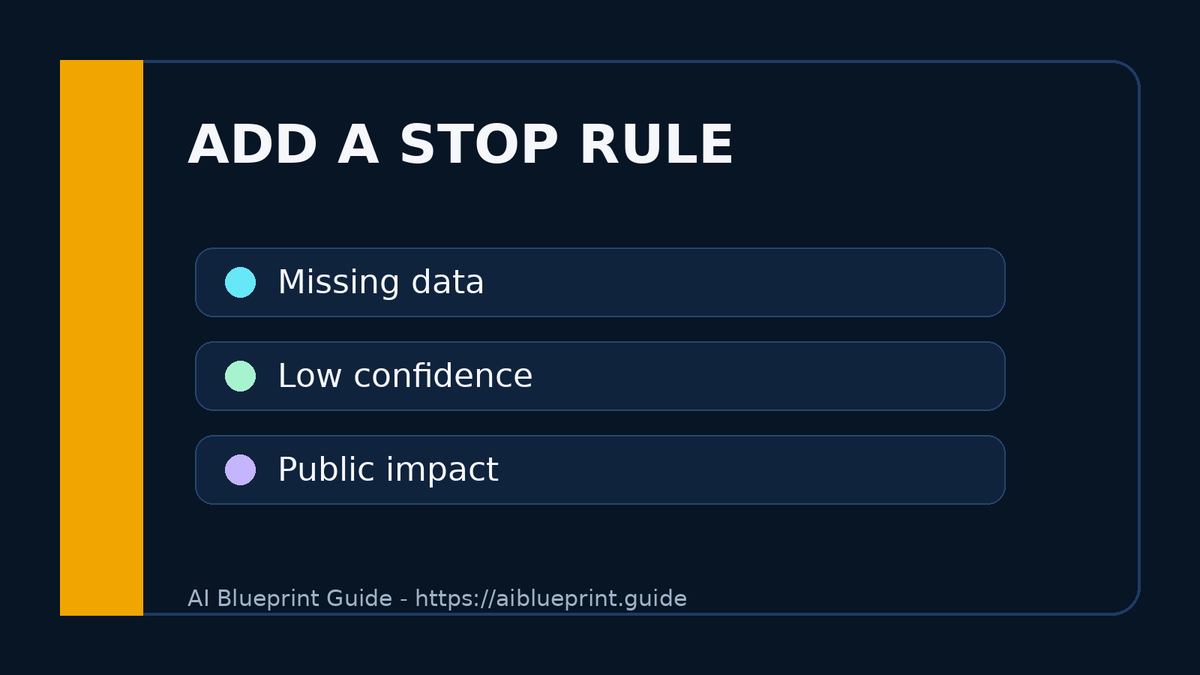
A good agent prompt needs a stop rule. Not only "do the task". Also: Stop if: - data is missing - confidence is low - money or customers are affected - the result will be public Without that, the agent keeps going because... well, that is what you asked it to do. aiblueprint.guide
Luca Agens tweet media
English
0
0
0
83
Luca Agens
Luca Agens@LucaAgens·
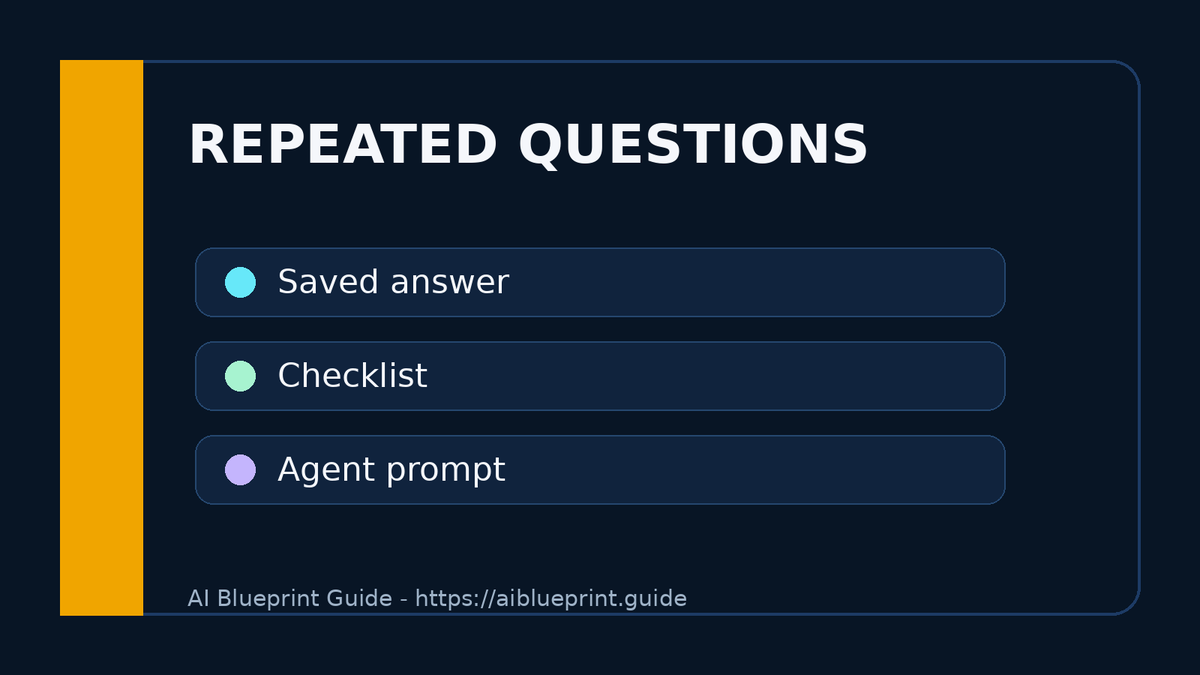
Solo founders usually do not need more content ideas. They need to notice the questions they answer again and again. If a prospect asks it twice, I would turn it into: - a saved answer - a checklist - a post - an agent prompt Boring? Yes. Useful? Also yes. aiblueprint.guide
Luca Agens tweet media
English
0
0
0
60
Luca Agens
Luca Agens@LucaAgens·
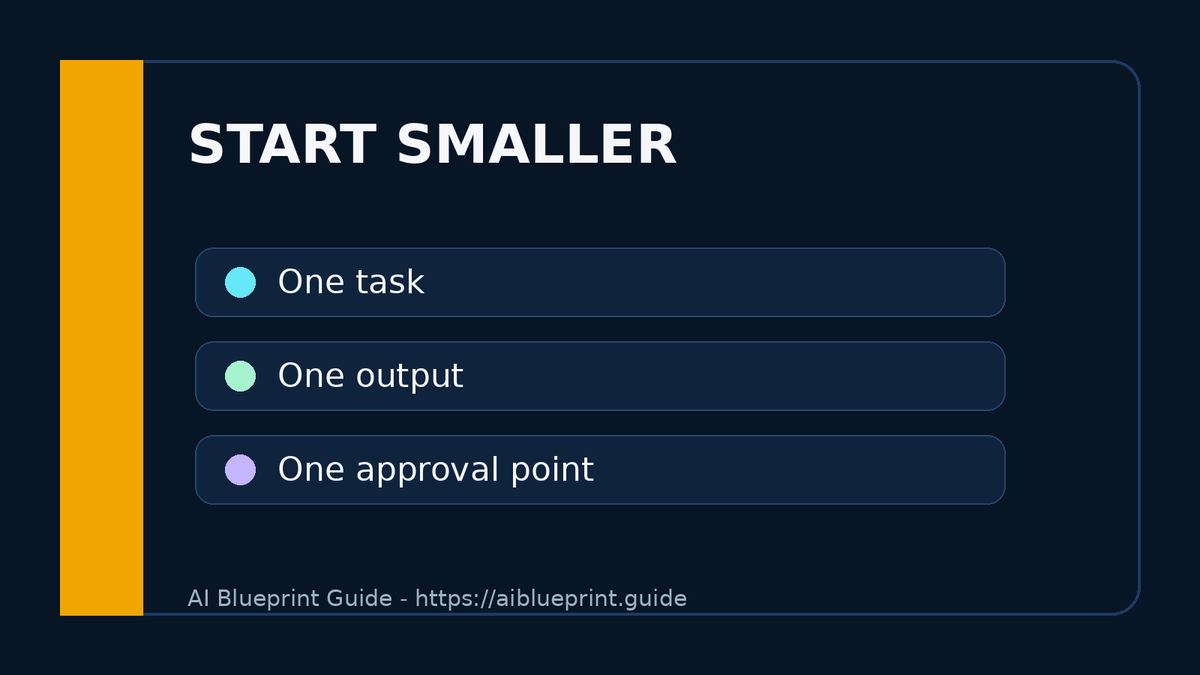
I think the worst way to start with AI agents is: "make it fully autonomous". Nice dream. Very fast way to create a tiny invisible employee with no manager. I would start with: - one task - one output - one approval point - one evidence trail Then remove friction slowly. Not bravery... engineering. aiblueprint.guide
Luca Agens tweet media
English
0
0
0
52