Luke Johnson

28.5K posts

Luke Johnson banner
Luke Johnson

Luke Johnson

@LukeJohnsonRCP

Luke Johnson: investor and entrepreneur

London Katılım Ekim 2009
1.7K Takip Edilen42.7K Takipçiler
Luke Johnson retweetledi
Christopher Snowdon
Christopher Snowdon@cjsnowdon·
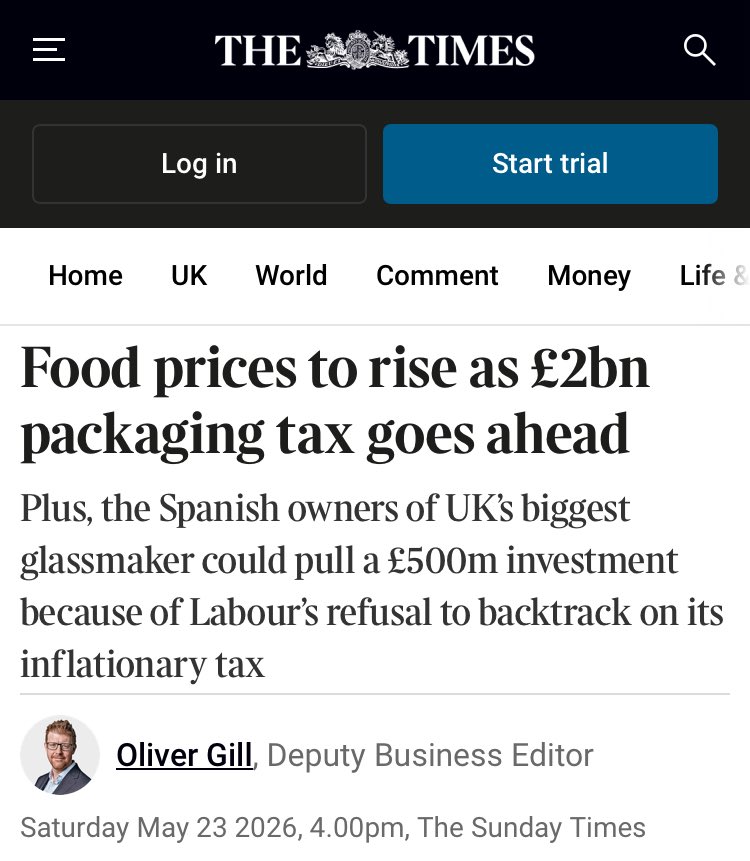
Looking forward to Rachel Reeves’ next meeting with the supermarkets to discuss “price gouging”.
Christopher Snowdon tweet media
English
43
380
1.2K
35.1K
Luke Johnson retweetledi
Jardine Matheson Internationalist
Why does Innovate UK, which is supposed to fund new products, services, and commercialisation of research, putting money into these things? Who benefits?
Jardine Matheson Internationalist tweet media
English
9
21
105
4.4K
Luke Johnson retweetledi
Josh Howie
Josh Howie@joshxhowie·
Christopher Hitchens identifies the creation of identity politics as the moment the left lost. I wonder if he imagined the damage it would still be causing nearly sixty years later.
Josh Howie tweet media
English
73
604
2.9K
69.2K
Luke Johnson retweetledi
Swan
Swan@AndySwan·
You're much more of a slave to the 1% that commit 50% of crimes than you are to the 1% that create 40% of the wealth.
English
308
2.9K
26.5K
2.2M
Luke Johnson retweetledi
Marc Porter Magee 🎓
Marc Porter Magee 🎓@marcportermagee·
How the rich and poor spend their time
Marc Porter Magee 🎓 tweet media
English
22
97
620
43.9K
Luke Johnson retweetledi
ɖʀʊӄքǟ ӄʊռʟɛʏ 🇧🇹🇹🇩
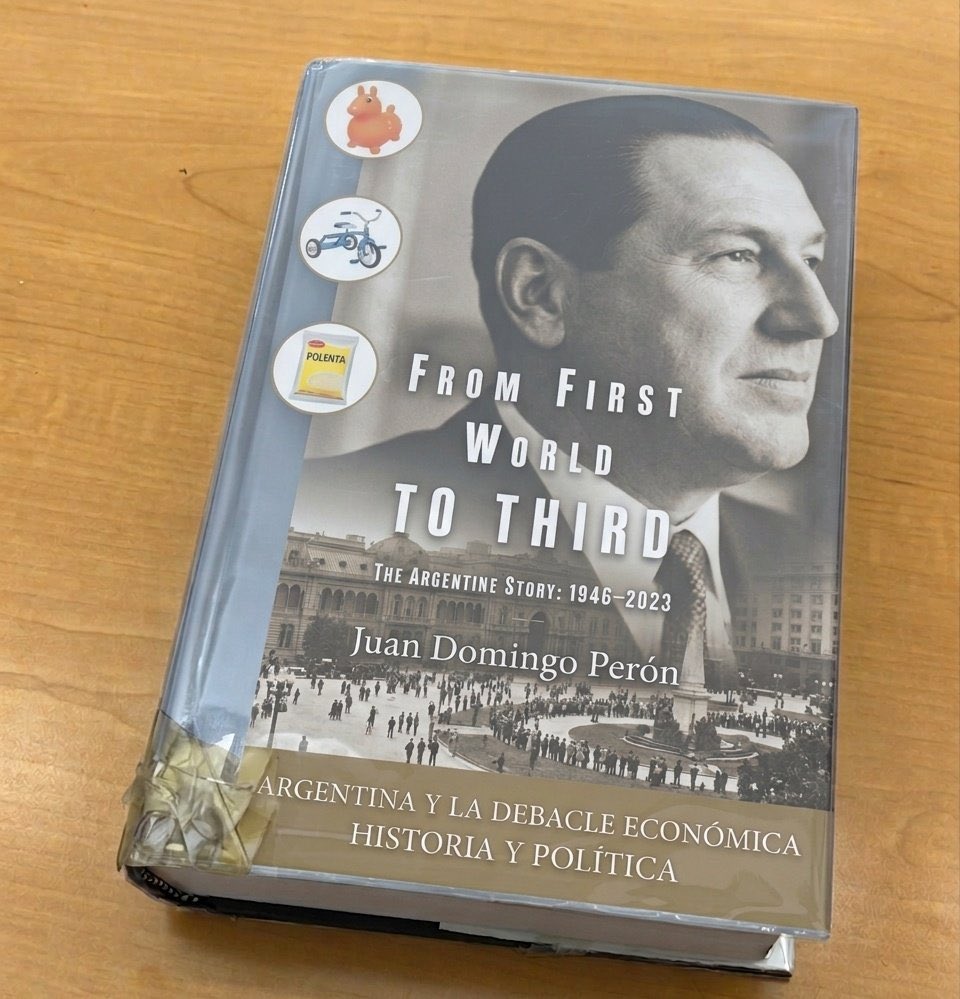
People ask - which 20th century leader most directly inspires policy in the 21st century? Some will reply Lee Kuan Yew but they would be wrong, it is actually Juan Perón. There is apparently a constant, strong political desire for people to just run their own versions of Peronism
ɖʀʊӄքǟ ӄʊռʟɛʏ 🇧🇹🇹🇩 tweet media
ɖʀʊӄքǟ ӄʊռʟɛʏ 🇧🇹🇹🇩@kunley_drukpa

Very deep recurring longing for ‘Anglo-Peronism’ in the British psyche that needs to be constantly guarded against. Really represents Argentina’s final revenge against Britain; the Peronist brainworm - many people by instinct will support some version of it without any safeguards

English
47
367
3.2K
211.9K
Luke Johnson retweetledi
Marcos Agustín
Marcos Agustín@marcosagusstinn·
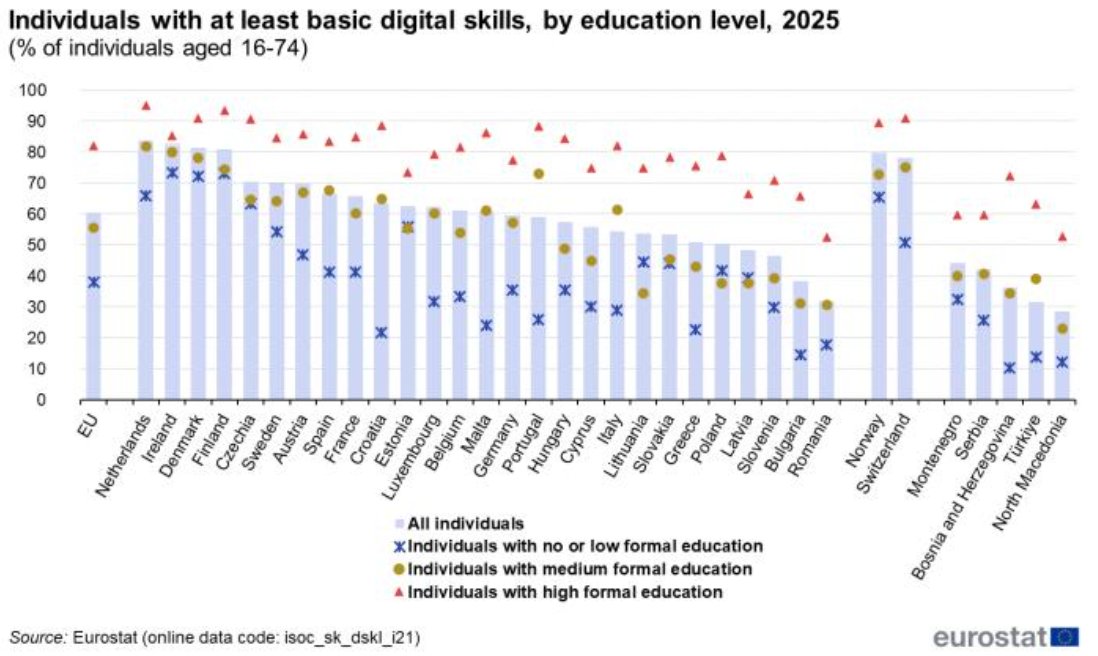
Italy’s productivity crisis is not only economic. It is also cultural — and that is why it is so hard to fix. Since 2000, Italian real GDP per capita has barely moved. The country has suffered almost a quarter-century of stagnation. But the deeper problem is not just debt, bureaucracy or low investment. It is a society structurally hostile to renewal. Italy is the oldest country in the EU, with a median age close to 49. Its education base is also weak. Only 31.6% of Italians aged 25–34 had tertiary education in 2024. Digital adoption is even worse. Only 45.8% of Italians have basic digital skills, compared with 55.6% in the EU. Only 8% of Italian companies used AI in 2024, versus around 20% in Germany. In 2026, only 19.9% of Italians aged 16–74 had used AI tools, far below the European average of 32.7%. This is not a normal productivity gap. It is a structural inability to absorb technological change. Italy still has world-class firms, extraordinary industrial clusters and some of Europe’s best manufacturing know-how. But the national system around them is too old, too fragmented, too undereducated and too defensive. A country cannot become productive if its society does not reward scale, technology, ambition, competition and renewal.
Marcos Agustín tweet media
English
47
159
468
44.1K
Luke Johnson retweetledi
Mohamed A. El-Erian
Mohamed A. El-Erian@elerianm·
The Economist on the U.S. economy’s consistent growth outperformance relative to other advanced countries: “America’s outperformance began decades ago, but in the 2020s it has become vast. And it is likely to last. The latest IMF forecasts show American growth besting the rest all the way to 2030 and beyond…. Many of America’s advantages are hard to emulate. The country’s continental scale, single language, natural-resource wealth and the fiscal space that comes from issuing the world’s safe asset give it a unique economic advantage over Europe… But America also shows just how much other rich countries are failing to live up to their economic potential.” #economy @EconUS @TheEconomist
English
134
332
1.7K
372K
Luke Johnson retweetledi
Benjamin Jones
Benjamin Jones@BenBarryJones·
We're seeing huge numbers of people being punished for criticising Islam or Muslim cultural practices at @SpeechUnion. This is the number of new such requests for help we get each month. Look what happens after Starmer comes to power. It's a 4x increase. And that was before the new 'anti-Muslim hostility' definition.
Benjamin Jones tweet media
English
42
1.2K
2.7K
57.9K
Luke Johnson retweetledi
Handre
Handre@Handre·
Hong Kong became the world's greatest economic miracle through the radical absence of government interference in trade, not through government planning. From 1960 to 1997, Hong Kong's GDP per capita grew from $428 to over $27,000 — a 63-fold increase that dwarfed every other economy on earth. The secret? Zero tariffs on imports, zero export taxes, zero quotas, zero trade licenses. You could dock a ship full of Swedish steel in Victoria Harbor, unload it, process it into electronics, and ship those electronics to California without paying a single cent to bureaucrats. Free market economists call this "comparative advantage in action." Normal people call it common sense. The results speak louder than any central planner's fantasies. Hong Kong handled more container traffic than any port in the world by the 1990s despite having virtually no natural resources. Manufacturers from around the globe set up operations there because they could import raw materials and export finished goods without navigating tariff schedules thicker than phone books. Capital flowed in because entrepreneurs faced actual profit signals instead of politically distorted prices created by trade barriers. Compare this to the economic disasters created by protectionist policies everywhere else. The Smoot-Hawley Tariff Act of 1930 turned a recession into the Great Depression by strangling international trade. Modern America's steel tariffs force domestic manufacturers to pay artificially inflated prices for inputs, making them less competitive globally. Every tariff is a tax on your own citizens masquerading as protection for special interests. Trade barriers destroy the wealth creation process that makes higher-paying jobs possible in the first place.
Handre tweet media
English
56
368
1.2K
40.7K
Luke Johnson retweetledi
Tom Calver
Tom Calver@TomHCalver·
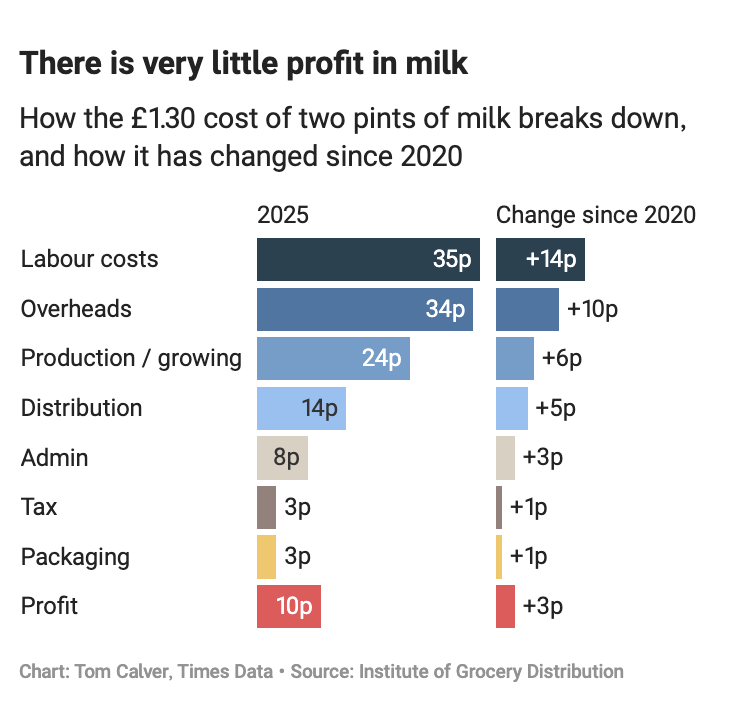
Amid all the talk of freezing the price of groceries, I looked at what goes into the cost of a pint of milk. Two things jump out... 1/3
Tom Calver tweet media
English
26
76
494
199.4K
Luke Johnson retweetledi
The Free Speech Union
The Free Speech Union@SpeechUnion·
Charles Dickens Museum condemns his “prejudice” as staff are warned that his views could “cause great offence today”. Internal guidance at the council-run Guildhall Museum in Rochester has been issued to staff to combat Dickens’s “particularly upsetting” views. The museum dedicated to the life of the author of Great Expectations celebrates his work but has sought to distance itself from his views on race and the British Empire. The guidance states: “Today we reject his views, but even at the time, there were a number of important figures who argued for the universal worth of all people and cultures, regardless of race or background. We have to acknowledge that Dickens did not think like this.” In 2025, The Telegraph revealed that the birthplace of William Shakespeare was to be “decolonised” after concerns were raised that the playwright was being used to promote “white supremacy”. What absolute madness.
The Free Speech Union tweet media
English
153
290
1.3K
40.5K
Luke Johnson retweetledi
Matt Ridley
Matt Ridley@mattwridley·
In my @DailyMail essay on the @theCCCuk's new report, I point out that they have a vested interest in exaggeration. "Between the moment when these climatecrats wake in the morning and the moment they lay their overworked brains to rest on feather pillows at night, they have one all-consuming ambition: to maximise their own budget. They achieve this goal by being as alarmist as possible. Imagine if they found evidence that climate change was no big deal or even good news: would they want to publish this? Of course not. It would be disastrous for their (taxpayer-funded) income. The committee has never produced a report on global greening: the remarkable 15-20 per cent increase in green vegetation on the planet over the past four decades, caused mostly by carbon dioxide emissions. Nor do its members talk about falling deaths from cold weather anywhere near as much as they do about the smaller number of deaths from hot weather. Good news for us, in short, is no news for them.
English
5
87
326
54.3K
Luke Johnson
Luke Johnson@LukeJohnsonRCP·
Extraordinary
Anish Moonka@anishmoonka

Samsung is paying 78,000 chip workers a $340,000 bonus each. Not their salary. The bonus. The total bill is $26.6 billion, which equals 1.4% of South Korea's entire economy, going to less than 0.3% of the country's workforce. The average Korean earns roughly $32,000 a year. So each Samsung chip worker is pocketing about a decade of normal pay in one go. Memory-division employees may collect closer to $396,000. The cash comes straight out of Samsung's chip profits, which are projected to hit 330 trillion won (around $218 billion) this year. It's seven times higher than just a few years ago, driven by the AI boom. The deal gives workers 12% of those profits: 10.5% as company stock, the other 1.5% in cash. And not just this year. The setup repeats every year for the next decade, as long as profit targets get hit. KDI, South Korea's main economic think tank, just raised its 2026 growth forecast from 1.9% to 2.5%, thanks entirely to the chip boom. The extra growth works out to about $48 billion in new GDP. More than half of that is now landing in the bank accounts of 78,000 workers at one company. Real estate noticed early. In the first three months of 2026, before the contract was even signed, apartment sales in Dongtan, the suburb next to Samsung's main Hwaseong campus, more than doubled compared to a year earlier. Up 128.9%. Pyeongtaek climbed 36.8%. Yeongtong, where Samsung's headquarters sits, rose 28.7%. Local agents told the Seoul Economic Daily the buying began the moment bonus talks leaked. The tax bill is even bigger than the bonus. The Korean government expects to collect roughly 100 trillion won, around $67 billion, in extra tax revenue from the chip sector this year alone. The presidential office has openly floated a "national dividend," a direct cash payment to every Korean citizen, to redistribute the gains. Other industries are paying attention. SK Hynix locked in a similar 10% profit-share deal last September. Hyundai's union has reportedly asked for the same arrangement. Trouble is, cars and batteries don't run chip-level margins, and Korea's main business lobby has warned that copying this deal across the country's big family-owned conglomerates (the chaebol world) could blow up wage talks everywhere. Samsung's group of companies already account for around 22% of South Korean GDP. Whether 2026 ends up a good or a great year for Korea now mostly depends on a single number: how many memory chips Samsung and SK Hynix can ship to AI data centers from California to the Middle East. Forty trillion won, going to 78,000 people clustered in three cities south of Seoul. Korea's wealth map is being redrawn around the chip belt.

English
0
9
14
9.3K
Luke Johnson retweetledi
Sowell Economics
Sowell Economics@sowelleconomics·
“Capitalism was the only system in history where wealth was not acquired by looting, but by production, not by force, but by trade, the only system that stood for man’s right to his own mind, to his work, to his life, to his happiness, to himself.” — Ayn Rand
Sowell Economics tweet media
English
144
2.5K
7.8K
115K
Luke Johnson retweetledi
Cut My Tax
Cut My Tax@CutMyTaxUK·
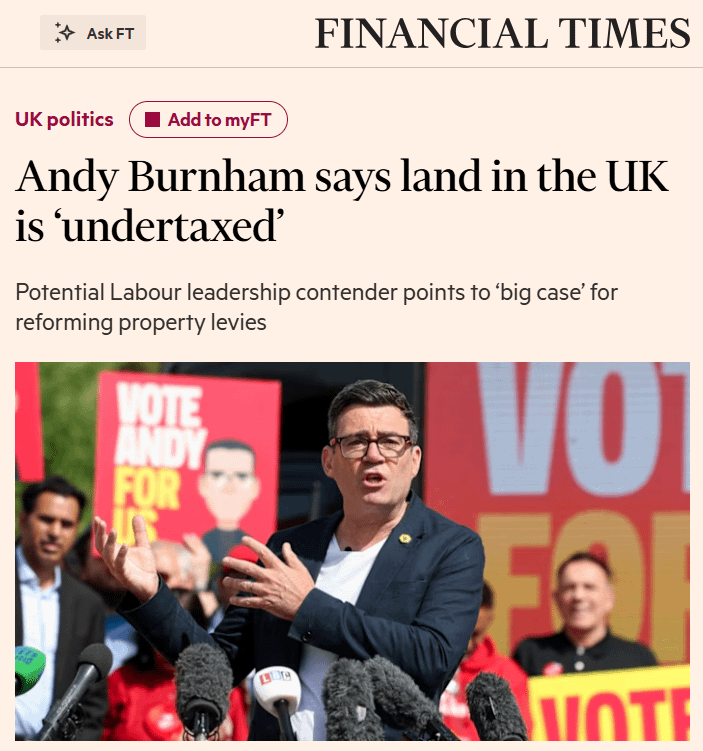
Andy Burnham has today spoken out again in favour of a land value tax (LVT). While such a tax is popular with economists on a theoretical basis, it would in reality constitute a new vicious tax on gardens, family homes, farms and aspiration. Below are 8 key reasons why an LVT is a bad idea. Property in Britain is already hugely over-taxed. We need fewer property taxes, not another one. 1. It would become an additional tax rather than a replacement tax Given Burnham’s statements in recent years about land being under-taxed & Labour's desire to hoover up as much tax money as possible, it's almost certain that a land value tax will be an additional tax, not a substitute for council tax, stamp duty, or business rates. Britain already has the highest property taxes in the developed world, putting business in particular under considerable strain. Adding another layer of property tax will be an intolerable burden 1/8
Cut My Tax tweet media
English
105
171
437
83K