LumaByte

20.8K posts

LumaByte banner
LumaByte

LumaByte

@LumaByteCo

Digital Products Studio | Transforming ideas into digital reality. استوديو منتجات رقمية | نحوّل الأفكار إلى واقع رقمي.

online Katılım Ekim 2016
4.1K Takip Edilen5K Takipçiler
Sabitlenmiş Tweet
LumaByte
LumaByte@LumaByteCo·
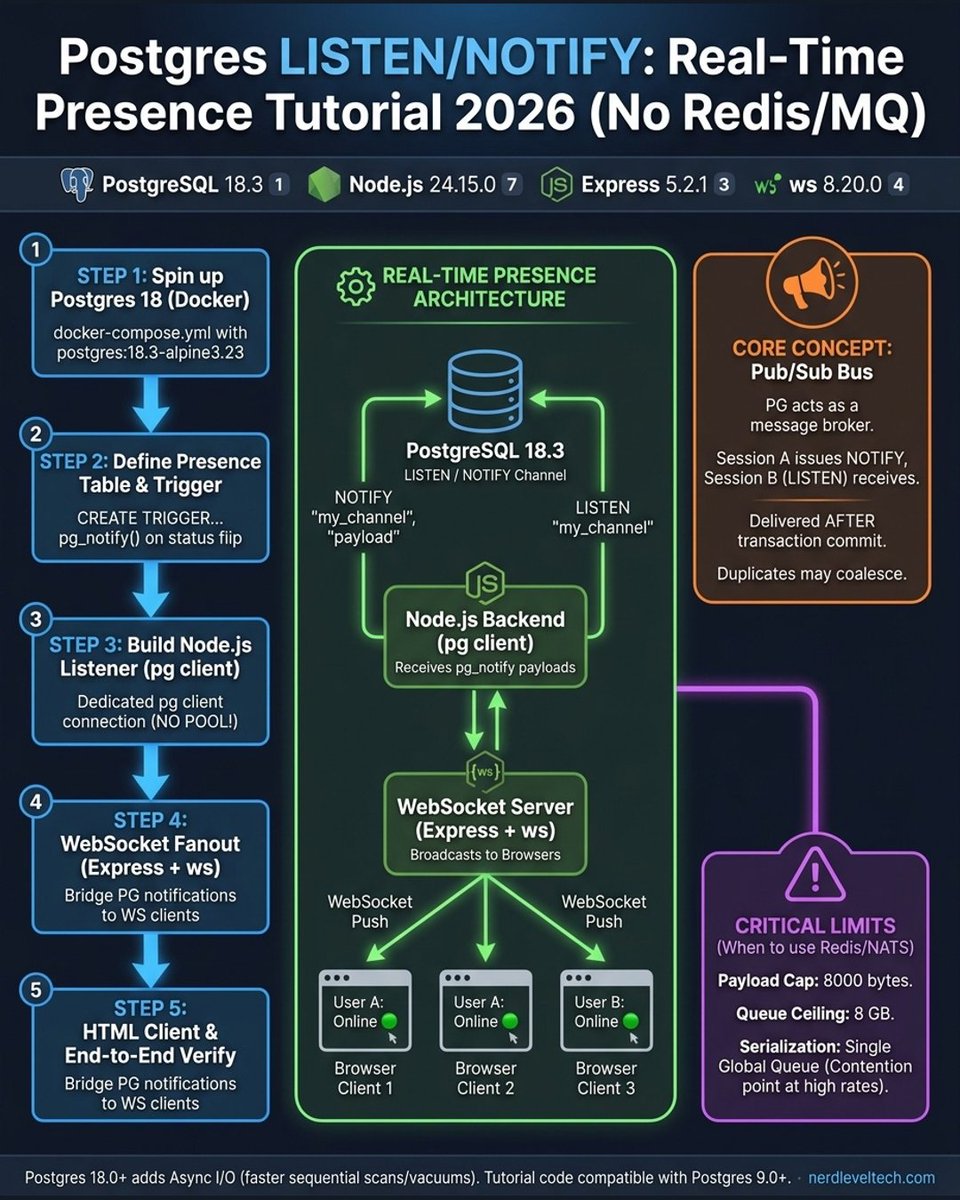
Stop adding Redis for simple real-time presence. Postgres LISTEN/NOTIFY handles it in ~120 lines of Node.js. The trade-off: an 8000-byte payload cap and a global mutex that serializes commits. Use a dedicated Client, not a pool, or your subscriptions will silently die.
LumaByte tweet media
English
3
4
21
110.6K
LumaByte
LumaByte@LumaByteCo·
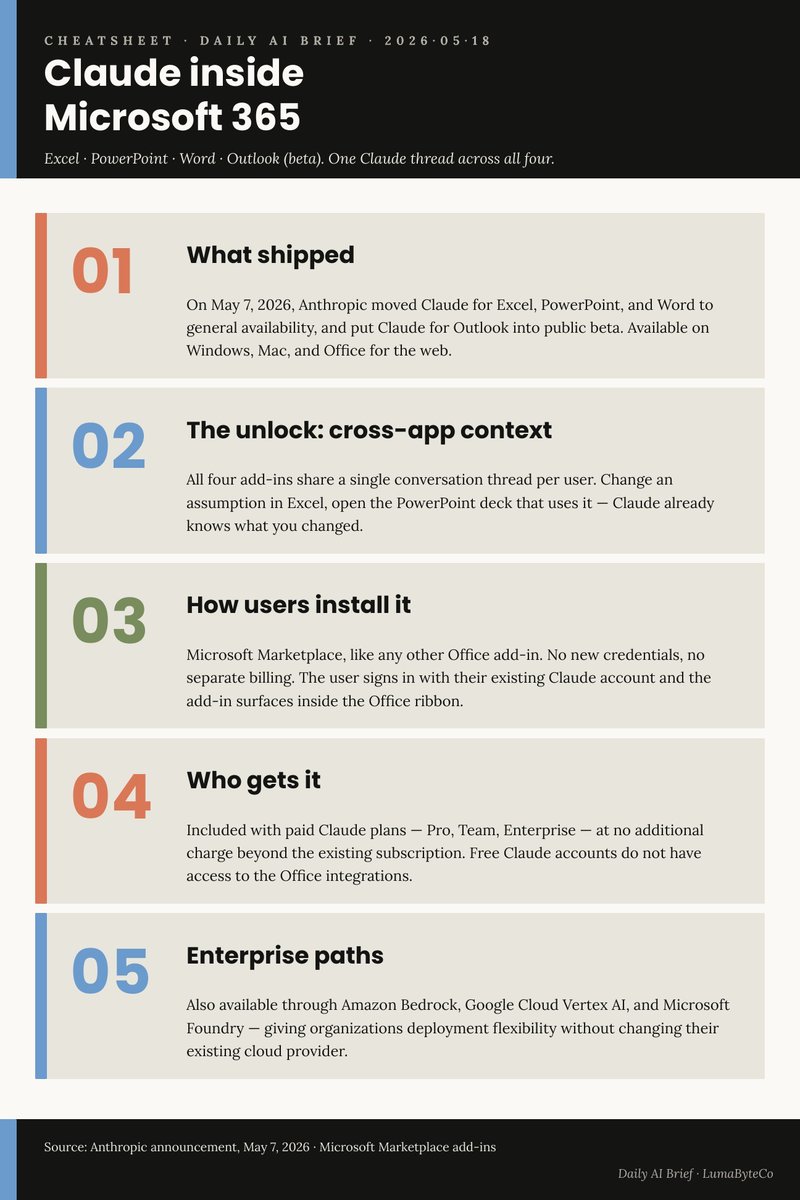
Claude is inside Excel, PowerPoint, Word, and Outlook (beta) — sharing ONE conversation thread per user. Single thread across surfaces. Microsoft Marketplace install. Included with paid Claude plans. The pattern SaaS teams should copy.
LumaByte tweet media
English
0
1
1
65
LumaByte retweetledi
Nerd Level Tech
Nerd Level Tech@NerdLevelTech·
Most "AI for Good" is just a PR exercise. The Anthropic x Gates Foundation $200M deal is different: it's a 4-year commitment to public goods. By releasing benchmarks and datasets for health and edu, they're building infrastructure, not just apps. Ship primitives, not promises.
Nerd Level Tech tweet media
English
0
2
2
79
LumaByte retweetledi
Akshay 🚀
Akshay 🚀@akshay_pachaar·
Naive RAG vs. Agentic RAG, explained visually: Naive RAG breaks in 3 ways: ↳ It retrieves once and generates once. If the context isn't relevant, the system can't search again. ↳ It treats every query the same. A simple lookup and a multi-hop reasoning task go through the identical retrieve-then-generate path. ↳ And there's no verification. Whatever the retriever returns gets blindly trusted. Agentic RAG fixes this by introducing decision-making loops at each stage. Steps 1-2) A query rewriting agent reformulates the raw query. This goes beyond fixing typos. It makes vague terms precise, decomposes complex queries into sub-queries, and expands abbreviations. Steps 3-5) A routing agent decides if the query even needs external context. If not, retrieval is skipped. If yes, a source selector picks the best backend for this specific query type. Steps 6-7) The source selector routes to the most appropriate source. Vector DB for semantic search, web search for real-time info, or structured APIs for tabular data. The retrieved context and rewritten query are combined into the prompt. Steps 8-9) The LLM generates an initial response. Steps 10-12) A validation agent (Corrective RAG) checks whether the response is relevant, grounded, and complete. If it passes, it's returned. If not, the system loops back to Step 1 with a reformulated query. This continues for some iterations until we get a satisfactory response or the system admits it cannot answer. The reason it works is that each agent acts as a quality gate. The rewriter ensures retrieval precision. The router ensures the right source is queried. The validator ensures the output is grounded. Individual failures get caught and corrected rather than silently propagated. That said, the diagram below shows one of many blueprints of an Agentic RAG system. Production systems increasingly combine Corrective RAG, Adaptive RAG, Self-RAG, and hybrid search (vector + lexical with reranking) based on latency budgets and accuracy requirements. 👉 Over to you: What does your Agentic RAG setup look like?
GIF
English
32
146
664
31.5K
LumaByte retweetledi
Nerd Level Tech
Nerd Level Tech@NerdLevelTech·
Shipping a shell in production is a security liability. Using uv 0.11.8 with Distroless removes /bin/sh and apt, eliminating the OS surface most CVEs exploit. BuildKit cache mounts drop rebuilds to seconds while UID 65532 ensures K8s compliance. Stop using slim images.
Nerd Level Tech tweet media
English
0
2
2
62
LumaByte retweetledi
Adobe
Adobe@Adobe·
Adobe for creativity + Claude 🤝 Now, Claude users can power their content with more than 50 Creative Cloud tools. Simply describe the outcome you want and let the assistant orchestrate workflows behind the scenes: adobe.ly/4cTkJjF
English
507
2K
15.9K
7.7M
LumaByte retweetledi
Linghua Jin 🥥 🌴
Linghua Jin 🥥 🌴@LinghuaJ·
Super excited to finally share CocoIndex v1 ! @cocoindex_io - After 50 releases in v1 alpha, together with 70 contributors since v0 launch. It is a fundamental redesign of how you write incremental data pipelines — built from a year of watching what people actually wanted to do with CocoIndex and building in the space. CocoIndex V1 is built for 𝐀𝐈 𝐞𝐧𝐠𝐢𝐧𝐞𝐞𝐫𝐬 𝐚𝐧𝐝 𝐚𝐠𝐞𝐧𝐭 𝐛𝐮𝐢𝐥𝐝𝐞𝐫𝐬 — people building coding intelligence, context, RAG, memory, knowledge-graph that live agents depend on. At GTC 2026, Jeff Dean and Bill Dally named a bottleneck that’s about to reshape every piece of infrastructure around AI. Agents run roughly 50x faster than humans, but the tools they rely on were built for human speed. Data infrastructure is one of those tools, and it matters beyond inference. An agent reasoning over a codebase, a conversation graph, a document corpus, or a stream of events needs that data fresh, organized, and cheap to query — not just on the first call, but throughout the run. That has always been CocoIndex’s vision. V1 makes it the right shape for agent-era workloads: the same incremental, state-driven guarantees, but now expressive enough to cover the pipeline shapes agents actually produce — entity resolution, clustering, multi-phase reduction, per-tenant topologies, conditional targets beyond embeddings and all. Every pattern in the examples gallery is something a long-horizon agent might want to run itself, and have its outputs become fresh source data for the next agent — without a human babysitting the job. Teams that take this on seriously typically allocate 10 – 20 engineers for at least six months to land the first production-worthy version — and then keep paying for maintenance indefinitely as sources, targets, and schemas evolve. CocoIndex ships all of this in the engine, so the code you write is the pipeline itself, not the scaffolding around it. Take a look at the announcement here, and keep us on your feedback!
CocoIndex@cocoindex_io

x.com/i/article/2046…

English
41
44
187
94.2K
LumaByte retweetledi
Hugeicons
Hugeicons@huge_icons·
Fed up with react-icons? Try Hugeicons React. 50,000+ icons, In 10 distinct styles, 5,000+ open-source icons, MIT licensed The ultimate icon solution for your React projects.
Hugeicons tweet media
English
4
3
17
1.3K
GitHub Projects Community
GitHub Projects Community@GithubProjects·
| ̄ ̄ ̄ ̄ ̄ ̄ ̄ ̄ ̄ ̄ ̄ ̄ ̄| | Share your GitHub profile. | |_____________| \ (•◡•) / \ / —— | | |_ |_
English
922
42
1.4K
138.1K
LumaByte retweetledi
Nerd Level Tech
Nerd Level Tech@NerdLevelTech·
Stop calling Kubernetes "too complex." 96% of production container orgs use it because declarative state beats imperative scripts every time. If you're still manually scaling pods, you're just babysitting a fragile system. Grab the 2026 hands-on guide: nerdleveltech.com/kubernetes-exp…
English
0
2
2
67
LumaByte retweetledi
Nerd Level Tech
Nerd Level Tech@NerdLevelTech·
Most ML models fail in production because devs ignore the bias-variance tradeoff. We've distilled the 2026 practitioner's stack: 5 core algorithms, 3 real-world case studies, and full implementation guides for PyTorch and scikit-learn. Stop the hype and start shipping.
English
1
1
1
54
LumaByte
LumaByte@LumaByteCo·
Frontier models aren't the only ones finding zero-days. AISLE found a 3.6B parameter model ($0.11/1M tokens) detected the same FreeBSD flaw as Claude Mythos. The moat isn't the model; it's the system. Stop waiting for "elite" access and build your orchestration now.
LumaByte tweet media
English
0
1
2
63
LumaByte retweetledi
Nerd Level Tech
Nerd Level Tech@NerdLevelTech·
ML libraries change, but linear algebra doesn't. Master preprocessing, bias-variance tradeoff, and cross-validation before transformers. Our 2026 guide skips hype: Python 3.12, scikit-learn, ethical deployment. Ship models that work AND behave. Fundamentals > Frameworks.
Nerd Level Tech tweet media
English
0
1
3
47
LumaByte retweetledi
Claude
Claude@claudeai·
Introducing Claude Opus 4.7, our most capable Opus model yet. It handles long-running tasks with more rigor, follows instructions more precisely, and verifies its own outputs before reporting back. You can hand off your hardest work with less supervision.
Claude tweet media
English
4.8K
10.2K
81.1K
13.9M
ollama
ollama@ollama·
We are rushing to add more capacity to Ollama's cloud. Please be patient with us as we add more GPUs. 🙏
ollama tweet media
English
90
47
928
40.8K
LumaByte
LumaByte@LumaByteCo·
Anthropic’s Claude Managed Agents separates “brain” (harness) & “hands” (sandbox) for serious efficiency. Fully hosted, competitive pricing (.08/active hour). Tradeoff: currently Claude models only. Ship faster, not harder.
LumaByte tweet media
English
0
1
1
46
LumaByte retweetledi
Nerd Level Tech
Nerd Level Tech@NerdLevelTech·
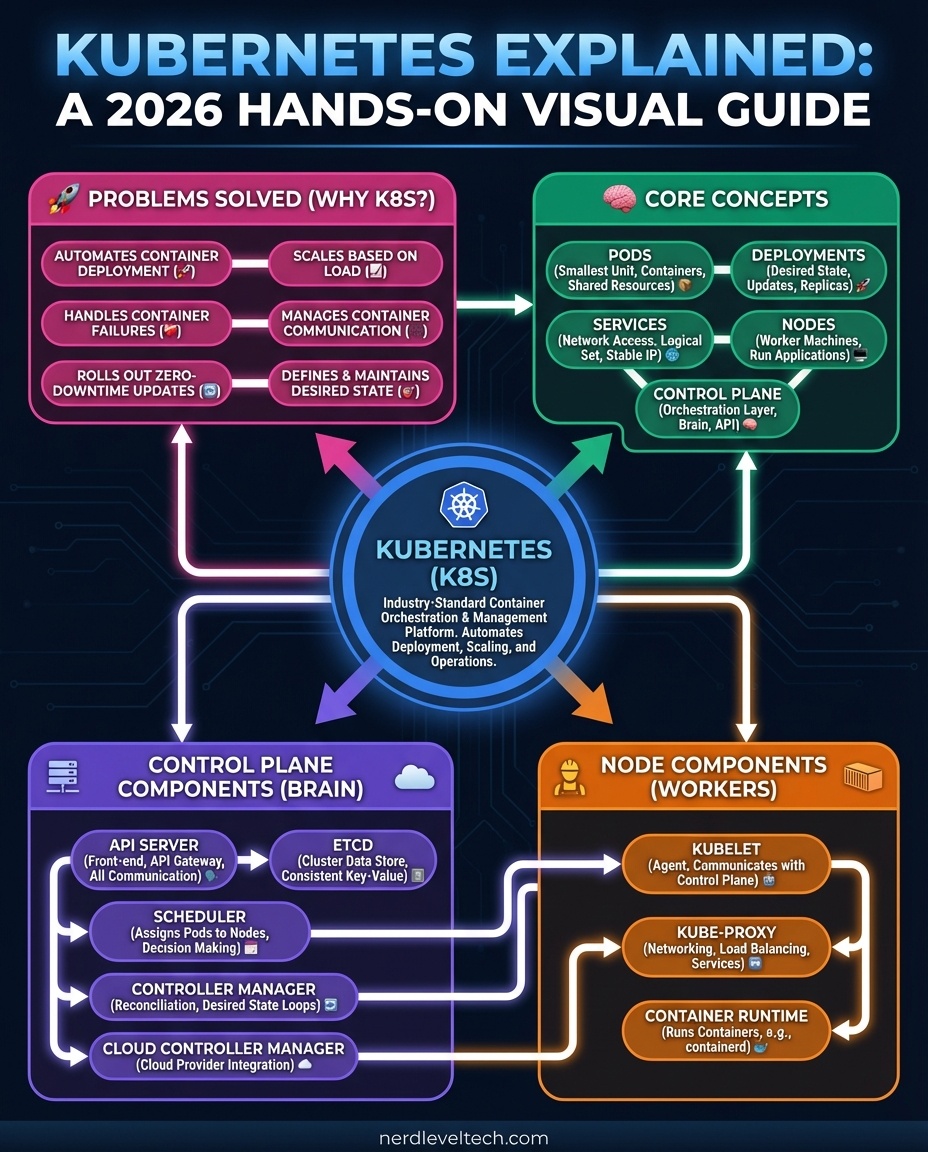
96% of orgs using containers run Kubernetes. It's complex—control planes, nodes, deployments... but worth it. Think auto-scaling e-commerce sites handling 10x holiday traffic, or banks modernizing with microservices. Master K8s, ship faster. [Link to guide]
Nerd Level Tech tweet media
English
0
3
3
77
LumaByte retweetledi
Nerd Level Tech
Nerd Level Tech@NerdLevelTech·
Chunk size matters. 800 chars + overlap is a sweet spot for RAG—enough context, still relevant. We built a full RAG pipeline (load, embed, retrieve, generate, evaluate) & hit 92% faithfulness with GPT-4o-mini. Evaluate *your* RAG with RAGAS.
Nerd Level Tech tweet media
English
0
2
3
76
LumaByte retweetledi
Nerd Level Tech
Nerd Level Tech@NerdLevelTech·
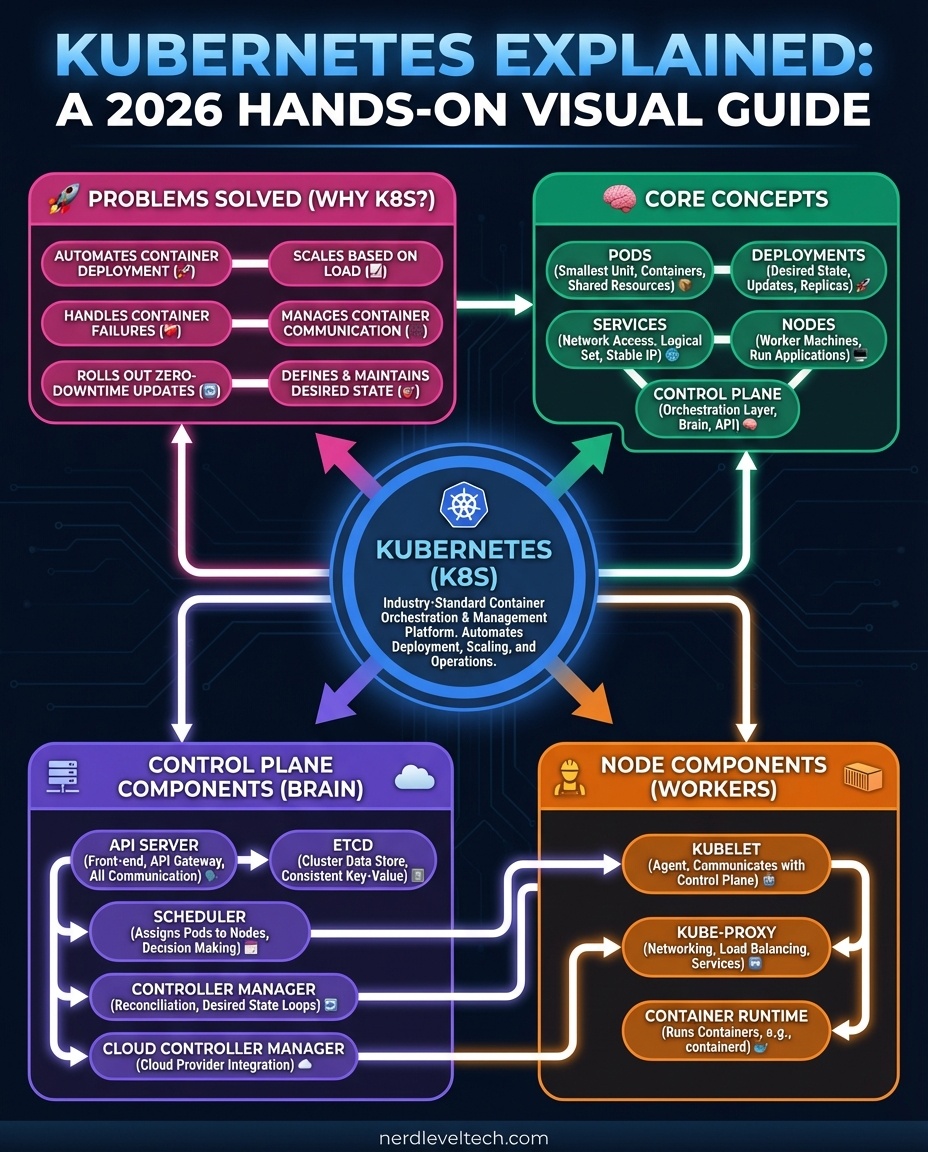
96% of orgs using containers run Kubernetes. It's complex—control planes, nodes, deployments... but worth it. Think auto-scaling e-commerce sites handling 10x holiday traffic, or banks modernizing with microservices. Master K8s, ship faster. [Link to guide]
Nerd Level Tech tweet media
English
0
3
6
1.3K