Lunathi Kilani 🇿🇦🏳️‍🌈

19.6K posts

Lunathi Kilani 🇿🇦🏳️‍🌈 banner
Lunathi Kilani 🇿🇦🏳️‍🌈

Lunathi Kilani 🇿🇦🏳️‍🌈

@LunathiKilani

I try with all my might to be myself; I thirst for unique and authentic things. Am rare| Humble| Adventurous| Socialite| Philanthropist| Communicator| Activist❤

Milnerton, South Africa Katılım Ağustos 2011
5.6K Takip Edilen10.7K Takipçiler
Sabitlenmiş Tweet
Lunathi Kilani 🇿🇦🏳️‍🌈
**Four Former Presidents of the Republic of South Africa, post 1994** 1) Under President Nelson Mandela's leadership, major projects and government achievements included the establishment of the Truth and Reconciliation Commission to address the injustices of apartheid, the adoption of a new democratic constitution, and the implementation of policies to promote reconciliation and nation-building. 2) During Thabo Mbeki's presidency, key initiatives focused on economic growth and infrastructure development, such as the Expanded Public Works Programme and the Accelerated and Shared Growth Initiative. 3) Under President Kgalema Motlanthe, efforts were made to address challenges such as poverty and unemployment, with initiatives like the Jobs Fund and the National Development Plan gaining momentum. 4) President Zuma initiated his first term with a strategic overhaul of the government aimed at enhancing efficiency and fostering cooperation with society, encapsulated by the theme "Working Together We Can Do More." This restructuring saw the establishment of several new government departments, including the Departments of Women, Children and People with Disabilities, Rural Development and Land Reform (separating Agriculture from Land Affairs), Basic Education (separating it from Higher Education), Cooperative Government and Traditional Affairs (with a renewed focus on Provincial and Local Government), Military Veterans, International Relations and Cooperation (formerly Department of Foreign Affairs), and Economic Development. Of particular significance were the introduction of two new functions and Ministries within the Presidency: Performance Monitoring and Evaluation, and the National Planning Commission. Furthermore, there was a pivotal shift in the housing portfolio towards Human Settlements, emphasizing the importance of not just providing shelter but also the necessary infrastructure and services for a decent standard of living. A notable achievement of this 4th administration was the development of the National Development Plan Vision 2030 by the National Planning Commission, established in 2009 under President Zuma's leadership, providing the country with a long-term strategic roadmap beyond mere short-term goals. ( DISCLAIMER: I DON’T OWN ANY COPYRIGHT © OF THIS IMAGES - 📸 CREDIT; @PresidencyZA )
Lunathi Kilani 🇿🇦🏳️‍🌈 tweet mediaLunathi Kilani 🇿🇦🏳️‍🌈 tweet mediaLunathi Kilani 🇿🇦🏳️‍🌈 tweet mediaLunathi Kilani 🇿🇦🏳️‍🌈 tweet media
Midrand, South Africa 🇿🇦 English

59
134
312
84.3K
Lunathi Kilani 🇿🇦🏳️‍🌈
Imagine if every other NEC member adopted the same approach. Every meeting at Luthuli House would simply become a prelude to a lecture, a foundation event or a university seminar where individuals explain what position they advanced inside the meeting and why the collective supposedly got it wrong. Before long, there would be no meaningful centre of collective leadership because every defeated position would simply continue competing in public. That is exactly what democratic centralism was designed to prevent. This is why I believe the leadership should be prepared to call anyone into line, irrespective of stature. Organisational principles cannot apply only to ordinary members while becoming optional for former presidents. If democratic centralism means anything, it must bind everyone equally; even bind this particular former President who many within the political and economic elites seem to worship or fear to criticize. None of this is an attempt to silence President Mbeki. He remains one of South Africa's foremost intellectuals and has every right to contribute to public debate as an elder statesman. But rights also carry responsibilities. As long as he continues to serve as an ex officio member of the ANC NEC, he carries an obligation to strengthen, rather than inadvertently undermine, the authority of the movement's collective leadership and its constitutional processes. Once we start replacing collective discipline with personalised politics, we erode one of the very organisational traditions that has sustained the ANC for generations. That, more than any speech or lecture, should concern every cadre who claims to believe in democratic centralism. 🖤 💚 💛 2/2
Cape Town, South Africa 🇿🇦 English
2
1
2
132
Lunathi Kilani 🇿🇦🏳️‍🌈
There's something rather revealing about the way some comrades have chosen to respond to my criticism of former President Thabo Mbeki's continuing mischievous conduct. Instead of engaging the substance of the argument, they somewhat immediately reach for whataboutism: "Why can't he use the Thabo Mbeki Foundation?" or "Why can't he speak through the UNISA Thabo Mbeki African School of Public and International Affairs?" With respect, that completely misses the point. The platform he opts to use has never been the issue. Whether President Mbeki speaks from a university podium, through his Foundation, or at a public lecture is neither here nor there. The real question is whether someone who remains an ex officio member of the ANC NEC should publicly revisit debates that properly belong within the movement's constitutional structures once the collective has already taken a position. That is where the principle of democratic centralism comes in, and far too many people either misunderstand it or deliberately pretend not to. The ANC did not invent democratic centralism. It borrowed and adapted the principle from the Marxist-Leninist organisational tradition. At its heart, it is neither complicated nor authoritarian. It demands the fullest possible democracy before a decision is reached, and the fullest possible unity once that decision has been made. Inside constitutional structures, members are expected to debate vigorously, persuade one another and strongly contest ideas without fear or favour. But once the collective has spoken, individual preferences give way to the decision of the majority. That is precisely what makes it collective leadership rather than a collection of competing personal mandates. Some have tried to argue that because certain ANC conference resolutions are not being implemented with sufficient urgency, President Mbeki is entitled to publicly challenge the organisation's direction. I do not accept that argument. Whether conference resolutions are being implemented adequately is a perfectly legitimate discussion. In fact, am of the firm view that it should be debated robustly within the organisation. But that debate does not suspend organisational discipline. Conference resolutions are binding, yes, but conference also elects a NEC structure to lead the organisation between conferences and oversee implementation under changing political, constitutional and economic material conditions. Implementation never occurs in isolation from objective realities at any point of time. Material conditions shape the pace, sequencing and practical form of implementation. That is not a rejection of conference decisions; it is the reality of political leadership. My concern is therefore not whether President Mbeki disagrees with aspects of the ANC's direction. Disagreement has always existed within the movement. My concern is that an NEC member insofar as he is an ex-officio member appears willing to carry internal disagreements into the public arena after the collective has already spoken. 1/2
Cape Town, South Africa 🇿🇦 English
2
2
9
742
Lunathi Kilani 🇿🇦🏳️‍🌈
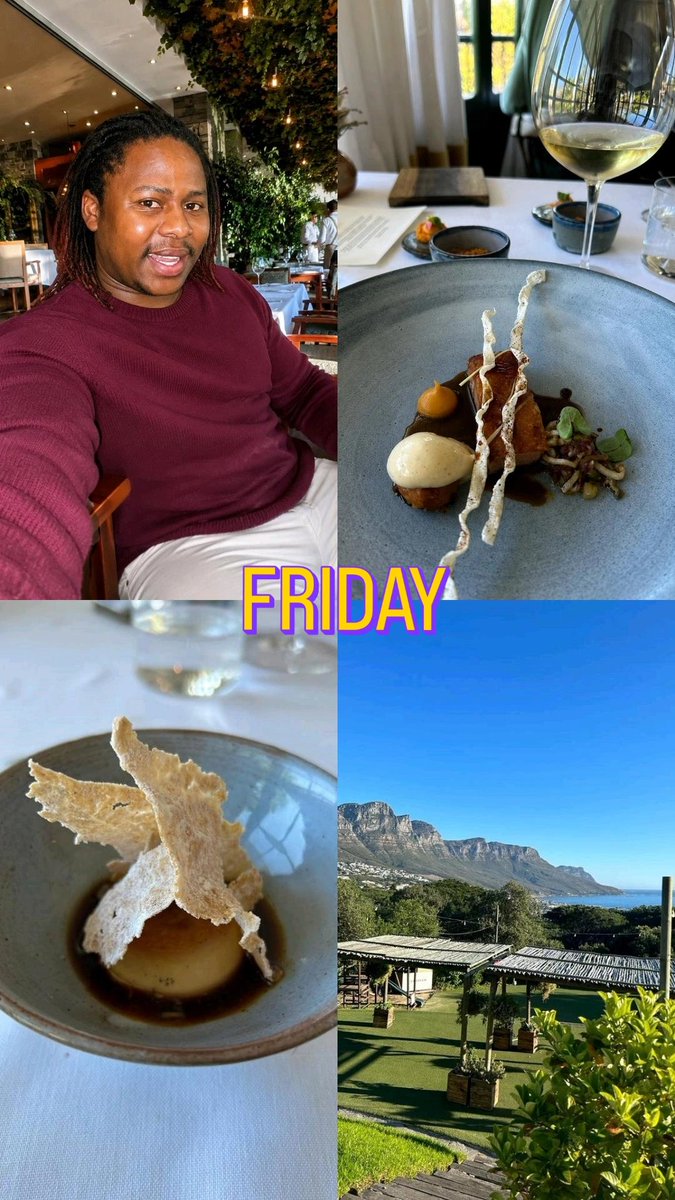
❤️🖤 Midweek check-in: breathing, smiling, and taking life one day at a time. Keep moving, even if it's only one small step at a time. ❤️🖤
Lunathi Kilani 🇿🇦🏳️‍🌈 tweet media
Cape Town, South Africa 🇿🇦 English
1
2
22
635
Zizou Tiklas
Zizou Tiklas@zizoutiklas·
@LunathiKilani I also agree with both your input and response. It was as if you saw the presser before writing, except with regards to TM. I guess it's up to you members to deal with it.
English
1
0
0
16
Lunathi Kilani 🇿🇦🏳️‍🌈
President Mbeki is, in many ways, a subtle but mischievous old man. Indeed he is also one of our country's respected elder statesmen and, more importantly, an elder of our ANC. It is precisely because of that stature that his conduct deserves scrutiny. Seniority in the movement should come with a greater responsibility to protect its organisational culture, not undermine it. One of the cornerstones of the ANC's organisational tradition is democratic centralism. Members are expected to debate freely and robustly within the appropriate structures, but once a collective decision has been reached, everyone is expected to defend and uphold that decision publicly, whether it reflects one's personal preference or not. That principle has held the movement together through some of its most difficult epochs. President Mbeki, however, appears to have in my zero opinion developed a pattern that raises uncomfortable questions. Time and again, he advances strongly held views inside the NEC. When those views are either not adopted, or when implementation of agreed decisions is delayed, he often takes to the podium through his Foundation to restate his own position. In the process, his remarks frequently come across as a public rebuke of the ANC leadership and Comrade President Ramaphosa. Whether intended or not, which i believe it is intentional, and this behavior creates the impression that he is litigating internal organisational matters in public after the fact. To my mind, that borders on organisational ill-discipline. It may be dressed up as intellectual engagement or policy debate through his Foundation as a Patron, but it extremely chips away at the very principle that every other ANC member is expected to respect and uphold. Democratic centralism cannot become optional simply because of one's historical stature. The bigger concern in my view is the precedent this sets. Imagine if every NEC member walked out of a meeting, organised an event through a personal foundation or institute, and used that platform to publicly air disagreements with decisions taken by the collective. The NEC would become meaningless because every unresolved internal debate would simply continue in the public domain. That would not strengthen the organisation; it would weaken its authority and confuse both members and the public. This is why the silence from the ANC leadership is increasingly difficult to understand. Are the Top 7 officials and the NEC leadership collective simply hoping the issue will resolve itself? Are they reluctant to confront this particular former President? Or have they convinced themselves that different rules apply to certain leaders? The SG has never been shy about asserting the authority of his office when organisational discipline is at stake or when he feels to assert his weight for whatever political calculations he deems befitting. We have seen decisive and extreme mouth dropping interventions before. So why does that same energy disappear when it comes to President Mbeki? If organisational discipline matters, it should matter consistently. If democratic centralism is a principle worth defending, then it cannot depend on who is speaking. Respect for President Mbeki's contribution to our democracy and organization should never place him above the traditions and discipline of movement he once helped lead. The ANC cannot expect us ordinary members to close ranks behind collective decisions while remaining silent when one of our very own most prominent elders repeatedly appears to do otherwise. These are legitimate political questions. The continued silence from the leadership only invites more speculation. At some point, the organisation owes the broader membership an explanation: why is this behaviour tolerated, and where exactly does the ANC draw the line between constructive engagement and conduct that undermines democratic centralism? #ANC114 🖤 💚 💛
Lunathi Kilani 🇿🇦🏳️‍🌈 tweet media
Milnerton, South Africa 🇿🇦 English
3
4
28
3.2K
Lunathi Kilani 🇿🇦🏳️‍🌈
I'm honestly not sure what you're responding to, because it has very little to do with what I actually wrote. You're introducing an entirely different argument that isn't connected to the discussion at hand. I'll leave it there, though. I get the sense that you and I see the world through completely different lenses, and your argument seems to drift into conspiracy territory. I don't think either of us is going to convince the other, so there's probably not much value in taking this any further.
Milnerton, South Africa 🇿🇦 English
1
0
1
64
VuyoMhaga
VuyoMhaga@Vuyo_Mhaga·
@mbalimcdust @LunathiKilani What is an accusation, what did he do? I want to join the conversation but I am not sure how he undermined the principle of democratic centralism. Please expand so I can join.
English
1
0
0
39
Lunathi Kilani 🇿🇦🏳️‍🌈
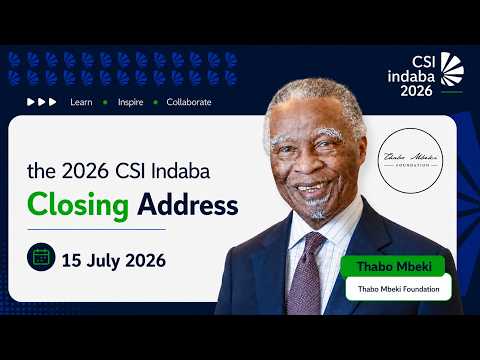
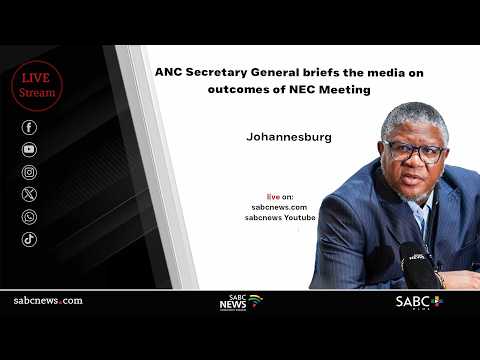
Just listened to it. To me, it actually proves the point I am making. The SG deals with the issue in very broad terms, grouping everyone together and even going as far as singling out Cde Tokyo. But he stops short of confronting former President Mbeki directly. What's more, this presser is already from last month. Since then, Mbeki has repeated the same pattern several more times through his Foundation, including as recently as 15 July during his closing remarks at the CSI Indaba. That's why I keep asking the same question: if this conduct is considered problematic in principle, why is there still no direct organisational response when it's Mbeki doing it?
Milnerton, South Africa 🇿🇦 English
1
0
0
71
Lunathi Kilani 🇿🇦🏳️‍🌈
Thanks, much appreciated...🙏🏼🙏🏼🙏🏼 I'd definitely be up for that coffee whenever the time permits. I truly enjoy these kinds of honest, honest and open conversations because they force us to test our own thinking rather than just defend positions without fully grasping its fundamentals. Good luck with the start of the school term today, and certainly we'll make the coffee proposal happen soon. 🙂 Mornings Ms. N ☕
Milnerton, South Africa 🇿🇦 English
0
0
1
169
Mbali Ntuli
Mbali Ntuli@mbalimcdust·
I’m not an ANC member, but if I were, I’d applaud the way you’ve articulated your organisation’s position on democratic centralism. I think because the ANC rarely speaks in those terms anymore, the concept has largely been lost on younger generations. I often catch myself using language and ideas we grew up with, only to realise that the dream has been deferred for so long that even the people it was meant to benefit no longer understand the terminology. That’s a collective failure. Across political parties, civil society, business, communities, we’ve all, in different ways, failed this generation. Your analysis of the party and its internal dynamics is, in many respects, correct. I actually think we should grab a coffee sometime if you’re keen to explore it further. It’s a fascinating conversation. But I’ll have to leave it there for tonight. School starts again tomorrow, so I need to get some sleep. Ciao.
English
3
0
8
766
Lunathi Kilani 🇿🇦🏳️‍🌈
Yhaaa ke bafafta, Sunday is very short. If you know you know; ayixabanisi, ayixoxisi kwaye ayihlebisi bethuna. Ngokomo isimo sithi vukani nitshone kubo #clearsthroat 🍷
GIF
Milnerton, South Africa 🇿🇦 Filipino
1
0
1
246
Lunathi Kilani 🇿🇦🏳️‍🌈
JUST IN: US former president Joe Biden announces his presidential memoir release date which is scheduled to be published on November 17, 2026, by Little, Brown and Company… 🇺🇸📕
Joe Biden@JoeBiden

I’ve written a book about my time as President. It’s called PROMISE ME, AMERICA. It’s coming out November 17th and is available for preorder now.  PromiseMeAmerica.com @littlebrown

Cape Town, South Africa 🇿🇦 English
0
0
0
218