Lydia Rader PhD

309 posts

Lydia Rader PhD banner
Lydia Rader PhD

Lydia Rader PhD

@LydiaRader

Postdoc @IBG_CUBoulder | Genetic epidemiology of chronic pain & mental health
Colorado Katılım Şubat 2013
816 Takip Edilen482 Takipçiler
Lydia Rader PhD retweetledi
Knowing Neurons
Knowing Neurons@KnowingNeurons·
The brain's energy demands are huge, and it takes a village, or in this case, a powerful partnership between neurons and astrocytes. Click on the link below to learn more from our latest infographic! 🧠 knowingneurons.com/neuron-astrocy…
Knowing Neurons tweet media
English
0
1
1
112
Lydia Rader PhD retweetledi
Nicholas Fabiano, MD
Nicholas Fabiano, MD@NTFabiano·
Loneliness is associated with cognitive impairment. Stay connected.
Nicholas Fabiano, MD tweet media
English
41
211
1.5K
626.4K
Lydia Rader PhD retweetledi
Stanford Pain Medicine
Stanford Pain Medicine@StanfordPain·
Experts from around the world worked together to agree on how to define “refractory migraine,” a type of migraine that does not improve with usual treatments. They created four groups of migraine: 1. Refractory migraine – when all proven treatments fail. 2. Resistant migraine – when at least three treatment types fail. 3. Probable refractory migraine – when not all treatments can be tried, often due to age, cost, or access. 4. Treatment-responsive migraine – when migraines improve with treatment. •These categories will help doctors decide when to try stronger treatments. •They may also make it easier to include patients in research and raise awareness about how serious these migraines can be. Bottom line: Clearer definitions can improve research, treatment decisions, and advocacy for people living with hard-to-treat migraines. Authors: @JenniferRobblee @HeadacheCOHope @lrobb98 @Simona_Sacco_ @stephanieJnahas @EhrlichNP @SengElizabeth Full paper: bit.ly/3IhRsUs
Stanford Pain Medicine tweet media
English
1
6
19
1.4K
Lydia Rader PhD retweetledi
CU Boulder Psychology and Neuroscience
Sarah Gonzalez Coffin (PhD Candidate-Social PSYC), received the 2025 Behavior, Energy & Climate Change Fellowship from @ACEEEdc! 🎉 This will fund Sarah's participation in their bi-annual convention where she will be featured as an emerging scholar in environmental psychology.
CU Boulder Psychology and Neuroscience tweet media
English
0
1
2
89
Lydia Rader PhD retweetledi
PGC Consortium
PGC Consortium@PGCgenetics·
"Multi-ancestral genome-wide association study of clinically defined nicotine dependence reveals strong genetic correlations with other substance use disorders and health-related traits" led by Emma Johnson and Dongbing Lai of PGC-SUD is now online. cambridge.org/core/journals/…
English
1
5
17
2K
Lydia Rader PhD retweetledi
Sophie Breunig
Sophie Breunig@BreunigSophie·
Our project, looking at the genetic relationships between immune diseases and psychiatric disorders, has finally been published! Now with gene expression analyses as well as additional sensitivity analyses, thanks to reviewers. Find the full article here: nature.com/articles/s4139…
Sophie Breunig@BreunigSophie

New preprint just dropped! 🧬🦠 For this project, we looked at the genetic relationships between psychiatric disorders and immune-mediated diseases. Check out the preprint here: medrxiv.org/cgi/content/sh… TL;DR below🧶

English
0
2
8
403
Lydia Rader PhD retweetledi
US Association for the Study of Pain
USASP is currently participating in virtual Hill visits to educate congressional staff about the importance of NIH funding for pain research. Want to help? Reach out to your representatives and share why pain research matters to you. Learn more here ⬇
US Association for the Study of Pain tweet media
English
0
12
15
1.4K
Lydia Rader PhD retweetledi
Stanford Pain Medicine
Stanford Pain Medicine@StanfordPain·
Chronic pain by the numbers — @DrSeanMackey explains: •Up to 100 million Americans live with chronic pain. •20 million+ have pain so severe it affects daily life — this is called high-impact chronic pain. The most common types:  • Low back pain (28%)  • Neck pain (16%)  • Headaches (16%) Pain costs the U.S. over $500 billion each year — more than cancer, heart disease, and diabetes combined.
English
4
5
15
918
Lydia Rader PhD retweetledi
Stanford Pain Medicine
Stanford Pain Medicine@StanfordPain·
Chronic pain doesn’t just stay in the body—it can rewire the brain. Over time, repeated pain signals make the nervous system more sensitive and reduce its ability to "turn down" pain. This is called central sensitization—and it helps explain why some people feel more pain even without new injury.
English
10
23
81
11.3K
Lydia Rader PhD retweetledi
IASP
IASP@IASPpain·
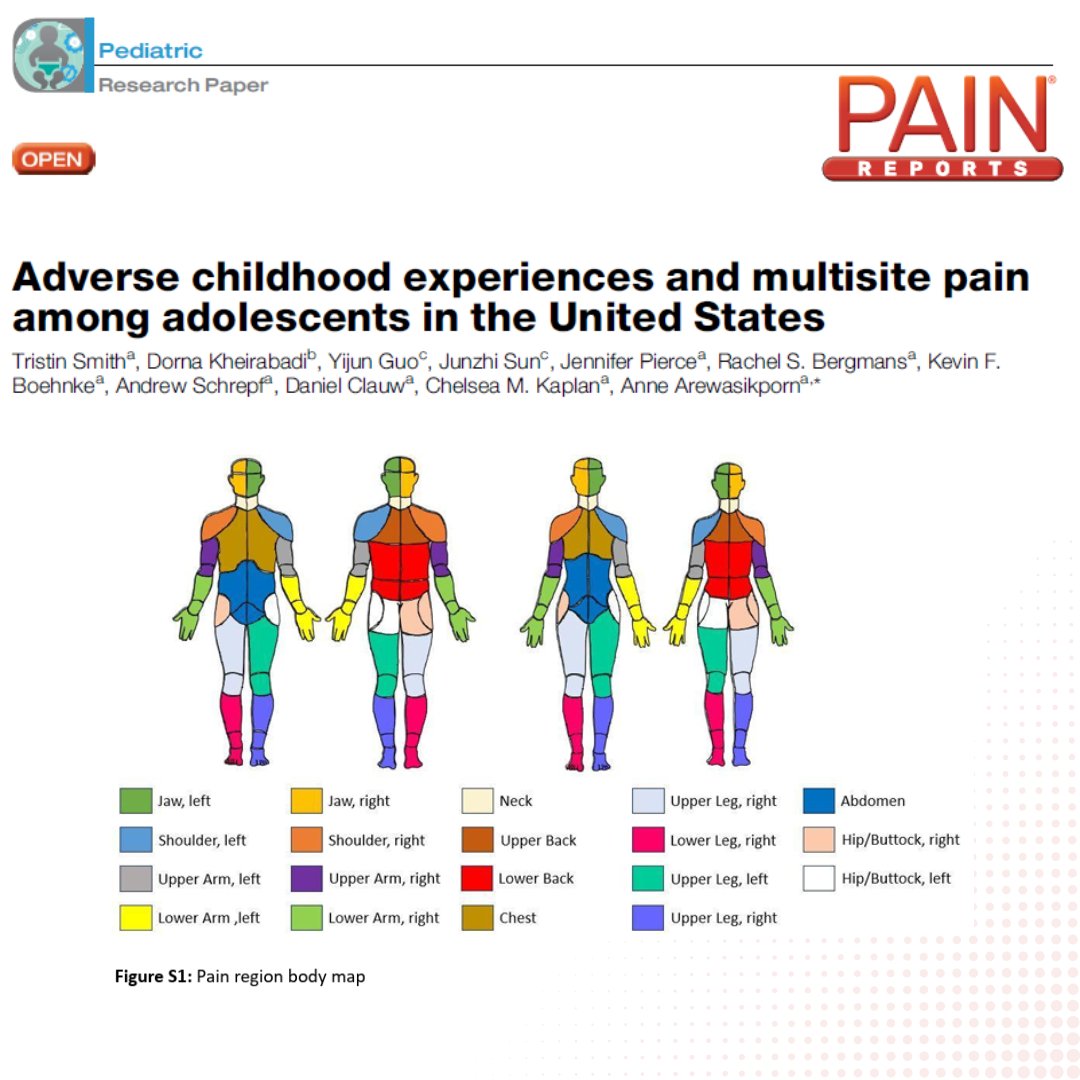
Smith et al. find that cumulative adverse childhood experience exposure is associated with multisite pain in early adolescence using data from the Adolescent Brain Cognitive Development Study. Learn more in #PainReports bit.ly/4jmLYnX
IASP tweet media
English
0
14
34
2.2K
Lydia Rader PhD retweetledi
Nicholas Fabiano, MD
Nicholas Fabiano, MD@NTFabiano·
Lifting weights significantly reduces depressive symptoms.
Nicholas Fabiano, MD tweet media
English
34
237
1.4K
83.4K
Lydia Rader PhD retweetledi
Stanford Pain Medicine
Stanford Pain Medicine@StanfordPain·
Supplements and chronic pain: What does the research say? A list of 5 supplements that may help with nerve and chronic pain, as part of a broader treatment plan: 1. Acetyl-L-Carnitine -Helps your cells make energy. - Studied in people with diabetic nerve pain. - May help nerves send signals better. 2. Alpha Lipoic Acid - Works as an antioxidant and affects calcium in cells. - May help with nerve pain. - Can cause an upset stomach in some people. 3. Vitamin C - Not just for colds. -Some research shows it may lower the chance of nerve pain after surgery. 4. Fish Oil (Omega-3s) - May help reduce inflammation and pain. - But it can make your blood thinner, which might raise the risk of bleeding. 5. Creatine - Often used by athletes for muscle strength. - Small studies suggest it might help people with fibromyalgia and similar conditions.
English
22
51
237
124.1K
Lydia Rader PhD retweetledi
Abdel Abdellaoui
Abdel Abdellaoui@dr_appie·
Check out our new OCD GWAS (53,660 cases and 2,044,417 controls) in @NatureGenet 🧬🧠 Genetic risk was associated with excitatory neurons in the cortex and hippocampus. There was much genetic overlap with anxiety, depression, and anorexia. Open access: nature.com/articles/s4158…
Abdel Abdellaoui tweet media
English
1
31
75
12.3K
Lydia Rader PhD retweetledi
tor wager
tor wager@torwager·
The National Academies of Science, Engineering, and Medicine @theNASEM is hosting a free online workshop May 19 and 21 on the #neurobiology of #empathy and #compassion. It is wonderful to see empathy and compassion being studied scientifically. They are part of the (usually invisible) foundation of any healthy society and our personal health as well. nationalacademies.org/event/44350_05…
English
0
6
24
1.6K
Lydia Rader PhD retweetledi
Knowing Neurons
Knowing Neurons@KnowingNeurons·
Brain Awareness Week (BAW) is this month!! 🎉 If you are located in any of these areas, make sure to stop by and celebrate BAW by learning about the brain. 🧠
Knowing Neurons tweet mediaKnowing Neurons tweet mediaKnowing Neurons tweet mediaKnowing Neurons tweet media
English
0
2
5
201
Lydia Rader PhD retweetledi
Oren Gottfried, MD
Oren Gottfried, MD@OGdukeneurosurg·
Immune system one pager
Oren Gottfried, MD tweet media
Français
50
1K
5.3K
550.8K