👨‍💻 MRTISTER🃏🎲

3K posts

👨‍💻 MRTISTER🃏🎲 banner
👨‍💻 MRTISTER🃏🎲

👨‍💻 MRTISTER🃏🎲

@MRTISTERR

Katılım Ocak 2022
2K Takip Edilen107 Takipçiler
👨‍💻 MRTISTER🃏🎲 retweetledi
Dr. Maalouf ‏
Dr. Maalouf ‏@realMaalouf·
A Hamas terrorist proudly poses for a photo before cowardly murdering a bedridden elderly Israeli woman and her Filipina caregiver on October 7. How can anyone support Hamas?

Dr. Maalouf ‏ tweet media
English
49
560
1.5K
12K
👨‍💻 MRTISTER🃏🎲 retweetledi
⚛ AtomGraph
⚛ AtomGraph@atomgraphhq·
Build knowledge graphs from unstructured text using Claude for entity extraction, relation mining, deduplication, and multi-hop graph querying. platform.claude.com/cookbook/capab…
English
0
13
79
4.2K
👨‍💻 MRTISTER🃏🎲 retweetledi
freeCodeCamp.org
freeCodeCamp.org@freeCodeCamp·
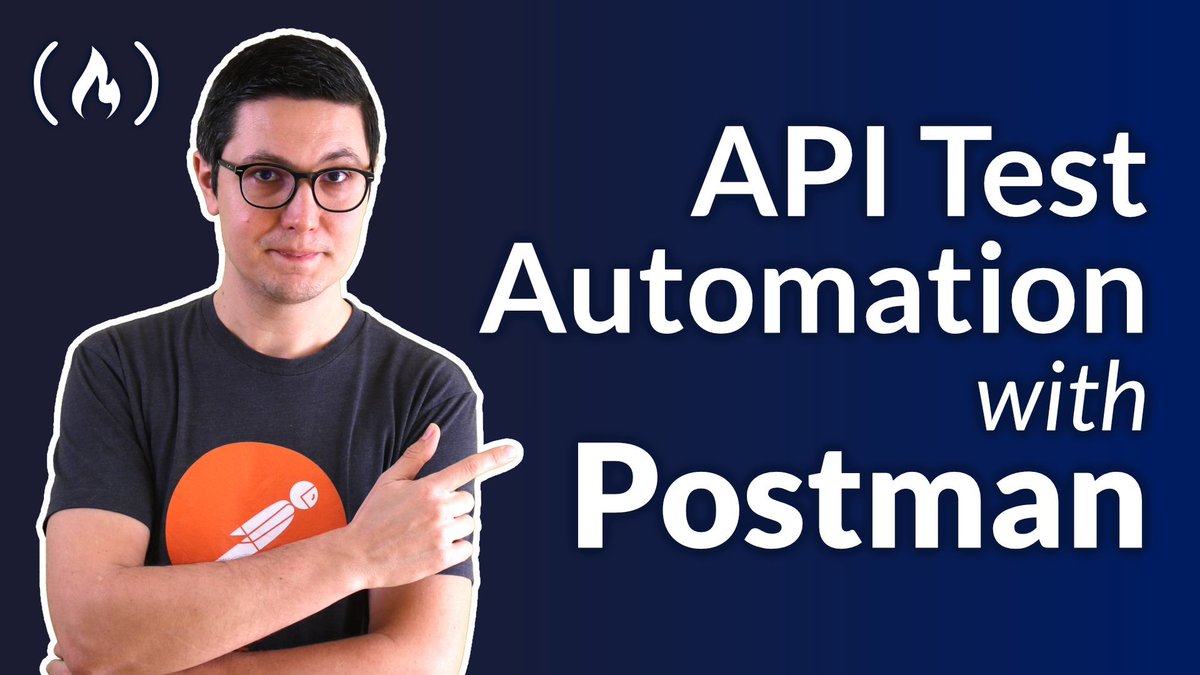
Postman is a popular tool you can use to test your APIs. It helps you make sure any new features you add don't break your existing code. Here, you'll learn all about debugging endpoints, automating the testing process, and more. freecodecamp.org/news/master-ap…
freeCodeCamp.org tweet media
English
1
43
348
10.7K
👨‍💻 MRTISTER🃏🎲 retweetledi
Atal
Atal@ZabihullahAtal·
🚨 BREAKING: This 4-hour Codex course might be the highest-ROI time you spend this month. This is exactly how top AI engineers actually use Codex. bookmark it. This course shows how to use it like a full software engineering system. In 4 hours, you’ll learn: How Codex Desktop actually works (not just prompts) Agents, subagents, and automation workflows Plugins, MCPs, and real computer use GitHub integration, cloud delegation, and parallel execution A full real-world build (Next.js + Convex + Vercel) This isn’t theory. It’s a complete, practical system you can apply immediately. If you’re serious about building with AI: This 4 hours will save you hundreds of hours later. watch it once. you won’t use Codex the same way again.
English
2
34
145
9.6K
👨‍💻 MRTISTER🃏🎲 retweetledi
Rohit Ghumare
Rohit Ghumare@ghumare64·
Ai ENGINEERING FROM SCRATCH JUST HIT 6.3K STARS 🌟 AND... IT'S GROWING VERY FAST 490+ LESSONS from Basics to Agent Harness Engineering github.com/rohitg00/ai-en…
Brij Pandey@LearnWithBrij

Claude Code ships with 5 architectural layers most engineers never open. Not features. Not settings. Layers — each solving a distinct problem that LLMs alone can't solve. And four of them have nothing to do with prompting. Here's the full Agent Development Kit: Layer 1 — CLAUDE.md → The Memory Layer Architecture rules, naming conventions, test expectations, repo map. Always loaded. Always active. Two scopes: • ~/.claude/CLAUDE.md → global • .claude/CLAUDE.md → project This isn't context you paste in before every session. It's context that never needs repeating. The agent's constitution. Layer 2 — Skills → The Knowledge Layer Each SKILL.md carries a description. Claude matches it at runtime and forks the skill into an isolated subagent. On-demand, never always-on. Task-specific knowledge without inflating your main context window. Modular by design. Layer 3 — Hooks → The Guardrail Layer PreToolUse → PostToolUse → SessionStart → Stop → SubagentStop This is the layer most teams skip. And the one they regret skipping first. Hooks are NOT AI. They're deterministic event-driven shell commands. • Auto-lint on every Write • Hard-block on rm -rf • Slack notification on Stop Event fires → Matcher checks → Command runs Quality enforced at the infrastructure level. Not the prompt level. Layer 4 — Subagents → The Delegation Layer Each subagent gets its own context window, model, tools, and permissions. Main agent delegates down. Receives results up. That's it. No infinite recursion — subagents can't spawn subagents. Main context stays clean. Hard boundaries by design. Layer 5 — Plugins → The Distribution Layer Bundle your skills + agents + hooks + commands into a plugin. One install. Whole team inherits the behavior. Think npm packages — but for what your agent knows how to do. Wrapping everything: → MCP Servers on the left (GitHub, databases, APIs, custom integrations) → Agent Teams on the right (parallel execution, message passing, shared permissions) The 5-layer stack in one line: CLAUDE.md sets rules → Skills provide expertise → Hooks enforce quality → Subagents delegate work → Plugins distribute to the team Most production failures in agentic systems trace back to one missing layer. Which one is the gap in your current setup?


English
3
48
300
33.6K
👨‍💻 MRTISTER🃏🎲 retweetledi
Jerry Liu
Jerry Liu@jerryjliu0·
Parsing PDFs is hard This past week I gave a few talks (at both AI Dev '26 by @DeepLearningAI and @Capgemini ) on why this is still such an open problem, and it’s even more important as agents become the consumers of documents, and need the OCR tools to read them properly. The fundamental issue is that PDFs are designed for print and display purposes, not to give back a linearized, semantically meaningful string of text. Text and tables are represented as a bunch of chars and lines, without any guaranteed order. This is what the community is solving with VLM-based approaches, including our own efforts around LlamaParse and ParseBench. If you’re interested in learning more about the problem, check out the blog post I wrote on this a while ago! llamaindex.ai/blog/why-readi…
Jerry Liu tweet media
English
21
38
313
24.7K
👨‍💻 MRTISTER🃏🎲 retweetledi
Hamzé 🦀
Hamzé 🦀@Hamzeml·
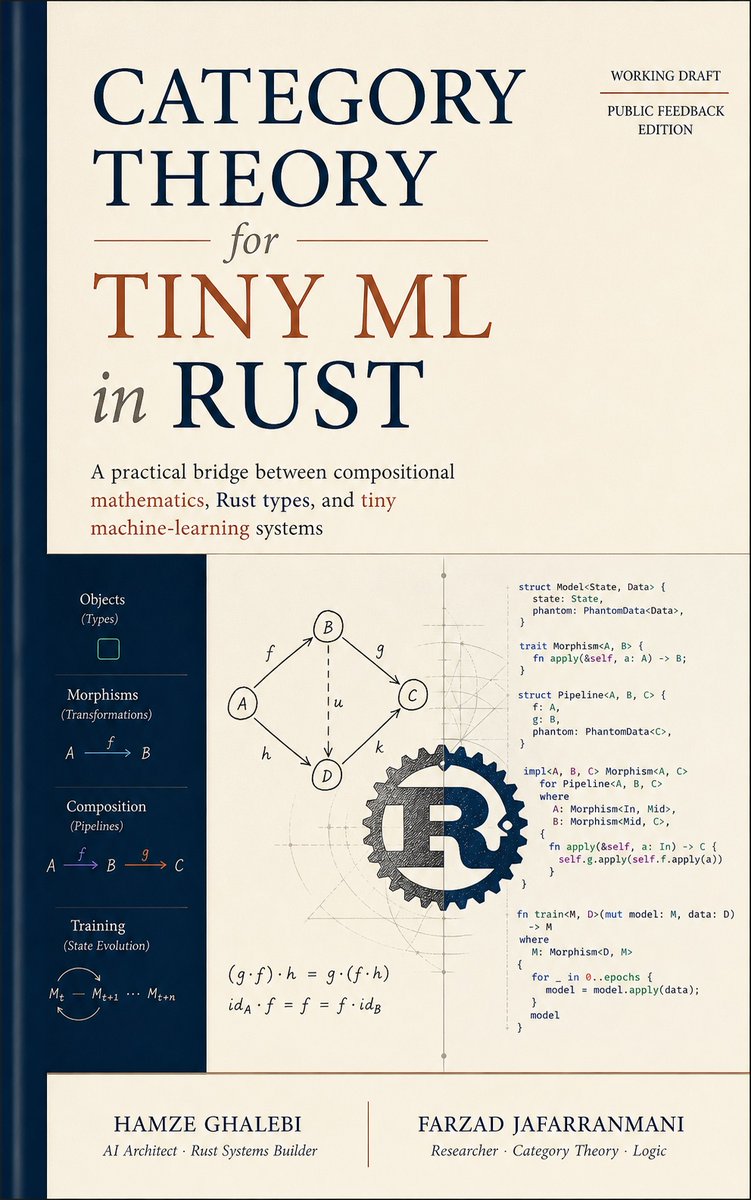
Python made AI accessible. Rust can make parts of AI understandable. That’s the bet behind Category Theory for Tiny ML in Rust. We’re building tiny ML systems from first principles using: Rust types typed transformations composition training loops category theory as an engineering tool Not abstraction cosplay. Executable structure. Working draft. Public feedback welcome.
Hamzé 🦀 tweet media
English
53
317
2.3K
100K
👨‍💻 MRTISTER🃏🎲 retweetledi
Sumanth
Sumanth@Sumanth_077·
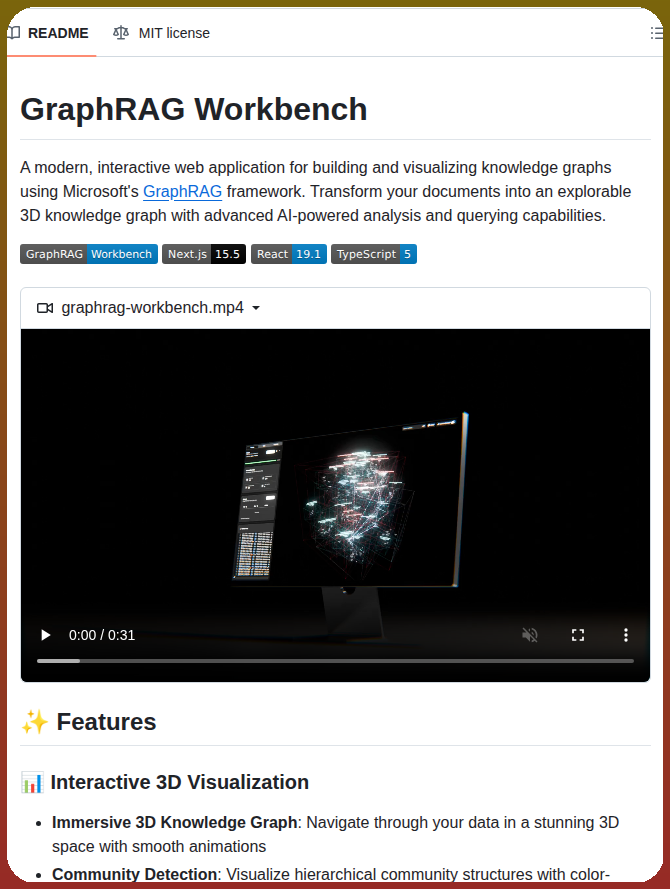
Turn any codebase into an interactive knowledge graph! Understand-Anything is a Claude Code plugin that builds an explorable map of your project. It analyzes every file, function, class, and dependency, then gives you an interactive dashboard to explore it all visually. Run the analysis and five agents execute in parallel. They scan your project, extract structure, identify architectural layers, and build a knowledge graph. The output is an interactive React Flow visualization. The dashboard shows your codebase as a graph. Nodes are files, functions, and classes. Edges show dependencies. Everything is color-coded by layer (API, Service, Data, UI, Utility). Click any node to see its code, relationships, and a plain-English LLM explanation. Key features: • Visual exploration with searchable, interactive graph • Plain-English summaries for every component • Guided architecture tours ordered by dependency • Semantic search - find by meaning, not just name • Diff impact analysis - see what your changes affect It works across multiple AI coding agents - Claude Code, Codex, OpenCode, OpenClaw, Cursor, Antigravity It's 100% open source I've shared the link in the comments!
Sumanth tweet media
English
21
125
643
36.8K
👨‍💻 MRTISTER🃏🎲 retweetledi
Alif Hossain
Alif Hossain@alifcoder·
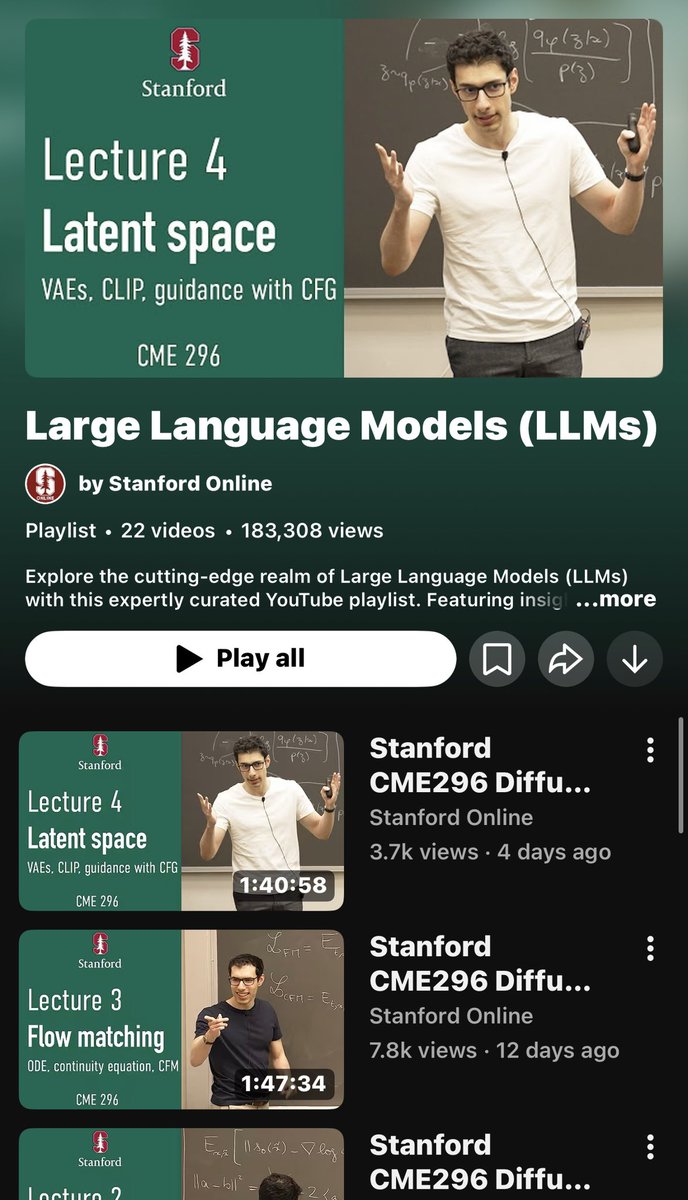
Stanford's $200K AI degree is now FREE on YouTube. Same lectures. Same materials. Same rigor. CME295: LLM Evaluation | CS336: Building LLMs from Scratch | CS224N: NLP If you're building AI, this is required.
Alif Hossain tweet media
English
8
46
189
6.4K
👨‍💻 MRTISTER🃏🎲 retweetledi
rob.
rob.@robiartec·
Alguien creó un Simulador de Diseño de Sistemas basado en web. Copias y pegas (API gateways, bases de datos, cachés) y simula tráfico en tiempo real. Puedes ver la latencia, los puntos de saturacion y los fallos mientras ocurren en directo...
Español
17
161
1.5K
75.1K
👨‍💻 MRTISTER🃏🎲 retweetledi
Nainsi Dwivedi
Nainsi Dwivedi@NainsiDwiv50980·
Learn AI for free directly from top companies. 1 - Anthropic: anthropic.skilljar.com 2 - Google: grow.google/ai 3 - Meta: ai.meta.com/resources/ 4 - NVIDIA: developer.nvidia.com/cuda 5 - Microsoft: learn.microsoft.com/en-us/training/ 6 - OpenAI: academy.openai.com 7 - IBM: skillsbuild.org 8 - AWS: skillbuilder.aws 9 - DeepLearning.AI: deeplearning.ai 10 - Hugging Face: huggingface.co/learn 👇Comment "Learning" if you find this helpful. Repost so others can take help. Must bookmark for future reference.
Nainsi Dwivedi tweet media
English
38
350
1.7K
75.4K
👨‍💻 MRTISTER🃏🎲 retweetledi
Aakash Gupta
Aakash Gupta@aakashgupta·
Hermes just crossed 100K GitHub stars in seven weeks. Faster than LangChain. Faster than AutoGPT. Faster than anything open-source I've tracked. Every AI tool you use today has the same flaw: it only works when you're there. You open ChatGPT, ask a question, get an answer. You close it, and it stops. Nothing happens until you come back. Hermes runs in the background, executes tasks on a schedule, and gets sharper at those tasks every time it runs them. You set it up once and it keeps going. Week after week. Without you. Two things make this possible. SOUL.md is a file you write once. Your standing brief: who you are, what matters, how you like answers delivered. It loads automatically before every session, every scheduled task, every message it sends. You never explain yourself again. The learning loop. Every run, Hermes evaluates what worked and saves an improved version of the procedure. The Sunday briefing it sends in week 8 lands sharper than week 1. The agent kept improving without you. ChatGPT Tasks can fire a prompt on a schedule. The procedure never improves. Same query Sunday after Sunday, no memory of what worked last week, no skill stored from the last run. Hermes is the first consumer agent built around the idea that value compounds the longer the agent runs. I've been running it six weeks. My Sunday briefing now knows I care about flight prices in the second week of each month, that I want sports results only for teams I mentioned, that I read the weather section first because I'm getting dressed. A health app shows you your data. Hermes tells you what your data means before you need to ask. Full deep dive on setup, three use cases, and three honest limitations: aibyaakash.com/p/878b2032-f19…
Aakash Gupta tweet media
English
14
28
248
61K
👨‍💻 MRTISTER🃏🎲 retweetledi
Dan Kornas
Dan Kornas@DanKornas·
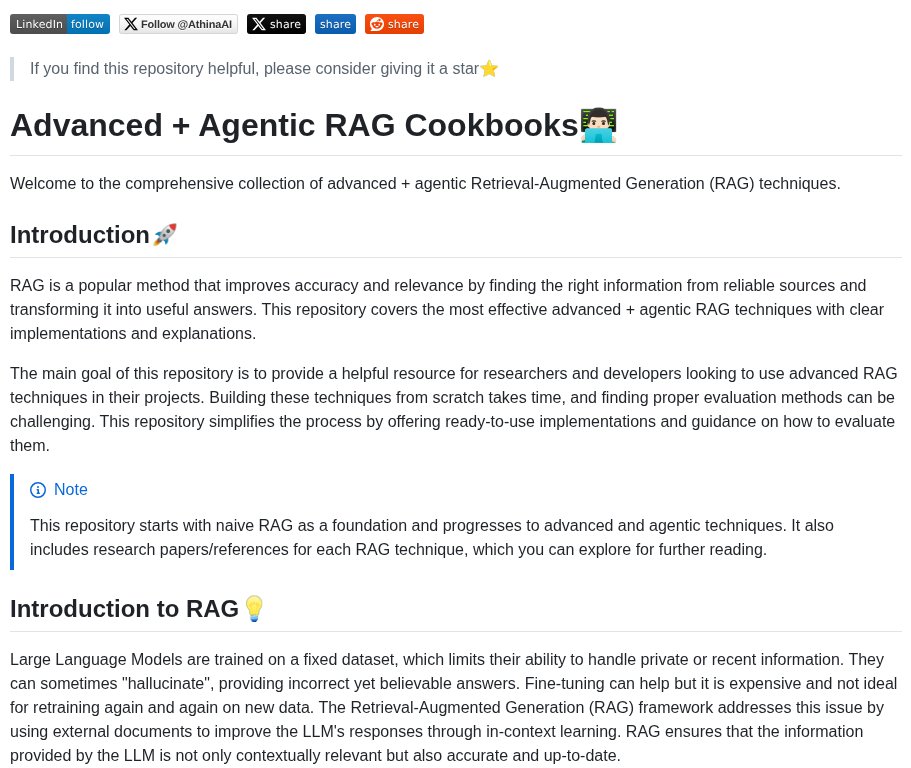
advanced RAG techniques and agentic workflows for LLMs.
Dan Kornas tweet media
English
2
10
90
4.9K
👨‍💻 MRTISTER🃏🎲 retweetledi
0xSero
0xSero@0xSero·
Important: This is a summary of an amazing video by one of the best creators I know. Video in the first comment. If you've been struggling to setup a productive local environment I'll summarise, but you should watch the video. 1. Qwen3.6-27B with NO THINKING - 4bit - 16bit depending on your resources 2. Hermes agent: It's polished, minimal, and OSS, if you're on OC keep at it it's also great but IMO consumes more tokens == slower 3. Learn to work in a detached way: Instead of small, unclear prompts make something really specific and hand-off to a local agent: - What is your end goal? - What is the output format? - How would you recommend a task be done? - How would you deal with common issues? Kick off a job and go do something IRL, the lower speeds paired with very clear prompts means you can check in every 2 hours on average for your next free task. Treat it like a challenge, it'll teach you so much. ~~~~~~~ If you're more technical, wire your devices with Tailscale & use protected Cloudflare Tunnels to serve your inference API to your network so you can work from ANYWHERE with your local models. I love Droid, Pi, and Opencode but you can use local models in Claude Code, Codex, Cursor relatively easily. Most of your day will involve computer-use which the models are great at. Need to reset a server? Do it for free, want to gather research? Do it for free. Not every task requires a 10T param beast crunching on things, being able to quickly cycle between models is what's critical here, which is why I recommend the three harnesses I did ~~~~~~~ What is productive? - Organise all your files, folders, images, etc.. have each one tagged (Qwen is omni so no more date time titles) - Create a content cache for yourself: - recommendation algo for books & videos etc. - content/papers/courses for studying - Social media post ideas (write your own posts tho) - Torrent manager, you don't need Netflix or Spotify lol - Simple utility coding projects: landing pages, designs, games, scripts - Market watchers: purchase stuff, check marketplaces, do shopping - Budgeting, taxes, and subscription management I could go on and on, obviously it's not going to make you a millionaire or whatever but it makes life more FUN. ~~~~~~~ AI is a tool, one that's very good at accelerating you towards self fulfilment as long as you: 1. Understand what it is 2. Learn how to talk to it 3. Keep trying to improve you ~~~~~~~ My videos tend to be stream of thought, I am starved of time and just want to make sure I keep up. I would not be doing this if I couldn't just generate 3 thumbnails on t3chat, for example. That's why I spend so much time working on this. I see myself being more of who I want to be every day and a lot of that is with the help of this technology, allowing me to more quickly and effectively interact with the world. Being able to own this at home? True sovereignty. ~~~~~~~ Thank you, Digital Spaceport. I wouldn't have gotten this deep into running my own infra without your videos.
0xSero tweet media
English
33
94
1.3K
63.1K