Michael || Venture Vault

4K posts

Michael || Venture Vault banner
Michael || Venture Vault

Michael || Venture Vault

@MSkylion

Angel Investor | Web3 & AI | Founder @venturevaultvc | $RWA maxi at @atomrealtokens | Strategic Advisor | $BTC bull since 2015

DreamVerse Katılım Ağustos 2010
1.2K Takip Edilen590 Takipçiler
Michael || Venture Vault
Just wrapped an AMA with @Yellow Network. Great conversation on where Web3 fundraising and infrastructure are actually heading. A few key takeaways: • Fundraising in Web3 is shifting from hype to precision - warm, high-signal introductions outperform mass outreach every time • Syndicate models are becoming a powerful alternative to traditional VC - founders get not just capital, but distribution and network effects • AI + Web3 is no longer a narrative, it’s a design space - especially around autonomous agents and on-chain economies • The current market is tougher, but healthier - capital is still there, just flowing to real builders with traction • The industry is maturing from speculation → utility → real economic systems Big thanks to the Yellow team for hosting, exciting to see ecosystems focused on builders and long-term value. If you're building in AI/Web3/RWA and thinking about fundraising, happy to connect.
Yellow@Yellow

Discover how @venturevaultvc is approaching Web3 startup support in 2026, what they look for in founders, and why joining the Yellow Builders Alliance made sense for their vision. Watch back as Yellow CMO @DeFi_Pop heard the details from @MSkylion

English
2
1
3
1.5K
Michael || Venture Vault retweetledi
ST0x
ST0x@st0x_io·
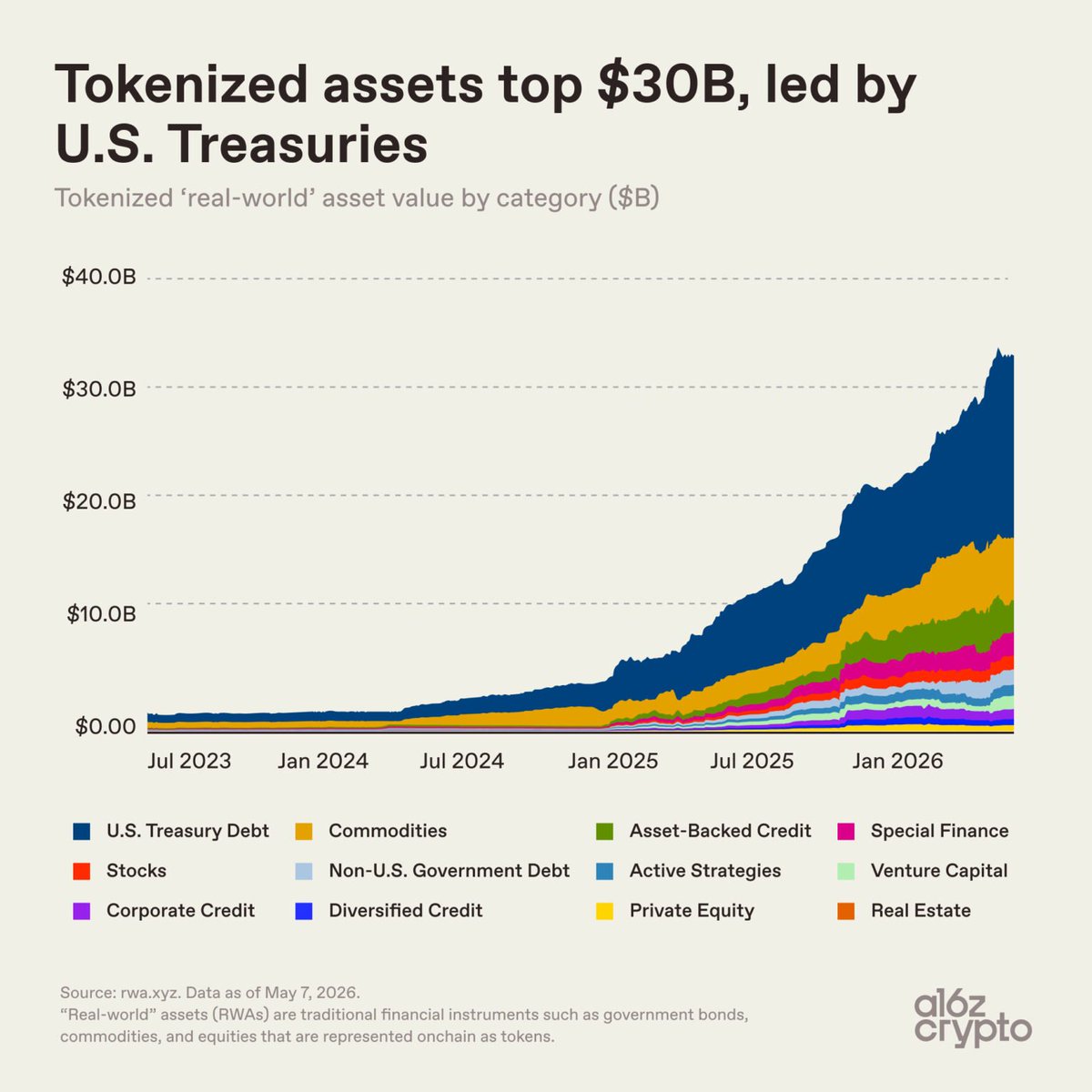
Two years ago, RWAs onchain were a rounding error. Now: $30B. Treasuries lead. Equities, commodities, private credit catching up. a16z Crypto's new $2.2B fund has RWAs in focus. They don't publish charts like this without a thesis. They're all coming onchain via ST0x.
ST0x tweet media
English
7
1
14
341
Michael || Venture Vault retweetledi
Catapult Trade
Catapult Trade@letsCatapult·
The Catapult Trade media network is live We've made the first step: acquiring the first batch of Catapult-branded social media, with a total coverage of more than 15M users. The next wave is almost upon us.
Catapult Trade tweet media
English
7
4
20
1K
Michael || Venture Vault
Michael || Venture Vault@MSkylion·
I've been working with Zingy Labs for a while now, and highly recommend them for any Web3 company
Zingy Labs@Zingylabs

excited to announce our partnership with @venturevaultvc what this means for projects we work with > direct access to a VC syndicate actively investing in web3, AI, and RWA > investor deal flow shared into a curated network, not just blasted to mailing lists > warm intros for fundraising rounds, not cold pitch decks > strategic partnership routes that go beyond capital most projects we talk to have one of two problems. either they have a real product but can't find the right investors, or they're raising into rooms that don't understand what they're building. venture vault solves the second problem at the source. they're running a syndicate that actually reads decks, asks real questions, and brings projects into rooms that match their stage and category. the marketing work and the fundraising work used to live in different conversations. they shouldn't. if you're building in web3, AI, or RWA and you're figuring out the next 6 months, dms open. we'll handle the comms. they'll open the doors.

English
1
1
2
81
Michael || Venture Vault
Michael || Venture Vault@MSkylion·
The global economy is quietly undergoing a structural shift: from efficiency to resilience. Recent developments make it clear: the U.S. and its allies are accelerating efforts to reduce dependencies on China, particularly across critical supply chains like rare earth minerals and strategic commodities. Why? Because these materials are no longer just inputs, they are geopolitical leverage. Today, China controls the majority of rare earth processing capacity, creating a single point of failure for industries ranging from AI hardware to defense systems. At the same time, we’re seeing a parallel transformation in capital markets: 👉 The rise of Real World Asset (RWA) tokenization Tokenization is not just about digitizing assets – it’s about unlocking access, liquidity, and transparency in markets that have historically been opaque, illiquid, and capital-intensive. Now connect the dots: – Strategic commodities need massive capital to scale – Governments want domestic and allied supply chains – Investors want exposure to real, hard assets This is where tokenization becomes a powerful unlock. By tokenizing commodities like rare earths: Capital formation becomes global and frictionless Supply chains gain transparency and traceability Strategic reserves can be financed faster and more efficiently Projects like @atomrealtokens are pushing this frontier forward by bringing tokenization to strategic commodities and rare earth minerals, aligning blockchain infrastructure with real-world geopolitical priorities. We are entering a world where: Resources = Power Access to resources = Strategy Tokenization = Infrastructure The next phase of Web3 won’t be purely digital. It will be anchored in the physical world and in the assets that define it. Let me know your thoughts, and if you are in the #RWA space, feel free to reach out.
Michael || Venture Vault tweet media
English
0
1
2
55
Michael || Venture Vault
Michael || Venture Vault@MSkylion·
@TobiasTBV I hear you, bro. We live like this already for 4 years+ with 2 kids. And it's been amazing! No cons for us)
English
0
0
0
21
Tobias Bauer
Tobias Bauer@TobiasTBV·
Since February 2024 I have been living fully nomadic here are the pros & cons: 👇 Pros: 1. This is a personal one but this lifestyle has demonstrated to me that we get consumed with the idea of owning things. Feeling the need to buy the car, the clothes, the watch (whatever) nothing is needed and none of this makes you in any way fulfilled. When I realized I had not touched anything from my storage room in 2 years - I gave it all away to charity. Now I own things that fit in a backpack and carry on suitcase. 2. Freedome of movement - I can be there where I need to be. No predation needed. No onligations. 3. Modern infrastructure makes it possible: co working spaces, clubs, Airbnb’s etc are an important component of this lifestyle and over time you will find out many hacks (happy to make a second post about it) 4. Building a global network - I have friends almost everywhere on the planet. People I reconnect and who are willing to help. 5. This lifestyle can be very affordable - no need for 5 star hotels, fancy flights etc. at the end of the day it gets you from A to B. I am in my hotel room for 2 things: sleep and work - everything else is a waste of time imo. 6. The world is an amazing place - so much to see and do. So many people to meet. Let’s take advantage of this. Cons: 1. No place to call home! No place to arrive. I hear this a lot of time. For some people this matters so keep this in mind. 2. Logostical challenges. Bank account, visa, immigration, internet, bookings. If there is a will there is a way but tbh depending on your passport and willingness to suffer it has a direct impact. 3. Finding a partner is hard. Most people simply don’t have the possibility or willingness to keep up with this lifestyle. Dating is hard. 4. No pets possible. 5. Are you willing to basically get rid of almost all your things. Now I want to ask you this: how much stuff do you own that you have not used in the last 60 days? Maybe you don’t really need it. Not taking about “nice to have here”. 6. Family & friends - you will miss birthdays or other occasions but this is very dependent on priorities and schedule. 7. No office, no team around you. Some people are simply not made for this type of work environment. It requires a lot of discipline to wake up and work and focus a lot on communication. It add challenges on top and you have to figure it out. I simply think: Do it out of YOUR conviction not because it is cool or interesting. Don’t flex, kindly find your way of living life. Work hard, enjoy the little things. Remember, you need to do what you like no matter what other people think or say.
English
15
3
44
4.3K
Michael || Venture Vault
Michael || Venture Vault@MSkylion·
“𝗪𝗲 𝗱𝗼𝗻’𝘁 𝘄𝗮𝗻𝘁 𝘁𝗼 𝗽𝗮𝘆 𝗳𝗼𝗿 𝗳𝘂𝗻𝗱𝗿𝗮𝗶𝘀𝗶𝗻𝗴.” A conversation I’ve had more times than I can count. Founder (Month 0): “𝘞𝘦’𝘭𝘭 𝘫𝘶𝘴𝘵 𝘸𝘰𝘳𝘬 𝘸𝘪𝘵𝘩 5 𝘤𝘰𝘯𝘯𝘦𝘤𝘵𝘰𝘳𝘴 𝘰𝘯 𝘴𝘶𝘤𝘤𝘦𝘴𝘴 𝘧𝘦𝘦𝘴. 𝘕𝘰 𝘶𝘱𝘧𝘳𝘰𝘯𝘵. 𝘓𝘰𝘸 𝘳𝘪𝘴𝘬.” Me: “𝘞𝘩𝘢𝘵’𝘴 𝘵𝘩𝘦 𝘴𝘵𝘳𝘢𝘵𝘦𝘨𝘺 𝘣𝘦𝘩𝘪𝘯𝘥 𝘪𝘵?” Founder: “𝘔𝘰𝘳𝘦 𝘱𝘦𝘰𝘱𝘭𝘦 = 𝘮𝘰𝘳𝘦 𝘪𝘯𝘵𝘳𝘰𝘴 = 𝘩𝘪𝘨𝘩𝘦𝘳 𝘤𝘩𝘢𝘯𝘤𝘦𝘴.” Me: “𝘔𝘰𝘳𝘦 𝘱𝘦𝘰𝘱𝘭𝘦 = 𝘮𝘰𝘳𝘦 𝘯𝘰𝘪𝘴𝘦 = 𝘭𝘰𝘸𝘦𝘳 𝘤𝘳𝘦𝘥𝘪𝘣𝘪𝘭𝘪𝘵𝘺.” They went with connectors. We spoke again last week. Founder (Month 6): “𝘞𝘦 𝘩𝘢𝘥 𝘢 𝘭𝘰𝘵 𝘰𝘧 𝘤𝘰𝘯𝘷𝘦𝘳𝘴𝘢𝘵𝘪𝘰𝘯𝘴... 𝘣𝘶𝘵 𝘯𝘰 𝘰𝘯𝘦 𝘤𝘰𝘮𝘮𝘪𝘵𝘵𝘦𝘥.” Meanwhile, one of my clients during same period: • Invested ~$23K into a structured process • Targeted the right investors (not just more investors) • Controlled positioning, narrative, and timing • Closed 3 deals • Raised $300K Same market. Same conditions. Different approach → completely different outcome. Here’s the reality most founders learn too late: Fundraising is not about access. It’s about execution. When you rely on multiple connectors: • No one owns the process • No one controls the narrative • No one manages follow-ups properly • No one pushes deals across the finish line So you get: Conversations without conviction. Interest without commitment. When you run it properly: • Clear positioning • Targeted outreach • Coordinated communication • Strategic negotiation • Relentless follow-through 𝗬𝗼𝘂 𝗴𝗲𝘁 𝘀𝗶𝗴𝗻𝗲𝗱 𝗰𝗵𝗲𝗰𝗸𝘀. And yes, it requires investment. But the real risk isn’t spending a few thousand. The real risk is spending 6 months and raising $0. ⸻ If you’re about to start your round or stuck in the middle of one... I can help you structure it, run it, and close it properly. DM me “𝗥𝗔𝗜𝗦𝗘” and let’s make sure you don’t end up in the second conversation.
Michael || Venture Vault tweet media
English
1
0
0
20
Michael || Venture Vault
Michael || Venture Vault@MSkylion·
If your fundraising looks like this: • 10+ connectors engaged • Dozens of intros sent • “Some interest” but no commitments You’re not “in progress.” You’re stuck. And the market already flagged you. Good news – this is fixable. With the right strategy, positioning, and controlled outreach, you can reframe the narrative and still close. But only if you stop the chaos.
English
0
0
0
16
Michael || Venture Vault
Michael || Venture Vault@MSkylion·
𝗬𝗶𝗲𝗹𝗱-𝗕𝗲𝗮𝗿𝗶𝗻𝗴 𝗧𝗼𝗸𝗲𝗻𝘀 𝗔𝗿𝗲 𝗤𝘂𝗶𝗲𝘁𝗹𝘆 𝗥𝗲𝗽𝗹𝗮𝗰𝗶𝗻𝗴 𝗧𝗿𝗮𝗱𝗶𝘁𝗶𝗼𝗻𝗮𝗹 𝗙𝘂𝗻𝗱𝗿𝗮𝗶𝘀𝗶𝗻𝗴 𝗶𝗻 𝗪𝗲𝗯𝟯 Most people still think tokens = speculation. That era is ending. A new model is emerging: Yield-bearing tokens, where holding the token gives you a share of real revenue. Not hype. Not “utility.” Actual cash flow. What are yield-bearing tokens? Instead of selling equity, a startup issues tokens that: Represent economic participation (not ownership) Give holders a share of protocol or company revenue Distribute yield via: 1) Staking rewards 2) Fee sharing 3) Buybacks / burns Think of it as: A programmable, liquid instrument tied to business performance. Why is this model powerful? 1. Immediate liquidity Investors don’t wait 7–10 years. Tokens can trade early. 2. Global capital access Anyone can participate and not just VCs. 3. Built-in distribution engine Your users become your investors → your investors become your marketers. 4. Transparent value flow Revenue → smart contracts → token holders No black boxes. Real examples already working GMX – shares protocol fees with stakers Uniswap – governance today, fee switch potential Ethereum – value accrues via network usage and staking These aren’t experiments anymore. They’re proof of model. The hidden risks: 1) Regulatory pressure If you promise revenue → you may be issuing a security. 2) Short-term market noise Token price becomes your daily report card. 3) Bad token design = death spiral If value doesn’t clearly flow to the token, it collapses. 4) Misaligned expectations Investors want yield + price upside — not just long-term vision. The brutal truth: A token is not fundraising. It’s your business model. If your revenue doesn’t naturally flow to the token: You’ll constantly “patch” tokenomics. You’ll lose investor trust and the market will punish you. My take on the above is that the yield-bearing tokens are one of the most powerful capital formation tools we’ve ever seen. But only if: Revenue is real Value flow is clear And tokenomics are designed before the raise Otherwise, you’re just creating a more liquid way to fail. If you’re building in Web3 right now, you should be asking: Where does the value actually accrue: in the company, or the token? Because that answer will define everything.
Michael || Venture Vault tweet media
English
0
0
0
19
Michael || Venture Vault
Michael || Venture Vault@MSkylion·
I’ve been on both sides of this: → founders thinking more outreach = better → investors receiving the same deal 3–4 times And the reaction is always the same: “Why is this everywhere?” “I’ve already seen this.” At that point, the conversation is already compromised. What most founders underestimate is this: Fundraising is not a distribution game. It’s a positioning game. The moment your deal is overexposed: You lose exclusivity You lose leverage You lose narrative control That’s why I strongly believe in the approach we’re building at VentureVault.vc: deep investor research curated targeting warm, contextual introductions controlled distribution Not more noise, more signal. In today’s market: Access to investors is not the bottleneck. Trust is. If you’re raising, ask yourself one question: Do investors see my deal once or everywhere?
Venture Vault ¦ A👁️&🕸️3@venturevaultvc

Most founders don’t fail at fundraising because of their product. They fail because of distribution. Spray-and-pray destroys positioning, kills exclusivity, and turns strong companies into “overexposed deals.” There’s a better way – built on signal, not noise.


English
0
0
0
20
Michael || Venture Vault
Michael || Venture Vault@MSkylion·
@venturevaultvc This is something I see founders get wrong over and over again. Working with multiple “success fee” agents feels like increasing your chances. In reality, you’re doing the opposite. You’re turning your company into deal flow noise.
English
0
0
0
4
Venture Vault ¦ A👁️&🕸️3
Most founders don’t fail at fundraising because of their product. They fail because of distribution. Spray-and-pray destroys positioning, kills exclusivity, and turns strong companies into “overexposed deals.” There’s a better way – built on signal, not noise.
Venture Vault ¦ A👁️&🕸️3 tweet media
English
2
0
2
159
Michael || Venture Vault
Michael || Venture Vault@MSkylion·
Really enjoyed this great video by Founder Institute about a Focused and Successful Startup. Here are some quick founder-relevant takeaways: 1. Big ideas don’t win, execution does The discussion highlights advanced concepts (AI, biotech, innovation), but the real bottleneck is always how those ideas are applied in reality. 2. Complexity kills adoption Even breakthrough solutions require clear framing, understanding, and trust before they’re accepted. 3. Alignment between stakeholders is everything Whether it’s science, policy, or business, success depends on multiple parties agreeing on direction, incentives, and timing. 4. The gap = translation layer The real value isn’t just invention, but the ability to bridge vision + execution + stakeholders. A must-watch for every early-stage founder out there! youtube.com/watch?v=r9i97g…
YouTube video
YouTube
English
1
0
1
20
Michael || Venture Vault
Michael || Venture Vault@MSkylion·
Congrats. You almost got your first check. This is where most founders think the hard part is over. It’s not. This is where deals quietly fall apart. You’ve got the investor. They’re interested. They sent terms. And suddenly: - The valuation feels off - Control terms look aggressive - Liquidation preferences raise questions Now emotions kick in. And that’s where founders make the biggest mistake: They negotiate positions, not outcomes. One of the core ideas from Getting to Yes (a must-read for founders!): → “Focus on interests, not positions.” The investor says: “I need more downside protection.” Founder hears: “They’re trying to take advantage of me.” Wrong framing. A strong founder (or someone guiding them) reframes: • What does the investor actually need? (risk protection) • What do you actually need? (upside + control) Now you’re solving a problem together, not fighting each other. Another principle most people ignore: → “Invent options for mutual gain.” Bad founders say: “No, these terms don’t work.” Great founders say: “Let’s structure this differently.” That’s how deals get saved. And the harsh truth: At this stage, ego kills more rounds than bad terms. I’ve seen founders walk away over small points… …only to spend the next 6 months trying to find another investor. Meanwhile, others adjust smartly and close. The difference? Not luck. Not intros. Deal navigation. Because raising capital isn’t just: → Who you know → How you pitch It’s also: → How you negotiate → How you protect your upside → How you close without blowing up the deal This is exactly where I step in with founders: Not just to bring investors, but to structure, guide, and close the deal properly. If you’re at this stage (or about to be), feel free to reach out. Because “almost funded” is the most dangerous place to be.
Michael || Venture Vault tweet media
English
0
0
1
16
Michael || Venture Vault
Michael || Venture Vault@MSkylion·
VCs don’t hate your project. They hate how you show up. If your deal: Looks generic Hits them cold Doesn’t match their thesis You’re done in 10 seconds. And no amount of “introductions” will fix that. This is why most rounds die quietly. If you want capital, you need someone who understands: Who to approach When to approach How to make it hit That’s the difference between noise and a signed check. P.S. Damn that image is sick 🤩
Michael || Venture Vault tweet media
English
1
0
1
12