حسن المعبري

373 posts

حسن المعبري banner
حسن المعبري

حسن المعبري

@Ma3bari

في بحر الشافعي سبحي وبنور الأشعري فلاحي

☪︎ Katılım Ocak 2026
80 Takip Edilen860 Takipçiler
Sabitlenmiş Tweet
حسن المعبري
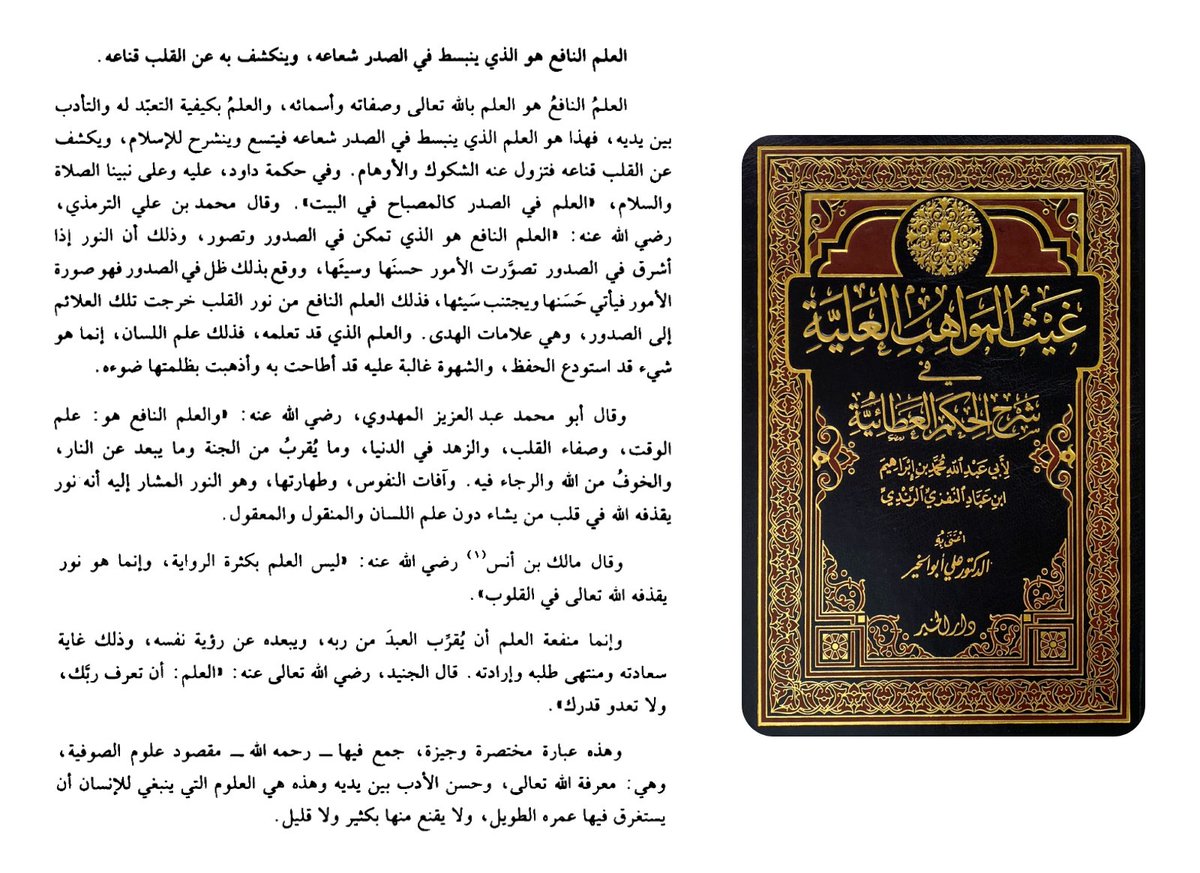
al-Shaykh Ibn ʿAbbād al-Nafzī al-Rundī, in his Ghayth al-Mawāhib al-ʿAliyyah, commenting on Hikam al-'Ata'iyya of Ibn Aṭāʾillah al-Iskandarī, writes on the saying: “Beneficial knowledge is that whose radiance spreads through the breast, and by which the heart’s veil is lifted.” He explains that beneficial knowledge is knowledge of Allah Most High, His names, and His attributes, and knowledge of how one worships Him and comports oneself with proper adab before Him. This is the knowledge whose radiance spreads through the breast until it opens and expands for Islam, and by which the heart’s veil is lifted, so that doubts and delusions depart from it. Then he cites the wisdom attributed to Dāwūd, عليه السلام: “Knowledge in the breast is like a lamp in the house.” And Muḥammad ibn ʿAlī al-Tirmidhī said that beneficial knowledge is that which becomes firmly established in the breast and is inwardly perceived. When light shines in the breast, things are seen in their goodness and their evil, so one takes what is good and avoids what is evil. That is beneficial knowledge. As for merely acquired knowledge, it is the knowledge of the tongue alone: something deposited in memory while desire remains dominant over it, able to cast it down and extinguish its light with its darkness. And Abū Muḥammad ʿAbd al-ʿAzīz al-Mahdawī said that beneficial knowledge is knowledge of the moment, purity of heart, renunciation of the world, knowledge of what draws one near to Paradise and distances one from the Fire, fear of Allah, hope in Him, and knowledge of the afflictions of the soul and its purification. It is the light alluded to here: a light which Allah casts into the heart of whomsoever He wills, beyond the knowledge of the tongue, transmitted knowledge, and rational knowledge. And Mālik ibn Anas said: “Knowledge is not by the abundance of narration; rather, it is a light that Allah Most High casts into hearts.” Then Ibn ʿAbbād says: the true benefit of knowledge is that the servant draws near to his Lord and be distanced from seeing himself. That is the furthest end of his seeking and desire. And al-Junayd said: “Knowledge is that you know your Lord and do not overstep your proper measure.” Ibn ʿAbbād then says that this brief statement gathers the very aim of the sciences of the Sufis: knowledge of Allah Most High and beautiful comportment before Him. These are the sciences in which a person ought to spend his long life immersed, and with which he should not be content, whether he has attained much of them or little.
حسن المعبري tweet media
Română
0
1
3
23
حسن المعبري retweetledi
حسن المعبري
حسن المعبري@Ma3bari·
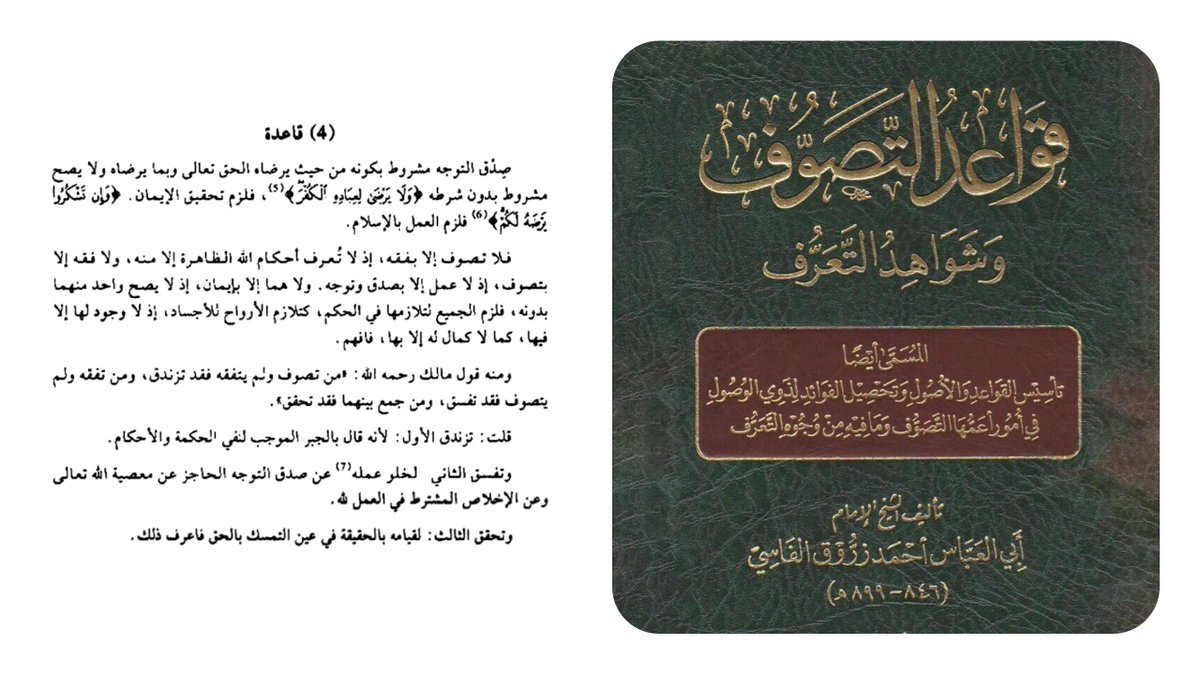
Imām Aḥmad Zarrūq al-Shādhilī ق (d. 899 AH) — on the inseparable bond between Īmān, Fiqh, and Taṣawwuf. "The sincerity of one’s turning to God is conditioned upon it being the kind of turning that God Most High is pleased with—indeed, upon His very pleasure. That which is conditioned is invalid without its condition. Hence His saying: “He is not pleased with disbelief for His servants:” (Q 39:7)—so faith is a condition that must be fulfilled. And His saying: “If you are grateful, I will surely increase you:” (Q 14:7)—so acting upon Islam is a condition that must be fulfilled. Thus, there is no Taṣawwuf without jurisprudence (fiqh), because divine exoteric rules can be known only through jurisprudence. Nor is there any jurisprudence without Taṣawwuf, for action cannot be carried out without sincerity and turning towards God. Nor can jurisprudence and Taṣawwuf be without faith, since neither of the two is valid without it. Thus all three are inseparably bound together in principle—like souls and bodies: souls have no existence without bodies just as bodies have no perfection without souls. So, understand this! Along these lines is the saying of Mālik (may God have mercy on him!): “He who follows the path of Ṣūfism without learning fiqh (jurisprudence) is a heretic; and he who learns jurisprudence while neglecting the Path becomes corrupt. But he who combines both has attained realization of the Truth.” I say: the first is a heretic because of his belief in determinism (jabr), which strips away wisdom and negates moral rulings. The second is called corrupt because his deeds lack a true turning towards God—one that restrains from disobeying Him—and because his deeds also lack sincerity, which is a condition in acting for God’s sake. The third attains to the realization because he establishes the Reality while holding fast to the Truth. So, know this!" [Principle 4, Qawāʿid al-Taṣawwuf]
حسن المعبري tweet media
English
0
17
92
5.8K
حسن المعبري
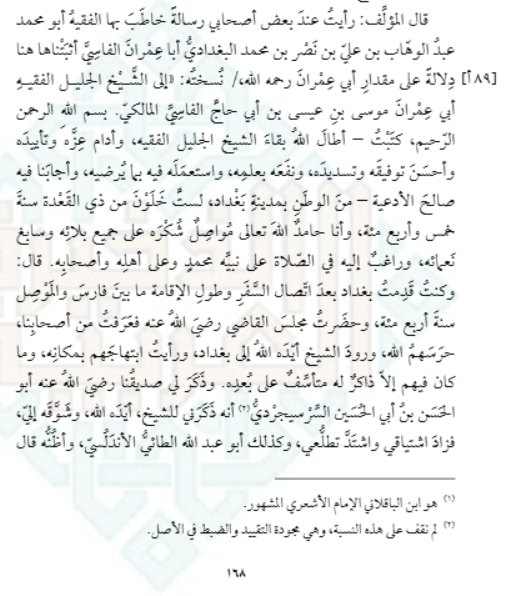
The attempt to portray Imām al-Qāḍī Abū Bakr al-Bāqillānī as a man of concealment or hesitation collapses before the way the tradition itself remembered him. Abū Ḥātim Maḥmūd ibn al-Ḥusayn al-Qazwīnī said: “What al-Qāḍī Abū Bakr al-Ashʿarī used to keep inwardly of scrupulousness, religion, renunciation, and guardedness was many times greater than what he used to show outwardly. He was asked about that, and he said: I only showed outwardly what I showed in order to infuriate the Jews, the Christians, the Muʿtazila, the Rāfiḍa, and the dissenters, so that they would not look down upon the scholars of truth and religion.” And Ibn ʿAmmār al-Mayūrqī said: “Ibn al-Ṭayyib was a Mālikī, eminent, and scrupulous—one from whom not a single lapse was ever preserved, nor was any deficiency ever attributed to him. He was known as Shaykh al-Sunna and the Tongue of the Umma. He was the knight of this discipline, a blessing upon this Umma. He was a fortress from the fortresses of the Muslims, and the people of innovation rejoiced at nothing as much as they rejoiced at his death.” And al-Qāḍī ʿIyāḍ said: “He was known as the Sword of the Sunna and the Tongue of the Umma, the spokesman on behalf of Ahl al-Ḥadīth and the path of Abū al-Ḥasan. To him the leadership of the Mālikīs in his time came to an end, and he had a great circle in the congregational mosque of Baṣra.” This is not the language of a man remembered for hiding what he believed. It is the language reserved for a man whom the tradition remembered as a fortress of Islam, a public defender of orthodoxy, and a scholar whose very presence humiliated the people of falsehood.
حسن المعبري tweet media
Ibn ‘Abdullāh al-Hāshimī@hashimiyy_

The claim that Imam Abu Bakr al-Baqillani was practicing “taqiyya” is frankly hilarious. He was openly and actively calling people to Ashʿarism, authoring works, and publicly defending his creed without hesitation. He answered detailed questions on ʿaqīdah from regions as far as North Africa, not just from those in his immediate circle. This is hardly the behavior of someone concealing his beliefs out of fear. His famous encounter in the court of the Byzantine emperor,where he deliberately turned his back to the emperor upon entering, demonstrates both his confidence in matters of principle. A figure of this stature was not intimidated by fringe voices posing as scholars of ḥadīth. At most, what this claim shows is that Abu Nasr al-Sijzi transmitted from a weak or unreliable source, likely due to his taʿaṣṣub, rather than presenting a credible account.

Română
0
2
12
314
حسن المعبري retweetledi
النووي
النووي@nawawimaliki·
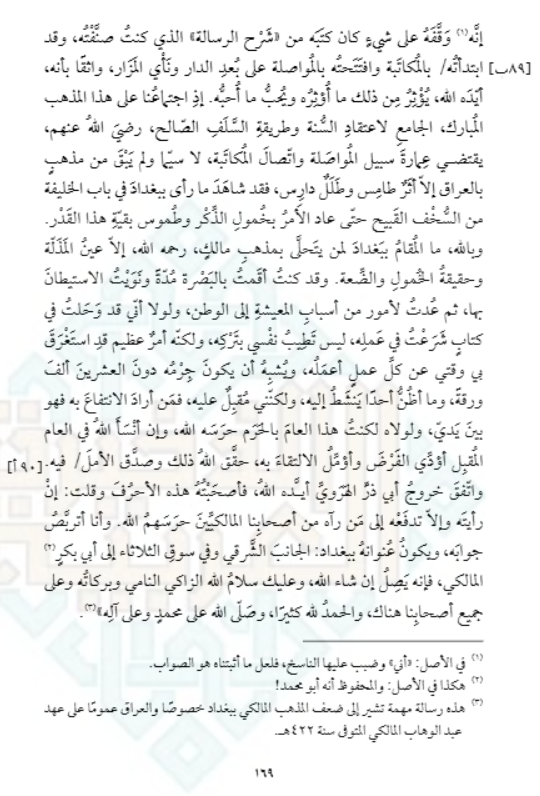
📌La croyance des premiers malikites du Maghreb #05 : Le consensus du Maghreb et des malikites sur la doctrine ash'arite rapporté par l'imam Abû 'Imran al-Fassî (m.430H) et le Qâdî 'Abd al-Wahhâb (m.422H). L'imam Abû 'Imran al-Fassî était un juriste, muhaddith, spécialiste des fondements juridiques (ussul) de l’école mâlikite, l’une des figures les plus éminentes de l'école. Il a laissé une empreinte importante dans l’histoire du Maghreb à son époque. Il a contribué à des transformations radicales dans les affiliations intellectuelles et doctrinales dans la région. Il fut nommé leader populaire et était à la tête l’émergence du mouvement almoravide, dans lequel il jouaun rôle essentiel. N'importe quel historien étudiant le Maghreb connaît la valeur de cette homme à son époque. C'était aussi l'élève du grand savant al-Qâbissî que nous avons déjà présenté dans les posts précédents, le Shaykh d'Ibn Abî Zayd, et de nombreux muhaddithun du Maghreb. L'imam Abû 'Imran al-Fâssî était notamment un fervent ash'arite, propageant ce crédo tout au long de sa vie. Il était l'élève de l'imam al-Bâqillânî al-Ash'arî, assistait a ces cours au côté du grand muhhadith Abû Dharr al-Harawî comme le rapporte l'imam al-Bâjjî al-Mâlikî. Une correspondance historique entre deux imams malikites ash'arites : Une précieuse lettre entre Abû 'Imran et le Qadi 'Abd al-Wahhâb nous est parvenue, mentionnant énormément de bienfaits. Elle est longue et je mentionnerai certains passages utiles pour notre propos : L'imam Abî Tâlib al-Marwâzî (m.516H) dans livre 'Uyun al-Imamah, rapporte à partir de ses compagnons, une lettre écrite par le Qâdî Abu Mohammed 'Abd al-Wahhâb (élève d'Ibn Abî Zayd), l'auteur du Sharh de la Rissalah, adressé à l'imam Abû 'Imran al-Fâssî : « J’ai ['Abd al-Wahhâb] assisté au cours du Juge [Al-Bâqillânî al-Ash'arî], qu’Allah soit satisfait de lui, et j’ai appris de nos compagnons, qu’Allah les protège, l’arrivée du Shaykh [Abû 'Imran], qu’Allah le soutienne, à Baghdad. J’ai vu leur joie à son sujet, et chacun d’eux parlait de lui, regrettant son éloignement. Notre ami, qu’Allah soit satisfait de lui, Abû al-Hassan ibn Abî al-Hussayn al-Sirrijsardî, m’a mentionné au Shaykh, qu’Allah le soutienne, et a éveillé en lui le désir de me rencontrer, ce qui a accru mon propre désir et intensifié mon attente. De même, Abû ‘Abd Allâh al-Tâ’î l’Andalusî, je crois, a dit qu’il lui avait montré quelque chose que j’avais écrit dans mon commentaire de la Rissalah, que j’avais composé. J’ai commencé par correspondre avec lui et j’ai poursuivi cette relation malgré la distance et l’éloignement du lieu, confiant qu’il, qu’Allah le soutienne, apprécierait ce que j’apprécie et aimerait ce que j’aime. Car notre adhésion commune à cette doctrine bénie [l'ash'arisme], qui regroupe la croyance de la Sunnah et la voie des pieux prédécesseurs (salaf salih), qu’Allah soit satisfait d’eux, exige de maintenir les liens de communication et de correspondance [...] Si Allah me prête vie l’année prochaine, j’accomplirai l’obligation [du pèlerinage] et j’espère le rencontrer [al-Fâssî], qu’Allah réalise cela et rende cet espoir véridique. Il se trouve qu’Abû Dharr al-Harawî [al-Ash'arî], qu’Allah le soutienne, part, et j’ai donc envoyé ces lignes avec lui. Je lui ai dit : si tu le vois, remets-les-lui [à Abû 'Imran] ; sinon, donne-les à l’un de nos compagnons mâlikites qui l’aura vu, qu’Allah les protège. J’attends sa réponse, et l’adresse à Baghdad est : sur la rive orientale, dans le Souk du Mardi, à l’adresse de Abû Bakr [al-Bâqillânî] al-Malikî elle lui parviendra, si Allah le veut. » On en déduit énormément de bienfaits dans cette correspondance entre ces deux grands savants : - L'importance énorme de l'imam al-Bâqillânî chez les savants malikites. - Le 'ilm al-kalâm était étudié et les savants malikites du Maghreb maitrisaient cette science. - Le respect et les éloges du Qadî 'Abd al-Wahhâb envers l'imam Abû 'Imran al-Fâssî. - Le consensus à leur époque concernant la doctrine ash'arite au sein du madhab malikite. Le madhab ash'ari et malikite allait de pair - Le ash'arisme existait bien avant les almoravides et s'est encore plus propagé pendant cet empire. - Le madhab malikite était peu présent à Baghdad contrairement au Maghreb et en Andalousie. Ainsi, prétendre que le ash'arisme était absent au Maghreb ou inconnu des premiers malikites relève soit d’une ignorance manifeste, soit d’une déformation et d'un mensonge volontaire de l’histoire. La réalité est que l’ash'arisme fut la croyance des plus grands savants malikites du Maghreb, diffusée par les figures majeures de l’époque imams, mujahiddîn et juges tous attachés à cette voie de la Sunnah. Al Hamdoulilah ! ⬇️
النووي tweet mediaالنووي tweet media
Français
10
35
100
22.8K
حسن المعبري
Imām Ibn ʿĀdil al-Ḥanbalī al-Ashʿarī (d. 880 AH) explains in his tafsīr al-Lubab fi ‘Ulum al-Kitab, in his interpretation of Surat al-Fajr, verse 22, “And your Lord comes, and the angels rank upon rank,” that this is not to be understood in any bodily, spatial, or creaturely sense, but rather in a manner that preserves the absolute transcendence of Allah through ta’wil grounded in tanzīh. He states: “As for His saying, ‘And your Lord comes, and the angels rank upon rank,’ it means: His command and decree come. This was said by al-Hasan, and it is a case of ellipsis, with the possessed noun understood. It has also been said: the Lord came to them by means of the signs, as in His saying, exalted is He, ‘unless Allah comes to them in canopies of cloud,’ that is, with canopies. It has also been said that the coming of the signs is described as His coming, in order to magnify the gravity of those signs, as in the hadith: ‘O son of Adam, I was ill and you did not visit Me; I asked you for water and you did not give Me drink; I asked you for food and you did not feed Me.’ It has also been said: the ambiguities vanished, the doubts were lifted, and knowledge became immediate and necessary, just as ambiguities and doubts vanish at the arrival of the very thing about which one had been in doubt. It has also been said: the overpowering force of your Lord comes, just as one says, ‘The Banu Umayyah have come upon us,’ meaning their domination and subjugation. The people of allusive interpretation said: His power became manifest and fully apparent. And Allah, glorified and exalted is He, is not described by movement from one place to another. How could transition and movement be attributed to Him, when He has no place, no temporal circumstance, and no time or age passes over Him? For the passage of time over a thing entails loss, and whatever is touched by loss is powerless.” This is not a denial of the verse. It is an explanation of it in a manner that preserves the Majesty of the Creator. So when Ibn ʿĀdil comments on “And your Lord comes,” he explains that what comes is His command, decree, signs, overpowering force, and the manifest disclosure of His power, while Allah Himself is exalted above space, time, motion, transition, and every created mode of being. [al-Lubāb fī ʿUlūm al-Kitāb, tafsīr of al-Fajr 89:22.]
حسن المعبري tweet media
Română
3
10
24
855
حسن المعبري retweetledi
حسن المعبري
حسن المعبري@Ma3bari·
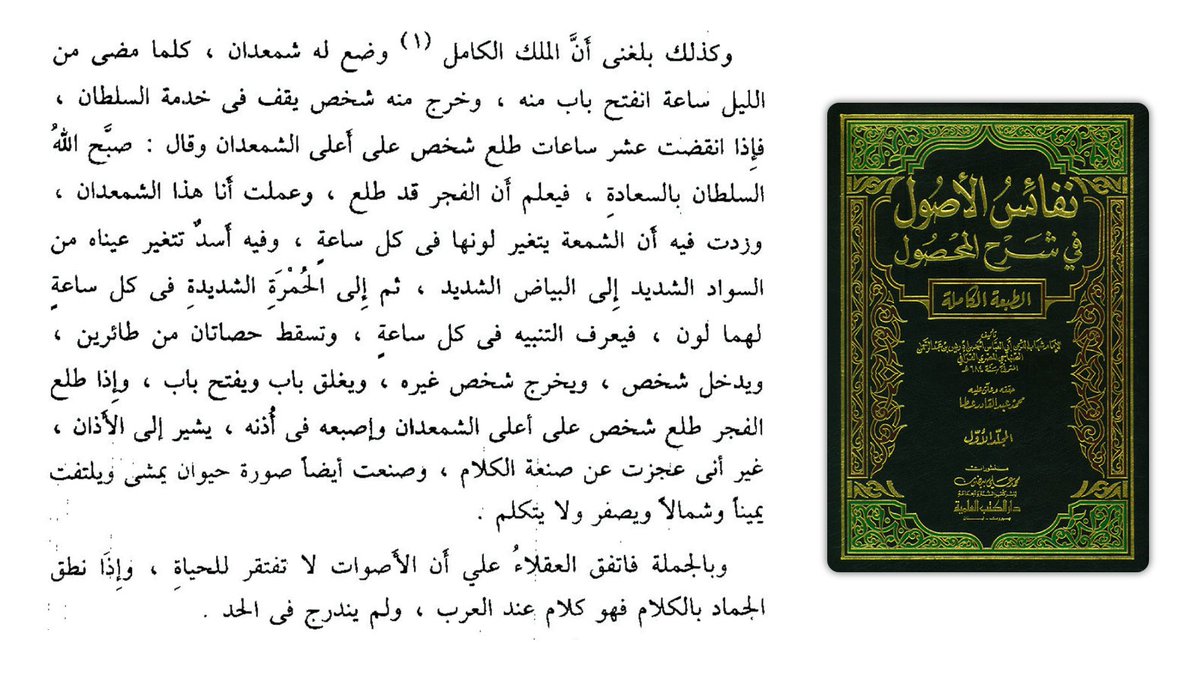
Imām Shihāb al-Dīn al-Qarāfī (d. 684/1285), in Nafāʾis al-Uṣūl, brings together uṣūl, craftsmanship, and intellect: he describes a mechanical candelabrum he himself built, not merely as a curiosity, but as part of a deeper argument about sound, motion, and what does and does not require life. “I made this candelabrum myself, and arranged it so that the candle changes color with each passing hour. In it is a lion whose eyes shift from intense black to brilliant white, then to deep red, each hour marked by its own distinct color. Two small pebbles fall from two birds; one figure enters while another exits; one door closes and another opens. And when dawn breaks, a figure rises atop the candelabrum with his finger in his ear, signaling the adhān — except that I was unable to devise speech for it. I also made the form of an animal that walks, turns right and left, and whistles, though it does not speak.” Then al-Qarāfī concludes: “In sum, rational people agree that sounds do not require life.” [al-Qarāfī, Nafāʾis al-Uṣūl, 1:441–442.]
حسن المعبري tweet media
Română
1
9
25
1.2K
حسن المعبري retweetledi
Ibn ‘Abdullāh al-Hāshimī
Sayyidunā Saʿd ibn Abī Waqqāṣ رضي الله عنه was among the most noble and virtuous Companions of the Messenger of Allāh ﷺ. He was Saʿd ibn Mālik ibn Uhayb al-Zuhrī, from the clan of Banū Zuhrah, the maternal relatives of the Messenger of Allāh ﷺ, making him the Prophet’s second cousin through his mother’s side. He was among the earliest to embrace Islām, accepting the message while still a youth, and he was known for his unwavering firmness upon the truth despite the severe pressure he faced from his family. He himself said: “No one accepted Islām except on the day I embraced the faith. I remained for seven days a third of Islām.” [Ṣaḥīḥ al-Bukhārī 3521] His mother attempted to force him to abandon Islām by threatening to starve herself, yet he remained steadfast, saying that even if she had one hundred souls and each departed, he would not leave his religion. Concerning this, Allāh revealed: “But if they strive to make you associate with Me that of which you have no knowledge, then do not obey them, but accompany them in this world with kindness.” [Qurʾān 31:15] Sayyidunā Saʿd رضي الله عنه was the first to shoot an arrow in the path of Allāh and is counted among the earliest warriors of Islām. The Prophet ﷺ honored him uniquely during battle, saying: “Shoot, O Saʿd! May my father and mother be sacrificed for you.” This immense honor, where the Prophet ﷺ combined both his father and mother in praise, was only reported for him and for Sayyidunā al-Zubayr ibn al-ʿAwwām رضي الله عنه among the Companions. He participated in Badr, Uḥud, al-Khandaq, Khaybar, the Conquest of Makkah, and all the major campaigns alongside the Messenger of Allāh ﷺ. During the Conquest of Makkah, one of the three banners of the Muhājirīn was entrusted to him. [Tārīkh Dimashq, 20/290] On the Day of Uḥud, Allāh honored him with a remarkable and miraculous vision. He said: “I saw on the right and left of the Messenger of Allāh ﷺ two men wearing white garments whom I had never seen before nor after, meaning Jibrīl and Mīkāʾīl عليهما السلام.” [Ṣaḥīḥ Muslim 2306] He was among those who pledged allegiance under the tree at al-Ḥudaybiyyah, the people of Riḍwān, about whom Allāh said: “Indeed, Allāh was pleased with the believers when they pledged allegiance to you under the tree.” [Qurʾān 48:18] At Khaybar, he was among those who stormed the fort, fighting side by side with the brave warrior, Sayyidunā ʿAlī ibn Abī Ṭālib رضي الله عنه. After the passing of the Messenger of Allāh ﷺ, Sayyidunā Saʿd رضي الله عنه became one of the greatest commanders of Islām. During the caliphate of ʿUmar ibn al-Khaṭṭāb رضي الله عنه, he was appointed to lead the Muslim armies against the Persian Empire. He commanded the decisive Battle of al-Qādisiyyah, in which Allāh granted victory to the Muslims over the Sāsānian forces, opening the lands of Persia to Islām. He later oversaw the establishment of Kūfah. He was also among the ten who were given glad tidings of Paradise and among the six men appointed by ʿUmar ibn al-Khaṭṭāb رضي الله عنه to the council (shūrā) that would determine the next caliph. Toward the end of his life, withdrew into seclusion in a palace he had built near Ḥamrāʾ al-Asad. He had adopted it as his residence, and it was there that he passed away. Thereafter, he was carried to Madīnah and buried therein. His son Muṣʿab described his final moments, saying: “My father’s head rested in my lap as life slowly escaped him, so I cried. He said, ‘Do not cry over me, for Allāh will not punish me and I am from the people of Jannah… Let every doer seek reward from the one for whom he acted.’” [Tārīkh Dimashq, 20/364] Sayyidunā Saʿd ibn Abī Waqqāṣ رضي الله عنه passed away around 55 AH after a life filled with service to Islām. May Allāh be pleased with Sayyidunā Saʿd ibn Abī Waqqāṣ رضي الله عنه, the skilled archer and one of the greatest commanders among the Companions of the Messenger of Allāh ﷺ.
Ibn ‘Abdullāh al-Hāshimī tweet media
Català
3
11
40
1.5K
حسن المعبري retweetledi
‏المدغاوي
‏المدغاوي@frossfross1·
Many tend to forget one of the more underrated Sahaba, Uqba b. Nafi رضي الله عنه the first Muslim to reach Atlantic ocean he said in his famous speech "O Allah, if the sea had not prevented me, I would have galloped on for ever, upholding your faith and fighting the unbelievers!
‏المدغاوي tweet media
English
20
163
1.3K
40.6K
حسن المعبري retweetledi
Lost (H)
Lost (H)@qrybwghryyb·
Abū al-Qāsim al-Naṣrābādhī said: “Paradise remains by His sustaining it, while His remembrance of you and His love for you remain by His own subsistence. So how vast is the difference between that which remains by His sustaining and that which remains by His own subsistence?!”
Lost (H) tweet media
English
1
2
19
492
حسن المعبري retweetledi
حسن المعبري
حسن المعبري@Ma3bari·
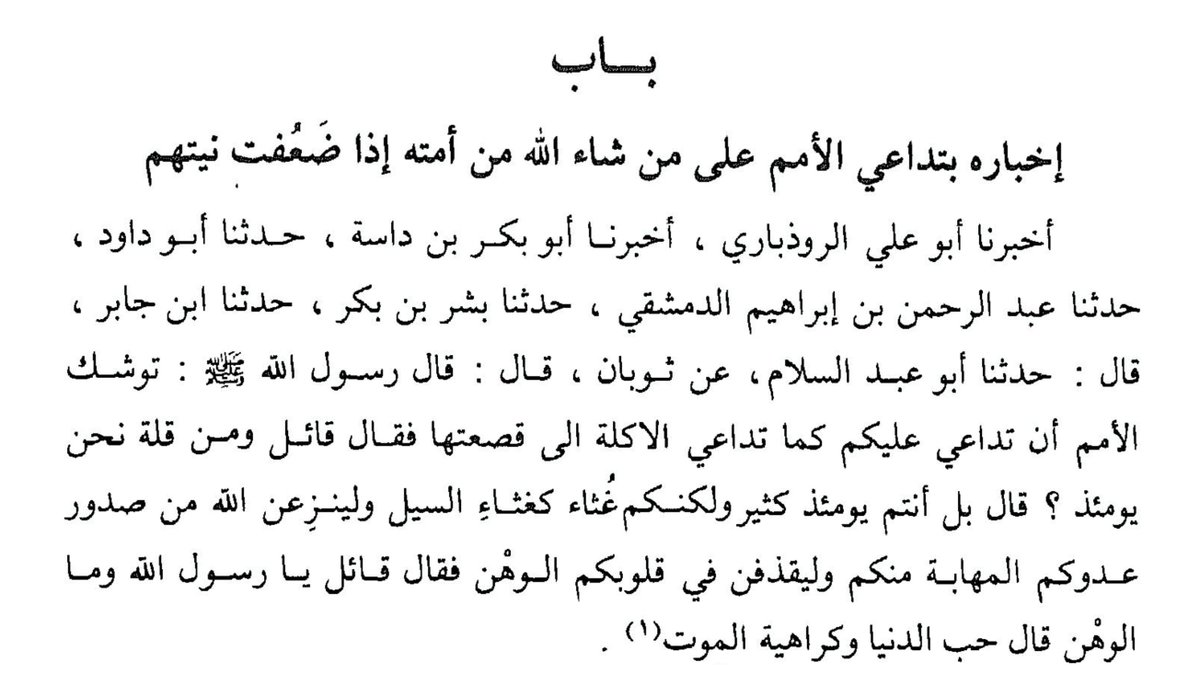
When the nations converge upon the Muslims as resolve weakens Narrated Thawbān رضي الله عنه: The Messenger of Allah ﷺ said: “Soon the nations will summon one another against you to attack, just as people when eating invite others to share their dish.” Someone asked: Will that be because of our small numbers at that time? He replied: “No—rather, you will be many on that day, but you will be like the scum and rubbish carried by a flood. Allah will surely remove the fear of you from the chests of your enemy, and He will cast wahn into your hearts.” Someone asked, “O Messenger of Allah, what is wahn?” He said: “Love of this world and aversion to death.” al-Bayhaqī, Dalāʾil al-Nubuwwah, vol. 6, p. 534.
حسن المعبري tweet media
English
1
7
41
1.8K
حسن المعبري retweetledi
حسن المعبري
حسن المعبري@Ma3bari·
Imām al-Mundhirī, in his chapter on poverty, lightness of hand, and detachment from the world, relates a beautiful exchange between Umm al-Dardāʾ and Abū al-Dardāʾ رضي الله عنهما. She said to him: “Why is it that you do not seek what so-and-so and so-and-so seek?” He replied: “Indeed, I heard the Messenger of Allah ﷺ say: ‘Before you lies a steep and arduous ascent which the heavily laden shall not cross.’ So I love to lighten myself for that ascent.” It is difficult to overstate how profound this answer is. Abū al-Dardāʾ does not respond with a long sermon on renunciation, nor with a denunciation of wealth, nor with some abstract praise of poverty. He answers with a single image that had already settled the matter in his heart: there is an ascent ahead, hard and crushing, and the burdened will not pass it. The later commentator al-Fayyūmī, in his commentary on al-Mundhirī, explains that this ʿaqabah kaʾūd is the difficult ascent; and he also cites al-Ḥāfiẓ al-Dimyāṭī, who describes it even more vividly as the rugged pass, hard to climb. Then al-Fayyūmī explains that the mukhiff is the one whose state has become light. That is the whole secret of the narration. The matter is not only what one owns, but what one carries. And that is what makes Abū al-Dardāʾ’s final words so beautiful: “So I love to lighten myself for that ascent.” He does not merely endure detachment; he loves it. For the people of insight, lightness was not deprivation. It was relief. It was the joy of casting off what would only make the crossing harder. Imām al-Mundhirī places this report exactly where it belongs: in a chapter meant to train the soul to fear the burden of excess and to desire a poverty that frees rather than humiliates. In this one brief exchange, an entire philosophy of zuhd appears — not the rejection of the world for its own sake, but the refusal to be weighed down by what will not help on the Day one must cross. May Allah make us light for that ascent: light from sins, light from vanity, light from heedlessness, and light from every burden that does not bring us nearer to Him.
حسن المعبري tweet media
English
0
19
83
3.2K
حسن المعبري retweetledi
موقع المنهاجي الشافعي
Imām al-Juwaynī (father of the Imām al-Ḥaramayn) lays down the Shāfiʿī position with precision: in matters of uṣūl, only one mujtahid is correct, and identifying that position is obligatory. The free-for-all of “every opinion is valid” has no place in uṣūl al-dīn.
Română
2
5
38
2.3K
حسن المعبري retweetledi
Ash'ari Sister
Ash'ari Sister@ashariukht·
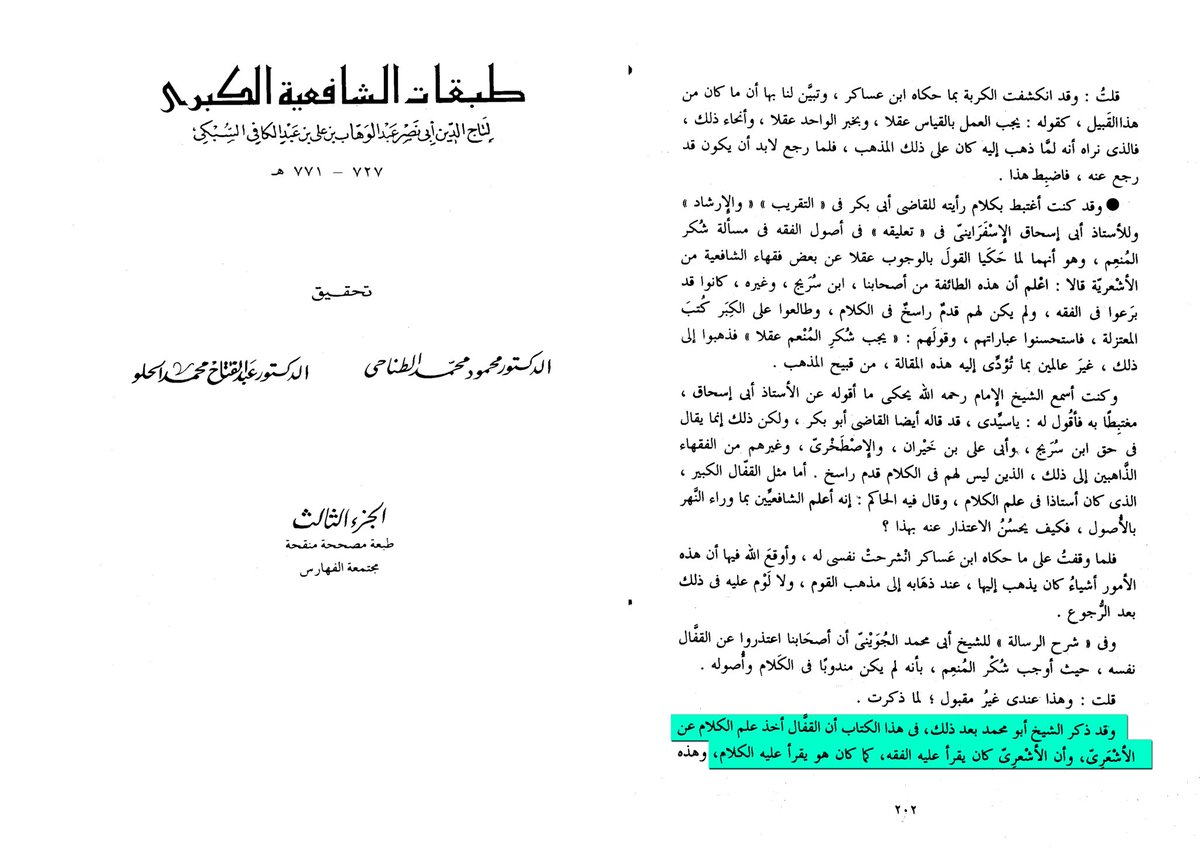
Early Shāfiʿīs and al-ʾAshʿarī A common claim from Wahhabis is that early Shāfiʿī scholars opposed ʾAbū al-Ḥasan al-ʾAshʿarī, and that Ashʿarīs later “took over” the Madhhab. However, historical reports show that many leading early Shāfiʿī imāms were directly connected to him studying Kalām with him, attending his gatherings, or being among his students and peers. No major Shāfiʿī authority of that early period is known to have condemned him or those who studied under him Notable Examples - ʾAbū Isḥāq al-Marwazī A leading Shāfiʿī authority and top student of Ibn Surayj. **He studied Kalām with ʾAbū al-Ḥasan al-ʾAshʿarī, while al-ʾAshʿarī studied fiqh from him. - ʾAbū Bakr al-Qaffāl al-Shāshī Another major student of Ibn Surayj and a leading faqīh. He studied Kalām under al-ʾAshʿarī, who also benefited from him in fiqh. - ʾAbū ʿAlī al-Sarakhsī A student of ʾAbū Isḥāq al-Marwazī and teacher of ʾAbū ʿUthmān al-Ṣābūnī. He also studied Kalām with al-ʾAshʿarī. - ʾAbū al-Ḥasan al-Ṭabarī A well-known theologian and direct companion/student of al-ʾAshʿarī. - ʾAbū Sahl al-Ṣuʿlūkī A prominent faqīh who attended the Kalām sessions of al-ʾAshʿarī. - ʾAbū Bakr al-Ismāʿīlī A contemporary and student of al-ʾAshʿarī. - Jamāl al-Dīn al-Mizzī A major Shāfiʿī ḥadīth master and author of Tahdhīb al-Kamāl, who admitted to being an Ashʿarī in his own handwriting. Conclusion These figures represent some of the most important early authorities in the Shāfiʿī Madhhab. Their direct engagement with ʾAbū al-Ḥasan al-ʾAshʿarī whether through study, companionship, or scholarly exchange demonstrates that his influence was present among early Shāfiʿīs, not a later intrusion. و الله هو اللي يوفق
Ash'ari Sister tweet mediaAsh'ari Sister tweet mediaAsh'ari Sister tweet mediaAsh'ari Sister tweet media
Română
4
11
35
1.8K
حسن المعبري
Imām al-Qāḍī Abū Bakr Muḥammad ibn ʿAbd Allāh ibn al-ʿArabī al-Mālikī (d. 543 AH), one of the great imāms of al-Andalus, writes in Sirāj al-Murīdīn on what later scholars would call the science of munāsabāt—the subtle interrelation and coherence of the Qurʾān’s verses: If it is asked: what is the reason for mentioning His saying, “And fear Allah; surely Allah is swift in reckoning,” alongside this verse, when no connection between them is outwardly apparent? The answer is that the interconnection of the verses of the Qurʾān with one another, such that they become like a single utterance—vast in meaning and perfectly ordered in expression—is a tremendous science. No one took it up except a single scholar, who worked through Sūrat al-Baqara in that manner. Then Allah opened this door for us as well. But when we found no people fit to carry it, and saw creation marked by the qualities of the idle and unworthy, we sealed it up, placed it between ourselves and Allah, and returned it to Him. And he does not leave the matter at a mere abstraction. When commenting on His saying, “And fear Allah; surely Allah knows what lies within the breasts,” he gives a glimpse of how such coherence works. Allah, he says, reminds the servants of His prior favor: that He made Himself known to them, took His covenant from them, and brought forth from them the response, “We hear and we obey.” He then warns them not to fall short in those covenants, outwardly or inwardly. Hence the closing words: “And fear Allah; surely Allah knows what lies within the breasts.” The ending, then, is not incidental. It returns the servant from outward speech and covenant to the inward reality of sincerity, fidelity, and what is hidden in the heart. The “one scholar” is commonly understood to be Abū Bakr al-Naysābūrī, whom later authorities describe as among the earliest to openly teach this science. (Abu al-Hasan al-Shahrabani, quoted by al-Zarkashī & al-Suyūṭī) The Qurʾān is not merely a collection of adjacent verses. In the eyes of the masters, it is a discourse whose parts are so deeply bound together that they become “like a single utterance.” Sirāj al-Murīdīn, 4:144–145.
حسن المعبري tweet media
Català
2
5
16
692
حسن المعبري retweetledi
Lost (H)
Lost (H)@qrybwghryyb·
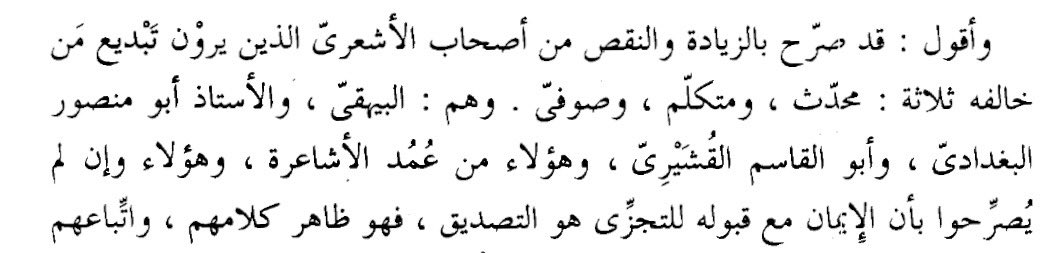
Three great pillars (ʿumud) of the Ashāʿirah in the 5th century in three different sciences: (1) Imām al-Bayhaqī: master of ḥadīth (2) Imām Abū Manṣūr al-Baghdādī: master of kalām (3) Imām Abū al-Qāsim al-Qushayrī: master of taṣawwuf
Lost (H) tweet media
Română
2
13
70
2.5K
حسن المعبري retweetledi
📝
📝@SalafiIbnSalaf·
Malik ibn Dinar “Since I've learned the reality of people, I don't care who praises or criticizes me, as they'll be excessive in both.” [Az-Zuhd of al-Bayhaqi (154)]
English
1
145
559
10K
حسن المعبري
حسن المعبري@Ma3bari·
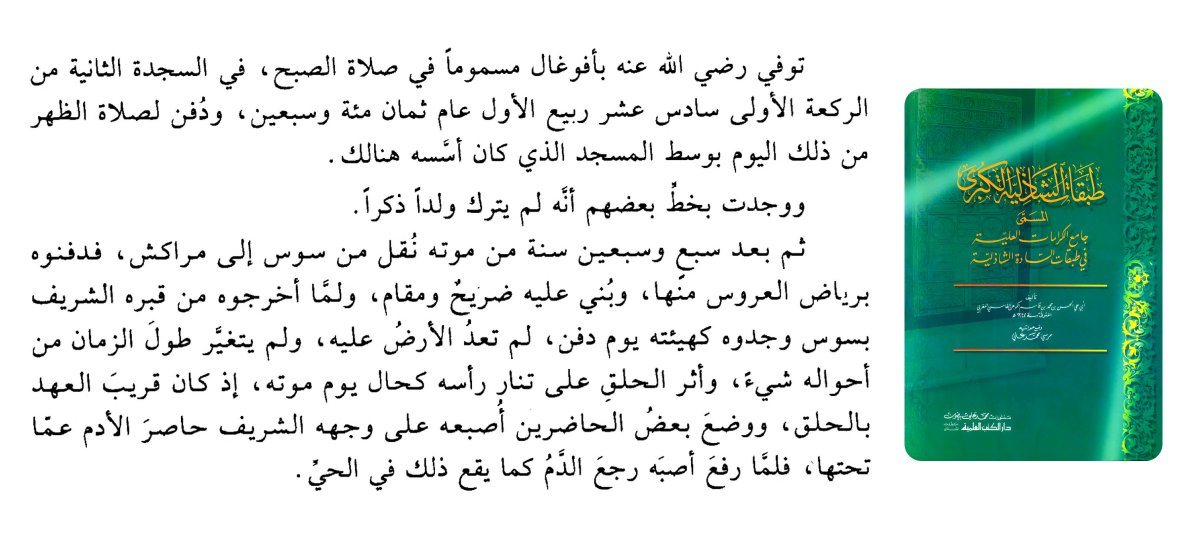
Imām Muḥammad ibn Sulaymān al-Jazūlī, the great saint and author of Dalāʾil al-Khayrāt, passed away by poisoning at Afūghāl during the Fajr prayer, in the second prostration of the first rakʿah, on 16 Rabīʿ al-Awwal 870 AH. He was buried before Dhuhr that very day in the mosque he had established there. Seventy-seven years later, his blessed body was transferred from Sūs to Marrakesh and reinterred in Riyāḍ al-ʿArūs. When his noble grave was opened, those present found him exactly as he had been on the day of his burial. The earth had not consumed him, nor had the long passage of time altered anything of his condition. Even the trace of shaving remained visible on the crown of his head, just as it had been at the time of his death, for he had only recently shaved. It is further related that when one of those present placed his finger upon the Imām’s noble face, the blood beneath the spot withdrew, and when he lifted it, the blood returned, just as that occurs in the living. May Allah be pleased with Imām al-Jazūlī, ennoble his secret, and grant us love for His awliya and steadfastness upon the path of His Messenger ﷺ. [al-Ṭabaqāt al-Shādhiliyya al-Kubrā]
حسن المعبري tweet media
Română
4
9
64
1.9K
حسن المعبري retweetledi
Mazouz
Mazouz@_Mazouz_·
Ibn ‘Ata Allah al-Iskandari al-Maliki, the third Murshid of the Shadhili Tariqa: “Don't feel the occurrence of mishaps unusual, as long as you are in this world, for this world only brings about what befits its traits and what its descriptions merit.” (Kitab al-Hikam)
English
1
6
32
1.7K