
Mariana

275 posts

Mariana banner
Mariana

Mariana

@MaariBech

Strategizing and executing campaigns that transcend the ordinary. Marketing aficionado dedicated to creating extraordinary brand experiences. ???? #Extraordinar

Ecuador Katılım Eylül 2009
69 Takip Edilen86 Takipçiler
Sabitlenmiş Tweet
Mariana
Mariana@MaariBech·
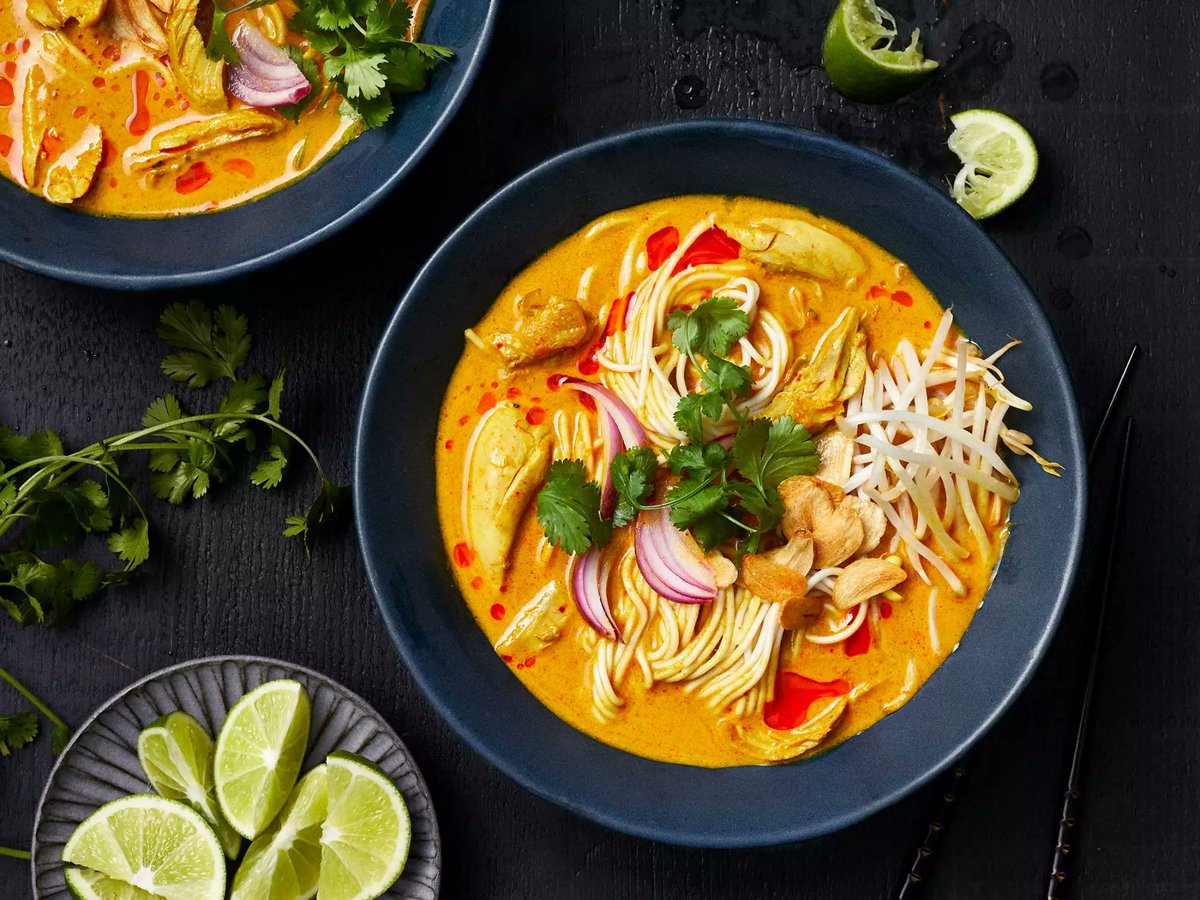
Thai Culinary Poetry: Khao Soi (Northern Thai Coconut Curry Noodles) Introduction: Our gastronomic odyssey through the diverse landscape of Thai cuisine unveils the poetic and soulful dish known as Khao Soi. Originating from the northern region of Thailand, Khao Soi is a symphony of textures and flavors, blending the richness of coconut curry with the satisfying slurp of egg noodles. Let's dive into the enchanting world of Khao Soi and discover why it has become a culinary treasure of Northern Thailand. Origins and Cultural Significance: Hailing from the city of Chiang Mai, Khao Soi reflects the distinct culinary identity of Northern Thailand. With influences from Burmese and Yunnanese cuisines, this dish has evolved into a beloved local specialty. Often enjoyed as a communal meal, Khao Soi embodies the warmth and conviviality of Northern Thai hospitality. Ingredients: At the heart of Khao Soi is a luscious coconut milk-based curry, enriched with a unique blend of spices such as coriander, turmeric, and chili. Tender pieces of chicken or beef are simmered in this aromatic broth, infusing them with the rich flavors of the curry. The dish is then served over both crispy deep-fried egg noodles and soft, boiled egg noodles, creating a delightful textural contrast. Garnishes like shallots, lime wedges, and pickled mustard greens add the finishing touches. Texture Harmony: Khao Soi's charm lies in its harmonious combination of textures. The crispy noodles provide a satisfying crunch, while the soft boiled noodles absorb the velvety richness of the coconut curry. The tender meat adds a hearty element, creating a symphony of textures that elevates every spoonful into a culinary experience. Aromatic Complexity: The aromatic complexity of Khao Soi is a result of the intricate spice blend and the fragrant coconut milk. The curry boasts a perfect balance of savory, sweet, and spicy notes, creating a depth of flavor that is both comforting and invigorating. The addition of lime wedges adds a citrusy zing, enhancing the overall sensory experience. Regional Variation: While Khao Soi is primarily associated with Northern Thailand, variations of the dish can be found in neighboring regions. Some areas may offer seafood or vegetarian options, showcasing the adaptability of Khao Soi to local ingredients and preferences. The dish's regional diversity adds another layer of intrigue to the exploration of Thai cuisine. Culinary Poetry in a Bowl: Khao Soi is more than a meal; it is a poetic expression of Northern Thai culinary artistry. The meticulous preparation of the curry, the careful balance of textures, and the regional nuances make each bowl a masterpiece that tells a story of tradition and innovation. Whether enjoyed in a humble street-side eatery or a fine dining establishment, Khao Soi invites diners to immerse themselves in the culinary poetry of Northern Thailand. Conclusion: Khao Soi, with its enchanting blend of flavors and textures, stands as a testament to the diversity and richness of Thai cuisine. As you savor the intricate layers of this Northern Thai coconut curry noodles, you embark on a culinary journey that transcends mere sustenance—it becomes a celebration of culture, tradition, and the profound poetry embedded in every bowl of Khao Soi.
Mariana tweet media
English
29
0
0
688
Mariana
Mariana@MaariBech·
@ayeejuju I can't trust anything anymore, always second-guessing everyone around me.
English
0
0
0
231
juju 💰
juju 💰@ayeejuju·
my trust issues so bad i don’t even trust these
juju 💰 tweet media
English
575
12.1K
157.8K
8.3M
Mariana
Mariana@MaariBech·
@AMAZlNGNATURE Absolutely stunning! Their vibrant colors are absolutely mesmerizing. So elegant and regal.
English
0
0
0
19
Mariana
Mariana@MaariBech·
@nftbadger Always there for each other, ready to face any challenge together.
English
0
0
1
2K
badger
badger@badger69420·
me and my best friend in every serious situation
English
229
3.9K
28.8K
5.6M
Mariana
Mariana@MaariBech·
@insultsrare This is the epitome of thirst, gotta have some self-respect.
English
1
0
0
327
star 💫
star 💫@stxrinsky·
no man should be this down bad
star 💫 tweet media
English
214
2.6K
68.3K
2.5M
Mariana
Mariana@MaariBech·
@ivgofa Amazing engineering feat connecting two iconic New York City boroughs together!
English
0
0
0
1.3K
Ivette González Fdz
Ivette González Fdz@ivgofa·
Brooklyn is a suspension bridge over the East River connecting the two boroughs of New York, Manhattan and Brooklyn. The bridge is one of the largest and oldest road bridges in the United States and was the world's first steel cable car bridge.
English
22
0
0
5.5K
Mariana
Mariana@MaariBech·
@Yoda4ever Ugh, Monday vibes hitting hard right now. Can we just skip today?
English
0
0
0
11
Mariana
Mariana@MaariBech·
@TheFigen_ This is hilarious, had me laughing the whole way through!
English
0
0
0
15
Mariana
Mariana@MaariBech·
@mylovrrr1 "Jeonju is truly a feast for the senses, offering a perfect blend of history, culture, and mouthwatering delicacies. A must-visit destination!"
English
0
0
0
79
Mariana
Mariana@MaariBech·
@CarolCornelius3 "Kaiseki cuisine truly captures the essence of Japan's vibrant seasons, an exquisite experience like no other."
English
0
0
0
139
Carol Cornelius
Carol Cornelius@CarolCornelius3·
Indulging in Elegance: The Allure of Kaiseki Cuisine Kaiseki: A Culinary Symphony of Seasonal Beauty Our gastronomic exploration of Japan brings us to Kaiseki, a culinary art form that transcends mere dining and offers an exquisite journey through the seasons. Often described as a multi-course meal, Kaiseki represents the pinnacle of Japanese haute cuisine, where each dish is meticulously crafted to showcase the beauty of seasonal ingredients. Historical Roots The origins of Kaiseki can be traced back to the Japanese tea ceremony, where small, simple meals were served to accompany the tea. Over time, these meals evolved into the sophisticated and refined dining experience known as Kaiseki. Today, Kaiseki is synonymous with elevated dining, celebrated during special occasions, ceremonies, and at renowned ryokans (traditional Japanese inns). Structure and Sequence Kaiseki is structured in a sequence of meticulously presented courses, each designed to highlight the flavors, textures, and aesthetic qualities of the featured ingredients. The meal typically begins with a sakizuke (appetizer), followed by a hassun (seasonal assortment). The progression continues with courses such as suimono (clear soup), mukozuke (sashimi), yakimono (grilled dish), mushimono (steamed dish), agemono (fried dish), and a shokuji (rice dish) or gohan. Dessert, or mizumono, concludes the dining experience. Seasonal Sensibilities One of the defining characteristics of Kaiseki is its emphasis on seasonality. Chefs meticulously select ingredients that are at the peak of freshness and flavor, reflecting the changing seasons. The presentation of each dish is a visual masterpiece, incorporating seasonal colors, textures, and even tableware to evoke a sense of harmony with nature. Attention to Detail Kaiseki is not just a meal; it's a meticulous craft where attention to detail is paramount. From the arrangement of plates to the selection of garnishes, every element is considered to create a harmonious and aesthetically pleasing dining experience. The artistry extends to the choice of tableware, ensuring that it complements the overall theme of the meal. Cultural Significance: A Celebration of Culinary Art Kaiseki is more than a dining experience; it's a celebration of culinary art and Japanese cultural aesthetics. It reflects the principles of omotenashi, where the chef strives to anticipate and fulfill the guest's needs, creating an immersive and memorable dining journey. Kaiseki embodies the Japanese philosophy of balance, seasonality, and the pursuit of perfection. In Conclusion Kaiseki, with its artistic presentation and devotion to seasonal beauty, stands as a testament to the sophistication of Japanese culinary culture. As you embark on a Kaiseki dining experience, you're not just savoring a meal; you're partaking in a culinary symphony that harmonizes nature, tradition, and culinary mastery. So, the next time you have the opportunity to indulge in Kaiseki, let each course unfold like a chapter in a culinary novel, allowing you to appreciate the exquisite craftsmanship and cultural richness embedded in this extraordinary Japanese dining tradition.
English
25
0
0
1.2K
Mariana
Mariana@MaariBech·
@Isa_VaFran15 Mouthwatering combination of flavors in this Thai basil pork stir-fry! A must-try!
English
0
0
1
68
Isa Varinas Franco
Isa Varinas Franco@Isa_VaFran15·
Thai Delight: Pad Krapow Moo Sap (Thai Basil Pork Stir-Fry) Introduction: In our culinary voyage through Thailand's diverse flavors, we encounter Pad Krapow Moo Sap, a beloved Thai dish that embodies simplicity and boldness in equal measure. This flavorful stir-fry combines tender minced pork with fragrant Thai basil, garlic, and chilies, resulting in a dish that is both comforting and exhilarating. Let's delve into the exquisite world of Pad Krapow Moo Sap and uncover the secrets behind its widespread popularity. Origins and Street Food Heritage: Pad Krapow Moo Sap has its roots in Thai street food culture, where vendors skillfully prepare quick and satisfying meals for hungry passersby. Originating from the bustling streets of Bangkok, this dish has become a staple in both local eateries and home kitchens across Thailand. Its simplicity and robust flavors have earned it a special place in the hearts of Thai food enthusiasts. Ingredients: At the heart of Pad Krapow Moo Sap is minced pork, cooked until tender and infused with the aromatic trio of garlic, Thai bird chilies, and fresh Thai basil leaves. The dish is seasoned with a combination of fish sauce, soy sauce, and oyster sauce, lending a savory depth to the stir-fry. Served atop a bed of steamed jasmine rice and garnished with a crispy fried egg, Pad Krapow Moo Sap offers a harmonious blend of textures and flavors. Flavor Explosion: What sets Pad Krapow Moo Sap apart is its explosive flavor profile. The combination of garlic, chilies, and Thai basil creates a symphony of tastes that tantalize the taste buds with every bite. The savory notes from the pork, combined with the umami-rich sauces, result in a dish that is deeply satisfying and full of depth. Heat and Aroma: One of the defining characteristics of Pad Krapow Moo Sap is its bold spiciness, derived from the Thai bird chilies. These fiery peppers not only add heat to the dish but also infuse it with a delightful aroma that fills the air with their distinctive fragrance. The interplay of heat and aroma creates a sensory experience that is both invigorating and comforting. Versatility and Adaptability: While Pad Krapow Moo Sap traditionally features minced pork, the dish can be adapted to accommodate different protein choices, such as chicken, beef, or tofu, catering to a variety of dietary preferences. Additionally, the level of spiciness can be adjusted according to individual tastes, making it a versatile option for diners of all palates. Culinary Heritage in Action: Pad Krapow Moo Sap is a testament to the ingenuity and resourcefulness of Thai cuisine. Its humble ingredients and straightforward preparation highlight the beauty of simplicity, allowing the bold flavors of Thai basil and chilies to take center stage. Whether enjoyed as a quick street food snack or a hearty home-cooked meal, Pad Krapow Moo Sap embodies the essence of Thai culinary heritage in action. Conclusion: Pad Krapow Moo Sap, with its bold flavors and comforting simplicity, captures the essence of Thai cuisine in every bite. As you savor the aromatic stir-fry of minced pork and fragrant Thai basil, you embark on a culinary journey through the vibrant streets of Bangkok, where each dish tells a story of tradition, innovation, and the rich tapestry of Thai flavors. So, let the robust flavors of Pad Krapow Moo Sap awaken your senses and transport you to the heart of Thailand, where every meal is a celebration of culinary delight.
English
25
0
1
801
Mariana
Mariana@MaariBech·
@HairToca Such a graceful creature, truly a testament to the beauty of nature!
English
0
0
0
47
Toca Hair Salon
Toca Hair Salon@HairToca·
The Majestic Giraffe - Towering Symbol of African Savannas Introduction: Among the iconic inhabitants of the African savannas, the giraffe stands tall as a symbol of grace, beauty, and resilience. This essay embarks on a journey through the world of the giraffe, uncovering its unique features, behaviors, and the conservation challenges it faces in its natural habitat. Body: The giraffe (Giraffa camelopardalis) is the tallest land animal on Earth, characterized by its long neck, distinctive coat pattern, and towering stature. With their elongated necks, giraffes can reach heights of up to 18 feet, allowing them to browse foliage from treetops that are inaccessible to other herbivores. Their coat patterns, resembling a mosaic of irregular spots and patches, serve as effective camouflage in the dappled light of the savanna. Giraffes are primarily browsers, feeding on leaves, shoots, and twigs from a variety of trees and shrubs. Their prehensile tongues, measuring up to 18 inches in length, enable them to pluck leaves with precision. Despite their formidable size, giraffes are gentle giants, known for their calm demeanor and social nature. Social structures within giraffe herds are fluid, with individuals forming temporary associations known as fission-fusion societies. These herds are often composed of females and their offspring, led by a dominant male known as a bull. Male giraffes engage in necking bouts, using their long necks as weapons to establish dominance and mating rights. While giraffes are well-adapted to life on the savanna, they face numerous threats, primarily due to habitat loss, poaching, and human-wildlife conflict. Fragmentation of their habitats, driven by agricultural expansion and urbanization, restricts their movements and access to food and water sources. Moreover, illegal hunting for their meat, hides, and tails poses a significant risk to giraffe populations across Africa. Conservation efforts for giraffes involve habitat protection, anti-poaching measures, and community-based initiatives to mitigate human-wildlife conflict. Collaborative research projects aim to monitor giraffe populations, assess threats, and develop strategies for their conservation. Additionally, raising awareness about the importance of preserving giraffes and their habitats is crucial for their long-term survival. Conclusion: In conclusion, the giraffe stands as a majestic and emblematic species of the African savannas. Its towering presence and gentle demeanor make it a symbol of Africa's rich biodiversity and cultural heritage. As guardians of this planet, it is our collective responsibility to safeguard the future of giraffes and ensure that they continue to roam the savannas, epitomizing the untamed beauty of Africa's wild landscapes. Through concerted conservation efforts and global cooperation, we can strive to secure a future where giraffes thrive, inspiring awe and admiration for generations to come.
English
26
0
0
293
Mariana
Mariana@MaariBech·
@CugkgIfhfhgud Jhumpa Lahiri's storytelling beautifully captures the complexities of immigrant life, resonating with readers worldwide.
English
0
0
0
67
ifhfhgud
ifhfhgud@CugkgIfhfhgud·
Jhumpa Lahiri: A Master of Intimate Portraits In the realm of contemporary literature, Jhumpa Lahiri stands out as a masterful chronicler of the immigrant experience, delicately weaving tales of longing, displacement, and identity. Born on July 11, 1967, in London to Bengali parents and raised in Rhode Island, USA, Lahiri's upbringing straddled multiple cultures, providing her with a rich tapestry of experiences that would later inform her writing. Lahiri burst onto the literary scene with her debut collection of short stories, "Interpreter of Maladies" (1999), which won the Pulitzer Prize for Fiction. The collection explores the lives of Indian immigrants and their descendants in America, delving into themes of cultural dislocation, familial bonds, and the search for belonging. Lahiri's prose is spare yet evocative, capturing the nuances of human emotion with precision and empathy. Her debut novel, "The Namesake" (2003), further solidified Lahiri's reputation as a literary powerhouse. The novel follows the life of Gogol Ganguli, the American-born son of Indian immigrants, as he navigates the complexities of identity and self-discovery. Through Gogol's journey, Lahiri explores the tension between tradition and assimilation, the weight of family expectations, and the universal struggle to reconcile one's past with one's present. Lahiri's second novel, "The Lowland" (2013), widens her scope to encompass the political and social upheavals of India, tracing the lives of two brothers against the backdrop of the Naxalite movement. The novel explores themes of revolution, sacrifice, and the enduring bonds of family, showcasing Lahiri's ability to seamlessly blend personal narratives with broader historical contexts. In "Unaccustomed Earth" (2008), Lahiri returns to the short story form, crafting a collection that examines the lives of Bengali immigrants and their children with her trademark sensitivity and insight. The stories in this collection delve into the intricacies of relationships—between spouses, parents and children, siblings—and the ways in which cultural heritage shapes individual destinies. Lahiri's work is characterized by its lyrical prose, its exploration of the immigrant experience, and its keen attention to detail. Her ability to illuminate the inner lives of her characters with empathy and grace has earned her a devoted readership around the world. Beyond her fiction, Lahiri has also explored themes of language and identity in her nonfiction work. "In Other Words" (2016), written in Italian and translated into English by Lahiri herself, reflects on her journey as a language learner and her deep connection to the Italian language and culture. As readers immerse themselves in the intimate portraits crafted by Jhumpa Lahiri, they are invited into a world where the boundaries between cultures blur and the universal truths of human experience come sharply into focus. Lahiri's writing is a testament to the power of literature to bridge divides, fostering understanding and empathy across diverse communities and cultures.
English
25
0
0
2.7M
Mariana
Mariana@MaariBech·
@HotmsTt86755 I couldn't resist the heavenly allure of Pasta Carbonara. Such a delightful Roman creation!
English
0
0
0
66
تركي الجميعي
تركي الجميعي@HotmsTt86755·
Reveling in Italian Comfort: Pasta Carbonara Continuing my culinary exploration of Italy, my taste buds embarked on a journey through the comforting embrace of Pasta Carbonara. This beloved dish, originating from the eternal city of Rome, beckoned me from the menu of a cozy trattoria tucked away in a charming alleyway. As the steaming plate of Pasta Carbonara was set before me, the tantalizing aroma of crispy pancetta, creamy sauce, and freshly grated Parmesan cheese enveloped my senses. The sight of al dente spaghetti coated in a silky golden sauce sparked a sense of anticipation for the symphony of flavors that awaited. The first forkful of Pasta Carbonara was a revelation of taste and texture. The creamy sauce, enriched with egg yolks and studded with crispy pancetta, clung lovingly to each strand of pasta, creating a luxurious coating that danced on my palate. The marriage of flavors – the salty richness of the pancetta, the velvety smoothness of the sauce, and the nuttiness of the Parmesan cheese – was nothing short of divine. What sets Pasta Carbonara apart is its rustic simplicity. Made with just a handful of ingredients – eggs, pancetta or guanciale, cheese, and black pepper – this dish epitomizes the Italian philosophy of transforming humble ingredients into culinary masterpieces. The magic lies in the careful balance of flavors and the skillful execution of the cooking process, resulting in a dish that is greater than the sum of its parts. Beyond its exquisite taste, Pasta Carbonara carries with it a sense of history and tradition. Legend has it that this dish was popularized by Italian charcoal workers (carbonai) who relied on simple, hearty meals to sustain them during long days of labor. Today, Pasta Carbonara stands as a timeless tribute to the ingenuity and resourcefulness of Italian cuisine. As I savored each mouthful of Pasta Carbonara, I couldn't help but appreciate the communal spirit that surrounds this dish. Whether enjoyed with family around the dinner table or shared among friends in a bustling trattoria, Pasta Carbonara is a celebration of togetherness, laughter, and the joy of savoring life's simple pleasures. In conclusion, my encounter with Pasta Carbonara was a culinary embrace that captured the essence of Italian comfort food. From the perfectly cooked pasta to the creamy sauce and crispy pancetta, each element spoke of a rich culinary heritage and a passion for honest, flavorful cooking. Italy, with its Pasta Carbonara, once again proved that true satisfaction lies in the warmth of a comforting meal shared with loved ones.
English
25
0
0
695
Mariana
Mariana@MaariBech·
@_annabitte "Salvador Dalí's imaginative art continues to captivate and inspire generations."
Español
0
0
0
23
anna bittencourt
anna bittencourt@_annabitte·
Salvador Dalí Salvador Dalí, a surrealist maestro born on May 11, 1904, in Figueres, Catalonia, Spain, stands as one of the most eccentric and influential artists of the 20th century. Known for his surreal and dreamlike imagery, Dalí's art transcended traditional boundaries and delved into the depths of the subconscious, creating a visual language that continues to captivate audiences worldwide. Dalí's artistic journey began with his early exposure to Impressionism and Cubism. However, it was his association with the Surrealist movement, led by André Breton, that propelled him into the avant-garde spotlight. Surrealism sought to unlock the power of the unconscious mind, and Dalí became one of its most iconic representatives. One of Dalí's most famous paintings, "The Persistence of Memory" (1931), epitomizes his surrealist vision. The melting clocks draped over barren landscapes symbolize the fluidity of time and the malleable nature of reality. Dalí's meticulous attention to detail and use of precise, almost hallucinogenic, imagery became characteristic of his unique style. Dalí's fascination with Freudian psychology influenced much of his work, leading to the exploration of dream symbolism, sexuality, and the unconscious mind. His paintings often feature distorted figures, bizarre landscapes, and fantastical elements that challenge conventional perceptions of reality. "The Elephants" (1948) and "The Sacrament of the Last Supper" (1955) exemplify Dalí's ability to infuse his art with symbolic depth and psychological complexity. In addition to painting, Dalí expressed his surreal vision through various mediums, including sculpture, photography, and film. His collaboration with filmmaker Luis Buñuel on the seminal surrealist film "Un Chien Andalou" (1929) further solidified his status as a multidisciplinary artist pushing the boundaries of artistic expression. Dalí's eccentric persona, complete with his trademark mustache and flamboyant attire, further fueled his public image. His theatricality extended beyond his art and into his public appearances, making him a larger-than-life figure in the art world. Dalí's eccentricity, however, should not overshadow the depth of his artistic vision and his contribution to the surrealist movement. As a surrealist luminary, Dalí's impact on the art world endures. The Dalí Theatre-Museum in Figueres, designed by the artist himself, houses the most comprehensive collection of his works, providing a surreal pilgrimage for art enthusiasts. Dalí's ability to merge the fantastical with the psychological invites viewers to explore the realms of imagination and challenge the boundaries of conventional reality. In conclusion, Salvador Dalí's surrealistic masterpieces continue to mesmerize and intrigue audiences, inviting them to delve into the mysteries of the subconscious mind. His contribution to the surrealist movement and his influence on 20th-century art reaffirm Dalí's place as a visionary artist whose work transcends the boundaries of time and reality.
English
13
0
0
356
Mariana
Mariana@MaariBech·
@LorieRedmer "Absolutely love Sundubu Jjigae, the perfect bowl of comfort on chilly days!"
English
0
0
0
25
Lorie Redmer
Lorie Redmer@LorieRedmer·
Delighting in the Comforting Warmth of Sundubu Jjigae - Korea's Silken Tofu Stew Introduction: Our culinary exploration through the diverse and flavorful landscape of Korean cuisine brings us to a dish that embodies comfort and warmth – Sundubu Jjigae. This silken tofu stew, known for its robust flavors and heartwarming qualities, holds a special place in the hearts of many Koreans and food enthusiasts around the world. Origins: Sundubu Jjigae has roots in Korean royal court cuisine, with tofu being introduced to Korea during the Goryeo Dynasty. The dish's popularity grew over time, becoming a beloved staple in Korean households. Today, Sundubu Jjigae is celebrated for its simplicity and ability to bring comfort with every spoonful. Ingredients: At the heart of Sundubu Jjigae is soft, silken tofu that is gently curdled and added to a rich broth. The broth is typically flavored with gochugaru (Korean red pepper flakes), gochujang (Korean red pepper paste), soy sauce, garlic, and anchovy or beef stock. The dish often includes an array of ingredients such as clams, shrimp, mushrooms, and vegetables, adding depth and variety to the stew. Silken Tofu Texture: The use of silken tofu gives Sundubu Jjigae its signature smooth and delicate texture. The tofu absorbs the rich flavors of the broth, creating a luscious and comforting consistency that is both soothing and satisfying. The contrast between the soft tofu and the vibrant array of ingredients makes each spoonful a delightful experience. Customizable Heat Level: One of the defining characteristics of Sundubu Jjigae is its level of spiciness. Diners have the option to choose their preferred heat level, from mild to extra spicy. The combination of the spicy broth and the cooling effect of the tofu creates a well-balanced and dynamic flavor profile. Culinary Ritual: Sundubu Jjigae is often served bubbling hot in an earthenware pot, enhancing the visual and sensory experience. The communal act of sharing a pot of Sundubu Jjigae at the table is a culinary ritual that fosters connection and warmth among diners. It is commonly enjoyed with a bowl of steamed rice and various banchan, creating a wholesome and satisfying meal. Health Benefits: Beyond its delicious taste, Sundubu Jjigae is recognized for its health benefits. Tofu, a key ingredient, is a good source of protein and is known for its potential cardiovascular and bone health benefits. The addition of nutrient-rich vegetables further enhances the stew's nutritional value. Conclusion: In the world of Korean comfort food, Sundubu Jjigae stands out as a soul-soothing delight that transcends mere sustenance. Whether you seek its warmth on a chilly day or crave the nourishing embrace of its flavors, Sundubu Jjigae invites you to savor the comforting essence that makes it a cherished classic in Korean culinary traditions.
English
13
0
0
307
Mariana
Mariana@MaariBech·
@wash_C "Can't wrap my mind around UY Scuti's immense size, mind-blowing!"
English
0
0
0
417
washington cavalcant
washington cavalcant@wash_C·
UY Scuti is a red supergiant star located in the constellation Scutum. It is one of the largest known stars in the Milky Way galaxy and is considered one of the largest stars known to science. UY Scuti's enormous size has fascinated astronomers and astrophysicists since its discovery. Here are some key facts about UY Scuti: Size: UY Scuti is estimated to have a radius that is over 1,700 times larger than the radius of the Sun. Its immense size makes it one of the largest stars known, although the exact size is difficult to determine accurately due to the challenges in measuring the distances to distant stars. Luminosity: While UY Scuti's exact luminosity is uncertain, it is believed to be a highly luminous star, radiating a tremendous amount of energy into space. Classification: UY Scuti is classified as a red supergiant, a type of massive star in the late stages of its evolution. These stars have exhausted the hydrogen fuel in their cores and have expanded to enormous sizes as they undergo nuclear fusion of heavier elements. Distance: UY Scuti is located approximately 9,500 light-years away from Earth, making it a relatively distant star in the Milky Way galaxy. Variability: Like many other supergiant stars, UY Scuti exhibits variability in its brightness over time. These variations can be caused by pulsations in the star's outer layers or by other factors such as changes in its stellar atmosphere. Despite its enormous size, UY Scuti is just one of many fascinating objects in the universe, offering valuable insights into the life cycle of stars and the processes that govern their evolution.
English
48
0
0
2.7M
Mariana
Mariana@MaariBech·
@juniorrocha23 "The World Bank has been instrumental in empowering the underprivileged nations to thrive."
English
0
0
0
580
junior rocha
junior rocha@juniorrocha23·
The World Bank is an international financial institution that provides loans and grants to the governments of low and middle-income countries for the purpose of pursuing capital projects. It is part of the World Bank Group, which also includes several other institutions focused on different aspects of development, such as the International Bank for Reconstruction and Development (IBRD) and the International Development Association (IDA). Here are some key points about the World Bank: Mission: The World Bank's mission is to reduce poverty and support development by providing financial and technical assistance to developing countries. Its primary goals include promoting sustainable economic growth, improving living standards, and addressing global challenges such as climate change and inequality. Structure: The World Bank Group is made up of five institutions: the International Bank for Reconstruction and Development (IBRD), the International Development Association (IDA), the International Finance Corporation (IFC), the Multilateral Investment Guarantee Agency (MIGA), and the International Centre for Settlement of Investment Disputes (ICSID). Financing: The World Bank provides financial assistance to developing countries through a combination of loans, grants, and technical assistance. It offers a range of financial products tailored to the needs of each country, including investment loans for infrastructure projects, policy-based loans to support economic reforms, and grants for social and environmental initiatives. Focus Areas: The World Bank's work covers a wide range of sectors, including education, health, agriculture, energy, transportation, and governance. It prioritizes projects that have the potential to have a significant impact on poverty reduction and sustainable development. Governance: The World Bank is governed by its member countries, which are represented by a Board of Governors and a Board of Executive Directors. Major decisions, such as the allocation of resources and the approval of new projects, require the consensus of member countries. Impact: Since its establishment in 1944, the World Bank has played a key role in supporting development efforts around the world. It has financed thousands of projects in areas such as infrastructure, education, and healthcare, and has helped millions of people escape poverty and improve their quality of life. Overall, the World Bank is a vital institution in the global development landscape, working to address pressing challenges and support sustainable development in low and middle-income countries.
English
50
0
0
3.8K
Mariana
Mariana@MaariBech·
@franciellen03 "Such a revolutionary platform that empowers content creators and viewers alike!"
English
0
0
0
525
franciellen
franciellen @franciellen03·
YouTube is a popular online video-sharing platform where users can upload, view, rate, share, and comment on videos. Here are some key points about YouTube: Founding: YouTube was founded in February 2005 by three former PayPal employees: Chad Hurley, Steve Chen, and Jawed Karim. The first video, titled "Me at the zoo," was uploaded by Karim on April 23, 2005. Acquisition by Google: In November 2006, Google acquired YouTube for $1.65 billion in stock. Since then, YouTube has continued to grow under Google's ownership. Content Variety: YouTube hosts a wide variety of content, including music videos, vlogs (video blogs), educational videos, tutorials, product reviews, entertainment content, live streams, and more. Users can find content on virtually any topic imaginable. Monetization: YouTube offers a partner program that allows content creators to monetize their videos through advertising revenue, channel memberships, Super Chats, and merchandise shelf. Creators can earn money based on the number of views and engagement their videos receive. YouTube Premium: YouTube Premium is a subscription service that offers ad-free viewing, offline downloads, background playback, and access to YouTube Originals (exclusive content produced by YouTube). It also includes access to YouTube Music Premium, a music streaming service. Live Streaming: YouTube provides a platform for live streaming events, concerts, gaming, and other activities. Content creators and organizations can reach audiences in real-time through YouTube Live. Community Interaction: YouTube fosters a sense of community among viewers and creators through features such as comments, likes, shares, and subscriptions. Users can engage with content creators and other viewers, forming communities around shared interests. Content Policies: YouTube has community guidelines and content policies to ensure a safe and enjoyable experience for users. It prohibits content that violates copyright laws, promotes hate speech, harassment, violence, or harmful behavior. Global Reach: YouTube has a global audience, with users from all over the world accessing the platform in multiple languages. It has localized versions for many countries and regions, allowing content creators to reach diverse audiences. Social Impact: YouTube has had a significant social and cultural impact, influencing trends, shaping public discourse, and providing a platform for expression and creativity. It has also been used for educational purposes, activism, and raising awareness about social issues. Overall, YouTube has become an integral part of internet culture, providing entertainment, information, and a platform for expression to millions of users worldwide.
English
50
0
0
2.7M
Marina Barsotti
Marina Barsotti@MarinaBarsotti·
Liverpool FC, also known as Liverpool Football Club, is a professional football (soccer) club based in Liverpool, England. Founded in 1892, Liverpool FC has a rich history and is one of the most successful clubs in English and European football. Here are some key points about Liverpool FC: Honors: Liverpool FC has won numerous domestic and international trophies throughout its history. This includes 19 league titles (as of 2022), 6 UEFA Champions League titles, 7 FA Cups, 8 League Cups, and 4 UEFA Super Cups, among others. Anfield: Liverpool FC plays its home matches at Anfield Stadium, located in the Anfield area of Liverpool. Anfield has been the club's home since its formation, and it has a seating capacity of over 53,000 spectators. Rivalries: Liverpool FC has several notable rivalries with other football clubs, including Everton FC (the Merseyside Derby), Manchester United (one of the biggest rivalries in English football), and local rivals Manchester City. European Success: Liverpool FC has a strong history in European competitions, particularly the UEFA Champions League. The club has won the Champions League title six times, including memorable victories in 1977, 1978, 1981, 1984, 2005, and 2019. Recent Success: In recent years, Liverpool FC has enjoyed a period of success under manager Jürgen Klopp. The club won the Premier League title in the 2019-2020 season, ending a 30-year wait for a league title. Prior to that, Liverpool reached the Champions League final in 2018 and 2019, winning the trophy in 2019. Fanbase: Liverpool FC has a passionate and dedicated fanbase, both in the UK and around the world. The club's supporters are known for their loyalty, enthusiasm, and vibrant matchday atmosphere at Anfield. Liverpool FC has left an indelible mark on the world of football, with a storied history, iconic players, and a tradition of success. The club continues to compete at the highest level, aiming to add to its impressive trophy cabinet and further cement its status as one of the elite clubs in world football.
English
49
0
0
1.8K
Mariana
Mariana@MaariBech·
@oldchristinefan "The World Bank is truly making a difference in developing nations!"
English
0
0
0
429