Maria Thaker retweetledi
Maria Thaker
170 posts

Maria Thaker
@MacrophysLab
Maria Thaker, at CES, Indian Institute of Science. Lizards, Physiology, Behaviour, Colour, Urbanisation, Movement Ecology, Nutrition.
Bangalore, India Katılım Şubat 2020
227 Takip Edilen1K Takipçiler
Maria Thaker retweetledi

Excited about this @SSAR2024 symposium on “ Global Perspectives on the Frontiers of Herpetology” sites.lsa.umich.edu/ummz-ssar2024/…, which is starting with a plenary lecture by @kartik_shanker #ssar2024


English
Maria Thaker retweetledi

Join us for "Kaapi with Kuriosity" talk with @abi_vanak @atree_org as he uncovers the hidden lives of lesser-known species in our open natural habitats.
30 June, Sun 4 PM @JNPlanetarium, Bengaluru
More info: icts.res.in/outreach/kaapi…

English
Maria Thaker retweetledi

It's getting harder and harder to ignore climate change. @AvichalTatu leads an incredible project in our lab showing that the spiny tailed lizards in the Thar desert have great strategies for thermoregulation but it may not be enough in the near future. journals.biologists.com/bio/article/13…
English
Maria Thaker retweetledi

New paper, hot off the press 🥳! Larger animals have longer limbs and are stronger-so why are the fastest runners of intermediate size? It's all to do with physical constraints on muscle, the prime mover. Collab w/ @cclemente4, @TaylorJMDick and P Bishop. doi.org/10.1038/s41467…

English
Maria Thaker retweetledi

Say hello to #oVertTCN, a 6-year effort to create 3D reconstructions of vertebrate specimens and make them freely available online. Led by @FloridaMuseum, along with @MorphoSource and collabs across 18 institutions. Story (and amazing video): floridamuseum.ufl.edu/science/scient…

English
Maria Thaker retweetledi

Have you ever gazed in the eyes of a frog? They are mesmerising! But why evolve so much variation? We explore the ecology and evolution of iris pattern variation in our newest paper in Evolutionary Ecology: link.springer.com/article/10.100…
English
Maria Thaker retweetledi

@JoshiMihir24 @J_Exp_Biol @ScienceGuyArka @MacrophysLab So you saying, smelling "bad" is a deal-breaker? 🫢
English

Happy to share our latest publication in @J_Exp_Biol!
This work, led by @ScienceGuyArka (who started it in 2015-2016!!), and supervised by @MacrophysLab has finally seen the light of the day!
Phew! (1/8)
journals.biologists.com/jeb/article/22…
English
Maria Thaker retweetledi

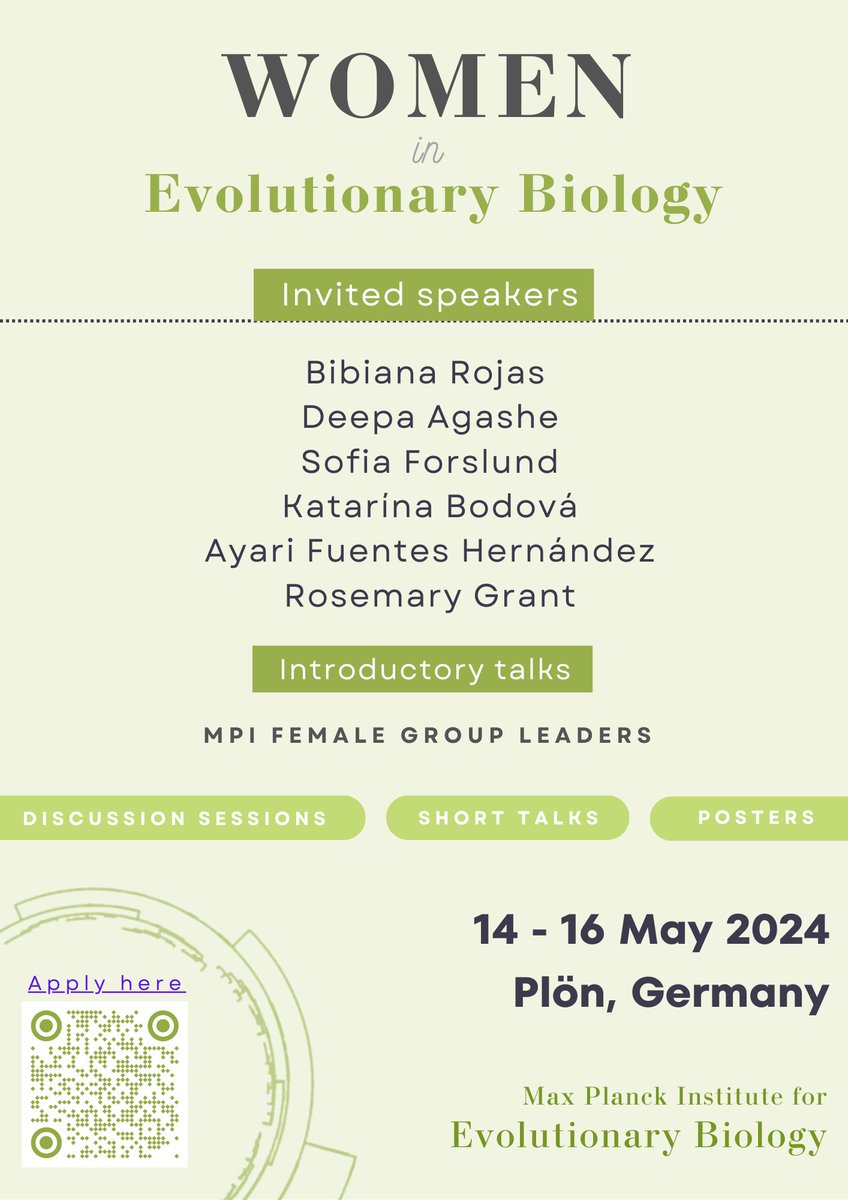
Women in Evolutionary Biology 🤩
We are happy to announce a workshop featuring scientific talks on Evolutionary Biology and discussion sessions on topics relevant to women in science!
🗓️ 14 - 16 May 2024
📍@MPI_EvolBio
Everyone is welcome!
Apply here: rb.gy/fnudrj

English
Maria Thaker retweetledi

As an academic writing coach, here are the 9 mistakes I see PhD and grad students make when writing scientific papers.
A thread 🧵 as long tweet:
#1: Thinking it’s laziness when you are procrastinating on your paper
🦥 Most PhD students procrastinate writing their paper (aka have ‘blank page syndrome’) not because they are lazy but because they don’t know where to start tackling this overwhelming project.
—
#2: Starting to write your paper by “writing”
📋 The first step of writing a paper isn’t to type out full sentences. It’s more efficient to first develop your story and create a good outline so writing just becomes filling in the gaps.
—
#3: Trying to make your sentences perfect in your first draft
🤓 If you keep deleting what you have written, you won’t get a lot of text on the page. The goal isn’t to get every sentence, every word right from the beginning but to refine your paper through editing.
—
#4: Accepting edits from your PI without understanding them
🖍️ Critical feedback from your supervisor can feel discouraging but it really is an opportunity to learn. So, ask for the reasons of edits and rewrites so you can refine your writing skills one iterations at a time.
—
#5: Trying to tell a story in your paper without knowing that really means
🎬 Ever been instructed by your supervisor to “tell a story” in your paper without getting a definition on what that means? Ask them for feedback on your story board so you are on the same page!
—
#6: Underestimating how long writing tasks take
⏱️ As a rule of thumb, quadruple the time you think you need to get any writing-related task done. And start using a time tracker so you have data on how much time each step takes going forward.
—
#7: Asking for feedback too late
💬 It’s a waste of time for your supervisor to correct a fully completed draft as the first touch point. Agree on the story and outline of each section before your start writing.
—
#8: Thinking your supervisor has the writing process figured out
🤫 If you feel like your PI isn’t giving away their secrets, it’s likely because they just don’t know how to teach you! The truth is, few researchers rely on an efficient process to write a successful paper.
—
#9: Not asking for writing training
💰 If you feel under-skilled at writing, ask your PI, department or grad school for funding to take a scientific writing course. Many universities have funding available for professional development, you just have to make the ask!
—
TL; DR: 9 mistakes I see PhD students make when writing their scientific paper
#1: Thinking it’s laziness when you are procrastinating
#2: Starting to write your paper by “writing”
#3: Trying to make your sentences perfect in your first draft
#4: Accepting edits from your PI without understanding them
#5: Trying to tell a story in your paper without knowing that really means
#6: Underestimating how long writing tasks taks
#7: Asking for feedback too late
#8: Thinking your supervisor has the writing process figured out
#9: Not asking for writing training
#PhDchat #ECRchat
English
Maria Thaker retweetledi

Editor reaching out to reviewers before the holiday season
twitter.com/Bornakang/stat…
English
Maria Thaker retweetledi

"The eight highest-ranked institutions in the India National Institutional Research Framework 2022 rankings had fewer female faculty members than average, with a median of around 10%."
nature.com/articles/d4158…
Thank you for the feature @dyanilewis !
English
Maria Thaker retweetledi