Michael Howard

4.1K posts

Michael Howard banner
Michael Howard

Michael Howard

@MahmahMike

Founder and fearless leader @nichefire | Cultural Listening Pioneer

Cincinnati, OH Katılım Kasım 2012
1.1K Takip Edilen1K Takipçiler
Michael Howard
Michael Howard@MahmahMike·
Most brands do not miss trends. They miss the earlier signal that starts the trend. Google’s Zero Moment of Truth was about the moment before purchase, when a consumer starts searching, comparing, and forming a decision. I think there’s an earlier version that matters more for strategy and innovation: the Cultural Zero Moment of Truth. It’s the moment before the market moves. The early signal that starts changing behavior before that shift is obvious in sales data, trend reports, or category decks. GLP-1s are a good example. This did not become a food and beverage story when brands started launching GLP-1-friendly products. It started earlier with rising metabolic dysfunction, growing frustration around appetite and weight, and then a pharmaceutical intervention that changed how people think about protein, fiber, portions, and satiety. Same with COVID. The important signal was not just that e-commerce or remote work grew. It was the break in routine that reset expectations around convenience. Grocery delivery, curbside pickup, telehealth, Zoom, and faster fulfillment all moved from helpful options to part of the baseline. That’s the shift more brands need to get better at spotting. Not just what is trending, but what is quietly changing in how people live, decide, eat, work, and spend. That’s where better innovation and positioning starts. culture-shock.beehiiv.com/p/the-cultural…
Michael Howard tweet media
English
0
0
0
12
Michael Howard
Michael Howard@MahmahMike·
Most companies are racing to add AI. Far fewer are asking the more important question: What is the machine actually learning from? That’s the gap. The winners in the next era won’t just automate more work. They’ll build systems that understand human change earlier than everyone else. Not just what sold. Not just what converted. Not just what happened last quarter. They’ll understand what people are starting to care about, how value is being redefined, which communities are beginning to shape demand, and which beliefs are forming before the market fully catches up. That’s culture. And I think it belongs much closer to the operating system than most companies realize. culture-shock.beehiiv.com/p/the-best-com…
Michael Howard tweet media
English
1
0
0
6
Michael Howard
Michael Howard@MahmahMike·
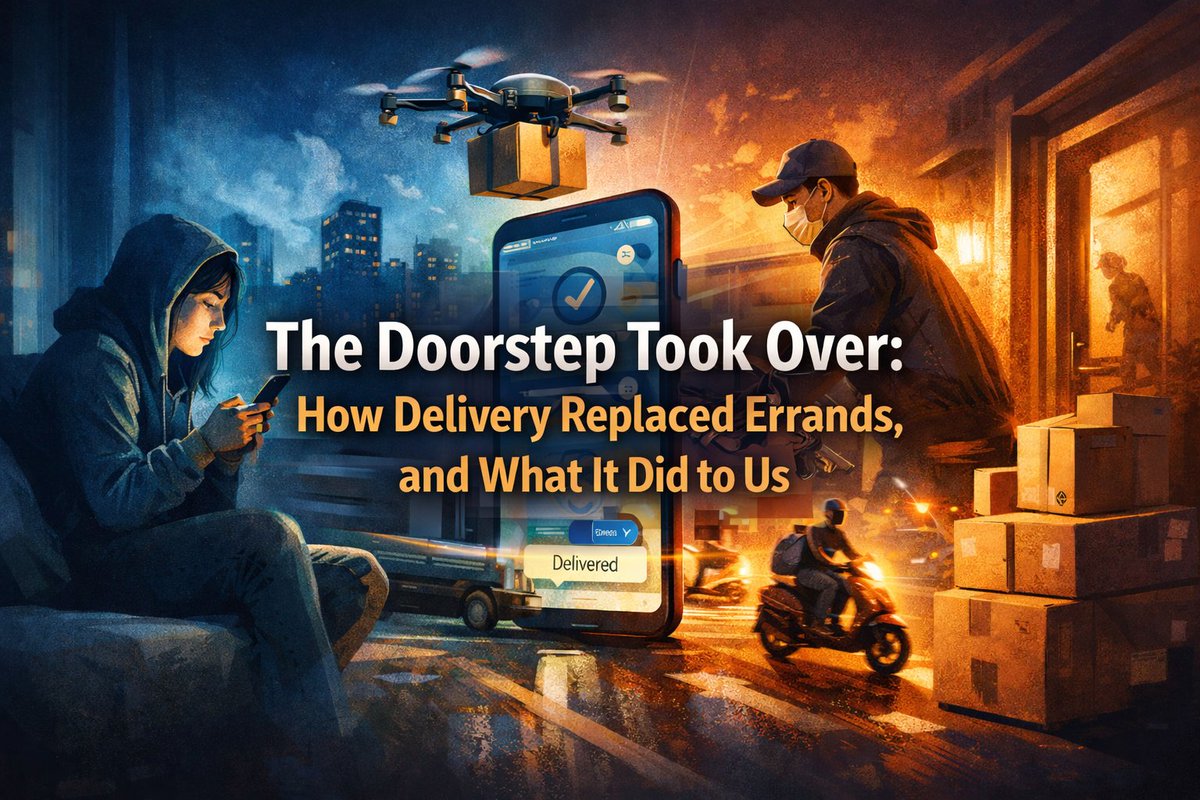
I relish the memories of going on errands with my mom when I was a kid. Stopping at the bank. Hitting up the grocery store. Going around town on small side quests. Now, those days are gone thanks to how robust delivery is nowadays. And it's something I think we take for granted. I personally used to see delivery as this new perk. Now it's an expectation. Especially in this post-COVID world. A few data points that made me stop and stare: 👉 US ecommerce sales jumped 43% in 2020. 👉 The “typical” social media user spends 2h 23m/day on social platforms. That’s a lot of time living inside a product discovery machine. 👉 ~Half of US adults report experiencing loneliness in recent surveys. Here’s the part most brands miss: The new battleground isn’t speed. It’s certainty. People can tolerate “late.” They can’t tolerate “I have no idea what’s happening.” And when the doorstep becomes the center of your life, delivery failures don’t feel like logistics problems. They feel personal. Like your time got stolen. We built a world where you can acquire almost anything fast. culture-shock.beehiiv.com/p/the-doorstep…
Michael Howard tweet media
English
0
1
1
14
Michael Howard
Michael Howard@MahmahMike·
I keep hearing brands talk about GLP-1s like they’re a niche segment. Meanwhile, 1 in 8 U.S. adults reports taking a GLP-1 (weight loss, diabetes, or other reasons). That’s not niche. That’s mainstream behavior. The bigger change isn’t just “people eat less.” It’s that people start editing food choices with a new filter: Will this keep me full? Is it worth the money? Is it doing something for me? That’s the Nutrition-Per-Bite era. In this article, I focus on the 3 shifts I think matter most: 👉 Protein as the new value metric 👉 Fiber as the underappreciated adherence lever 👉 Portion-controlled formats that feel human (not diet-y) culture-shock.beehiiv.com/p/the-glp-1-ef…
English
0
0
0
11
Michael Howard
Michael Howard@MahmahMike·
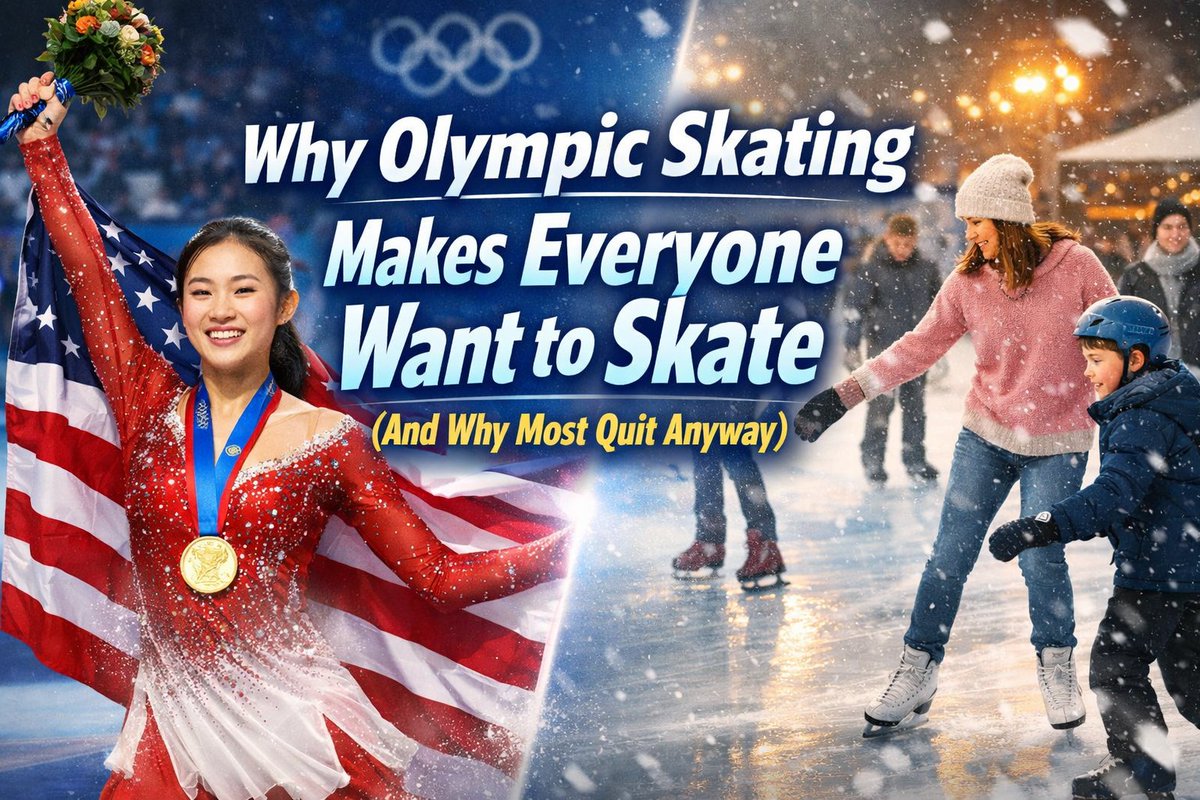
The Olympics don’t create skaters. They create a 72-hour window where a normal adult thinks: “I could do that.” That’s the Demonstration Effect. Elite performance triggers real-world participation. Not forever. Not reliably. But long enough to move people from awe → search → trial. And Olympic skating is the cleanest case study because the funnel is visible: 👉 Figure skating was the top Winter Olympic sport for 59% of U.S. viewers. 👉 Adult skating interest is surging (1050% YoY signal). 👉 Lessons cost $80–$150, which is where the dream starts to thin out. Then Alysa Liu wins gold and the entire sport becomes a story you can step into. Not just a highlight you watch. Here’s the punchline: Most people quit because the system makes continuing harder than starting. Ice time, schedules, cost, injury fear, and the reality gap between “Olympic elegance” and “clinging to the boards.” culture-shock.beehiiv.com/p/why-olympic-…
Michael Howard tweet media
English
0
0
0
29
Michael Howard
Michael Howard@MahmahMike·
AI didn’t kill SaaS. It killed thin SaaS. If your “AI product” is basically: a prompt a pretty UI an API call and vibes …then you didn’t build a company. You built a temporary interface to someone else’s intelligence. Here’s what’s changing fast: The scarcity moved. Code is cheap. Features are cheap. “Smart” is getting cheap. What’s expensive now: 👉 distribution (trust + attention) 👉 workflow ownership (embedded in how work gets done) 👉 proprietary context (data + integrations + permissions) 👉 reliability (repeatable outcomes, not cool outputs) And AI flips SaaS economics too. Usage can mean higher compute costs, which means seat-based pricing starts wobbling unless you build like an adult. I wrote an article on what this means for founders building in SaaS right now. culture-shock.beehiiv.com/p/the-great-sa…
English
1
0
1
21
Michael Howard
Michael Howard@MahmahMike·
For years, food and beverage brands could win with broad positioning like “clean,” “natural,” or “better for you.” That’s not enough in 2026. According to IFT’s latest consumer outlook, delivering on health benefits is now one of the most influential purchase drivers. But what’s changed isn’t just the priority. It’s the expectation. Consumers are no longer asking, Is this healthy? They’re asking: 👉 What specific benefit does this deliver? 👉 How much protein or fiber is actually in it? 👉 Will this improve my energy, digestion, or focus? 👉 Is there proof behind the claim? Health has shifted from aspiration to utility. Protein is evaluated by grams per serving. Fiber is evaluated by functional impact. Energy is evaluated by how you feel at 3pm. Vague wellness language is losing credibility. Measurable outcomes are winning. In this article, I break down: • Why functional nutrition is now mainstream • How GLP-1 awareness is reshaping nutrient expectations • Why “clean label” alone no longer converts • What brands must do to deliver real, defensible health benefits culture-shock.beehiiv.com/p/health-is-no… The takeaway is simple: If your product cannot clearly articulate what it does for the consumer, it will struggle to justify shelf space. #FoodInnovation #CPG #ConsumerTrends #HealthAndWellness #FunctionalNutrition #RetailStrategy
Michael Howard tweet media
English
0
0
0
10
Michael Howard
Michael Howard@MahmahMike·
Language trends don’t start in classrooms. They start in culture. When Bad Bunny took the Super Bowl stage and followed it with major Grammy wins, something unexpected happened: Millions of Americans didn’t just watch. They started learning Spanish. At the same time, heightened ICE activity pushed language into an even sharper focus, turning Spanish from a skill into a signal of identity, solidarity, and resistance. In this piece, we break down: • Why Bad Bunny’s Super Bowl performance triggered a spike in Spanish learning • How pop culture validation shifts language from “useful” to “aspirational” • The role immigration politics plays in accelerating (and complicating) language adoption • What this moment reveals about culture-driven behavior change in the U.S. This isn’t about music. It’s about how culture rewires behavior faster than institutions ever can. If you’re interested in how cultural moments translate into real-world action, this is worth the read. 👉 culture-shock.beehiiv.com/p/how-bad-bunn… #Culture #Language #BadBunny #SuperBowl #CulturalInsights #LatinoCulture #Trends #BehaviorChange
Michael Howard tweet media
English
0
0
0
18
Michael Howard
Michael Howard@MahmahMike·
For years, “value” in food meant one of two things: Cheap calories or premium positioning. That model is breaking. What we’re seeing now is Value 3.0. Consumers aren’t just asking Is this affordable? They’re asking: What nutrition am I getting per dollar? Will this keep me full, healthy, and satisfied? Is the price fair for the functional benefit? In other words, value has become nutritional ROI. In a new article, I break down why this shift isn’t just inflation-driven, and why it won’t reverse when prices stabilize. Using cultural data from over 180,000 conversations across TikTok, Reddit, search, and forums, the signal is clear: Protein has become a unit of value. Plant-based hasn’t disappeared. It’s been repriced. Food-as-medicine is moving from premium to pragmatic. Consumers are optimizing, not trading down. The brands that win next won’t be the cheapest. They’ll be the clearest about what a dollar actually buys. 👉 Read the full piece here: culture-shock.beehiiv.com/p/how-nutritio… #ConsumerTrends #FoodAndBeverage #CPG #Retail #Nutrition #CulturalInsights
Michael Howard tweet media
English
0
0
0
17
Michael Howard
Michael Howard@MahmahMike·
The End of “Guilt-Free” is here. A new consumer reality is taking hold: Food Freedom. Less shame. Less obsession. Less mental noise. More ease and intentionality. GLP-1 ubiquity is doing more than changing what people eat. It’s changing: how decisions get made (more “autopilot,” more systems, more default choices) what feels emotionally safe in marketing language what “premium” means (smaller, more satisfying, more intentional) what loyalty should reward (not volume, but confidence and consistency) If your brand still leans on discipline language (“cheat,” “guilt-free,” “bad foods”), you’re not just outdated. You may be actively pushing consumers away. I wrote a quick field guide on what Food Freedom means for brands, and the five moves I think matter most next. culture-shock.beehiiv.com/p/the-end-of-g… #CPG #Retail #FoodAndBeverage #ConsumerTrends #BrandStrategy #CulturalIntelligence
Michael Howard tweet media
English
0
0
0
21
Michael Howard
Michael Howard@MahmahMike·
Dry January is ending. But the sober-curious movement isn’t. What started as a one-month reset has quietly evolved into something bigger: a cultural rewrite of how adults socialize, celebrate, and unwind. Over the past few years, we’ve watched sobriety move from abstinence to intentionality. From “I’m not drinking” to “I’m choosing clarity.” From alcohol as the default social glue to rituals that prioritize how people want to feel tomorrow, not just tonight. Here’s what stood out most as we dug into the data: 👉 Sober-curious isn’t anti-fun. It’s anti-punishment. 👉 Non-alcoholic drinks are no longer substitutes. They’re occasion-first choices. 👉 Gen Z isn’t rejecting alcohol outright. They’re redefining what drinking even means. 👉 This is slow culture in motion. Identity, wellness, and ritual are driving sustained behavior change, not a January spike. For brands, this matters far beyond beverages. It reshapes menu strategy, retail moments, experiential marketing, and how we think about “adult” social spaces altogether. I wrote a longer piece breaking down the cultural evolution, the signals behind it, and what it means for brands trying to move early without being performative. If you’re building for modern consumers, this is one movement worth understanding deeply. Curious how others are seeing this show up in real life. Are sober-friendly rituals already part of your world, or just starting to surface? culture-shock.beehiiv.com/p/the-sober-cu… #SoberCurious #CulturalIntelligence #ConsumerTrends #SlowCulture #PredictiveInsights #BrandStrategy
Michael Howard tweet media
English
0
0
0
22
Michael Howard
Michael Howard@MahmahMike·
For years, optimism was treated like a liability. Earnestness was “cringe.” Joy felt naïve. Caring too much was something to joke about, not design for. That’s changing. In my latest piece, I break down a cultural shift we’re calling Audacious Optimism (more coming soon to the Nichefire cultural library): a move away from irony and emotional distance toward intentional joy, sincerity, and visible enthusiasm. This isn’t blind positivity. It’s what happens when consumers, especially Gen Z and younger Millennials, decide that constant detachment is more exhausting than vulnerability. We’re seeing it everywhere: • The revival of early-2010s “Millennial optimism” • A rejection of ironic distance in favor of authorized authenticity • “Dopamine maxxing” as a strategy for emotional self-regulation • Play, color, ritual, and small joys are becoming economic signals, not fluff Most importantly, this shift is predictive, not retrospective. It’s emerging now, before it hardens into table stakes. For brands, the implication is simple but uncomfortable: Irony is no longer the safest default. Emotional utility now matters as much as functional value. I wrote this piece not as a trend reminder, but as a strategic warning and opportunity for anyone building products, brands, or strategies for the next few years. If you’re working in insights, strategy, brand, or innovation, this one’s worth your time. culture-shock.beehiiv.com/p/audacious-op… #CulturalInsights #ConsumerBehavior #GenZ #BrandStrategy
Michael Howard tweet media
English
1
0
0
24
Michael Howard
Michael Howard@MahmahMike·
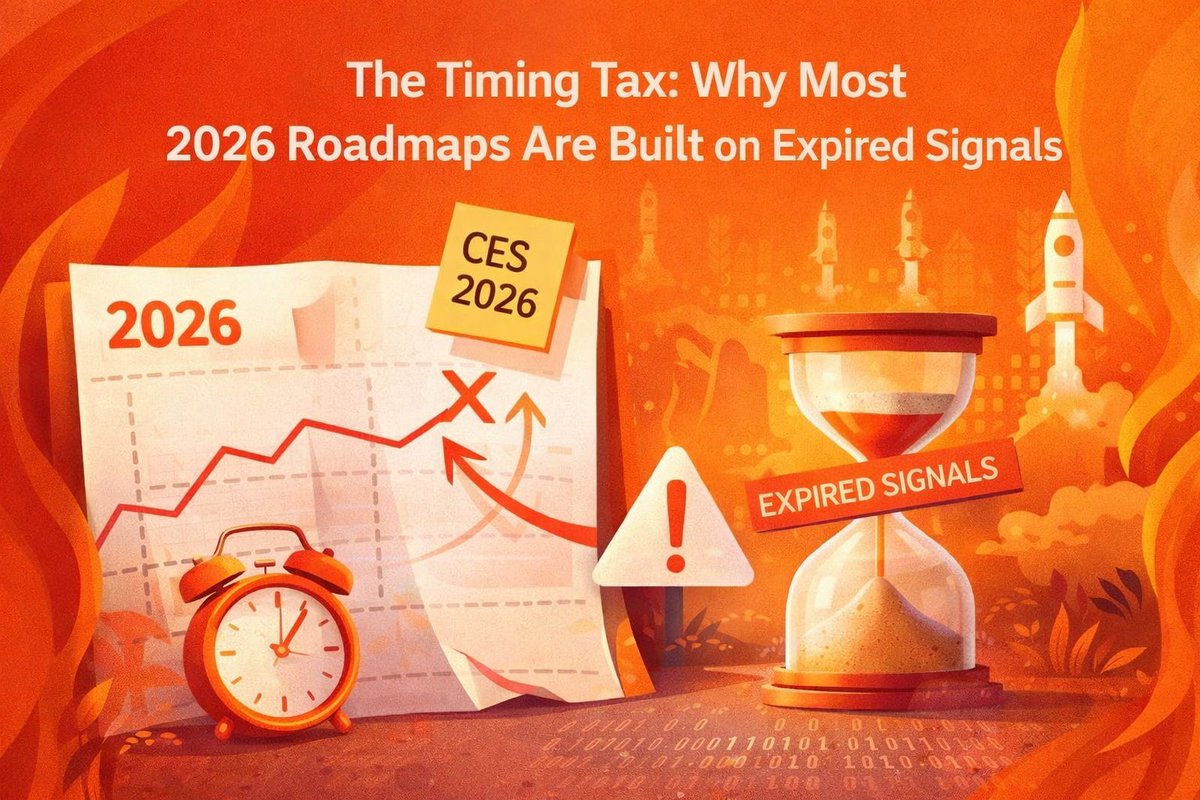
Most 2026 roadmaps are built on expired signals. Not because enterprises are slow. Because their insight systems are. Traditional research often validates trends 12–18 months after they start compounding, which means teams plan around what already peaked, not what’s emerging. CES 2026 made this impossible to ignore: categories are redefining in real time. The winners aren’t waiting for validation. They’re moving while the signal is still forming. I wrote a new piece on: • The “timing tax” and how it compounds inside innovation cycles • Early signal vs late validation (and why rigor can still make you late) • What “attention compounding” changes for roadmapping • A practical 30-day fix for insights and foresight teams If you lead Insights, Foresight, or Innovation Strategy, this one’s for you. culture-shock.beehiiv.com/p/the-timing-t…
Michael Howard tweet media
English
0
0
0
24
Michael Howard
Michael Howard@MahmahMike·
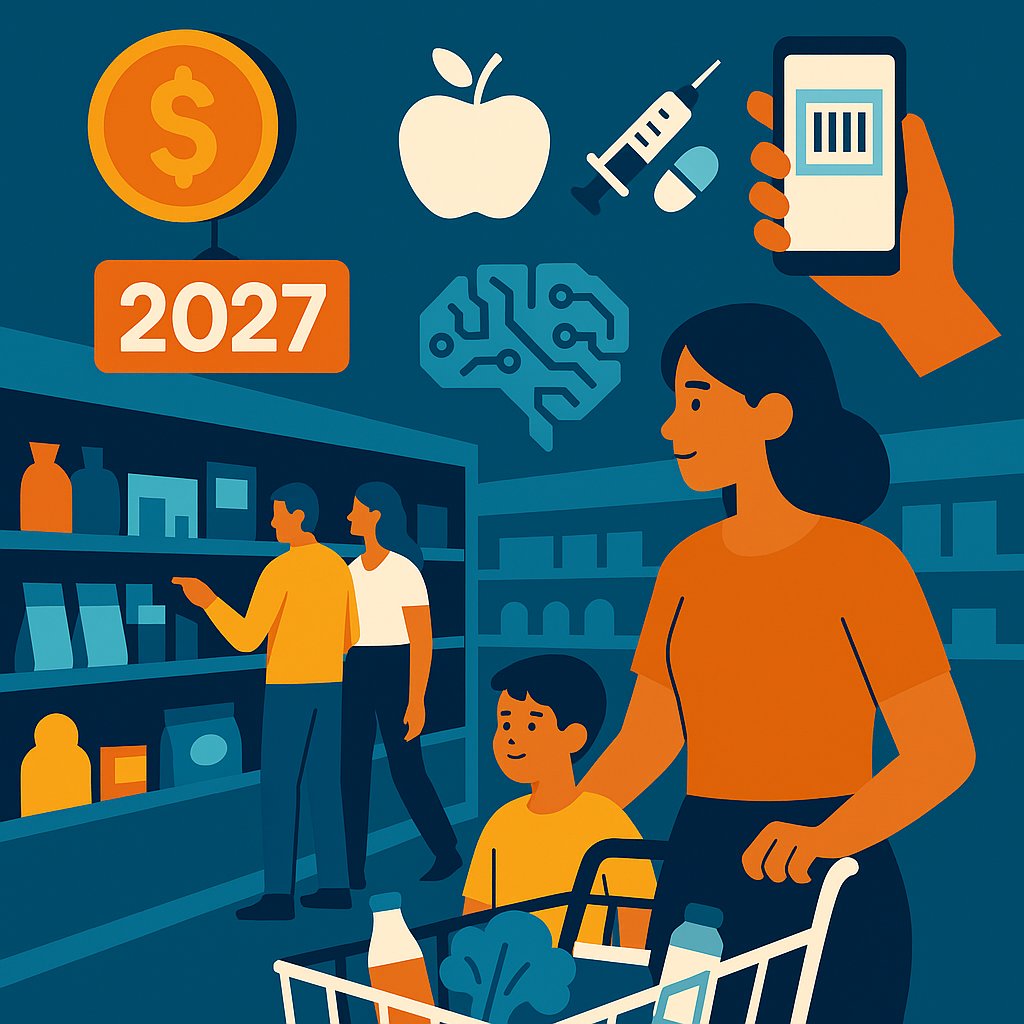
Consumers are still value-obsessed. What is changing is how they define value. By 2027, we see a world where the real question in the aisle is not “How much food can I get for this price?” but “How much nutrition do I get for every dollar I spend?” A few signals we are watching at Nichefire: 👉 Nutrition per dollar as the new value equation. Households are optimizing protein, fiber and satiety, not just unit price. 👉 GLP 1 culture. Portion size, fullness and muscle preservation are reshaping what “right sized” meals look like. 👉 MAHA and ingredient distrust. Apps like Yuka and viral label breakdowns are putting ultra processed foods under the microscope. 👉 Millennials as family CFOs, Gen Z as culture engine. One controls the cart, the other controls the conversation. 👉 AI upstream of the brief. The biggest impact of AI is not flavor tweaks, it is tighter, culturally grounded product briefs that prevent teams from building the wrong thing. For product developers working on 2027 launches, our advice is simple: Treat nutrition per dollar as a design spec, not a tagline. Formulation, pack size, labeling and merchandising should all point to the same promise: “This is a smart choice for your family and your budget.” culture-shock.beehiiv.com/p/from-value-o…
Michael Howard tweet media
English
0
0
0
36
Michael Howard
Michael Howard@MahmahMike·
Your shopper is not just asking "what is cheapest per ounce?" anymore. They are asking: 👉 "How much protein, fullness, and real health do I get for this 20 bucks?" That is nutrition per dollar. Or what I like to call nutritional ROI. And it is quietly becoming the new battleground for food, beverage, and retail. A few things our work at Nichefire is surfacing: 👉 This is not just a low income survival tactic. Consumers are treating protein like an asset. If they pay a premium, it better stretch across meals and actually hit protein goals. 👉 Protein is the new value anchor. Search and social behavior are shifting from "cheap meals" to "high protein cheap meals" and "protein on a budget." High-priced "high protein" SKUs that cannot justify their nutritional ROI are at risk of being called out as paying for branding, not benefit. 👉 Plants and seniors are in the same story. Beans, lentils, chickpeas, tofu, frozen veg. Seniors managing blood pressure and blood sugar on fixed incomes. Both groups are using a nutrition per dollar lens to reconcile health aspirations with hard budgets. 👉 Everyday rituals already reflect this. Stretch the bird for 3 meals. Beans as a budget superfood. Eggs as a flexible hedge when meat feels expensive. Freezers as "value amplifiers." Your products either plug into these rituals or they fight them. So what now, next 6 to 24 months? ✅ Re-rank your portfolio around true nutritional ROI, not just price per ounce. ✅ Make things like "cost per 20g protein" or "1 bag, 3 dinners" visible so shoppers do not need a spreadsheet in the aisle. ✅ Merchandise around real missions like "high protein on a smart budget" or "heart healthy without breaking the bank." ✅ Use predictive cultural listening as your early warning system so you see these value shifts 12 to 18 months before they show up in your panel data. Because the real competitive question is changing from: "Are we cheaper than X?" to "If every shopper had an invisible nutrition per dollar meter in their cart, would we be winning or losing?" culture-shock.beehiiv.com/p/nutrition-pe…
Michael Howard tweet media
English
0
0
0
21
Michael Howard
Michael Howard@MahmahMike·
Black Friday isn’t a day anymore. It’s a season. And AI is officially running the show. That’s not hype. That’s 129,000+ consumer conversations telling us exactly where culture is heading! Here are the 3 shifts every CPG, retailer, and insights leader needs to have on their radar for 2025. 1️⃣ AI is now the real Black Friday shopper. AI shopping assistants exploded. 71% of consumers want AI in their retail journey. Only 24% trust AI enough to buy on their behalf. That trust gap is the new battleground. Forget SEO. The competitive arena now is Agent Optimization. If your metadata is messy or your pricing history looks shady, AI will bury you. Quietly. Think of AI as the brutally honest friend who tells you if that “40% off” is actually 12% off with extra steps. 2️⃣ Black Friday is becoming a season of drops. 30-40% of Black Friday revenue is shifting outside the actual day. We’re entering the era of: • early access cycles • micro-events • rolling product drops • multi-week cultural moments It’s less Hunger Games. More festival season. Brands that orchestrate November like a narrative arc will own the future of Q4. 3️⃣ Consumers want precision, not excess. The deal-chasing chaos is out. Value alignment is in. Two trend clusters surged: • GLP-1 eating behavior (+88% MoM) • diaspora food exploration (+100% WoW) The hero SKUs of Black Friday aren’t flatscreens anymore. They’re smart joy products. Zero-proof drinks. High-protein snacks. Functional wellness. This is the rise of precision celebration. 👉 What leaders should be doing right now Here are the five moves I’d make if I were running a CPG or retail giant. ✅ Make AI your deal safety layer ✅ Architect Black Friday like a season, not a spike ✅ Elevate precision celebration as a product strategy ✅ Build trust infrastructure into pricing and metadata ✅ Treat Black Friday as your annual test lab Black Friday is no longer a single moment. It’s a cultural mirror. And it’s telling us exactly where consumers are heading. culture-shock.beehiiv.com/p/black-friday…
Michael Howard tweet media
English
0
0
0
19
Michael Howard
Michael Howard@MahmahMike·
Just got back from the Observe Summit on Friday, a little jet-lagged but buzzing with that “I just saw the future” kind of energy. We had a blast talking about cultural foresight at Nichefire’s session, and it got me thinking about something big: Why does the future always seem to sneak up on us? Here’s the truth. The future is basically a speed demon. We used to have five-year plans. Now, entire industries reinvent themselves in the time it takes to binge a Netflix series. But it doesn’t have to catch us off guard! We just have to know where to look. That’s where cultural foresight comes in. Culture is the early warning system. It speaks before the market moves. And it speaks in two different voices: Fast Culture and Slow Culture. 👉 Fast Culture: viral trends, TikTok moments, meme explosions. They flare up fast, but they reveal what’s bubbling beneath the surface. 👉 Slow Culture: deeper shifts like sustainability, inclusivity, and self-care. They’re the long arcs that reshape what people expect from brands. The magic happens when you connect the two. Those quick flashes of Fast Culture are breadcrumbs that lead you to the Slow Culture shifts that actually change markets. At Nichefire, we call this cultural listening. It’s not about chasing noise, it’s about listening with intention. When you connect the dots, you start to see the bigger picture forming. You spot what’s next before it hits your dashboard or your quarterly report. That’s how the most successful brands stay ahead of the curve. They’re not reacting to what’s trending. They’re predicting what’s about to matter. Because the next era of intelligence isn’t technical. It’s cultural. So here’s to listening smarter, spotting trends earlier, and never saying “we didn’t see it coming” again. culture-shock.beehiiv.com/p/culture-spea…
Michael Howard tweet media
English
0
0
0
20
Michael Howard
Michael Howard@MahmahMike·
Gut health is no longer a side hustle in wellness. It is quickly becoming a business strategy. We are entering the era of ROI Nutrition. Fibermaxxing, digestive stacks, and metabolic hacks are not just wellness fads. They are signals that consumers are redefining what “healthy” means in 2026. This isn’t about calories anymore. It is about performance. It is about energy. It is about asking a new question of every meal: does this food pay me back in how I feel, think, and live? Gut culture is no longer niche. It is the baseline. And it is reshaping food, wellness, and even personal finance. The message is simple. If your brand still treats wellness as a side trend, you are already behind. So here’s the question. If consumers are calculating ROI on their own nutrition, how are you calculating ROI on your cultural strategy? culture-shock.beehiiv.com/p/gut-health-i… #GutHealth #CulturalListening #ConsumerTrends #Innovation culture-shock.beehiiv.com/p/gut-health-i…
English
0
0
0
27
Michael Howard
Michael Howard@MahmahMike·
Back in 2021, our early TrendFire (now just "Nichefire") work called it: high protein and high fiber would run the next era of weight management. Fast-forward. GLP-1s exploded, psyllium husk left grandma’s pantry, and food teams started designing for smaller appetites and bigger satiety. The throughline isn’t hype. It’s behavior. What I’m seeing now: 👉 Portion-aware, protein-first, fiber-smart foods are winning real baskets (not just headlines). 👉 Psyllium husk is both an alternative for the GLP-1 curious and a complement for GLP-1 users who want steadier energy and happier guts. 👉 Access matters. Cash-pay offers opened the door, but many consumers are still building “GLP-1-adjacent” routines with food and supplements. 👉 The job to be done is "metabolic UX." Less willpower theater, more design for how people actually feel on Tuesday at 2 p.m. If you run insights for health, wellness, or food and bev, your roadmap is simple: set a protein minimum, add soluble fiber, right-size portions, and talk to real cravings (not perfect ones). Predictive cultural listening caught this in 2021. It is louder now. Curious how you’re adapting: ❓ Are you building a GLP-1 friendly spec for R&D? ❓ Where do you see the biggest upside: breakfast, snacks, or ready meals? ❓ What fiber education would actually help your shoppers? culture-shock.beehiiv.com/p/how-our-2021… #ConsumerInsights #GLP1 #Protein #Fiber
English
0
0
1
112