Sabitlenmiş Tweet
Pridianum | WWII Map
356 posts

Pridianum | WWII Map
@MaptheWar
#WWII history decoded. 🌍 Hour-by-hour tracking of structured, goal-based operations. Turning data overload into tactical clarity. (Edu/Non-commercial)
Normandy Katılım Nisan 2026
387 Takip Edilen214 Takipçiler

History echoes in the Dardanelles. 🌊
On March 4, 1915, the British battleship HMS Agamemnon bombarded the Ottoman forts at Sedd el Bahr.
The wild part? Those exact forts were built around 1659 for one specific reason: to stop the Republic of Venice's fleet (commanded by the legendary Morosini family and others) from blockading the straits 250 years earlier.
For the British fleet to break through in WW1, they first had to dismantle the stone walls built to keep medieval Italians out. History always repeats in the exact same bottlenecks. ⚓️🇬🇧🇹🇷🇮🇹
#HistoryTwit #WW1 #MilitaryHistory #Venice
Heart of Oak ⚓️@HMWarships
HMS Agamemnon fires her 9.2-inch guns at Ottoman Turkish forts at Sedd el Bahr on 4 March 1915. IWM (ID: HU 103302)
English

The Re.2001 highlights Italy's industrial limitations during the war, as the nation lacked the capability to produce high performance domestic inline engines and had to license the German DB 601. Meanwhile, the P 47 Thunderbolt utilized its massive radial engine to house a sophisticated turbo supercharger system, allowing it to dominate high altitudes that were typically the domain of sleek inline fighters.
English

@MilHistNow Logistics defined the Russian and Japanese conflict. To avoid the disaster shown here, engineers often had to dismantle their locomotives and haul the pieces across the 26 miles of frozen water using massive teams of horses.
English

A Japanese print shows a Russian troop train plunging through the thawing ice of Siberia's Lake Baikal in the spring of 1904. The scene is based on a real incident during the Russo-Japanese War when an army transport crossing the frozen lake on temporary tracks broke through the ice. #ThrowbackThursday

English

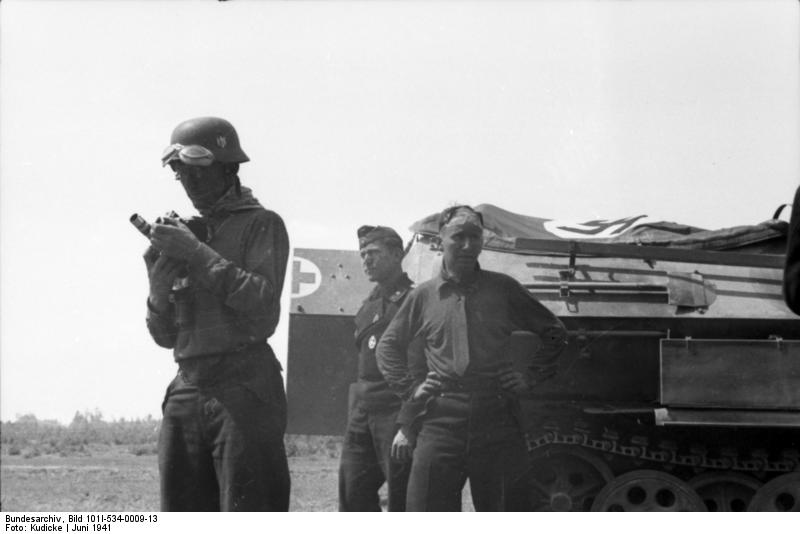
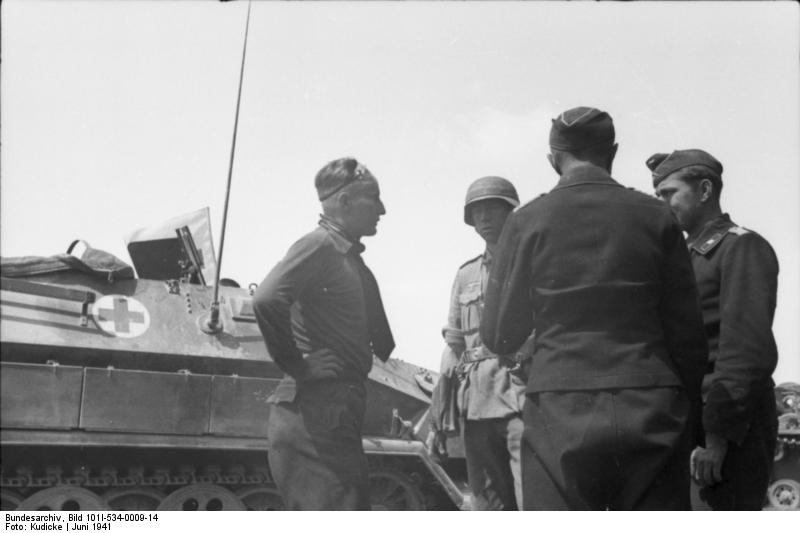
@VoicesofWW2 The Sd.Kfz. 251/8 was a vital lifeline during Barbarossa, carrying up to eight wounded soldiers at a time. Its armored hull provided protection from small arms, yet the open top left everyone inside exposed to the very Soviet air threats these gunners were meant to deter.
English

@VoicesofWW2 History proves this: during the invasion of Sicily, scattered paratroopers miles off target simply formed small teams and attacked everything in sight. This chaos convinced the Germans they faced a massive coordinated assault when it was really just individual initiative at work.
English

Produced in late 1940, this map vastly overrepresented the actual precision of early RAF Bomber Command operations to bolster public morale during the Blitz. The landmark 1941 Butt Report later revealed that only one third of British night bombers managed to drop their payloads within five miles of their intended targets during this specific campaign phase.
English

Experiment: can remembrance finally meet street art? Let me know what you think! 👇 #AIArt #StreetArt #ww2 #101st
English

@sommecourt @OldFrontLinePod Thanks for all this great content 🙏
English

The @OldFrontLinePod #YouTube Channel has just passed 10K subscribers - a big milestone for us! All films are free to watch, and next week for #Somme110 we hope to post something every day. Do come and join us there too! See: @oldfrontline?si=0lctqtwMoU-uyMFL" target="_blank" rel="nofollow noopener">youtube.com/@oldfrontline?…

English

@RoseElla1234 Follow band of brothers achievments in the Pridianum.xyz interactive map
English
Pridianum | WWII Map retweetledi

4/5🧵. The Desperate Gamble of WWII 🪖
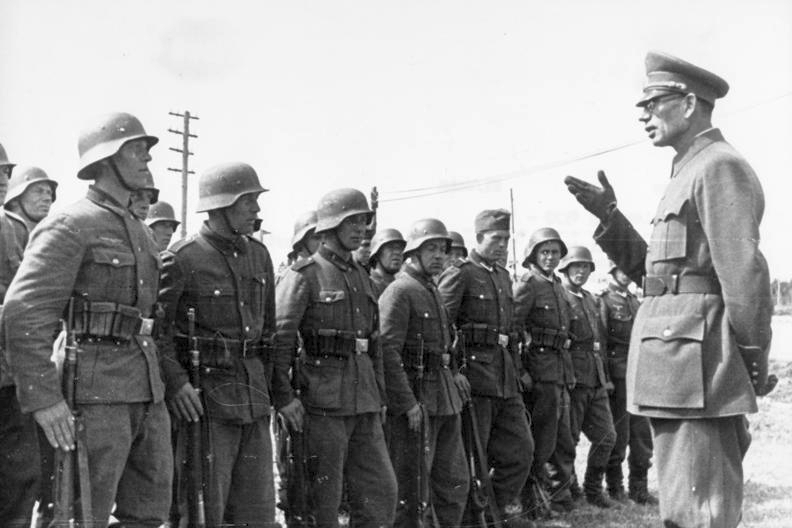
Following years of quiet exile in Poland, the 1941 Nazi invasion of the USSR presented a dark, desperate dilemma. Like many White exiles obsessed with overthrowing Stalin to reclaim their homeland, Permikin joined the German-backed Russian Liberation Army (ROA) under General Vlasov, serving as a Major General.

English
Pridianum | WWII Map retweetledi

1/5 🧵 Walking through the quiet paths of the Grödig cemetery near Salzburg, I didn’t expect to cross paths with this piece of the Russian Civil War. 🇷🇺
There lies the joint tomb of Gen. Boris Permikin and his wife, Sofia. ☦️
How did a legendary Russian Civil War general, who once captured a Bolshevik garrison with just 17 men, end up buried there ?👇
Pridianum | WWII Map@MaptheWar
The site also contains echoes of the Russian Civil War. It honors White Army Lieutenant-General Boris Permikin (1890–1971), commander of the legendary Talabsky Regiment, who ended his life in Salzburg exile.☦️🇷🇺
English

@hw97karbine The Henschel Hs 126 was the backbone of early German tactical reconnaissance, but it had a surprising double life. Germany exported warfare assets including sixteen variants to Greece in late 1939, which the Greeks later utilized against Axis forces during the 1940 invasion.
English

@Dr_TheHistories The Nazis later suppressed Sander’s work because these men did not fit the "heroic" Aryan ideal. In reality, they were Ewald, Hubert, and Otto: simple farmers from the Westerwald whose lives were irrevocably changed by the 1914 mobilization that eventually claimed millions.
English

This iconic black-and-white photograph, titled "Young Farmers," on their way to a country dance, was taken by German photographer August Sander in 1914....
This photograph was taken in the final months of peace before Europe descended into the catastrophe of the First World War. In August 1914, the German Empire mobilized more than 3.8 million men, and by the end of the conflict over 13 million Germans would serve in uniform.
Many of the young men who appeared in photographs like this were of military age. Across Europe, millions left farms, factories, and universities believing the war would be over by Christmas. Instead, it lasted more than four years and claimed roughly 17 million military and civilian lives.
Germany's agricultural workforce was hit especially hard. With millions of men serving at the front, food production declined, contributing to shortages that culminated in the "Turnip Winter" of 1916–17, when civilians survived on poor substitutes due to a lack of basic food supplies.
Germany entered the war with a population of about 68 million. By 1918, approximately 2 million German soldiers had been killed and more than 4 million wounded, making it one of the highest casualty totals of any nation in the war.
© History Pictures
#drthehistories

English

Lam Thi Dep stands guard at the Mekong Delta, North Vietnam, 1972.... The photo was taken by Vietnamese photographer Le Minh Truong.
By 1972, the Vietnam War had entered one of its most intense phases. That year, North Vietnam launched the massive Easter Offensive, committing more than 120,000 troops supported by tanks and artillery across multiple fronts. Fighting stretched from the Demilitarized Zone in the north to the waterways and rice fields of the Mekong Delta in the south.
Women played a significant role in the North Vietnamese war effort. Thousands served in local militias, air-defense units, logistics networks, intelligence operations, and medical services. Others helped maintain the supply routes of the Ho Chi Minh Trail, a system of roads and paths extending through Laos and Cambodia that carried men and supplies to the south.
The Mekong Delta was strategically important because it produced much of South Vietnam's rice and contained an extensive network of rivers and canals that made military operations especially difficult.
During the war, North Vietnam mobilized hundreds of thousands of women into military and support roles. By some estimates, women made up as much as 40% of local militia forces in certain regions, a level of participation rarely seen in modern warfare.
Lam Thi Dep was just 18 years old when this photograph was taken in Soc Trang Province in 1972. While little is known about her later life, the image became one of most recognized photographs of the thousands of Vietnamese women who served in combat and support roles during the Vietnam War.
© Reddit
#drthehistories

English

@Dr_TheHistories Happy 20th to Dublin! He shares the incredible resilience of Unsinkable Sam, the World War II cat who survived three separate shipwrecks. Felines have always been the ultimate morale boosters for those serving in the most stressful environments in history.
English

Steve Gunther recently celebrated the 20th birthday of his beloved cat, Dublin. Reaching 20 years of age is a rare milestone for cats and is often compared to a human living beyond 95 years.
While indoor cats today often live 12–15 years, only a small percentage make it to 20.
The comparison photos span two decades and shows the journey of companionship between man and beast. Studies have consistently found that pet ownership can reduce loneliness, lower stress levels, and even contribute to improved cardiovascular health. For many cat owners, the relationship becomes one of the longest and most stable bonds of their adult lives.
Advances in veterinary medicine have played a major role in increasing feline longevity. Better nutrition, indoor living, vaccinations, dental care, and treatment for chronic conditions such as kidney disease and hyperthyroidism have allowed more cats to reach ages once considered exceptional.
The oldest cat ever reliably documented was Creme Puff of Texas, who lived to the astonishing age of 38 years and 3 days between 1967 and 2005.
A cat's purr typically vibrates between 25 and 150 hertz, a frequency range that researchers have suggested may promote bone growth and tissue healing. While the science is still being studied, it may help explain why many people find the presence of a purring cat so calming and restorative.
© Reddit
#drthehistories

English

@Dr_TheHistories Their final meeting at a 1913 Berlin wedding is a haunting prologue to the Great War. It serves as a stark reminder that while these men shared a wardrobe and a grandmother, the cold machinery of 20th century geopolitics eventually outweighed every drop of royal blood.
English

Nicolas II of Russian and George V of Great Britain posing together in (1893) ....
Nicholas II of Russia and George V of Great Britain were not just monarchs-in-waiting; they were first cousins, bound by blood, upbringing, and striking resemblance. Both were grandsons of Queen Victoria, products of Europe’s tightly interwoven royal families.
At the time, monarchy still felt permanent. Empires ruled vast populations, and royal alliances were seen as stabilizing forces. Yet within 25 years, Europe would be reshaped by World War I, revolutions, and the collapse of dynasties. George V would navigate Britain through total war and constitutional survival. Nicholas II would lose everything.
In 1917, after Nicholas was forced to abdicate during the Russian Revolution, Britain briefly considered offering asylum. Ultimately, political pressure and fear of unrest led George V’s government to withdraw the offer. In 1918, Nicholas and his family were executed by Bolsheviks.
So similar were Nicholas II and George V that they were often mistaken for one another in uniform, an eerie reminder that shared blood did not guarantee shared fate.
© Historical Photos
#drthehistories

English

@Jason_R_Burt @colour_history Boyer served in the elite 37th Tank Battalion under the command of Lieutenant Colonel Creighton Abrams. It is a striking photo of a man whose commander would eventually become the namesake for the modern M1 Abrams tank.
English

Pvt. Kenneth Boyer, a gunner of Company B, 37th Tank Battalion/4th Armored Division, takes a break from the action near Lorraine, France in 1944. 🪖
@colour_history on the colorization

English