Marcelo Rocha retweetledi
Marcelo Rocha
4.1K posts


Marcelo Rocha
@MarceloRocFer
Computer engineer; Software engineer; Systems project analyst; Full Stack Developer.
Brasil Katılım Eylül 2009
1.2K Takip Edilen796 Takipçiler

Marcelo Rocha retweetledi

Marcelo Rocha retweetledi

Marcelo Rocha retweetledi
When engineering hits absolutely zero tolerance.
English
Marcelo Rocha retweetledi

Marcelo Rocha retweetledi

@joaopedro Se não é de rico ou de pobre, é de quem quiser fazer kkkkk
Português

@MarceloRocFer Não era “de rico” mas definitivamente não era de pobre. Tatuagem bem feita sempre foi algo mto caro
Português
Tatuagem virou coisa de pobre.
Tá todo mundo tirando.
Engraçado ver como a moda é cíclica.
New York Post@nypost
Pete Davidson shows off nearly bare arms in Las Vegas after dropping $200K to remove his tattoos trib.al/k8UilQZ
Português
Marcelo Rocha retweetledi

FREE certifications, 💯 accepted in the industry:
1. Python
netacad.com/courses/python…
2. JavaScript
netacad.com/courses/javasc…
3. Computer Science
learn.saylor.org/course/index.p…
4. Full Stack Web Development
freecodecamp.org/learn/
5. Software Engineering
hackerrank.com/skills-verific…
6. Python
programming-25.mooc.fi
7. Data Analysis with Python
courses.mooc.fi/org/uh-cs/cour…
8. Data Analytics
netacad.com/courses/data-a…
9. AI
elementsofai.com
10. DevOps with Kubernetes
devopswithkubernetes.com
11. Fullstack Web Development
fullstackopen.com
12. Neo4j Certified Professional
graphacademy.neo4j.com/certifications…
13. Neo4j Data Science Certification
graphacademy.neo4j.com/courses/gds-ce…
14. SEO, Marketing, Sales
academy.hubspot.com/certification-…
15. AI/ML, Data Science
kaggle.com/learn
16. Ethical Hacking
netacad.com/courses/ethica…
17. Networking
netacad.com/courses/networ…

English
Marcelo Rocha retweetledi

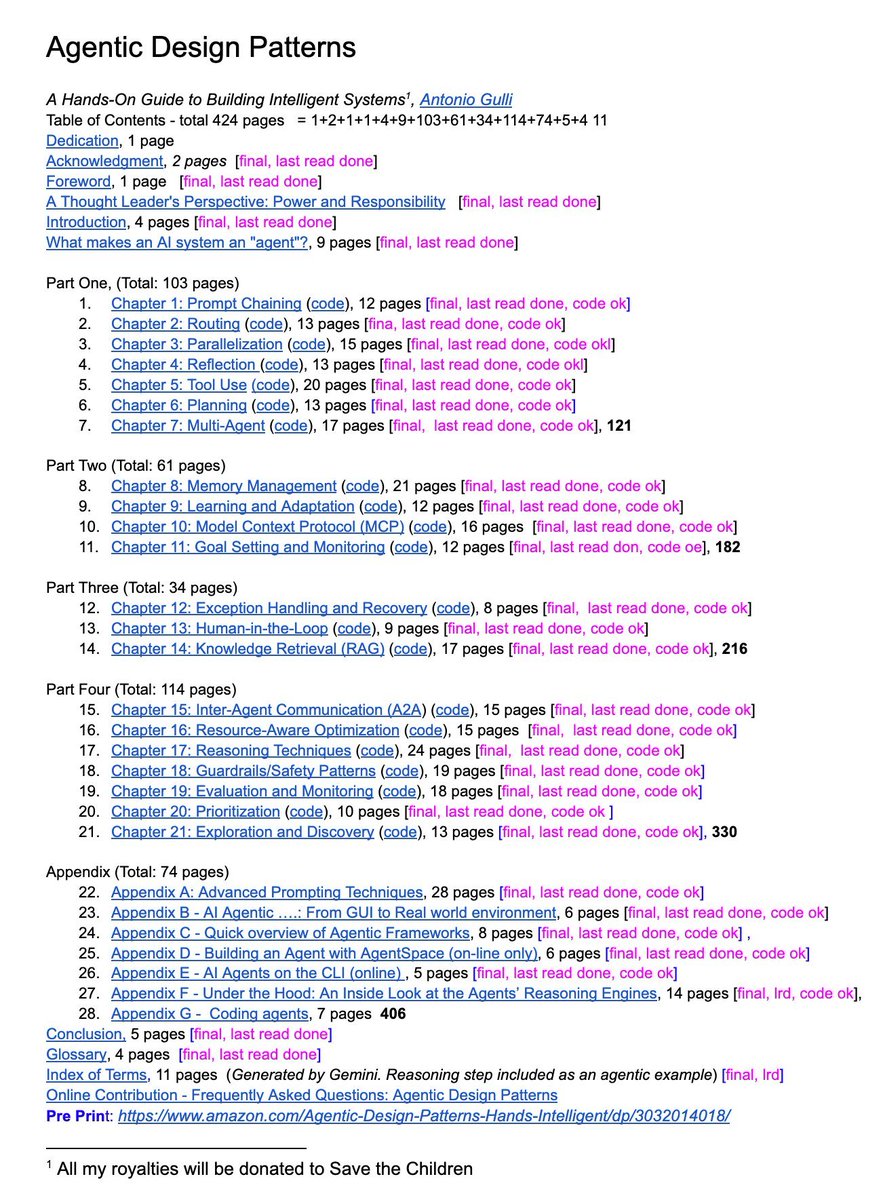
A senior Google engineer just dropped a 421-page doc called Agentic Design Patterns.
Every chapter is code-backed and covers the frontier of AI systems:
→ Prompt chaining, routing, memory
→ MCP & multi-agent coordination
→ Guardrails, reasoning, planning
This isn’t a blog post. It’s a curriculum. And it’s free.
English
Marcelo Rocha retweetledi

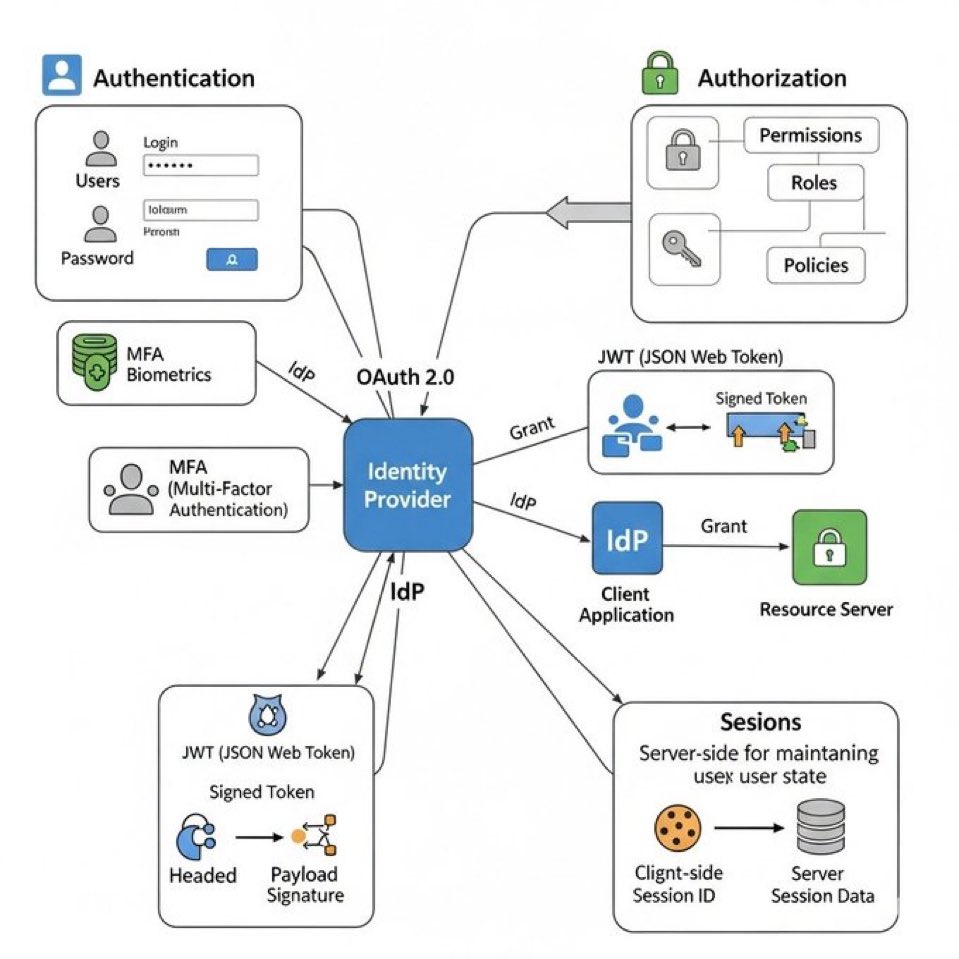
Authentication & Authorization (OAuth, JWT, Sessions)
What is Authentication?
Authentication is the process of verifying the identity of a user or system. It ensures that the person or application trying to access a system is who they claim to be.
→ Example: Logging in with a username and password.
What is Authorization?
Authorization determines what an authenticated user is allowed to do within a system. It defines permissions and access levels.
→ Example: A normal user can view content, while an admin can add or delete content.
OAuth (Open Authorization)
→ A standard protocol for token-based authentication and authorization.
→ Allows users to log in using third-party providers like Google, Facebook, or GitHub.
→ Example: "Log in with Google" button on websites.
JWT (JSON Web Token)
→ A compact, secure token format used for authentication.
→ Contains encoded user information and is signed to ensure integrity.
→ Commonly used in stateless authentication, where the server doesn’t store session data.
→ Example: After logging in, the server issues a JWT that the client sends with every request.
Sessions
→ A method where the server stores user authentication data temporarily.
→ A session ID is stored in the client’s browser (cookie) and mapped to server-side data.
→ Example: Traditional web apps where a user stays logged in until the session expires or they log out.
Key Differences
→ OAuth: Delegates authentication to external providers.
→ JWT: Stateless authentication with tokens stored on the client.
→ Sessions: Stateful authentication with data stored on the server.
Real-World Examples
→ OAuth: Logging into Spotify using Facebook or Google.
→ JWT: APIs where clients authenticate using tokens.
→ Sessions: Classic PHP or Node.js web apps with login systems.
English
Marcelo Rocha retweetledi

Marcelo Rocha retweetledi

Marcelo Rocha retweetledi
Marcelo Rocha retweetledi
Marcelo Rocha retweetledi
Marcelo Rocha retweetledi

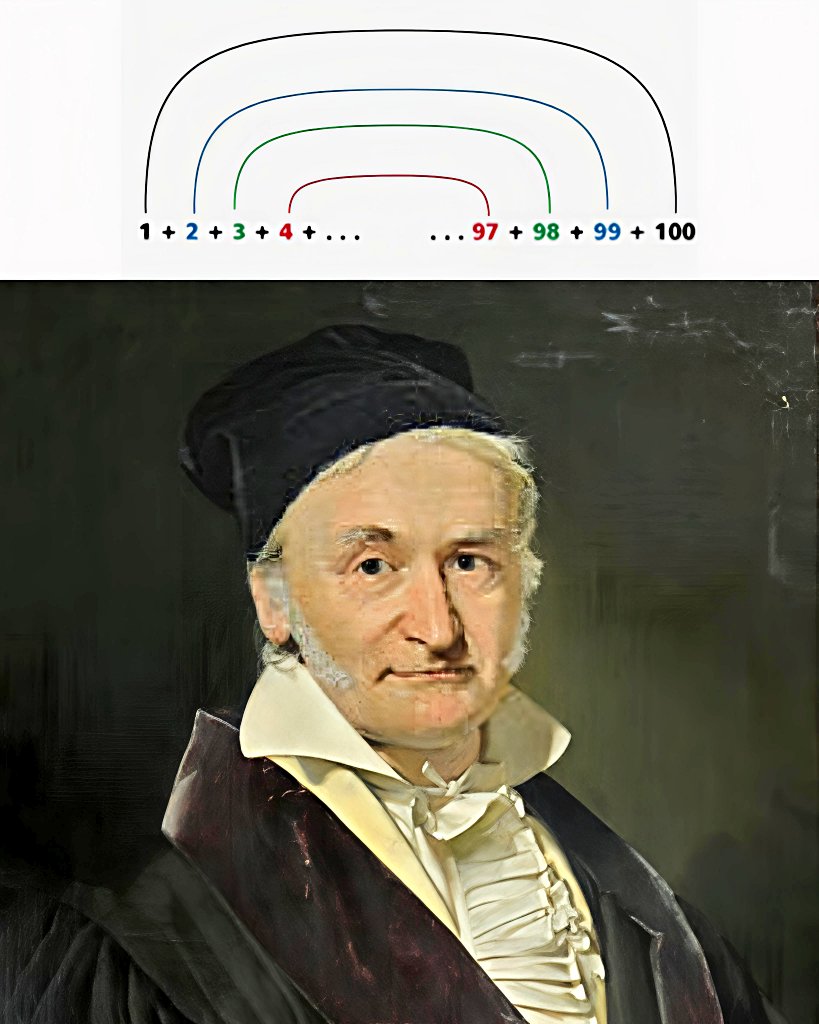
Quando Gauss tinha 10 anos e frequentava a escola primária, sua professora pediu à turma que somasse todos os números de 1 a 100.
Poucos instantes depois, o jovem Gauss levantou a mão e gritou a resposta, enquanto os outros alunos começavam a somar os números, um por um, meticulosamente.
Como ele chegou à resposta tão rápido?
O jovem Gauss percebeu que a sequência podia ser dividida em pares: o primeiro número, 1, com o último número, 100; o segundo número, 2, com o penúltimo número, 99; e assim por diante.
A soma de cada par seria 101. Percebendo que havia 50 pares no total, Gauss multiplicou 50 por 101 para obter a soma da sequência. O resultado, 5050, surgiu em sua mente quase instantaneamente.
Português
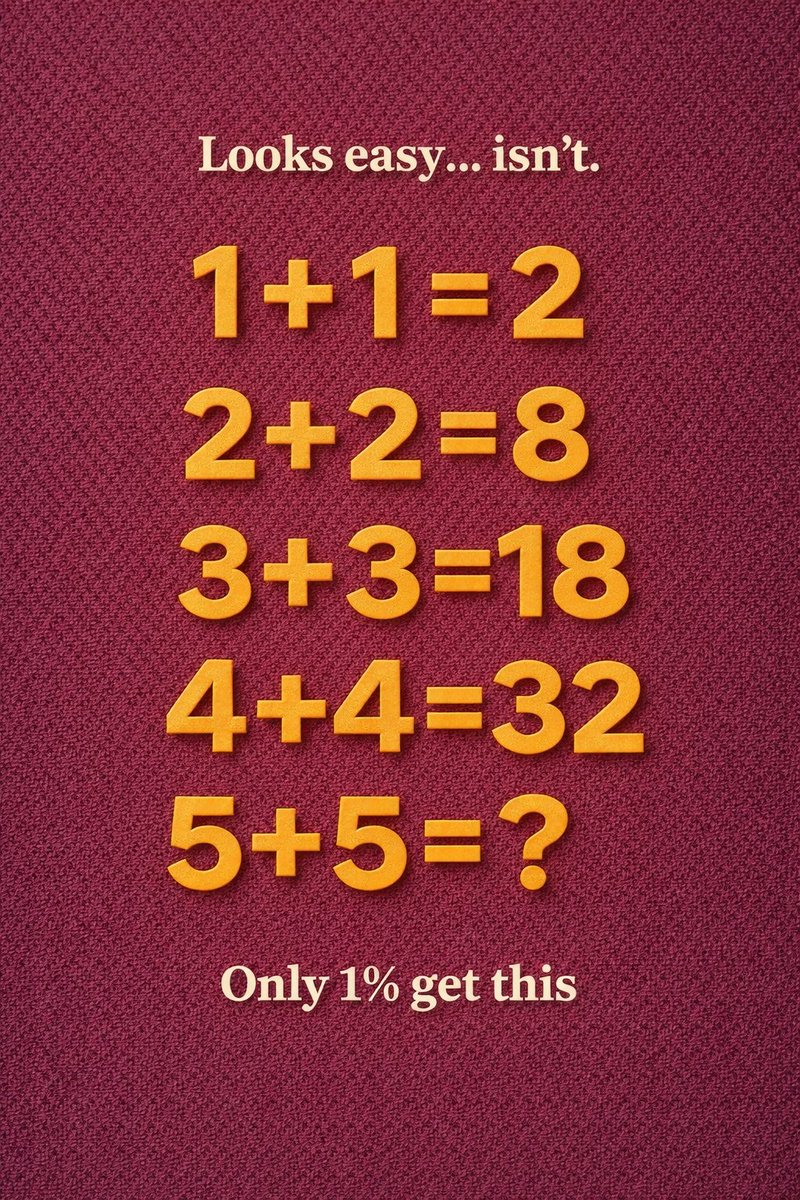
@HildurArnar1 @mariajan786 @MithilaWeb3 The pattern can also be: (x^2) * 2.
(5^2) * 2;
25 * 2;
Answer 50.
English

@mariajan786 @MithilaWeb3 so
1+1=2 1x2=2
2+2=4 2x4=8
3+3=6 3x6=18
4+4=8 4x8=32
5+5=10 5x10=50
So 50
Deutsch