

maquee.eth
2.5K posts
maquee.eth retweetledi

maquee.eth retweetledi
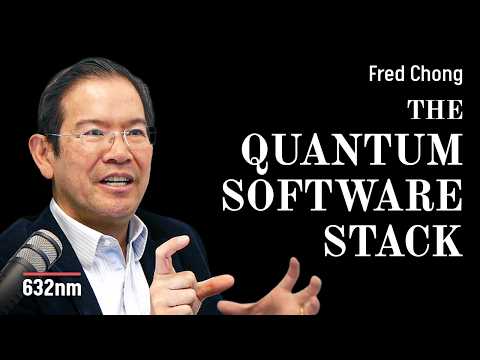
Mikhail and Yudong recently had a great discussion with Fred Chong, one of the world’s leading voices in quantum computer architecture.
Quantum computing is still largely a field shaped by physicists, which makes Fred’s perspective especially valuable, coming from computer architecture and supercomputing.
They drilled into the challenges of building the full stack required for fault-tolerant quantum computing: compilers, error correction, verification, scheduling, and hardware/software co-design, and debated where NISQ-era approaches may still provide value, particularly for optimization problems with limited datasets such as biomarker discovery and cancer treatment prediction.
For the Qubitcoin community, this direction is highly aligned with what we have been building:
In addition to our VQA-based component already being part of qPoW, for the last few months, we have been heavily focused on integrating tasks directly relevant to fault-tolerant quantum algorithms and the future quantum software stack.
The long-term goal is not just to make a quantum-aware blockchain, but to help create computational infrastructure naturally connected to the emerging fault-tolerant quantum ecosystem.

English
maquee.eth retweetledi


maquee.eth retweetledi

Our responses to Russia’s prolongation of the war and its attacks on our cities and communities are entirely justified. This time, Ukrainian long-range sanctions reached the Moscow region, and we are clearly telling the Russians: their state must end its war. Ukrainian drone and missile manufacturers continue their work. I am grateful to the Security Service of Ukraine and all the Defense Forces of Ukraine for their precision. The distance from Ukraine’s state border is over 500 km. The concentration of Russian air defense in the Moscow region is the highest. But we are overcoming it. Glory to Ukraine!
English
maquee.eth retweetledi

maquee.eth retweetledi

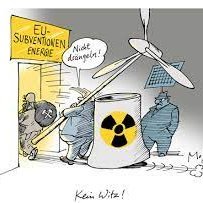
Katherina Reiche hat heute gelogen, dass sie vor ihrer Zeit als Wirtschaftsministerin NICHT für die Gaslobby (Westenergie) gearbeitet habe. Ich fragte sie zuvor, ob sie ausschließt nach ihrer Regierungszeit wieder für die fossile Lobby zu arbeiten. Das wollte sie nicht tun...
Deutsch
maquee.eth retweetledi
Russlands beliebteste Bloggerin ist nach Wochen der Kritik an der Internet-Zensur des Kreml (in westlichen & opposition. Medien) so glücklich über Wladimir Putin & Dmitri Peskow, dass sie einfach nur noch weinen kann.
Sie lebt im Ausland, der FSB hat wohl ihre Familie besucht …
Jay in Kyiv@JayinKyiv
After weeks of criticizing the Russian government for allowing the country to spiral into collapse, it seems Russia's most popular blogger (13 million followers, living in Monaco) got a visit from the FSB. Now saying everything's great because Peskov heard her and Putin will fix everything.
Deutsch
maquee.eth retweetledi

Unerwartet hat eine russische Influencerin eine Welle der Kritik ausgelöst. Die Wut wächst in allen Schichten, seit der Staat auch die letzten Freiheitsräume beschränkt. trib.al/7OBINWv
Deutsch
maquee.eth retweetledi

Es passierten heute interessante Dinge in der russischen Duma: Sjuganow unterstützt die Putin-Kritik der Bloggerin Bonja und warnte als Kommunist vor einer Wiederholung des Jahres 1917, wenn nicht finanz-und wirtschaftspolitisch bald etwas geschehe.
Deutsch
maquee.eth retweetledi
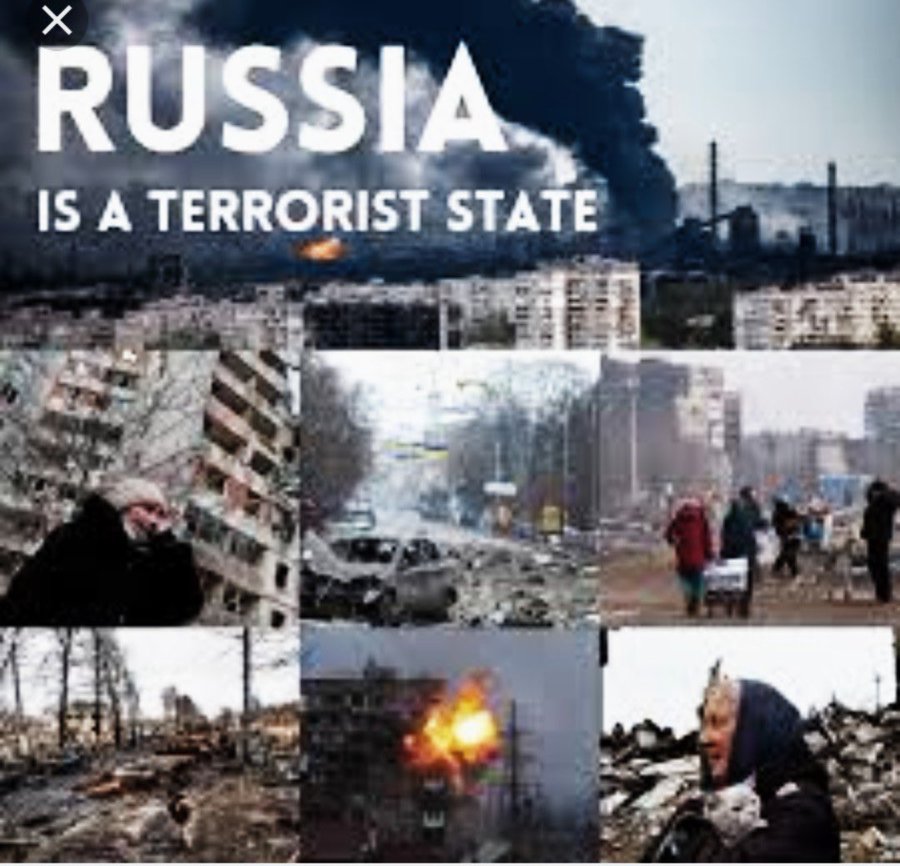
Putin ist ein Terrorist, und hat ein Terror-Staat geschaffen.
💭🌐 🐵 ➡️ Internetausfälle in Großstädten sind mit der Verhinderung terroristischer Bedrohungen verbunden, was eine Priorität ist, — Putin

Deutsch
maquee.eth retweetledi

Mikhail was the smartest among the people here talking at @MITBitcoinClub.
The best scientist when it comes to quantum.
The founder of @qubitcoinx $QTC
Listen to this video, this was live on stage at @MITBitcoinClub
English
maquee.eth retweetledi
Not hard to guess, it’s all over my page.
@qubitcoinx is the next billion dollar running made in the bear market.
Supply is moving from weak hands to strong hands.
One of the strongest communities is standing behind it.
safetrade.com/exchange/QTC-U…
Hard to buy but it will feel even harder in the end if u fade it.
cryptobarba@Cryptobarba_
The next $TAO or $KAS is brewing Lead by a team full of MIT scientists (doxxed) Narrative? Quantum Very hard to buy but this gives the best opportunities, this is how both Tao and Kaspa began Can you guess?
English
maquee.eth retweetledi
Russian fascist in a hole in occupied Ukraine begs his wife to send 300,000 rubles ($4,000 USD) to his commander, says they threatened to break his fingers if she doesn't.
Imagine what they do to Ukrainians.
All Ukrainian people and land must be liberated from this evil.
English
maquee.eth retweetledi

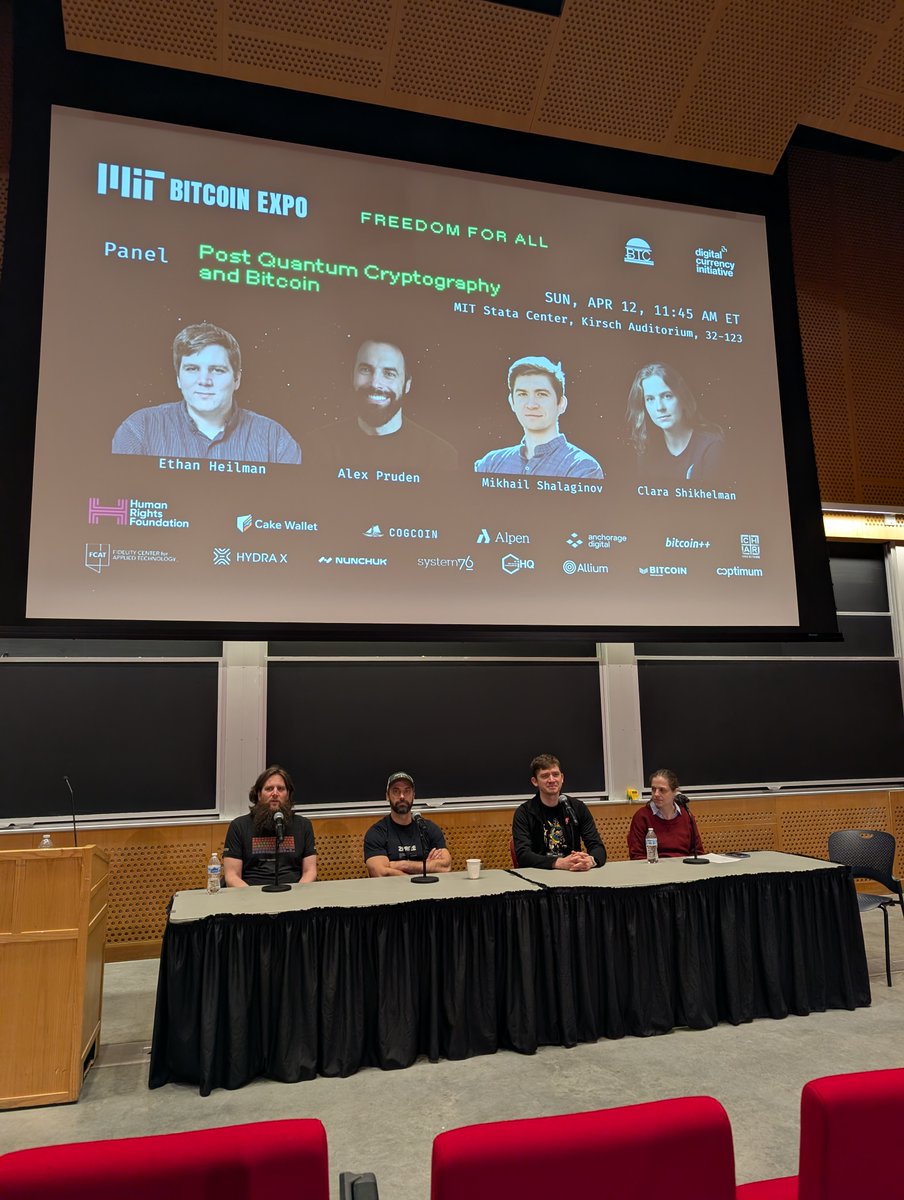
It was great to take part in the @MITBitcoinClub Expo, joining a panel on post-quantum cryptography and interacting with Bitcoin Core developers and leading cryptographers.
As quantum machines mature, running Shor's Algorithm or its variants at scale is becoming increasingly plausible, directly challenging Elliptic Curve Cryptography, which underpins Bitcoin and Ethereum.
Bitcoin’s security relies on private keys. However, once a transaction is made, the public key is revealed. With a sufficiently powerful quantum computer, that public key could be used to recover the private key and take control of the funds. This fundamentally changes the security assumptions of the entire ecosystem.
The solutions are not straightforward. Post-quantum schemes exist (e.g., Falcon and Dilithium), but signatures are often 10–100x larger. Since signatures dominate transaction size, this would mean fewer transactions per block, higher fees, slower propagation, and increased centralization pressure. A naive transition risks disrupting Bitcoin’s economic balance.
Upgrading Bitcoin is also inherently difficult. The system resists change by design, and history (e.g., the 2017 split into Bitcoin Cash) shows how contentious even relatively simpler upgrades can be. A post-quantum transition would require global coordination and a large-scale migration of funds.
There is also a deeper question: a significant fraction of coins that are likely lost becomes vulnerable in a quantum scenario. Should they be left as a bounty, or somehow reclaimed? There is no clear consensus.
Quantum computing is advancing rapidly and poses a systemic risk to digital assets. The window to prepare is limited, and the challenges are both technical and social.
Can Bitcoin be upgraded, or will its core assumptions be tested beyond repair?
P.S.: I believe @qubitcoinx (originally inspired by Bitcoin) will become both quantum-secure and quantum-friendly.
English
maquee.eth retweetledi
Das riecht nach perfektem Timing – oder nach einem handfesten Skandal! Nur rund 20 Minuten, bevor der iranische Außenminister am vergangenen Freitag verkündete, dass die Straße von Hormus wieder geöffnet sei, setzten Investoren eine gigantische Wette: satte 760 Millionen Dollar auf fallende Ölpreise! Was dann passierte, ließ die Märkte beben: Kaum war die Nachricht draußen, rauschte der Ölpreis in den Minuten danach um bis zu 11 Prozent nach unten. Wusste da jemand schon vorher Bescheid? Der Verdacht auf Insider-Handel liegt nahe.
bild.de/politik/auslan…

Deutsch
maquee.eth retweetledi

🚨 BREAKING
TRUMP'S INSIDER JUST OPENED A $53 MILLION $BTC SHORT WITH 30X LEVERAGE!
HIS WIN RATE IS 100%,10 OUT OF 10 TRADES HAVE BEEN PROFITABLE.
IF $BTC PUMPS JUST 7% → HE WILL BE LIQUIDATED FOR $50 MILLION.
EITHER HE KNOWS SOMETHING, OR A MASSIVE LIQUIDATION IS COMING...
English
maquee.eth retweetledi
Study:
@qubitcoinx $QTC
The long term utility according to the faq
The long-term vision for QubitCoin includes the development of Layer 2 execution environments featuring quantum smart contracts, which would enable programmable logic on top of the base layer.
The project also aims to create a marketplace for useful compute, allowing users to post quantum simulation tasks for miners to solve.
Additionally, QubitCoin plans to implement quantum-resistant infrastructure to future-proof the network against quantum attacks. These goals reflect a commitment to both scientific progress and practical utility, positioning Qubitcoin as a foundational platform for quantum-enhanced decentralized applications.
English
maquee.eth retweetledi

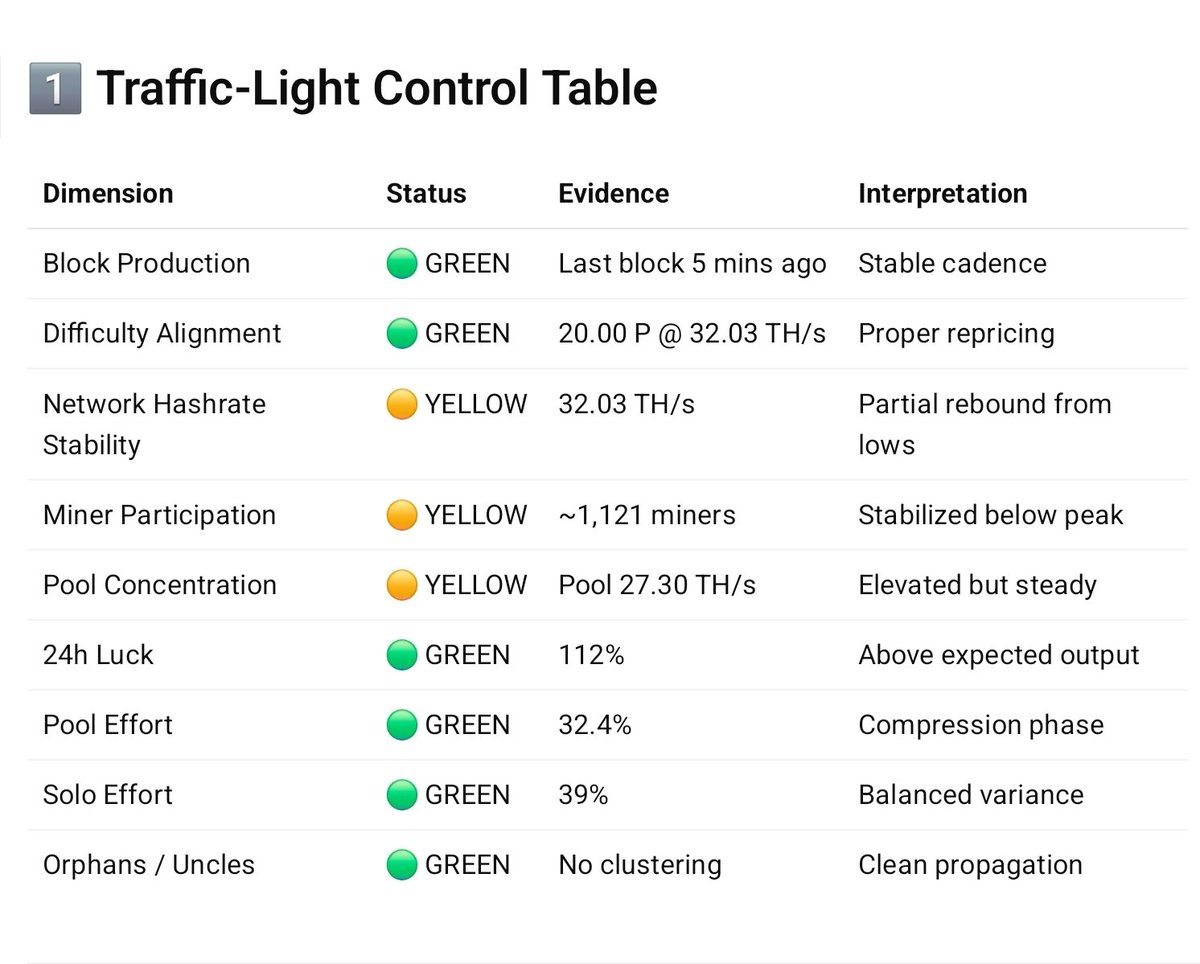
This snapshot reflects:
Healthy Proof-of-Work stochastic cycling within a reduced but stable consolidation range, with intact control-loop alignment and sustained production efficiency despite lower overall scale.
$QTC #Qubitcoin
English
maquee.eth retweetledi

Are you listening? #superquantum $QTC
In the company of giants.
@JoeParys @noBScrypto @milesdeutscher @Crypto__Growth @LeetheCaptain @AltcoinDaily @coinbureau @AltcoinPsycho @AltcoinSherpa

Ladon@RealLadon
3. Qubitcoin… the decentralized quantum sim network. Alongside the giants exploring QS, there are SMEs and non-profit organisations taking a more unconventional approach. One such organisation is Superquantum, a non-profit foundation behind the project Qubitcoin ($QTC). Founded by academics from MIT (like Feynman) and Vanderbilt University, and supported by experienced advisors—including Michael Dubrovsky (noted for early involvement with DAGLabs, which developed Kaspa $KAS) and Yudong Cao, former Harvard postdoctoral researcher and now Head of Quantum at BCG X—Qubitcoin has conceptualised a world first: a decentralized quantum simulator network. Qubitcoin combines proof-of-work blockchain technology (qPoW, or quantum Proof of Work) with its own plug-and-play quantum software, SuperSim, allowing users to connect highly optimised libraries (effectively databases) to simulate real quantum tasks using classical hardware such as GPUs. Miners are incentivised either by selling the token or holding it long-term as an investment. In return, the network benefits from miners contributing electricity and infrastructure—similar to Bitcoin. The difference between BTC and QTC is small but stark. Qubitcoin is based on Bitcoin’s source code, but its developers have found a way to make network hashes produce tangible answers to quantum problems, potentially unlocking valuable data. Think of it like this: each time Bitcoin produces a block, it generates a hash. Each time Qubitcoin produces a block, it may generate data that solves an actual quantum problem. Instead of relying on physical quantum machines—often costing hundreds of millions of dollars and plagued by stability and reliability issues—Qubitcoin uses decentralised classical computing power to run simulations. The network is open-source and primarily aimed at institutions and SMEs. Imagine a global network of GPUs and ASICs, all contributing power to what could become the largest decentralised quantum simulator ever built—accelerating quantum machine development and potentially solving real-world industrial problems with valuable data. The list of potential applications is difficult to fully comprehend; it is almost 2001: A Space Odyssey-esque. Qubitcoin coordinates access to these simulation resources while securing transactions, positioning itself as a bridge between classical blockchains and future quantum networks. While the commercial value remains uncertain and much development lies ahead, one thing is clear: quantum simulation is an established and rapidly growing field.
English