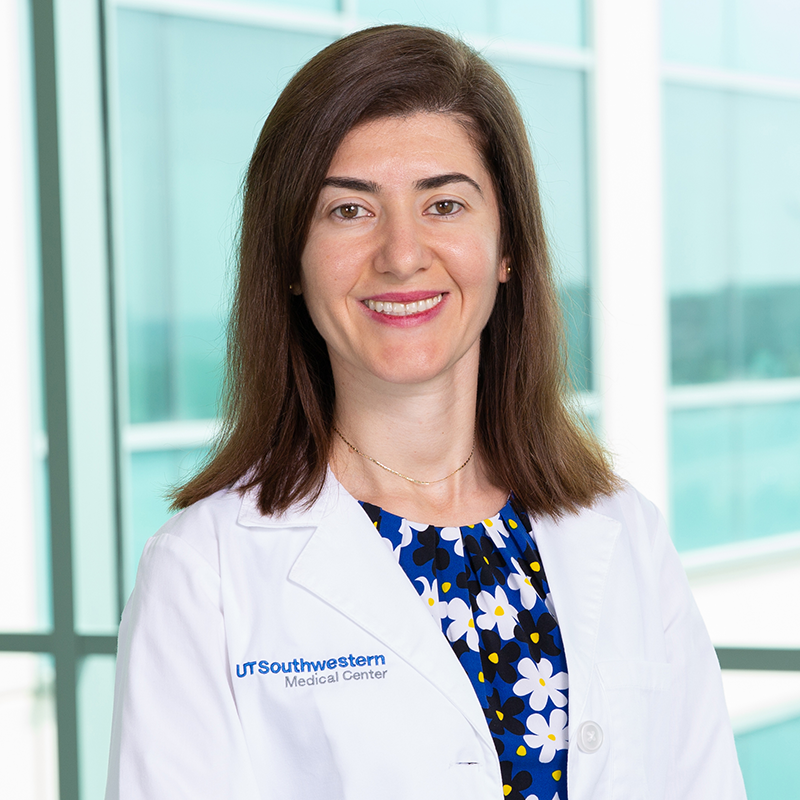
Maria Chahrour

807 posts

Maria Chahrour banner
Maria Chahrour

Maria Chahrour

@MariaChahrour

Studying the genetics of autism spectrum disorder @UTSWMed McDermott Center. Tweets and opinions my own

Dallas Katılım Aralık 2012
1.1K Takip Edilen856 Takipçiler
Maria Chahrour retweetledi
UTSW Science
UTSW Science@UTSWScience·
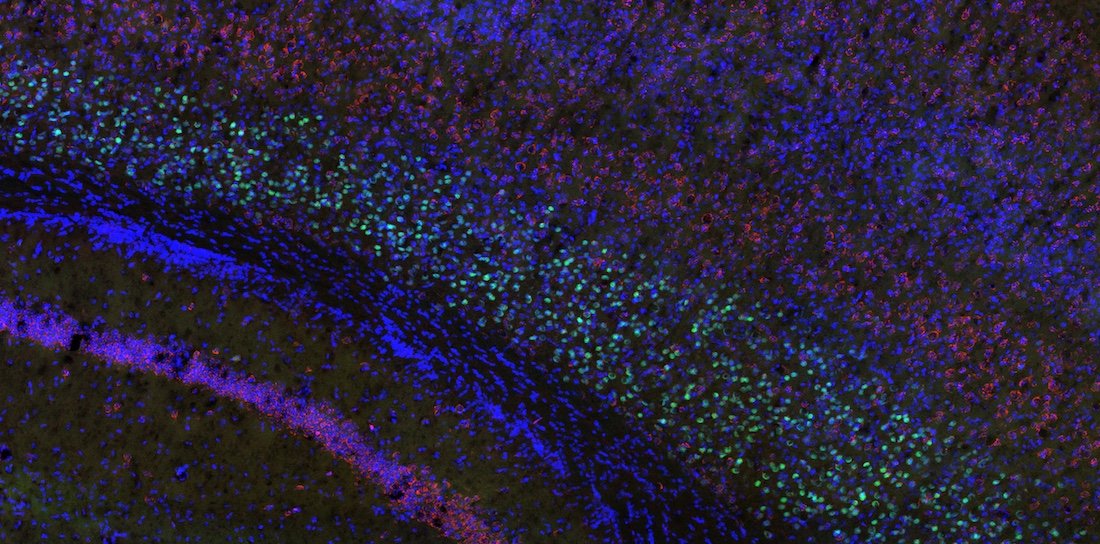
Two new studies led by #UTSW researcher Maria Chahrour, Ph.D., help explain how the genes KDM5A and UBE3B may contribute to autism spectrum disorder — work that could support better genetic tests and future therapies. bit.ly/3PkU0og #Neuroscience #AutismResearch
English
0
2
9
880
Maria Chahrour retweetledi
UT Southwestern O'Donnell Brain Institute
O'Donnell Brain Institute Investigator, Dr. Maria Chahrour, led two studies that shed new light on genes associated with #autism spectrum disorder (ASD). The findings could lead to improved diagnostics and therapies that can treat ASD at its genetic roots. bit.ly/3PkU0og
UT Southwestern O'Donnell Brain Institute tweet mediaUT Southwestern O'Donnell Brain Institute tweet media
English
0
3
19
2.3K
Maria Chahrour retweetledi
UTSW Science
UTSW Science@UTSWScience·
What drives @MariaChahrour? Understanding the “why” behind neurodevelopmental conditions like autism. Her lab studies genes and brain development to advance understanding and inform more personalized approaches to care. Learn more: bit.ly/4rJmYeu #UTSWMeetTheMinds
English
0
8
16
1.9K
Maria Chahrour
Maria Chahrour@MariaChahrour·
The enthusiasm for computational biology and AI in drug discovery is certainly justified. But framing this as an “extinction event” for pharmaceutical science misunderstands how biology and medicine actually work. The idea that we can “engineer the human operating system” assumes biological systems behave like deterministic computational systems. They don’t. Biology is a multi-scale, stochastic system shaped by evolution. Gene regulation, cell states, tissue environments, immune responses, and development interact in ways that are not reducible to a single computable model. Even when we know the DNA sequence, predicting phenotype remains profoundly difficult. Conditions like autism illustrate this well: hundreds of genes, diverse molecular pathways, developmental timing effects, and environmental interactions all shape outcomes. That complexity is exactly why mechanistic biology still matters. Simulations are powerful, but only as good as the models behind them. In drug discovery, the biggest bottlenecks extend far beyond molecular structure prediction. Entire fields like Genomics, Systems Biology, and Computational Biology have been integrating data and modeling for decades. The real story is integration, not replacement. AI will help generate hypotheses faster and interpret massive datasets, but validation still requires experiments in cells, tissues, animal models, and ultimately humans. Biology doesn’t become “engineering instead of science”. It becomes better science aided by engineering tools. @JensenHuangcon Digital biology will transform medicine, but it won’t collapse the timeline to cures or make pharmaceutical science obsolete. If anything, it makes deep biological expertise more important, not less.
Dustin@r0ck3t23

Jensen Huang just called the exact top of the pharmaceutical industry. Not a pivot. Not a disruption. An extinction event. Huang: “Where do I think the next amazing revolution is going to come? And this is going to be flat out one of the biggest ones ever. There’s no question that digital biology is going to be it.” The medical establishment has spent centuries playing a chaotic game of trial and error. We’re about to mathematically engineer the human operating system. Huang: “For the very first time in human history, biology has the opportunity to be engineering, not science. When something becomes engineering, not science, it becomes less sporadic and exponentially improving.” Biology is no longer the dark art of random discovery. It’s a predictable, compounding execution loop. Translate the chaotic variables of chemistry into the laws of computer science and you stop waiting for accidental breakthroughs. You simply compute the cure. That line should terrify every pharmaceutical executive alive. Huang: “It can compound on the benefits of the previous years. And every researcher’s contributions compound on each other.” For decades, drug discovery has been an isolated, artisanal process. One lab. One team. One molecule. Years of blind iteration. The algorithm just shattered that entire bottleneck. Every failed protein fold, every successful synthetic molecule instantly trains the foundational model. Makes the next iteration mathematically smarter. Huang: “We’re going to have incredible tools that bring the world of biology, which is very chaotic and constantly changing and diverse and complex, into the world of computer science. And that is going to be profound.” Incumbent pharma looks at the human body and sees an unmanageable wall of variables. Engineers look at that exact same body and see raw data waiting to be compiled. No longer guessing how a molecule will react in the physical world. Running millions of zero-cost simulated iterations before a single test tube is ever touched. Rip the chaotic friction out of the physical lab and drop it directly into a massive GPU cluster? The timeline to map, edit, and optimize the biological machine doesn’t shrink. It collapses.

English
0
0
11
494
Maria Chahrour retweetledi
UT Southwestern O'Donnell Brain Institute
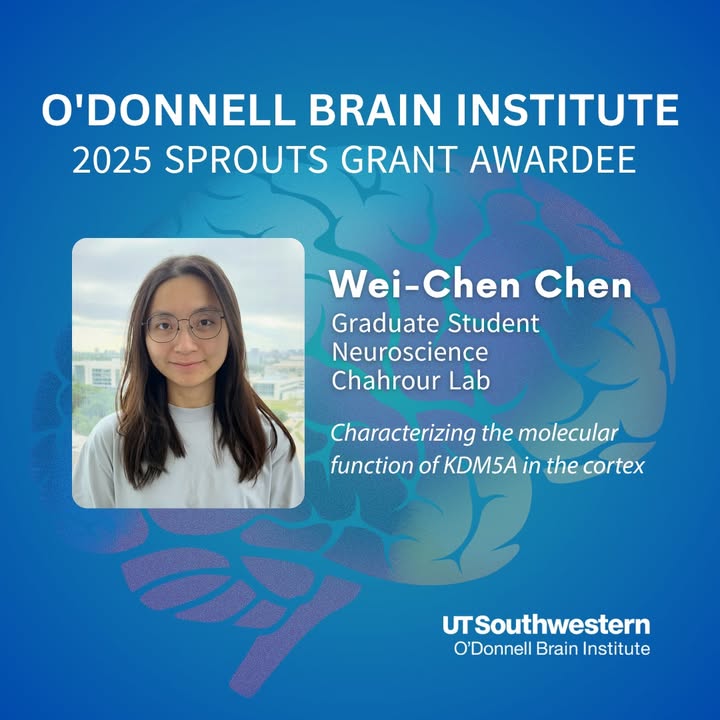
Neuroscience graduate student, Wei-Chen Chen, is a 2025 OBI Sprouts Grant recipient. The Sprouts program supports trainees exploring new research directions. Wei-Chen is studying the molecular mechanisms underlying Autism Spectrum Disorder under the mentorship of @MariaChahrour.
UT Southwestern O'Donnell Brain Institute tweet media
English
0
2
5
675
Maria Chahrour
Maria Chahrour@MariaChahrour·
She just published her book "Systemic: how racism is making us sick”, a data-driven global exploration of this critical topic. Congrats Layal! 🎉 Add it to your summer reading. An essential read to understand how racism influences health outcomes and ho w we can all solve it.
English
0
0
0
126
Maria Chahrour
Maria Chahrour@MariaChahrour·
I had an enlightening conversation with Layal Liverpool @layallivs about racial disparities in healthcare and the genomics work my lab is doing in collaboration with the East African community in Dallas.
Maria Chahrour tweet media
English
1
0
7
416
Maria Chahrour retweetledi
UT Southwestern O'Donnell Brain Institute
If you are working on your application to our Graduate Student Award Symposium, the deadline is midnight tonight (your local time)! This is a great opportunity to share your thesis work with peers in #neuroscience and the neuroscience community @UTSWMedCenter.
UT Southwestern O'Donnell Brain Institute tweet media
English
1
10
8
1.3K
Chen Liu
Chen Liu@ChenLiuLab·
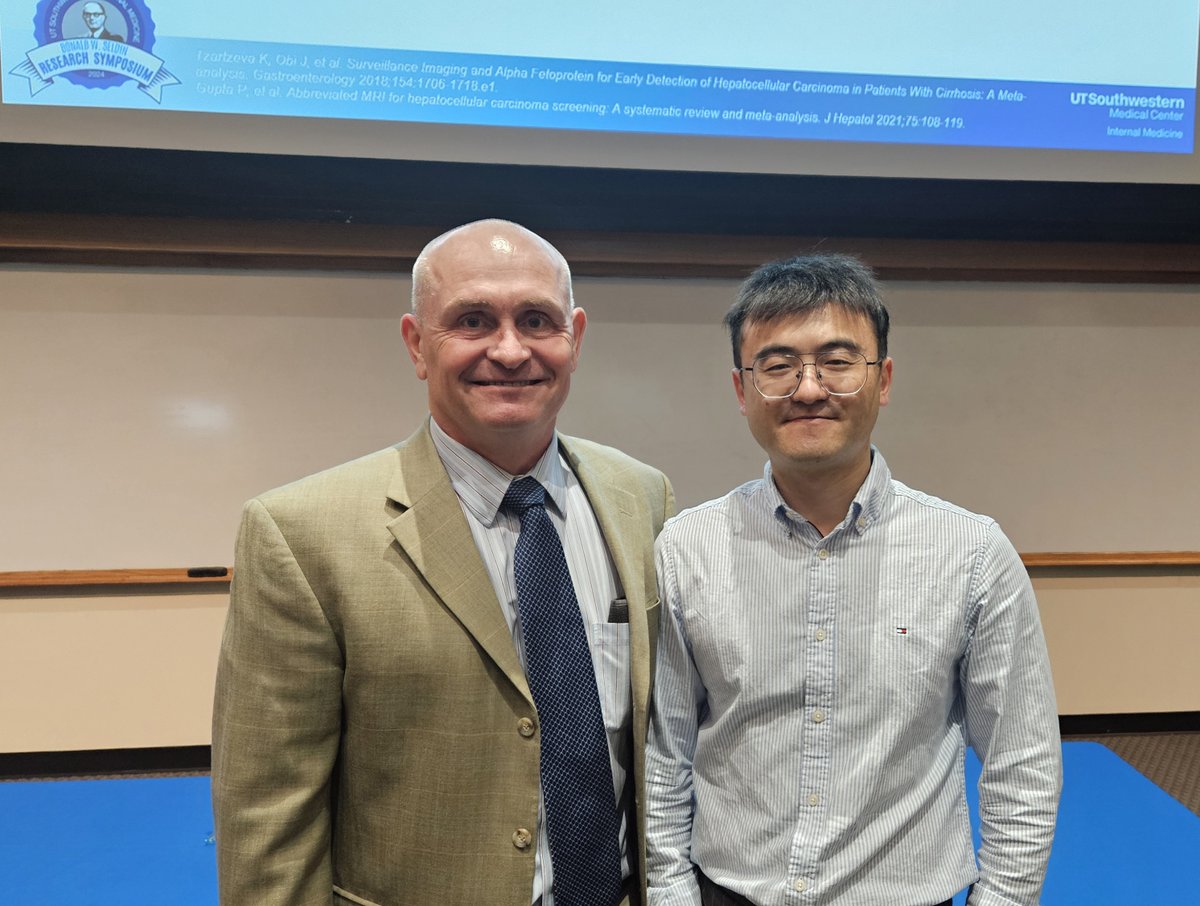
Congratulations to Baijie @Baijie_Xu for winning the Basic Science Award at the Ninth Donald W. Seldin Research Symposium @UTSWInternalMed. #ProudMentorMoment! Immense gratitude to the twitterless JKE, whose unwavering support has been the cornerstone of our success.
Chen Liu tweet media
English
2
6
35
4.1K
Maria Chahrour
Maria Chahrour@MariaChahrour·
Big thanks to the chahrourlab.org team: Ashlesha Gogate, Ariel Aiken, Kiran Kaur, and lab alumna Darlene DeVries.
English
1
0
1
242