
Mark
4 posts



@archeohistories Really pisses me off the way the white man killed all the buffalo to starve the Indians to extinction
English

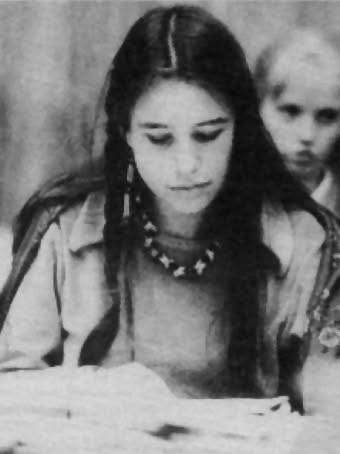
In 1982, Winona LaDuke made a choice that defied the logic of upward mobility. At 23, armed with a degree in economics from Harvard, she bypassed the high-rise career path to move to the White Earth Reservation in rural Minnesota—a place she had never lived, where her arrival was met with suspicion. Her father was Ojibwe from White Earth; her mother was Jewish from the Bronx. LaDuke had grown up in Oregon, spoke no Ojibwe, and carried the "Ivy League" label—a credential that, on the reservation, often signaled an outsider who came to talk rather than listen.
She took a job as a high school principal at Pine Point, where she listened more than she spoke. What she heard was the mechanical hum of a century-old theft. In 1867, a treaty had established White Earth as a permanent home for the Anishinaabe—over 837,000 acres of tallgrass prairie and sacred wild rice beds. It was supposed to be protected in perpetuity. By the time LaDuke arrived, a staggering 90% of that land had been stripped away through "paper-wars": fraudulent land deals, tax forfeitures on a people with no cash economy, and contracts written in English for people who spoke only Ojibwe.
In 1985, LaDuke joined a massive consolidated lawsuit to recover the stolen territory. When the courts eventually dismissed the claims, ruling that too much time had passed, most people would have moved on. She stayed. In 1989, using $20,000 from a human rights award, she founded the White Earth Land Recovery Project (WELRP) with a mission that was deceptively simple: buy back the land, acre by grueling acre. No dramatic protests or media campaigns—just quiet, persistent reclamation.
It was impossibly slow work, measured in single-digit parcels while hundreds of thousands of acres remained beyond reach. But something else was growing alongside the land. LaDuke launched Ojibwe language programs so children could speak the words their grandparents had been punished for using. She reintroduced buffalo herds that hadn't roamed the region in a century and established wind energy projects when renewable energy was still considered fringe. She revived the cultivation of manoomin (wild rice)—the sacred grain that had sustained her people for generations but had nearly disappeared.
By 2000, the project had recovered 1,200 acres. It was a fraction of what was lost, but it meant ceremonies could resume and memory could take root. Then came the pipelines. When Enbridge proposed the Line 3 tar sands pipeline—a project cutting through treaty-protected waters—LaDuke’s quiet work became loud resistance. She organized legal challenges, led direct actions that blocked construction equipment, and stood with "Water Protectors" in freezing conditions. She was arrested multiple times and spent days in jail, facing criminal charges that took years to resolve.
More than 600 people were arrested during the Line 3 protests. They chained themselves to equipment and demanded the world pay attention. Though the pipeline was completed in 2021, the fight shifted the foundation of future battles. Treaty rights entered mainstream legal debate, and when a Minnesota judge eventually dismissed charges against LaDuke and other protectors, it established a precedent for the right to protect treaty lands that continues to influence cases today.
LaDuke also took this message to the national stage, running for Vice President on the Green Party ticket in 1996 and 2000. She knew she wouldn't win; she ran to force Indigenous issues into presidential debates and make erasure impossible. In 2016, she became the first Green Party member and first Native American woman to receive an Electoral College vote—a symbolic moment reflecting four decades of making herself impossible to ignore.
© History Pictures
#archaeohistories
English
@tinker0203 @sabbathfans I have to give Sharon credit for helping Ozzie out in his time of need, but she is still riding on his coattails
English

@sabbathfans I can’t stand him. He’s riding on Ozzy’s coattails since he’s a washout. Sabbath was nothing after Ozzy left.
English

It hasn't formally been announced yet by Tony, but.. The Seventh Star Record Store Day release is up on the RSD site.
The text mentions a red & black splatter - we can see some of that on the social media post by Tony a few days ago. It also mentions a single remix, which is probably the version that was on the music video back in 86.
If this follows the path of Eternal Idol last year, it'll be an RSD vinyl now and then a wide summer release on a new black vinyl print and a CD (plus digital). Hopefully we get some official news soon.
recordstoreday.com/SpecialRelease…

English