Matthieu Segret

2.3K posts

Matthieu Segret banner
Matthieu Segret

Matthieu Segret

@MatthieuSegret

Founder of @humancoders • Phoenix, Rails and WebGL developer • Art : @MatthieuArt

Montpellier, France Katılım Mayıs 2009
658 Takip Edilen2.1K Takipçiler
Matthieu Segret retweetledi
Human Coders
Human Coders@humancoders·
« Vous avez formé mes devs sur Claude Code. Vous pourriez aussi former mon équipe marketing ? » On l'entend toutes les semaines depuis un an. Alors on a construit une vraie offre. 7 formations à l'IA pour vos équipes non-tech, animées par nos dev 👇 blog.humancoders.com/formations-ia-…
Français

1
1
4
1.7K
Matthieu Segret retweetledi
Camille Roux
Camille Roux@CamilleRoux·
Mon top 13 des skills et plugins Claude Code qui ont marqué 2026 : → celui qui coupe 63 % des tokens de sortie → celui qui rejoue tes sessions comme une vidéo → celui qui transforme une codebase en graphe explorable → et 10 autres encore ! camilleroux.com/top-skills-plu…
Français
4
22
131
14.8K
Matthieu Segret
Matthieu Segret@MatthieuSegret·
RYBitten, un outil pour explorer les espaces colorimétriques avec une approche peinture — mélange RYB, presets de gamut et génération de palettes directement dans le navigateur. rybitten.space
Français
0
0
1
102
Matthieu Segret retweetledi
Şerafettin Sarışen
Şerafettin Sarışen@ssarisen·
sniffnet diye rust ile yazılmış bir araç var, internet trafiğini izlemek için. açıp ağ kartını seçiyorsun ve o an hangi cihaz nereye paket gönderiyor, hangi servisle konuşuyor, hangi ülkeye bağlanıyor hepsini görebiliyorsun. windows mac linux hepsinde çalışıyor, tek binary. hostların domain ve asn bilgisini çözüyor coğrafi konumu gösteriyorr. açık kaynak ve ücretsiz.
Şerafettin Sarışen tweet media
Türkçe
25
306
2.2K
127.4K
Matthieu Segret retweetledi
Alex Volkov
Alex Volkov@altryne·
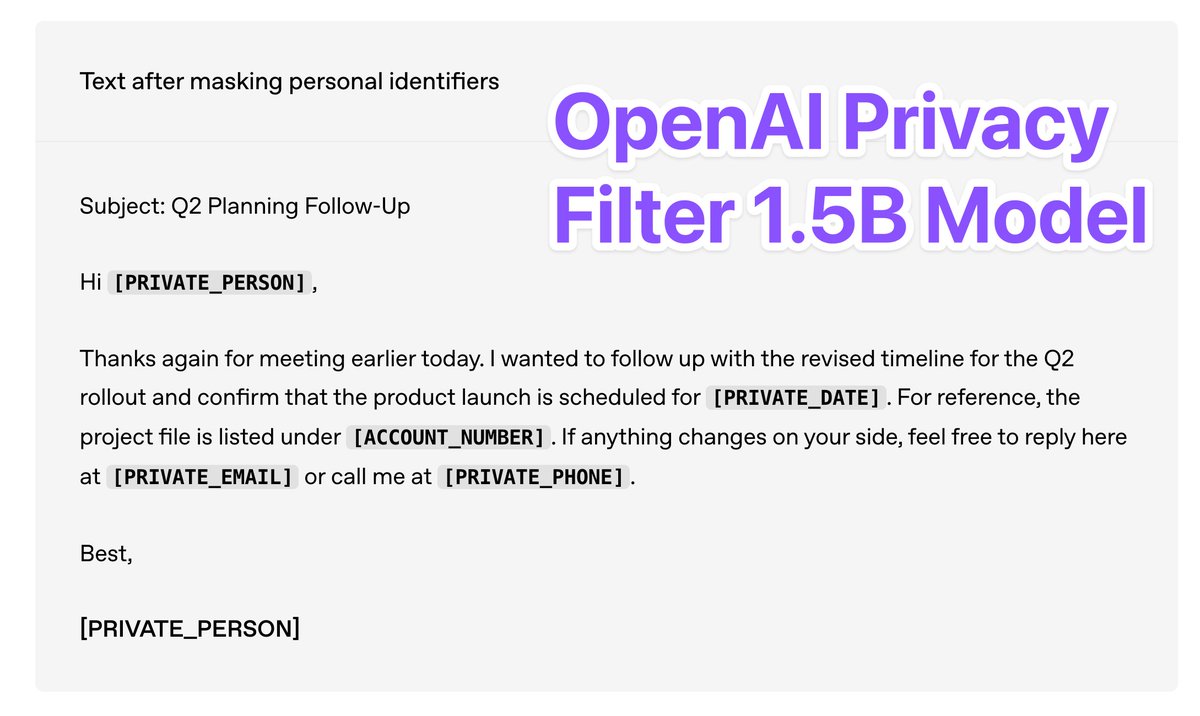
OpenAI just open sourced a new 1.5B (50m active) model on HuggingFace with Apache 2.0 license! It's not a new LLM, this one is called Privacy Filter, and it's a PII detection model (checking if text has private information) A few interesting tidbits from the release + links:
Alex Volkov tweet media
English
24
143
1.1K
174.9K
Matthieu Segret retweetledi
Plateforme des données de santé (Health Data Hub)
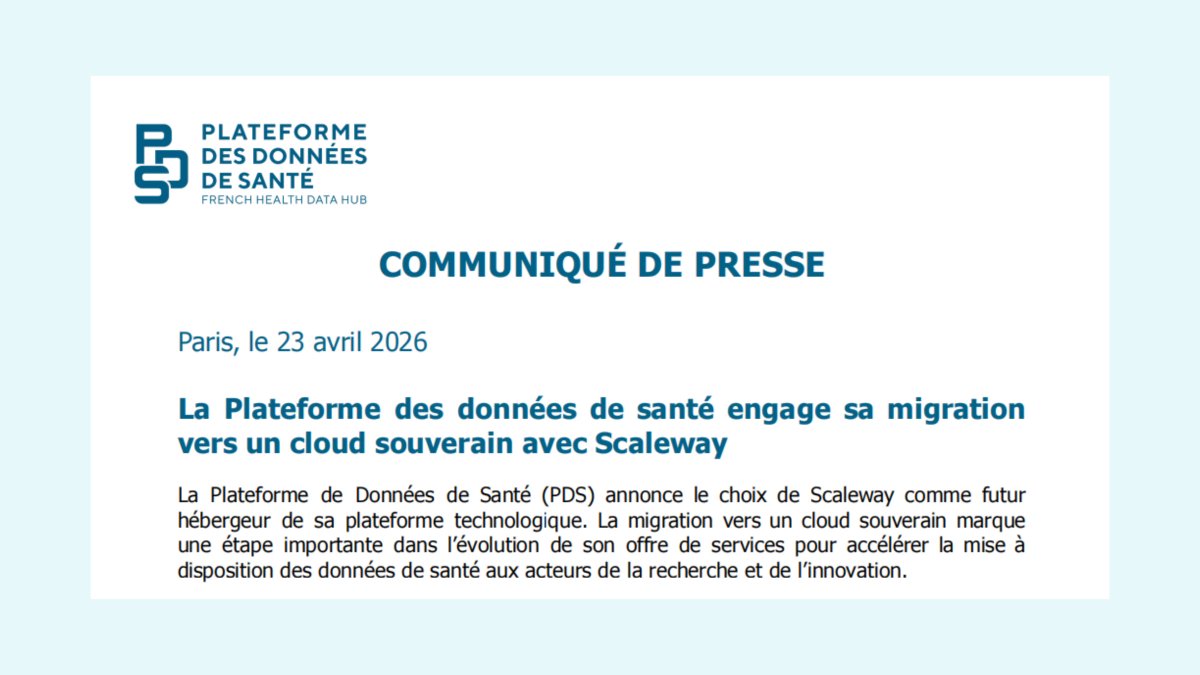
🚀 Nous avons retenu @Scaleway_fr comme nouvel hébergeur de notre plateforme technologique ! 👉 La migration vers ce nouvel hébergeur s’inscrit dans une stratégie de réversibilité engagée dès 2019 et va permettre d’accélérer la mise à disposition de données de santé. 🔎 Ce choix repose sur une analyse approfondie de la PDS qui a bénéficié de l'accompagnement de la DINUM, d’@Inria et du ministère @Sante_Gouv, et met en valeur l’évolution de l’offre cloud souveraine. Lire le communiqué 👉 health-data-hub.fr/actualites/la-…
Plateforme des données de santé (Health Data Hub) tweet media
Français
12
51
142
20.9K
Matthieu Segret retweetledi
Stitch by Google
Stitch by Google@stitchbygoogle·
Today, we’re open-sourcing the draft specification for DESIGN.md, so it can be used across any tool or platform. We’re also adding new capabilities. DESIGN.md lets you easily export and import your design rules from project to project. Instead of guessing intent, agents know exactly what a color is for and can even validate their choices against WCAG accessibility rules. Watch David East break down this shared visual language in action👇. New capabilities and links in 🧵
English
209
2K
18.3K
6.8M
Matthieu Segret retweetledi
Kimi.ai
Kimi.ai@Kimi_Moonshot·
Meet Kimi K2.6: Advancing Open-Source Coding 🔹Open-source SOTA on HLE w/ tools (54.0), SWE-Bench Pro (58.6), SWE-bench Multilingual (76.7), BrowseComp (83.2), Toolathlon (50.0), Charxiv w/ python(86.7), Math Vision w/ python (93.2) What's new: 🔹Long-horizon coding - 4,000+ tool calls, over 12 hours of continuous execution, with generalization across languages (Rust, Go, Python) and tasks (frontend, devops, perf optimization). 🔹Motion-rich frontend - Videos in hero sections, WebGL shaders, GSAP + Framer Motion, Three.js 3D. 🔹Agent Swarms, elevated - 300 parallel sub-agents × 4,000 steps per run (up from K2.5's 100 / 1,500). One prompt, 100+ files. 🔹Proactive Agents - K2.6 model powers OpenClaw, Hermes Agent, etc for 24/7 autonomous ops. 🔹Claw Groups (research preview) - bring your own agents, command your friends', bots & humans in the loop. - K2.6 is now live on kimi.com in chat mode and agent mode. For production-grade coding, pair K2.6 with Kimi Code: kimi.com/code - 🔗 API: platform.moonshot.ai 🔗 Tech blog: kimi.com/blog/kimi-k2-6 🔗 Weights & code: huggingface.co/moonshotai/Kim…
Kimi.ai tweet media
English
933
2.4K
18.2K
7.5M
Matthieu Segret retweetledi
Camille Roux
Camille Roux@CamilleRoux·
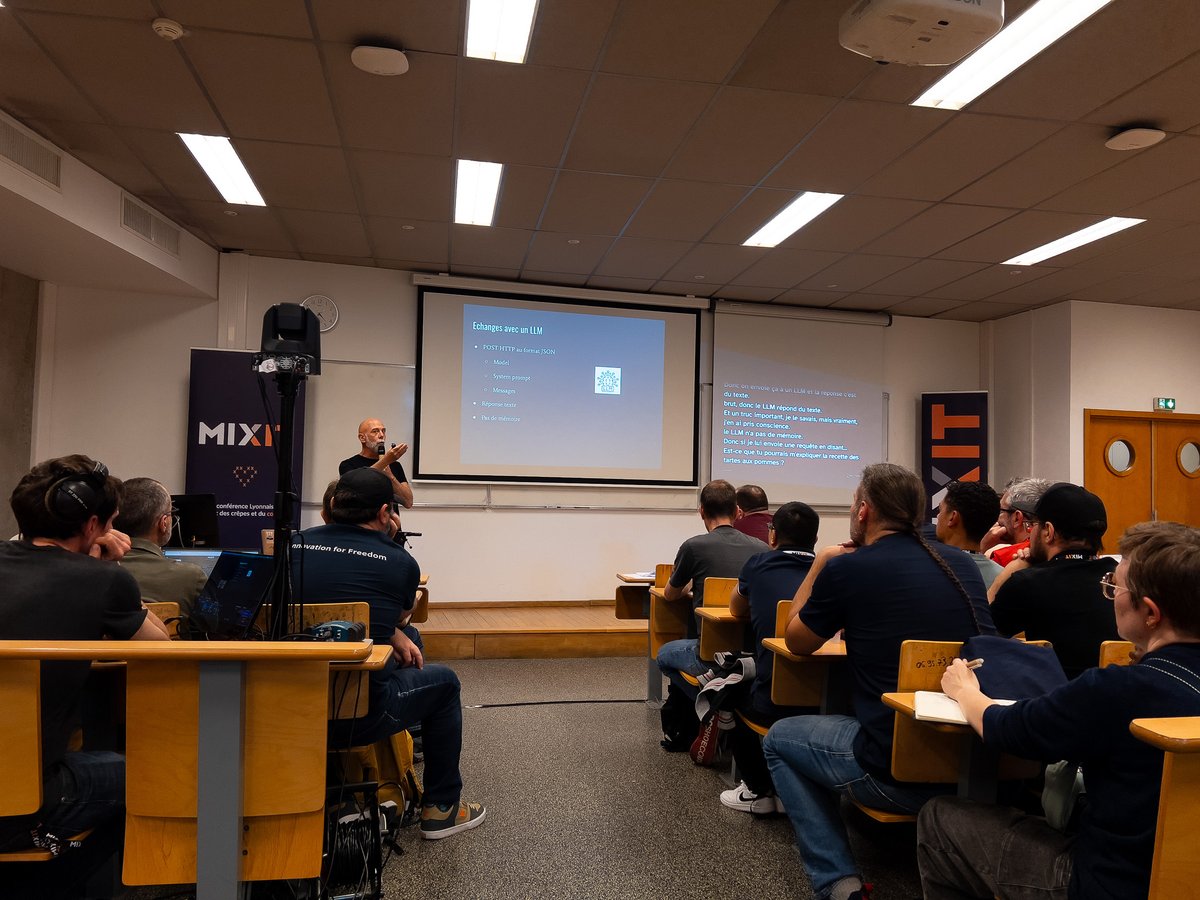
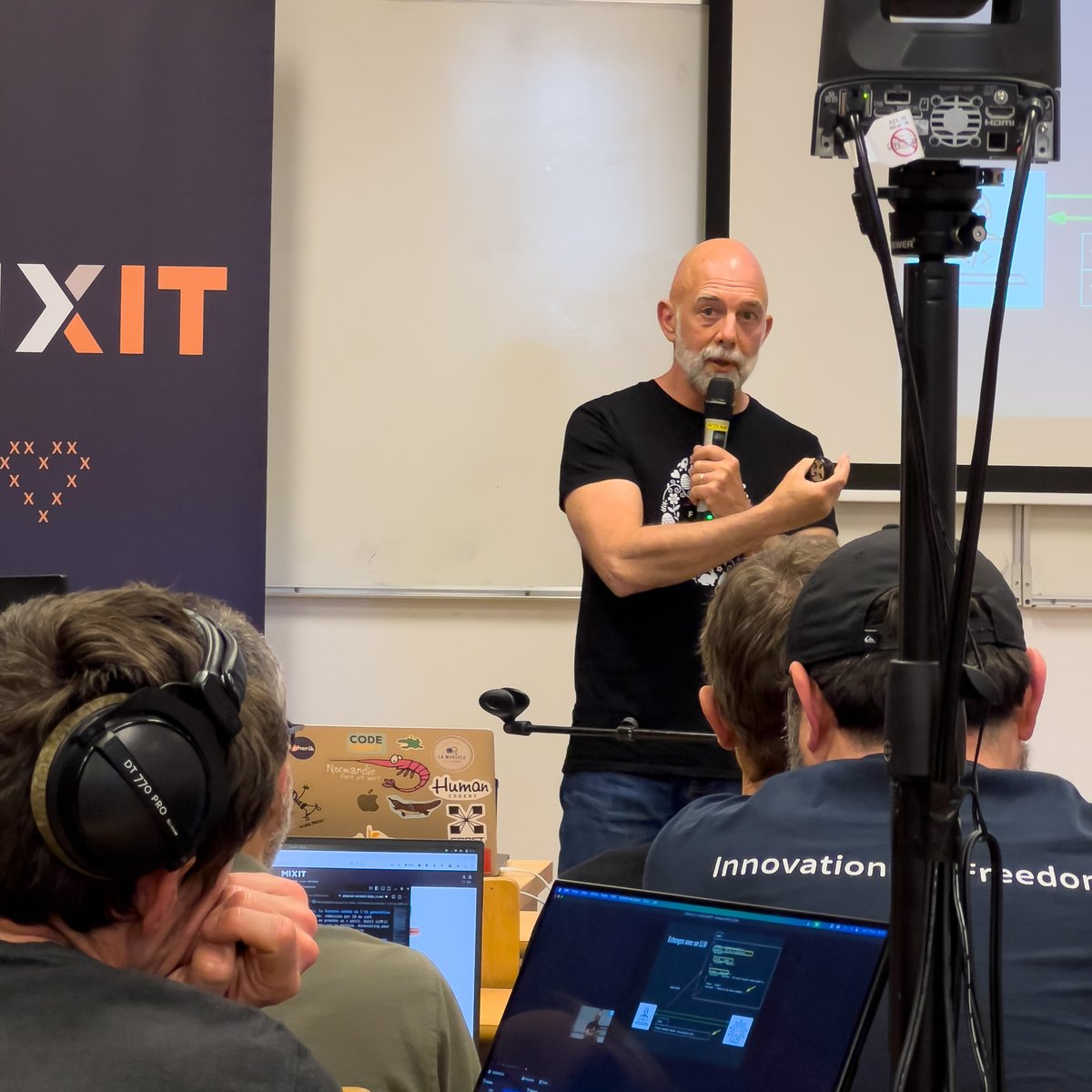
Bravo Xavier ! Super conf pour savoir comment marche Claude Code, OpenCode et autres. J'avais déjà vu le replay de la version donnée au @HumanTalks mais c'est mieux en vrai ! (coucou MiXiT) PS: Le sticker @humancoders sur le Mac fait très plaisir :p
Camille Roux tweet mediaCamille Roux tweet media
Français
1
3
7
1.3K
Matthieu Segret retweetledi
Claude
Claude@claudeai·
We've redesigned Claude Code on desktop. You can now run multiple Claude sessions side by side from one window, with a new sidebar to manage them all.
English
2.1K
3.2K
42.8K
6.1M
Matthieu Segret retweetledi
Camille Roux
Camille Roux@CamilleRoux·
J'ai créé un skill Claude Code qui agrège l'actu dev francophone et te sort un récap trié par jour directement dans ton terminal. /veille 👉 github.com/camilleroux/ve…
Français
9
21
168
16.4K
Matthieu Segret retweetledi
Human Coders
Human Coders@humancoders·
Anthropic lance les Claude Managed Agents : une infrastructure gérée pour faire tourner Claude comme agent autonome, sans avoir à construire sa propre boucle d'exécution. ⬇️ news.humancoders.com/t/ia/items/514…
Français
1
2
5
866
Matthieu Segret retweetledi
Anthropic
Anthropic@AnthropicAI·
Introducing Project Glasswing: an urgent initiative to help secure the world’s most critical software. It’s powered by our newest frontier model, Claude Mythos Preview, which can find software vulnerabilities better than all but the most skilled humans. anthropic.com/glasswing
English
2K
6.7K
44.1K
31.3M
Matthieu Segret retweetledi
Human Coders
Human Coders@humancoders·
Cursor 3 repense l'interface autour des agents : multi-dépôts, exécution parallèle d'agents locaux et cloud, passage fluide entre les deux, et tout ça sans quitter l'IDE. ⬇️ news.humancoders.com/t/ia/items/504…
Français
2
2
2
552
Matthieu Segret
Matthieu Segret@MatthieuSegret·
Cette semaine, j'ai eu le plaisir d’être interviewé par @happytodev pour la newsletter « Quoi de neuf les devs ? » (n°172). Au menu : mon rapport à IA en tant que dev, Elixir / Phoenix, l'art génératif, veille et de mon travail chez @humancoders Bonne lecture 👇
Matthieu Segret tweet media
Français
1
0
2
250
Matthieu Segret retweetledi
Andrej Karpathy
Andrej Karpathy@karpathy·
LLM Knowledge Bases Something I'm finding very useful recently: using LLMs to build personal knowledge bases for various topics of research interest. In this way, a large fraction of my recent token throughput is going less into manipulating code, and more into manipulating knowledge (stored as markdown and images). The latest LLMs are quite good at it. So: Data ingest: I index source documents (articles, papers, repos, datasets, images, etc.) into a raw/ directory, then I use an LLM to incrementally "compile" a wiki, which is just a collection of .md files in a directory structure. The wiki includes summaries of all the data in raw/, backlinks, and then it categorizes data into concepts, writes articles for them, and links them all. To convert web articles into .md files I like to use the Obsidian Web Clipper extension, and then I also use a hotkey to download all the related images to local so that my LLM can easily reference them. IDE: I use Obsidian as the IDE "frontend" where I can view the raw data, the the compiled wiki, and the derived visualizations. Important to note that the LLM writes and maintains all of the data of the wiki, I rarely touch it directly. I've played with a few Obsidian plugins to render and view data in other ways (e.g. Marp for slides). Q&A: Where things get interesting is that once your wiki is big enough (e.g. mine on some recent research is ~100 articles and ~400K words), you can ask your LLM agent all kinds of complex questions against the wiki, and it will go off, research the answers, etc. I thought I had to reach for fancy RAG, but the LLM has been pretty good about auto-maintaining index files and brief summaries of all the documents and it reads all the important related data fairly easily at this ~small scale. Output: Instead of getting answers in text/terminal, I like to have it render markdown files for me, or slide shows (Marp format), or matplotlib images, all of which I then view again in Obsidian. You can imagine many other visual output formats depending on the query. Often, I end up "filing" the outputs back into the wiki to enhance it for further queries. So my own explorations and queries always "add up" in the knowledge base. Linting: I've run some LLM "health checks" over the wiki to e.g. find inconsistent data, impute missing data (with web searchers), find interesting connections for new article candidates, etc., to incrementally clean up the wiki and enhance its overall data integrity. The LLMs are quite good at suggesting further questions to ask and look into. Extra tools: I find myself developing additional tools to process the data, e.g. I vibe coded a small and naive search engine over the wiki, which I both use directly (in a web ui), but more often I want to hand it off to an LLM via CLI as a tool for larger queries. Further explorations: As the repo grows, the natural desire is to also think about synthetic data generation + finetuning to have your LLM "know" the data in its weights instead of just context windows. TLDR: raw data from a given number of sources is collected, then compiled by an LLM into a .md wiki, then operated on by various CLIs by the LLM to do Q&A and to incrementally enhance the wiki, and all of it viewable in Obsidian. You rarely ever write or edit the wiki manually, it's the domain of the LLM. I think there is room here for an incredible new product instead of a hacky collection of scripts.
English
2.9K
7.1K
59.1K
21.1M
Matthieu Segret retweetledi
Google
Google@Google·
We just released Gemma 4 — our most intelligent open models to date. Built from the same world-class research as Gemini 3, Gemma 4 brings breakthrough intelligence directly to your own hardware for advanced reasoning and agentic workflows. Released under a commercially permissive Apache 2.0 license so anyone can build powerful AI tools. 🧵↓
English
730
3.1K
20.5K
7.7M
Matthieu Segret retweetledi
Camille Roux
Camille Roux@CamilleRoux·
Avec @matthieusegret on travaille sur @HumanCodersNews la semaine prochaine et on a besoin de vous ! Presque 20 000 news postées en 14 ans, on veut passer un cap 👇
Français
1
3
7
1.2K